
Archive
-
Are Teachers in Trouble?
Comments Off on Are Teachers in Trouble?What is the relationship between the emotional load of teachers’ work and individual manifestations of illness? We need to document and address clinical needs – such as pain, functional impairment, mental illness and social isolation– that go deeper than simple “wellness programs.”
I first heard about the National Standard for Psychological Health and Safety in the Workplace in 2017.
That year, I was part of a small delegation of teachers who were attending (for the very first time) the Nova Scotia Federation of Labour Biennial Convention in Halifax, N.S. Of all the amazing insights I gained that weekend, learning about directly connecting workplace stress to worker wellness was a key moment for me.
The “Standard” was originally launched in 2013. Supported by the Mental Health Commission of Canada, it is a set of voluntary guidelines, tools and resources designed to help organizations prevent psychological injury at work. The standard aims to connect overall worker wellness with more tangible ideas like stress and workplace absenteeism.
As a union leader, my job centres around helping teachers navigate the increasingly complex world of public education. Naturally, my perception of that complexity is coloured by my role.
My phone seldom rings when teachers are doing well, and my phone is seldom quiet for very long.
However, I am also keenly aware that the angst I witness in my own members is not limited to my one small corner of the world.
The global educational landscape is littered with stories of teacher shortages and excessive attrition rates.
As I read more about psychological wellness, I began to question the frequently cited but hard to define platitudes often used to describe teachers in crisis. Words like “stress” and “burnout” are frequently associated with the teaching profession, but they are hard to pin down. The terms still have an almost ephemeral ring to them, much like PTSD used to. (PTSD – post-traumatic stress disorder – struggled for years for definition, let alone acceptance.) I began to look for research, any research, that explored the connections between the stress being felt by teachers in the classroom and their overall health. Much to my chagrin, my searches were fruitless.
“Students’ and teachers’ healthy minds and bodies are critical to quality public education.”
Then, in another fortunate turn of fate, I met MSVU researcher Dr. Krista Ritchie, Assistant Professor at Mount Saint Vincent University and a scientist at the IWK Health Centre in Halifax. Her program of research makes connections across the fields of education and health. Through a multitude of research projects and collaborations over time, she has formed a strong commitment to applied research for the public good, framed by the central tenet that healthcare is an education issue and education is a healthcare issue.
According to Ritchie, opportunities for clinicians, patients and care providers to learn about illness and new evidence-informed treatments are critical to quality healthcare. Similarly, students’ and teachers’ healthy minds and bodies are critical to quality public education. One of the keys to being able to approach this applied research effectively is the willingness to establish meaningful and trusting collaboration across stakeholders. As such, she has sought to collaborate with community groups, schools, hospitals, and most recently the Nova Scotia Teachers’ Union (NSTU).
NSTU President Paul Wozney says, “Ninety-one hundred NSTU members have expressed a clear desire to partner in research that illuminates the growing struggle teachers experience with mental health, and with mental health issues that develop due to workload and the evolving complexity of their jobs.” They view research as a way to delineate the negative impact mental health issues have on their personal wellness, vital relationships and ability to do their jobs. They voted in overwhelming support of this action at our Annual Council in 2018; our board of directors subsequently approved a proposal from Dr. Krista Ritchie to undertake collaborative research to this end.
If your organization, school district or faculty of education is an EdCan member (see the list here), you can enjoy unlimited access to our online content! Click here to create your online account.
Through this most recent collaboration, a team approach is being used to identify a way to do high quality research that explores the relationship between the emotional load of teachers’ work and individual manifestations of illness. This includes such things as pain, functional impairment, mental illness, and social isolation.
Perhaps most importantly, the research attempts to find ways in which these factors influence the nuanced decisions teachers make every day that shape student learning and engagement.
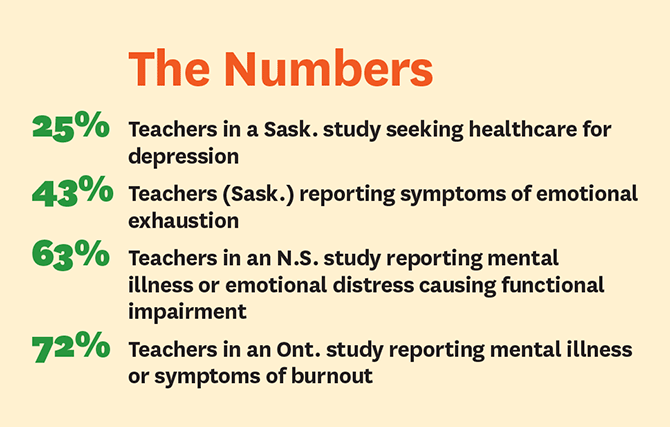
Certainly, what statistics we do have indicate a clear need for further examination of the impact of wellness on the classroom.
Canadian statistics indicate that approximately 25 percent of adults experience mental illness at some point.
Statistics Canada estimates that 4.8 percent of adult Canadians have depression.
When it comes to the teaching profession, a 2012 report revealed that 25 percent of 745 teachers interviewed in Regina and Saskatoon were seeking healthcare for depression and 43 percent reported symptoms of emotional exhaustion.1
A thesis recently published from Western University reported that 72 percent (almost 3 in 4) of surveyed teachers identified as having either mental illness or symptoms of burnout resulting from stress, such as avoidance strategies and social disengagement.2
Here in N.S., Dr. Ritchie and the NSTU have partnered on an ongoing study of public school teachers.
Initial analysis of the data collected so far indicates that 63 percent of surveyed teachers reported that they currently have mental illness or emotional distress resulting in functional impairment of work and home responsibilities. Of these respondents with illness or distress, 71 percent reported that their health problems were interfering with their normal social activities with friends, family, neighbours, or social groups.
This is concerning because social support is a protective factor against mental illness.
Although it is too early to draw strong conclusions about whether teachers are experiencing higher rates of mental illness than the national average, these studies tell us that we need to be asking the question and generating valid and reliable prevalence rates.
This area of research could be of tremendous value in directly informing healthcare needs and program planning for teachers. To even begin to consider the potential impact on students, we must generate population level statistics that can guide provincial and national conversations.
Who helps the helpers?
It is equally important to situate these statistics in the teaching and learning contexts where students are learning every day. As part of the effort to meet that goal, Ritchie has been joined by Laura Leslie, a St. Francis Xavier University PhD student. Leslie comes to her PhD studies with over 15 years’ experience as a teacher in Nova Scotia schools, and with a background in counselling. Her research interests are in the impact of trauma on students and schools – an interest sparked by her own experiences as a classroom teacher supporting students affected by traumatic and adverse life events. Community violence, illness, loss, poverty, abuse, witnessing or experiencing frightening events are just some of the experiences that can have a significant impact on children in our schools.
During her years of teaching these students, Leslie came to recognize how supporting students with trauma was affecting the health of her teaching colleagues. She found herself going to the empirical literature and asking the question “Who helps the helpers?”3
That question is one that is thankfully starting to be asked more often. New research is revealing the prevalence of secondary trauma symptoms in educators in today’s classrooms. Further research is needed to understand and support teachers with these ongoing, daily and often pervasive challenges.
“Psychological health in the workplace needs to become a major focus across the educational landscape of our nation.”
Within the teaching profession, we bear witness daily to human flourishing. Seeing students learn to read, gain independence and learn about themselves is a great privilege. This privilege is situated in trusting relationships with children – those very individuals upon whom society places so much value. Yet within the ranks of those charged with their care and academic development, there exists long documented evidence of high attrition rates, particularly among early-career teachers.4
Psychological health in the workplace needs to become a major focus across the educational landscape of our nation. These efforts need to move beyond simple wellness programs that, although helpful, do not compare to documenting health needs that must be addressed by healthcare professionals.
Whether it be among classroom teachers, university academics, community members or educational leadership, collaboration in addressing this issue will be key.
We all do better by reaching across institutions and working together to generate high quality and relevant evidence to solve real problems.
Photo: iStock
First published in Education Canada, March 2020
Notes
1 R. R. Martin, R. Dolmage, and D. Sharpe, Seeking Wellness: Descriptive findings from the survey of the work life and health of teachers in Regina and Saskatoon (Saskatchewan Teachers’ Federation, Saskatoon, SK, 2012). www.stf.sk.ca/sites/default/files/seeking_wellness.pdf
2 K. Marko, “Hearing the Unheard Voices: An in-depth look at teacher mental health and wellness,” (Thesis, University of Western Ontario, London, ON, 2015), 2-15
3 H. A. Lawson, J. C. Caringi, R. Gottfried, B. E. Bride, and S. P. Hydon, “Educators’Secondary Traumatic Stress, Children’s Trauma, and the Need for Trauma Literacy,” Harvard Educational Review 89, no. 3 (2019): 421–447.
4 L. Darling-Hammond, “The Challenge of Staffing our Schools,” Educational Leadership58, no.8 (2001): 12-17; B. Kutsyuruba, L. Godden and L. Tregunna, Early-career Teacher Attrition and Retention: A pan-Canadian document analysis study of teacher induction and mentorship programs (Kingston, ON: Queen’s University, 2013).
-
What Does Teacher Well-Being Look Like?
Comments Off on What Does Teacher Well-Being Look Like?As a researcher and teacher, I’ve often wondered “How do schools and the people in them look after their well-being?” It’s this particular question that sparked my interest in researching well-being in K-12 education. Together with my colleague, Dr. Keith Walker, we’ve collaborated with teachers and school administrators across Canada to get to the bottom of what teacher well-being looks like and why it matters.

There’s often a widely held assumption that well-being means you’re either mentally healthy or not. However, when we start to consider what well-being means and looks like, we begin to realize that it not only means more than just an “absence of illness,” but that the term itself is complex. Well-being is an elaborate term that includes attending to our mental, physical, emotional, and spiritual health.
Throughout our research, we’ve heard from teachers the stress they’ve often experienced within their role and how that’s put a strain on their ability to feel well at work. For teachers, well-being at work far too often means merely surviving the challenges and hardships that this work, at times, can bring. To address some of the concerns we were hearing, our research led us to write the book Teacher Wellbeing: Noticing, Nurturing, Sustaining, and Flourishing in Schools. We wrote this book because we know that teachers want and need practices and strategies for attaining and growing their well-being, and it serves as a starting point to provide staff with small opportunities for shifting how they nurture their well-being as a priority in their work. To give you a taste of what it means to truly be well at work, let’s go over WHY teacher well-being matters and what that actually looks like at school.

TEACHER WELL-BEING AND ENGAGED TEACHING AND LEARNING GO HAND IN HAND
Teachers who feel heard and valued for their ideas, have opportunities to collaborate, and feel supported by colleagues feel a greater sense of well-being within the workplace. What’s more, staff need to be able to trust they have the space to be creative and are able to take risks in learning something new – just as their students need to be able to do.

Creating opportunities for teachers to engage with their colleagues to reflect on and build meaningful teaching practices lead to teachers who are passionate and committed to the work they do, improving the overall learning experience for their students.
Teachers are well when there is a sense of community. Schools are more than just buildings — schools are communities where there are trusting, supportive, and caring relationships between every member (e.g. teachers, students, parents/guardians), which creates a shared sense of belonging. Most importantly, members of the school community work towards the shared common goal of supporting the academic, social, and emotional development of children and youth who are entrusted to them.
WHY DOES TEACHER WELL-BEING MATTER?
Teachers are increasingly faced with the pressure to provide educational experiences that prepare students to succeed in a rapidly changing society. In addition to meeting curriculum requirements, teachers are almost always expected to lead and implement numerous initiatives to better equip students and increase educational outcomes.
While these initiatives are well-intentioned and provide moments for both personal and professional impact, they can leave teachers feeling stressed and overwhelmed. Heroically — and typically alone — teachers try to handle increasingly complex and challenging working conditions, all while trying to look after their own well-being and that of their students.

WHEN TEACHER WELL-BEING IS LOOKED AFTER IT:
→Creates a supportive working environment
A supportive environment leads to teachers feeling safe to openly discuss and share their ideas, give and receive constructive feedback, and collaborate with each other to solve any perceived challenges in the workplace.
Supportive school communities recognize the stresses associated with juggling the multiple demands that teachers often experience, while striving to encourage work-life balance by establishing clear boundaries between work and home life, coupled with supporting those who are experiencing stress and/or burnout.
→Builds resilience
Focusing on well-being can help teachers shift beyond a sense of merely surviving the challenges and difficulties in their work to seeing the ways they can thrive in their workplaces. Teachers who are well are equipped with skills and coping strategies to better manage and respond to stress.
→Encourages innovative practice
Teachers who feel secure to explore innovative teaching practices are able to provide students with deeper learning experiences in ways that promote their curiosity and creativity. What’s more, when teachers have the flexibility to try new things and adapt promising practices into their classrooms, they themselves are more engaged and excited about their work, which contributes to their own sense of well-being.
HOW TO ENHANCE TEACHER WELL-BEING IN YOUR SCHOOL
To support students’ learning and well-being, we need teachers who are engaged, innovative, collaborative, resilient and, most importantly, well. But how exactly do we accomplish this?
Invite your school community to start developing a common vision about what well-being looks like for them. Ask each other, “What’s already working well? Where is there opportunity for growth and change?”
SO, WHAT NOW?

Try this activity:
Get your team together and ask each of them to individually write down their observations of:
- Moments when they and/or their colleagues are engaged and having fun at work.
- Things that they’re often grateful for at the end of each work day.
After time for reflection, share observations and discuss commonalities – these represent your school’s strengths.

As teachers begin to shift their focus towards what makes them feel well at work, they can then begin to identify what aspects contribute to their well-being — physically, emotionally, mentally, and spiritually — which can allow them to identify what’s going well and what can be improved in their school community.
are you looking for a resource to learn more about teacher well-being?
Look no further! Known as the “purple book,” this rare find helps teachers reignite their passion for the profession and take charge of their own well-being.
Continue here to read the Book preview for Teacher Wellbeing: Noticing, Nurturing, Sustaining, and Flourishing in Schools
-
Stress and burnout are on the rise among Canadian principals and vice-principals
Comments Off on Stress and burnout are on the rise among Canadian principals and vice-principalsPrincipals and vice-principals are facing increased pressure, workload, and stress.1 But considering how pervasive stress and burnout seem to be across many professions in modern society, why should we care specifically about school leaders? The answer is actually so very clear: health, happiness, and success for everyone! Of course, work-related stress is normal and inevitable; however, excessive physical and emotional stress can interfere with school leaders’ well-being which can carry over to ultimately impact education systems as a whole.

WHEN LOOKING AT SCHOOL LEADERS’ WELL-BEING, THERE ARE THREE INTERCONNECTED COMPONENTS TO CONSIDER:
1. The Individual: Stress inhibits school leaders from effectively improving school performance
Principals and vice-principals (VPs) are some of our most dedicated and passionate educators who have chosen to take on a role with significant responsibility and impact, which means that we need them to be at their best. One might say that handling difficult tasks and juggling many needs is simply the role of school principals and VPs. That is absolutely correct! This is exactly what our best leaders are good at and often thrive on. However, our bodies are not designed for the levels of constant and excessive stress that many of our school leaders are currently experiencing.

Chronic stress lowers levels of health, happiness, and success – and leaders aren’t immune from these innately human factors.2 If principals and VPs are working days, nights, and weekends (and they often are), then they are indeed experiencing chronic stress, which will take a toll on their social, emotional, and cognitive well-being,3 just like anyone else. Work-related stress can have damaging effects that inhibit school leaders’ ability to function effectively while lowering their job enthusiasm and motivation to perform well.4 Stress not only affects the ability of school leaders to improve their schools but also makes it difficult to retain and recruit new principals and VPs.
Research shows that most principals burn out and leave the profession in four years or less, although it takes five-to-seven years for a principal to have a significant impact on a school community.5 Yes, we need principals to do their job now, but we also need them to stick around long enough to yield the greatest results possible for students. What’s more, despite the fact that we’re increasingly more aware of the importance of social emotional skills like self-awareness and the need to practice self-care, many school leaders have not been taught these essential skills. More importantly, leaders often assume that they can’t possibly worry about themselves since they’re tasked with taking care of everyone else. However, it’s good to be reminded of the simple truth that we’ve learned from air travel, which is that it’s not only important – but essential – to put on your own oxygen mask before helping others.
2. The Group: Education is a collective endeavour – not one person’s job
If you are a parent, student, or school staff member, then this is one of the most compelling arguments for why you should care about your principals’ or vice-principals’ stress levels. It takes a community – if not a village – to raise a child. The most productive and successful work teams are made up of people who care about each other. People on successful and productive teams use the words family, support, and trust to describe their work together. It isn’t enough to have great individuals. Principals and VPs aren’t superheroes, nor should they be the sole go-to people who are expected to triumph against all odds. They are regular people whose health and well-being should be of equal concern, not an afterthought. For schools to function well, all staff need to work as a team towards a common goal. To do our best work, we need to have strong, connected teams built on relationships and trust.

What we know about workplace well-being is that the best teams are those that understand the importance of social connection and creating a workplace where people feel safe and valued. If school leaders don’t feel connected or supported by their team, then they’re not only less effective but so is everyone else. If leaders are connected and have strong, authentic relationships then the people that work for them will go out of their way to make their leaders’ and the organization’s vision come true.6 When we work for someone who we care about and who we feel cares about us as employees, then we will work with passion, dedication, and creativity. What’s more, when we hold this sense of care as a group, the results are amazing!

Fundamentally, work and life aren’t things we can ever do alone – nor are we meant to.7 We’re at our best when we work together and, just as we know that stress can actually spread and be contagious towards those around us,8 we also know that the “good stuff” is contagious, too. For instance, it has been scientifically proven that when we show gratitude and compassion towards other people, they feel better, perform better, and are more likely to reciprocate acts of compassion and belonging.9 So, no matter who we are and what role we may find ourselves in, we can always make the choice to act first by showing compassion, assuming good intention, and being kind. It’s important for leaders to both show and receive these positive actions. Above all, we need leaders who feel safe, valued, and connected in order for them to do their best work and to inspire and support their staff – and ultimately their students – to do the same.

3. The System: School leaders are running systems that aren’t designed to support their well-being
Surveys of principals demonstrate that education systems are overloading our leaders.10 A rapid flow of policies, initiatives, and programs leads to loss of focus, overwork, frustration, and demotivation11 – and these are impacting school leaders’ health and well-being while increasing their levels of stress. As this makes it more difficult to recruit and retain the best school leaders, school districts are faced with high costs in terms of both time and money, which further inject stress into the system.

It’s important to name this tension while also being very clear that this isn’t a criticism towards – or the responsibility of – any one person or group of people. Rather, this tension indicates that education systems as a whole need to look at practices through the lens of workplace well-being. As such, looking at practices through a well-being lens can lead to large-scale change that, as the First Peoples’ Principles of Learning remind us, will take time and patience. However, rethinking system-level practices can also involve small changes that simply require a willingness to try – and we need both large and small changes.
THE TAKEAWAY
While it’s encouraging that many associations, ministries of education, and partner groups are beginning to focus on the issue of workplace well-being in K-12 education, we still have a ways to go in acknowledging the importance of principals and vice-principals’ well-being – leaders of learning who have huge impacts on the health, happiness, and success of our schools. For school leaders reading this, remember that well-being has three interconnected components: you, your team, and the system as a whole. You were never meant to do this job alone.
References and Further Reading
1Alberta Teachers Association (ATA). (2017). The Canadian school leaders: Global forces and future prospects. A research report. Edmonton, AB.
Canadian Association of Principals (CAP). (2014). The future of the principalship in Canada: A national research study. Kanata, ON.
Pollock, K., Wang, F., & Hauseman, D. C. (2014). The changing nature of principals’ work: Final Report. Ontario Principals’ Council, Toronto, ON.
Pollock, K., Wang, F., & Hauseman, D. C. (2015). Complexity and volume: An inquiry into factors that drive principals’ work. Societies, 5(2), 537–565.
Pollock, K., Wang, F., & Hauseman, D. C. (2017). The changing nature of vice-principals’ work: Final report. Ontario Principals’ Council, Toronto, ON.
Poirel, E., & Yvon, F. (2014). School principals’ emotional coping process. Canadian Journal of Education/Revue Canadienne de L’éducation, 37(3), 1–23.
Riley, P. (2016). The Australian principal occupational health, safety and well-being survey. Institute for Positive Psychology & Education. Retrieved from: http://www.principalhealth.org/au/2016_Report_AU_FINAL.pdf
U.S. Bureau of Labor Statistics. (2016). Occupational outlook handbook: Elementary, middle, and high school principals. U.S. Department of Labour. Retrieved from: https://www.bls.gov/ooh/management/elementary-middle-and-high-school-principals.htm
2Hallinger, P., & Murphy, J. F. (2013). Running on empty? finding the time and capacity to lead learning. NASSP Bulletin, 97(1), 5-21. doi:10.1177/0192636512469288
Nthebe, K., Barkhuizen, N., & Schutte, N. (2016). Rewards: A predictor of well-being and service quality of school principals in the north-west province. SA Journal of Human Resource Management, 14(1), 1-e11. doi:10.4102/sajhrm.v14i1.71
Poirel, E., & Yvon, F. (2014). School principals’ emotional coping process. Canadian Journal of Education/Revue Canadienne de L’éducation, 37(3), 1–23.
3Wang, F., Pollock, K., & Hauseman, D. C. (2018b). Ontario principals’ and vice-principals’ well-being and coping strategies in the context of work intensification. In S. Cherkowski, & K. D. Walker (Eds.), Perspectives on flourishing in schools (pp. 287-303). Lanham, Maryland: Lexington Books, an imprint of The Rowman & Littlefield Publishing Group, Inc.
4Devos, G., Bouckenooghe, D., Engels, N., Hotton, G., & Aelterman, A. (2007). An assessment of well-being of principals in flemish primary schools. Journal of Educational Administration, 45(1), 33-61. doi:10.1108/09578230710722449
5Leithwood, K. A., Louis, K. S., & Anderson, S. E. (2012). Linking leadership to student learning (1st ed.). San Francisco: Jossey-Bass.
6Sinek, S. (2014). Leaders eat last: Why some teams pull together and others don’t. New York: Portfolio/Penguin.
Sinek, S. (2011). Start with why: How great leaders inspire everyone to take action. New York: Portfolio / Penguin.
7Walton, G. M., Cohen, G. L., Cwir, D., & Spencer, S. J. (2012). Mere belonging: The power of social connections. Journal of Personality and Social Psychology, 102(3), 513-532. doi:10.1037/a0025731
8Sterley, T., Baimoukhametova, D., Füzesi, T., Zurek, A. A., Daviu, N., Rasiah, N. P., & Bains, J. S. (2018). Social transmission and buffering of synaptic changes after stress. Nature Neuroscience, 21(3), 393-403. doi:10.1038/s41593-017-0044-6
9Coyle, D. (2018). The culture code: The secrets of highly successful groups (1st ed.). New York: Bantam Books.
10Wang, F., Pollock, K., & Hauseman, C. (2018a). School principals’ job satisfaction: The effect of work intensification in Ontario. Canadian Journal of Educational Administration and Policy, 185, 73-90.
Wang, F., Pollock, K., & Hauseman, D. C. (2018b). Ontario principals’ and vice-principals’ well-being and coping strategies in the context of work intensification. In S. Cherkowski, & K. D. Walker (Eds.), Perspectives on flourishing in schools (pp. 287-303). Lanham, Maryland: Lexington Books, an imprint of The Rowman & Littlefield Publishing Group, Inc.
11Fullan, M. (2008). What’s worth fighting for in the principalship? (2nd Ed.). New York: Teachers College Press.
-
What does it mean to flourish in your work?
Comments Off on What does it mean to flourish in your work?Looking for more?
Check out our Part 2 Extended Cut here
also available on:


-
Book Preview – Teacher Wellbeing: Noticing, Nurturing, Sustaining, and Flourishing in Schools
Comments Off on Book Preview – Teacher Wellbeing: Noticing, Nurturing, Sustaining, and Flourishing in SchoolsEvery person’s wellbeing is important in and of itself. Teacher wellbeing isn’t just about making school systems more economically efficient, or enhancing students’ performance on standardized assessments. Whether you are a student, a teacher, a principal, or an administrator, you have the right to be well and to live well simply because of your inherent worth as a person.
Yet teachers do play a shaping role in the lives of their students. Learning happens best when teachers and their students are well – happy, healthy teachers who feel well and whole in their work provide strong support for happy, healthy children and youth. This book acknowledges that we need to consciously attend to and support teacher wellbeing.
Too many of our teacher colleagues across the world suffer from sources of stress that put an enormous strain on their ability to feel well in their work. This situation also invades their personal and family lives in ways that can be devastating.
Too often, teachers are pushed to account for merely the academic achievement of their students, leaving aside the many social, emotional, and spiritual aspects of learning and development that are essential to students’ wellbeing. However, teaching and learning are fully human endeavours, and learning well cannot be separated from living well.
This research-informed, theoretically grounded book will coach you — alone, or with a group of your colleagues — to determine what wellbeing looks like in your classroom, in your school, and for yourself. The aim is to offer you new perspectives, research insights, reflection moments, and activities for gaining a sense of ‘flourishing’ wherever you can in your work. We achieve this by helping you notice what makes you feel whole, engaged, and connected, while encouraging you to pay attention to ways you can grow more of these feelings in your work.
WHAT THIS BOOK CAN OFFER YOU.
Teacher Wellbeing affirms the agency that teachers have in reimagining a new way forward. This book supports you as you shift your mindset towards thinking about the work of teaching as including a strong sense of wholeness and aliveness. Teacher Wellbeing is an interactive book that will guide you as you notice, nurture, and sustain holistic flourishing in your work and in your life.
In addition to providing a theoretical framework for promoting evidence-based practices that foster wellbeing, this book also enables you to create a Living Map of Flourishing — that is, an artistic representation of a path that you can follow to enable you to thrive in your teaching. By creating your own map, you’ll become an expert in building your own knowledge on how to be the teacher you’re meant to be.
We call this a ‘Living Map’ because it isn’t static, just as schools aren’t static systems, but rather are living ecosystems of people and their experiences. Your ‘Living Map’ will become a place for recording your learning, generating knowledge, and tuning into new understandings that you’ll form as you work through the activities in the book. By the time you’re finished reading, you’ll have a custom-built plan that’s unique to you, yet influenced by nuanced theoretical approaches, stories, and practices derived from research.
Teacher Wellbeing also provides interactive activities to prompt reflection and collaboration, including:
1. Heart Prints.
You know about footprints and handprints, which are the impressions we leave as we pass through various spaces in our life. Similar but different, ‘Heart Prints’ are strong emotional impressions that are left on us, and that we leave on others, when we engage from a place of authenticity, wholeness, vulnerability, love, and compassion. ‘Heart Print’ reflections are opportunities to help you tap into experiencing a sense of gratitude and appreciation through noticing moments of your own goodness. Essentially, these are moments of pause that allow you to rest, reflect, and make sense of what you’re reading in ways that affirm the essence of who you are as a teacher, and that encourage and inspire you to stretch towards a greater sense of wholeness and wellbeing in both your work and in life.
2. Shifting Ground.
Feeling the ground shift beneath your feet can feel scary and can cause you to be thrown a bit off kilter. But it’s in these times – times when you’re a little disturbed or placed in unease – that you might actually find opportunities for new learning and renewal. ‘Shifting Ground’ moments are creative activities that serve to shift the ground a little and perhaps even shake things up or provoke you. These moments are designed as reflective, creative, and re-creative experiences.
OUR APPROACH TO FOSTERING WELL-BEING.
Our book is designed to encourage and coach you towards giving greater attention to what’s working well, since we know that the things we pay attention to are destined for growth. Our research shows that educators work best when they focus on and build up their strengths —their passions, purposes, and sources of vitality. Teacher Wellbeing thus draws from a strengths-based model of thinking and reflecting on action-oriented change. This model is called Appreciative Inquiry (AI). Drawing on AI, we coach you as you shift towards an abundance mindset rather than a deficit-based way of thinking.
Appreciative Inquiry isn’t about denying real-life experiences of struggle and suffering. Rather, it’s about placing a more intentional focus on wellbeing as an essential aspect of your work as a teacher, and then paying attention to how you perceive your work as a means to promote and encourage self-care, positive growth, and a sense of thriving for yourself and others in particular situations you may experience.
Systems and pressures may shape what we are and aren’t able to do. Yet we are nonetheless in charge of interpreting the many different stories we hear ourselves telling about ourselves and about the world around us. How we author our own reality reflects what is most important to us. By focusing on what’s working well, we can strengthen what’s working well; by focusing on a flourishing future, we can indeed move forward towards a flourishing future.
Our theory on ‘flourishing’ emerged from research in the fields of positive psychology, positive organizational scholarship, and school improvement. As we reflected on the potential of these findings for the work of teachers, we connected our ongoing research on ‘flourishing’ with our knowledge about learning communities. This approach resonated with the teachers we spoke with on the ground, and even so with our own teaching practices.
As you begin to uncover your beliefs and actions, you’ll see which aspects of your life and work are authentically aligned with who you’re intended to be. You’ll find yourself setting up opportunities to use your strengths throughout the day, and will come to carry out activities that allow you to better understand your strengths alongside your colleagues, all while advancing along a journey towards ‘flourishing.’
Teacher Wellbeing is organized into a sequence of steps:
1. Noticing
Paying attention to how we use language to describe our experiences is an important step towards developing your agency in shaping your own wellbeing. When we can take notice of how we talk to ourselves and to other people about our experiences, we can then take small steps towards more compassionate approaches to relating to ourselves and to those we work and live with.
We provide ‘Heart Print’ and ‘Shifting Ground’ activities that prompt you to engage in storytelling — that is, noticing your role in shaping your own experiences and those of your community. As you look into your own beliefs and assumptions about how and why things work (or don’t work), you’ll need courage. Some find this courage in community — in engaging with others in the process of reimagining teaching as a whole, appreciative, and positive experience. Your community may be your colleagues, your educator friends, or an imagined community of fellow readers of this book.
2. Nurturing
As you begin to take stock of moments of laughter, compassion, hope-building, and other indicators of wellbeing in your work and in your life — and as you reflect on these through guided activities while documenting your thoughts on your ‘Living Map’ — you’ll begin to develop your own theory of ‘flourishing’ that is unique to your circumstances.
To support you as you build your own individual approach, we share research results and stories from a range of academic disciplines including philosophy, psychology, and education, among others. Your research-informed knowledge base will enable you to both grow and nuance your pursuit of wellbeing.
3. Sustaining
Your wellbeing has a relational component. Developing your capacity to grow is a collective phenomenon that involves the whole educational community. We offer research-based stories, theories, practices, and activities that you can use to reflect on what it means for you to grow and thrive within a ‘flourishing’ learning community.
We don’t think teachers need to wait for others to set the conditions necessary for their wellbeing. No one should wait! But as you pursue ‘flourishing,’ we encourage you to strive to find collaborators with whom you can share your journey. Collaboration provides an opportunity to create meaningful relationships and a sense of both individual and collective achievement — and let’s not forget that meaning-making and achievement are both central to ‘flourishing’ as a teacher. We provide practices to cultivate and sustain relationships built on trust, care, connection, purpose, and enjoyment.
4. Flourishing
‘Flourishing’ is a fluid and aspirational destination – not a fixed point. Your challenge is to learn to be well in the moment, and to learn how to recognize and ask for more supports as you move towards achieving a greater sense of wellbeing.
We offer a two-fold conclusion to Teacher Wellbeing. First, we offer practices for self-care and for showing greater empathy towards others. In sharing these practices, we call for all educators to overcome inertia and to foster healthy educational leadership.
Second, we note that the formal school leader — the principal — plays an essential role in making room for a climate that values and honours the building of collaborations, relationships, and capacities. Our epilogue offers strategies for principals and administrators that support the wellbeing of teachers, and that in turn support the wellbeing of all staff and students within the ‘flourishing’ learning community.
HOW TO GET YOUR HANDS ON A COPY OF TEACHER WELLBEING: NOTICING, NURTURING, SUSTAINING, AND FLOURISHING IN SCHOOLS.
Teacher Wellbeing can be found at most places books are sold.
Keep an eye out for further resources from Dr. Sabre Cherkowski and Dr. Keith Walker that dive into how principals and vice-principals can create the right conditions for school communities to flourish.
-
Principal SEL: What’s it look like?
Comments Off on Principal SEL: What’s it look like? -
Are education systems designed to care for teachers?
Comments Off on Are education systems designed to care for teachers? -
Pan-Canadian Summit on K-12 Workplace Well-Being
Comments Off on Pan-Canadian Summit on K-12 Workplace Well-BeingFollowing government COVID-19 guidelines concerning large in-person events, we unfortunately have had no choice but to further postpone our Pan-Canadian Summit on K-12 Workplace Well-Being, which had originally been postponed to November 2-4, 2020.
Registrations will be fully refunded for all registrants by July 15, 2020.
We are still currently working on a new potential event date and venue in 2021 and we apologize for any inconvenience this may cause, and remain committed to hosting a safe event when a better time will permit us to do so. We sincerely hope that you will be able to join us next year!
Since March, we’ve temporarily rebranded our Well at Work initiative to Well at Home to share our original evidence-based content and carefully curated external resources to support K-12 staff who are navigating working from home and preparing to return to school in September. We invite you to continue exploring our growing collection of podcasts, blog posts and magazine articles as well as the latest research resources, and a webinar series centred on elevating staff well-being and workplace morale. Stay tuned for more webinars to come!
If you have any recommendations for future webinar topics/presenters, feel free to reach out to Bineta Diallo at bdiallo@edcan.ca
Thank you for all of your support during this challenging time. We look forward to seeing you in 2021!
-
Empowering Staff to Drive Well-Being Forward
Comments Off on Empowering Staff to Drive Well-Being Forward -
Teach Resiliency
Comments Off on Teach ResiliencyIn every classroom in Canada, students are grappling with mental health issues.
And at the front of these classes are teachers are grappling with their own issues – contending with the heavy demands of their day to day responsibilities and the stress of helping students who are struggling.
Teach Resiliency is an online portal and community of practice offering teachers simple-to-use strategies and tools to assess resilience needs and provide resources to promote and enhance teacher and student mental health. Teach Resiliency is designed to:
- Develop, enhance and support teacher competencies
- Enhance and support mental health literacy for teachers
- Offer effective and practical strategies to support child and youth resiliency and mental health
- Offer effective and practical strategies to support teacher resiliency and wellness
The Teach Resiliency site was created in partnership with a team of teachers, administrators, mental health professionals, researchers and students. This team developed tools and resources, created curated resource collections and collaborated with a team from the Centre for Addiction and Mental Health to design and build the website.
-
Principals’ Social and Emotional Competence
Comments Off on Principals’ Social and Emotional CompetenceThis brief reviews the research on principal stress, coping, and positive school leadership. However, the research is currently thin, especially on how principals’ professional development, preparation programs, and certification standards can be strengthened to improve principal well-being and school outcomes. We review various strategies to enhance effective leadership by supporting principals to deepen their social and emotional competencies, all of which set the foundation for student success. A conceptual model of the Prosocial School Leader is also included. We conclude with a series of recommendations on research, programs, and policies to build this field and improve the lives of principals for effective prosocial leadership.
This issue brief, created by The Pennsylvania State University, is one of a series of briefs that addresses the future needs and challenges for research, practice, and policy on social and emotional learning (SEL). SEL is defined as the process through which children and adults acquire and effectively apply the knowledge, attitudes, and skills necessary to understand and manage emotions, set and achieve positive goals, feel and show empathy for others, establish and maintain positive relationships, and make responsible decisions. This is the second series of briefs that address SEL, made possible through support from the Robert Wood Johnson Foundation. The first set synthesized current SEL research on early support for parent engagement and its effects on child outcomes; SEL in infancy/toddlerhood, the preschool years, the elementary school period, and middle-high school timeframes; and how SEL influences teacher well-being, health equity, and school climate.
-
Teacher Stress and Health
Comments Off on Teacher Stress and Health
This research brief examines the sources and effects of teacher stress, highlights programs and policies that can reduce teacher stress and improve teacher well-being and performance, and recommends next generation research, real-world policies, and systematic, sustainable practices that can build and sustain a culture of health for teachers in U.S. schools.
This issue brief, created by the Pennsylvania State University with support from the Robert Wood Johnson Foundation, is one of a series of briefs addressing the need for research, practice, and policy on social and emotional learning (SEL). SEL is defined as the process through which children and adults acquire and effectively apply the knowledge, attitudes, and skills necessary to understand and manage emotions, set and achieve positive goals, feel and show empathy for others, establish and maintain positive relationships, and make responsible decisions.
-
Research Brief: Promoting the Wellbeing of Teachers and School Staff
Comments Off on Research Brief: Promoting the Wellbeing of Teachers and School StaffConducted by Dr. Nancy Heath’s team at McGill University, this research provides a summary of a literature review on effective approaches highlighting some of the key do’s and don’ts when it comes to promoting the well-being of teachers and school staff.
References
Reviews
Emerson, L., et al (2017). Teaching mindfulness to teachers: A systematic review and narrative synthesis. Mindfulness, 8(5), 1136-1149.
Hwang, Y. et al (2017). A systematic review of mindfulness interventions for in-service teachers: A tool to enhance teacher wellbeing and performance. Teaching And Teacher
Education, 6426-42.Mccallum, F. et al (2017). Teacher wellbeing: a review of the literature. The Association of Independent Schools of New South Wales Limited, Australia.
Roeser, R. W. et al (2012). Mindfulness training and teachers’ professional development: An emerging area of research and practice. Child Development Perspectives, 6(2),
167-173.Whitley, J et al (2013). Promoting mental health literacy among educators: Critical in school-based prevention and intervention. Canadian Journal Of School Psychology, 28(1), 56-70.
Articles
Au, D. W. et al. (2016). Psychosomatic and physical responses to a multi-component stress management program among teaching professionals: A randomized study of
cognitive behavioral intervention (CB) with complementary and alternative medicine (CAM) approach. Behaviour research and therapy, 80, 10-16.Benn, R. et al. (2012). Mindfulness training effects for parents and educators of children with special needs. Developmental psychology, 48(5), 1476.
Beshai, S., McAlpine, L., Weare, K., & Kuyken, W. (2016). A non-randomised feasibility trial assessing the efficacy of a mindfulness-based intervention for teachers to reduce stress and improve well-being. Mindfulness, 7(1), 198-208.Chan, D. W. (2010). Gratitude, gratitude intervention and subjective well-being among Chinese school teachers in Hong Kong. Educational Psychology, 30(2), 139-153.
Chan, D. W. (2013). Counting blessings versus misfortunes: positive interventions and subjective well-being of Chinese school teachers in Hong Kong. Educational Psychology, 33(4), 504-519.
Cheek, J. R. et al. (2003). Using music therapy techniques to treat teacher burnout. Journal of Mental Health Counseling, 25(3), 204-217.
Cook, C. R. et al (2017). Promoting secondary teachers’ well-being and intentions to implement evidence-based practices: Randomized evaluation of the ACHIEVER resilience curriculum. Psychology in the Schools, 54(1), 13-28.
Critchley, H., & Gibbs, S. (2012). The effects of positive psychology on the efficacy beliefs of school staff. Educational and Child psychology, 29(4), 64.
Ebert, D. D. et al (2014). Efficacy of an internet-based problem-solving training for teachers: results of a randomized controlled trial. Scandinavian journal of work, environment & health, 582-596.
Frank, J. L. et al (2015). The effectiveness of mindfulness-based stress reduction on educator stress and well-being: Results from a pilot study. Mindfulness, 6(2), 208-216.
Gold, E. et al (2010). Mindfulness-based stress reduction (MBSR) for primary school teachers. Journal of child and family studies, 19(2), 184-189. Doi: 10.1007/s10826-009-9344-0Gouda, S. et al (2016). Students and teachers benefit from mindfulness-based stress reduction in a school-embedded pilot study. Frontiers in psychology, 7, 590.
Harris, A. R. et al (2016). Promoting stress management and wellbeing in educators: Feasibility and efficacy of a school-based yoga and mindfulness intervention. Mindfulness, 7(1), 143-154.
Jeffcoat, T., & Hayes, S. C. (2012). A randomized trial of ACT bibliotherapy on the mental health of K-12 teachers and staff. Behaviour Research and Therapy, 50(9), 571-579. Doi:10.1016/j.brat.2012.05.008
Jennings, P. A., Frank, J. L., Snowberg, K. E., Coccia, M. A., & Greenberg, M. T. (2013). Improving classroom learning environments by Cultivating Awareness and Resilience in Education (CARE): Results of a randomized controlled trial. School Psychology Quarterly, 28(4), 374.
Larson, M. et al. (2010). Stressed Teachers Don’t Make Good Implementers: Examining the Interplay Between Stress Reduction and Intervention Fidelity. School Mental
Health, 10(1), 61-76.LeCheminant, J., et al. (2017). Changes in Behaviors and Outcomes Among School-Based Employees in a Wellness Program. Health promotion practice, 18(6), 895-901.
Nosaka, M., & Okamura, H. (2015). A single session of an integrated yoga program as a stress management tool for school employees: Comparison of daily practice and
nondaily practice of a yoga therapy program. The Journal of Alternative and Complementary Medicine, 21(7), 444-449.Sharrocks, L. (2014). School staff perceptions of well-being and experience of an intervention to promote well-being. Educational Psychology in Practice, 30(1), 19-36.
Schnaider-Levi, L et al (2017). Inquiry-Based Stress Reduction Meditation Technique for Teacher Burnout: A Qualitative Study. Mind, Brain, and Education, 11(2), 75-84.
Schussler, D. L. et al (2016). Improving teacher awareness and well-being through CARE: A qualitative analysis of the underlying mechanisms. Mindfulness, 7(1), 130-142.
Siu, O. L., et al (2014). Intervention studies on enhancing work well-being, reducing burnout, and improving recovery experiences among Hong Kong health care workers and teachers. International Journal of Stress Management, 21(1), 69.
Unterbrink, T. et al (2010). Improvement in school teachers’ mental health by a manual-based psychological group program. Psychotherapy and psychosomatics, 79(4), 262-
264.Vesely, A. K., Saklofske, D. H., & Nordstokke, D. W. (2014). EI training and pre-service teacher wellbeing. Personality and Individual Differences, 65, 81-85.
Wolf, S. et al (2015). Preliminary impacts of the “Learning to Read in a Healing Classroom” intervention on teacher well-being in the Democratic Republic of the Congo.
Teaching and Teacher Education, 52, 24-36.Woynarowska-Soldan, M. (2015). Project on school staff health promotion in Poland: the first experiences. Health Education, 115(3/4), 405-419.
-
Webinar: Teacher and School Staff Wellbeing 101
Comments Off on Webinar: Teacher and School Staff Wellbeing 101
Co-presenters: Dr. Kim Schonert-Reichl and Dr. Mark Greenberg
In this webinar, Dr. Kim Schonert-Reichl and Dr. Mark Greenberg review the latest research on how teacher stress impacts student wellbeing, contributing factors to teacher/staff stress and burnout, and what we know (and don’t know) about how to address this issue.
-
Infographic: Why Focus on Teacher and School Staff Wellbeing?
Comments Off on Infographic: Why Focus on Teacher and School Staff Wellbeing?
This infographic provides an overview of key research and references from Canada and beyond that outlines the case for investing in teacher and school staff wellbeing.
-
Losing My Voice
Comments Off on Losing My Voice -
Losing your most powerful tool in the classroom – your voice
Comments Off on Losing your most powerful tool in the classroom – your voiceAs an educator, you never know what your day is going to look like as you try to balance the different learning styles and needs that your students bring to the classroom. We far too often are tasked to consider – in addition to these diverse learning needs – that many students have experienced trauma and/or stress, which they innately bring with them to school. As such, we sometimes find ourselves in a position where we’re unable to discuss these experiences due to their sensitive nature, which can lead us as educators to self-internalize these traumas and negative emotions that our students are experiencing.

Still, we push through and continue to put a smile on our faces while keeping the day moving along as smoothly as possible for our students’ sake. Why? Because we care for our students and want to protect them, which is part of the trust-based relationship that we work hard to build with each of them. However, when we suppress our natural and innate responses by merely “pushing through,” we aren’t allowing our bodies to feel and respond naturally. For me personally, in continuing this pattern of putting on a smiling face for my students, my body eventually found a way to let me know that I wasn’t okay – voice loss.
WHAT MY BODY WAS TRYING TO TELL ME
I was experiencing voice loss almost monthly. I was unable to socialize with friends and unable to be a vocal part of my family. It became overwhelmingly clear to me just how much my voice loss was affecting my ability to participate in day-to-day events. At my son’s soccer game, all I could do was sit – which meant no cheering and no conversations with other parents whom I normally spoke with. I quickly learned that voice loss is a very isolating experience.

As a Special Education Resource Teacher (SERT) my voice is an important part of my job. As I was losing my voice so often, I also had to miss days off work. It was at this point that I decided that I needed to seek medical help. I wasn’t sure what to expect and nothing could have prepared me for the verdict on what would be the true cause of my voice loss. After consulting with my family doctor, an Ear-Nose-throat Specialist (ENT), a Speech and Language Pathologist (SLP), and a counsellor, the verdict was that I had experienced voice loss due to Vicarious Trauma (VT) and Stress. I remember thinking, “That can’t be right!” I always knew there was stress in teaching, but I wasn’t aware of the toll it could end up having on my own physical health.
I had no idea just how much time, energy, and vulnerability it took to become well again. To begin my healing journey, I reduced my workload to half-time. Part of me felt ashamed for missing work for something that didn’t seem to be a common problem among my colleagues. Why weren’t they losing their voices, too? I was scared to tell my coworkers the truth about my voice loss, and so I lied to everyone by instead saying that I had “voice strain.” Above all, what I truly wasn’t ready to share was that my voice loss had really meant that I was stressed out and traumatized.
Throughout my journey, I’ve realized that listening to my body and taking a break to look after myself does not make me weak. This realization, along with the wonderful support I’ve received from my family, my counsellor, my SLP, and my friends, gave me the confidence to be more open and equipped to share my story. While I was initially terrified of what my colleagues would think, I soon learned how fortunate I was to work with an amazing group of people. As I continued to share my story, I realized just how many of my coworkers have had similar experiences of stress in the workplace – that I wasn’t alone.
HOW I’M REGAINING CONTROL OF MY WELLNESS
In an effort to build a work culture that promotes wellness, I’ve taken part in creating a ‘Wellness Committee’ at our school. The Committee has done several things including providing a snack bowl for staff, putting plants in the staffroom, celebrating staff members’ birthdays, sharing daily uplifting quotes, organizing team-building activities, and creating a space known as the ‘Rejuvenation Room’ for staff and students.

As I look back at the journey that has brought me to where I am today, I at times debate the future of my career. After yet another visit to the clinic due to voice loss, my family doctor had straight-up asked me, “You’re not giving it up yet?” What’s more, after I had disclosed that I’ve always wanted to be a teacher, even my counsellor had challenged my belief that I am “living my dream.” To be honest, I do debate my future in education. I never would have thought I’d receive a diagnosis for Vicarious Trauma and Stress in direct relation to my work as a SERT.
So many things are out of our control in education, but what we do have control over is our wellness and ourselves. Voice loss has shown me that I was giving too much without adequately looking after myself. At this point, I’m able to better listen to my body and identify when my stress level is getting too high. I feel more in control of my wellness than I used to. I’ve been able to find joy and happiness throughout this experience and I’m thankful for what I’ve learned and continue to learn, and how I feel right now in this very moment as I continue to teach.

-
EVENT RECAP: The Case for Investing in K-12 Staff Well-being
Comments Off on EVENT RECAP: The Case for Investing in K-12 Staff Well-being
On November 22, 2019, ministry and faculty of education representatives, Directors of Education/CEOs, and other K-12 leaders from across Canada attended our EXCLUSIVE professional learning session, where they:
-
Learned the fundamental principles and evidence behind workplace well-being in K-12 education
-
Found out how investing in educator well-being can heighten student achievement and save precious resources
-
Discussed ways to go beyond one-off unsustainable programs to a long-term, system-wide approach
Click on the album to see more photos from our event.

ALL-STAR PROGRAMME AND PRESENTATIONS
Led by Edcan Network and the McConnell Foundation
CLICK HERE TO DOWNLOAD THE PRESENTATION
PRESENTATIONS LINEUP:
1. The Business Case for Workplace Well-Being: Rationale for an Upstream Approach
Led by Leanne Keyko, Health Strategies Liaison & Trudy Lakusta, School Jurisdiction Liaison, Alberta School Employee Benefit Plan (ASEBP)
CLICK HERE TO DOWNLOAD THE PRESENTATION
2. The Legal Case for Workplace Well-Being: How Health and Safety Legislation Can Help You Achieve the Best Return-on-Investment
Led by Anna V. Karimian, Associate – Labour and Employment Group, Borden Ladner Gervais (BLG) LLP
CLICK HERE TO DOWNLOAD THE PRESENTATION
3. The Student Achievement Case for Workplace Well-Being: Raising Student Outcomes through a Whole-System Approach to Well-Being
Led by Dr. Bill Morrison, Professor of Educational Psychology & Co-Executive Director, Health and Education Research Group (HERG), University of New Brunswick; President, WMA Wellness
CLICK HERE TO DOWNLOAD THE PRESENTATION
Led by Dr. Charlie Naylor, Affiliated Scholar – Simon Fraser University; District Well-Being Coach; former Senior Researcher – British Columbia Teachers’ Federation (BCTF)
CLICK HERE TO DOWNLOAD THE PRESENTATION

Small group facilitated discussions supported participants to consider and share “Where they’re at,” “What they learned,” and “What they need to do to move forward” to lead greater investments into workplace well-being in their own school communities.
Couldn’t make it?
Stay tuned for our Pan-Canadian Summit on K-12 Workplace Well-Being!
Learn more about the summit here
Thank you to our partners

Special thank you to

Toronto’s preeminent meditation studio for providing free class passes
Gift raffle prize sponsored by:




-
-
Recess for Everyone
Comments Off on Recess for Everyone -
How you can start taking more effective breaks – and inspire your students and colleagues to do the same
Comments Off on How you can start taking more effective breaks – and inspire your students and colleagues to do the sameAs teachers, we often grumble amongst ourselves during break time as we walk briskly through the halls and come across students who are either glued to their smartphones or sitting or leaning on lockers. “No social skills,” we confidently diagnose. “No one talks to each other anymore,” we lament. Our lost suggestion of “they should go outside and run around” is as empty as the playground itself. As we make our way to the staff room to check our mailboxes, we then promptly head back to our classrooms to frantically check items off our to-do list – emails, assignments that need grading, or spaces that need tidying up. After the break, everyone returns to class just a little bit less focused and certainly more fatigued, and it’s clear that we haven’t effectively used our break time.

THE DIFFERENCE BETWEEN A ‘BREAK’ AND AN ‘EFFECTIVE BREAK’
Everyone can benefit from taking a step back and reconsidering how they spend their breaks throughout the school day. Sure, our students can benefit from “going outside and running around,” but so can adults! There are three things we need to remind ourselves when it comes to taking an effective break during our workdays, which can literally restore our brains and rest our minds if we put these into practice:
- It’s NEVER unproductive or ‘time lost’ to spend our breaks getting a bit of physical activity.
- Spending our breaks in the outdoors allows us to return to work refreshed and rested.
- Leaving our smartphones and devices behind every now and then may actually allow us to reconnect with others – or at least give our brains a rest.

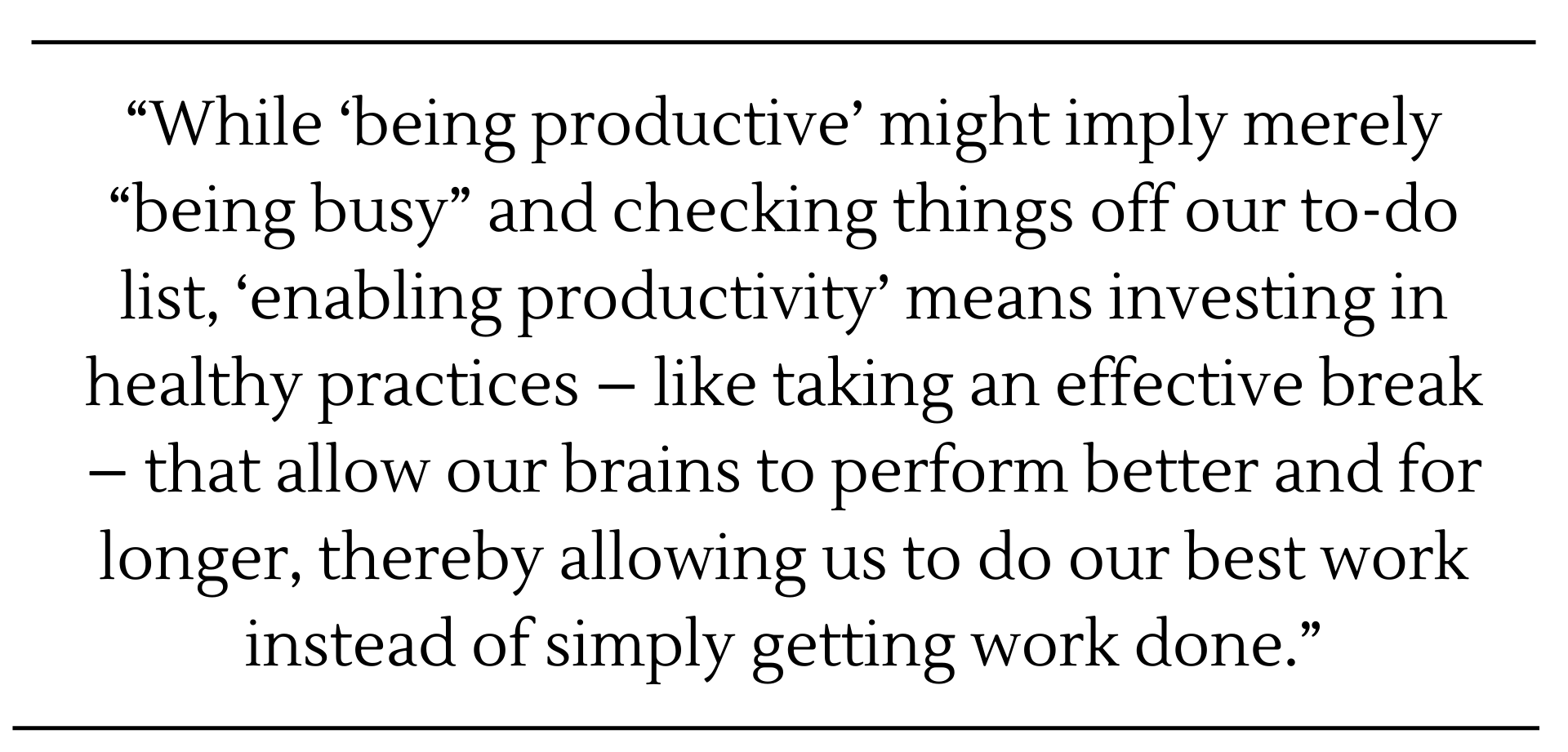
Integrating these reminders into our daily work lives represents an attempt at reorienting our minds to the idea that taking time out isn’t just about ‘being productive’; rather, it’s about ‘enabling productivity.’ While ‘being productive’ might imply merely “being busy” and checking things off our to-do list, ‘enabling productivity’ means investing in healthy practices – like taking an effective break – that allow our brains to perform better and for longer, thereby allowing us to do our best work instead of simply getting work done.
We also know that sedentary behaviours and physical inactivity are directly linked to all kinds of chronic health issues. This is true for all age groups from the younger years to the older years. We also know that sleep, nutrition, and screen time are variables in our personal wellness equation. So how do we put these all together and ensure that we’re getting enough of each of these variables? The good news is that the Canadian Society for Exercise Physiology has created a very articulate set of evidence-based infographics that allow the general public to make sense of all of the health recommendations that often get thrown at us. Fundamentally, what you need to know is that all types of movement are important: slow, moderate, and vigorous. And remember that there isn’t anything wrong with sitting down, but it’s also important to limit how long we remain sedentary while making sure that we’re not inactive for extended periods of time.
Sweat, Step, Sleep, and Sit are the so-called Four S’s of a healthy day. While the nuts and bolts of these four components differ depending on how old you are, the core recommendation is that we all need to pay attention to how long we:
1. Sweat through moderate to vigorous physical activity on the playground, during physical education, while leading extracurricular activities, or during our own workout routines.

2. Step through light physical activity during unstructured play, walking, or practicing ‘body movement breaks’ throughout the day.

3. Sleep without interruption and with consistent bedtime and wake-up times.

4. Sit and limit sedentary behaviour through the day.

Never forget – as a school community, we have the ability to encourage each other to be more physically active. Although a 7-minute walk around the block with colleagues during lunch hour may not work up a sweat, it’s nevertheless valuable in improving our overall mood. Creating opportunities for students and staff to move together during breaks is also a great way for us to sustain our collective well-being as a school community.
WHY RECESS ISN’T JUST FOR KIDS
There’s a clear connection between our well-being and being outdoors. Throughout the day, our brains get tired and our cognitive functions decrease. Some of the more obvious symptoms of cognitive fatigue include reduced performance and productivity, decreased effectiveness in completing tasks, and reduced competency. But some of the less obvious symptoms, which may manifest in students and staff, include impulsiveness and increased risk taking, irritability and negative emotions, insensitivity to interpersonal cues, and impatience. Do any of these symptoms sound like you or your students after a morning of indoor recess?

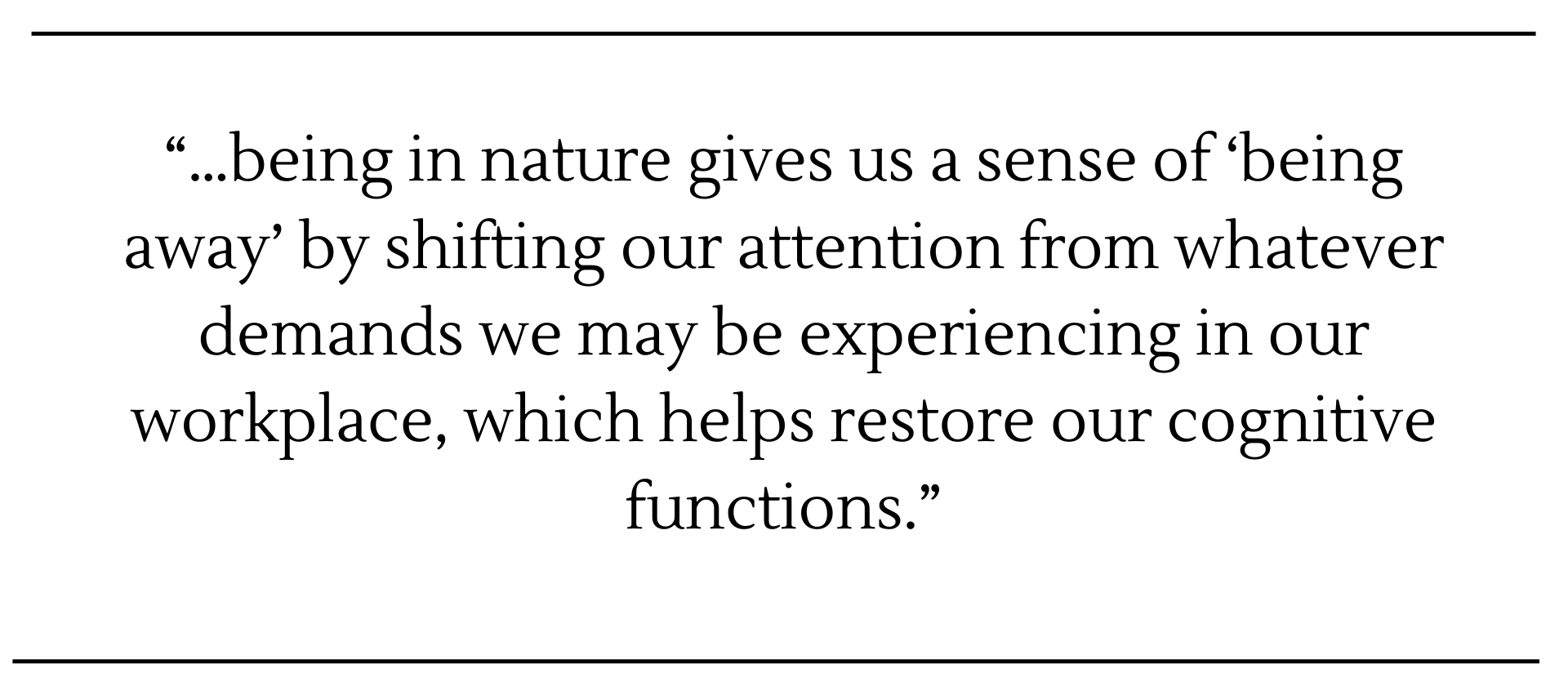
Research on cognitive restoration has found that exposure to natural environments helps aid recovery from physiological stress and mental fatigue. In fact, Kaplan’s ‘Attention Restoration Theory’ (ART) has been around for decades and is still used by researchers to this day. ART tells us that being in nature gives us a sense of ‘being away’ by shifting our attention from whatever demands we may be experiencing in our workplace, which helps restore our cognitive functions. Plus, we don’t need to go far – the schoolyard, neighbourhood park, or even our backyards provide this healthy sense of ‘being away.’ We also don’t need to spend lengthy amounts of time outdoors, either – brief contact with nature can boost our mood, with research recommending 20 minutes as the optimal amount of time to reap the benefits of spending time outdoors. Above all, even making small efforts to take deep breaths or look around at the trees can leave our brains feeling a bit more rested and a bit more restored.
WHY YOU NEED TO PUT DOWN YOUR PHONE
Addiction to technology and excessive use of online communications is directly related to psychological factors such as stress, anxiety, and depression. Although we may not personally consider ourselves technology addicts, we know that taking an effective break during the day doesn’t entail using our devices or other technology. In fact, walking around, sitting, and looking at our devices while spending time outdoors actually counteracts the benefits that nature provides. Unsurprisingly, overuse of our devices is a growing issue that’s most prevalent in people under the age of 30. That said, I’m sure we can all agree that time away from our screens is refreshing. Promoting social activities on the playground, inviting colleagues to take a ‘walking meeting’ outside instead of a typical ‘sit down meeting’ in a classroom, or even just taking a ‘time out’ from our devices are all great ways that we can role model taking effective breaks throughout the day.

THE TAKEAWAY: WE NEED TO RETHINK ‘PRODUCTIVITY’
I’m just as guilty as the next person for feeling a strong desire to be productive during my breaks by working through my to-do list. At times, I’m guilty of not taking a break at all – I hate being cold in the middle of winter and I cringe at the thought of stepping out in the rain. However, when we begin reorienting our minds towards the importance of taking effective breaks that entail (A) moving around more during the day, (B) getting outside, and (C) leaving our devices behind, we may actually begin to see some changes in our behaviour, concentration, and ability to learn new skills at work. It’s easy to tell our students that “they should go outside and run around” but, as adults and role models, we’d be better off actually taking a piece of our own advice.
LISTEN TO THE PODCAST WITH DR. SHANNON KELL ON TAKING EFFECTIVE BREAKS:
Listen to “Recess for Everyone ft. Dr. Shannon Kell” on Spreaker.
References and Further Reading
Atchley, R. A., Dtrayer, D. L. & Atchley, P. (2012). Creativity in the wild: Improving creative reasoning through immersion in natural settings. PloS one, 7(12), e51474. https://doi.org/10.1371/journal.pone.0051474
Berto, R. (2014). The role of nature in coping with psycho-physiological stress: A literature review on restorativeness. Behavioral Sciences, 4, 394-409. https://doi.org/10.3390/bs4040394
Capaldi, C. A., Passmore, H., Nisbet, E. K., Zelenski, J. M., & Dopko, R. L. (2015). Flourishing in nature: A review of the benefits of connecting with nature and its application as a wellbeing intervention. International Journal of Wellbeing, (5)4. https://doi.org/10.5502/ijw.v5i4.449
Hartig, T., Evans, G., Jamner, L. D., Davis, D. S., & Garling, T. (2003). Tracking restoration in natural and urban field settings. Journal of Environmental Psychology, 23, 109-123. https://doi.org/10.1016/S0272-4944(02)00109-3
Hunter, M. R., Gillespie, B. W., & Chen, S. Y-P. (2019). Urban nature experiences reduce stress in the context of daily life based on salivary biomarkers. Frontiers in Psychology, (2)722, 1-16. https://doi.org/10.3389/fpsyg.2019.00722
Jiang, B., Schmillen, R., & Sullivan, W. C. (2018). How to waste a break: Using portable electronic devices substantially counteracts attention enhancement effects of green spaces. Environment and Behavior,1-28. https://doi.org/10.1177/0013916518788603
Kaplan, S. (1995). The restorative benefits of nature: Toward an integrative framework. Journal of Environmental Psychology, 15, 169-182. https://doi.org/10.1016/0272-4944(95)90001-2
Lee, U., Lee, J., Ko, M., Lee, C., Kim, Y., Yang, S. & Song, J. (2014). Hooked on smartphones: An exploratory study on smartphone overuse among college students. In Proceedings of the SIGCHI Conference on Human Factors in Computing Systems (pp. 2327-2336). https://doi.org/10.1145/2556288.2557366
Pearson, D. G., & Craig, T. (2014). The great outdoors? Exploring the mental health benefits of natural environments. Frontiers in Psychology, 5(1178). https://doi.org/10.3389/fpsyg.2014.01178
- It’s NEVER unproductive or ‘time lost’ to spend our breaks getting a bit of physical activity.


IDEAS TO SUPPORT EDUCATORS : Subscribe to the EdCan e-Newsletter
Quality research, reports, and professional learning opportunities.