
Archive
-
The Missing Link
Comments Off on The Missing LinkThere’s a vintage piece of market research about how we make our choices as consumers. Stop a bunch of people in the street and ask them how they like their coffee, and the overwhelming majority will say the same thing: strong, black with a powerful aroma. Follow those same people home and watch how they make their coffee. The chances are that it’ll be weak and milky. It wasn’t until the 1990s that the coffee shops in Seattle made it cool to ask for a weak, milky coffee by calling it a latté.
This disjuncture, between our stated wishes and our actions, doesn’t just apply to coffee preferences. As an observer of “parent evenings” in the U.K., I see one parent after another speak the language of black coffee. The talk is of grades, targets, revision strategies, or homework compliance. Talk to those same parents outside the intimidating atmosphere of what many Australian parents call “the five-minute speed dating exercise” and the conversations have a very different, latté-like tone: Are their kids happy? Do they make friends easily? Are they speaking much in class? Have they experienced bullying?
Beyond the “sausage sizzle”
I’m lucky enough to work in schools around the world, and it was this universal dissatisfaction with these encounters between parents, teachers and students – often amounting to little more than a performance review of a disgruntled employee – that convinced me there had to be a better way.
In most countries, it seems that the input of parents into the culture-building of schools too often fails to rise above what Australians call the “sausage sizzle”: primarily, organizing or participating in occasional fundraising social events. This seems to be a great opportunity missed. I have long maintained that the biggest underutilized resource, that schools ignore at their peril, is the skillset within its parent body. Here you’ll find senior executives, skilled craftsmen and women, artists, community lynchpins – yet how often are those skills woven into student’s learning experiences?
In an attempt to recast the concept of parental engagement, I put together a series of workshops that would bring teachers and parents together to get beyond speed-dating and black-coffee conversations, so that deep learning conversations could take place. In the first parent workshop I led, in Canberra, as part of a national tour sponsored by the Australian Parents Council, I asked discrete groups of teachers and parents to brainstorm ways that stronger partnerships could be built. The teacher group suggested weekly newsletters and social media tools to update parents on their child’s progress – strategies to inform, not involve. The parents had other ideas: they saw themselves as potential reading coaches, classroom assistants, assessors of student presentations of learning, field trip organizers. There was no denying their desire to be in the thick of all things learning.
I’ve observed this divergence – not to say gulf – in ideas for deepening parental engagement in several countries. From hypercities like New Delhi to rural communities in England and Ireland, I’ve felt the same urgency from parents, no longer content to be supporting from the sidelines, asking instead to be active players.
How should the teaching profession respond? I’d suggest a number of ways forward.
First, we should see this call for greater parent participation as an opportunity, not a threat. I’m not being naive here. We’ve all encountered parents who seem to view schools as little more than child-minding provision, the salve for all of society’s ills, or the reason why their child missed out on that Nobel Prize. But the majority of parents well understand the pressures schools operate under, and – here’s the kicker – really want to better understand this thing we call learning. Get a bunch of parents in a room, ask them to identify the design principles of their “dream school” or show them videos of direct instruction/inquiry-based learning in action, and two things inevitably happen: they realize how complex the task of teaching 25 kids with widely differing needs actually is; and second, they become immersed in deep learning conversations.
I once spoke with an inspiring school principal who voiced a frustration commonly shared by school leaders: “The biggest obstacle we face, when trying to innovate, is parental perceptions of what ‘school’ is supposed to look like. They have a mental model from when they attended, and they find it hard to see it any other way.” I spoke to a highly successful parent in Gurgaon, in India, who appeared to confirm the problem: “I know the traditional model of an Indian school classroom is not going to survive the 21st century, but I came from a small village, and now I work for a multinational corporation – it must have worked for me!”
So, resistance to change is often greater in schools serving wealthier populations. But when I ask school principals what they’ve done to involve parents in discussions around the imperative to change, the response is almost always “not much.” And here’s the rub: if we want to redesign schools for the unique challenges that our kids will face, we can’t do it without getting parents involved in the conversations.
Does it count?
Part of those discussions, I would suggest, needs to be around what is meant by “parental involvement.” Most parents feel that the best way they can support their child’s attainment in school is through interventions associated with being a good parent: reading to them, helping with homework, attending PTA meetings, monitoring their test prep, and so forth. The confusing reality is that there is no clear evidence to show that any of these things work.
The seminal work on parental involvement, The Broken Compass: Parental Involvement With Children’s, [1] concluded that what seems to improve test scores in one context (say, parents discussing school experiences with Hispanic children) had a negative effect in another (parents of Black kids doing exactly the same thing). Authors Harris and Robinson also demolished the homework myth (helping kids do their homework usually has a negative effect on test scores) and the “Tiger Mom” illusion (there’s no evidence to show that Asian parents value education any more than other ethnic groups). The researchers did find evidence to support some parenting strategies: regularly talking about post-school aspirations appears to have a positive correlation with better attendance and attainment, and regularly reading to children before they start going to school has an obvious impact upon language development. Other than that though? Not so much.
It’s hard to overestimate how counter-intuitive the evidence appears. Having parents engaged in their child’s learning must be a good thing, right? Not if you equate success with academic scores. However, there are many other reasons for advocating greater parental involvement – and many other forms it can take.
Despite the confusing and even discouraging evidence they uncovered, even the Broken Compass authors wanted to see greater parental participation.
Speaking in an interview for Maclean’s in 2013, Keith Robinson argued that:
“Effective parental involvement might, in fact, be in reach, but we are stuck in conventional ways of thinking about parents’ roles. What we need in this country is the next step – explaining to educators and parents that parents matter on a much more intangible, abstract level. That has to do with their effectiveness in communicating to their children how essential education is to the kids’ lives.”[2]
Perhaps part of the problem was hinted at in another study. In a qualitative study of school-parent relationships in the U.K., Alma Harris and Janet Goodall concluded:
“It is clear that powerful social and economic factors still prevent many parents from fully participating in schooling. The research showed that schools rather than parents are often ‘hard to reach.’ The research also found that while parents, teachers and pupils tend to agree that parental engagement is a ‘good thing,’ they also hold very different views about the purpose of engaging parents.”[3]
The Broken Compass conclusion was that parents shouldn’t worry about volunteering or observing in a classroom, but should focus instead on “stage setting”: a theatrical term meaning to create the right environment for the actors (teachers) to perform. But I would argue that parents want to, and should, be on the stage, not passively supporting from the wings.
It may not boost test scores but it could have a number of other, vital, benefits:
- Our children will need to be learning throughout their lives – the coming economic models of employment demand it. In What’s The Point Of School?[4] Guy Claxton writes, “In a complicated, fast-changing world the intelligent path is to let go of being a Knower and embrace being a Learner… We must all, adults as much as young people, stay open and flexible, ‘expect the unexpected’ and keep learning.” Seeing their parents deeply engaged in learning conversations and helping to set the educational direction of their school, will reinforce this notion for students.
- Community building is an essential responsibility for schools, and this goes far beyond encouraging parents to organize fundraising events. It could be about putting on courses in community leadership for single mothers, or having parents work the school garden or teach cycling or swimming – as happens at Hilltop Public School in Sydney, Australia. Or it could be about advisory teachers at High Tech High Schools in San Diego having dinner with their students’ parents. Or it could be the involvement of parents and community members as panel members at XP School in Doncaster, England, when students reflect as metacognitive learners during “Passage Presentations” marking significant milestones. Or it could be the kinds of workshops that I, and others like me, facilitate to engage parents in deep conversations about the kind of learning they want to see for their kids. The focus of these encounters is perhaps less important than their symbolism. They say, “We see you, and you belong here – let’s figure this out together.” Almost all schools speak of parents as primary educators. Comparatively, few of them practice it.
- Involving parents helps to re-cast them in the eyes of their children. Seeing one’s parent as a valued member of a school community, bringing their professional expertise or physical labour to support other children’s learning, can be a formative experience. For too many children, the only time they see their parent guardian talking to teachers and principals is when they’re in trouble.
Power to the people?
There is, however, an even bigger potential gain to be had from an equal, and genuine, partnership between schools and parents, and I sincerely believe its time has come. For those of us who believe that politically-driven education “reform” is a poor substitute for educator-led system transformation, who preach the urgency to re-think schooling so that it can be future-facing, we must ruefully accept that there isn’t a secretary of state for education anywhere in the developed world who will listen and act purely upon the guidance of professional educators. As the U.K.’s former education boss, Michael Gove, observed during the divisive Brexit campaign, “I think the people of this country have had enough of experts with organisations with acronyms saying that they know what is best and getting it consistently wrong.”
But they will listen to parents, because parents vote, in large numbers. And parents really care about their children’s education. What’s more, parents are becoming more vocal, more autonomous about ensuring that their children get an education worth having. In growing numbers, they are withdrawing their children from anxiety-inducing, relentless testing regimes; more of them are even taking the difficult decision to homeschool their kids. In many countries parents are demanding more from their politicians, and from their schools. If we’re being honest, most educators would have to accept that they’ve not done a great job in getting parents onside and tapping into parent power. But that’s beginning to shift. We’re realizing that if we want to see an education revolution, we need to work more closely alongside parents.
One leading voice in education, Sir Ken Robinson, is aiming his next book squarely at the parent readership. I was lucky enough to meet with Ken recently and asked why he felt the time is now right to mobilize parents:
“The people we have to engage with are parents. When I started working on the book, I asked parents on Twitter and Facebook what their biggest concerns were about education. I had literally hundreds of responses within half an hour. It was just like lancing a boil. The narrative is changing in education, because the world around it is changing so much. And it’s been happening for a long time: the falling value of university degrees, the costs of getting them; the whole political economy of education is shifting, and parents are sensing it… There are forces for change that we’re not inventing, we’re just trying to account for them. (Parents are) the audience that we haven’t been able to get through to yet. We need to get better at getting the message across.”
We do, indeed.
There may be scant evidence to support greater parental engagement as a means to improving test scores. There is, however, a social and, I would suggest, a moral imperative for us to re-visit our perceptions of parents as partners in learning. Put bluntly, we need them much more than they need us. By thinking beyond their role as mere “stage setters,” we can not only significantly enhance the learning experiences of our students, we can tap into their enormous political influence and power to help bring about the transformation of schooling, and future-ready students.
We want to know what you think. Join the conversation @EdCanPub #EdCan!
Photo: Anne-Sophie Hudon-Bienvenue
First published in Education Canada, December 2017
[1] The Broken Compass: Parental involvement with children’s education, K. Robinson and A. Harris (Harvard University Press, 2014).
[2] www.macleans.ca/general/helping-with-homework-isnt-important-but-talking-about-kids-post-high-school-plans-is/
[3] Alma Harris and Janet Goodall, “Do Parents Know They Matter? Engaging all parents in learning,” Educational Research 50, no. 3 (2008).
[4] G. Claxton, What’s The Point Of School? (OneWorld Publications, 2008).
-
The Value of Parent Councils and Home and School Associations
Comments Off on The Value of Parent Councils and Home and School AssociationsHome and school associations or parent councils form an important part of the school team. These associations/councils are composed of an Executive and parents and/or community members who volunteer within the school. These groups support programs such as breakfast and hot lunch programs, fundraisers, construction of playgrounds, libraries and physical education activities and the procurement of technology for classrooms and offer parental educational sessions.
Research has proven that children whose parents are active in the school environment are better achievers. Parents are a child’s first teacher; they know their child better than anyone. Partnering with the school gives parents and educators a better insight into changes in the education system, and allows parents to actively support these changes as well as discuss their concerns and the effect of these changes on their children. The teamwork of the students, parents and educators leads to the success of program changes in education.
Being a member of a provincial organization brings parents together with Department of Education committees and offers the opportunity to consult on issues and attend educational workshops, which would not be available to individual parents. Parents are a vital asset to success in education and need to be seen and respected as collaborators.
At the national level, the Canadian Home and School Federation (CHSF), parent volunteers meet with educational associates to discuss issues that are shared across the country. Parents and educators alike are examining best practices in the fields of mental health, physical health, stress in both our educators and children, use of technology, and inclusion – to mention a few topics. CHSF is a member of the Education Coalition (Copyright), continuing to support the current copyright legislation. The opportunity to speak with Senators and Members of Parliament on the bills coming before them for consideration and the ability to bring their messages back to provincial parents and to share parental concerns is invaluable.
Home and School Associations and Parent Councils support excellence in public education and advocate for the social well-being of children and youth.
We want to know what you think. Join the conversation @EdCanPub #EdCan!
Photo: Anne-Sophie Hudon-Bienvenue
First published in Education Canada, December 2017
-
This Is Not a Simulation!
Comments Off on This Is Not a Simulation!An engaging buzz begins to move throughout the building as the narrow hallways fill with people. Familiar music played over the public address system signals a change of energy and the smell of homemade grilled cheese sandwiches and popcorn begins to waft through the air. Strategically placed members of the local constabulary ensure a sense of order and safety, while elected officials seize the opportunity to connect with their constituents. The local bank opens for the day as merchants make final preparations before opening their doors to eagerly waiting customers.
A scene from the local shopping mall? You might think so. In this case, however, as surprising as it might sound, it’s Market Day at Aspen Heights Elementary School in Red Deer, Alberta. It’s the day of the week when student-run enterprises, not-for-profits and services open their doors to the public. And it’s the day when members of the community – students, staff, parents and sponsors – come to support and participate in Canada’s only MicroSociety school.
Nearly ten years ago, two Aspen Heights teachers, Milt Williams and Allan Baile, were concerned about the level of apathy that seemed to be building among students, as well as a sense that more could be done to engage the parent community. After researching programs that might help address these challenges, they landed on MicroSociety, a U.S-based not-for-profit founded on the belief that, if we want to educate today’s children to be able to run the world, we have to give them a world to run. And that’s exactly what the Aspen Heights MicroSociety does.
A MicroSociety is a living, breathing, fully-functioning community, facilitated by adults but organized and run by young people. An annually-elected government allows students to create the laws and ordinances that will govern the community, while the Royal Aspen Mounted Police have the authority to issue tickets and fines and, in more serious cases, move grievances through an internal court system.
At Aspen Heights, students are free to develop their own ideas for new initiatives, learning how to create the business models, not-for-profits and social services to bring those ideas to life. In the context of their enterprises, they develop new products, hire staff, learn to maintain financial records, pay taxes and even buy and sell stocks.
At the start of each year, all students are required to attend MicroUniversity, where they learn the business skills that they will need to carry on their work throughout the year. Business and service owners hold job fairs, accept resumes and conduct interviews with prospective workers.
For students, half of the six hours per week dedicated to MicroSociety is spent developing products, meeting with their employees and taking care of any enterprise-related issues. The other half is spent participating in Market Day, either as shoppers or business operators.
A look down the main corridor of Aspen Heights reveals that these students have considered much of what is needed to ensure that their community is thriving. The bank converts Canadian dollars to Stingers, the official currency of Aspen Heights. The smoothie bar is always busy, as is the Penguin Ave. Café. The Ace Theatre offers students a chance to relax, enjoy some popcorn and take in an episode of their favourite TV program. There’s a wellness centre, a bottle recycling depot and Helping Hands – a charitable outreach program. On the sustainability side, some students spend their time learning about hydroponic gardening, while others raise the urban chickens that provide fresh eggs for the school’s breakfast program.
Some may look at what is happening at Aspen Heights as an impressive and engaging simulation, while others may wonder how it’s possible to find time in a busy schedule to make this work.
For the students, staff and parents at Aspen Heights, it is clear that this is not preparation for some life beyond graduation. This is life – very real life! It’s what draws them to this place every morning and it’s what captures their imagination when away from school. Business owners think about how to improve their products and services. Employees consider how they might strengthen their skillset.
And teachers look at what is happening in the MicroSociety to help inform their curriculum. Amanda Williams, a Grade 2 teacher at Aspen Heights, appreciates how the model connects the entire school, regardless of age, grade and ability. But, like her colleagues, she also watches for opportunities to ensure that her classroom program resonates with what students are doing in the MicroSociety community. “You work with it, you plan with it, you get involved,” says Williams as she warns against seeing MicroSociety as an extra-curricular initiative. Instead, it becomes a powerful context for learning both inside and outside the classroom.
Current coordinator Allan Baille passionately underlines the point that this is not a simulation. For Baille, MicroSociety begins with a very engaging invitation and challenge: “Let’s bring the community to us and not have these walls be the limit of the education of our students.” And that invitation has become a game changer for Aspen Heights. Students who, in the past, may have been apathetic about coming to school are voting with their feet, leading to some of the highest attendance numbers in the entire division. Parents, once reluctant to come into the school, are now seeing Aspen Heights as part of their identity and their life.
A parent satisfaction rating of 97 percent speaks volumes about how MicroSociety has transformed this community. And the willingness of outside businesses and organizations to support what is happening at the school brings the idea of partnership to a whole new level.
There is no doubt that students graduating from Aspen Heights after six years of life in this MicroSociety will have an enviable array of business skills and competencies. They will have a keen sense of what it means to live in the world as creative thinkers, risk takers and problem solvers. They will have the capacity to communicate their ideas more effectively and with greater confidence. But they will also have experienced the learning that begins when you get out from behind your desk and get involved in something that really matters.
We want to know what you think. Join the conversation @EdCanPub #EdCan!
Photo: EdCan Network
First published in Education Canada, December 2017
-
Aspen Heights Microsociety
Comments Off on Aspen Heights MicrosocietyStudent Voice and Choice Shapes School Culture
Aspen Heights Elementary School (Red Deer Public Schools)
Red Deer, Alta.Imagine a school where children experience math by having jobs, paying taxes and running businesses that sell everything from smoothies to clothing to dreamcatchers; a place where students study logic and law by taking their peers to court and fining them in the school’s currency; a place where kids come to understand politics by drawing up their own constitution, and drafting their own bills and laws; a place where these laws are enforced by the Royal Aspen Micro Police (RAMP). Imagine a school where citizenship is not just a character pillar that is talked about, but a continuous experience in playing with the building blocks of modern society. The Aspen Heights MicroSociety is just such a place. MicroSociety is embedded into the daily program of this K-5 school and is learning-by-doing at its finest. It’s a thriving, modern-day, mini-country – complete with an elected government, entrepreneurial hub, non-profit organizations, consumer marketplace, courts, police, university/college and community gathering spaces – created and managed by students and facilitated by teachers and community mentors. By making informed decisions in a safe and caring environment, students gain insight into what to expect in the real world of business and finance while honing their financial literacy, service learning, environmental awareness, community involvement, cultural appreciation and their health and wellness.
Read the article about the Aspen Heights MicroSociety
-
First Indigenous Chair Elected in the Canadian Education Association’s 126-Year History
Comments Off on First Indigenous Chair Elected in the Canadian Education Association’s 126-Year HistoryTORONTO – November 3, 2017 – As the leading independent national voice in Canadian K-12 education, the CEA/EdCan Network is pleased to announce that Darren Googoo has been elected Chair of the Board of Directors. Darren has been the Director of Education for Membertou – a Mi’kmaw First Nation community – for 19 years. He also serves as Chair of the Council on Mi’kmaw Education, and Chair of the Cape Breton Victoria Regional School Board.

The 2017-2018 CEA/EdCan Network Board of Directors (from left to right) Dr. Alexander (Sandy McDonald, Yves Saint-Maurice, Dean Shareski, Roger Paul, Anne MacPhee, Darren Googoo, Rob Adley and Peter L. McCreath
The following leaders from the K-12, post-secondary, and corporate sectors – who share a commitment to supporting the thousands of courageous educators working tirelessly to ensure that all students discover their place, purpose and path – were also elected to serve on the CEA/EdCan Network’s 2017-2018 Board of Directors:
2017-2018 CEA/EdCan Network Board of Directors Darren Googoo, Chair
Director of Education, Membertou First Nation, Membertou, NSYves Saint-Maurice, Vice-Chair
Lecturer, Université Laval
Président sortant, Association canadienne d’éducation de langue française (ACELF), Quebec City, QCAnne MacPhee, Treasurer, Toronto, ON Roger Paul, Past Chair
Directeur général, Fédération nationale des conseils francophones, Ottawa, ONRob Adley
Vice President, Pre-Sales & Solutions Architecture, HP Enterprise Group, Hewlett-Packard (Canada) Co., Mississauga, ONDenise Andre
Director of Education, Ottawa Catholic District School Board, Ottawa, ONDr. Michele Jacobsen
Professor and Associate Dean, Graduate Programs in Education Werklund School of Education, University of Calgary, Calgary, ABChris Kennedy
Superintendent, West Vancouver School District, West Vancouver, BCDr. Alexander (Sandy) MacDonald
Vice-president and Chief Learning Officer, Holland College, Charlottetown, PEIPeter L. McCreath
Executive Chairman and Managing Director, PLMC, Hubbards, NSDean Shareski
Community Manager, Discovery Education Canada, Moose Jaw, SKThe EdCan Network Advisory Council provides a forum for expression of countrywide issues and trends in education and advises the Board on the direction and priorities for the Network. Council members provide visibility and act as advocates for the EdCan Network within their respective professional communities. They are drawn from all regions of the country and serve a three-year term, which may be renewable for a second three-year term.

The following individuals will serve on the CEA/EdCan Network’s 2017-2018 Advisory Council:
2017-2018 CEA/EdCan Network Advisory Council
Rob Adley*
Vice President, Pre-Sales and Solutions Architecture, HP Enterprise Group, Hewlett-Packard (Canada) Co., Mississauga, ON
Denise Andre*
Director of Education, Ottawa Catholic District School Board, Ottawa, ON
Michel Bernard
Secrétaire général, Association des directions générales des commissions scolaires (ADIGECS), Sherbrooke, QC
Lyne Chantal Boudreau
Professeure en administration de l’éducation et chercheure, Université de Moncton (campus de Shippagan) Shippigan, NB
Dr. Monique Brodeur
Doyenne, Faculté des sciences de l’éducation, Université du Québec à Montréal, Montréal, QC
Duane Brothers
Superintendent of Schools, Louis Riel School Division, Winnipeg, MB
Dr. Steve Cardwell
Associate Vice President – Academic, Kwantlen Polytechnic University, Delta, BC
Michael Chechile
Director General, Lester B Pearson School Board, Dorval, QC
Janice Ciavaglia
Acting Director of Education, Assembly of First Nations, Ottawa, ON
Curtis Clarke
Deputy Minister, Alberta Education, Edmonton, AB
Paul Cuthbert
Education Leadership Consultant, Cuthbert Consulting, Gimli, MB
Michael Furdyk
Director of Technology, Taking IT Global, Toronto, ON
Darren Googoo*, Chair
Director of Education, Membertou First Nation, Membertou, NS
Cassandra Hallett DaSilva
Secretary General, Canadian Teachers’ Federation, Ottawa, ON
Dr. Michele Jacobsen*
Associate Professor, Associate Dean, Faculty of Education, University of Calgary, Calgary, AB
Kevin Kaardal
Superintendent of Schools/CEO, Central Okanagan Public Schools (School District 23), Kelowna, BC
Dr. Heather Kanuka
Full Professor, Faculty of Education, University of Alberta, Edmonton, AB
Chris Kennedy*
Superintendent, West Vancouver School District, West Vancouver, BC
Marie-France Kenny
Owner/Consultant, MFK Solutions and Management Consulting, Regina, SK
Normand Lessard
Directeur général, Commission scolaire Beauce-Etchemin (CSBE), Saint-Georges, QC
Anne MacPhee*, Treasurer, Toronto, ON
Dr. Alexander Sandy MacDonald*
Vice-president and Chief Learning Officer, Holland College, Charlottetown, PEI
Peter L. McCreath*
Executive Chairman and Managing Director, PLMC, Hubbards, NS
Catherine McCullough
President, CMC Leadership, Orillia, ON
Darren McKee
Executive Director, Saskatchewan School Boards Association, Regina, SK
Sandra McKenzie
Deputy Minister, Nova Scotia Department of Education and Early Childhood Development, Halifax, NS
John McLaughlin
Deputy Minister, New Brunswick Department of Education and Early Childhood Development, Fredericton, NB
Donna Miller Fry
Assistant Director of Education (Programs/Western Region), Newfoundland and Labrador English School District, Corner Brook, Newfoundland and Labrador
Brian O’Leary
Superintendent, Seven Oaks School Division, Winnipeg, MB
Roger Paul*, Past Chair
Directeur général, Fédération nationale des conseils scolaires francophones, Ottawa, ON
Darrin G. Pike
Administrative Officer, Programs and Services, Newfoundland and Labrador Teachers’ Association, St. John’s, NL
Gérald Richard
Sous-ministre, Ministère de l’éducation et développement de la petite enfance, Fredericton, NB
Cynthia Richards
President, Canadian Home and School Federation, Chipman, NB
Bruce Rodrigues
Deputy Minister, Ontario Ministry of Education, Toronto, ON
Christian Rousseau
Sous-ministre adjoint par intérim, Relations extérieures et services aux anglophones et aux autochtones
Ministère de l’Éducation et de l’Enseignement supérieur du Québec, Québec, QC
Bernard Roy
Retired Directeur de l’éducation, Conseil des écoles catholiques du Centre-Est, Ottawa, ON
Yves Saint-Maurice*, Vice-Chair
Lecturer, Université Laval
Président sortant, Association canadienne d’éducation de langue française (ACELF), Quebec City, QC
Dean Shareski
Community Manager, Discovery Education Canada, Moose Jaw, SK
Dr. Kate Tilleczek
Professor, Faculty of Education, University of Prince Edward Island, Charlottetown, PEI
Dianne Turner
Official Trustee, Vancouver School Board, Vancouver, BC
Susan Willis
Deputy Minister, PEI Department of Education, Early Learning and Culture, Charlottetown, PEI
James Wilson
Deputy Minister, Manitoba Education and Advanced Learning, Winnipeg, MB
Rob Wood
Deputy Minister, Yukon Department of Education, Whitehorse, YT*CEA/EdCan Network Director
For more information about these Advisory Council Members, please visit: www.edcan.ca/council
Pour en savoir davantage sur les membres de notre Conseil consultatif, veuillez visiter le site : www.edcan.ca/council
About the EdCan Network

Brought to you by the Canadian Education Association, the EdCan Network is the independent national organization with over 75,000 members working tirelessly to ensure that all students discover their place, purpose and path.
To learn more about the work of EdCan Network, please visit www.edcan.ca and follow our Twitter feed at @EdCanNet
Contact: Max Cooke, CEA Director of Communications (bilingual)
Tel: 416-427-6454 E-mail: mcooke@edcan.ca Twitter: @max_cooke
-
Healthy Principals, Healthy Schools
Comments Off on Healthy Principals, Healthy SchoolsWhen it comes to supporting well-being in the public education sphere, principals tend to be an afterthought. Some stakeholders subscribe to the notion that principals should expect to experience some degree of stress and work complexity, and that they are rewarded for the increased responsibility and risk with higher salaries, some additional benefits, and a greater sense of social prestige. Many would also argue that, after students, teachers’ health and well-being is second most important overall, as they are widely considered the front-line workers in education. Given that there are more teachers than principals, this argument could also be based on volume. As a result, it appears that principals have become less of a priority. I would argue, however, that it is equally significant and timely to consider school leaders’ well-being.

Although there may be fewer principals in the public education system than teachers, this does not necessarily mean they have less influence on student success. As education scholar Ken Leithwood has argued for years, “There is no documented case of a school successfully turning around its pupil achievement trajectory in the absence of talented leadership.”1 Principals who are struggling with burnout or their own personal well-being are less able to support teaching and learning in their schools.
In this context, “well-being” refers not only to an absence of any kind of distress associated with our cognitive functions, emotional state, social interactions, or physical health, but also to having a feeling of joy, contentment, fulfillment, happiness, and accomplishment.2 School principals have great pride and joy in their work, even when they simultaneously experience symptoms of burnout. For example, in a study I led in 2013, 78 percent of surveyed Ontario principals indicated that they were satisfied with their job most of the time, 91 percent of principals believed their school was a good place to work, and 92 percent of principals felt their job makes a meaningful difference in the school community.3
Although most Ontario principals are satisfied with their job, this does not mean their work is easy. Despite school leaders’ positive outlook, they work long hours: Principals in Ontario work, on average, 59 hours per week, and in some other jurisdictions they work more. Principals are also completing a higher number of regular tasks associated with their position. For example, they have always been involved with discipline issues, but now these issues are becoming more complex, involving new challenges such as cyberbullying. On top of increasing traditional daily tasks, principals now have additional roles connected to student well-being.
Moreover, advances in information and communication technology mean principals work in faster paced environments with higher expectations and demands – a process known as “work intensification.” As one principal described it: “There is no job so draining.” Even more concerning, 21 percent of the surveyed principals said that, if they could relive their career, they would have remained teachers or pursued careers in another sector.
Principals are feeling these changes in their work. As one study participant explained:
It is a role that never gets smaller. Nothing ever comes off the plate. It is just more that gets added to the plate. The bottom line is the plate is only so big. You can only get so much on it.
One significant symptom of principals’ work intensification is burnout. One principal described the impact of these work demands on their physical and mental well-being:
I will ask for a move, just because I’m finding that I’m tired, personally. I mean I have high expectations for myself and what I deem [is] acceptable for me – and I don’t feel that I’m acting on all 150 cylinders. That’s, to me, a weakness… I just feel that I’m just not as effective as I was two or three years ago. It’s constant.
Specifically, our research determined that the more time principals spend on student discipline/attendance, working with parents, and district school board office committees, the more likely the work will put them in emotionally draining situations. Principals only spend, on average, five hours per week on curriculum and instruction – a number that 82 percent of the principals from the 2013 survey would like to see increased.
There are several ways principals manage their workload. Some are individual coping strategies similar to those recommended for anyone working in a stressful environment—spending time with loved ones, being physically active, and cultivating hobbies outside the workplace, for example. Based on recent studies, however, there are some strategies and practices specific to the role of the principal that school leaders can use to promote and manage their own well-being.
Cultivating informal peer networks
Some principals find it useful to connect with other school leaders to share, troubleshoot, and problem-solve in a nonthreatening context. Principals can also associate with other work colleagues, especially those in similar roles. However, only 18 percent of principals in the 2013 study indicated that they have high or very high levels of interaction with other principals. One principal told us:
Being a principal can be a lonely job, but it is only lonely if you let it be. You don’t have to make all the decisions on your own. There are 27 other principals out there that I can call on the phone, and others have called me as well that have their own strengths and weaknesses and specialties and that sort of thing. So, you can call them and say, ‘I don’t know what to do with this particular kind of situation, what do you think?’
Principals can rely on their leader colleagues for guidance and support, and prevent isolation by reaching out to their informal network of peers. These informal networks often begin with encounters at formal meetings/events/gatherings – such as district meetings and professional learning opportunities from associations and higher education institutions – but they continue on an informal basis, usually with the aid of communication technology such as phone calls, texting, Twitter, LinkedIn events, and Facebook chat.
Place boundaries around email communication
Principals described the impact email and social media as a “double-edged sword.”4 On the one hand, these tools allow principals to reach multiple stakeholders simultaneously, complete more work tasks than before, and create an accountability trail in ways not previously possible. On the other hand, they increase principals’ volume of communication, extend their workdays and workload, increase their pace of work, and blur the boundaries between work and home.
Principals can better manage email overload by setting personal boundaries around its use to delineate between their home and work lives. By choosing to only check email at certain times, or removing email access from their personal devices, principals can ensure they have time to “turn off.”
One participant described their strategy in detail:
A strategy was to not take my laptop because that’s where I get my email now. I would not take it home on weekends… And I’d show up Monday morning extra-early: 7:00 a.m. [to catch up on email]. That worked for me. I’m an early morning person anyway.
Another told us:
I don’t have email on my phone. I took it off five years ago. And it was one of the best strategies I used.
Buffering staff from initiatives
Ministries of Education and school boards regularly expect educators to implement multiple initiatives. For many teachers and principals, these initiatives can translate into additional pressure, stress, and workload.5 Principals can engage in strategies to mediate the cumulative impact on school staff.
At first, it might appear that this buffering, while protecting teachers’ well-being, is additional work for principals that would add to their job stress. However, according to the principals in the 2013 study, as a result of buffering principals deal with fewer discipline issues and more satisfied parents, are better equipped to meet students’ needs, and have more time to work toward their schools’ annual goals – all of which contribute to a more manageable workload and decrease burnout.
How principals use these strategies will depend on their personal needs and preferences. The key to success is engaging in the selected strategies intentionally and over a prolonged period, and being mindful of when the boundary between work and home begins to blur.
I do not want to solely focus on what principals themselves can do, however. Some aspects of principals’ work context are the result of policies, mandated practices or social realities that are outside of their control, and therefore it is unreasonable to think that individual school leaders merely need to be more resilient or learn different kinds of coping strategies. Principals alone cannot mitigate all of the factors that influence their well-being. They need support from school boards, professional associations, and/or provincial or territorial governments as well.
System supports
Organizations and institutions can actively support principals’ well-being. System support can come from several different sources: district school boards, professional associations, higher education institutions, and in Canada, provincial and territorial governments.
For example, ministries and departments of education can consider the current organizational structure of public schooling. School operations are growing increasingly complex as a result of increased accountability, advances in technology, changing approaches to leadership and schooling, and advances in how we understand student learning and teaching – to name a few. And yet, little has changed for principals in their work structure. If governing bodies want school leaders to be the agents of change who lead improvements in student outcomes, then consideration must be given to their role. There has always been a fragile balance in the principal role between being a manager/administrator and being the lead learner in schools. Lately, the scales have tipped toward the paperwork and policy aspects at the expense of facetime and instructional leadership. One way to reduce principals’ stress and avoid burnout is to create a dedicated school building management position. Implementing this structural change and creating this new position would distribute some of the managerial and administrative aspects of principals’ work to this new role, allowing principals to dedicate more time and energy to being lead learners in their schools.
Professional associations can also play an integral part in supporting principals. As mentioned earlier, the pool of active principals is small compared to other groups of educators in the public sector and often the voice of school leaders can be overlooked. Moreover, the general public has perceptions and assumptions about principals and their work – but many of these are unfortunately inaccurate. For there to be any level of system change, there first needs to be public and system awareness. It is essential for professional associations to intentionally devise public awareness campaigns targeting school leaders’ well-being concerns, because public awareness is one way to generate the necessary public and political will to positively allocate resources for principals. Another way professional associations can support principals’ well-being is to advocate on their behalf for access to services that might not be found within the education system – such as different forms of professional counselling and support groups, and other services within the health field such as suitable coverage for massage therapy and physiotherapy, for example.
Professional learning opportunities
Unsustainable work-life practices can lead to role overload and burnout. For this reason, district school boards need to target professional learning in two ways:
- Profesional learning that focuses on job-embedded skills and knowledge that allow school functioning to improve, thus mitigating the factors that contribute to burnout and emotional exhaustion. For example, effective leadership styles and management practices can improve school climate, reducing the number of emotionally draining incidents.
- Professional learning opportunities regarding well-being and work–life balance, with a focus on the various strategies principals can use to cope with the changing nature of their work. In these forms of professional learning, principals learn how to recognize various forms of stress (emotional, physical, cognitive, and social) and how to employ strategies to cope with these stresses, such as progressive muscle relaxation, exercise, meditation, and positive communication strategies when saying “no.”
If we want healthy, positively productive schools, then we need to consider the well-being of all those within the school environment. This means caring for the well-being of school principals as well. Most principals are resilient and resourceful and many engage in positive coping strategies that help them reduce burnout and succeed at their work, but their success also depends on support from the organizations in which they work. Principals are a part of a larger public system where existing structures and processes influence them on a daily basis, but are beyond their control. It is at this larger scale that provincial and territorial governments, district school boards and professional associations need to consider the role they must play in supporting principals’ well-being.
Illustration: Dave Donald
First published in Education Canada, September 2017
1 Kenneth Leithwood et al., “School Leaders’ Influences on Student Learning: The four paths,” in The Principles of Educational Leadership and Management, eds. T. Bush, L. Bell, and D. Middlewood (London: Sage, 2012), p. 1.
2 Nic Marks and Heten Shah, “A Well-Being Manifesto for a Flourishing Society,” Journal of Public Mental Health 4 no. 2 (2004): 9–15.
3 Katina Pollock, Fei Wang, and Cameron Hauseman, The Changing Nature of Principals’ Work: Final report (October 2014): 1–42. www.edu.uwo.ca/faculty-profiles/docs/other/pollock/OPC-Principals-Work-Report.pdf
4 Katina Pollock and D. Cameron Hauseman, “The Use of Email and Principals’ Work: A double-edged sword,” Leadership and Policy in Schools (2017).
5 Kenneth Leithwood and Vera N. Azah, Elementary Principals’ and Vice-Principals’ Workload Studies: Final report (2014): 1–100. www.edu.gov.on.ca/eng/policyfunding/memos/nov2014/FullElementaryReportOctober7_EN.pdf
-
“Schools aren’t mental health treatment facilities – Educators need more support”
Comments Off on “Schools aren’t mental health treatment facilities – Educators need more support”
Toronto – September 19, 2017 – Education leaders from across Canada will gather in Toronto for the Educator Well-Being: A Key to Student Success symposium from October 5-6 to discuss how they can create a climate that supports well-being for all.
The EdCan Network is concerned that the steep hike in reported cases of student anxiety[1] and suicidal ideation[2] is creating stress and emotional exhaustion among teachers.[3] Schools aren’t mental health treatment facilities – principals and teachers cannot be expected to shoulder the entire burden.They can, however, be an important part of the solution.[4]
Registration spaces are still open. This is an essential opportunity for School Board Mental Health Leads and Administrators, Guidance Counsellors, Principals and Community Health and Social Workers to shift the conversation from ‘fixing symptoms’ to addressing how we can proactively support our educators to develop wellness within entire school community cultures.
“In today’s world, classrooms don’t turn off at the 3:00 p.m. bell,” says Darren Googoo, Incoming Chair of the EdCan Network. “Education leaders have roles to play in providing safe zones for teachers and principals to navigate their own journey to well-being and continue a long career.”
Through this symposium’s hands-on group discussions and case study presentations, leading experts will explore what it means to embed well-being in diverse school and community contexts. Participants will return with new ideas for building resiliency in themselves, their colleagues and their students.
For more information about the Educator Well-Being: A Key to Student Success symposium, please visit: www.edcan.ca/well-being and follow #EdCan on Twitter @EdCanNet.
With over 125 years of experience as the leading independent national voice in Canadian K-12 education, the Canadian Education Association is proud to launch the EdCan Network to support the thousands of courageous educators working tirelessly to ensure that all students discover their place, purpose and path.
[1] R.C. Kessler, P. Berglund, O. Demler et al, “Lifetime Prevalence and Age-of-Onset Distributions of DSM-IV Disorders in the National Comorbidity Survey Replication,” Archives of General Psychiatry 62, no. 6 (2005): 593-602. See also: Health Behaviours in School Aged Children, Ontario 2014 data, and The Mental Health and Well-Being of Ontario Students, Centre for Addiction and Mental Health, 2016.
[2] Findlay, L.,“Health Reports: Depression and suicidal ideation among Canadians aged 15 to 24,” Statistics Canada (2017).
[3] D.M. Rothi, G. Leavey, and R. Best, “On the Front-Line: Teachers as active observers of pupils’ mental health,” Teaching and Teacher Education 24 (2008).
[4] Kenneth Leithwood et al., “School Leaders’ Influences on Student Learning: The four paths,” in The Principles of Educational Leadership and Management, eds. T. Bush, L. Bell, and D. Middlewood (London: Sage, 2012), p.1.
– 30 –
For more information:
Max Cooke
EdCan Network Director of Communications
416-427-6454 mcooke@edcan.ca @max_cooke
-
The E-Principal
Comments Off on The E-PrincipalCANADA’S SCHOOL LEADERS report a seemingly paradoxical work life: while the career path of the principal is extremely rewarding, it is characterized by unsustainable hours of work, high levels of psychological demands and role overload. These conclusions are underscored in the 2017 report A National Study of the Impact of Electronic Communication on Canadian School Leaders, a study led by André Lanctôt and Linda Duxbury, both of Carleton University. This report was the first instalment of a two-phase collaborative effort sponsored by the Canadian Association of Principals (CAP) and undertaken by the Alberta Teachers’ Association (ATA). 1
This article examines the impact of electronic communications on the work of school leaders, drawing on the full report2 with the anticipation that readers will look to the published report for further context.
Email: A double-edged sword?
Why a study on email use? Simply put, electronic communication, such as email, has become the pervasive form of communication at work. One study of employed Internet users found that most employees feel email is very important for doing their job — more important than other forms of communication used in the workplace such as landline telephones, cellphones and social media sites.3
Some see email as a work tool that can help them balance work and family, while others see it as a taskmaster that never sleeps. But which is true? What is the link between the volume of emails a person processes per day and employee and organizational well-being? What is the link between the types of emails a person sends and receives and employee and organizational well-being? How can employees and organizations manage electronic communications to maximize the benefits of the technology while minimizing the drawbacks?
The study designed by Lanctôt and Duxbury aimed to improve our understanding of how principals evaluate and process work-related email, linking this email use to outcomes of interest to their school system or jurisdiction. Based on responses from 1,150 members of the CAP, the research team identified a complex relationship between email use and the growing role overload experienced by school leaders. Some of the highlights of the study:
- On average, school leaders send/receive 112 work-related emails each day, including 27 work-related emails from home.
- In their average 61-hour work week, a typical Canadian school leader spends 17 hours processing email, including 5.8 hours at home.
- The hours spent in email per week is a stronger predictor of email overload than the number of messages sent and received per week. 4
- Principals who spend 20 hours or more per week processing emails will likely experience high levels of email overload.
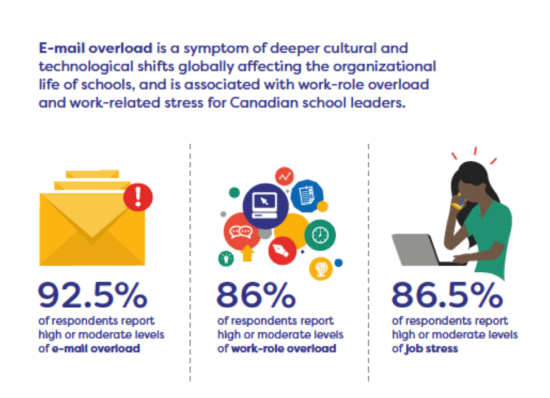
- 5 per cent of respondents report high or moderate levels of email overload.
- 86 per cent of respondents report high or moderate levels of work-role overload.
- 5 percent of respondents report high or moderate levels of job stress.
Citing a growing body of research from across the globe, the study concludes that email overload is a symptom of deeper cultural and technological shifts globally affecting the organizational life of schools, and is associated with work-role overload and work-related stress for Canadian school leaders.
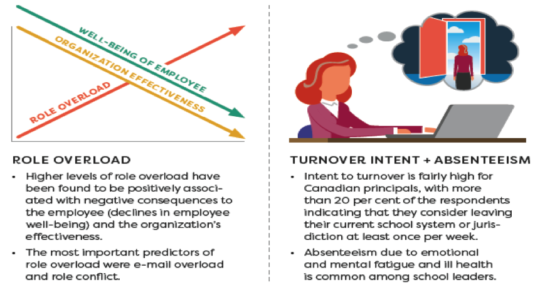
Email overload has real implications for school leaders, affecting their well-being and their ability to do their jobs (see Figure 1 and Figure 2).
Figure 1 Figure 2
(source: graphics from the study’s summary document, You’ve Got Mail.)
School and system cultures are nested within the broader social milieu shaping the ecology of email use; consequently, change will require strong leadership and commitment from all levels of the organization. Managing expectations and norms at the individual and organizational levels is key, especially if one considers the following key indicators of work intensification:
- Nearly 90 percent of the sample reported high or moderate stress scores. Only 11 percent reported low levels of perceived stress.
- More than half of the CAP respondents consider leaving their organization at least once per month, and more than one in five consider leaving at least weekly.
Managing mail
The study uncovers a strong link between time spent on email and email overload. While the number of hours (17) per week that principals spend processing email is of interest, the real story here is that email overload contributes to outcomes associated with poor organizational health, since it is strongly associated with role overload and job stress.
Given these findings, the researchers suggest that school boards help principals manage the overload precipitated by email and, perhaps more importantly, address the organizational culture that tethers school leaders to tasks that do not enhance their capacity to do their work. They identify strategies for triaging electronic communications. These include both organizational and personal changes, ranging from establishing clear expectations and policies surrounding email use to individuals setting more parameters around the ways they monitor, answer and organize their emails.
The study’s recommendations reinforce a growing body of research on the work life of school leaders. For example, The Future of the Principalship in Canada: A National Study 5 found that the ubiquity of electronic communication tools was diminishing the quality of work life for principals in three key areas: the growing central management and surveillance of school operations, increasing expectations to be available 24/7, and the sometimes pernicious use of social media among students (and in some cases parents) that contributed to cyberbullying and the deterioration of school climates. Policy pronouncements about the role of principals as instructional leaders are problematic given that, in the same study, school leaders struggled to find six hours in a 56-hour workweek to spend time in classrooms or in contact with teachers. The study also found that 90 percent of Canada’s school leaders report significant levels of work-related stress.
A growing body of international research illustrates how email is indeed a double-edged sword. Email overload is symptomatic of broader international trends related to the ubiquity of electronic communication tools in the workplace. The proliferation of information and communication technologies, if ineffectively managed or regulated, can affect the health of workers across all sectors. For example, in the U.K., the amount of time people spend typing, texting, talking or gaming through smartphones, tablets and desktops is now more than time spent sleeping. Human capital experts argue that this constant supply of technology consumption can lead to decision paralysis due to increasing stress, and lower productivity as people manage a broader range of data and communications and are overwhelmed by feelings of never being able to disconnect from their work.
AS WE CONTINUE TO monitor and reflect on the work life of school leaders in increasingly digitally saturated environments, future research efforts ought to consider the complex ecologies of schools nested in communities where technology continues to grow in its influence. We must remain mindful, as Marshall McLuhan reminds us, that we shape our tools and then our tools shape us. Therefore, future research ought to be grounded by the recognition that optimal conditions of practice for school leaders are not only critical for their work-life balance, but ultimately extend benefits to student success and to the school-community that school leaders serve.
Resources
The full report, A National Study of the Impact of Electronic Communication on Canadian School Leaders, is available on the Alberta Teachers’ Association (ATA) website at www.teachers.ab.ca. Click on Publications> Education Research. Ordering information for print copies is available under Publications> Other Publications.
The ATA has undertaken a number of other research studies examining the changing conditions of practice for Alberta teachers and school leaders. The following studies can also be accessed at www.teachers.ab.ca. Click on Publications > Education Research.
- The Changing Nature of Teachers’ Work – Teaching and Learning Conditions in Alberta: A Global Perspective (2015)
- A Week in the Life of Alberta School Leaders (2014)
- Reflections on Teaching: Teacher Efficacy and the Professional Capital of Alberta Teachers (2014)
- The 2011/12 National Study on Balancing Work, Life and Caregiving in Canada: The Situation for Alberta Teachers (2013)
- The New Work of Teaching – A Case Study of the Worklife of Calgary Public Teachers (2012)
- Impact of Digital Technologies on Teachers Working in Flexible Learning Environments (2011)
Notes
1 A second study, The Canadian School Leader: Global Forces and Future Prospects, offers a broad analysis of the critical influences shaping the work life of school leaders, specifically focusing on the changing characteristics of Canadian society, the role of commercial interests in education, and district supports for technology, inclusion and professional development.
2 André Lanctôt and Linda Duxbury, A National Study of the Impact of Electronic Communication on Canadian School Leaders (Edmonton, AB: Alberta Teacher’s Association and Canadian Association of Principals, 2017). (Special thanks to Dr. Lindsay Yakimyshyn of the Alberta Teachers’ Association, who shepherded the report through to publication.)
3 K. Purcell and L. Rainie, Technology’s Impact on Workers (PEW Research Center: Internet Science & Technology. www.pewinternet.org/2014/12/30/technologys-impact-on-workers/.
4 Email overload is a type of information overload: “a condition in which the volume of information exceeds a person’s capacity to process it.” (Thomas et al., 2006).
5 Alberta Teachers’ Association (ATA), The Future of the Principalship in Canada: A National Research Study (Edmonton, AB: ATA, 2014), p. 11.
Images: courtesy Alberta Teachers’ Association
-
Strengthening Teacher Instructional Practices in the N.W.T.
Comments Off on Strengthening Teacher Instructional Practices in the N.W.T.When we compare instructional hours, students in the Northwest Territories (N.W.T.) receive about four more years of schooling than their peers in Finland – and yet Finnish students’ achievement consistently ranks among the highest in the world,1 while N.W.T. students, the majority of whom are of Indigenous descent, continue to lag behind their Canadian counterparts.
So why are Finnish students starting at age seven, in school for just 632 hours (elementary) and 844 hours (secondary) per year,2 and excelling in their core subjects, while N.W.T. students are starting a year or two earlier, in school for 997 hours (elementary) and 1,045 hours (secondary) per year,3 and not doing as well or better?
It turns out that the quality of instruction is more important than the quantity of instruction. Research does not support a relationship between instructional hours and student achievement, but it clearly shows that well-prepared, quality teachers have a strong impact on student outcomes.4 “The amount of time spent in school is much less important than how the available time is spent, what methods of teaching and learning are used, how strong the curriculum is, and how good the teachers are,” states the OECD Educational Indicators in Focus Report (2014).5
While Finnish teachers spend fewer hours at the front of the classroom, they are able to devote more time to designing instruction and interventions that maximize achievement. They have time to ensure success, which strengthens their sense of efficacy and worth, and reduces the exhaustion and burnout.
Overwhelming expectations
The professional expectations on teachers have expanded rapidly in the last few decades, with the change from a focus on teaching to a focus on ensuring student learning. Now, teachers must find time to work collaboratively to determine the Essential Learning Outcomes (ELOs) in the otherwise bloated curriculum guides for each and every grade and subject, and to ensure that all students, even those who do not attend regularly, are making the best possible progress. To that end, teachers complete frequent pre- and post-assessments to know each student’s strengths and stretches in relation to the ELOs. With that information, teachers prepare evidence-based lessons that differentiate and maximize growth for each student. Further, the best teachers engage students and their parents in setting short-term goals for improvement.6
Education in the 21st century, and in Indigenous cultures, must take into account the whole person – teachers are expected to impart not only academic teachings, but also the values and skills that help a child grow into a competent adult. Teachers in the N.W.T. also build their programs on the foundation of Aboriginal culture, and deliver them in a more Indigenized way. And these skills, attitudes and world views – incorporating concepts like truth and reconciliation, self-regulation, resilience, and a positive sense of identity – take time to learn and understand.
Quality teaching and learning, as described above, is a monumental and insurmountable task in a 40-hour work week, considering that for the majority of that time (up to 30 hours) teachers are in front of the class (compared to 18 hours a week for Finland’s teachers).7 Teachers also prepare report cards, supervise children on their breaks, and are extensively involved in student extra-curricular activities. The list goes on.
With so much to accomplish, N.W.T. teachers report working over 52 hours a week on average. If we take a moment to do the math, some teachers are working 2,028 hours per year, compared to other government employees who average 1,725 hours yearly. And that’s after their respective vacation times have been subtracted.8 It’s no wonder teachers feel increasingly stressed by their job demands. This phenomena is not isolated to the North – across the country, teachers are doing more while having less time to recharge. Teacher workload studies, conducted by teachers’ associations across Canada, consistently report that teachers work 50-55 hours each week.9
The N.W.T. STIP Initiative
Starting in the 2017-18 school year, as a result of negotiations between the N.W.T. Teachers’ Association (NWTTA) and the Government of the N.W.T., schools were permitted to submit proposals to redirect up to 100 hours of instructional time divided evenly between teacher professional duties and collaborative professional learning. This Strengthening Teacher Instructional Practices (STIP) time still ensures that students in all grades are in class for a minimum of 945 hours per year – a number more in line with the majority of Canadian provinces, though still much higher than Finland.
The STIP proposals require majority agreement of the school’s teachers, and further approval of the superintendent, the assistant deputy minister, and the president of the NWTTA. It is the locally elected District Education Authority (DEA) that approves the school year calendar, so the principal must ensure the calendar meets legislative requirements and receives the DEA’s approval.
How schools are responding
Principals, teachers, and their local DEAs worked together to determine what would work best for the parents, students, and staff of each community. They analyzed past school attendance records and considered the implications that schedule changes could have on things like busing and childcare. While schools were given the autonomy to determine how to redistribute the time, they were all required to approach the task with the same priority: to improve staff and student wellness and achievement.
For some schools, this means Friday afternoons free of student contact time, giving students an early start to their weekend and staff a chance to decompress as well as plan for the next week. For others, Monday mornings have the poorest attendance, making that the logical STIP time. And a few chose to attach full STIP days to holidays and other breaks through the year.
At Paul W. Kaeser High School in Fort Smith, classes used to begin at 8:30 a.m. sharp. But student attendance and tardiness is an issue in the mornings. So in 2017-18, students will begin their lessons at 9:10 a.m. as their teachers take the first 40 minutes to analyze student assessments, share strategies, and prepare more effective lessons. Principal Al Karasiuk, one of Canda’s Outstanding Principals in 2012 (The Learning Partnership), says, “We are going to work towards very specific data analysis – understanding the data, setting short-term goals to target learning outcomes, and ensuring that the kids are ‘getting it.’”
While the teachers are hard at work, students will be invited – and bused – to arrive early to school and enjoy a free hot breakfast and a slow start to their day in the foyer. Educational assistants will be available to supervise, tutor, and facilitate morning extra-curricular activities.
Karasiuk sees his proposal as a win-win for both staff and students. Teachers will have time to orient themselves for the day and collaborate with their colleagues, while the teens will be able to snag an extra half an hour of sleep or fill up on the oft-touted “most important meal of the day.” By the time the instructional part of the day officially starts, they are more likely to be rested, well-fed, and prepared to learn.
Deninu School in Fort Resolution, a small community of 500 Chipewyan people, kept the importance of teamwork at the forefront when redirecting 74 hours. The school has had success hiring educators who have been teaching internationally, in places as far away as China or South Korea, before deciding to return to Canada. But Beijing and Seoul are very different from the N.W.T., and when asked for their feedback on how the hours might be redistributed, the current teachers reported that a few extra days near the beginning of the year to help ease them back into the Canadian curriculum, and to get support with the development of integrated year plans, would be helpful.
The other STIP days are dispersed throughout the year, in line with Deninu School’s planning cycle. Every four to six weeks, the staff will have time to meet and prepare for the upcoming units they will be teaching. “We chose to schedule full days of STIP time,” explains Principal Kate Powell, a co-recipient of a Premier’s Award for Excellence and a Ministerial Literacy Award. “To have meaningful conversations and collaboration, teachers suggested that we needed long periods of time. We plan to use the mornings of these days for collaborative planning, marking, assessing, and goal setting; and then the afternoons for teachers to work independently incorporating the morning’s learnings in the preparation of their units and lessons.”
The value of Professional Learning Communities
Professional Learning Communities, or PLCs, have long been proven as one of the best strategies for ensuring all students learn at high levels. In what is touted as the largest ever evidence-based research in education, Hattie synthesized those factors that the research shows to have the greatest impact on student achievement, with Collective Teacher Efficacy ranking the highest.10
Frequent PLC meetings provide opportunities for teachers in similar grade or subject areas to work together to address challenges and share best practices, driven by actual classroom evidence. The result is stronger, more confident teachers who no longer feel isolated in their concerns about students or the curriculum. By sharing and learning together, teacher wellness and effectiveness is supported and enhanced.
Expected results
A quick search of the Internet shows that teaching is often rated in the top ten most stressful professions, and our educators are facing increasingly high expectations in regard to unique student needs, cultural relevance, truth and reconciliation, accountability, testing, and student achievement.
As counter-intuitive as it may appear, the evidence suggests that reducing instructional time can result in more effective instruction and in more students achieving their potential, provided the “found” time is used for teacher professional duties and collaborative planning.
By giving teachers up to 100 hours of collaborative professional learning and working time throughout the school year to be more effective, we are hopeful that we can offset the high number of hours they work each year, while increasing their job satisfaction and well-being.
If the expected results occur, more teachers will be energized to come to work every day instead of feeling emotionally exhausted. Improved wellness should lead to less sick time and less money spent on substitute teachers (who are in extremely short supply or unavailable in most small outlying communities), resulting in a more stable, supportive environment for our students to grow. We are hopeful that the domino effect will include students being motivated to come to school, attending regularly, performing well on tests, and graduating in larger numbers.
The evolution of education demands a culture of both wellness and success in order for both staff and students to thrive. Along with the partners involved in this pilot project, we are keen to monitor and evaluate its effects on staff and student well-being and achievement.
Photo: courtesy Curtis Brown and Sarah Pruys
First published in Education Canada, September 2017
1 Programme for International Student Assessment, “PISA 2015 Results in Focus,” Organisation for Economic Co-operation and Development (2016). https://goo.gl/TsLeC3
2 European Commission/EACEA/Eurydice, “Recommended Annual Instruction Time in Full-time Compulsory Education in Europe 2015/16,” Eurydice – Facts and Figures (Luxembourg: Publications Office of the European Union, May 2016).https://goo.gl/0T4tpm
3 Canadian Education Statistics Council, “Education Indicators in Canada: An international perspective,” Statistics Canada (February 13, 2015). https://goo.gl/GRcpUU
4 J. Hattie, Visible Learning: A synthesis of over 800 meta-analyses relating to achievement, 1st edition (London, New York: Routledge, 2009).
5 Organisation for Economic Co-operation and Development, “Education Indicators in Focus,” OECD (April 2014). https://goo.gl/SLE2gv
6 Adapted from the work of the DuFours in Learning by Doing: A handbook for professional learning communities at work, 3rd Ed. (Bloomington, Indiana: Solution Tree Press, 2016).
7 Kristen Lewis, “Lessons From Finland,” Scholastic. http://bit.ly/2qBQg1c
8 Government of the Northwest Territories, NWT Teacher Time and Workload Study (GNWT, January 2017). https://goo.gl/9XT24A
9 Compiled by C. Naylor, E. O’Neill, and K. Rojem, Teacher Worklife Research (BC Teachers’ Federation). https://goo.gl/HJxsYq
10 The larger the effect size, the more powerful the influence. Hattie concludes that an effect size of 0.4 is medium and 0.6 is large. His research shows an effect size of 1.57 for Collective Teacher Efficacy.
-
Queer and Trans at School
Comments Off on Queer and Trans at School
We all wonder where we fit in and how we can find community. This narrative is particularly resonant for queer and trans identifying youth, who often struggle to find community and belonging in their home and school lives.
Through our PhD work and our experiences working with LGBTQ+ (Lesbian, Gay, Trans, Queer/Questioning, and Others) youth, we have witnessed the importance of finding community and belonging. As LGBTQ+ educators ourselves, we have not only practical experience working with queer and trans students, but lived experience. And while we are passionate about creating more inclusive classrooms for all students, we are also aware that the current politic is still very white and gender normative.
We are often asked, “How do you create safe and inclusive classrooms for queer and trans youth?” While considering this, we need to first think about who we consider queer and trans. The LGBTQ+ communities are incredibly diverse in terms of intersecting identities, and it is important that our work as educators reflect this.
Homonormativity: What does it mean?
Ahmed, a queer Muslim youth looking for belonging and acceptance, attended his school’s Gay-Straight Alliance (GSA) hoping to find community. The group was largely white students, who were dismissive of Islam and told Ahmed that his religion was homophobic. Ahmed, feeling less than welcome, decided to leave the group and find his own community outside of the mainstream queer and trans movement.
Eliza, who identifies as trans but keeps that private at school, confided to the GSA teacher-advisor that “I want to be able to talk about who I am, but I’m not gay, and I worry that if I come to the GSA people will figure out why I’m there.” Hearing that the students involved are mostly gay and lesbian didn’t assuage her concerns. Students of various gender identities, racial backgrounds, abilities, and other identities fall within the LGBTQ+ spectrum. Still, much of queer and trans activism focuses on white gay and lesbian, or homonormative, representations of LGBTQ+ individuals.
Homonormativity is the valuing of white, gender-normative representations of queer1 and trans people to the exclusion of queer and trans people of colour and those who do not fit rigid gender norms.2 Homonormativity valorizes marriage as the ultimate goal for queer and trans individuals, as per the slogan “We’re just like you, except for what we do in bed,” and presents a narrow model of both who can be gay, and what it means to be gay. In schools, this can be seen in the mostly white representations of LGBTQ+ individuals in children’s literature, for example.
How can teachers be cognizant of homonormativity while considering queer and trans issues at school? Simple! We need to think beyond white and gender-normative representations of queerness, and move beyond the nuclear family model of “two moms, or two dads” in conversations with students. Queer and trans communities are diverse and require representation that acknowledges the intersections of various identities and locations, such as class, race, gender, nationality, disability, etc.
There are concrete steps school staff can take to create a more welcoming and inclusive space for all queer and trans students.
Begin in the elementary years
Adam’s elementary teacher experience demonstrates the importance of incorporating queer and trans content into the school routine while directly addressing homophobia and transphobia at a young age. Developmentally, preschool aged children are building their understanding of categories – including which ones they belong in – and this often leads to gender policing. Young children replicate the norms they are exposed to and Adam has seen young children regulate chosen toys, colours, games, and stickers based on gender. The educator’s duty is help children make choices based on individual interest instead of gender identity or social norms. Gendered norms may seem to be an innocent concept at this age, but they significantly limit and harm many students.
Children are identifying as queer and trans in elementary settings, and at younger ages than ever. Working with the Gender-Based Violence Prevention team in the Toronto District School Board, j often works with children as young as four who have a very clear understanding of their gender as different from what was expected of them. The rise of GSAs in middle schools speaks to student needs. It is important that all students know that people of all sexual orientations, gender identities, and gender expressions are welcomed and celebrated in schools.
Build inclusive GSAs
The name Gay-Straight Alliance was coined 25 years ago, and while once radical now needs to include a broader range of identities. Encourage students to consider more inclusive names, like Gender and Sexuality Alliance, Pride, a Rainbow Alliance, or others, and gently help them understand the implications of the names they are considering. j recalls: “One of the groups I was working with decided that instead of being a Gay-Straight-Alliance, they would call themselves GLOW, for Gay, Lesbian or Whatever. It took some work to help them see how being referred to as a ‘whatever’ might not be welcoming for some students.”
Seek out diverse resources
j observes, “White teachers often suggest that homophobia comes from people of colour. Truthfully, no one community holds the monopoly on homophobia, or on inclusion – homophobia is present in all communities, as are pockets of celebration. When I began supporting GSAs in Halton, many of the teachers who became teacher-advisors to GSAs were teachers of colour, because they were the people already engaged in equity work.”
Seek out resources for and by Black people, Indigenous people, and people of colour. When the LGBTQ images, books and movies we use in schools are predominantly white, we perpetuate the false stereotypes that being queer or trans is a white thing, and that communities of colour are more homophobic than white communities. In seeking to decolonize education, it’s also important to recognize two-spirit identities.3
Specifically address gender diversity
Many trans students j has worked with have shared that while teachers may have encouraged them to attend the school’s GSA, their GSA did not address gender identity or gender expression. Further, they feared attending would out them as trans. Addressing gender identity will make your school safer for trans students, femme boys, butch girls, and everyone else. Become familiar with gender non-binary and androgynous identities and what those students need.
Recognize coming out as an option, not a goal
“Coming out,” or the experiencing of identifying yourself as a sexual or gender minority, is often forwarded by mainstream LGBTQ+ politics as the “end goal” or desirable destination for queer and trans youth. While coming out can be an empowering experience, for some, particularly queer and trans youth of colour, coming out presents itself with a myriad of cultural, religious, and familial barriers that can be challenging for family dynamics.4 Trans students who have previously transitioned may feel that “coming out” will put them at risk for violence and transphobia, and that keeping their trans status private is what allows them to live most authentically. Anti-black racism and/or femmephobia in LGBTQ+ spaces,5 and the devaluation of gender and emotional expression that is deemed feminine,6 particularly for gay and queer men,7 are other factors that can make coming out feel unsafe.
To ensure students’ individual identities are respected and they do not feel pressured to “come out,” make sure that privacy and openness are both talked about as valid.
Conclusion
For GSAs to be vital emancipatory student groups, they need to be places of possibility and transformability for all students. Homonormativity limits who can find belonging; pushing back against homonormativity creates new possibilities, and ways for GSAs to partner with other equity-focused student groups. Finally, while it remains important for students to have spaces to organize, learn together, and support each other, GSAs cannot replace the institutional work that all schools must take on. Inclusive GSAs that challenge homonormativity are one part, but not the only work we need to do.
En Bref : Les jeunes qui s’identifient comme étant transgenres et allosexuels(queer) ont souvent du mal à se faire accepter dans leur vie familiale et scolaire. Ce malaise est d’autant plus grand pour les jeunes autochtones, noirs et de couleur. Cet article examine comment les écoles peuvent créer un espace plus accueillant et inclusif pour tous les élèves transgenres et allosexuels.
Illustration: Dave Donald
First published in Education Canada, June 2017
1 For the purposes of this paper, we are utilizing the term “queer” to encompass all individuals who identify within the LGBTQ+ spectrum.
2 Jayson Flores, “Let’s Make 2017 a Year About Fighting Homonormativity,” Pride, last modified December 21, 2016. www.pride.com/queer/2016/12/16/lets-make-2017-year-about-fighting-homonormativity
3 Maddalena Genovese, Davina Rousell, and The Two Spirit Circle of Edmonton Society, “Safe and Caring Schools for Two Spirit Youth,” The Society for Safe and Caring Schools & Communities, 2016. www.safeandcaring.ca/wp-content/uploads/2013/08/Two-Spirited-Web-Booklet.pdf
4 Vivek Shraya, “Have You Told Your Parents?” BuzzFeed News, last modified September 28, 2016. www.buzzfeed.com/vivekshraya/have-you-told-your-parents
5 Cicely-Belle Blain, “Four Reasons Why Queer Spaces don’t Feel Welcoming to Many Black Queer People,” Daily Xtra, February 3, 2017. www.dailyxtra.com/vancouver/news-and-ideas/opinion/four-reasons-queer-spaces-don%E2%80%99t-feel-welcoming-many-black-queer-people-214505
6 Brynne Tannehill, “6 Ways Femmephobia is Harming LGBTQIA+ Communities,” Everyday Feminism, February 26, 2016. http://everydayfeminism.com/2016/02/femmephobia-queer-community
7 Brandon Miller and Elizabeth Behm-Morawitz, “‘Masculine Guys Only’: The effects of femmephobic mobile dating application profiles on partner selection for men who have sex with men,” Computers in Human Behavior 62 (2016): 176-185.
-
Putting Porn on the Curriculum
Comments Off on Putting Porn on the Curriculum
When my children first entered school I didn’t give much thought to the impact pornography would have on their lives. Then one day we found the images: hardcore pornography, full penetration. That led to the first of many talks with our children.
What I had overlooked was what a huge game-changer the Internet has been for the porn industry. What once took effort for the consumer to procure is now available in unlimited amounts, to anyone, at any age. You don’t even have to seek it out – it finds you through embedded gaming links, pop-up ads, and unsolicited emails.
As parents and educators, we’ve been slow to catch up to the impact of what has been referred to as the new drug. It took a recent conversation with my third son to really open my eyes to how we could be addressing this issue better at school, as well as in our homes.
I had just got off the phone with a friend. She was concerned about her children’s access to pornography, but wondered if bringing it up with them could backfire and make them more curious.
I decided to seek expert advice – I asked my kids.
I explained the dilemma to my seventeen-year-old first. I told him parents often worry that just talking about pornography with their kids will inspire them to seek it out. Did he think it was a valid concern?
“Not really,” he said, as he fixed himself another PB&J. “Parents should definitely talk to their kids about it. No offense, Mom, but it would have been a lot easier on me if you had given me some idea of what was out there before I was eleven. The first time I found porn on our computer was because of something I overheard kids talking about. I was curious, so I looked it up when I got home from school. I had no idea what I was getting into.”
This was a little upsetting to hear, but didn’t surprise me. What he added next did catch my attention:
“Plus, that same year we talked about porn in Health. My teacher said we’d come across it soon, if we hadn’t already. He said that a lot of people use porn to masturbate and we shouldn’t feel bad if we did… We didn’t talk much more about it.”
Pause.
“But it kind of made me feel pressure to experiment. You know, like it wasn’t normal if I didn’t use porn that way.”
What’s the big deal anyhow?
I’ll be honest; this did not sit well with me. But was I right to be concerned? So many people think that using pornography is a natural part of sexual development. I needed to dig deeper for answers.
It didn’t take much research to discover that the majority of today’s porn is problematic in many ways. In fact, I now feel convinced that children’s frequent exposure to pornography can be detrimental to their mental health and may actually hinder sexual development. Here are just a few of my concerns:
• Mounting research demonstrates that the brain’s response to pornography is similar to that of addictive drugs. It is this response that compels individuals to continue seeking more stimulation.
• As with smoking, alcohol and drug consumption, the adolescent brain is especially vulnerable to compulsive behaviours associated with using porn.
• Almost ninety percent of mainstream sexually explicit content features violence towards women. Kids come away with the message that you’re supposed to be violent when you are intimate with somebody.
• Pornography also encourages gender stereotypes and promotes the rape-myth culture that puts our young women at risk.
• Erectile dysfunction in healthy young males has increased nearly 1,000 percent (yes, that’s one thousand) in the last 20 years. Many attribute this dramatic increase to Internet porn use.
• There are strong correlations between the porn industry and the rise of human trafficking globally and domestically.
Back to my son’s experience at school. Shouldn’t this information have been included in the discussion on pornography? If our objective is to help students to integrate the information they receive in the classroom to their own “personal health choices”1 then we should address addiction, violence and human trafficking when we talk about pornography.
Students need to know that using pornography has the potential for negative health consequences. We need a curriculum that gives our students the whole health story on porn.
Photo: iStock
First published in Education Canada, June 2017
1 www.edu.gov.on.ca/eng/curriculum/elementary/health1to8.pdf
-
Inside Nova Scotia’s New School Review Process
Comments Off on Inside Nova Scotia’s New School Review Process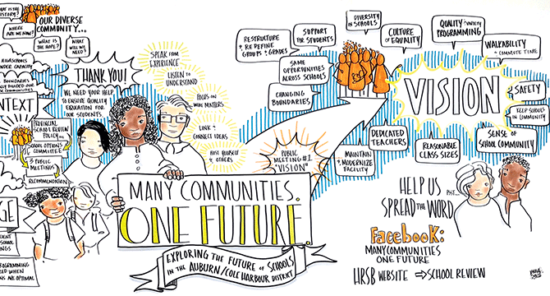
When the governing members of the Halifax Regional School Board met on the evening of September 28th, 2016, there was standing room only.
The room was jammed with parents, media and community members. A group of teachers were sitting, united, on one side of the room, wearing the concern on their faces as prominently as they were wearing their school crests on their shirts. At issue: a decision on whether to move forward, over the next six to eight months, with a review of 17 different schools, representing all educational levels and a wide variety of communities.
The tension in the room was palpable.
Very few issues in education create such an emotional response as the reviewing of a school for possible closure. Although there are several reasons why such a review could take place, the words “School Review Process” often elicit reactions of fear and loathing in parents, teachers, and community members alike. In small communities, the decision to close a school is often seen as a final death knell in the life of the town.
Here on Canada’s East Coast, we suffer from the same demographic and economic woes that plague many rural jurisdictions: outmigration, low immigration, aging infrastructure and a struggling economy. All these issues and many more make sustaining current levels of service not only challenging but, in some cases, virtually impossible. And, indeed, one of the common maladies associated with these modern afflictions is the necessity to look long and hard at the use of public buildings. Schools that are not operating at full capacity become the norm, not the exception, and unfortunately, do not become much cheaper to run.
Thus, the School Review Process.
School reviews in Nova Scotia have a rather storied history. In 1994, the Minister of Education at the time, John MacEachern, was given authority by the Liberal government to regulate the process for reviewing schools. Under MacEachern, school boards were given the power to make final decisions about school closures. For almost two decades thereafter, efforts were made to standardize timelines, to formalize the information used in decision-making, and perhaps most importantly, to include School Advisory Councils in the process.
In 2013, the process underwent a fairly significant review again in response to concerns being raised by a variety of stakeholders. The government of the day struck a committee to develop a new school review process and, armed with a discussion paper and a mandate for change, the committee traveled the province holding a series of town hall meetings. The intent was to engage parents, school boards, communities and municipalities in discussing the shortcomings of the process as it existed and to garner ideas for improvements and change. The following spring, the Nova Scotia Minister of Education announced a new School Review Policy.
This new policy included some rather distinct new elements. For example, school board staff would now be required to publish a collection of standard facts and figures in order to provide a broad picture of the school district as well as an overview of all the schools within the jurisdiction. Labelled the Long-Range Outlook, this data set would anchor school review mandates and guide problem solving and decision-making. Perhaps even more significant was the requirement for a School Options Committee (SOC), comprised principally of School Advisory Council members, and others as needed, to lead the review.
It is really in the SOC where the beauty of this process lies.
The SOC is guided by a mandate from the governing school board. They are provided with an external facilitator and focus on hearing from the community on how best to solve the problem described in their mandate. They actively engage the community to participate in generating solutions. Voices are heard and ideas are nurtured, finally shaping the recommendations advanced in the SOC’s final report.
A new approach to public engagement
That the addition of the SOC has positively impacted the process was very clearly on display at another meeting, this one held on a cold night in January of 2017 at a local community center in Cole Harbour, Nova Scotia. This was the first in a series of three public engagement sessions set up to allow local stakeholders to have their say on the future of their schools. The meeting room itself was certainly no less crowded than the school board office had been the previous September. Indeed, the 250 copies of the handouts that had been prepared proved to be about 100 shy. However, where before there had been a sense of worry and concern, there was now a sense of engagement and, to some extent, hope.
When one envisions a traditional “town hall” meeting, some fairly stereotypical images come to mind. However, this meeting felt a great deal more like a professional development session than it did a town hall. The room was filled with tables instead of chairs, where people were invited to sit and face each other rather than face a panel on a stage. It was set up for learning and participation, rather than accusation and conflict. On each table, a pile of markers and a fresh sheet of white chart paper awaited community members who were invited to write, express or even draw their ideas. Finally, there was a conspicuous absence of microphones for people to step up and express their concerns. Indeed, the only microphone in the room was in the hands of the facilitator. More voices would be heard, but clearly in a different way.
The opening of the meeting did wax somewhat familiar, when the facts of the issue were laid bare by social worker turned part-time facilitator Robert Wright for everyone to see. Of the 17 schools in question, a full 15 of them were operating under capacity, and some tough decisions indeed would have to be made. However, instead of focusing on the negative side of the issue, the audience was challenged to help develop beliefs and priorities to guide their future focus on solutions. In the words of SOC member Corrie Anderson, it was hoped that the process would be viewed as “an amazing opportunity for us to have influence and be part of the change.”
Before long, participant-focused work got underway, reminding one of a rather well thought-out lesson plan. Facilitators asked the crowd to contemplate three questions for approximately 20 minutes each, and to record their thoughts on the chart paper at their tables. To open dialogue, participants considered their current experience with schools – what they thought was working well and what could be improved. Next, the tables were asked to consider what vision they had for the future of schools within their community, and further, within that context, to consider what they would retain and what they would change about their current realities. Finally, the tables were asked for direct input to what they would like the SOC to consider in their preparation of scenarios for the next meeting. In answering this question, each table was given a few Post-It notes to prioritize the three important things from their discussion. They were invited to post them in the front of the room, as organizers grouped the many brightly coloured sticky notes into themes.
Each of these questions resulted in animated but tremendously respectful discussion throughout the room. Facilitators encouraged participants to move from table to table, and to exchange ideas with people from other school communities. This particular exchange is another unique facet of this approach, as conversations never turned to “my school versus your school” or “our community versus yours.” Instead, people from different communities shared visions of what they believed, what they valued, and how they could move forward as a group.
As one can well imagine, a room with more than 300 passionate and engaged community members – from students to grandparents – all sharing their ideas around such all-encompassing questions, creates an air of chaos. However, it is from within this chaos that common ideas emerged. Many of the gathered community members, despite their diverse makeup, almost organically shared many of the same priorities. Walkable schools, safety, programming, student learning all were echoed in many conversations. And it was the emergence of these key themes that seemed to reinforce the similarities between the school communities and even, to some extent, strengthen those bonds. Everyone at the meeting wanted the same things for their children, and hearing that message from many communities seemed to help the entire group recognize the magnitude of the task set before the SOC. As the discussion moved to a review of the emergent themes, the voices of the group resonated visually on the wall in front of the crowd, where ideas captured from the tables were prominently displayed and categorized.
As the evening wrapped up, in place of fear and concern, the room emanated a sense of hope. By the end of the evening, everyone felt like they had, in many ways, had their opportunity to express their views in a way that “stepping up to the microphone” simply would not have allowed. One parent, Roberta Hupman, said,
“It’s amazing to see how many people have shown up tonight… we’ve got an engaged community here, and… I’m happy to be participating in a very healthy discussion about the future of our schools. I didn’t really know what to expect, to be honest; I knew it wasn’t going to be the lining up at a microphone and yelling, but what certainly is exceeding my expectations is our ability to have some real input into the process.”
Whatever the outcome, when it comes to closing schools, communities must know that they have, at the very least, been genuinely engaged to make a difference. In Halifax, where this new process has been completed twice (and is currently underway once again), the Governing Board has solidly endorsed both recommendations from SOCs. Perhaps this is proof of a real change toward engaging communities in practices of deep democracy – engaging people in meaningful ways around issues they can actually impact, and nurturing participants to contribute honestly and meaningfully to real issues that affect them.
Inevitably, some schools are unsustainable and must be closed. However, by using this SOC process, the sense that these decisions are predetermined long before public consultations even begin is diminished. What this process does is create an authentic device for public input, and ideally, a way for all the stakeholders to feel like alternatives have at least been considered.
Reviewing schools for closure has become one of the most unenviable tasks for school boards clear across our country. However, under Nova Scotia’s school review process, there is an opportunity for communities to not only have their voices heard, but to collectively and collaboratively look for solutions. While it is unfortunate to have to consider the closure of schools in changing communities, it is reassuring to have a change process that engages those communities in moving forward together, as opposed to driving them further apart.
En Bref : Beaucoup de conseils et commissions scolaires canadiens affrontent la rebutante tâche d’évaluer des écoles en vue d’une reconfiguration ou d’une fermeture possible. En Nouvelle-Écosse, ces évaluations d’écoles ont dans le passé divisé des collectivités et soulevé de vives réactions émotives défavorables, mais la province a récemment adopté un nouveau processus qui engage les parties prenantes dès le départ et amène les communautés scolaires à chercher collectivement des solutions.
Chart: Marguerite Drescher, BraveSpace
First published in Education Canada, June 2017
-
Distance Education that Works
Comments Off on Distance Education that WorksOne of the perennial challenges confronting small, rural and remote high schools is the provision of a curriculum program comparable in breadth and quality to that available to students in larger schools.1 Traditionally, the programs and courses that a school can provide are dependent on the number of teachers employed in the school and their professional qualifications, experience, and expertise. The low enrolment of smaller schools means there are fewer teachers on staff, and this limits the number of courses that can be offered to students.
In the smallest schools, the curriculum may be the bare minimum required for students to graduate, with few if any specialized courses in the arts, foreign languages, or skilled trades. In such schools, teachers will often have an increased workload and be teaching outside their areas of expertise – a math teacher, for example, may take on an English course or vice versa. In the smallest schools, teachers may have to teach two or more courses in a single instructional period. And although rural teachers are dedicated and work exceedingly hard to provide the best they can for their students, it is hardly an ideal educational situation.
The curriculum challenge is exacerbated for small, rural high schools situated in remote and isolated places. Living and working in a remote community is not for everyone. These schools have always had difficulty recruiting and especially retaining teachers in the areas of math, science and foreign languages. New math and science teachers are generally in high demand, and most prefer not to go to small, isolated places. When they do, they often stay only for a year; they see the remote school merely as a “stepping stone” to a more urban appointment. The high teacher turnover in such schools and the resulting lack of continuity is not good for the school, the community or (and especially) the students.

The Newfoundland and Labrador context
Newfoundland and Labrador is a province of small rural schools. In the 2016/17 school year there are only 262 schools, with an average enrolment of 255. The 165 schools classified as rural have an average enrolment of 144. Forty of these rural schools have less than 50 students, and half of them are all-grade schools providing instruction for students from K-12. The senior high school cohort of these all-grade schools is commonly less than 12 students per grade.
Student enrolment has declined dramatically in the last 25 years, from 130,109 in 1990 to 66,800 in 2016. During that same time period, the government has pursued a persistent program of school closure and consolidation. Despite strong community opposition and heartfelt resistance, 281 schools have been closed – the vast majority of which were small rural community schools. The rationale used for these closures was the purported enhanced educational opportunities available at larger schools – opportunities which, the government claimed, were worth the long and often dangerous bus rides students might have to endure.
These recent school closures simply continue a trend that dates back to the publication of the Warren Royal Commission Report in 1967.2 Clinging to the questionable belief that “bigger is better” when it comes to schooling, various governments have closed almost a thousand schools, mostly rural, since 1965.
However, one group of schools has frustrated education officials’ quest to totally eliminate small schools. These are schools situated in such remote and isolated rural places that busing students to a larger school in another community has not been possible. Some of these schools exist on islands with limited ferry service. Others are simply too far from the next nearest school.
Warren despaired that high school students in these remote communities would ever have access to a quality education. He suggested that the government consider creating residential boarding schools for them – an idea, thankfully, that was never acted on. Subsequent government reports3 recommended that a program of distance learning be developed as a way of delivering an enhanced curriculum to rural and remote schools.
Distance education, eLearning and virtual schools
By the late 1990s, the government had come to the realization that there were few small rural schools remaining that could be reasonably targeted for closure. A significant number (93) of “small necessarily existent” (SNE) schools would continue to remain open because it was not feasible to close them, given their remote locations. These schools had to be provided for as long as people continued to live in these communities. It was also clear that enrolment would continue to decline for the foreseeable future and that rural schools would continue to lose teachers.
In August 1999, the government of Newfoundland and Labrador announced the formation of a Ministerial Panel mandated to examine the current education delivery model and to investigate and recommend “alternative delivery strategies.” The premier of the day, Brian Tobin, stated his government’s commitment to “doing everything possible to ensure that all children in this province, regardless of where they live, have access to a balanced and high quality education.”
“Most alternatives,” the Panel would determine, “involve a form of distance learning… delivered by various forms of electronic media via what has come to be known as the “virtual classroom.”4
The Ministerial Panel report, Supporting Learning, was published in March 2000. It recommended that the government create the Centre of Distance Learning and Innovation (CDLI). CDLI would function as a virtual school and would be responsible for the development and delivery of high school courses via the Internet to rural, remote and isolated schools. These web-based or eLearning courses would offer programs and courses that small rural schools were not able to offer on site because of insufficient teachers or teacher expertise.
Previous to this, the province had offered a very limited distance education program using an audiographics delivery system. The vision for CDLI was to be much more inclusive and eventually make available the complete high school program via the Internet. Any student who did not have access to a course in their brick and mortar school on site would be able to take it online in the province’s virtual school.
The Centre for Distance Learning and Innovation (CDLI) piloted its first ten web-based courses in the 2001/02 school year. By 2004/05, CDLI was offering 35 courses with 1,500 student enrolments from 95 different schools.5
CDLI Today6
Since its beginnings, CDLI has developed its technology, eLearning pedagogy and course offerings. Today, it has a staff of 46, including program and IT specialists, a guidance counselor, and 29 e-teachers.
Currently there are 1,105 students registered in one or more of 42 senior high school courses that cover advanced and academic mathematics, sciences, English and French languages, technology education, social studies, skilled trades, French first language, and fine arts (both music and visual art). CDLI courses are delivered to 110 schools in the province.
CDLI has been judged to be successful by students, parents and educators. Students in rural and remote schools now have access to all courses offered by the Department of Education. The online courses are identical in terms of content, outcomes, and assessment to those offered in the province’s face-to-face schools, and the academic achievement of online students is generally on a par with those in the province’s traditional brick and mortar schools. Thousands of students have successfully completed online high school courses and qualified for post-secondary education.
Why CDLI is successful
There are a number of reasons for this success.
CDLI, as a small virtual school, enjoys the advantages that all small schools and organizations have. Most virtual schools, especially those in the U.S., are fairly large organizations. CDLI is focused exclusively on rural students in Newfoundland and Labrador; only students who are enrolled in a provincial high school can access the eLearning courses.
CDLI’s eTeachers are first and foremost subject matter specialists, many with Master’s degrees. They also have extensive training in eLearning pedagogy. Equally important, they are experienced teachers who are familiar with rural students and rural schools. They are in constant contact with their students and are able to develop an intimate knowledge of their needs and abilities. This kind of personal relationship is not possible in larger virtual schools, whose students may be anywhere in the world.
One of the most important and distinguishing features of CDLI is its substantial use of synchronous interaction between eTeachers and online students. CDLI’s virtual classrooms are delivered in two formats: synchronous (sometimes referred to as “online”) and asynchronous (sometimes referred to as “offline”). During the synchronous classes, students and teachers interact in real time.
One way this is done is through web conferencing. Blackboard Collaborate™ (sometimes abbreviated as eLive) is the web conferencing tool used by CDLI. It is the students’ online classroom, where direct instruction/interaction takes place between the e-Teacher and students. CDLI teachers deliver the curriculum mainly through this method and monitor student interaction, participation and progress in real time.
Depending on the course, students can expect to spend anywhere from 40 to 70 percent of their class time using this tool. Synchronous interaction makes an enormous difference to online pedagogy and closely emulates face-to-face instruction.
The asynchronous features of CDLI also contribute to student success. A class can, for example, break from the large-group session for independent or small-group work. Work on written assignments can be scheduled independently by individuals or teams. Thus the students enjoy a degree of flexibility in their activities. Students use CDLI’s learning management system, Desire2Learn, to coordinate group work, as well as to:
• email their classmates and instructors
• post comments and opinions to the discussion forum for the course
• access and submit written assignments
• interact with learning content, both in the form of web pages and multimedia
• view grades.
Finally, rural schools that are part of the CDLI family are required to have a team or teacher to provide support and assistance to students taking online courses. They work closely with the eTeachers to help students in any way they can. CDLI also provides its students with both synchronous and asynchronous academic tutoring.
For more than 30 years, researchers have claimed that technology-based distance education has the potential to make the size and location of a school irrelevant in terms of access to a broad, high-quality curriculum. The Centre for Distance Learning and Innovation (CDLI) has made that promise a reality by providing rural students in remote schools online access to any course they need or desire.
Quality education, however, is not just a matter of access or delivery. The success of CDLI is tied to the pedagogical support provided to students, the quality and commitment of its eTeachers, and the appropriate mix of synchronous and asynchronous communication and interactions. With these features, it serves as a model of how a virtual school should function.
En Bref : Grâce au développement de la formation à distance en ligne de qualité, la taille et le lieu d’une école n’importent plus pour déterminer sa capacité d’offrir aux élèves ruraux des programmes et des cours essentiels. Cet article décrit comment, par le cyberapprentissage (E-learning), l’école secondaire virtuelle de Terre-Neuve-et-Labrador (CDLI) donne accès au curriculum du secondaire de la province aux écoles rurales et éloignées.
Photo: iStock
First published in Education Canada, June 2017
1 This is a universal issue for small rural and remote schools.
2 P. J. Warren, The Report of the Royal Commission on Education and Youth (Government of Newfoundland and Labrador, 1967).
3 F. Riggs, Report of the Small Schools Study Project (Government
of Newfoundland and Labrador, 1987); L. Williams,Our Children Our Future (Government of Newfoundland and Labrador, 1992); R. Sparkes and L. Williams,Supporting Learning (Government of Newfoundland and Labrador, 2000).4 R. Sparkes and L. Williams, Supporting Learning, 9.
5 M. K. Barbour, “Portrait of Virtual Schooling,” Canadian Journal of Educational Administration and Policy 59 (February 11, 2007).
6 Two main sources for information about CDLI used for this article are: www.cdli.ca (the CDLI website); and Michael Barbour, State of the Nation: K-12 E Learning in Canada (2004-2016). http://canelearn.net/research/state
-
Manitoba’s Moratorium on School Closures
Comments Off on Manitoba’s Moratorium on School Closures
In 2008, school boards in Manitoba had identified nine out of the province’s roughly 700 schools for possible closure. Four of those schools were in the Louis Riel School Division in southeast Winnipeg. The schools were small but they were viable. In response to vigorous community concern, the provincial government passed legislation that imposed a province-wide moratorium on school closures and required Ministerial approval for any planned closure or consolidation. That measure effectively halted the closures in Louis Riel – but it also halted closure discussions everywhere in the province. Some school divisions were forced to maintain schools whose enrolments weren’t viable, to the point where parents literally walked away, abandoning the school.
Like all other Canadian provinces, Manitoba has had to address the challenges of matching school facilities and programs to shifting student enrolments. Decisions about whether or not to close or consolidate existing schools, and/or open new ones, often have far-reaching consequences, especially in rural communities. This article examines how the Manitoba moratorium has impacted on these critical decisions.
Bill 28: The Strengthening Local Schools Act
Bill 28: Strengthening Local Schools (Public Schools Amendment Act) was introduced without consultation in April 2008 and enacted into Manitoba law on June 12. Under the heading “Moratorium on closing schools,” this legislation states that, “except with the Minister’s written approval under this section, a school board may not close a school that pupils attended in the 2007-08 school year.”1 Laying down the conditions under which approval might be given, the legislation states that Ministerial approval may be forthcoming if the school board demonstrates to the Minister’s satisfaction that:
(i) the closure is the result of a consolidation of schools in the area or community;
(ii) there is a consensus among parents and residents of the area served by the school that the school should be closed; or,
(iii) it is no longer feasible to keep the school open because of declining enrolment and, despite having made reasonable efforts, the board has been unable to expand the use of the school building for appropriate community purpose.
In addition, the Bill required school divisions to use their best efforts to ensure that children’s travel time to and from school did not exceed one hour each way and added, “schools whose future sustainability and viability is threatened by low enrollments” to the criteria for schools that might have access to provincial community schools programming and funding. The legislation also signaled the government’s intent to provide new school closure regulations.
Peter Bjornson, then-Minister of Education, Citizenship and Youth, cited the importance of local public schools to the quality of educational experience for young children, and to the overall life of communities, as a rationale for the Act.2
Suggesting that the moratorium was a temporary measure, the Minister further stated that “over time, possibly several years, the power of school closures will be returned to school divisions, but with a new regulatory framework that emphasizes the need to work to ensure the viability of schools and their surrounding communities.”3 He also gave notice that notwithstanding the conditions for approving school closures laid out in the legislation, Bill 28’s primary purpose was the imposition of a moratorium, stating, “… I want to make it clear that the primary objective of this bill is to help keep schools open, not to find alternative ways and means of closing them.”4
Minister Bjornson clarified that he would only consider consolidation as a justification in rural Manitoba and it would only apply to the merging of an elementary school with a neighbouring high school to form a Kindergarten to Grade 12 school – and only then in an extreme case where one school could clearly not remain viable.5 Further, it was made clear to school boards that “consensus among parents and residents of the area served by the school” meant very close to if not total endorsement of any school closure plan. This was a “hard” moratorium.
The response to Bill 28
School closures are more often than not contentious, and it was no surprise that Bill 28 provoked strong responses, with nearly 50 presentations and submissions made to the legislative Standing Committee on Social and Economic Development at the second reading of Bill 28.6 Opposition to the legislation was led by school boards as well as the Manitoba Association of School Trustees and the Manitoba Association of School Superintendents, while parents and parent councils generally supported the bill.
School boards asserted that in the face continuing declining and shifting enrollments, they needed the option of school closures or consolidation as one way of addressing local circumstances in a way consistent with local community and taxpayers’ needs. They also argued that the one-hour busing limitation failed to recognize the geographical realities of certain communities and could prevent vocational programming for some rural students. Further concern was expressed that the Minister did not provide for the additional costs borne by the divisions for keeping very small schools open, and that the legislation did nothing to address the underlying causes of school closures.7
Parent Councils and individual parents speaking in favour of the Bill cited research on the benefits of small schools and highlighted the negative impact that school closures are likely to have on families and the surrounding community. They expressed concern about the negative educational effects and safety issues associated with busing children long distances to school. Several presentations argued that although the pre-existing guidelines called for extensive community consultation before school closing, this was not always happening and that school boards could too easily manipulate the process. Further, it was suggested that the proposed School Closure Regulations could provide an opportunity to address a perceived imbalance between the authority of school boards and communities and to restore ministerial oversight.8
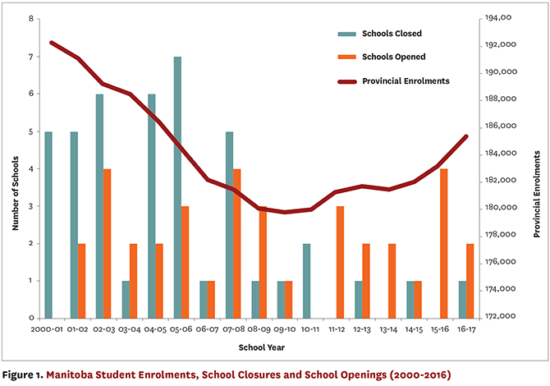
The impact of Bill 28
Minister Bjornson described Bill 28 as providing a period of stability to allow governments, school boards and communities to develop better solutions to declining enrolment and cost pressures.9 Nine years later, the moratorium is still in place. So how successful has the legislation been in 1) slowing down school closures in the province, and 2) developing creative ways to sustain schools with declining enrolments in ways that are both educationally and financially viable?
The moratorium has not completely ended school closures in the province, but it has substantially reduced the number of schools being closed and extended the time it takes to actually close those schools that are approved. According to data from the annual Manitoba Student Enrollment reports, in the eight years before the 2008-09 school year, some 37 schools were closed across the province. In the eight years from 2009-10 to 2016-17, only six schools were closed (see Figure 1).
Five of those schools were rural – all with enrolments of under 20 students – and they closed less as the result of sustained planning than because “parents voted with their feet and took their kids to larger schools, leaving schools empty.”10The impact on Winnipeg divisions has been more marked. Faced with the likelihood that even after a lengthy consultation process, any divisional proposals that involved a school closure or consolidation would not receive Ministerial approval, urban school divisions essentially took closure and consolidation off their agendas and since 2008, only one Winnipeg area school has been closed.
The extent to which these developments can be taken as evidence that the moratorium has stimulated school divisions to rethink their approaches to managing their facilities in ways that sustain the educational and economic viability of small schools is a more complex question to answer. The moratorium has certainly discouraged school boards from seeing school closure, or even consolidation, as anything but a “last resort” option (if it ever was anything else), and it also made more rigorous the expectations of parental and community consultation, in which divisions must present a detailed and compelling justification for their proposals and from which they must demonstrate to the Minister strong community support.
Below, we look at two cases that illustrate quite different impacts from the moratorium. In the Louis Riel School Division, a revisiting of facilities and programming enhanced the viability of community schools previously scheduled for closing, while in the Pembina Trails School Division, the effect may have been only to delay the closing of a school – at a substantial cost and without any obvious benefits.
Reconfiguring divisional programming
The moratorium on school closures effectively halted a significant reorganization of schools in Louis Riel School Division that had included the closure of four smaller schools. All had enrolments between one and two hundred. Seven years later, in 2015, Louis Riel faced enrolment dilemmas similar to those faced in many urban divisions: Enrolment was growing in new subdivisions and shrinking in older neighborhoods. French Immersion enrolment was up; English program enrolment was down. Louis Riel initiated a broad community consultation process. After ten large-scale community forums involving the input of thousands of parents and community members, Louis Riel implemented a reorganization that changed catchments, grade configurations and language designations for several schools. Today, all four schools originally identified for closure are still open. Three of the four were positively affected by the 2015 reorganization and by subsequent neighbourhood development, and are more viable today than they were in 2008. The fourth school remains small but is still viable. This more recent reorganization was supported by the provincial government, as the school division sought to rationalize its existing facilities rather than ask for new ones.
The closing of Chapman K-6 School in Winnipeg
Chapman School had been scheduled for closure when Bill 28 was introduced. With a capacity for 225 students, this Winnipeg K-6 school had some 87 students registered in 2007 – only half of whom actually lived in the school’s catchment area. The divisional plan was to move the Chapman students to the neighbouring Royal School, which had a capacity for some 500 students and an enrolment of around 200. All of the students living in the Chapman catchment area also lived within 1.6 km of Royal School. The position of the board was that the quality of education would be equal or superior at Royal School for Chapman students, while the annual incremental cost of keeping Chapman School open was approximately $500,000.
Under the moratorium, requests to the Minister to close Chapman School were rejected on the grounds that there was not a supporting consensus among parents and community members. In the words of Superintendent Ted Franson, “the Minister made it clear that consensus meant everyone.” During the 2015-16 school year, the Chapman School Parent Council initiated a conversation about closing their school along with some requested accommodations related to moving their students to Royal School. These requests were agreed to, and all 31 parents of children registered at Chapman School asked that their children be transferred to Royal School. A request to close the school in June 2016 was submitted to the newly appointed Minister of Education, the Honourable Ian Wishart, and approved.
When Bill 28 was introduced, the Minister indicated that it was intended to be in place only for a few years, after which authority over closures would be returned to school boards, framed by a new set of provincial Regulations. The moratorium is now in its ninth year of operation and there are no Regulations. In April 2016, the provincial election saw the New Democratic Party government, which had been in power since 1999, replaced by a Progressive Conservative government. With the new government comes the possibility of a reconsideration of the moratorium and the development of a set of regulations to structure the process of review and closure or amalgamation of schools.
The complex array of community settings across remote, rural and urban contexts in the province call for flexible and creative thinking about the funding and delivery of high-quality school programs to all Manitoba students. The moratorium on school closure in Manitoba has, however, framed the discussion of small schools as “to close or not to close,” narrowing to a single and sometimes stark choice the question of how we make prudent use of our capital and operating dollars and maintain strong, vibrant schools. It is this broader discussion that the province now needs to engage in more fully.
En Bref : En 2008, le Manitoba a imposé un moratoire, encore en vigueur, sur les fermetures d’école. Les auteurs de cet article retracent l’historique du moratoire et expliquent son impact sur les écoles manitobaines.
Photo: iStock
First published in Education Canada, June 2017
1 For this and all subsequent quotations from the Act: Government of Manitoba, Bill 28: The Strengthening Local Schools Act (Public Schools Act Amended), 2008.
2 Government of Manitoba, “Bjornson Introduces Legislation that Would Place Moratorium on School Closures (April 28, 2008: Manitoba Government News Release). http://news.gov.mb.ca/news/index.html?item=3588
3 Manitoba, Legislative Assembly, Debates and Proceedings (Hansard), 39th Leg, 2nd Sess. Vol. LX, No 40B (May 13, 2008), 2101.
4 Manitoba Legislative Assembly (May 13, 2008), 2101.
5 “Closure Ban Has Boards Confused,” Winnipeg Free Press (May 12, 2008): A4.
6 K. Antonyshyn, “Bill 28, The Strengthening Local Schools Act (Public Schools Act Amended),” Manitoba Law Journal 34, no. 3 (2011): 1-34.
7 Antonyshyn, pp. 22-3.
8 Antonyshyn, pp. 19-21.
9 Manitoba Legislative Assembly (May 13, 2008), 2101.
10 “Advice on School Closings Ignored: Report,” Winnipeg Free Press (July 27, 2016). www.winnipegfreepress.com/local/advice-on-school-closings-ignored-report-388496241.html
-
School Closures and Communities
Comments Off on School Closures and CommunitiesIn Ontario, over 2,000 schools have been permanently shuttered since 1990. Right now, 600 schools are under review for potential closure; 500 of these schools are located in rural communities and small towns. This is an important and high-profile issue for small towns and rural communities that are already stressed by the local impacts of a changing economic structure, an aging society, and concerns about long-term viability.
Why is school closure such a concern? Schools play many roles in our communities. School boards would remind us that they exist to educate our children, which is true; however, these schools are so much more. Municipal politicians and community residents regard schools as an important part of the community’s fabric and self-image. Some researchers have argued that schools should be classified as a public good. Schools are also considered key to building a community’s social capital. There is evidence that a healthy, stable community enhances students’ academic performance and by extension, the viability of schools.
Schools are important symbols, valued as the focal point of the community, “as markers of community history.”1 School buildings and equipment support community activities; they are places where residents meet and build connections. Schools contribute in a big way to a community’s health, well-being, and sense of place. Local government planners also recognize the important and diverse role played by community schools as a stabilizing factor, especially in inner city communities and in small towns and rural communities. As Witten et al. note, “schools are more than buildings where a curriculum is delivered.”2
Why, then, are schools being closed? Ontario’s school boards are under intense pressure to do more with less, and have struggled for years with fiscal constraints and declining enrolments. Funding shortfalls in provincial allocations to school boards reflect decades of neoliberal policies; the funding formula has changed little since the late 1990s during the Mike Harris era in Ontario.
In larger communities, the funding formula in Ontario has privileged the construction of new suburban schools over the renewal of existing (often inner city) school properties. Funding shortfalls are often the stimulus for accommodation review (school closure) processes; other reasons can include declining enrolments, compromised program viability, escalating costs associated with maintenance of an aging physical plant, and the need to meet demands for schools in newer suburban neighbourhoods. The cumulative effect of all these factors is the closure of community schools.

The accommodation review process
School closures make for great headlines. We’ve all seen the heated newspaper editorials and television interviews with upset parents. This is certainly a hot button, high-profile community issue for local government leaders and urban planners in many parts of Canada. When a school closure decision is announced, the immediate response is shock and disbelief, followed by anger, resentment and resistance that takes various forms. There are few cases where school closures could be considered a positive experience for all involved, and that includes school board trustees and staff. This is because accommodation review processes are characterized by conflict and intense emotions.
With few exceptions, accommodation review processes have been harshly criticized by just about everybody on the receiving end of a closure decision. In Ontario, school boards manage these processes using the Ontario government’s guidelines. The accommodation review evaluation model focuses on factors related to the educational experience, which reflects the expectation that school boards will provide a high-quality education. This is an appropriate objective. However, where that education is delivered – the community and its viability – seems incidental. As a result, the impacts of a closure on a community’s stability, economy or environment are not recognized or adequately addressed.
As one might expect, there have been many calls for change to these evaluative criteria and to the decision-making process itself. A key issue concerns the nature of school closure decision-making processes that are designed to be “consultative,” in the narrow (and minimal) sense that residents have limited opportunities to voice their opinions – i.e. four town hall-type meetings with school board trustees. These processes are not collaborative, nor are they always considered respectful.
This seemingly intentional passive role for community stakeholders and apparently unilateral decision-making power by school board trustees is at odds with the expectation Canadians have of transparency and accountability on the part of all public sector decision-makers, and of having a meaningful role in decision-making. Interestingly, local governments – which are responsible for providing the services and policies that create a healthy quality of life in communities – cannot challenge school board decisions. Indeed, school boards seem to operate in “splendid isolation.”
To complicate things even more, provincial government Ministry policies on education, infrastructure and urban planning are not coordinated, at least not in Ontario. These Ministries and their staff operate in rigid organizational silos with minimal evidence of inter-Ministerial coordination on school location and closure decisions.
Impacts of closures
So school closure is a fact of life in many Canadian communities. Older, smaller schools are especially vulnerable. A school closure can have a significant and often negative impact on students, families and communities. When a school closes, it becomes difficult to attract families with young, school-age children. Businesses can have trouble attracting employees with families. The loss of a community school symbolizes a community in trouble.
The negative impacts of a school closure can be more significant and severe in rural communities than in urban centres. Rural communities and small towns in many parts of Ontario and Canada are struggling. They have experienced loss of a traditional economic base and its associated jobs; an increasingly aging population as young people seek work elsewhere; and the elimination of key public goods and services, such as hospitals and schools, that mean so much to these communities and contribute to their viability.
The loss of these local institutions can adversely affect the long-term vitality, resilience, and overall well-being of a rural community. Schools in rural communities are a source of local identity and community pride, and they typically reflect a community’s particular culture, values, or way of life. Schools provide rural communities with important infrastructure that local residents need and that might not be available otherwise, such as recreation facilities, libraries, and gathering places for social events. When a school closes in a small town or rural community, children are bused to schools elsewhere, an experience that can be stressful for children and parents.
There must be a better way
We have to accept that schools must be closed, for all kinds of good and practical reasons. However, the decision-making process that leads to a closure must be changed. It’s time to ask some fundamental questions about the accommodation review process. For example, why don’t school boards pay enough attention to community impacts when making these closure decisions? We need accommodation review processes that are informed by studies of the social, economic and environmental impacts of school closure. We need to question school consolidation strategies (is bigger really always better?).
Why must we have decision-making processes that are so often confrontational, secretive and divisive? We know there are far more constructive and collaborative decision-making models that have been developed and are commonly used in community-oriented, problem-solving situations. The example of community planning practice across Canada comes to mind. Until the 1970s, community planning decisions were made by local elites without consideration of residents’ perspectives. Today, community planning public consultation and participation processes offer stakeholders the opportunity to contribute to decision-making in a meaningful way. These processes are characterized by engagement and education of stakeholders; respect for diverse values and views; mutual learning; identification and advancement of the public interest; and, ideally, shared responsibility for decision-making. To date, we have not been able to identify comparable processes in Ontario’s accommodation review process. In the event that schools are closed, at least the results could be better understood and eventually accepted by community stakeholders.
And, why don’t school boards and local governments work better, together? When considering alternatives to a closure, why not fully integrate school board facility planning with their municipal government counterpart’s community planning efforts? What’s getting in the way here?
We argue that many of these problems originate with the province. Ontario’s Ministry of Education develops accommodation review guidelines for implementation by school boards. It’s time to take a very close, critical look at the provincial legislation that governs school boards in the context of the extensive demographic and economic changes that are taking place in our communities.
This brings us to the bottom line. We need to prioritize the community’s needs. Let’s accept that schools are a public good; these are not simply buildings that provide a structure to deliver curriculum. We need a better, more complete and nuanced understanding of the impacts of school closures for urban and rural communities. We need to find ways to coordinate inter-ministerial and inter-governmental decision-making. And, we need to design accommodation review processes that are truly consultative and collaborative.
It’s time to find a better way to deal with these complex issues. Let’s do that now.
En Bref : Les auteurs soutiennent que les écoles ne sont pas que des bâtiments fournissant une structure pour livrer des curriculums; ce sont des biens publics. Il faut une nouvelle approche élargie de planification d’écoles et d’examen des installations, assortie d’une meilleure coordination entre les ministères ainsi qu’entre les conseils scolaires et les gouvernements locaux, de même qu’un processus de consultation communautaire plus collaboratif et une reconnaissance que l’impact sur la collectivité est un facteur pertinent.
Illustration: iStock
First published in Education Canada, June 2017
1 R. A. Kearns, N. Lewis, T. McCreanor and K. Witten, “The Status Quo Is not an Option: Community impacts of school closure in South Taranaki, New Zealand,”Journal of Rural Studies 25, no. 1 (2009): 31-140.
2 K. Witten, T. McCreanor, T. Kearns and L. Ramasubramanian, “The Impacts of a School Closure on Neighbourhood Social Cohesion: Narratives from Invercargill, New Zealand,” Health and Place 7, no. 4 (2001): 307-317.
-
Is it Change that We Want or Is it Evolution?
Comments Off on Is it Change that We Want or Is it Evolution?
So, after celebrating its 125th anniversary, the Canadian Education Association (CEA) is launching its new EdCan Network brand. When I share our organization’s lengthy history in Canadian public education, people often say to me, “I guess it’s time for change!” When I consider my 41 years of working in public education, I guess that the same could be said for me!

At the CEA, we’ve been actively supporting the courageous educators who are innovating in and out of schools, and we continue to present our research and perspective at provincial, national and international conferences. We’ve even dared ask: “What’s standing in the way of change in education?”, which so many people ask themselves, yet tend to shy away from speaking publicly about. At times, we have come under criticism for being too focused on systemic problems and giving too little attention to what works. My response is that we amplify what works, and we question what doesn’t.
I’m now into my seventh year as the CEO for this association – soon to become the EdCan Network. In that time, I’ve been blessed to meet such a wide range of creative and imaginative educators so firmly committed to supporting success in classrooms. Within this spectrum, I’ve interacted with three distinct groups:
1. those who believe that the current Canadian education context is perfectly fine, albeit in need of a few tweaks here and there
2. those who feel that the current system hinders innovation, change or any transformational process and propose entirely new definitions of teaching and learning
3. and finally, those who advocate for a hybrid system, mixing the best of the traditional approach with a healthy dose of innovation.
So where does the EdCan Network stand in all of this? Where do you stand in all of this?
We need to determine:
Do we want change? or Do we want evolution?
What’s the difference? Let’s look at the definition of change, as a verb: to make or become different or take or use another instead of, and as a noun: the act or instance of making or becoming different. Now let’s look at the definition of evolution: the gradual development of something, especially from a simple to a more complex form.
These two definitions present remarkably different processes while working towards remarkably similar outcomes. What research has amply demonstrated is that people are usually resistant to change. The “unknown outcome” factor – the fear that the change will be for the worse rather than the better – is a strong deterrent. This “uncertainty” factor is a significant hurdle to overcome. Add in the increasing prevalence of initiative fatigue,1 and one can readily understand why change in education has – and will be – difficult to achieve.
This should lead us to developing strategies for evolution – a slower but more “natural” shift. It’s hard to predict where this evolution will lead us in the next few decades, but I will try: Schools will continue to exist, but will be much more integrated into community structures, and learning/teaching will be a truly shared partnership between knowledge provider and knowledge recipient. It will be interesting to observe the evolution of the definition of teacher and student.
I base my prediction on my first year of teaching in 1976. At that time, the movie 2001: A Space Odyssey was only eight years old, and we believed that a landing on Jupiter within the next 25 years was doable! When I look back on my 41 years in education, I can unequivocally say that I have truly seen evolution, but little significant change of note.
Which brings me back to the new EdCan Network. It’s not just a new logo. With this magazine, our fact sheets and events, we aim to create spaces for the challenging conversations that need to happen about how research can be better used to improve learning. A great example of evolution, with exciting potential and opportunities for all of us in our quest to ensure that our children’s quality of education is second to none.
Photos: courtesy Ron Canuel
First published in Education Canada, June 2017
1 The long-term negative physical and emotional effects that educators feel due to constant changes to classroom activities and expected outcomes. Such changes have been occurring over the past twenty years and have created a deepened sense of skepticism and hesitation among educators.
-
Educator Well-Being
Comments Off on Educator Well-BeingA symposium for education leaders tasked with embedding wellness throughout their school communities
Read our event report
It’s time for education leaders to shift the conversation from ‘fixing symptoms’ to addressing how we can proactively develop wellness within entire school cultures because this issue concerns us all.
Check out or re-experience our presentations
Achieving Excellence for the Whole Child
by Denise Dwyer, Patrick CaseMaking the Connection Between Youths’ Social Media Use and Their Well-being
by Dr. Valerie SteevesEmbedding Well-being as a Core Role for K-12 Education
Playing the Long Game to Embed Well-Being in all our Classrooms
by Dr. Kathy Short, Dr. Katina Pollock and Vani Jainand many more…
Find All Of Our Presentations
Why this event
The EdCan Network is concerned that the steep hike in reported cases of student anxiety[1] and suicidal ideation[2] is creating stress and emotional exhaustion among teachers.[3] Schools aren’t mental health treatment facilities – principals and teachers cannot be expected to shoulder the entire burden.They can, however, be an important part of the solution.[4]
How can education leaders create a climate that supports well-being for all?
Discover our Schedule
Day 1 – Day 2Our symposium will help you:
- Understand the nuances of emotional, mental, physical, cognitive and workplace well-being perspectives from diverse school and classroom contexts.
- Learn the ‘how-tos’ from leading experts, and successful school- and community-based wellness programs from across Canada.
- Strategize success indicators for measuring impact when developing a culture of educator wellness in your schools.
Who should attend:
- School Board Mental Health Leads and Administrators
- Guidance and Pastoral Counsellors
- Principals
- Community Health and Social Workers
Exclusive access to experts
With our hands-on group discussions and case study presentations, you will return with new ideas for building resiliency in yourself, your colleagues and your students.
Meet our Speakers
Complementary event with our keynote speaker Dean Shareski
Ignite Your Passion for Discovery EdCan Network 2017
Proudly supported by:
Premier +


INNOVATOR



leader









supporter


FRIEND




IN-KIND



IDEAS TO SUPPORT EDUCATORS : Subscribe to the EdCan e-Newsletter
Quality research, reports, and professional learning opportunities.