Archive
-
What can school leaders do in the aftermath of student and staff suicide?
Comments Off on What can school leaders do in the aftermath of student and staff suicide?Suicide postvention refers to activities that support the grieving process and may help prevent suicide contagion among family, friends and classmates of a student or teacher who dies from suicide. While this is a challenging topic for any educator as waves of strong emotions take grip on a school community, acting primarily on emotions is not likely to bring optimal outcomes.
Although evidence on the effectiveness of suicide postvention strategies is still limited, here are some suggestions for what school leaders should and should not do following the suicide of a student or staff member:
THINGS TO DO
- Remain calm and ensure that usual school activities continue.
- Notify all pertinent persons and provide them with simple, clear and factual information.
- Follow the school’s policy and crisis implementation plan.
- Reach out to the deceased’s family to offer condolences.
- Create an opportunity for students and teachers to send condolences to the family (e.g. through a remembrances book) and give permission to attend funeral services.
- Identify key persons from within the school and a site (e.g. a classroom or school health clinic) to be made available before school starts until a reasonable time after school ends for students who wish to talk. Staff the space with educators and student service providers whom the students already know.
- Contact local mental health services providers to let them know and seek their input.
- For students, touch base with the deceased’s closest friends and invite them to chat with a guidance counselor or teacher. For staff, invite them to chat with a trusted colleague or administrator if they wish to do so.
- Identify students or teachers who are still struggling emotionally (including increased absences/sick days) six weeks or longer after the event and suggest referral to mental health services.
- Request that students and teachers use social media responsibly.
THINGS TO AVOID
- Using phrases such as “committed suicide.” Instead, use “died by suicide.”
- Creating or applying school-wide suicide or depression screening programs.
- Providing graphic details as to what happened.
- Memorializing the event (e.g. student assemblies, memorial sites, speakers, etc.)
- Bringing in external “grief counselors” or applying Critical Incident Stress Debriefing.
- Purchasing suicide prevention programs since there is no good evidence that such programs prevent suicide.
To be effective, suicide postvention must be adapted to the unique needs, situations and realities of the affected school and community. While a conservative estimate counts six people connected to the deceased who will be most personally impacted, suicide affects a web of individuals including parents, siblings, friends and acquaintances, classmates, healthcare providers and others.
Although numerous suicide postvention programs are available, school leaders have a responsibility to select evidence-based strategies that are likely to be effective – and avoid those that lack solid evidence and may do more harm than good – in preventing suicide and supporting those who are grieving.
ADDITIONAL INFORMATION RESOURCES
- TeenMentalHealth.org: Suicide
- Ontario Center of Excellence for Child and Youth Mental Health. (2015). Evidence in-sight: suicide postvention programming.
- Media Guidelines for Reporting on Suicide
- Ashraf Kagee. (2002). Concerns about the effectiveness of critical incident stress debriefing in ameliorating stress reactions. Critical Care.
- Francesco Pia and co-authors (2011). ACFASP Review: Critical Incident Stress Debriefing.
- Samaratins UK: Suicide Postvention in the Workplace
REFERENCES
Kutcher, S. (2018). Suicide Postvention in Schools: Addressing an emotional issue using best available information and critical thought. CAP Journal.
Szumilas, M. & Kutcher, S. (2011). Post-suicide Intervention Programs: A Systematic Review. Can J Public Health, 102 (1), 18-29.
WITH THE GENEROUS FINANCIAL SUPPORT OF:

-
Three little-known risks of adolescent cannabis use
Comments Off on Three little-known risks of adolescent cannabis useIn this era of legalization for Canadian adults, a newly released fact sheet by the national EdCan Network of educators entitled Cannabis: What are the risks for students? aims to heighten awareness among K-12 educators, parents and students on three major risks associated with adolescent cannabis use – lower school performance, psychosis, and cannabis use disorder (CUD). Recent scientific studies pinpoint specific areas of the developing adolescent brain that are vulnerable to cannabis.
Authored by Dr. Christina Grant, McMaster University’s Associate Chair for Education with the Department of Pediatrics, this timely resource provides clarity in view of the limited research that currently exists on the consequences of youth cannabis use over long-term periods.
As Dr. Grant asserts in this fact sheet, “As our understanding of the development of the human brain has increased, so too has the potency of THC – the main psychoactive component in cannabis – which has increased by up to 400% over the past fifty years.” This increase in potency could potentially impact brain development, which continues until students’ mid-twenties.
“Educators want to know if and to what extent legalization will impact teaching practice,” says Max Cooke, EdCan Network Interim CEO. “While it’s too early to say how cannabislegalization for adults in Canada will impact youth consumption, what we do know is that adolescents who use cannabis daily or weekly are at risk of lower school performance.”
In addition to the downloadable copy of the fact sheet, available at www.edcan.ca/cannabis, also included are several practical resources to support parents and teachers in beginning important conversations with students on these serious risks.
This fact sheet was made possible with the generous financial support of the Desjardins Foundation and the Canadian Schools Boards Association.
-
How Can I Use Self-Reg to Help the Child I’m Concerned About?
Comments Off on How Can I Use Self-Reg to Help the Child I’m Concerned About?This six hour workshop, open to educators, parents and specialists, will help participants consider how they could begin to map out some strategies using the tools of Shanker Self-Reg to help a child in their care. It will discuss what participants can do to address their own self-regulation in ways that will enhance their ability to work effectively with the child. Open to everyone! Whether you are a parent, educator, or specialist, whether you are new to Self-Reg or already familiar with it, we’d love to see you there!
-
Cannabis: What are the risks for students?
Comments Off on Cannabis: What are the risks for students?There are several unique risks that have emerged over the past few years associated with cannabis use among adolescents. As our understanding of the development of the human brain has increased, so too has the potency of THC – the main psychoactive component in cannabis – which has increased by up to 400% over the past fifty years. Science has explored how this increase in potency could potentially impact brain development among our student-aged population, which continues until their mid-twenties. Although rates of cannabis use among youth ages 15-24 in Canada continue to decrease, approximately 25% reported having used cannabis with the average age of initiation being 14 years-old. We cannot yet conclude how cannabis legalization for adults in Canada will impact youth consumption, but data from Washington and Colorado have not shown a significant increase in cannabis use among those under the U.S. legal age of 21.
Here are three major risks associated with adolescent cannabis use:
1. LOWER SCHOOL PERFORMANCE
Studies have shown that an individual’s working memory is impacted by cannabis use, with the effects potentially lasting for several days. This could impact a student’s academic performance and cause them to fall behind. As well, unlike alcohol, there is evidence that the effects of cannabis can persist over years of regular and continued use. These include the potential for a lowering of inhibition and reasoning skills, and a reduction in memory performance. Research has also shown that regular cannabis use could result in lower levels of educational attainment, including lowering high school graduation rates.
2. PSYCHOSIS
Cannabis use can result in psychotic episodes, where some youth lose touch with reality. These effects can last anywhere from a few hours to a few days, but do eventually resolve. However, in instances where heavy or frequent use is combined with beginning cannabis use at a younger age, there can be as much as a twofold increased risk of developing a chronic psychotic disorder, especially where there is a family history of schizophrenia.
3. CANNABIS USE DISORDER (CUD)
One-in-six youth who experiment with cannabis will go on to develop Cannabis Use Disorder (CUD). This can result in a reduction in grades, increased conflict at home, and changes within the student’s social circle of friends – with these changes often occurring over the course of a single year’s time. According to research, approximately 3% of older male high school students have CUD.
While cannabis has a long history of human use, recent scientific findings have discovered more about the developing adolescent brain and specific areas that are vulnerable to cannabis. For adolescents who use cannabis daily or weekly, studies have pinpointed functional brain deficits that require them to compensate by working harder than those who are not regular users. Fostering an open-door policy and being non-judgemental can help begin important conversations with students on these serious risks.
Additional Information Resources
Resources to talk to teens
- Drug Free Canada: The Cannabis Talk Kit
- TeenMentalHealth.Org: Cannabis
- Canadian Centre on Substance Use and Addiction: Cannabis Communication Guide
- University of Waterloo, School of Pharmacy: Cannabis use and youth resources
General information resources on adolescent cannabis use in Canada
- Health Canada: Canadian Cannabis Survey 2018 Summary
- Canadian Paediatric Society: Cannabis and Canada’s children and youth
- Canadian Centre on Substance Abuse: Substance Abuse in Canada: The Effects of Cannabis Use During Adolescence (2015)
- Centre for Addiction and Mental Health: Drug Use Among Ontario Students, 1977–2015
References
Morin JF, Afzali MH, Bourque J, Stewart SH, Sequin JR, O’Leary-Barrett MA, Conrod PJ. Population-Based Analysis of the Relationship Between Substance Use and Adolescent Cognitive Development. Am J of Psych 2018, e-published.
Morean ME, Kong G, Camenga DR, Cavallo DA, Krishnan-Sarin S. High school students’ use of electronic cigarettes to vaporize cannabis. Pediatrics 2015;136(4):611–6.
Friese B, Slater MD, Annechino R, Battle RS. Teen use of marijuana edibles: A focus group study of an emerging issue. J Prim Prev 2016;37(3):303–9.
Morgan CJ, Noronha LA, Muetzelfeldt M, Feilding A, Fielding A, Curran HV. Harms and benefits associated with psychoactive drugs: Findings of an international survey of active drug users. J Psychopharmacol 2013;27(6):497–506.
Rieder MJ; Canadian Paediatric Society, Drug Therapy and Hazardous Substances Committee. Is the medical use of cannabis a therapeutic option for children? Paediatr Child Health 2016;21(1):31–4.
WHO. Social Determinants of Health and Well-being Among Young People. Health Behaviour in School-Aged Children (HBSC) Study: International Report From the 2009/2010 Survey. Copenhagen: WHO Regional Office for Europe, 2012.
Health Canada. Canadian Alcohol and Drug Use Monitoring Survey (CADUMS): Canadians Aged 15 Years and Older. 2012. www.hc-sc.gc.ca/hc-ps/drugsdrogues/stat/_2012/summary-sommaire-eng.php (Accessed September 19, 2016).
Brunelle N, Plourde C, Landry M, et al. Patterns of psychoactive substance use among youths in Nunavik. Indittera 2010;2:1–12.
Colorado Department of Public Safety. Marijuana Legalization in Colorado: Early Findings; A Report Pursuant to Senate Bill 13–283. March 2016. http://cdpsdocs.state.co.us/ors/docs/reports/2016-SB13-283-Rpt.pdf (Accessed September 19, 2016).
Roffman R . Legalization of cannabis in Washington state: How is it going? Addiction 2016;111(7):1139–40.
Giedd JN, Blumenthal J, Jeffries NO, et al. Brain development during childhood and adolescence: A longitudinal MRI study. Nat Neurosci 1999;2(10):861–3.
Lenroot RK, Giedd JN. Brain development in children and adolescents: Insights from anatomical magnetic resonance imaging. Neurosci Biobehav Rev 2006;30(6):718–29.
Hurd YL, Michaelides M, Miller ML, Jutras-Aswad D. Trajectory of adolescent cannabis use on addiction vulnerability. Neuropharmacology 2014;76(Pt B):416–24.
George T, Vaccarino F, eds. Substance Abuse in Canada: The Effects of Cannabis Use During Adolescence. Ottawa: Canadian Centre on Substance Abuse, 2015.
Blakemore SJ. Teenage kicks: Cannabis and the adolescent brain. Lancet 2013;381(9870):888–9.
Anderson VA, Anderson P, Northam E, Jacobs R, Catroppa C. Development of executive functions through late childhood and adolescence in an Australian sample. Dev Neuropsychol 2001;20(1):385–406.
Bossong MG, Niesink RJ. Adolescent brain maturation, the endogenous cannabinoid system and the neurobiology of cannabis-induced schizophrenia. Prog Neurobiol 2010;92(3):370–85.
Lisdahl KM, Wright NE, Kirchner-Medina C, Maple KE, Shollenbarger S. Considering cannabis: The effects of regular cannabis use on neurocognition in adolescents and young adults. Curr Addict Rep 2014;1(2):144–56.
Jager G, Block RI, Luijten M, Ramsey NF. Cannabis use and memory brain function in adolescent boys: A cross-sectional multicenter functional magnetic resonance imaging study. J Am Acad Child Adolesc Psychiatry 2010;49(6):561–72.e3.
Cascini F, Aiello C, Di Tanna G. Increasing delta-9-tetrahydrocannabinol (?-9-THC) content in herbal cannabis over time: Systematic review and meta-analysis. Curr Drug Abuse Rev 2012;5(1):32–40.
Karila L, Roux P, Rolland B, et al. Acute and long-term effects of cannabis use: A review. Curr Pharm Des 2014;20(25):4112–8.
Li MC, Brady JE, DiMaggio CJ, Lusardi AR, Tzong KY, Li G. Marijuana use and motor vehicle crashes. Epidemiol Rev 2012;34:65–72.
Papafotiou K, Carter JD, Stough C. The relationship between performance on the standardised field sobriety tests, driving performance and the level of delta9tetrahydrocannabinol (THC) in blood. Forensic Sci Int 2005;155(2–3):172–8.
Ramaekers JG, Robbe HW, O’Hanlon JF. Marijuana, alcohol and actual driving performance. Hum Psychopharmacol 2000;15(7):551–8.
Hartman RL, Brown TL, Milavetz G, et al. Cannabis effects on driving lateral control with and without alcohol. Drug Alcohol Depend 2015;154:25–37.
Canadian Council of Motor Transport Administrators. Public Opinion Survey on Drugs and Driving – Summary Report. http://ccmta.ca/images/publications/pdf//CCMTA_Public_Opinion_Survey_of_Drugs_and _Driving_in_Canada_revised_2014_04_14_FINAL_ENGLISH.pdf (Accessed September 26, 2016).
Smith-Kielland A, Skuterud B, Mørland J. Urinary excretion of 11-nor-9-carboxy-delta9tetrahydrocannabinol and cannabinoids in frequent and infrequent drug users. J Anal Toxicol 1999;23(9):323–32.
Wang GS, Le Lait MC, Deakyne SJ, Bronstein AC, Bajaj L, Roosevelt G. Unintentional pediatric exposures to marijuana in Colorado, 2009–2015. JAMA Pediatr 2016;170(9):e160971.
Turner SD, Spithoff S, Kahan M. Approach to cannabis use disorder in primary care: Focus on youth and other high-risk users. Can Fam Physician 2014;60(9):801–8, e423–32.
Volkow ND, Baler RD, Compton WM, Weiss SR. Adverse health effects of marijuana use. N Engl J Med 2014;370(23):2219–27.
American Psychiatric Association. Diagnostic and Statistical Manual of Mental Disorders, 5th edn. Arlington: APA, 2013.
Budney AJ, Hughes JR. The cannabis withdrawal syndrome. Curr Opin Psychiatry 2006;19(3):233–8.
Georgiades K, Boyle MH. Adolescent tobacco and cannabis use: Young adult outcomes from the Ontario child health study. J Child Psychol Psychiatry 2007;48(7):724–31.
Merline A, Jager J, Schulenberg JE. Adolescent risk factors for adult alcohol use and abuse: Stability and change of predictive value across early and middle adulthood. Addiction 2008;103(Suppl 1):84–99.
Suris JC, Akre C, Berchtold A, Jeannin A, Michaud PA. Some go without a cigarette: Characteristics of cannabis users who have never smoked tobacco. Arch Pediatr Adolesc Med 2007;161(11):1042–7.
Degenhardt L, Coffey C, Carlin JB, Swift W, Moore E, Patton GC. Outcomes of occasional cannabis use in adolescence: 10-year follow-up study in Victoria, Australia. Br J Psychiatry 2010;196(4):290–5.
Bélanger RE, Akre C, Kuntsche E, Gmel G, Suris JC. Adding tobacco to cannabis–its frequency and likely implications. Nicotine Tob Res 2011;13(8):746–50.
Bélanger RE, Marclay F, Berchtold A, Saugy M, Cornuz J, Suris JC. To what extent does adding tobacco to cannabis expose young users to nicotine? Nicotine Tob Res 2013;15(11):1832–8.
Vandrey RG, Budney AJ, Hughes JR, Liguori A. A within-subject comparison of withdrawal symptoms during abstinence from cannabis, tobacco, and both substances. Drug Alcohol Depend 2008;92(1–3):48–54.
Zimmermann P, Wittchen HU, Waszak F, Nocon A, Höfler M, Lieb R . Pathways into ecstasy use: The role of prior cannabis use and ecstasy availability. Drug Alcohol Depend 2005;79(3):331–41.
Beck F, Legleye S, Spilka S. Multiple psychoactive substance use (alcohol, tobacco and cannabis) in the French general population in 2005. Presse Med 2008;37(2 Pt 1):207–15.
Bebarta VS, Ramirez S, Varney SM. Spice: a new “legal” herbal mixture abused by young active duty military personnel. Subst Abus 2012;33(2):191–4.
National Conference of State Legislatures. Synthetic Cannabinoids (Aka “K2”/“Spice”) Enactments. Washington, 2012.
Patton GC, Coffey C, Carlin JB, Degenhardt L, Lynskey M, Hall W. Cannabis use and mental health in young people: Cohort study. BMJ 2002;325(7374):1195–8.
Rubino T, Zamberletti E, Parolaro D. Adolescent exposure to cannabis as a risk factor for psychiatric disorders. J Psychopharmacol 2012;26(1):177–88.
Rey JM, Sawyer MG, Raphael B, Patton GC, Lynskey M. Mental health of teenagers who use cannabis. Results of an Australian survey. Br J Psychiatry 2002;180:216–21.
Meier MH, Hall W, Caspi A, et al. Which adolescents develop persistent substance dependence in adulthood? Using population-representative longitudinal data to inform universal risk assessment. Psychol Med 2016;46(4):877–89.
Buckner JD, Schmidt NB, Lang AR, Small JW, Schlauch RC, Lewinsohn PM. Specificity of social anxiety disorder as a risk factor for alcohol and cannabis dependence. J Psychiatr Res 2008;42(3):230–9.
Cornelius JR, Kirisci L, Reynolds M, Clark DB, Hayes J, Tarter R . PTSD contributes to teen and young adult cannabis use disorders. Addict Behav 2010;35(2):91–4.
Johns A. Psychiatric effects of cannabis. Br J Psychiatry 2001;178:116–22.
D’Souza DC, Perry E, MacDougall L, et al. The psychotomimetic effects of intravenous delta-9-tetrahydrocannabinol in healthy individuals: Implications for psychosis. Neuropsychopharmacology 2004;29(8):1558–72.
Arendt M, Rosenberg R, Foldager L, Perto G, Munk-Jørgensen P. Cannabis-induced psychosis and subsequent schizophrenia-spectrum disorders: Follow-up study of 535 incident cases. Br J Psychiatry 2005;187(6):510–5.
Moore TH, Zammit S, Lingford-Hughes A et al. Cannabis use and risk of psychotic or affective mental health outcomes: A systematic review. Lancet 2007;370(9584):319–28.
Radhakrishnan R, Wilkinson ST, D’Souza DC. Gone to pot—a review of the association between cannabis and psychosis. Front Psychiatry 2014;5:54.
Large M, Sharma S, Compton MT, Slade T, Nielssen O. Cannabis use and earlier onset of psychosis: A systematic meta-analysis. Arch Gen Psychiatry 2011;68(6):555–61.
Di Forti M, Sallis H, Allegri F, et al. Daily use, especially of high-potency cannabis, drives the earlier onset of psychosis in cannabis users. Schizophr Bull 2014;40(6):1509–17.
Lynskey MT, Coffey C, Degenhardt L, Carlin JB, Patton G. A longitudinal study of the effects of adolescent cannabis use on high school completion. Addiction 2003;98(5):685–92.
Brook JS, Stimmel MA, Zhang C, Brook DW. The association between earlier marijuana use and subsequent academic achievement and health problems: A longitudinal study. Am J Addict 2008;17(2):155–60.
Fergusson DM, Horwood LJ, Beautrais AL. Cannabis and educational achievement. Addiction 2003;98(12):1681–92.
Jackson NJ, Isen JD, Khoddam R, et al. Impact of adolescent marijuana use on intelligence: Results from two longitudinal twin studies. Proc Natl Acad Sci USA 2016;113(5):E500–8.
Meier MH, Caspi A, Ambler A, et al. Persistent cannabis users show neuropsychological decline from childhood to midlife. Proc Natl Acad Sci USA 2012;109(40):E2657–64.
Fergusson DM, Boden JM. Cannabis use and later life outcomes. Addiction 2008;103(6):969–76; discussion 977–8.
Schweinsburg AD, Brown SA, Tapert SF. The influence of marijuana use on neurocognitive functioning in adolescents. Curr Drug Abuse Rev 2008;1(1):99–111.
WITH THE GENEROUS FINANCIAL SUPPORT OF:
-
National gathering reframes barriers to reconciliation in schools
Comments Off on National gathering reframes barriers to reconciliation in schoolsSince the release of the Final Report of the Truth and Reconciliation Commission in 2015, school systems across Canada have been grappling with how best to embed Indigenous perspectives into all grade levels and aspects of schooling, including lessons on the history and legacy of residential schools. This has included diverse approaches to curricular reform and staff professional development plans, which have revealed that schools are progressing at varying paces along their journey towards reconciliation as they work to implement the Commission’s education-related calls to action.
While many educators find themselves at the how-to stage and fearful of committing cultural appropriation in their teaching, numerous more are still asking, “Why should I do this?”, “Why is this my concern?” and “Even if I’m now obligated by curriculum, where would I begin since I know little to nothing about Indigenous histories and cultures?”
On October 12th, in an effort to address this tension, the national EdCan Network organized a professional learning event for over 200 teachers at the University of Lethbridge called “Truth and Reconciliation in Every School: What we know, what we don’t know, and what we need to do to move forward respectfully” – an acknowledgment that the road to reconciliation is not only an ongoing process that everyone is called to take up, but also a challenging personal investment that will unfold differently for each educator. The event catered directly to teachers and teacher candidates – regardless of where they might be along their journeys – and convened authors who had written for the recently-published Education Canada magazine special focus on Truth and Reconciliation in the Schools, which maps the progress Canadian public schools are making on this front.
“It’s not so much about the individual teacher,” explained Dr. Leroy Little Bear, the University of Lethbridge’s Special Assistant to the President. “Rather, it’s about the institutional aspect that teachers are a part of, which has played a large part in history in educating those superintendents, those Indian Agents and those ministers who brought about policies that led to residential schools.”
How can you respectfully incorporate Indigenous perspectives into your classroom? Advice from Dr. Leroy Little Bear and Dr. Michelle HogueDuring the event’s main panel discussion, speakers affirmed the need for educators to assess their intentions and work towards navigating from a place of heart, in lieu of “walking on eggshells” and remaining stagnant out of fear of asking a silly question that could offend someone.
Grounded in the view that not doing anything is likewise wrong, speakers accentuated how no one will ever feel 100 percent ready to take up this challenge – that teachers need to be brave enough to say “I don’t know,” which is critical when working with Indigenous peoples and marginalized communities, according to panellist Dr. Pamela Rose Toulouse.
Beyond those three words follows a willingness to reach out to valuable human resources – school district Indigenous consultants, Elders, Knowledge Keepers and those with authentic expertise – so that teachers can advance their own knowledge, build trust-based relationships, and work collaboratively with Indigenous peoples to teach all students about treaties, residential schools and long-standing issues facing Indigenous communities.
“Our biggest obstacle to reconciliation is ourselves,” emphasized Dr. Pamela Rose Toulouse, Associate Professor at Laurentian University and author of Truth and Reconciliation in Canadian Schools. “On the one hand, educators have their fears, misunderstandings and pride, while on the flipside it could be a question of indifference.”
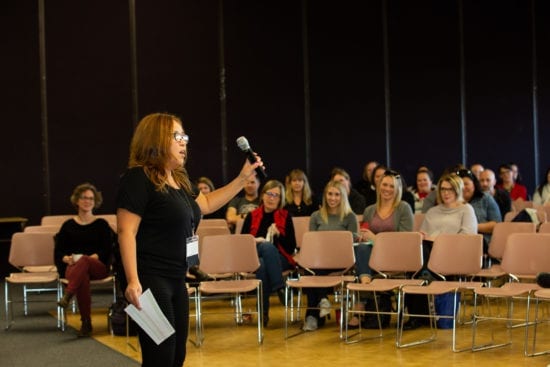
Dr. Pamela Rose Toulouse “But I don’t have Indigenous students in my school” is but one of the common excuses Dr. Toulouse has encountered from educators. Her suggestion is to liken reconciliation as a collective endeavour as are other large-scale challenges such as food security, climate change and equity, which touch anyone who has children, grandchildren, nephews and nieces, family and friends who comprise today’s generation and those to come. Confronting indifference and excuses also entails illuminating the contemporary contributions of Indigenous peoples – giving credit where credit is due for Indigenous inventions and inspirations for the “sport of hockey, medicines, potato chips and Dr. Pepper,” as Dr. Toulouse listed. Whereas curriculum will speak about residential schools and treaties, educators are charged with filling-in gaps by leading conversations about positive Indigenous role models and contributions that have been made by Indigenous peoples.
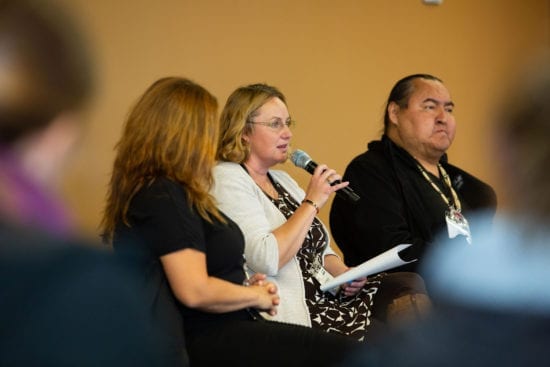
Julaine Guitton Panellist Julaine Guitton is a novel example of a non-Indigenous teacher who has prioritized the resiliency of Indigenous peoples within her classroom over topics of cultural genocide and residential schools. This approach, entrenched in the viewpoint that Indigenous peoples are not victims first, has proven effective among her fifth and sixth-grade students as project lead for Stavely Elementary School’s “Project of Heart.” The project entails general research about residential schools in Canada, followed by more narrowed research into a particular residential school, meeting with a residential school survivor and a culminating artistic act of reconciliation. In a rural township where many students live on farms and ranches, understanding Indigenous peoples’ connection to land and place was cornerstone to these discussions which, as Elder-in-Residence Francis First Charger illustrated, allows students to understand different people, different worldviews and interrelations.
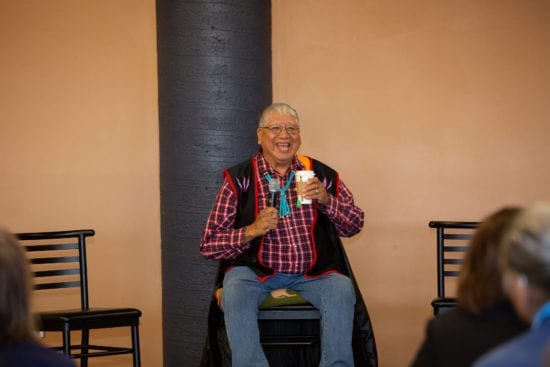
Francis First Charger “I remember where I was when the final report of the Truth and Reconciliation Commission was finally released, and I felt especially compelled as a teacher being in a position where I knew that I could help other people,” Guitton recalled. “I didn’t know how I would accomplish that, so I decided to just wear an orange t-shirt to school one day and begin a discussion with my students about what that meant.”
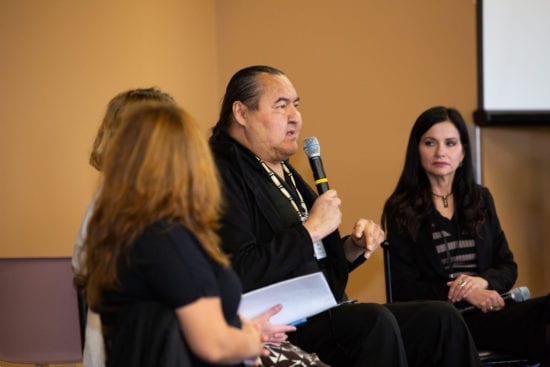
Ira Provost Ira Provost, Manager of the Piikani Nation Consultation, was Ms. Guitton’s community resource person throughout the project. With a career as an Indigenous liaison and cross-cultural educator, Provost found himself astounded by the depth and breadth of learning that had taken place, which transpired through speeches that the students had presented to school board trustees, the superintendent, Stavely’s school principal, FNMI support personnel and Elders from the Indigenous community during a class-organized community event.
All Indigenous peoples want, as Provost highlighted, is meaningful engagement, which forms the derivative of an ongoing commitment to starting early and moving beyond one-off endeavours.
“Reconciliation is about a thousand cups of coffee,” stated panel moderator Dr. Michelle Hogue, Associate Professor and Coordinator of the University of Lethbridge’s First Nations Transition Program, in her recap of the conversation. “It’s about sitting, listening, being present and building relationships.”
more ideas and resources on how to lead reconciliation initiatives with your students
- Education Canada Magazine: Truth and Reconciliation in the Schools
- Infographic for your classrooms and staffrooms: How teachers can integrate Truth and Reconciliation in their classrooms
- Fact Sheet: How can we embed Truth and Reconciliation in every school?
- Report and Research Reports
This event was made possible by the support of our generous partner and sponsors

-
It’s Time to Walk the (Digital) Talk
Comments Off on It’s Time to Walk the (Digital) TalkIt’s commonly understood that children acquire many behaviours, both good and bad, by watching the adults around them. In this vein, we aim to create school environments where young people are exposed to positive and caring adult role models. Unfortunately, this emphasis on positive modeling appears to fly out the window when implementing digital citizenship programs and curricula.
Take, for instance, the idea that young people should be critical readers online. Certainly, we know that young people struggle to identify fake vs. factual news, but a showed that they are a great deal better at it than older generations.1 We see this deficit playing out in schools when educators continue to use inauthentic examples and outdated checklists when teaching about how to determine the truthfulness of a digital site or article. And outside of school settings, young people need only glance online to see countless examples of adults sharing fake or photoshopped images without stopping to check the source or verify the content.
Another oft-touted digital citizenship narrative is the necessity to keep one’s online presence squeaky clean; this is frequently framed in alarming ways, with adults telling young people that a single digital mistake can cost them future careers or even the chance of a university education. Of course, most of those same adults who warn about the dire consequences of online errors grew up in a pre-Internet world, one in which typical teen behaviours and “missteps” were not constantly being permanently documented, shared, and even glorified online. It seems unfair to hold today’s youth to standards that most of us (if we are being honest) could never have lived up to ourselves. Even the simplest, most basic directive to “be kind” online is problematic when adults regularly criticize, harass, and even threaten each other on social media and in the comments section of articles.
If there is any hope of helping young people to become positive digital citizens, we will first need to step up and model the behaviours we want to see. Our current practices are often hypocritical, and at worst downright counterproductive. As educators, parents, and adults generally, we must begin to practice what we preach and to follow our own instructions to be wise, kind, and positive citizens in the (digital) world.
First published in Education Canada, December 2018
1 https://bit.ly/2Ar4XLQ
-
21st Century Citizens
Comments Off on 21st Century CitizensRemember when the Internet was so full of promise? There was so much information – on everything! – available at our fingertips. So much more connection possible – with long-lost friends, with people from around the globe who shared our challenges, interests or concerns. Important news, causes, and initiatives could reach so many more people. The world took a giant step closer to becoming a true global village.
That promise is still there, but the dark side of this instant connectivity has become starkly apparent. If we have more information than ever before, we also have more disinformation. If we can recruit more people to save the whales, we can also recruit them to join the neo-Nazis. We can connect with people, and we can also inundate them with brutal hate mail. Extreme polarization seems as likely an outcome as a common understanding.
In this context, democratic countries have never had a greater need for informed, active citizens who can see beyond narrow self-interest and grandiose claims and set their sights on positive change. We need savvy users who can engage online, yet protect their privacy and well-being. We need critical citizens who are able to assess both the value and flaws in our institutions and policies. In this issue, we explore how educators can engage students in civic issues within the shifting landscape of the digital age.
And yes, this is a charge that our schools must take on, alongside so many other requirements. Joel Westheimer points to disturbing signs that globally, democracies are weakening, and warns that civic education is more than teaching good behaviour online or off: “ ‘Good character’ is insufficient for safeguarding and strengthening democratic institutions and traditions.” Erica Hodgin and her colleagues write, “Teachers can, and should, play a pivotal role in supporting all youth to develop the sense of agency, motivation, and skills to use digital media to participate in democratic life.” For one inspiring example of how it can be done, check out Casey Burkholder’s account of how students use cellphilming to engage with and communicate issues that are meaningful to them.
I hope you will find lots to think and talk about in this issue, and in our web-exclusive articles. There’s been a lot of attention paid to the education students need to participate in the workforce of the future. Surely it’s at least as important to prepare students to be effective citizens in a world filled with critical challenges.
Photo: Dave Donald
First published in Education Canada, December 2018
-
Self-Reg Summer Symposium 2019
Comments Off on Self-Reg Summer Symposium 2019Join Dr. Stuart Shanker and the TMC crew, July 8th – 11th 2019, for our 5th annual Self-Reg Summer Symposium. Our theme this year is Self-Reg and Democracy: The Future lies in the Hands of Self-Reg Parents, Schools, and Communities.
SRSS 2019 will focus on how Self-Reg can help sustain democracy and civil engagement, one community, one classroom, one family, one child at a time. How can Self-Reg help us raise today’s kids in ways that promote the prosocial behaviour and civic engagement that society needs? -
Changemaker Education Summit
Comments Off on Changemaker Education SummitThis experiential K-Post-Secondary changemaker education day will give participants the opportunity learn from youth and the ingenuity of our Canadian youth-focused Ashoka Fellows. By providing an immersive experience in living a changemaker education, Ashoka Canada and Rideau Hall Foundation aim to further our goal of helping all young people see themselves as Canada’s future innovators who create change for the good of all.
In this unique un-conference, educators will learn from and alongside young changemakers with some of the most creative minds in the country.
-
From a focus on teaching to a focus on learning
Comments Off on From a focus on teaching to a focus on learningDr. Sharon Friesen is a professor and the President of the Galileo Educational Network at the University of Calgary’s Werklund School of Education. Stephen Hurley sat down with the renowned scholar to discuss nationwide revisions and redesigns to teacher education programs, including where we’re headed next. For new and future teachers – including all you history buffs out there – this one’s for you!
Read the article that inspired this conversation.
A Future Wanting to Emerge: Challenging assumptions about teacher education
-
Living by Design with Stress Resilience
Comments Off on Living by Design with Stress ResilienceAn extraordinary day with a line-up of Experts in the field of Integrative Health. Learn from Margaret Boersma, OCT how to increase your energy, access to happiness and how to lower the emotional temperature in a relationship. Marise Foster, Integrative Healing Practitioner and Trainer will support you in discovering how food effects our well-being and provide physical solutions for lowering stress. Carrie Rubel, Wellness Expert will give you ways to recognize a stress response and shift it. Then teach your students practical strategies to increase their stress resilience. Sign up today!
-
Young Child Expo
Comments Off on Young Child ExpoWe invite you to our 16th Annual Highly Rated Conference on April 30th – May 3rd 2019, join us for 4 days of early childhood conference presentations. Over 80 presentations. Continuing Education Credits Offered. Over 1,000 attendees expected. Topics for Typically Developing Children topics on Special Needs, Autism, Speech and other conditions
Target Audience
Teachers, Special Education Teachers, Principals, Directors, Speech, OT, PT Therapists, Psychologists, & Social Workers. -
An Exclusive Conversation with Sandra Becker: 2018 Master’s-Level Pat Clifford Award Winner
Comments Off on An Exclusive Conversation with Sandra Becker: 2018 Master’s-Level Pat Clifford Award WinnerSandra Becker is a third-year Ph.D. candidate at the University of Calgary’s Werklund School of Education and the first-ever Master’s-level category recipient of the Pat Clifford Award for Early Career Research in Education. Stephen Hurley caught up with Sandra to speak about her latest work, “How can I build a model if I don’t know the answer to the question?: Developing student and teacher sky scientist ontologies through making.”to Learn more about Sandra Becker’s research, click here.
-
A raw discussion about truth and reconciliation in Canadian schools
Comments Off on A raw discussion about truth and reconciliation in Canadian schoolsFour young Indigenous leaders shared with us their thoughts about what Truth and Reconciliation means to them and how that should be reflected in our schools…
Take in this powerful discussion…
This conversation inspired an article published in the Summer 2018 issue of Education Canada Magazine. Read Carrying the Fire.
Illustration: Don McIntyre
Music: “Perfect” by Ketsa Music/UTK Publishing (www.ketsamusic.com)
-
Corwin Deep Equity Institute
Comments Off on Corwin Deep Equity InstituteThe Deep Equity framework addresses the dynamics of power, privilege, and the impact that implicit biases have on our schools and our students. This capacity-building approach to cultural competence and culturally responsive teaching empowers educators to close the racial and socio-economic gaps in student achievement. Deep Equity builds the foundation for organizational growth by giving educators the tools and skills to have authentic conversations, drive positive change, overcome equity barriers and become courageous leaders of cultural transformation.
The Corwin Equity Institute engages educators in the real work of school reform to create systemic change from the bottom up. Learning from real experiences of public school practitioners and students, attendees will leave with a renewed energy and a more engaging approach to their practice. Teachers and school leaders will gain a deeper understanding of how to impact change and discover what it takes to create more equitable learning experiences for all students.
At the Ottawa Deep Equity Institute, you will learn to:
- Build a climate of constructive collaboration
- Transcend the rhetoric of shame and blame
- Dismantle organizational barriers to equity and inclusion
- Connect cultural competence with student outcomes
- Implement action research and planning to achieve systemic change
-
9th Canadian EdTech Leadership Summit
Comments Off on 9th Canadian EdTech Leadership SummitI’m thrilled to invite you to participate in Canada’s 9th Canadian EdTech Innovation Summit — “Designing Sustainable Learning Environments.”
We’re challenging education & industry leaders along with students to join forces to help solve some of the most pressing challenges we face in education across Canada to get beyond pockets of innovation.
As we’re in the midst of finalizing our program, we have a call out for presenters and sponsors to support what promises to be an engaging and thought provoking day that will inspire and challenge you and your colleagues in raising the bar in keeping Canada at the forefront of innovation in education across the world!
New this year! We’re thrilled to announce our partnership with University of Toronto Mississauga as the host site of this year’s Summit.
Please don’t hesitate to drop me an email rober@mindsharelearning.com or call me at, 416-569-2106 to discuss how we can partner with you to maximize you and your team’s participation in our national EdTech Leadership Summit.
-
Self-Reg and Inclusive Schooling Face-to-Face Seminar
Comments Off on Self-Reg and Inclusive Schooling Face-to-Face SeminarDr. Susan Hopkins, executive director of The MEHRIT Centre, will engage participants, using an inquiry-based design, to explore the relationship between stress, is one of the key unaddressed issues in inclusive special education, and how Shanker Self-Reg can help educators to better understand and support students with special needs.
-
Self-Reg: A Great Tool for Early Kindergarten Educators – Face-to-Face Seminar
Comments Off on Self-Reg: A Great Tool for Early Kindergarten Educators – Face-to-Face SeminarSelf-regulation is now an important concept in Kindergarten education, one of the four frames of early learning in Ontario’s Full-Day Early-Learning Kindergarten curriculum. In this Institute Dr. Susan Hopkins, executive director of The MEHRIT Centre, will present and unpack the concept of self-regulation developed by Dr. Stuart Shanker.
-
Desjardins Coopérathon 2018
Comments Off on Desjardins Coopérathon 2018The 2018 Cooperathon will revolve around the tracks of finance, education, healthcare and energy.
The Cooperathon is both a platform and a movement. The platform is a place for learning and co-creating where projects with a big social impact take shape. The movement is a community of people and organizations who believe cooperation, innovation and entrepreneurship can make a positive difference in the world.
-
Your Top 10 Summer Reading List
Comments Off on Your Top 10 Summer Reading ListAre you seeking promising practices and the latest research and ideas from like-minded educator-leaders to challenge your thinking? Add these hand-picked articles from our Editor Holly Bennett to your summer reading list and boost your knowledge before the next school year begins!
EDUCATOR WELL-BEING
In this issue, we examine what can be done to support the well-being of all educators and reduce their levels of stress, role overload, and exhaustion. Many of our contributors make the very good point that the mental health of educators has a direct impact on the well-being of the students in their care; and that therefore we should support teachers’ well-being in order to ensure they are able to bring their best to their students.
- Creative Caring for Teachers: How a whole-school well-being approach can support everyone’s mental health
by Sue Roffey
- Healthy Principals, Healthy Schools: Supporting principals’ well-being
by Dr. Katina Pollock - Teach Resiliency: A resource for teacher and student wellness
by Susan Rodger, Kathryn Hibbert and Alan Leschied
WORKING WITH PARENTS
Parental engagement is a complex, double-edged issue that affects every level of education, from the student at home to provincial policy. From the importance of parent support to a child’s progress at school, to the tensions around parent advocacy for their children’s individual needs, to the political clout groups of parents can wield (for good or ill), this theme has many potential facets.
- The Missing Link: Parents are key players in sustainable educational change
by David Price - Bear With Me: Teaming up with parents of students with special needs
by Jeffrey MacCormack and Dr. Ian Matheson
SIGNALS OF CHANGE
In this issue, a cross-section of our network contributors – teachers, principals, superintendents, academics and students – explore how emerging big ideas could be creatively applied to education, why it may be important to do so, and the drawbacks or risks that need to be guarded against. From the aging population to micro-credentialing and artificial intelligence, what lies ahead for education?
- A Virtual Education: Artificial intelligence and virtual reality are changing the way we learn
by Lora Appel, PhD - Micro-credentially: Giving credit where credit is due
by Chris Cluff and Stephen Hurley
TRUTH AND RECONCILIATION IN THE SCHOOLS
How can teachers, who may know little themselves about Indigenous cultures and issues, authentically incorporate respectful, accurate information and experiences about Indigenous history, worldview, ways of teaching and learning, and contemporary issues into their classrooms? In this issue, we invite explorations of good practice examples, researchers’ insights on how we can “scale up” Indigenized learning, and other articles aimed toward helping schools move forward towards education for reconciliation.
- “First, We’re a School”: Teachers and school leaders play a key role in reconciliation, but policy makers must resource schools for equity of opportunity and success
by Dr. Gordon A. Martell - Truth and Reconciliation in YOUR Classroom: How to get started, and who can help
by Dr. Kate Freeman, Shawn McDonald and Dr. Lindsay Morcom
- Carrying the Fire: A youth talking circle on truth and reconciliation in our schools
by Dr. Michelle Hogue and Holly Bennett
Enjoy your summer!
- Creative Caring for Teachers: How a whole-school well-being approach can support everyone’s mental health


IDEAS TO SUPPORT EDUCATORS : Subscribe to the EdCan e-Newsletter
Quality research, reports, and professional learning opportunities.