Archive
-
The Signal: A curriculum shift from content to connections
Comments Off on The Signal: A curriculum shift from content to connectionsWhat?
In response to an evolving global landscape, and to better equip students with the skills and abilities needed for the future, British Columbia is in the process of integrating a new curriculum for Grades K-12.
So What?
B.C.’s new curriculum provides greater flexibility to teachers, focusing on depth of understanding rather than simply recalling and regurgitating “Google-able” facts. This increased flexibility allows students to explore the curriculum through the lens of their individual passions and interests. By extension, the relevancy of curriculum is increased for both teachers and students. Exploring curriculum through the lens of a student’s interests allows for a more strength-based approach to education, providing increased opportunities for students to succeed based on their unique skills and abilities. Ultimately, it should result in greater engagement and ownership, creating a framework for meaningful learning experiences.
As well, by encouraging the development of a broader and more diverse range of skills, students will be better equipped for the challenges and opportunities that they will face in the future.
Now What?
This shift from content to connections necessitates a renewed focus on relationships between teachers and students. A culture in which relationships are valued as an essential component for student success requires an investment of time. In the midst of busy days, teachers must be provided with the time to learn the stories and context of their students, allowing them to facilitate meaningful connections between the curriculum and individual student interests. As such, districts and schools much invest in both informal and formal structures, providing a necessary framework in which to grow and sustain meaningful relationships.
The Advisory Model is one such example of a formal structure. This model provides a sustained, intentional and focused block of time, built into the school day, that allows teachers to connect with their students without the pressure to deliver specific content or curriculum. In an Advisory Model, connections are privileged over content. Research clearly indicates that students who feel like they belong, who are understood and supported by the adults in their school community, are more likely to achieve social and academic success.
Participant reflections on signals of change
Participants at the 2016 EdCan Network Regional Exchanges discussed more signals of change than we could possibly cover — but we wanted to share a sense of their range and significance. We invited a number of participants to write a short piece reflecting on one of the signals they brought to the Exchange.
Discover more signals at: www.edcan.ca/RegExReport
We want to know what you think. Join the conversation @EdCanPub #EdCan!
Photos: Max Cooke and Yolande Nantel
First published in Education Canada, March 2018
-
The Signal: Increased focus on closing the gaps for students with learning disabilities
Comments Off on The Signal: Increased focus on closing the gaps for students with learning disabilitiesParticipant reflections on signals of change
Participants at the 2016 EdCan Network Regional Exchanges discussed more signals of change than we could possibly cover — but we wanted to share a sense of their range and significance. We invited a number of participants to write a short piece reflecting on one of the signals they brought to the Exchange. Some appear below; others are published on the EdCan Network website.
What?
In 2016, the Ontario Ministry of Education launched the Learning Disabilities Pilot Projects. The goal of these projects is to provide better support for students with Learning Disabilities. Working with eight publicly funded school boards, the Ministry is running three-year intensive reading pilot projects. All eight school boards are using the Empower Reading Program, an evidence-based reading remediation program developed by the Hospital for Sick Children. In addition to addressing reading, school boards are also tasked with looking at ways to support the social-emotional functioning of students with learning disabilities and access to assistive technology.
So what?
Focused reading instruction takes place in the primary grades. As the system moves from “learn to read” to “read to learn,” students who struggle with reading after Grade 3 often receive little support or remediation to improve their skills. While some reading remediation programming does exist for older students, it is not widely available across the province, and varies greatly from school board to school board. As students get older, and fall farther behind their peers, positive academic and social-emotional outcomes become harder to achieve.
During the 2015-2016 school year, the Ontario Ministry of Education conducted a Consultation into the Provincial and Demonstration Schools, which are run by the Ministry and support students who are Deaf or hard of hearing, blind, Deaf/blind or have severe learning disabilities. At the time of the Consultation, many feared that the government was looking to close these schools. As a result of the findings, these schools remain open, and this pilot project was created to take some of the best practices of the demonstration schools, and reach more students through implementation at the school board level. As an educator who was working at a Demonstration School at the time of the Consultations, and who believes ardently that we must do what we can to find a way to support all students, the pilot projects represent a recognition that change is needed if we are to truly commit to teaching all students.
What now?
Moving forward, school boards can build upon the proven success of research-based reading remediation programs, such as Empower, and begin to implement them widely. We can recognize the emotional toll that learning challenges can place on a student, and develop social-emotional supports. All educators can refuse to accept the premise that a student with a learning disability may never learn to read well, and seek out ways to support all students to achieve success.
Discover more signals at: www.edcan.ca/RegExReport
We want to know what you think. Join the conversation @EdCanPub #EdCan!
Photos: Max Cooke and Yolande Nantel
First published in Education Canada, March 2018
-
The Signal: New media, new literacies
Comments Off on The Signal: New media, new literaciesWhat?
Whether it’s news, social media or classroom learning resources, images and video are gaining primacy over print. Many teens use Snapchat to share spontaneous images and video and many use it as their news source. Most classrooms have a projector connected to a computer, making it easy for teachers to use many kinds of media to teach.
If you want to learn how to repair something, learn a computer program, play the piano, or even how to write, search YouTube. You can share what you know, what you can do or the strange thing your cat did, on Youtube, Vimeo, Daily Motion, Twitter, Instagram or Imgur. If you’re interested in ideas or stories, you can listen to or create a podcast. Gamers can live stream their own game play or watch others play on Twitch. Audience size? Try 100,000,000 visitors a month. There are also many sites where you can take a course or create a course for free or a fee.
So what?
We need to prepare students to make sense and meaning with these new media texts that are increasingly a huge part of what we consume and create. And that means we will have to give up some old practices and attitudes.
As schools have been print-based, many in education continue to privilege print texts and to narrowly define literacy as the ability to read and write print texts. Rarely are we even teaching how print texts are written, presented and read differently online.
We talk about multiple intelligences in education, yet how prevalent are tests or exams that use multiple intelligences and multiple literacies?
Now what?
We need to invest our resources into teaching students how to critically analyze images and video and other new media. We need to teach our students the persuasive and expository techniques used in images and video and how to use them effectively. We can have students create video essays and post them online.
Traditional reading and writing texts are still important and won’t be going away. It is now a necessity, though, that schools teach students how to “read” and “write” with new media with the same urgency for creating literate students as before.
Rather than dragging past literacy definitions into the present, we need to bring present literacies into the future.
Participant reflections on signals of change
Participants at the 2016 EdCan Network Regional Exchanges discussed more signals of change than we could possibly cover — but we wanted to share a sense of their range and significance. We invited a number of participants to write a short piece reflecting on one of the signals they brought to the Exchange.
Discover more signals at: www.edcan.ca/RegExReport
We want to know what you think. Join the conversation @EdCanPub #EdCan!
Photos: Max Cooke and Yolande Nantel
First published in Education Canada, March 2018
-
The Signal: The average is nobody
Comments Off on The Signal: The average is nobodyWhat?
We are leaving out the majority when we design and implement curricula to meet the needs of the average student and the average teacher. This is the opposite of what most people believe about being average. We use the phrase “average Joe” to mean just about anybody but it actually describes virtually nobody. As Lori Hough wrote,
Schools were designed during the industrial age by people who were ‘absolutely obsessed’ with averages because averages worked so well in managing factories. The goal wasn’t to nurture creativity and develop individuality. The system mostly accomplished what it set out to do: prepare students for standardized jobs in an industrial economy. Since then, we have continued to think that the average — a human invention — represents everyone or that any deviation from the average is what defines you.2
So what?
If we are truly going to design education to meet the needs of all students, we need to start thinking about individuals. Who is our audience? Who are the primary benefactors of teachers’ work? In answering this question, we need to consider a paradigm shift in our thinking about what we are teaching and how we teach it. This is important to our work in developing an education system to support universal design for learning. The word “universal” might make some of us leery, thinking that it’s just another way of describing average. But it really means recognizing and celebrating diversity in our schools and in our curricula.
Now what?
To quote Bernie Sanders, “Change happens from the bottom up.” So it starts in the classroom with teachers and students. We need to ask: Is the way I’m teaching in the best interests of the students or in my own best interests? The answer to this question may lead us to advocate for more flexibility and autonomy. And this means we need to be prepared to be flexible, which is much easier said than done. It is much easier to keep doing things the way we have always done them. Change is hard but once there is evidence of a few individuals engaged in open, safe, collaborative dialogue about what we are doing in the classroom, momentum will grow. We can prepare for the challenges of change by inviting these classroom leaders to share their experiences at school board and government levels. Check out Shelley Moore’s bowling analogy3 about teaching for a great perspective: “We have to change our aim.”
Participant reflections on signals of change
Participants at the 2016 EdCan Network Regional Exchanges discussed more signals of change than we could possibly cover — but we wanted to share a sense of their range and significance. We invited a number of participants to write a short piece reflecting on one of the signals they brought to the Exchange.
Discover more signals at: www.edcan.ca/RegExReport
We want to know what you think. Join the conversation @EdCanPub #EdCan!
Photos: Max Cooke and Yolande Nantel
First published in Education Canada, March 2018
2 L. Hough, “Beyond Average” (2015). www.gse.harvard.edu/news/ed/15/08/beyond-average
3 S. Moore, “Transforming Inclusive Education” (2014). www.youtube.com/watch?v=RYtUlU8MjlY
-
The Signal: Understanding neuroplasticity
Comments Off on The Signal: Understanding neuroplasticityWhat?
Neuroscience evidence now proves that our brains are malleable, constantly creating new neural pathways and disrupting others. This means, in essence, that the pathways to create the patterns that we use to make decisions, which affect our learning behaviours, can be influenced by our teaching strategies.
So what?
This signal has the potential to be a serious game changer in education. The growing understanding of the neuroplasticity of the brain will have a tremendous impact on our ability to teach students and ultimately on student learning.
In my 27 years in education, it has been my observation that previous initiatives aimed at optimizing student learning, although well intended, were rarely successful. Until recently, the neurological science to support why a learning directive should be effective has not been available. With MRI diagnostic information, we are now able to have a clearer and more accurate understanding of how we learn, both physiologically and psychologically, and neuroscience is at the forefront of this revolution.
It is critically important for educators to understand the concept and implications of neuroplasticity, and how it can influence our teaching and the learning environment we provide for our students. We, and our students, need to view our brains as a muscle – one that, when exposed to the right environment, gets stronger. A growth mindset is our belief that intelligence can be developed, and that we, as educators, need to adopt the right strategies, effort and modeling to effectively assist students to learn and adapt.
Now what?
As school leaders, we need to ask ourselves, “What would the outcome be for our students if we developed a growth mindset with our staff?”
Research indicates a number of ways to promote a growth mindset:
• Model a growth mindset via professional development opportunities.
• Create a culture where failure is viewed as a learning opportunity, and where people feel safe to challenge themselves.
• Advance the importance of self-reflection and provide consistent opportunities to do so.
• Design a feedback system that is formative and responsive for staff, in which staff are active participants.
Developing a growth mindset is a long journey that requires sustained attention and focus. The desired outcome for our students – that they become more resilient, more intelligent and more prepared for effort – is a goal worth caring about.
Participant reflections on signals of change
Participants at the 2016 EdCan Network Regional Exchanges discussed more signals of change than we could possibly cover — but we wanted to share a sense of their range and significance. We invited a number of participants to write a short piece reflecting on one of the signals they brought to the Exchange.
Discover more signals at: www.edcan.ca/RegExReport
We want to know what you think. Join the conversation @EdCanPub #EdCan!
Photos: Max Cooke and Yolande Nantel
First published in Education Canada, March 2018
-
The Signal: Mapping language acquisition
Comments Off on The Signal: Mapping language acquisitionWhat?
MIT professor Deb Roy1 wanted to understand how his infant son learned language, so he wired his house with video cameras and parsed 90,000 hours of video to interpret how his son turned the sound “gaaa” into “water.” Roy used visual manipulations of data to create space and time “hotspots” that provided clues around language acquisition. These “hotspots” or data worms led to insights around how language develops in the very young.
So what?
Observing the work of academics, statisticians, program evaluators and data specialists clues us in to how our world is evolving and changing. These professionals are modeling new ways to combine perspectives, methods, information and technologies. Researcher Deb Roy maps data across the space and time continuum. Big data parses data for causality and evidence. Social network mapping organizes complex data into relational maps. New mapping technologies combine population data with geospatial innovation across disciplinary data sets. A data revolution is underway.
Now what?
Educators need to respond to this signal of change through evolving practice and a nimble interaction with information and technology. New data approaches offer incredible opportunities to leverage data to address important social issues. Amplifying innovative thought and preparing students to respond to multiple ways of thinking becomes a 21st century imperative.
Participant reflections on signals of change
Participants at the 2016 EdCan Network Regional Exchanges discussed more signals of change than we could possibly cover — but we wanted to share a sense of their range and significance. We invited a number of participants to write a short piece reflecting on one of the signals they brought to the Exchange.
Discover more signals at: www.edcan.ca/RegExReport
We want to know what you think. Join the conversation @EdCanPub #EdCan!
Photos: Max Cooke and Yolande Nantel
First published in Education Canada, March 2018
1 www.ted.com/talks/deb_roy_the_birth_of_a_word
-
The Signal: Questioning pedagogy
Comments Off on The Signal: Questioning pedagogyWhat?
Traditionally, students would “take blame” or ownership for what they know and don’t know. This mindset is shifting. The tables have turned. Students are starting to ask good questions about assessment practices and pedagogy, and to look critically at the teacher’s professional practice with a good sense of what’s fair and reasonable. However, schools are not a safe place for students to express their questions about how they’re being taught and assessed. They remain silent. They find their voice, however, on social media. With photos and quick comments, students express their concerns and feelings of injustice online with peers and possibly the world.
So what?
Students want to be active participants in their learning. They want a voice and have a strong desire for student agency and autonomy. The school system needs to respond. Students feel powerless and disengaged when they are expected to be complacent and compliant. Why should students wait for high school to end before figuring out what they want and love to do? K-12 is the time to play, experiment, and explore oneself and one’s strengths. The teacher or school leader should not be a barrier to this learning process. Fear-based learning comes from fear-based leadership. Students should feel safe providing formative feedback to teachers as advocates of their learning to enhance their learning experience in K-12 schools.
Now what?
Listen to students. Be responsive. Take action. This goes beyond the annual student forum or student council meeting. It’s about taking appropriate pedagogical action based on student feedback. This is an opportunity for teachers and school leaders to reflect on practice, policy, and doing what’s best for students and student learning. Ask, “Would you want to buy a ticket to attend your class or school?” Self-reflection, student feedback, and taking action must be visible, restorative, and responsive.
We need to pay attention to what students are saying and not get burdened or blinded by the grind or rigour of our work. Going beyond the ego and into a place that’s vulnerable, kind, and receptive, will help us become true partners in our students’ learning.
Participant reflections on signals of change
Participants at the 2016 EdCan Network Regional Exchanges discussed more signals of change than we could possibly cover — but we wanted to share a sense of their range and significance. We invited a number of participants to write a short piece reflecting on one of the signals they brought to the Exchange.
Discover more signals at: www.edcan.ca/RegExReport
We want to know what you think. Join the conversation @EdCanPub #EdCan!
Photos: Max Cooke and Yolande Nantel
First published in Education Canada, March 2018
-
The Power of the Personal
Comments Off on The Power of the PersonalNancy Doherty taught all my children Grade 3 at West Preparatory Junior Public School in Toronto. We all have fond memories of her. Going the extra mile for students is not easy, but it’s always appreciated and remembered by students and their parents.
I have three sons and one daughter – and all their report cards from Kindergarten to Grade 12. Among the piles, Mrs. Doherty’s reports stand out. In my second son Jiayin’s Grade 3 report card, she wrote, “He is very well respected for his academics, but also for his honesty, sense of fair play and tremendous sense of humour… We all enjoy Jiayin’s weekly reading of poetry. He has a very strong sense of self… He is a very accomplished and sensitive writer.” These lines weren’t copied and pasted from a comment bank. They are personal. Mrs. Doherty wrote them especially for my son. Actually, I wasn’t even aware of my son’s funny side back then. Mrs. Doherty discovered a gem in my young boy.
My daughter, Mingmei, also had a terrific year in Grade 3. Knowing that Mingmei was ahead of her peers in math, Mrs. Doherty prepared booklets full of difficult problems for her to solve. She enjoyed the challenging questions a lot. In Mingmei’s report card, Mrs. Doherty wrote, “She is an outstanding individual, happy, positive and inquisitive… During class discussions, she is able to make high-level connections across the curriculum and to the world beyond… Her imaginative, creative stamp is left everywhere!” Again, these comments are unique. Mrs. Doherty wrote them just for my daughter, who doodled all over the place. Instead of criticizing her, Mrs. Doherty saw creativity in my little girl.
In my eldest son Weilan’s Grade 3 report card, Mrs. Doherty wrote, “Weilan is a delightful, caring and studious young man, who always gives his best effort… He is thought of in the class as someone who is kind, respectful and honest.” These comments are special, too, which is why I still remember them after so many years.
Mrs. Doherty was a loving teacher who seemed to have a magical touch with her young charges. All my children were shy, but she managed to bring them out of their shells. One day Weilan, a quiet boy, bravely made the morning announcements in the office. When he came back to his classroom, Mrs. Doherty hugged him, pleased and proud that her timid student had stepped out of his comfort zone. “She smelled like coffee,” my son told me. My third son, Haiyang, was painfully shy (In Grade 5, he was diagnosed with Asperger’s Syndrome, a mild form of Autism). But in Mrs. Doherty’s class, he read his comic books in front of his classmates!
In Haiyang’s report card, Mrs. Doherty wrote, “Haiyang loves to express himself through written/art work (comics)… He is an inquisitive, conscientious student who can always be depended upon to do his very best. His knowledge of the world and his incredible imagination take him to examine the unusual.” Once again, these are not cookie-cutter comments. Mrs. Doherty took time to write something particular for each of my children.
Mrs. Doherty not only encouraged and challenged my children, but also encouraged and challenged me. It was she who said to me, “You are good with children. You should be a teacher.” So in the fall of 2005, I, an immigrant and a mother of four young children, enrolled in the Bachelor of Education/Ontario Teacher’s Certificate of Qualification Program at Ontario Institute for Studies in Education of the University of Toronto. The following year, I became a teacher of the Toronto District School Board.
We all meet many teachers in our lives. But only few of them have had a profound influence on us. They are difference makers. Mrs. Doherty is definitely one of them.
We want to know what you think. Join the conversation @EdCanPub #EdCan!
Photo: iStock
First published in Education Canada, March 2018
-
Promoting an Activist Teacher Identity
Comments Off on Promoting an Activist Teacher IdentityWhat does it mean to be a professional teacher? What is the work of professional teachers? How do we construct our understandings of teacher professionalism? These are all questions I explore with pre-service teachers in my undergraduate teaching – most just two or three years removed from being high-school students themselves. They find navigating the complexities of their transitioning teacher identity an arduous task. In their weekly blog posts, they have many of their own ponderings: “How do we as teachers voice our opinions in a professional manner?” “How do we learn professionalism?” “Should teachers be allowed to self-regulate?”
These questions are precisely the reason I moved from being a K-12 educator to being a professor of education – to challenge future generations of teachers to question traditional notions of the work of professional teachers and promote the development of an activist teaching identity. Teacher activism, however, has not always been appreciated. We often see this reflected in the media (and sometimes in research) when teachers are undertaking labour action or negotiating new contracts. Thus, it is important to note that activism in teaching is not just about overt actions like strikes and work-to-rule situations. Rather, an activist teaching identity implores teachers to embrace their collective voice and refuse to yield to narrow, managerial, understandings of teacher professionalism.
For some time now there has been increasing recognition that, in an educational climate of accountability measures and increased top-down control, there is a need to position the work of teachers as extending beyond the classroom and situate teachers’ role in education within the broader context of schooling. For instance, Sockett stated:
“Professionalism requires that we go beyond the classroom performance or classroom activity as descriptors of teaching acts to the complete and complex role a teacher fulfills. Public education needs teachers who able to not only shine in the categories mentioned within the classroom but are also able to undertake the demands of partnership with other professionals, of collaborative leadership, and of a wider role within the school.”1
Hargreaves and Goodson2 proposed the idea of “post-modern professionalism.” They believed that teacher professionalism should encompass engagement in collaborative cultures to solve problems of practice, rather than simply implementing the mandates of others, and self-directed professional learning rather than compliance with the “endless change demanded by others.”3 They advocated for increased professional discretion and opportunities for teachers to engage in curriculum and assessment matters. Sachs4 also re-defined teacher professionalism with her notion of “transformative professionalism.” Here, professional teachers are seen as broadly contributing to the quality of education; they advocate for equitable policies that challenge the status quo, their purview is extended to include debates over the purposes of schooling, and their success is judged on more than students’ performance on standardized tests.
These frameworks and others like them promote democratic understandings of professionalism. Unlike managerial notions of professionalism, which firmly place teachers at the bottom rung in a hierarchical chain of command, democratic professionalism is rooted in teacher empowerment. Here, the lines between those at the top and those at the bottom are blurred, positioning teachers as engaging in higher levels of reflection and taking an inquiry stance in examining educational practices and policies. Teachers are encouraged to participate in innovative leadership opportunities and self-directed professional learning experiences such as teacher networks, action research projects, and collaborative inquiries. It is this kind of understanding of the work of teachers that will propel the teaching profession into the next century.
There is a saying that “the best teachers should stay in the classroom.” This is an outdated way of thinking. While the work they do in classrooms with students is undoubtedly the core work of teachers, we need to reframe our understanding of the daily work of teachers to better support them in doing that core work. The best teachers need to collaborate with other teachers and share their experience and wisdom to enable other teachers to reach their full potential and grow the profession collectively. This is what Hargreaves and Fullan refer to as social capital – professional experiences that allow teachers to learn with and from one other. They argue:
“Some of the most powerful, underutilized strategies in all of education involve the deliberate use of teamwork – enabling teachers to learn from each other within and across schools – and building cultures and networks of communication, learning, trust, and collaboration around the team as well.”5
Teachers cannot engage in that kind of mutual learning and teamwork when they spend their whole workday delivering curriculum in isolation from other educators. In Singapore, teachers sometimes spend less than half their workday teaching in the classroom. The remainder is spent engaging in myriad learning and leadership experiences. This has the dual purpose of capitalizing on the wealth of knowledge teachers bring to the larger system and continuing to develop their teaching and leadership skills.
We need to re-imagine teachers as leaders, learners, and policy actors whose influence goes beyond the walls of any one classroom.
By contrast, our recent study, The State of Educators’ Professional Learning in Canada,6 found that while many teachers have access to high-quality learning experiences, much of this work is done outside of the school day – an add-on to an already onerous list of professional responsibilities. Issues of time, workload and work intensification were identified as major challenges and concerns, with Canadian teachers and school leaders reporting from 48 to 59 working hours per week, compared to an average work week of 38 hours across 35 countries in the Teaching and Learning International Survey.7 Further to this, opportunities for teachers to make active choices over the content and type of professional learning they engage in are important. Approaches to develop teacher leadership, where teachers lead their own and collaborative professional learning, can be beneficial for professional knowledge and practices and for students’ learning experiences. This is the driving force, for example, behind Ontario’s Teacher Learning and Leadership Program8 and Saskatchewan’s Facilitator Community.9 Both programs position teachers as not only leaders of their own learning but leaders of the learning of their peers.
If we really want educators to be the change agents and 21st century proponents our students desperately need, we need to re-imagine teachers as leaders, learners, and policy actors whose influence goes beyond the walls of any one classroom. We need to create hybrid teacher leadership roles that allow teachers to work both in the classroom and in other capacities to lead learning across the profession. As demonstrated in the international examples cited earlier, it is possible for teachers to enact and espouse expanded notions of what it means to be a professional teacher. In doing so, these teachers are laying the foundation for the continued promotion of activist teaching identities that challenge our understanding of a typical day in the life of a teacher. While there are examples of this kind of teacher learning and leadership across Canada, it is not the norm.
What kind of impact can we expect from professional learning that is an add-on to an already full day or week of teaching? What other ways of organizing the work of Canadian teachers might better acknowledge the important role ongoing professional learning serves in teacher development? How might educational systems better leverage the leadership, knowledge, and skills of teachers? What opportunities exist to grow the social capital of educators? These are important questions to ponder as we continue to grapple with ongoing tensions around teacher autonomy and professionalism.
We want to know what you think. Join the conversation @EdCanPub #EdCan!
Illustration: Drante (iStock)
First published in Education Canada, March 2018
NOTES
1 H. Sockett, The Moral Base for Teacher Professionalism (New York: Teachers College Press, 1993), 8.
2 A. Hargreaves and I. F. Goodson, “Teachers’ Professional Lives: Aspirations and actualities,” in Teachers’ Professional Lives, eds. Goodson and Hargreaves (London: Falmer Press, 1996), 1-27.
3 Ibid., p. 21.
4 J. Sachs, The Activist Teaching Profession (Philadelphia: Open University Press, 2003).
5 A. Hargreaves and M. Fullan, Professional Capital: Transforming teaching in every school (New York, NY: Teachers College Press and Toronto, ON: Ontario Principals’ Council, 2012), 89.
6 C. Campbell, P. Osmond-Johnson, B. Faubert, et al., The State of Educators’ Professional Learning in Canada: Full report (Oxford, OH: Learning Forward, 2017).
7 Organisation for Economic Cooperation and Development (OECD), New Insights from TALIS 2013 – Teaching and learning in primary and upper secondary education (Paris: OECD, 2014).
8 A. Lieberman, C. Campbell, and A. Yashkina, Teacher Learning and Leadership: Of, by and for teachers (London & New York: Routledge, 2017).
9 P. Osmond-Johnson, “Leading Professional Learning to Develop Professional Capital: The Saskatchewan Professional Development Unit’s Facilitator Community,” International Journal of Teacher Leadership 8, no. 1 (2017): 26-42.
-
Deep Learning
Comments Off on Deep LearningHow do we create the needed change to move from a system focus on content acquisition to a mindset that helps develop and grow this content knowledge in a deeper, more meaningful manner and helps all students to excel? Michael Fullan, Joanne Quinn and Joanne McEachen share some strategies and answers in their new book, Deep Learning: Engage the world change the world.
This book does not attempt to sell a pre-packaged program, nor does it encourage teachers to make subtle shifts in practice. Deep Learning shares an effective mix of the why and the how of Deep Learning through theory, strategies, and successful examples to create a cultural shift to “attack inequity with excellence.” Educators can tap into the strengths and talents of teachers and learners to better engage, make learning more meaningful, and “help all young people to flourish.” The authors describe a “fusion of the most effective pedagogical practices with emerging innovative practices that together foster the creation and application of new ideas and knowledge in real life.”
The authors do not simply share what is wrong with education; rather, they choose a strengths-based model by identifying effective pedagogies that occur in pockets within schools. They build on these examples to create system-wide change. By focusing on their 6 C’s (character, citizenship, communication, collaboration, creativity, and critical thinking – which align very well with the focus on Core Competencies in the redesigned curriculum here in British Columbia), conditions are created for deep learning and students gain the knowledge and skills they need to flourish in school and beyond.
As a principal, I thoroughly enjoyed the balance of research, examples, and ideas to move learning deeper in schools. The book is a fantastic entry point to deep learning and educators can go on to use the New Pedagogies for Deep Learning website (http://npdl.global) to watch videos, read additional resources, and connect with other educators from around the world who are working to shift their mindset and create this change. Educators can use this book as a resource to start the conversation or continue the dialogue to help create the needed shift in pedagogies and culture to move to deeper learning in schools.
We want to know what you think. Join the conversation @EdCanPub #EdCan!
Corwin, 2017 ISBN: 978-1506368580
Photo: Dave Donald
First published in Education Canada, March 2018
-
Boys Do Cry
Comments Off on Boys Do CryAs a young boy, I never quite fit the mould for masculinity placed before me. Singing the latest Spice Girls songs and playing with my Furby came naturally to me, as did exuberantly expressing my various emotions. As a result, I was sometimes deemed “too sensitive” or “soft.”
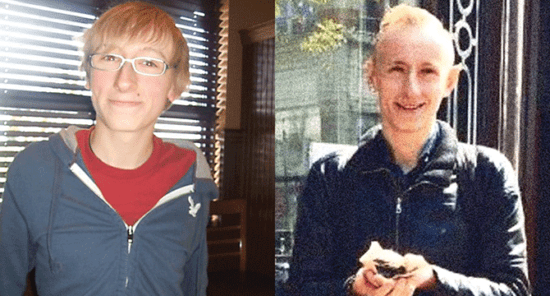
While I never questioned my gender identity, I still felt that my own way of expressing my masculinity was unique and different. Due to this, I faced ostracism and shame for my interests and emotional expressivity, and experienced continual gender policing and surveillance from both teachers and other students throughout my years at school.
The effects of various instances of gender policing still haunt my subconscious to this day. Experiences of being told, “Boys don’t sing and dance,” “Boys don’t cry,” and “Boys don’t run like that” repeated themselves throughout my formative years. I frequently flung my wrists around – this still hasn’t changed – but this form of effeminate behaviour received much criticism and commentary from my classmates. Other students often told me that I was “girly,” that the way I walked was for sissies; even my musical and artistic tastes were denigrated. Moreover, I was continually told to not be quite so “sensitive” by my teachers as I fought to rationalize my feelings. In short, I was deemed, to use the words of writers Ivan Coyote and Rae Spoon, a gender failure.1
When I decided to come out as gay at age 20, I thought I’d be entering a queer community that would embrace my effeminate and effervescent nature. Instead, I encountered a community that has elements of heavy hyper-masculinization in both embodiment and emotional detachment.2 While I eventually made wonderful gay male friends and learned to manoeuver through the ins and outs of gay male culture, it appeared to me that even in the community where I anticipated acceptance, I often found pressures to conform to masculinized expectations that did not match my own personality and sense of self.
Theorists have attributed these pressures to growing up in a society that invalidates visible gender nonconformity in childhood while upholding heterosexual masculinity as the ideal.3 Thus, cultural lessons about gender expression begin in early childhood, and conversations about gender at a young age are key to creating safer spaces for children to develop their gendered selves naturally and authentically.
Why talk about gender?
From a very early age, the gender expression of students is commonly policed by peers, teachers, and even parents.
As an educator who has worked with children and youth of all ages throughout my career, I see how gender is a foundational piece of a child’s identity and sense of self. Children experience a tremendous amount of societal pressure to conform to gendered ideologies. Whether inhibiting which articles of clothing are worn, refraining from crying or expressing emotions, or choosing not to engage in certain sporting and/or extracurricular activities, gendered behaviour is embedded within the social fabrics of the lives of children.
Within my own writings on gender and sexuality in schooling, I have tried to explore the ways in which we police and regulate genders and sexualities in school climates4 and argued that schools can and should be more gender transformative spaces for students. Why is this important?
We need more nuanced analyses of boys’ achievement in schooling that take into consideration factors of race, socioeconomic status and sexuality, along with the ability to comprehend which specific boys struggle in schools and how to engage in culturally relevant teaching.5
Boys who present themselves as effeminate are often (and often mistakenly) presumed to be gay. The stigma around gender nonconformity is often related to homophobia, while homophobia perpetuates the policing of students who are presumed to be gay.6
A school focus on gender as a social construct and fluid spectrum (rather than dichotomized sex) can break the binary that is often instilled between male and female, and foster understanding of the ways in which students have their gender expression policed and regulated.7
Children are frequently heterosexualized and subjected to rigid gender norms based on the desire to ensure heterosexuality as an “outcome” and norm. Moreover, products and media marketed towards children, such as Disney films, often propagate heterosexualized love storylines with idealized forms of masculinities and femininities embodied in the main characters.8
What to do?
Based on my own experiences as an effeminate boy in the school system, teachers need to take better notice of incidents of gender policing in schools and actively engage with their students in open and critical conversations about gender to question preconceived notions.
From a very early age, the gender expression of students is commonly policed by peers, teachers, and even parents. It is important that teachers create safer classroom climates by affirming students’ gender expression and identities (including checking students’ preferred pronouns on a regular basis and using gender neutral phrases to refer to groups of students). Dialogue about how gender is embedded within our social relations in schools and educator self-reflection are essential starting points for creating safer school climates for students to express themselves.
We want to know what you think. Join the conversation @EdCanPub #EdCan!
Photos: courtesy Adam William John Davies
First published in Education Canada, March 2018
1 Ivan E. Coyote and Rae Spoon, Gender Failure (Arsenal Pulp Press, 2014).
2 Francisco J. Sánchez, J. S. Westefeld, W. M. Liu, and E. Vilain, “Masculine Gender Role Conflict and Negative Feelings About Being Gay,” Professional Psychology: Research and Practice 41, no. 2 (2010): 104-111; Jeremy Alexander, “Fellow Gay Men, Stop Glorifying Toxic Ideals of Masculinity,” Huffington Post (November 22, 2016), www.huffingtonpost.ca/jeremy-alexander93/lgbtq-bro-%20culture_b_13154426.html
3 Alan Downs, The Velvet Rage: Overcoming the pain of growing up gay in a straight man’s world (Da Capo Lifelong Books, 2012).
4 Adam W. J. Davies, Evan Vipond, and Ariana King. “Gender Binary Washrooms as a Means of Gender Policing in Schools: a Canadian perspective,” Gender and Education (2017): 1-20.
5 Wayne Martino, “Boys’ Underachievement: Which boys are we talking about?” Ontario Ministry of Education (April 2008). www.edu.gov.on.ca/eng/literacynumeracy/inspire/research/Martino.pdf
6 Elizabeth J. Meyer, “Lessons from Jubran: Reducing school board liability in cases of student harassment” (British Columbia Teachers’ Federation, 2006). https://bctf.ca/uploadedFiles/Social_Justice/Issues/Homophobia/JubranCAPSLEPaper.pdf.
7 Lee Airton, “From Sexuality (Gender) to Gender (Sexuality): The aims of anti-homophobia education,” Sex Education 9, no. 2 (2009): 129-139.
8 Karin A. Martin and Emily Kazyak, “Hetero-romantic Love and Heterosexiness in Children’s G-rated Films,” Gender & Society 23, no. 3 (2009): 315-336.
-
Micro-credentially
Comments Off on Micro-credentiallyTHE BACKGROUND
Tell us about your current role in education.
I work at the secondary level with students who have been suspended or expelled from regular programming. These are students who have been moved from their home school and assigned to me, for either the short- or long-term. In doing so they sometimes get to continue the courses that they started, but in other cases those courses have to be shifted because of the resources of our classroom.
So, in a sense, both you and your students are situated on the edge of the traditional high school context. How has that impacted your vision and the work that you do?
One of the things that I learned early on is that you have to make friends with everyone. Before I went into Alternative Education (Alt Ed), I taught hospitality and special education, and both of those had very specific departments and very specific support systems. So I didn’t have to look too far beyond the next desk to borrow resources and get help. When I made the shift to Alt Ed, it was like we needed running shoes! The students bring the courses with them and part of my focus is on finding the resources to help them get through those courses. So we had to move around to different departments, sit in on classes, learn how to teach new concepts.
I now have to pay attention to a lot of little moving pieces in the board. There are different initiatives, policies, resources and people to learn about and understand. I have had to develop a knowledge of community liaisons, law enforcement officials, superintendents, principals… and then there’s the home school and whatever their rules of engagement are. So I’ve become Chris Cluff, the connector of dots!
This is really important, because when students are shifting between the home school and my site, some of them may feel that the system has forgotten them entirely. So when we’re working through that transition process, I’m watching and listening to see whether or not they understand fully the circumstances that have brought them to me, but also what opportunities are still on the horizon for them.
I also find that I’m far more focused on helping the families behind the student. I’ve gotten closer and closer to really honest, wholehearted conversations with families. And that communication continues after the student has transitioned away from us. It’s an open communication process that goes beyond the intake table.
It becomes portable, so that the student and their family can leave us and have pretty cool conversations back at their school. We spend a lot of time preparing them: Who are you going to talk to? What’s the next resource you need? What are the courses you should be set up for? Do you have your volunteer hours? Have you written your literacy test? Someone mentioned it’s like they’re showing up with some source code because they can speak in an informed way toward the next move. They don’t have to spend a lot of time describing what they want. They can say what they want.
So, you’ve been forced to learn a whole lot more about the system, not because there’s a test for you to take, but because there are human beings that need you to have that knowledge.
There’s not a test, but there is a cost!
WHY MICRO-CREDENTIALING?
We’re talking in this issue of Education Canada about signals of change – those ideas and initiatives that are beating on the edges of our current contexts and offer us some insight into what the future might could hold for education. In our recent Regional Exchanges, you spent some time talking about micro-credentialing as a signal to which you are particularly attuned. What is micro-credentialing and where do you see it in play right now?
We can come at the concept of micro-credentialing from three directions. One way is through the world of business. In business and large corporations, micro-credentialing is a kind of upgrading of your skills once you get hired in a place. So, you could develop other skillsets, take other training opportunities and, in many cases, that type of micro-credentialing affords you better pay or a better position.
When you swing it more towards education, then you start to see the use of something called a badge system. You’re not necessarily making any more money for what you’re learning, but you’re getting some sort of emblem or some sort of notation that you’ve achieved a next level in something. It can create a kind of a “buzz” in someone to keep learning. It’s very much based on gamification.
And the third space – and this is where my particular interest lies – is where, instead of talking about a badge, we talk about school accreditation. Currently in Ontario, secondary school students need to earn 30 credits – 18 compulsory and 12 elective – in order to graduate, and they’re set within a pretty rigid operating system, mainly defined by the number of hours spent in a course.
So I start to think of what might be possible if we looked at smaller pieces of credits in the education system, specifically at secondary. What would it be like if you could earn a half-credit in something, not because you only achieved half of the expectations but because that’s the actual size of the course?
So that’s a really manageable and accessible idea and a great way to lead people into this concept. How would this approach to earning credentials impact the particular students that you’re working with?
Here’s something that I’ve asked students in the alternative education context in which I teach. “If you could achieve a credit in something that you’ve done outside of class, what would be ‘accreditable?’” One of the first things that comes up is sports: “Well, I’ve been playing sports forever. I’m on a rep hockey team…” And that leads me to think about “opportunizing” that type of credit. For example, I had a student who had participated in three levels of Scouts and had transitioned into a leadership position. Could that be worth a partial credit in Civics or Leadership?
The reason it becomes interesting to me is that when I look at the full list of the credits that have been earned by a student, it’s often elective credits that are missing. The compulsory credits tend to get picked up pretty quick but when I’m trying to get those elective credits rolling, its strikes me that if credits could be obtained in an alternative fashion it would benefit these students. And if they could be tied to things that they are already feeling success in, then why don’t we go there?
Do you think that the system is ready for this conversation?
Curriculum doesn’t have to be bound by periods or semesters. It doesn’t even have to be bound by existing course offerings.
There is precedence to start this conversation. Right now, there is something called High Performance Athletics where students can get co-op credits for basically being on a rep team. There are conditions there, in that you have to have a certain number of practice and performance hours within a semester but, ostensibly, you’re getting credit for playing a sport.
You know, I remember in my own schooling, getting a Grade 13 credit for completing a Grade 8 Royal Conservatory piano exam and a corresponding theory exam.
So, we’re comfortable there. We understand this. I’ll go back to your question about some of the things that I see by being in my current context and I mentioned being able to step back and observe the education ecosystem. So when I go into the conversations, I like to talk about the High Performance Athletic programs. I like to talk about tech courses and how they might be able to do fractional credits. I’ll jump into the fact that Civics and Career courses are already half-credits. Before I get into the logistics of what this change would mean, I’m still trying to find the spaces where this conversation can land and have a few people feel comfortable enough to have it.
And I think that’s important. It’s not totally “off-the-wall.” There is already a sensibility for it.
But, you know, I’m not sure if you can notice that from within your department and so, even though there is precedence, it still becomes a fairly big paradigm challenge. It’s interesting, when you go out to the edges – to the fringe – like I have and you look back, it is sometimes hard to share that view with other people. The existing operating system of education has such gravitas – it offers a very persuasive and intoxicating point of view. It is hard to get outside that bubble.
You’re talking about being open to the learning that can take place outside of the parameters of a school day and offering students a chance to earn credentials as the result of that learning. What is necessary in order for us to start to go down this road more intentionally? How do we begin to see and value the learning that takes place outside of the schoolhouse?
For me, it has been beginning to see the system of education as something other than a rigid structure. It’s a LEGO house. It has strength and stability if you leave it exactly how it is. You can put it on a shelf and leave it there. But the great thing about a LEGO house is that you can pull it apart and reconfigure it. So this understanding has put me on the path of thinking about curriculum in a very different fashion. It doesn’t have to be bound by periods or semesters. It doesn’t even have to be bound by existing course offerings. And if you can account for the student learning and for the fulfillment of the expectations, it can cross years and modalities.
Chris, this signal challenges some of the assumptions that we make about what it means to be in school and what it means to be operating a school. You’ve just mentioned a couple of important assumptions, but are there others that this seemingly simple idea serves to challenge?
One of the really big assumptions that this challenges is that every student is the same, every course is the same and that there is a way to make it more “the same” – both students and curriculum. Instead, the idea of micro-credentialing leads towards truly personalized education.
So, your ideas around micro-credentialing point to that bigger process of creating more personalized learning.
There’s a ceiling that it would crash through; I think it would be transformational if it were given serious resources and time! You seem to be pegging the idea of signals to the present in terms of what we need to be paying attention to. But, I’m taking this as a communication from the future that is saying, “How did they not know that they should have taken one step forward? How did they not see that, despite the logistical challenges, students were screaming out for something more individualized, more responsive and they wanted ownership over their learning?”
I think that all of the pieces are, in a way, laid out right now. And there’s a dissonance to them – they’re creating quite a bit of tension. In the same school, you have International Baccalaureate and Advanced Placement programs, enrichment and co-op programs and, more recently, these conversations about personalized education. What is it being said here that we’re not paying attention to?
We want to know what you think. Join the conversation @EdCanPub #EdCan!
Illustration: Dave Donald
First published in Education Canada, March 2018
-
Seize the Future
Comments Off on Seize the FutureIt’s late February as we go to press, and already a few brave shoots are showing in the more sheltered corners of my garden. What will thrive and spread? What will get killed off by the next blast of winter? What will survive, but never really take hold? I love this stage of early spring promise, which is all about possibility.
This issue of Education Canada considers signals of change: developments and trends, within and without our sector, that may not be a big force in education right now but have the potential to change how we teach and learn. The idea grew out of last year’s EdCan Network Regional Exchanges; read Stephen Hurley’s column for some background on those Exchanges and the articles that they inspired.
These signals of change are varied indeed. Chris Cluff proposes that micro-credentialing, now common in business settings, could open the door to a more personalized, flexible education system that allows students to earn credit for a wider variety of learning activities. Michael Fox discusses how one small rural community developed a vision for their own education; could this signal a shift to community-based education planning? And in the category of sci-fi turned real, Lora Appel shows how Virtual Reality and Artificial Intelligence is already being applied to personalized training for health professionals, and imagines how further development could transform our education possibilities.
There were so many more ideas that we invited some Regional Exchange participants to briefly discuss a signal of their choice. More of these signals will be featured in our online version.
You won’t find a lot of how-to recipes or best practice recommendations in our theme articles this issue. For most of these emerging signals, the how-to hasn’t been figured out yet. Instead, we invite you to imagine, to get inspired, to prepare the ground. That’s what the spring is for, after all.
P.S. With this issue we say goodbye to Yolande Nantel, who has been the outstanding editor of our French articles for seven years. It has been a great pleasure to work with Yolande, and I am very sorry to see her go. But our francophone readers are in great hands with Yolande’s replacement, Jean-Claude Bergeron. Jean-Claude brings a wealth of experience in both education and editing, and I look forward to working with him to make Education Canada an inspiring, relevant, and useful bilingual resource.
Write to us!
We want to know what you think. Send your comments and article proposals to editor@edcan.ca – or share your own Signals of Change on social media using #EdCan.
Photo: Dave Donald
First published in Education Canada, March 2018
-
A Virtual Education
Comments Off on A Virtual EducationPicture this: Eva, six years old and just starting Grade 1, is fascinated with the human body and how it works. Why, she wonders, do some people have a different eye colour from their parents? Why do the tiny hairs on her arm stand up when it gets cold, and why does skin swell and itch after a tiny mosquito bite? Why do her parents love the taste of seafood, when she hates it?
What is Eva’s teacher to do with all these questions? Many are simply too complicated to explain to a young child at a level she can comprehend (like recessive genes resulting in different eye colours). And as a recent immigrant to Canada, Eva still finds explanations in English tricky to understand. This makes personalized learning even more of a challenge for her teacher.
We, as formal or informal educators, have all faced obstacles in our teaching, from having the knowledge to accurately explain a wide range of topics, to having the patience required to continuously respond to those “yes, but why?” questions, and perhaps most challenging, to creatively illustrate meaning at an individual’s level of understanding.
Technologies – such as artificial intelligence and virtual reality – that have for decades been described in science fiction are now emerging in a way that may soon make this kind of individualized and infinite learning possible at any grade level and indeed throughout life.
Definitions
Artificial Intelligence (AI) / Machine Learning (ML) and Virtual Reality (VR) / Augmented Reality (AR) are two sets of buzzwords that often seem to be used interchangeably. However, AI is not the same as ML, and similarly, VR is not the same AR; it is worth clarifying their differences before we imagine their possible impact on the future of learning.
Artificial Intelligence (AI) is the broader concept of machines being able to carry out tasks in a way that we would consider “smart.” An example is the way your smartphone keyboard predicts the word you are typing based on the first letter and from the average frequency and proximity this word has to the other words you previously typed.
Machine Learning (ML) is an application of AI based around the idea that rather than teaching computers everything they need to know about the world and how to carry out tasks, it might be possible to teach them to learn for themselves, by giving them access to large data sets and letting them identify patterns on their own. So rather than creating a rule that tells the computer that the letter “t” in a word at the end of a message is most commonly used for “thank you,” you tell the computer to find patterns in an individual’s typing habits. This might indicate the person is actually more likely to write “thanx.” With the advent of the internet and the vast increase in digital information being generated and stored, computers are now able to delve into, extract and analyze (aka “mine”) this data and come up with structures and patterns that we, “smart humans,” may not even see.
Both AI and ML are methodologies that computers use to analyze data.
Augmented Reality (AR) and Virtual Reality (VR), by contrast, are means by which we can convey information represented by a digital reality (a sensory experience that mimics physical reality).
Mixed reality is the blending of the physical and digital worlds. Mixed reality is a spectrum; on one side, which we currently refer to as Augmented Reality, visualizations are overlaid on top of the physical world – think Pokémon Go. At the opposite side, Virtual Reality presents a digital environment that completely occludes your vision of the real (physical) world and transports you to a different virtual (digital) world.
In their most recent incarnation, AR/VR are presented on head-mounted displays: wearable devices that make users feel as though they are truly present in the virtual world. Head-mounted displays seamlessly replace the surrounding real environment with the rich sights and sounds of a simulated three-dimensional world. Coupled with auditory stimuli and haptic feedback, VR experiences are truly immersive and elicit perceptions and behaviours similar to those one would observe in real life. Users view and engage with content that has been created using software and special cameras to create a graphically rendered virtual world.
In its infancy, AR/VR were used primarily for military training (flight simulators), entertainment and gaming, and more recently in the media sector. As VR equipment has become increasingly affordable and available, there has been an incredible explosion of interest around the development of VR technologies and content, and now these are being implemented across various sectors, including healthcare (for things like phobia treatments), and also in education.
Virtual Reality in clinical education
Imagine that as Eva grows older, she excels in biology, takes an interest in the health sciences, and decides to pursue a degree in Nursing. In order to graduate, Eva must complete a clinical placement – but local opportunities are limited and highly competitive. Travel is difficult as she also works part-time and provides care for her elderly grandmother. In the past it would have been very hard for Eva (and many others like her) to balance her responsibilities and complete her degree. In response to these growing challenges, and to give emerging healthcare professionals the opportunity to “practice before they practice,” post-secondary healthcare programs have started to invest in simulation as a part of their curricula.
Professors from the School of Nursing at York University have applied for funds to develop a Virtual Reality simulated Intensive Care Unit (ICU) environment, to enable health-care professionals to practice and gain in-situ experience. VR technologies are of special interest to clinical education as they can effectively simulate experiences and afford controlled manipulation, which allows users to engage realistically yet under safe conditions. VR also overcomes some limitations of more traditional simulation methods (such as live actors), which are more costly and time consuming. With VR, one can create a wider range of clinical scenarios (e.g. hospital ICU, out-patient clinic, long-term care setting) that can be exposed simultaneously to a greater number of students. Furthermore, VR simulations can be repeated as many times as required to create the desired level of familiarity and appreciation of the different roles, skills and scenarios.
In another simulation project, the professors are working on a VR training simulation platform called “ScrubXchange” that helps build empathy and understanding for the different clinical roles and responsibilities in healthcare. It’s intended to help nursing students “live a day in the scrubs” of another professional or in another setting – perhaps in Eva’s case as a nurse practicing in a clinic in Botswana.
Imagine now that Eva dreams of working for Doctors Without Borders. It would good for her to have the opportunity to understand how her education in Toronto may differ from her future work environment; how the tools at her disposal may be different and how to best use them, and how the cultural and professional norms in another country may impact how she works and interacts with others. Through VR, she can be transported into a virtual but realistic clinical setting in Botswana. She will be immersed in a clinic, staff and equipment on the other side of her world.
The potential of virtual learning
In the last ten years, education has benefited from a real revolution – most schools and universities now have a functioning virtual learning environment like Moodle, Sakai, WebCT or Blackboard, and their benefits have already been well documented. In short, in addition to helping students (and educators) develop a skill set that is needed in the current marketplace, virtual learning environments can improve equity of access by providing greater curriculum choice, flexibility, breadth of experiences, and opportunities for every student to excel, including the geographically isolated, the disengaged and vulnerable, the gifted and talented and those with special needs.
Machine learning brings additional benefits and furthers those already afforded by virtual learning environments. However, the greatest impact ML would bring to education is one-on-one personalization: the ability to customize and adapt curriculum to the current knowledge, learning abilities and preferred pedagogical style of individual students, and do so time and time again so that students have continuity.
At York University, educators are looking to combine an existing e-learning platform, Daagu, with the power of machine learning. In its current form, one of the aspects that makes Daagu unique is that it encourages students to tag moments, elements, emotions, or conversations that have created a shift in their understanding, leading to an “aha” moment. With a large enough data pool, machine learning could build off Daagu’s embedded tags and pair up students who have similar or complimentary learning styles. The long-term goal of the initiative is to better understand how, and in what order, content and experiences should be presented for optimal learning, and to do so on an individual level. In other words, to begin to customize and deliver content to students in a way that provokes personal reflection and pushes them towards their own “aha” moments.
For example, let’s suppose Eva is learning about stitches. To help her learn which types of sutures and seams are ideal for different types of wounds, the program could first present Eva with a visualization of a quilt she made with her grandmother when she was a child. Showing how different thread and patterns are ideal for different materials, depending on their elasticity and the desired strength or flexibility, the program could then draw parallels to different surgery incisions and wounds, and which areas of the body need greater flexibility to account for increased movement. Finally, if it appeares that Eva has understood the basic idea, but is best able to cement a concept through emotional experience, the program would generate an interactive movie in which her grandmother trips in the kitchen and requires stitching around her knee. Eva is challenged to describe the motion of the knee, the type and size of wound and to suggest the most appropriate suture and seam pattern. For Eva, this approach is meaningful and memorable. Another student might be better taught in an entirely different way. This ability to learn from the users and provide personalized curriculum is the true power of AI.
Risks of AI education
For all its potential benefits, AI also creates opportunities for new kinds of misuse, and so we should proceed with caution. Where there is ubiquitous technology and a captive, perhaps naïve, audience, there is the threat of abuse. One obvious risk is the potential for privacy and security breaches, and of user data being mined and mishandled.
A big risk is for any country, system, organization or company to wield too much control over people’s education and learning techniques. Even subtle ways in which history is taught, what is included or omitted, can have grave impacts on society and politics. The fact that virtual education is easily scalable allows for more scalable misinforming. With machine learning computers, only a handful of content creators can have immense impact over many people. The more we learn about how the brain works and understand how people form biases, the more we realize how vulnerable we are to targeted presentations of inaccurate or biased views.
Finally, there is a valid concern that individuals will no longer know how to effectively communicate in person, or be empathetic towards the needs of other (real) people. Some argue that society is changing, the need for in-person interactions is decreasing and therefore the ability to foster what we traditionally recognized as deep relationships is no longer as important. However, if we collectively believe that there is something valuable in building face-to-face connections, then we have full control to design future tools to help improve the skills that are on a downward spiral. Much like the shift to improve the bedside manner of physicians, we need to make the teaching of communication skills a priority, alongside programming, math and sciences. We should thoughtfully design the next set of technology-based teaching tools so that they encourage rather than dilute our abilities to have meaningful conversations in person. If we focus on building AI and AR tools that encourage longer and more complex communication, incorporate visual, auditory, and sensory interaction (what AR/VR actually contribute), and provoke self-driven exploration and experimentation (what AI is able to generate), we have the ability to reverse the current trend.
Despite the risks, it is undeniable that we are entering an age of revolutionized education. With little imagination, one can easily see a future similar to that described in Neal Stephenson’s science fiction novel, The Diamond Age. The story features a young protagonist, Nell, who at the age of four acquires an interactive AI “book” whose sole purpose is to steer its reader (with whom it bonds) intellectually towards a more interesting life and to become an effective member of society. The AI book is designed to react to its reader/owner’s environment and teach them everything they need to know to survive and develop, personalizing every interaction to reflect their life, preferred interests, and learning style, and it does so without bias and with infinite patience and support.
We can look forward to the day when students have a truly personalized education experience that helps to drive both their professional education and personal development.
We want to know what you think. Join the conversation @EdCanPub #EdCan!
Photo: Valentin Russanov (iStock)
First published in Education Canada, March 2018
-
Bullying has no place in our schools
Comments Off on Bullying has no place in our schoolsToday WE CELEBRATE #pinkshirtday BY SHARING the BEST resources ABOUT BULLYING, CYBERBULLYING, AND HOMOPHObIA.
Bullying has no place in schools, the workplace or online.
Share these useful resources with your network and make sure to stand up to bullying.
- How could students’ use of social media be affecting their mental health?
by: Alissa Sklar - 13-Point Bullying Prevention Plan: What schools can do to reduce bullying
by: Greg Anderson - Stop Asking Them to Turn Off Their Devices!
by: Barb Brown - Improving School Climate to Reduce Bullying
by: David Smith - Queer and Trans at School: Where do I fit in?
by: Adam William John Davies, j wallace skelton - From the Edublogs: Combatting homophobia
by: EdCan Network
- How could students’ use of social media be affecting their mental health?
-
Tightly Knit Community… Successful Education!
Comments Off on Tightly Knit Community… Successful Education!nternational Conference on Educational Success, April 25, 26, 27, 2018
Centre des Congrès, Québec City, CanadaOrganized as part of
7th World Conference on « Violence in Schools and Public Policy »
and
7th Biennial Conference of the «Québec Committee for Youth with Behavioural Difficulties/ Comité québecois pourles jeunes en difficulté de comportement (CQJDC) -
National Reading Recovery and Early Literacy Learning Conference
Comments Off on National Reading Recovery and Early Literacy Learning ConferenceThis conference is widely recognized as Canada’s premier professional development experience for teachers of early literacy. Sessions are designed to present sound learning theory together with instructional best practices for K–3 teachers, Reading Recovery Teachers, Literacy Consultants and Coaches, Resource, Special Education teachers and Early Childhood Educators.
-
5 Learning Resources About Student Mental Health
Comments Off on 5 Learning Resources About Student Mental HealthEnsuring your well-being also means paying attention and understanding the mental health of your loved ones. On January 31, join the conversation by using the hashtag #BellLetsTalk. Let’s talk together about mental health and tool up our educators and students.
GET UP-TO-SPEED with these 5 EdCan Network Student MENTAL HEALTH learning resources:
- Fact Sheet: How could students’ use of social media be affecting their mental health?
- Fact Sheet: How can we best support student mental well-being?
- Fact Sheet: What are effective approaches to improving students’ mental well-being?
- Expert article: School Mental Health Literacy
- Expert article: What is Child and Youth Mental Health?
Check out our New Report on Well-Being at School!
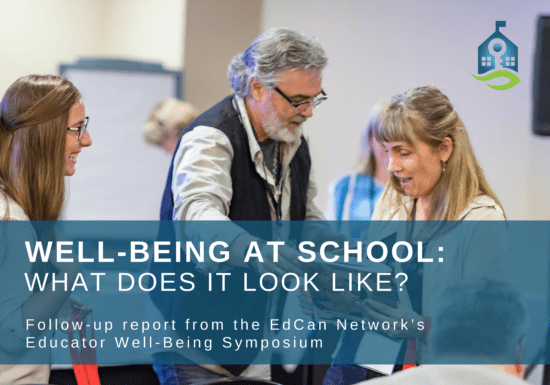
This multimedia follow-up report from our Educator Well-Being: A Key to Student Success Symposium, which took place last October in Toronto, includes presentation recaps and videos of the latest research and good practices for ensuring the well-being of students, teachers, principals, and education leaders.
LOOKING FOR MORE?
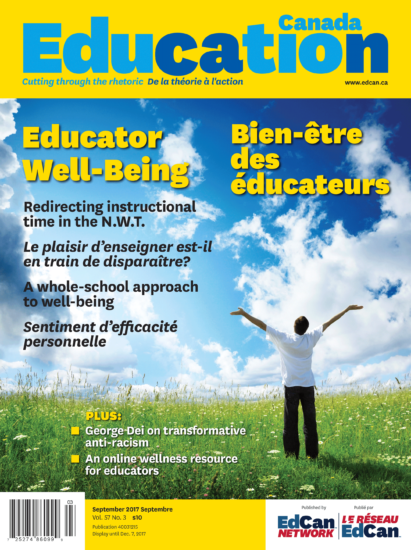
Check out our special edition of Education Canada magazine on ‘Educator Well-Being.’ -
Well-Being at School: What does it look like?
Comments Off on Well-Being at School: What does it look like?A national symposium on educator and student well-being has shifted the conversation from ‘fixing symptoms’ to transforming entire school cultures.
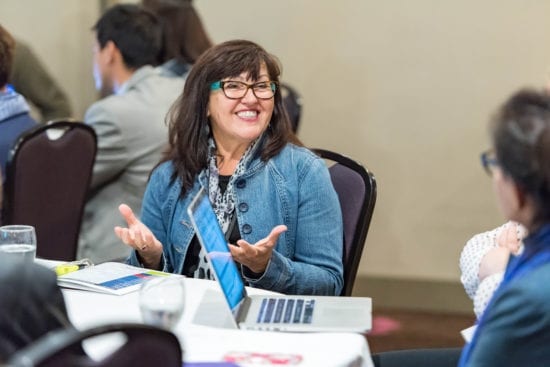
This multimedia follow-up report from the EdCan Network’s Educator Well-Being: A Key to Student Success Symposium, which took place last October in Toronto, includes presentation recaps and videos of the latest research and good practices for ensuring the well-being of students, teachers, principals, and education leaders.
Two days of engaging keynotes, panel discussions and workshops inspired attendees to answer the following questions:
- What is well-being?
- What does student success look like?
- And how can school districts lead systemic change to meet unique learner needs?
ACCESS THE FULL ELECTRONIC REPORT
(INCLUDING VIDEOS AND PODCASTS)Looking to get up-to-speed? Here are 5 articles to read on youth mental health:
- Fact Sheet: How could students’ use of social media be affecting their mental health?
- Fact Sheet: How can we best support student mental well-being?
- Fact Sheet: What are effective approaches to improving students’ mental well-being?
- Expert article: School Mental Health Literacy
- Expert article: What is Child and Youth Mental Health?
Looking for more?
Check out our special edition of Education Canada magazine on ‘Educator Well-Being.’ -
Learn Self-Reg Face-to-Face Seminar: Stress Management vs. Breaking a Stress Cycle
Comments Off on Learn Self-Reg Face-to-Face Seminar: Stress Management vs. Breaking a Stress CycleStress management is often discussed in terms of adaptive coping. We are taught that stress is a normal part of life and we must learn to cope with it. Yet Self-Reg tells us that stress management is not just a question of coping but also a question of managing energy flow and recovering the energy expended in dealing with stressors. We will explore these topics with Dr. Stuart Shanker.


IDEAS TO SUPPORT EDUCATORS : Subscribe to the EdCan e-Newsletter
Quality research, reports, and professional learning opportunities.