
Archive
-
Second-Hand Harm
Comments Off on Second-Hand Harm“What do you think Mommy would say if she saw you doing that? Do you think she would be happy?”
“Just leave him, he has been crying for no reason all day. He does this every single time he is dropped off.”
Emotional well-being. Mental health. We know these are important – but we don’t always recognize that it is as important to pay attention to educators’ mental health as to students’. In fact, student mental health, in many ways, relies on the emotional well-being of the educator. How so? The emotional well-being of the educator is critical in building a strong and positive teacher-student relationship. There is widespread agreement in the literature that teacher-student relationship quality is directly associated with increased academic achievement, social-emotional development, and decreased behavioural challenges. Researchers have even found that highly sensitive teachers may “buffer the effects of a negative family context for children who have insecure attachments with their mothers by reducing children’s risk for aggressive behavior.” 1
When teachers’ well-being is compromised, there is increased risk of misconduct towards children in their care. Educators who identify higher levels of work and personal stress report a decreased use of effective approaches towards child guidance, and reduced amount of time being spent on developing positive relationships with children with challenging behaviours. 2
Children who exhibit challenging behaviour such as disruptiveness or inattention may add an immense strain to resources, and educators may quickly become frustrated with the children and engage in power struggles, negative reactions and verbally abusive behaviour. While it seems the teacher’s actions occur in response to challenging behaviour, there must also be careful consideration given to the opposite notion. Educators must be reflective of the role their own depression, anxiety, and stress may have in influencing children’s behaviour.
Despite anecdotal concerns expressed by students and their parents, sensationalized media reports, and legislation developed to prevent and address maltreatment by educators, raw and honest discussions of classroom management strategies that may be emotionally damaging to children are often lacking among colleagues and in empirical research. But these dialogues must take place if we are to destigmatize getting support and deepen the culture of trust among peers. This is why attending to educator mental health must be a shared priority for all those working in or researching education settings.
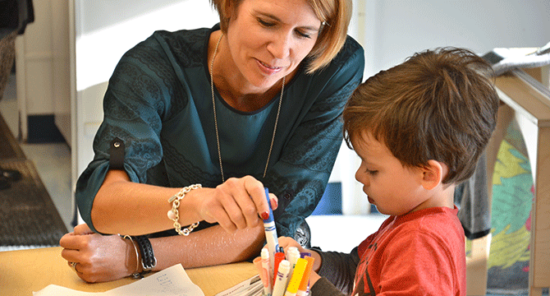
High quality teacher-student relationships are characterized by warm and respectful bi-directional interactions, strong emotional support, high levels of closeness and low levels of conflict. Educators in high quality relationships with their students provide a supportive environment that promotes emotional security and student confidence, even when difficulties arise.
On the other hand, in environments where there are high levels of conflict or negativity such as yelling, sarcasm, irritability, or rigidity, there are often low levels of positive, individualized communication with each student. While factors such as child-to-teacher ratios and rotation among teachers for different subjects influence the quality of teacher-student relationships, the capacity to build high quality relationships is equally dependent on the educator’s own emotional well-being. Of course not all, or even most, educators who are highly stressed engage in overtly negative interactions; however, they may become less engaged with and attentive to their students, with minimal individualized interactions or indifference/unresponsiveness to the unique needs of each student. Such “average” relationships are not benign; they parallel a reduction of potential regarding the child’s development in these areas.
Discussions of abuse by educators can be emotionally charged and embedded in controversy. The Government of Canada, Department of Justice (2013) states that emotional abuse and/or psychological abuse is “when a person uses words or actions to control, frighten or isolate someone or take away their self-respect.” 3 Educators across Canada are bound by codes of ethics and standards of professional conduct that acknowledge the educator’s special position of both trust and power. Though the criteria for these standards differ slightly across the country, the common goal is to treat children with dignity and respect at all times.
The vast majority of educators establish positive relationships with children that support their development. But it is important to acknowledge that some educators may be unaware of the impact of their behaviour on children. Abusive conduct does not require an abusive intent on the part of the educator, and ignorance or good intent does not lessen its impact.
Yelling at students, disguising and promoting an imbalance of power as part of regular practice (“Because I said so”), rejection, shaming, degrading, humiliating, or singling out one student to criticize and punish, using emotional messages intended to invoke fear or guilt – these are all emotionally and psychologically damaging behaviours that should not take place in educational settings. Ignoring a student, being unavailable or unresponsive to a student’s needs, are acts of omission that can also be damaging.
Damaging behaviours such as those listed above do occur, and are often associated with depression, anxiety, or stress in the educator. Educators who are struggling with mental health and/or emotional well-being may not recognize if they are conducting themselves in an inappropriate or potentially abusive manner, or understand the influence their actions may be having on the child’s own behaviour and mental health. Candid discussion among colleagues and administrators is essential for peer support to address expectations of appropriate conduct. So is increased support to help reduce stress in teachers who are struggling, and a reduction of the stigma surrounding the admission that help is needed.
When children have an emotionally positive experience in school, this can be expected to positively influence the child’s functions at home, school, with peers and in the community. As educators, we must begin prioritizing our own mental health, and taking the time to care for ourselves, so that we never lose sight of the impact we may have on a child.
Notes
1 E. Buyse, K. Verschueren, and S. Doumen, “Preschoolers’ Attachment to Mother and Risk for Adjustment Problems in Kindergarten: Can teachers make a difference?” Social Development 20, no. 1 (Feb. 2011): 33-50.
2 C. Li Grining, C. Cybele Raver, K. Champion, et al., “Understanding and Improving Classroom Emotional Climate and Behavior Management in the ‘Real World’: The role of Head Start teachers’ psychosocial stressors,” Early Education & Development 1 (2010): 65-94.
3 Government of Canada, Department of Justice, About Family Violence (2013). www.justice.gc.ca/eng/cj-jp/fv-vf/about-apropos.html#emo
Images: Rob Newell, courtesy West Vancouver Schools
-
researchED Toronto
Comments Off on researchED TorontoresearchED is coming to Canada with the first ever researchED conference and it’s in the downtown heart of Toronto, Canada’s largest city. Come and learn what the latest research tells us about the best ways to teach, lead schools, and help children learn. Founder of the U.K. researchED movement, Tom Bennett, will be the headliner of the first researchED conference to be held in Canada on November 10 and 11, 2017 atGeorge Ignatieff Theatre and Trinity College, University of Toronto, 15 Devonshire Place, Toronto, ON M5S 2C8
Come and learn what the latest research tells us about the best ways to teach, lead schools, and help children learn. Listen, learn and speak to the researchers, teachers and academics transforming the best research into teaching practice. Network, get ideas, be challenged and ask questions at one of the most unique, stimulating and engaging events of the year. Join us as we bring researchED to a new audience in Canada.
For comment or further information, contact Paul W. Bennett, Chair, researchED Toronto at (902) 233-2414 or director@schoolhouseconsulting.ca Interviews with researchED founder Tom Bennett can also be arranged through contactus@workingoutwhatworks.com
-
Strengthening Teacher Instructional Practices in the N.W.T.
Comments Off on Strengthening Teacher Instructional Practices in the N.W.T.When we compare instructional hours, students in the Northwest Territories (N.W.T.) receive about four more years of schooling than their peers in Finland – and yet Finnish students’ achievement consistently ranks among the highest in the world,1 while N.W.T. students, the majority of whom are of Indigenous descent, continue to lag behind their Canadian counterparts.
So why are Finnish students starting at age seven, in school for just 632 hours (elementary) and 844 hours (secondary) per year,2 and excelling in their core subjects, while N.W.T. students are starting a year or two earlier, in school for 997 hours (elementary) and 1,045 hours (secondary) per year,3 and not doing as well or better?
It turns out that the quality of instruction is more important than the quantity of instruction. Research does not support a relationship between instructional hours and student achievement, but it clearly shows that well-prepared, quality teachers have a strong impact on student outcomes.4 “The amount of time spent in school is much less important than how the available time is spent, what methods of teaching and learning are used, how strong the curriculum is, and how good the teachers are,” states the OECD Educational Indicators in Focus Report (2014).5
While Finnish teachers spend fewer hours at the front of the classroom, they are able to devote more time to designing instruction and interventions that maximize achievement. They have time to ensure success, which strengthens their sense of efficacy and worth, and reduces the exhaustion and burnout.
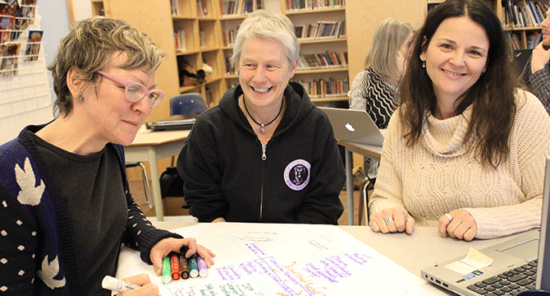
Overwhelming expectations
The professional expectations on teachers have expanded rapidly in the last few decades, with the change from a focus on teaching to a focus on ensuring student learning. Now, teachers must find time to work collaboratively to determine the Essential Learning Outcomes (ELOs) in the otherwise bloated curriculum guides for each and every grade and subject, and to ensure that all students, even those who do not attend regularly, are making the best possible progress. To that end, teachers complete frequent pre- and post-assessments to know each student’s strengths and stretches in relation to the ELOs. With that information, teachers prepare evidence-based lessons that differentiate and maximize growth for each student. Further, the best teachers engage students and their parents in setting short-term goals for improvement.6
Education in the 21st century, and in Indigenous cultures, must take into account the whole person – teachers are expected to impart not only academic teachings, but also the values and skills that help a child grow into a competent adult. Teachers in the N.W.T. also build their programs on the foundation of Aboriginal culture, and deliver them in a more Indigenized way. And these skills, attitudes and world views – incorporating concepts like truth and reconciliation, self-regulation, resilience, and a positive sense of identity – take time to learn and understand.
Quality teaching and learning, as described above, is a monumental and insurmountable task in a 40-hour work week, considering that for the majority of that time (up to 30 hours) teachers are in front of the class (compared to 18 hours a week for Finland’s teachers).7 Teachers also prepare report cards, supervise children on their breaks, and are extensively involved in student extra-curricular activities. The list goes on.
With so much to accomplish, N.W.T. teachers report working over 52 hours a week on average. If we take a moment to do the math, some teachers are working 2,028 hours per year, compared to other government employees who average 1,725 hours yearly. And that’s after their respective vacation times have been subtracted.8 It’s no wonder teachers feel increasingly stressed by their job demands. This phenomena is not isolated to the North – across the country, teachers are doing more while having less time to recharge. Teacher workload studies, conducted by teachers’ associations across Canada, consistently report that teachers work 50-55 hours each week.9
The N.W.T. STIP Initiative
Starting in the 2017-18 school year, as a result of negotiations between the N.W.T. Teachers’ Association (NWTTA) and the Government of the N.W.T., schools were permitted to submit proposals to redirect up to 100 hours of instructional time divided evenly between teacher professional duties and collaborative professional learning. This Strengthening Teacher Instructional Practices (STIP) time still ensures that students in all grades are in class for a minimum of 945 hours per year – a number more in line with the majority of Canadian provinces, though still much higher than Finland.
The STIP proposals require majority agreement of the school’s teachers, and further approval of the superintendent, the assistant deputy minister, and the president of the NWTTA. It is the locally elected District Education Authority (DEA) that approves the school year calendar, so the principal must ensure the calendar meets legislative requirements and receives the DEA’s approval.
How schools are responding
Principals, teachers, and their local DEAs worked together to determine what would work best for the parents, students, and staff of each community. They analyzed past school attendance records and considered the implications that schedule changes could have on things like busing and childcare. While schools were given the autonomy to determine how to redistribute the time, they were all required to approach the task with the same priority: to improve staff and student wellness and achievement.
For some schools, this means Friday afternoons free of student contact time, giving students an early start to their weekend and staff a chance to decompress as well as plan for the next week. For others, Monday mornings have the poorest attendance, making that the logical STIP time. And a few chose to attach full STIP days to holidays and other breaks through the year.
At Paul W. Kaeser High School in Fort Smith, classes used to begin at 8:30 a.m. sharp. But student attendance and tardiness is an issue in the mornings. So in 2017-18, students will begin their lessons at 9:10 a.m. as their teachers take the first 40 minutes to analyze student assessments, share strategies, and prepare more effective lessons. Principal Al Karasiuk, one of Canda’s Outstanding Principals in 2012 (The Learning Partnership), says, “We are going to work towards very specific data analysis – understanding the data, setting short-term goals to target learning outcomes, and ensuring that the kids are ‘getting it.’”
While the teachers are hard at work, students will be invited – and bused – to arrive early to school and enjoy a free hot breakfast and a slow start to their day in the foyer. Educational assistants will be available to supervise, tutor, and facilitate morning extra-curricular activities.
Karasiuk sees his proposal as a win-win for both staff and students. Teachers will have time to orient themselves for the day and collaborate with their colleagues, while the teens will be able to snag an extra half an hour of sleep or fill up on the oft-touted “most important meal of the day.” By the time the instructional part of the day officially starts, they are more likely to be rested, well-fed, and prepared to learn.
Deninu School in Fort Resolution, a small community of 500 Chipewyan people, kept the importance of teamwork at the forefront when redirecting 74 hours. The school has had success hiring educators who have been teaching internationally, in places as far away as China or South Korea, before deciding to return to Canada. But Beijing and Seoul are very different from the N.W.T., and when asked for their feedback on how the hours might be redistributed, the current teachers reported that a few extra days near the beginning of the year to help ease them back into the Canadian curriculum, and to get support with the development of integrated year plans, would be helpful.
The other STIP days are dispersed throughout the year, in line with Deninu School’s planning cycle. Every four to six weeks, the staff will have time to meet and prepare for the upcoming units they will be teaching. “We chose to schedule full days of STIP time,” explains Principal Kate Powell, a co-recipient of a Premier’s Award for Excellence and a Ministerial Literacy Award. “To have meaningful conversations and collaboration, teachers suggested that we needed long periods of time. We plan to use the mornings of these days for collaborative planning, marking, assessing, and goal setting; and then the afternoons for teachers to work independently incorporating the morning’s learnings in the preparation of their units and lessons.”
The value of Professional Learning Communities
Professional Learning Communities, or PLCs, have long been proven as one of the best strategies for ensuring all students learn at high levels. In what is touted as the largest ever evidence-based research in education, Hattie synthesized those factors that the research shows to have the greatest impact on student achievement, with Collective Teacher Efficacy ranking the highest.10
Frequent PLC meetings provide opportunities for teachers in similar grade or subject areas to work together to address challenges and share best practices, driven by actual classroom evidence. The result is stronger, more confident teachers who no longer feel isolated in their concerns about students or the curriculum. By sharing and learning together, teacher wellness and effectiveness is supported and enhanced.
Expected results
A quick search of the Internet shows that teaching is often rated in the top ten most stressful professions, and our educators are facing increasingly high expectations in regard to unique student needs, cultural relevance, truth and reconciliation, accountability, testing, and student achievement.
As counter-intuitive as it may appear, the evidence suggests that reducing instructional time can result in more effective instruction and in more students achieving their potential, provided the “found” time is used for teacher professional duties and collaborative planning.
By giving teachers up to 100 hours of collaborative professional learning and working time throughout the school year to be more effective, we are hopeful that we can offset the high number of hours they work each year, while increasing their job satisfaction and well-being.
If the expected results occur, more teachers will be energized to come to work every day instead of feeling emotionally exhausted. Improved wellness should lead to less sick time and less money spent on substitute teachers (who are in extremely short supply or unavailable in most small outlying communities), resulting in a more stable, supportive environment for our students to grow. We are hopeful that the domino effect will include students being motivated to come to school, attending regularly, performing well on tests, and graduating in larger numbers.
The evolution of education demands a culture of both wellness and success in order for both staff and students to thrive. Along with the partners involved in this pilot project, we are keen to monitor and evaluate its effects on staff and student well-being and achievement.
Photo: courtesy Curtis Brown and Sarah Pruys
First published in Education Canada, September 2017
1 Programme for International Student Assessment, “PISA 2015 Results in Focus,” Organisation for Economic Co-operation and Development (2016). https://goo.gl/TsLeC3
2 European Commission/EACEA/Eurydice, “Recommended Annual Instruction Time in Full-time Compulsory Education in Europe 2015/16,” Eurydice – Facts and Figures (Luxembourg: Publications Office of the European Union, May 2016).https://goo.gl/0T4tpm
3 Canadian Education Statistics Council, “Education Indicators in Canada: An international perspective,” Statistics Canada (February 13, 2015). https://goo.gl/GRcpUU
4 J. Hattie, Visible Learning: A synthesis of over 800 meta-analyses relating to achievement, 1st edition (London, New York: Routledge, 2009).
5 Organisation for Economic Co-operation and Development, “Education Indicators in Focus,” OECD (April 2014). https://goo.gl/SLE2gv
6 Adapted from the work of the DuFours in Learning by Doing: A handbook for professional learning communities at work, 3rd Ed. (Bloomington, Indiana: Solution Tree Press, 2016).
7 Kristen Lewis, “Lessons From Finland,” Scholastic. http://bit.ly/2qBQg1c
8 Government of the Northwest Territories, NWT Teacher Time and Workload Study (GNWT, January 2017). https://goo.gl/9XT24A
9 Compiled by C. Naylor, E. O’Neill, and K. Rojem, Teacher Worklife Research (BC Teachers’ Federation). https://goo.gl/HJxsYq
10 The larger the effect size, the more powerful the influence. Hattie concludes that an effect size of 0.4 is medium and 0.6 is large. His research shows an effect size of 1.57 for Collective Teacher Efficacy.
-
Fidget Spinner Craze
Comments Off on Fidget Spinner Craze
Principal Daniel Villeneuve of Saints-Anges Catholic Elementary School in North Bay, Ontario was among the first wave of Canadian school leaders to take a stand against Fidget Spinners, the latest craze among children worldwide.
On May 23 and 24, 2017, the North Bay principal visited class after class to advise his students that the hand-held gadgets were being banned from school grounds, then sent a letter to parents explaining the decision. What he didn’t say was perhaps obvious – the classroom distractions were driving teachers crazy and making teaching almost intolerable.
Marketed as a “stress reliever” for anxious or hyperactive kids, Fidget Spinners became a major disruption, interfering with teaching and learning and affecting everyone in the classroom. Childhood crazes come and go, but this one was different because the gadgets were billed as therapeutic tools providing supposed benefits for children affected by ADHD and a host of school-age anxieties.
In May 2017, school authorities across the world stepped in to limit or eliminate the spinners in the classroom. While American and British education leaders were quick to react against the latest gadget, their Canadian counterparts were more cautious, and teachers were more receptive to claims that Fidget Spinners had therapeutic effects based upon what researchers term ‘pseudoscience.’
The arrival of fidget spinners on school playgrounds had a polarizing effect, pitting regular teachers against those serving special needs children. Influenced by child psychologists like Toronto’s Sara Dimerman, teachers recommended using spinners to help ease the anxieties of students in Grades 3 and 6 writing Education Quality and Accountability Office (EQAO) exams in reading, writing and math during the week of May 22 to 26.
The critical question remains: why did it take so long for Canadian educators to confront the latest menace to effective teaching and learning?
Fidget Spinners, since their invention in the 1990s, have been used with some success to assist in teaching students severely challenged with autism. “We call them fidget tools because they really are tools,” Edmonton autism specialist Terri Duncan told CBC News. “Sometimes it helps to tune out other sensory information. Sometimes it helps them calm and focus. Sometimes it helps them with their breathing and relaxing. It’s a little bit different for every child.”
Serious problems arise when Fidget Spinners are used to simply relieve everyday stress and anxiety. While Dr. Jennifer Crosbie of Toronto’s Hospital for Sick Children sees value in the gadgets for treating autistic children, she’s not a fan of their widespread use in classrooms. In her words, “it’s too distracting” and “draws attention” to the user, disrupting the class. She and many other clinicians now recommend that schools limit their use to special education classes or interventions.
School authorities in Maritime Canada initially accepted the claims of the marketers and were swayed by their special education program consultants. Self-regulation, championed by Dr. Stuart Shanker of York University, has made inroads in elementary schools, many of which embrace “mindfulness” and employ “stress-reduction” strategies and tools.
Seeking to accommodate learning challenged students in inclusive classrooms, New Brunswick’s Anglophone school districts readily accepted Fidget Spinners as just another pacifying tool to complement their spin bikes and wiggle stools. In the Atlantic Region’s largest school district, Halifax Regional School Board, the policy decision was left up to individual schools and frustrated teachers took to social media to complain about the constant distraction and ordeal of confiscating spinners to restore order.
Prominent education critics and teacher researchers had a field day exposing the pseudoscience supporting the introduction of Fidget Spinners into today’s regular classrooms. A Winnipeg psychologist, Kristen Wirth, found little evidence testifying to their positive results and claims that it is a “placebo effect” where “we feel something is helping, but it may or may not be helping.” Canada’s leading teen mental health expert, Dr. Stan Kutcher, saw “no substantive evidence on spinners” and warned parents and teachers to be wary of the out-sized claims made by marketers of the toys.
The founder of Britain’s researched, Tom Bennett, was more adamant about the “latest menace” to effective teaching and learning in schools. The latest fad – Fidget Spinners – he saw as symptomatic of “education’s crypto-pathologies.” Teachers today have to contend with students purportedly exhibiting “every trouble and symptom” of anxiety and stress. Misdiagnoses, he claimed, can lead to children feeling they have some insurmountable difficulty in reading, when what it requires is tutorial help and ongoing support.
“Many children do suffer from very real and very grave difficulties,” Bennett pointed out, and they need intensive support. When it comes to “Fidget Spinners,” he added, “we need to develop a finer, collective nose for the bullshit, for the deliberately mysterious, for the (purely invented) halitosis of the classroom.”
Magic bullets – like magic beans – which do not pass the sound research test have no place in today’s classrooms. In many cases, they do far more harm than good to our students.
-
Learning from the Inside Out
Comments Off on Learning from the Inside Out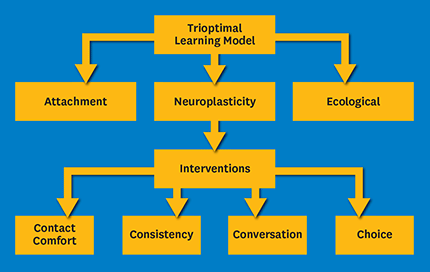
I heard the bells ringing and saw the children running towards the door. There was something terrifying about walking into this class. We were nicely dressed in our uniforms; my hair was done, my tie neatly knotted in a Windsor knot and I looked like I fitted in. It was my first day of school in England. I had moved from Canada to Birmingham and everything was new – the uniform, the people, the accents, and my house. However, one thing remained the same: the ever-nagging questions. “What do I do when she asks me to read?” “What will I do if I have to spell?” I could not hint that school was going to be a problem; at the age of nine I was learning about who I could trust in the classroom and who I could not. Some days I could not even sound out the words, some days the words moved around, and on others I was too tired to even try. I had to make friends with better brains than mine. So began my journey from the inside out…
Nearly 30 years later, on the other side of the world, I completed my dissertation work for Walden University at a small children’s home on the north side of the island of Mindanao, Philippines, where I was introduced to a unique group of children. I had hypothesized that the longer the children were in care and the more exposure to trauma they had, the lower their academic achievement would be. However, I was surprised to find that, in fact, it did not matter how long the children had been in care or how much trauma they had sustained – they all achieved 70 percent or above. Quite remarkable! What was different about this place, these children, these teachers and caregivers? The key difference was that these children were not adopted or discharged at 18, but rather could stay in the home right through university.
Both my own experience and that of the children in Mindanao had three things in common:
- secure attachment (despite attachment injuries)
- optimal learning environments to retrain the brain (I achieved this through after-school tutoring; in Mindanao, the children had a school program within their home.)
- a stable community (For me this was a consistent, loving two-parent home; the Mindanao children experienced this through a program that never gave up on them.)
Identifying these three factors led me to the creation of the TriOptimal Learning Model.™
The TriOptimal Learning Model™
The TriOptimal Learning Model™ is a comprehensive approach to providing all learners with the opportunity to excel in the classroom, graduate high school, and become successful members of society. It is built around the following three concepts:
1. Attachment
Early childhood attachment and adult attachment are important factors in the development of secure bonds, both with caregivers and with our romantic partners. The model insists that the teacher/social worker/caregiver look at their own attachment experiences, begin to understand their own attachment style, and learn how it impacts the relationship that they are having with children. While the importance of relationship in education has been acknowledged for decades, we go one step beyond relationship to look at how adult attachment impacts student learning. One teacher told me, “This is completely different. In 25 years of teaching I have never stopped to think about how my desire to be conflict avoidant has influenced how I deal with students who have misbehaved in the classroom.”
2. Retraining the brain: neuroplasticity
A 16-year-old girl asked to speak to me one afternoon. She started to cry as she showed me her math test. She had scored 100 percent. She said that it was the first time that she had felt smart in school. She thanked me for training her brain differently and helping her to see that her brain could learn.
Neuroplasticity is the brain’s capacity to reorganize itself by forming new neural connections over the lifespan. The more opportunity students are given to receive, pattern, and consciously manipulate new information, the greater the stimulation and regeneration of brain pathways.1 I remember the first book I read at the end of Grade 9: To Kill a Mockingbird. It took me three times as long as the others but I read it. I read it by myself. My brain was beginning to regenerate the language pathways in my brain.
3. Ecological systems theory
Systems theory is the third pillar of our model. The more connected the systems (community, government, friends and family) are in surrounding a child with a learning disability, the better chance there is for an optimal learning environment to occur and for children to overcome their disadvantages. For example, when children come into my practice they often have no one left who believes they can succeed. We try to bring that belief back. We tell the child, teacher, and parent that we are going to believe in the child for them until they are able once again to believe. As children see others believing in them, their confidence soars and they are able to achieve so much more than was ever expected of them.
Each pillar of the model is needed in order to create the optimal environment for learning.2 Training is very important, because this is not just a new strategy or technique to be done to or with a child. This is a philosophical shift – first in how caregivers/teachers understand their own attachment traits; second, in believing that the child’s brain can change; and lastly in building a relational system from the individual through to the government level that believes in the child’s right to be securely attached in the classroom. Although we know that we can’t effect change in the whole system, we recognize that every single interaction with a child can slowly build change.
Pilot project and research
Glencorse Family Therapy Inc. opened the first TriOptimal Learning Community in March 2016, in Calgary, Alberta. This is an after-school program (four to eight p.m.) that matches children and teens experiencing learning struggles with an educational coach and social/emotional coach, who work with the children to improve their educational outcomes. The coupling of social/emotional and educational support, facilitated by both a therapist and teachers, is what makes TriOptimal communities different from traditional tutoring programs. We have seen preliminary improvements in the areas of math, reading and writing, but more importantly in self-efficacy and executive functions (working memory, behaviour control and initiation of task). My favourite comment is from a Grade 9 student, who said, “The TriOptimal Community has given me a reason to try.” His mother says that they no longer have to fight with him to do his homework.
Research is underway to follow youth in this program and track their achievement progress. More research is needed in order to determine the long-term efficacy of the model in a variety of contexts as we continue to strengthen and improve its implementation. We hope for opportunities to bring the TriOptimal Learning Model™ to more schools, residential treatment programs, and social programs for youth and children in Canada and internationally.
I was told in Grade 9 that I should apply for a job in a fast food restaurant, as that was the best I could hope for in employment without being able to read. Instead, my parents worked hard to ensure that I got the support I needed to retrain my brain. Now it is my turn to ensure that children with learning struggles – who can become our most marginalized and left-behind students – will be able to challenge the curriculum and graduate with their classes.
For more information
TriOptimal Learning Communities can be built in any school or community. On-site training, site licenses and online support and consultation are offered. http://trioptimallearningmodel.com
En Bref : Ayant surmonté des troubles d’apprentissage et rédigé une thèse sur une maison d’enfants dans les Philippines, Heather Macdonald a puisé dans sa propre expérience pour élaborer le modèle d’apprentissage tri-optimal (TriOptimal Learning ModelMD). Le programme vise à aider les enfants et les jeunes à surmonter des difficultés d’apprentissage en utilisant trois soutiens essentiels : 1) un lien sécurisant; 2) la possibilité de reprogrammer le cerveau en traçant de nouvelles voies neuronales; 3) un environnement multidimensionnel manifestant la confiance dans le potentiel de l’élève.
Chart: Dave Donald
First published in Education Canada, June 2017
-
Queer and Trans at School
Comments Off on Queer and Trans at School
We all wonder where we fit in and how we can find community. This narrative is particularly resonant for queer and trans identifying youth, who often struggle to find community and belonging in their home and school lives.
Through our PhD work and our experiences working with LGBTQ+ (Lesbian, Gay, Trans, Queer/Questioning, and Others) youth, we have witnessed the importance of finding community and belonging. As LGBTQ+ educators ourselves, we have not only practical experience working with queer and trans students, but lived experience. And while we are passionate about creating more inclusive classrooms for all students, we are also aware that the current politic is still very white and gender normative.
We are often asked, “How do you create safe and inclusive classrooms for queer and trans youth?” While considering this, we need to first think about who we consider queer and trans. The LGBTQ+ communities are incredibly diverse in terms of intersecting identities, and it is important that our work as educators reflect this.
Homonormativity: What does it mean?
Ahmed, a queer Muslim youth looking for belonging and acceptance, attended his school’s Gay-Straight Alliance (GSA) hoping to find community. The group was largely white students, who were dismissive of Islam and told Ahmed that his religion was homophobic. Ahmed, feeling less than welcome, decided to leave the group and find his own community outside of the mainstream queer and trans movement.
Eliza, who identifies as trans but keeps that private at school, confided to the GSA teacher-advisor that “I want to be able to talk about who I am, but I’m not gay, and I worry that if I come to the GSA people will figure out why I’m there.” Hearing that the students involved are mostly gay and lesbian didn’t assuage her concerns. Students of various gender identities, racial backgrounds, abilities, and other identities fall within the LGBTQ+ spectrum. Still, much of queer and trans activism focuses on white gay and lesbian, or homonormative, representations of LGBTQ+ individuals.
Homonormativity is the valuing of white, gender-normative representations of queer1 and trans people to the exclusion of queer and trans people of colour and those who do not fit rigid gender norms.2 Homonormativity valorizes marriage as the ultimate goal for queer and trans individuals, as per the slogan “We’re just like you, except for what we do in bed,” and presents a narrow model of both who can be gay, and what it means to be gay. In schools, this can be seen in the mostly white representations of LGBTQ+ individuals in children’s literature, for example.
How can teachers be cognizant of homonormativity while considering queer and trans issues at school? Simple! We need to think beyond white and gender-normative representations of queerness, and move beyond the nuclear family model of “two moms, or two dads” in conversations with students. Queer and trans communities are diverse and require representation that acknowledges the intersections of various identities and locations, such as class, race, gender, nationality, disability, etc.
There are concrete steps school staff can take to create a more welcoming and inclusive space for all queer and trans students.
Begin in the elementary years
Adam’s elementary teacher experience demonstrates the importance of incorporating queer and trans content into the school routine while directly addressing homophobia and transphobia at a young age. Developmentally, preschool aged children are building their understanding of categories – including which ones they belong in – and this often leads to gender policing. Young children replicate the norms they are exposed to and Adam has seen young children regulate chosen toys, colours, games, and stickers based on gender. The educator’s duty is help children make choices based on individual interest instead of gender identity or social norms. Gendered norms may seem to be an innocent concept at this age, but they significantly limit and harm many students.
Children are identifying as queer and trans in elementary settings, and at younger ages than ever. Working with the Gender-Based Violence Prevention team in the Toronto District School Board, j often works with children as young as four who have a very clear understanding of their gender as different from what was expected of them. The rise of GSAs in middle schools speaks to student needs. It is important that all students know that people of all sexual orientations, gender identities, and gender expressions are welcomed and celebrated in schools.
Build inclusive GSAs
The name Gay-Straight Alliance was coined 25 years ago, and while once radical now needs to include a broader range of identities. Encourage students to consider more inclusive names, like Gender and Sexuality Alliance, Pride, a Rainbow Alliance, or others, and gently help them understand the implications of the names they are considering. j recalls: “One of the groups I was working with decided that instead of being a Gay-Straight-Alliance, they would call themselves GLOW, for Gay, Lesbian or Whatever. It took some work to help them see how being referred to as a ‘whatever’ might not be welcoming for some students.”
Seek out diverse resources
j observes, “White teachers often suggest that homophobia comes from people of colour. Truthfully, no one community holds the monopoly on homophobia, or on inclusion – homophobia is present in all communities, as are pockets of celebration. When I began supporting GSAs in Halton, many of the teachers who became teacher-advisors to GSAs were teachers of colour, because they were the people already engaged in equity work.”
Seek out resources for and by Black people, Indigenous people, and people of colour. When the LGBTQ images, books and movies we use in schools are predominantly white, we perpetuate the false stereotypes that being queer or trans is a white thing, and that communities of colour are more homophobic than white communities. In seeking to decolonize education, it’s also important to recognize two-spirit identities.3
Specifically address gender diversity
Many trans students j has worked with have shared that while teachers may have encouraged them to attend the school’s GSA, their GSA did not address gender identity or gender expression. Further, they feared attending would out them as trans. Addressing gender identity will make your school safer for trans students, femme boys, butch girls, and everyone else. Become familiar with gender non-binary and androgynous identities and what those students need.
Recognize coming out as an option, not a goal
“Coming out,” or the experiencing of identifying yourself as a sexual or gender minority, is often forwarded by mainstream LGBTQ+ politics as the “end goal” or desirable destination for queer and trans youth. While coming out can be an empowering experience, for some, particularly queer and trans youth of colour, coming out presents itself with a myriad of cultural, religious, and familial barriers that can be challenging for family dynamics.4 Trans students who have previously transitioned may feel that “coming out” will put them at risk for violence and transphobia, and that keeping their trans status private is what allows them to live most authentically. Anti-black racism and/or femmephobia in LGBTQ+ spaces,5 and the devaluation of gender and emotional expression that is deemed feminine,6 particularly for gay and queer men,7 are other factors that can make coming out feel unsafe.
To ensure students’ individual identities are respected and they do not feel pressured to “come out,” make sure that privacy and openness are both talked about as valid.
Conclusion
For GSAs to be vital emancipatory student groups, they need to be places of possibility and transformability for all students. Homonormativity limits who can find belonging; pushing back against homonormativity creates new possibilities, and ways for GSAs to partner with other equity-focused student groups. Finally, while it remains important for students to have spaces to organize, learn together, and support each other, GSAs cannot replace the institutional work that all schools must take on. Inclusive GSAs that challenge homonormativity are one part, but not the only work we need to do.
En Bref : Les jeunes qui s’identifient comme étant transgenres et allosexuels(queer) ont souvent du mal à se faire accepter dans leur vie familiale et scolaire. Ce malaise est d’autant plus grand pour les jeunes autochtones, noirs et de couleur. Cet article examine comment les écoles peuvent créer un espace plus accueillant et inclusif pour tous les élèves transgenres et allosexuels.
Illustration: Dave Donald
First published in Education Canada, June 2017
1 For the purposes of this paper, we are utilizing the term “queer” to encompass all individuals who identify within the LGBTQ+ spectrum.
2 Jayson Flores, “Let’s Make 2017 a Year About Fighting Homonormativity,” Pride, last modified December 21, 2016. www.pride.com/queer/2016/12/16/lets-make-2017-year-about-fighting-homonormativity
3 Maddalena Genovese, Davina Rousell, and The Two Spirit Circle of Edmonton Society, “Safe and Caring Schools for Two Spirit Youth,” The Society for Safe and Caring Schools & Communities, 2016. www.safeandcaring.ca/wp-content/uploads/2013/08/Two-Spirited-Web-Booklet.pdf
4 Vivek Shraya, “Have You Told Your Parents?” BuzzFeed News, last modified September 28, 2016. www.buzzfeed.com/vivekshraya/have-you-told-your-parents
5 Cicely-Belle Blain, “Four Reasons Why Queer Spaces don’t Feel Welcoming to Many Black Queer People,” Daily Xtra, February 3, 2017. www.dailyxtra.com/vancouver/news-and-ideas/opinion/four-reasons-queer-spaces-don%E2%80%99t-feel-welcoming-many-black-queer-people-214505
6 Brynne Tannehill, “6 Ways Femmephobia is Harming LGBTQIA+ Communities,” Everyday Feminism, February 26, 2016. http://everydayfeminism.com/2016/02/femmephobia-queer-community
7 Brandon Miller and Elizabeth Behm-Morawitz, “‘Masculine Guys Only’: The effects of femmephobic mobile dating application profiles on partner selection for men who have sex with men,” Computers in Human Behavior 62 (2016): 176-185.
-
Putting Porn on the Curriculum
Comments Off on Putting Porn on the Curriculum
When my children first entered school I didn’t give much thought to the impact pornography would have on their lives. Then one day we found the images: hardcore pornography, full penetration. That led to the first of many talks with our children.
What I had overlooked was what a huge game-changer the Internet has been for the porn industry. What once took effort for the consumer to procure is now available in unlimited amounts, to anyone, at any age. You don’t even have to seek it out – it finds you through embedded gaming links, pop-up ads, and unsolicited emails.
As parents and educators, we’ve been slow to catch up to the impact of what has been referred to as the new drug. It took a recent conversation with my third son to really open my eyes to how we could be addressing this issue better at school, as well as in our homes.
I had just got off the phone with a friend. She was concerned about her children’s access to pornography, but wondered if bringing it up with them could backfire and make them more curious.
I decided to seek expert advice – I asked my kids.
I explained the dilemma to my seventeen-year-old first. I told him parents often worry that just talking about pornography with their kids will inspire them to seek it out. Did he think it was a valid concern?
“Not really,” he said, as he fixed himself another PB&J. “Parents should definitely talk to their kids about it. No offense, Mom, but it would have been a lot easier on me if you had given me some idea of what was out there before I was eleven. The first time I found porn on our computer was because of something I overheard kids talking about. I was curious, so I looked it up when I got home from school. I had no idea what I was getting into.”
This was a little upsetting to hear, but didn’t surprise me. What he added next did catch my attention:
“Plus, that same year we talked about porn in Health. My teacher said we’d come across it soon, if we hadn’t already. He said that a lot of people use porn to masturbate and we shouldn’t feel bad if we did… We didn’t talk much more about it.”
Pause.
“But it kind of made me feel pressure to experiment. You know, like it wasn’t normal if I didn’t use porn that way.”
What’s the big deal anyhow?
I’ll be honest; this did not sit well with me. But was I right to be concerned? So many people think that using pornography is a natural part of sexual development. I needed to dig deeper for answers.
It didn’t take much research to discover that the majority of today’s porn is problematic in many ways. In fact, I now feel convinced that children’s frequent exposure to pornography can be detrimental to their mental health and may actually hinder sexual development. Here are just a few of my concerns:
• Mounting research demonstrates that the brain’s response to pornography is similar to that of addictive drugs. It is this response that compels individuals to continue seeking more stimulation.
• As with smoking, alcohol and drug consumption, the adolescent brain is especially vulnerable to compulsive behaviours associated with using porn.
• Almost ninety percent of mainstream sexually explicit content features violence towards women. Kids come away with the message that you’re supposed to be violent when you are intimate with somebody.
• Pornography also encourages gender stereotypes and promotes the rape-myth culture that puts our young women at risk.
• Erectile dysfunction in healthy young males has increased nearly 1,000 percent (yes, that’s one thousand) in the last 20 years. Many attribute this dramatic increase to Internet porn use.
• There are strong correlations between the porn industry and the rise of human trafficking globally and domestically.
Back to my son’s experience at school. Shouldn’t this information have been included in the discussion on pornography? If our objective is to help students to integrate the information they receive in the classroom to their own “personal health choices”1 then we should address addiction, violence and human trafficking when we talk about pornography.
Students need to know that using pornography has the potential for negative health consequences. We need a curriculum that gives our students the whole health story on porn.
Photo: iStock
First published in Education Canada, June 2017
1 www.edu.gov.on.ca/eng/curriculum/elementary/health1to8.pdf
-
Educator Well-Being
Comments Off on Educator Well-BeingA symposium for education leaders tasked with embedding wellness throughout their school communities
Read our event report
It’s time for education leaders to shift the conversation from ‘fixing symptoms’ to addressing how we can proactively develop wellness within entire school cultures because this issue concerns us all.
Check out or re-experience our presentations
Achieving Excellence for the Whole Child
by Denise Dwyer, Patrick CaseMaking the Connection Between Youths’ Social Media Use and Their Well-being
by Dr. Valerie SteevesEmbedding Well-being as a Core Role for K-12 Education
Playing the Long Game to Embed Well-Being in all our Classrooms
by Dr. Kathy Short, Dr. Katina Pollock and Vani Jainand many more…
Find All Of Our Presentations
Why this event
The EdCan Network is concerned that the steep hike in reported cases of student anxiety[1] and suicidal ideation[2] is creating stress and emotional exhaustion among teachers.[3] Schools aren’t mental health treatment facilities – principals and teachers cannot be expected to shoulder the entire burden.They can, however, be an important part of the solution.[4]
How can education leaders create a climate that supports well-being for all?
Discover our Schedule
Day 1 – Day 2Our symposium will help you:
- Understand the nuances of emotional, mental, physical, cognitive and workplace well-being perspectives from diverse school and classroom contexts.
- Learn the ‘how-tos’ from leading experts, and successful school- and community-based wellness programs from across Canada.
- Strategize success indicators for measuring impact when developing a culture of educator wellness in your schools.
Who should attend:
- School Board Mental Health Leads and Administrators
- Guidance and Pastoral Counsellors
- Principals
- Community Health and Social Workers
Exclusive access to experts
With our hands-on group discussions and case study presentations, you will return with new ideas for building resiliency in yourself, your colleagues and your students.
Meet our Speakers
Complementary event with our keynote speaker Dean Shareski
Ignite Your Passion for Discovery EdCan Network 2017
Proudly supported by:
Premier +


INNOVATOR



leader









supporter


FRIEND




IN-KIND



IDEAS TO SUPPORT EDUCATORS : Subscribe to the EdCan e-Newsletter
Quality research, reports, and professional learning opportunities.