
Archive
-
Taking a SGM-inclusive approach to education
Comments Off on Taking a SGM-inclusive approach to education -
Supporting LGBTQ2+ teachers in the workplace
Comments Off on Supporting LGBTQ2+ teachers in the workplace -
Opportunism or Opportunity?
Comments Off on Opportunism or Opportunity?Societal inequities are replicated in schooling along the lines of Indigeneity and race, gender, gender identity and sexuality, class, disability, citizenship, place of birth, faith, and more, and become more layered and complex when we consider intersecting identities. We see these long-standing inequities play out in practices such as academic streaming; disproportionate levels of punishment, suspension and expulsions for Black students; curricular violence that exists in the erasure of the histories, realities, and resistance of Indigenous, Black and racialized people in Canada; disproportionately higher proportions of White, middle-class students in gifted classes, French Immersion programs, specialty arts programs, and other “programs of choice”; limited accountability measures to address often persistent and traumatic experiences of discrimination and harassment for students, families, and staff that are racialized and marginalized; and more.
In times of greater crisis and strain on systems and structures, long-standing inequities are simply exacerbated. In this time of a global pandemic, we see growing gaps between the ability of private and public schools to support the safety and well-being of children, we see massive inequities with regards to student access to technology and Wi-Fi, and we see the disproportionate impact of COVID-19 on racialized families and communities and families marginalized by poverty.
Many families and communities on these lands have been living through another pandemic that we have yet to name as a society. White supremacy and settler colonialism have existed in this place that some refer to as Canada, long before March 2020. The question is: Why haven’t we seen these oppressive structures as a global crisis? It makes me question which lives are deemed worthy and which lives are deemed disposable. Whose pain and suffering is avidly attended to, and whose pain and suffering is erased? In this current moment, we are seeing an upsurge in awareness of how Whiteness and White supremacy have and continue to construct anti-Blackness and perpetuate anti-Black racism politically, economically, socially, mentally, emotionally, and academically.
How might this time of global upheaval, massive uncertainty, and racial reckoning influence who we choose to be and how we choose to live? How will it influence the how and why of schooling in ways that will both challenge and perpetuate historical barriers to educational access and opportunity?
Perhaps a better question is: Who will view this time as an opportunity for collective transformation and freedom, and who will view it as opportunity for self-interest and self-protection?
We have seen many examples of “opportunism” in the last few months. For example, the rise of pandemic pods, in which small groups of children from different families learn together outside of traditional school settings, similar to homeschooling or private schooling, demonstrate increases in privatization in education, which provide “choice” for more privileged families and result in disproportionately negative impacts for historically marginalized populations (Winton, 2020). We were already seeing calls for greater moves to e-learning prior to the pandemic, and the redirection of large amounts of public education dollars to private technology companies. As we move into an era of unprecedented online learning, we have to be vigilant about efforts to normalize a form of schooling that was developed in response to a pandemic. While educators are doing their best to recreate community and rich learning experiences online, mass efforts to increase online learning in a post-pandemic era will increase inequities in access and de-emphasize the importance of relationships, creativity, co-constructing knowledges, and developing critical consciousness that are such crucial aspects to the learning experience. This is all against the backdrop of an analysis by the Canadian Centre for Policy Alternatives, indicating that Canada’s top billionaires “added $37B to their fortunes since the pandemic started, during six of the most economically catastrophic months in the country’s history” (Canadian Centre for Policy Alternatives, 2020).
Crisis has the potential to breed opportunism, which has historical roots in colonialism, White supremacy, and capitalism, as well as contemporary manifestations in the form of grave injustices. But crisis also has the potential to return us to more just, humane, and compassionate approaches to schooling and society. We might seize this opportunity to resist traditional educational discourses, legitimize marginalized knowledges, and imagine future possibilities.
Resisting traditional schooling discourses
Resisting traditional educational discourses requires an active acknowledgement of the ways in which schooling has historically stratified students according to perceived abilities, social class, race, and gender and continues to underserve historically marginalized populations of students. Possibilities emerge when we make the distinction between education and schooling, with the former having transformative and liberatory possibilities, and the latter being a site of social reproduction and socialization (Patel, 2016). We might resist:
- Low expectations and false, deficit narratives of Black, Indigenous, racialized, and marginalized students, families, and communities
- The idea that the sole purpose of schooling is to prepare students for the workforce, resulting in curriculum that is disconnected, ahistorical, and decontextualized
- The belief that schooling must be a highly individualistic and competitive system, creating winners and losers, those who can approximate wellness, and those whose safety is compromised
- The notion that “to be thoroughly educated means to be educated away from your own life stories, educated away from your own voice, educated into inadequacy… ” (Akomolafe, 2019).
Legitimizing marginalized knowledges
Legitimizing marginalized knowledges requires an acknowledgement of the knowledge systems that are on the periphery of traditional schooling discourses. Their erasure constitutes a form of curricular violence for particular populations of students whose identities, histories, and worldviews are not represented in classrooms, creating a social, emotional, and mental disconnect. It’s a continuous reminder for particular students and educators that these spaces are not for them, that they do not belong here, and that they must conform to particular logics to be granted access, opportunity, and safety. We might legitimize:
- Pedagogical approaches that foster critical self-reflection, relationality, wellness, humanity, and embodied ways of knowing
- Curriculum that centres multiple histories, identities, lived experiences, and perspectives, especially those of Indigenous, Black, and racialized peoples
- Fostering critical consciousness that disrupts the status quo by preparing students to be thoughtful, aware, and active citizens
- Pedagogies that encourage curiosity, creativity, sustained analysis, and wonder.
Imagining future possibilities
Imagining future possibilities involves a critical eye to what needs repair, healing, truth, and justice in our current realities. It simultaneously requires a hopeful heart as we imagine the worlds we may create together. Oftentimes, the act of imagination can be a painful process when we consider current realities, but it is that place of critical hope that keeps us working toward new possibilities, different realities, and heightened levels of consciousness. We might imagine:
- Schools being sites of collective and communal care in which every student, parent/guardian, and educator is honoured and valued, and feels a deep sense of belonging
- Schools that honour histories of Indigenous, Black, and racialized resistance toward collective freedom and liberation by engaging in acts of solidarity and love
- Schools that are deeply connected to the communities in which they are located, that are animated and guided by strong and meaningful relationships between the home, school, and community
- Schools that believe all students can learn and all students deserve to learn.
In the midst of these two global pandemics, one new and one centuries old, may we find the individual and collective courage to centre relationality, community, and collective care above our individual fears, insecurities, and self-interest. Students depend on it, our schools depend on it, and our futures depend on it.
Anti-Racist Education in Action: Honouring children’s identity

“When we leverage texts, we open up mirrors that reflect the lived experiences of children and windows that enter the lives of others, while sliding doors allow us to interact within the worlds of one another.”
– Rudine Sims Bishop, 1990
Kenisha Bynoe and Gail Bedeau are both Early Reading Coaches with the Toronto District School Board. They have collaborated with educators and invited them to situate who they are based on the intersections of their social identities and that of their learners. By using texts to reflect and honour the lived experiences of learners and themselves, educators came to realize that who we are influences how and what we teach. The Kindergarten-level activity described below is one example of how we can support the development of belonging, contributing, and well-being, as learners come to new understandings about themselves, others, and the world in which they live in.
Book: I Like Myself (also in French), by Karen Beaumont
This book is about a little girl who loves everything about herself, from her ears to her toes. It does not matter what others think or say because she has a strong sense of self and embraces all that she is, inside and out.Question: How do you see yourself?
Materials: Skin-tone paint, paint brushes, mirrors, vials with chickpeas, cinnamon, cocoa powder, brown sugar, and Rice Krispies, Sharpie markers
Anti-Racist Education in Action: Taking action against injustice

The pandemic has further brought to light the inequities and injustices faced by marginalized groups. For Black and other racialized students in a North Toronto middle school, face-to face-class discussions on matters of anti-Black racism were replaced with virtual community circles. The highly publicized murder of George Floyd and subsequent outcries for justice for Black lives presented educators with an opportunity to critically unpack and explore these lived experiences. Above all, it was critical for all educators to listen to students and encourage social action in their local communities.
Creating a socially distanced Public Service Announcement (www.youtube.com/watch?v= JOW5z3JmaFQ) was an opportunity for students to express, through poetry and spoken word, their deep-rooted trauma, hurt, anger, and resolve as they reflect on their very beings, representations of “Blackness,” and all this encompasses in society.
Photos: courtesy Vidya Shah
First published in Education Canada, January 2021
References
Akomolafe, B. (2019, Oct. 22). KWIC 30th Anniversary Keynote: Adebayo Akomolafe [Video]. YouTube. www.youtube.com/watch?v=Q7pauBaL_UE&t=6s
The Canadian Centre for Policy Alternatives. (2020, Sept. 16). Canada’s top billionaires are $37 billion richer since start of the pandemic, CCPA report finds [Press release]. www.policyalternatives.ca/newsroom/news-releases/billionaires-wealth-pandemic
Patel, L. (2016). Pedagogies of resistance and survivance: Learning as marronage. Equity & Excellence in Education, 49(4), 397–401.
Winton, S. (2020). Pandemic pods may undermine the promises of public education. The Conversation. https://theconversation.com/pandemic-pods-may-undermine-promises-of-public-education-145237
-
Opportunity Solving
Comments Off on Opportunity Solving“I believe that education is the civil rights issue of our generation. And if you care about promoting opportunity and reducing inequality, the classroom is the place to start. Great teaching is about so much more than education; it is a daily fight for social justice.” – Arne Duncan
The COVID-19 pandemic has magnified inequities in our school system – barriers based within poverty, language, ability, and racism. But Stephen Covey argued that organizations could potentially arrive in a better place after a crisis than prior to it having occurred, a concept he called “opportunity solving” (2004). Will educational organizations make use of this opportunity? Through surveys and representative interviews of 1,668 Canadian teachers while they pivoted to remote learning and then back to the classroom during the COVID-19 pandemic, we saw examples of actions by teachers, administrators and parents that set the stage for a better, more equitable kind of Canadian schooling.
Teachers: Beyond an instructional role
Teachers who participated in our study let us know that their foremost concern was for the welfare of their students. The stress caused by the quick pivot to remote learning and public displays of new online pedagogies in front of administrators and parents – along with their early stumbles and self-critique – was a distant second concern. One teacher told us,
“My biggest stress right now is not knowing about the well-being of all the students – how are kids coping, how are families coping? That’s another aspect of it that’s hard. I’m not even really worried about what we’re teaching – that’s the last of my worries in some senses.”
The priority placed by teachers on student welfare above instruction points to two important foundations of our current educational system. First, the role of “teacher” is much more than one of providing academic knowledge and skills to students, having become conflated with many other functions in children’s lives, such as ensuring they are physically and emotionally safe and healthy. Second, this responsibility is one that teachers and administrators willingly accept and embrace. Of her students’ reliance on her and the classroom community, one teacher said, “It’s nice how much they miss it.” The acceptance by teachers and administrators that they had a role to play in their students’ welfare was evidenced through their actions as well as their stated feelings, as will be shown in the examples below.
Equal but not equitable
It became evident very early in the pandemic that some children’s needs – both in terms of education and well-being– were not being met. Teachers shared with us their concerns about inequities in access to online learning that challenged the sustainability of schooling for some of their students. These included children who lived in poverty, children whose parents were unable to assist due to work obligations and students with lack of access to the language of instruction. Teachers were also worried about students whose additional learning needs required specialized planning and programming, which was difficult to support outside the classroom and school.
All hands on deck
Teachers and administrators organized quickly and creatively to address these needs. One teacher described how school buses in his province were repurposed to drop off and pick up homework. Other teachers participated in delivering hampers to students’ homes to replace the nutrition programs typically offered in their schools: As one teacher from the Maritimes explained, “There are a lot of families who are really struggling, and [the pandemic] has made it extra hard for them. They might not have a meal that day, so we’re reaching out to them and delivering food.” One administrator in Winnipeg quickly put the school division’s tablets into the hands of his students in their homes and then funded $40,000 for Internet for those homes. “Anything we can do to keep kids on pace with their peers, making progress, and socially engaged with their teachers and peers is just the right thing to do,” explained Brian O’Leary, Superintendent of Seven Oaks School Division. Additionally, a response planning team of Manitoba educators and administrators worked together with provincial officials to quickly gather resources to create an online repository for parents trying to support differentiated learning taking place at home. One team member said, “These plans, resources, supports, and activities adopted key messaging and practices to guide both educators and families during a time of uncertainty.”
Heroism and hopefulness
These inspirational stories highlight the commitment and partnership of educators, families and communities, and it would be tempting to call them heroes. Indeed, their work is inspirational. However, the need for these “heroic” acts is prompted not by the pandemic, but by inequities revealed within the foundation of the wider social safety net. These “cracks” have for too long been silently filled by educators, and the broadening disparities continue to be addressed by the goodwill of caring education professionals during the pandemic. Nonetheless, teachers are tired. One told us, “I feel inadequate, if that makes sense, in my ability to teach over the phone.” Another said, “I found I was almost getting depressed and felt completely helpless basically – [from] the inability to help the kids like I typically would.” A common sentiment was that teachers just wanted to go back to the way things were before the pandemic: “Just let us go back to school. I miss [my students], and I want them to know that I miss them.” But to return to school as it was before the pandemic would be a mistake. While we collectively yearn to return to our former and familiar systems, we are now called upon to opportunity solve to ensure that the lessons taught to us by COVID-19 are used to build an enhanced, equitable, and more robust Canadian school system.
The challenges of change
The pandemic has provided the opportunity and the impetus to transform our current practices in education. Change is uncomfortable, yet necessary for growth. In his latest book, The Catalyst, Jonah Berger (2020) explores barriers to change, and his findings articulate the factors that make it easy for us to be lured back to the past, especially after a worldwide pandemic. They include the endowment of value we place on what is familiar, our discomfort with the distance from past practice, and the uncertainty of moving forward in a new way. Given these barriers and teachers’ current “pandemic fatigue,” it just seems more comfortable to restore our former educational system rather than to try something different… once again.
Michael Mindzak (2020) challenges us to “shift our gaze to reconceptualise contemporary education.” Rather than looking at how we can return as quickly as possible to the way things were, he suggests we consider how things can be approached differently going forward. Mindzak encourages us to re-examine expectations in the current educational narrative – such as the myth of finite resources resulting in educators having to do more with less, and the belief that formal learning can only occur in a classroom or designated school building. Ultimately, he asks us to rethink the purpose of education within this re-framed context. Navigating a pandemic has allowed us to see first-hand the inefficiencies and ineffectiveness in our current system. Likewise, Fullan et al. (2020) describe the opportunity for Canadian educators to harness this knowledge and move from a period of disruption and transition to “re-imagining” – not restoration. Rather than focusing on ways to return our educational organizations to places that clearly have structural challenges, we are called upon to opportunity solve new systems built on solid foundations of sustainable equity and well-being. With equity as a guiding principle, creating a new Canadian social/school system where every child is safe, nourished, cared for, and has access to technology is an action-oriented pathway.
From crisis to opportunity
The abrupt and disruptive changes resulting from the COVID-19 pandemic have effectively propelled education from a zone of crisis and uncertainty to one involving learning and growth. Fullan et al. say that what has emerged in the process is recognition that we are no longer working on provisional solutions for the short term. Rather, educators are refocused on enduring, student-centred technological innovations that combine the most effective approaches for both classroom and remote engagement – a sustainable and dynamic hybrid learning model. In this regard, the pandemic crisis can be viewed as an opportunity taken for improvement in education, bringing the essential levels of creativity and inspiration to bear, and ensuring that school communities are in a better place both now and in the future.
“It’s the long game we’re in. And the way it’s played will keep changing. Adapt and respond. Use compassion and the best available science. Pivot quickly when necessary. Accept that life is different now. Keep calm and carry on. Reset not return.”
– Senator Stan Kutcher
Read the report
Read a more detailed summary of the authors’ research survey here:
https://edcan.atavist.com/teacher-covid-survey
References
Berger, J. (2020). The catalyst: how to change anyone’s mind. Simon & Schuster.
Covey, S. (2004). The 7 habits of highly effective people. Free Press.
Fullan, M., Quinn, J., Drummy, M., & Gardner, M. (2020). Education reimagined: The future of learning. https://edudownloads.azureedge.net/msdownloads/Microsoft-EducationReimagined-Paper.pdf
Mindzak, M. (2020). COVID-19 and the ongoing problem of educational efficiency. Brock Journal of Education, 29(2), 18–23. https://journals.library.brocku.ca/brocked
a
Photo: Adobe Stock
-
School Wellness Partnership Program
Comments Off on School Wellness Partnership Program
YOUR NEW WELLNESS JOURNEY STARTS RIGHT NOW, RIGHT WHERE YOU ARE.
EdCan and TeacherFit are proud to present you the ONLY program designed specifically to meet the needs of educators through affordable, efficient, and effective mindfulness, fitness, and yoga classes. Plus nutrition challenges and programs for students!
TeacherFit provides educators with the tools they need to take care of themselves mentally, physically, and emotionally for the long term.
Click here for more details
-
WEBINAR: Leading Schools in the COVID19 Era: What have we learned so far?
Comments Off on WEBINAR: Leading Schools in the COVID19 Era: What have we learned so far?Watch the full webinar below:
This webinar is primarily for governments, education professional organizations, school and school district leaders, teachers and education support workers, and anyone interested in understanding current issues for changes to K-12 schooling for the education sector across Canada in the COVID-19 era.
This webinar broadcasted on October 7th, 2020 explores what has been learned so far about leading schools through COVID-19 as we prepare to enter into our second month of school reopening across the country.
Topics explored include:
-
how our understandings of the work of school leaders is evolving;
-
the ways in which educators and their professional organizations are navigating ever-changing expectations of schooling during the present time; and
-
how schools can maintain a focus on the social justice and equity issues that have been laid bare as a result of COVID-19 and its impact on marginalized and racialized communities.
Note: EdCan is a neutral third-party intermediary organization. Live presentations do not constitute an endorsement by the EdCan Network/CEA of information or opinions expressed.
-
-
Education Canada, September 2020 – Flipbook Edition
Comments Off on Education Canada, September 2020 – Flipbook EditionSTRESSED AT SCHOOL
School is a learning environment, but we need to recognize that it is also a workplace. In this issue, we look at K-12 staff and student stress as being two sides of the same coin. We share the realities of staff burnout through real-life accounts, look at the relationship between staff and student stress, and bring new perspectives and approaches to alleviating stress at school. This theme is an extension of EdCan’s Well at Work initiative and recognizes that stress, anxiety, violence, and bullying negatively impact both staff and students as well as the overall school culture. The rising complexity of student needs, the lack of adequate supports for students with special needs, difficult or abusive relationships (whether peer-to-peer, parent/teacher, principal/teacher, trustee/director, or other), overwhelming expectations, and exposure to trauma all challenge the mental health of the whole school community. Stress and burnout in students and K-12 staff are interconnected, affecting each others’ well-being and teaching effectiveness, and ultimately learning outcomes.
WEB EXCLUSIVES:
RELATED EDCAN FACT SHEETS:
-
Cultivating Well-Being
Comments Off on Cultivating Well-BeingThe stress that teachers experience has many sources. Teachers often report feeling undervalued, underprepared, unsupported, overworked, isolated, and marginalized. A Canadian Teachers’ Federation (2014) survey found that eight in ten teachers feel their stress levels have increased over the previous five years. Reasons cited for elevated stress levels include an inadequate amount of preparation time, limited opportunities for planning and collaboration with colleagues, lack of professional development opportunities, and insufficient support with curriculum implementation. Stress impacts teacher well-being, social emotional competence, and the ability of teachers to provide the emotional and instructional support that is characteristic of safe, caring, learning environments.1
When educators experience burnout, the emotional exhaustion that sets in can negatively impact teacher instruction and elevate student stress levels, leading to further mental health issues in the classroom.2 Teacher burnout can cause students to perceive the classroom as negative, which can lead to increased behavioural problems – and it is problem behaviours that teachers cite as a major source of job dissatisfaction, turnover, and lowered expectations. In Canada, stress and burnout has contributed to the high number (25 to 30 percent) of teachers who leave the field entirely within the first five years of beginning their career.3
A district-wide model for supporting teacher well-being
The OECD (2016) has conceptualized an integrated School as Learning Organization model4 with seven key dimensions, described in Figure 1 below. The Surrey School District (SD 36) has developed and implemented a district-wide shared vision for learning – Learning by Design – that puts into action each of the OECD dimensions.
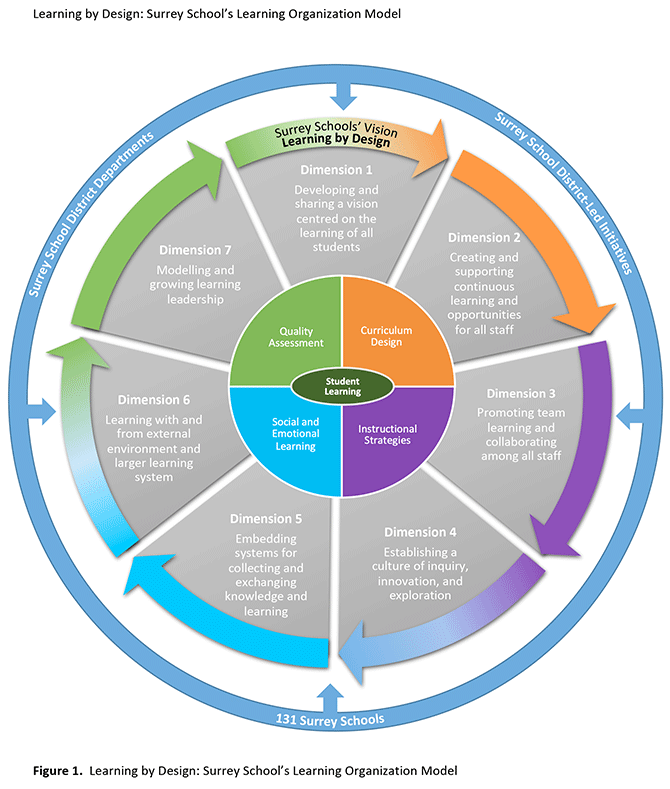
A key aspect of Learning by Design is our commitment to supporting ongoing professional learning through research, innovation, and collaboration as part of our four Priority Practices:
- Curriculum Design that deepens learning and supports students in gaining important core competencies
- Quality Assessment that focuses on the learning process and provides multiple opportunities for students to demonstrate their learning
- Instructional Strategies that are carefully crafted by teachers to enrich learning experiences for all students
- The implementation and support of quality Social and Emotional Learning through research-based processes and practices.
Below we describe a collection of district-wide initiatives, aligned with our four Priority Practices that promote educator well-being, self-efficacy, and connectedness. These initiatives were underpinned by research into best practices, and designed and implemented by multi-department teams. Within our systems change approach, we have in place formalized research, monitoring, and evaluation activities to ensure program challenges are identified and addressed.
Strategies for supporting teacher well-being
Social Emotional Learning for educators When educators demonstrate social emotional competencies (SEC), it translates into positive impacts on teacher-student relationships, a healthier classroom climate, greater student Social Emotional Learning (SEL) and academic achievement, and implementation of more effective SEL and classroom management strategies. Research finds that teachers high in SEC tend to have lower levels of workplace stress, a greater sense of personal accomplishment and satisfaction in their career, and are often better able to provide emotional and instructional support to students.5
Providing professional development grounded in SEL for educators not only provides them with skills to improve their own mental well-being and emotional resiliency, it also provides them with tools to take those skills and implement them with the learners in their schools.
The Surrey Schools’ SEL for Educators (SEL4E) initiative has been offering a series of workshops that provide educators with tools to increase their SEC by developing:
- A greater sense of self-awareness and teacher efficacy
- Mindfulness practices that support teacher well-being
- Increased emotional resilience
- Self-compassion in teaching and learning.
Educators who took part in this initiative reported that they have the confidence to bounce back from a challenging day due to a better understanding of SEL practices, that the skills they learned will support them in overcoming challenges in their career, and that they can identify, assess, and implement strategies that will support their SEC and resiliency.
A district of our size faces barriers to offering SEL professional development opportunities on a wide scale. While it’s great that we have many requests from school staff to take part in SEL4E, the number of requests often exceed what our resources will allow. The district is committed to increase capacity and provide for more collaborative and experiential learning opportunities.
Supporting an SEL climate in schools Educational research finds that system-wide approaches can contribute to improved social emotional competencies for student populations and school staff.6 The Surrey SEL Initiative is a school-wide systems approach to integrating academic, social, and emotional learning (SEL) across the district as a means to promote equitable outcomes for all students, while also promoting teacher wellness and resiliency.
To fuse SEL practices at the level of a school community, our approach incorporates capacity building, collaboration, and reflection on the pedagogical practices teachers adopt and implement in their classrooms. It uses resources from the CASEL Guide to School-wide Social and Emotional Learning to support our schools in assessing the SEL climate of the student population and staff, and to guide planning and monitoring of implemented SEL programs and activities.
Teachers and administrators form a school-based SEL Team and participate in a collaborative process, supported by the District SEL Team. Each school receives release time for one teacher (SEL Lead) one day per week to support the implementation of quality SEL practices. The SEL Lead works side-by-side with classroom teachers in their school to co-plan and co-facilitate the implementation of SEL-based curriculum to enhance learners’ skills development.
This model builds on relationships that exist within a staff. While changes in staff are always the concern, we have found that the nature of this work is taking root and proving sustainable beyond one individual. Evaluation efforts are currently underway to better understand the impacts of the Surrey SEL initiative and the sort of district supports that are needed at all levels of the school system.
Comprehensive mentoring support Mentor 36 is a joint initiative between Surrey Schools (SD 36) and the Surrey Teachers’ Association. It aims to foster a sustained culture of collaborative mentorship at every site in Surrey, supporting professional growth and a sense of belonging for Surrey teachers, through strength-based, non-evaluative learning opportunities such as:
- Ongoing professional learning sessions for teachers who are in the first five years of the profession and new to the role
- Ongoing professional learning for mentors/facilitators
- Peer-to-peer support and collaborative cohorts.
Currently, Mentor 36 has 91 elementary mentors and 126 elementary mentees, as well as 136 secondary mentors and 110 secondary mentees. Feedback data revealed that the majority of mentees (59 percent) were comfortable sharing their vulnerabilities and discussing instructional strategies with their own mentors. About two-thirds of mentors (67%) felt they had developed a safe and trusting mentoring relationship, as evidenced by their mentees reaching out and connecting, feeling comfortable and safe to ask for support, and discussing classroom issues.
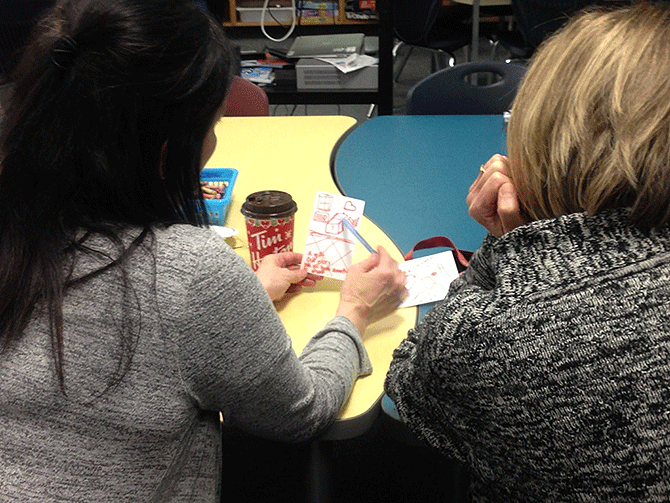
At a Mentor Learning Session, mentors created a collaborative drawing depicting the benefits of teacher mentorship.
Collaboration time and efficacy building as strategies to address stress
A review of best practices by the Centre for the Use of Research Evidence in Education7 finds that collaboration that enables co-learning, co-development, and joint work for educators is linked to improved professional knowledge, skills and practices, and increased expectations for student learning. Increased collaboration and communication between teachers often both reduces feelings of isolation and improves teachers’ knowledge and skills. These in turn lead to lower teacher burnout and greater feelings of capability to meet challenges in the classroom.8
Two of Surrey’s programs to support students also support teacher wellness by providing opportunities to collaborate and share learning to better meet the needs of specific students:
The Inner-City Early Learning initiative provides early literacy and numeracy support for “at-promise” students in Kindergarten and Grade One who may be demonstrating challenges in literacy and/or numeracy development since the 2012-2013 academic year. Specialist teachers in literacy and numeracy work collaboratively with classroom teachers in 26 inner-city schools.
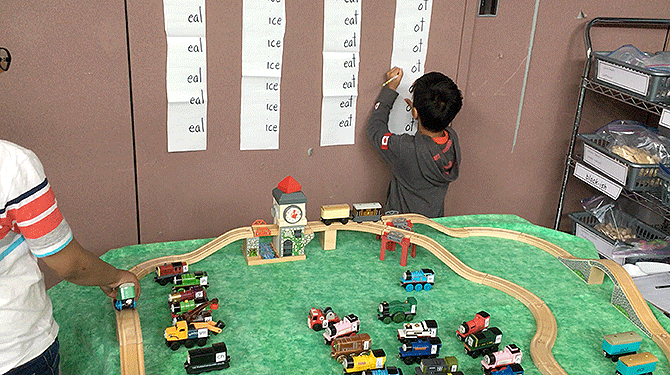
Grade One students collaborate to build (with onset-rime trains) and record words with the support of their Early Literacy Teacher.
These early literacy and numeracy supports have provided a success story for our inner-city schools. One challenge is that only three of the original 25 early literacy and early numeracy teachers from the 2012-2013 start-up are still with the program. This rate of turnover impacts the professional capacity building of the department as a whole, and it is more difficult to maintain connections and trust when relationships between early learning support staff and classroom teachers have to begin anew each school year. Despite these challenges, this initiative continues to successfully support some of the district’s most vulnerable learners.
The Knowing Our Learners Initiative offers School Teams (teachers and administrators) the opportunity to participate in Knowing Our Learners (KOL), a collaborative initiative that aims at enhancing instructional and assessment practices with the support of Curriculum and Instructional Helping Teachers. This year, 175 teachers in 55 schools participated in this program, which focuses on knowing our learners’ stories, strengths and challenges, and using this knowledge to design effective learning environments that keep social and emotional well-being, quality assessment, and evidence of learning at the heart of every child’s learning experience.
KOL activities led to teachers feeling supported and more aware of ways to align their learning intentions with student needs and to make informed decisions about teaching strategies and interventions based on research and other supports. Beyond the impacts KOL sessions had on teacher practices, the initiative was grounded in teacher-to-teacher relationships, open dialogue, and peer reflections. KOL was effective because it was “situated in relationships.” As one participant commented, KOL sessions “made me feel working with [my colleague] made me more [sensitive to] what is working and what’s not. I felt it improved our capacity to know how each other worked to help students.”

Knowing our Learners Honeycomb Activity: Teachers wrote and made connections of strengths and stretches of their own Core Competencies with those of their students.
Sustainability challenges and the road ahead
While many Surrey schools have embraced the initiatives previously discussed, maintaining motivation and engagement year over year can be challenging. Additionally, while we have found school-wide buy-in for many sites, in some instances only pockets of teachers have been engaged in these collaborative opportunities. We are working toward overcoming these challenges by ensuring rigorous research and evidence collection activities are embedded throughout each initiative, in order to make adjustments for future planning of district-led initiatives. Our process and outcomes-based program evaluations are formative in nature, grounded in best practices in evaluation designs, and include the stories and reflections of school staff.
The district also ensures that participation in its professional learning opportunities is predicated on school staff either forming or being part of a team at their school site (e.g. SEL School-based Teams). This can still pose a challenge when team members bring to the initiative different goals and competencies on which they wish to focus. We address these differences by connecting Helping Teachers and teacher mentors with specific school sites to help facilitate team discussions and bring clarity around the team’s goals and activities.
With a district focus on social and emotional learning, we are addressing not only the health and well-being of students, but of our teachers as well. We believe that healthy and capable teachers foster healthy school classrooms and give students the best possible chances for success. Surrey School’s Learning by Design framework reflects our systems approach to cultivating well-being. By building teachers’ SEL competencies, we are able to address teacher burnout and stress, support teacher wellness, elevate teacher autonomy and voice, and build resiliency through cross-departmental collaborations.
The primary authors wish to recognize contributions from: Gloria Sarmento (Director of Instruction, Building Professional Capacity Department), Taunya Shaw (District Helping Teacher, Social and Emotional Learning), Courtney Jones (District Helping Teacher, Inner City Early Learning Support), and Sharon Lau (District Helping Teacher, Mentoring)
Illustration: iStock
Photos: Courtesy authors
First published in Education Canada, September 2020
Notes
1 M. T. Greenberg, J. L. Brown, and R. M. Abenavoli, Teacher Stress and Health: Effects on teachers, students, and schools, (Edna Bennett Pierce Prevention Research Center and Pennsylvania State University, 2016).
2 Schonert-Reichl, “Social and Emotional Learning and teachers,” The Future of Children, 27, 137-155.
3 P. A. Jennings and M. T. Greenberg, “The Prosocial Classroom: Teacher social and emotional competence in relation to student and classroom outcomes,” Review of Educational Research 79 (2009): 491-525.
4 OECD, What Makes A School a Learning Organisation? A guide for policy makers, school leaders and teachers, (Paris: OECD, 2016).
5 K. A. R. Richards, C. Levesque-Bristol, T. J. Templin, and K. C. Graber, “The Impact of Resilience on Role Stressors and Burnout in Elementary and Secondary Teachers,” Social Psychology of Education 19 (2016): 511-536.
6 G. G. Bear, S. A. Whitcomb, M. J. Elias, and J. C. Blank, J. C. (2015). “SEL and Schoolwide Positive Behavioral Interventions and Supports,” in Handbook of Social and Emotional Learning: Research and practice (New York, NY: Guilford Press, 2015).
7 CUREE, Understanding What Enables High-Quality Education: A report on the research evidence (London: Pearson Education, 2016).
8 Richards et al., “The Impact of Resilience on Role Stressors and Burnout in Elementary and Secondary Teachers.”
-
A Tale of Two Programs
Comments Off on A Tale of Two ProgramsTEACHERS ARE ASKED to play many roles. They must be creators of engaging lessons, leaders who can motivate students to learn, operation managers, administrators who report and document increasing levels of paperwork, and compassionate counsellors caring for an increasing array of students’ needs. Teaching is also a unique profession as you are “on” all the time. You cannot hide behind a computer screen when you are having a bad day. No wonder a teacher is considered stress-hardy if she remains in the teaching profession for merely five years! Teacher well-being has to be viewed as the essential ingredient to the overall well-being and learning success of students.
Over the period of 2014-2019, I consulted on self-regulation initiatives in two similar northern educational jurisdictions, and observed the resulting relational wellness between student and teacher. I promoted “self-regulation” as an alternative to the traditional cognitive or motivational view of student behaviour. Helping teachers shift the lens through which they view their most vulnerable students can foster both student and teacher wellness.
Both jurisdictional staffs were already acquainted with the concept of self-regulation as introduced by Stuart Shanker and Chris Robinson;1 my task was to translate an abstract understanding into accessible and tangible classroom tools, behaviours, language and wellness actions. The interventions I provided combined social-emotional components promoting self-awareness, social relationships, restoration practices, and self-regulation of optimal energy levels of functioning.
What is self-regulation?
Stuart Shanker2 describes self-regulation as a physiological or energy state that is constantly responding to stressors, both internal (sleep, nutritional, sensory) and external (cognitive tasks, emotional upheavals, social discomforts). It is not self-control, which is a cognitive skill to control an impulse. Rather, it is learning to maintain an optimal level of energy functioning. When stressed, we are affected by an increase in chemicals such as adrenaline and cortisol, and we try to reset ourselves back to a state of equilibrium. We may choose healthy self-soothing options such as exercise and talking with others, or resort to unhealthy choices such as addictions, anger towards others or deep withdrawal. Self-regulation fosters your ability to take pause and recover when feeling stressed.
If teachers want students to act differently, then they must model, co-regulate and guide students towards alternative ways of behaving. To do this, self-regulation must occur within teachers first. This is the premise and philosophy I sought to instill in the teachers with whom I worked.
Two approaches to a wellness program
It should be noted that we began our self-regulation journey in Jurisdiction A, experimenting with what self-regulation in a school setting could look like, and took the lessons learned into Jurisdiction B. Both the infrastructure and delivery of the self-regulation projects were radically different in these two jurisdictions, with one jurisdiction choosing a more comprehensive approach in terms of both depth and breadth. Some key differences are described below:
Leadership and participants
In Jurisdiction A, a single senior executive at the Department of Education who had a personal interest in self-regulation championed the initiative. The file was assigned to me, with other departmental consultants informally involved, responsible to lead three enthusiastic pilot schools. External consultants were also hired to provide an advisory role.
In contrast, in Jurisdiction B self-regulation became a strategic initiative collaboratively discussed among the entire senior leadership team. Every regional area in Jurisdiction B selected its own pilot school, with expansion to include additional requests by individual schools, making a total of approximately 15 schools. A committee of department consultants that I mentored was formed, and the union was invited to informally partner on the initiative with the entire jurisdiction, making self-regulation and wellness a priority for all its members.
Finances and target audience
Funding in Jurisdiction A was modest and drawn from the senior leader’s budget. Funding was unknown year to year, and required schools to supplement from their own budgets. Each pilot school selected one vulnerable or dysregulated student as the focal point for programming support. The program targeted the class or student, and did not incorporate teacher wellness.
In Jurisdiction B, the self-regulation initiative was assigned a more substantial and sustained five-year budget as a pillar of their overall strategic plan. The target audience included the entire teaching staff and student population of each pilot school.
Communication and program delivery
Communication in Jurisdiction A was top-down and limited to those directly involved. To start the program, the external consultant provided webinar training to the pilot schools focused on the neuroscience and physiology of self-regulation. I provided classroom consultations to each of the pilot schools, as well as consulting on strategies to support the one dysregulated student. The pilot schools also received a classroom observation, accompanied by environmental and sensory recommendations (e.g. decluttering, lighting, seating options). I handed out sensory tools and program materials on mindful breathing, self-regulation, emotional literacy and movement. A number of schools, beyond the pilot schools, applied separately for funding for structural equipment such as stationary bikes.
Unfortunately, program delivery was a bit haphazard. Further, the uncertainty of funding left pilot schools questioning the overall direction and frankly losing enthusiasm. It was dependent on individual teacher interest if self-regulation became a supported practice in a classroom or school.
Jurisdiction B adopted a comprehensive 4-step program communication and delivery approach:
1) Details of the initiative were widely dispersed. From senior leadership to front-line educators in pilot schools, all were exposed to both theoretical concepts and implementation practices for self-regulation, for both students and teachers. All schools, not just the pilot schools, had access to teacher mindfulness webinars and an online self-regulation book club.
2) We started with a kickoff presentation for program specialists, classroom teachers, and administrators in all pilot schools. Subsequently, a group of consultants joined me for a dedicated week in each pilot school, offering both leadership and classroom support.
3) We took teacher wellness as the starting point. This delivery sequence is espoused by social-emotional author Linda Lantieri,3 who after the 9-11 tragedy insisted that work be with teachers – not students – acknowledging that it’s the teachers who must model for the students. Each school visit began with professional development dedicated to teacher personal wellness, including personalized and doable self-calming and up-regulatory tools.
Some examples of teacher-specific training goals include:
- Learn how to satisfy personal regulatory needs in the classroom, as teachers cannot leave the classroom.
- Manage personal stressors to model effective problem-solving techniques when stressed through self-examination and self-awareness.
- Understand how co-regulation guides students to recognize their stressors, and discover effective self-regulatory options.
Subsequent training focused on individual supports for dysregulated students, as well as classroom-wide observations on the physical environment and student-teacher interactions. Teachers had the opportunity to leave the class for immediate follow-up coaching with the consultant. There were classroom demonstrations where I modelled lessons such as:
- Learning our body signals when stressed (do you feel tension in your shoulders, stomach, jaw?) and belly breathing (feeling your belly expand when you breathe in)
- Determining individual emotional and sensory soothing tools (e.g. take in air at the window, walk around the school, drink of water) to reset back into an optimal zone of energy
- Learning how assertiveness draws boundaries, protects personal integrity and reduces resentment and stress.
Parent evenings at each school used experiential activities to explain self-regulation.
4) At the end of each school visit tour, the team consulted on lessons learned and we followed up with schools on action items. There were pre-and post-surveys.
Lessons learned
Feedback I received during the school visits, sustainable or long-term behaviour and language changes I observed over a five-year period, and the collected surveys, all informed the following learnings.
Size matters. By sheer numbers, there were more Jurisdiction B schools exposed to the self-regulation initiative (15 schools versus three in Jurisdiction A), and thus there was overall more uptake and success in terms of student and teacher understanding and application of self-regulation. The entire school region was aware and supportive of the initiative, from senior level to front-line staff. At the same time, having more dedicated funds allowed Jurisdiction B to have some quick wins, with schools visibly seeing environmental changes such as lighting, alternative seating, and program resources.
Level of intervention matters. In Jurisdiction A, the level of intervention were brief school visits targeting one dysregulated student. In Jurisdiction B, one week of dedicated time, with substitutes provided, were allocated for us to model practical classroom interventions and debrief with staff.
School culture matters. In Jurisdiction A, the initiative was relatively short-lived. The schools in Jurisdiction B that found observable, sustainable, success with this initiative could envision the potential benefits of self-regulation because the concept aligned with their whole-school orientation toward students. In these schools, leadership held power with staff and the staff was a cohesive community. Self-regulation became another part of their culture, with teachers explicitly expressing their own energy levels and need for daily breathing and movement breaks. Schools that adopted self-regulation already recognized the critical prerequisite of positive relationships with teachers for students to achieve, and school staff and leaders accepted a longer-term perspective on behavioural and academic changes.
Teacher wellness is a necessary component of self-regulation. Schools in Jurisdiction B that integrated self-regulation into school practices also prioritized teacher wellness, beyond yoga workshops or other one-day add–ons. Teacher wellness was understood as necessary to student success and supported with concrete stress reducers such as decreased photocopying, time between classes to just breathe, and streamlined reporting systems.
Reduced stress was most notable in Jurisdiction B, where there were directed self-regulatory supports for both students and teachers. The self-regulation lens invites more compassion for dysregulated students, and teachers reported this reduced their own stress levels. Also, when teachers were self-regulated themselves, they were able to co-regulate the students. A teacher noted, “The self-regulation work was one of the most influential pieces of professional development that I have been a part of in my career. First, and most importantly, it had a profound impact on my professional and personal well-being.” When self-regulation resonated with the teachers’ own sense of well-being it was more likely to be integrated into the classroom for students as well.
Some gains with both approaches. An overall win in both jurisdictions was that there is now more acceptance of the belief that children are doing the best they can and that relationships with students are critical to success. Sensory circuits, the use of movement, and stationary bikes have become standard school tools. Unfortunately, where stationary bikes were placed in classrooms without explicit rationale, they sometimes became glorified coat hooks.
Not a quick fix. Neither of the jurisdictions found the widespread transformational change in student self-regulation and overall achievement levels that they hoped for. While improvements were seen in this student population, a self-regulation initiative alone cannot quickly shift the outcomes for dysregulated children, as school is only one part of their overall life experience. I believe self-regulation is a viable initiative to lead to such success, but it requires a long-term and multidimensional approach.
Leadership is key. The vast differences in the two jurisdictions’ approaches certainly impacted the reach and level of success. However, I believe the most profound ingredient necessary for the widespread success of any educational initiative is the priorities of all leadership and whether they themselves integrate and model the change they wish to see.4 Sustainability of an initiative comes from leadership enthusiasm.
SELF-REGULATION is not easy to adopt into practice. A significant philosophical change is required in how teachers and administrators view students’ behaviour. It requires enhancing our own self-awareness and it requires the belief that student-teacher relational health is a prerequisite to engaged learning and student academic success. Teachers need to work in a safe, supporting culture to begin self-examination of their practice. Moreover, it takes time to see changes. Given that schools work on a yearly basis with limited timed academic objectives, it is not always feasible to look beyond the academic demands nor at long-term initiatives.
The larger net cast and more comprehensive supports provided in Jurisdiction B led to more in-depth exposure to the concept, and thus greater probability of reaching the right, enthusiastic leaders and teachers who deeply integrated self-regulation into their personal lives. Seeing positive changes within themselves, they were positioned to model and translate it at the school level. As one school administrator reported, “We are able to use language that helps to diffuse rather than exacerbate difficult situations, and we have a better appreciation of our own need to self-regulate.” Teacher wellness must be an integral component of any self-regulation initiative for students.
Photo: iStock
First published in Education Canada, September 2020
Notes
1 http://www.selfregclinic.com/
2 Stuart Shanker, Calm, Alert and Learning: Classroom strategies for self-regulation (Toronto, On: Pearson Canada, 2015).
3 https://casel.org/consultants/linda-lantieri
4 S. Sinek, Leaders Eat Last: Why some teams pull together and others do not (New York: Penguin Random House, 2014).
-
WEBINAR: A Need for Proactive Educator Wellness
Comments Off on WEBINAR: A Need for Proactive Educator WellnessThis webinar is primarily for school district leaders, school principals and vice-principals.
It is now more apparent than ever before that taking care of the health of our K-12 educators can no longer be a reactive response. Leaders must begin to be proactive, putting accessible initiatives in place that prioritize the health of their teams. If we hope to impact our student’s success, we must be our best self – mentally, physically, and emotionally. Leadership at all levels must set an example for all to follow.
This webinar originally broadcasted on September 21, 2020 was all about bringing a proactive approach to the culture of educator wellness.
-
WEBINAR: Struggling in September? Let’s turn to self-compassion as a way to meet the ongoing challenges
Comments Off on WEBINAR: Struggling in September? Let’s turn to self-compassion as a way to meet the ongoing challengesThis webinar is primarily for school-based educators
As an educator, do you feel like you’re on a boat out at sea with no rudder this September? Cultivating mindfulness and self-compassion practices can provide the anchor you need in these unprecedented times.
Bill O’Brien said: “The success of an intervention depends on the interior condition of the intervener.” In other words: the success of our actions as educators during September does not depend on “What we do” or “How we do it,” but on the inner Place from which we operate. Mindfulness and self-compassion enables us to show up intentionally aware and present so we can meet each colleague and student with care. But it starts with us as individuals first.
In this-one hour webinar, originally broadcasted on September 18th, 2020, participants learned the three components of self-compassion, the physiology around self-compassion and self-criticism and practices on how to meet ongoing struggles in the moment.
Watch the webinar below:
-
Sexual and Gender Minorities in Canadian Schools
Comments Off on Sexual and Gender Minorities in Canadian Schools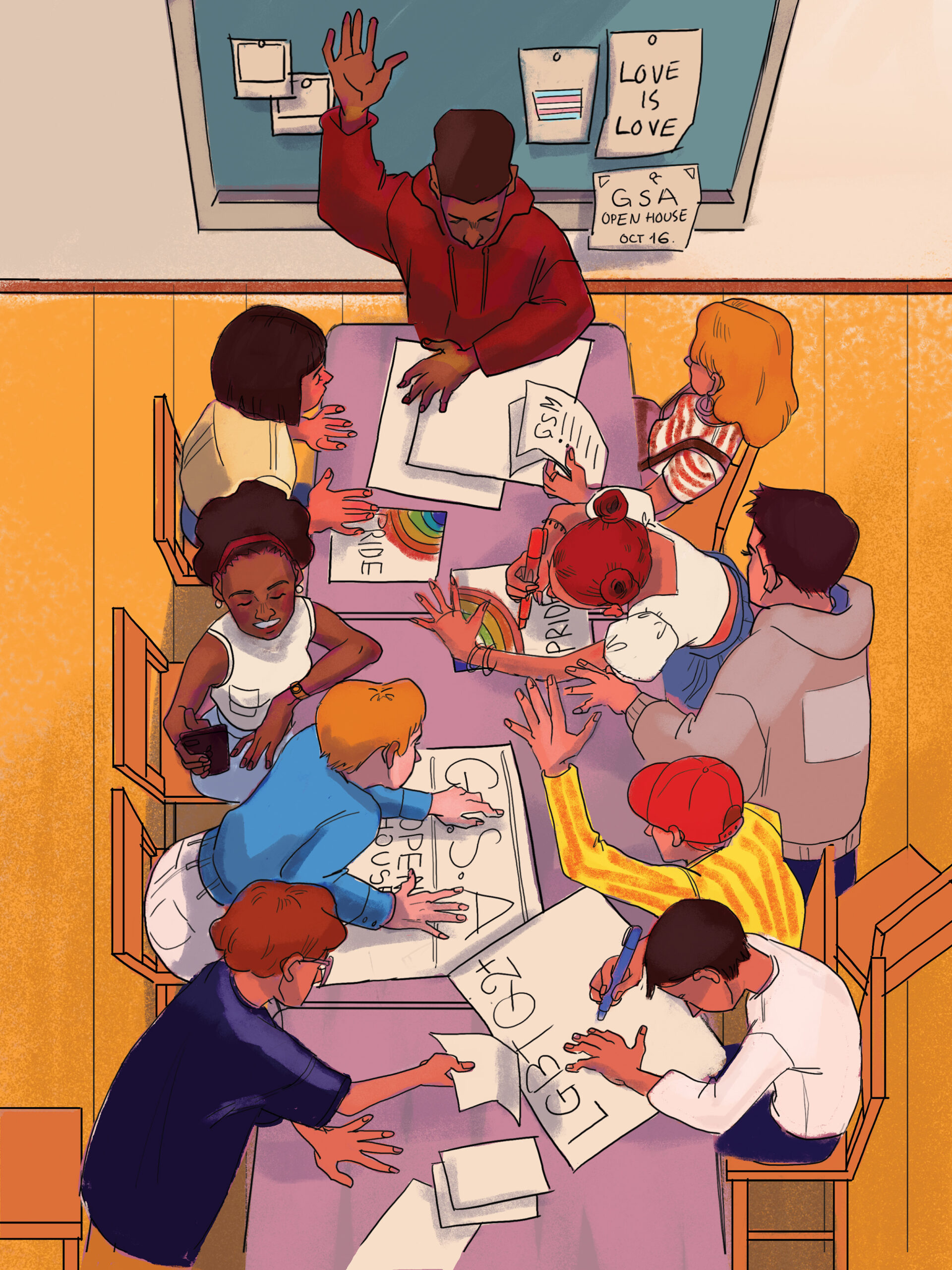
I still live with hurtful memories of being a timid and apprehensive gay boy who was bullied mercilessly and suffered immense mental anguish during junior and senior high school. I was subjected to incessant name calling and targeted by packs of boys on school buses and school grounds. Later, as a teacher, I was perpetually in fear of being outed as gay and losing my job. I dealt with unrelenting stressors, like finding pictures of naked men left under wiper blades on my car windshield in the school parking lot. These indelible memories are my impetus for wanting to make life better now for sexual and gender minorities (SGMs or LGBTQ2+ persons) in our schools. In Canada today, there is an established basis for doing this, bolstered by the Canadian Charter of Rights and Freedoms. Since the Supreme Court of Canada decision in Vriend v. Alberta in 1998, which granted equality rights to sexual minority Canadians, there have been continuous changes in law, legislation, and educational policy that have abetted recognizing and accommodating SGMs in school culture and curriculum. More recently, Bill C-16, An Act to Amend the Canadian Human Rights Act and the Criminal Code, which became law in 2017, provided gender minorities with protection against discrimination on the grounds of gender identity and expression.
With such movement forward, what is it like for SGMs to have SGM-specific policy in place in our schools as social spaces where students learn and teachers work? I took up this question in research1 I conducted in a large urban school district in western Canada that had had a standalone SGM policy, rather than merely an umbrella or general equity policy, in place for five years. Having SGM-specific policy is far from the norm in school districts in our country, so I interviewed key interest groups that included students and teachers to learn about their experiences. Students were asked to discuss everyday stressors and supports as they talked about school culture, climate, curriculum, principals, and teachers. Teachers were asked to discuss the importance of having SGM policy and practice that impact the recognition, accommodation, and well-being of SGMs. Here, I share some of their perspectives.
Students’ perspectives: What teachers do matters
The high-school students I interviewed commonly spoke about the need to educate others about SGMs and our issues and concerns. One student who was president of his high-school GSA (Gay-Straight Alliance or Gender-Sexuality Alliance) spoke pragmatically about this:
“I think having more education would be helpful because when people are uneducated, they don’t like what they don’t understand or what they don’t perceive to be normal. I think having education is a really big aspect. Incorporating LGBTQ+ case studies into courses would be really helpful.”
Another high-school student spoke about her former faith-based school where sexual orientation was still a taboo topic. She related, “It was never spoken about. There were no comments on it, and anything you did to try to bring it up, they’d put you down.” She spoke positively about the SGM-inclusive culture in her current school, stating, “I find it very welcoming. You see same-sex couples in the hallway, and there’s nothing – nobody blinks an eye.” She spoke about the teachers, saying, “One of my friends had a teacher who used their preferred pronouns and names. So that’s one teacher I know who’s very accepting. I’m pretty sure there are multiple other teachers who would as well. On the first day, they read off the attendance list and, of course, that’s your legal name. But if you ask, there are multiple teachers who will use the student’s preferred name and pronouns.” Another high school student also spoke about the naming issue, using an example to indicate how students can be negatively impacted in a public way: “One thing that sucks is for Valentine’s Day, they do the hearts. They write everyone’s name on a heart and put them in the lunchroom downstairs. But because they use the attendance list to do it, it’s birth names and legal names. So that can cause anxiety.” One trans-identified student who uses he/him pronouns provided this particular concern regarding naming and roll call. He recounted, “A big issue that you need to work with is substitute teachers. My legal name and the name that I go by are not the same, so I always need to talk to the substitutes ahead of time. That’s a bit stressful. Sometimes they forget. They always try, but you can’t remember everything.” Regarding his teachers in general, this student pondered, “I wish there was some way for the teachers to understand how significant it is to respect pronouns and labels and titles because I feel like some of them don’t understand some of the consequences. The first few times don’t bother you that much, but the more it happens, the more it bothers you. Most of my teachers don’t seem to understand how much it affects me. It makes me feel crappy.” Like other students I interviewed, this student spoke about the need to educate teachers:
“I feel because teachers are directly interacting with and impacting queer youth, it should be part of training them on a PD day or something, just to take a crash course on understanding. I don’t know if those things do happen or what the situation is with that. I just wish in general that people knew more about us and just the facts and less of the perceptions. I don’t know specifically what would be available to them, though. I do wish there was more information that was commonly known. Overall, I think our teachers are pretty supportive – some more than others – just because they’re more educated on everything. And some really try to learn with you, which is helpful. They want you to tell them stuff that they don’t know. There’s still a lot of improvements that can be made, a lot more information that can be shared. With more knowledge, there’s less misunderstanding, there’s less judgment, and everybody can just live together more peacefully and not be angry at each other or confused.”
Teachers’ perspectives: Knowing school culture, being an advocate
Supportive teachers I interviewed saw schools as social spaces where they engaged in strategic actions to advance SGM inclusion. One high-school teacher provided this perspective on what constituted an SGM-inclusive culture in her school:
“The school is very welcoming and comprehensive in terms of how staff accept students and how students themselves are perceived around the school. There isn’t a lot of discussion that we have to do because the SGM policy dictates behaviour. It’s more about creating a culture: We’ll do it because that’s what people do. This results in fewer students seeking out the GSA on a regular basis because the culture of the school itself is so open and accepting that everywhere is a safe place. The school encounters zero parent resistance to pink shirt day and other GSA events. The administration is very vocally supportive of the students wherever they are in their identity journey. They want to put those students first, ahead of any reservations of parents or complaints from community members. Everyone realizes that comfort is not covered under our provincial human rights legislation, but lack of discrimination and the ability to exist in your identity are covered.”
Of course, creating a genuinely accepting SGM-inclusive school culture takes time. Another high school teacher spoke about his GSA work to help non-heterosexual boys become more comfortable with their sexual identities: “In the GSA, it’s always more girls than guys – substantially. It’s probably 80 percent girls and 20 percent boys, if not lower. I’ve talked to other GSA teachers, and they’ve seen the same thing. Many times, I’ve heard girls say that they felt safe. I haven’t really heard a boy commenting either way. Maybe that’s why fewer boys come to the GSA meeting. There generally is more of a stigma for them, especially in high schools.” Paralleling this perspective on non-heterosexual boys’ discomfort, another high school teacher provided this observation: “I don’t think I’ve ever seen any boys holding hands, but I’ve seen lots more girls holding hands – girlfriends. That’s now just as okay as heterosexual couples walking down the hallway.” A junior high school teacher offered a similar perspective, indicating it is not just a high-school issue: “The girls seem to be far more comfortable at the junior high age for sure compared to the boys. Absolutely, I don’t think boys are quite there yet at this stage, which is sad. It’s unfortunate.”
Many teachers spoke to the importance of having a standalone school district policy on sexual orientation and gender identity to fortify the work to create an SGM-inclusive school culture. In this regard, one teacher working in an all-grades setting provided her perspective on living out this policy in word and action:
“It’s about a district level of support that starts with leadership. It’s about letting all staff know that it’s about not having prejudice and discrimination based on a student’s perceived or actual sexual orientation or gender identity. It’s about being appropriate with our responses as a staff if we encounter that, whether it’s in behaviours, comments, or the actions of other students. But it goes so much deeper. It’s in the way you would group students, in washroom use and locker use, in language use in the classroom, and in resources and approaches. So, it’s really helpful in building on safe and caring schools. It gives us something to work toward so we’re all consistent. We have a policy and we have the support of our district to continue to do that.”
In sum, teachers provided an array of reasons why a standalone SGM policy is a good thing. One high-school teacher saw it as assurance enabling SGM inclusion when teachers couldn’t rely on the school principal. He concluded, “Putting a policy on this was a good thing because you’re not always going to have an understanding administrator, a forward-thinking administrator.” A junior high school teacher felt the policy enabled him to start a GSA, which subsequently contributed to more SGM inclusion in his school. He said, “I’ve had students say how much better it is in the school since we started the GSA. I used to hear students say, ‘That’s so gay’ – constantly. I can’t even remember the last time I had to say something to a student about that. It’s just known that that’s not acceptable to do anymore. Those sorts of things to do with language and what’s acceptable in schools – I think a lot of that has to do with the policy.”
A standalone SGM policy that is consistently implemented… is a clear indicator that a school district has the backs of SGM teachers and allied teachers.
Considering whether the standalone policy made a difference for teachers in her district, a teacher working in a K-12 school responded, “I think by our surety that we’ve got our backs covered, that makes us stronger in what we’re trying to achieve.” She also saw the policy as effective in assisting SGM students who require basic accommodation that includes having their physical needs met: “I know last year, one student would go home to go to the bathroom. Of course, they wouldn’t come back. Washroom access is something so simple and so painful at the same time.”
Supporting SGM teachers, creating an SGM-inclusive school
Increasingly today, young SGM teachers choose to be vocal and visible at work, which is enabled when there is policy in place to protect them. However, many SGM teachers in our country still navigate homophobia and transphobia in their schools. Their challenges and concerns are well documented in The Every Teacher Project on LGBTQ Inclusive Education in Canada’s K-12 Schools.2
Importantly, a gay junior high school teacher spoke about the significance of having the policy in terms of SGM teacher welfare:
“I think it’s fantastic. I think it’s awesome. When it got put in place in our school district, it just seemed quite far advanced from where the rest of the province was. Just being able to know you’ve got the backing of the board is huge. Knowing that you can go in and ask these questions and do these things and not be petrified is massive. Not that it ever felt like there was a lot of homophobia in my district. I know people have encountered pockets of it here and there. I know of some horror stories, but I came out in my second year as a teacher. It was never a big deal, but it’s still nice to know that the board has your back.”
Indeed, having a standalone SGM policy that is consistently implemented and periodically reviewed is a clear indicator that a school district has the backs of SGM teachers and allied teachers engaged in SGM-inclusive work. Such specific policy can nurture an SGM-positive school culture and encourage principals to lead the way in being there for SGM students and teachers. In the end, policy is protection and its purposeful implementation is true recognition and accommodation of SGM students and teachers.
In terms of being there for SGM teachers, here are three constructive ways to be accommodative: First, show support. Notably, having strong support from school leaders can create a more open dialogue and space whereby SGM teachers feel safe to deliver and engage in SGM-inclusive education. Second, develop inclusive workplace policies. At the school district level, standalone anti-homophobia and anti-transphobia policies covering SGM staff and students – rather than generic equity policy – should stand alongside workplace harassment policies and be implemented to protect and support SGM staff. Third, create a professional and/or informal network. SGM teachers within the district can form a professional GSA where they meet to share their experiences, learn from one another, and develop trusting and supportive professional relationships.
As well, teachers – including SGM teachers needing mentors – students, principals, and parents can learn from the good work that openly LGBTQ+ educators do. Here is an excerpt from an interview I conducted with an openly gay elementary school principal in the school district who spoke about his work to be a change agent and advocate in his school:
“What do I do at my school? Certainly, we have our safe-contact teachers identified. We also have the safe and caring rainbow stickers. There’s one right as you enter the school, and there’s one on my office door, my assistant principal’s door, and on the classroom doors of the safe contact teachers and other supportive teachers. I’ve had many conversations with my parent council around the work we’re doing in order to have their support for the SOGI [sexual orientation and gender identity] work in our school. Our library collection is also growing as we find more and more stories that depict the LGBTQ+ youth and their families and same-sex families. I also have conversations with my staff about heteronormativity, the gender spectrum, and the language we use with students. So, is it working? I certainly know that my staff is very aware. Also, my sexuality is not hidden from my staff, so my staff know who I am. I also let them know that my partner is male and he’s a grade one teacher. I do it because I want them to know that I believe in the normalization of sexuality and gender in our schools, that it is no big deal. It is just who we are.”
Illustration: Diana Pham
First published in Education Canada, September 2020
Notes
1 The Social Sciences and Humanities Research Council of Canada funded this research.
2 C. Taylor, T. Peter, C. Campbell, et al., The Every Teacher Project on LGBTQ-inclusive Education in Canada’s K-12 Schools: Final report (Winnipeg, MB: Manitoba Teachers’ Society, 2015). http://egale.ca/wp-content/uploads/2016/01/Every-Teacher-Project-Final-Report-WEB.pdf
-
Addressing Racism in the K-12 Workplace
Comments Off on Addressing Racism in the K-12 Workplace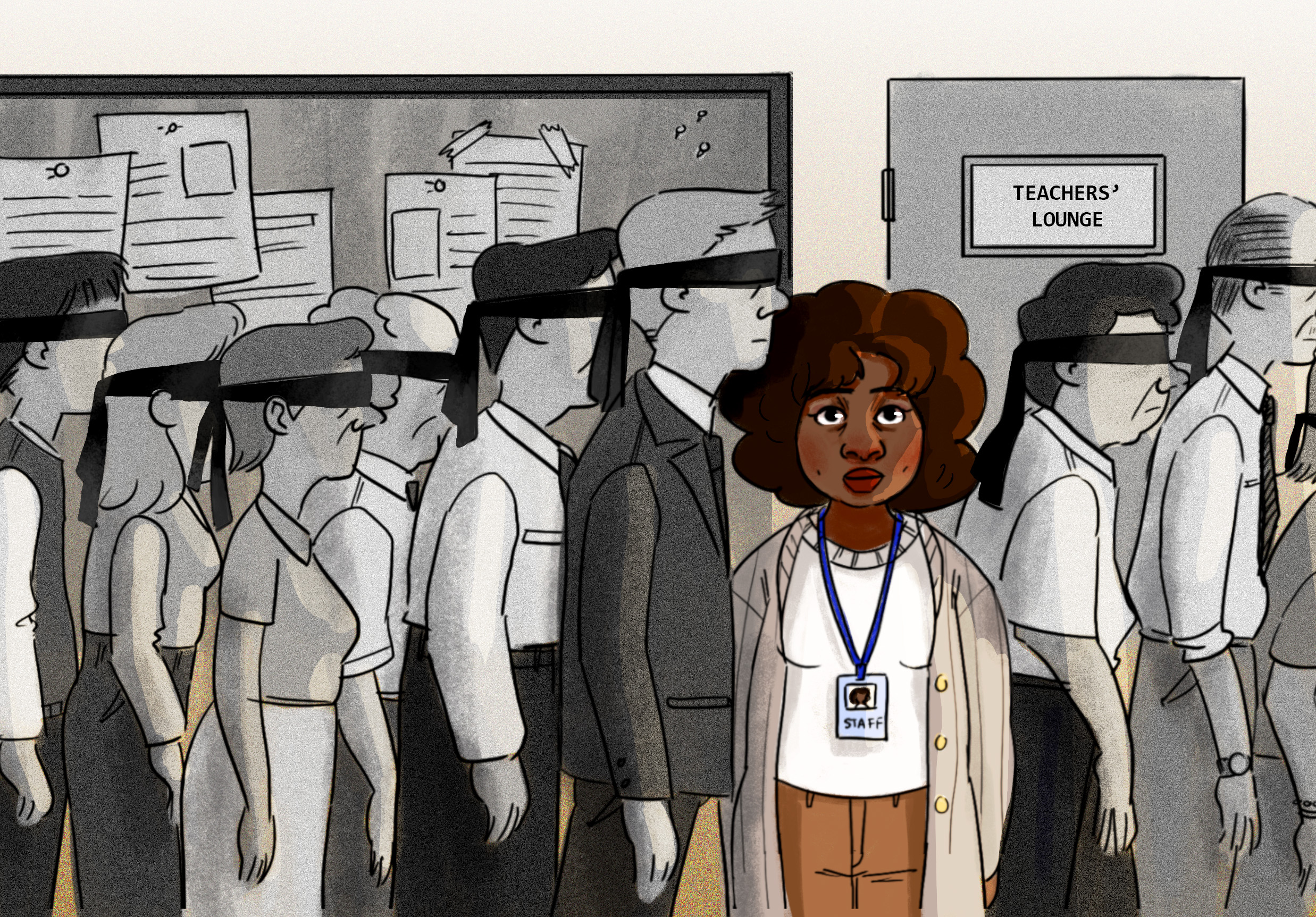
Students have been subject to some of the most egregious and gross forms of racism that no one should ever experience, much less a child. In Ontario, two fairly recent examples of racist violence that students face have been documented in the Dufferin-Peel Catholic District School Board and the Peel District School Board. On June 15, 2020, the CBC reported that Anne Stewart,1 a teacher at Notre Dame Secondary School in Brampton, Ontario, used the N-word in class while teaching students. Stewart was reported to the Ontario College of Teachers (OCT), which concluded that the teacher had indeed used the N-word. However, Stewart only received a verbal reprimand and her case was not sent to the OCT’s discipline committee. The second case worth mentioning happened in 2016, when staff at an elementary school in the Peel District School Board called in the Peel Regional Police to address a situation where a six-year-old Black female student was in mental distress. The two white officers who arrived proceeded to shackle the hands and feet2 of the little girl. She remained shackled and placed on her stomach for 28 minutes. The case was referred to the Human Rights Tribunal of Ontario and, in 2020, the Tribunal ruled that the girl’s human rights were violated and that race was a factor in the way the police responded.
What we must understand is that both of these cases were traumatizing events for the students involved; they will likely require mental health support for a long time as a result of the racial trauma they experienced. The same can probably be said about the many students who have also come to be aware of too many of these stories in which Black and racialized students, friends and family, experience racist violence in the school system. Students and their families are also re-traumatized when they find out that those who committed these racist acts are rarely held accountable for their actions.
Since school districts are in the business of serving students, we can understand why we need to address these issues so that students can have the opportunity to be successful and not be under the threat of racial violence when they are expected to be learning and getting an education. But there’s another part to this conversation that often does not get the attention it deserves: the racism that Black, Indigenous and racialized staff experience in school districts across the country. The system of anti-Black racism that Black students are fighting against and resisting is the same anti-Black racism that Black staff have to contend with and navigate while they are expected to be teaching at a high level. A report titled The Voices of Ontario Black Educators, covered by the Toronto Star in 2015,3 stated that one-third of the Black teachers, principals and vice-principals who participated in the study indicated they were passed over for promotions because they were Black, 27 percent indicated that racism at work impacts their day-to-day work life, and 51 percent believed anti-Black racism impacts who gets promoted.
School districts that want to take up the work of dismantling systemic racism to enhance student success and address the disparity in student outcomes must also address and dismantle the racism that Black and racialized educators are experiencing in the K-12 workplace. This can only be done by taking a comprehensive approach to staff mental health and well-being, and by drawing the connection between systemic racism, racism and anti-Black racism in the workplace and well-being in the workplace. The premise of this discussion must be that our education system, and by extension our school districts, are all inherently racist and anti-Black. The conversation should not be about, “Is racism operating in our school district?” The evidence and research detailing a variety of ways that racism and anti-Black racism impacts the education system is too strong and comprehensive for us to still be looking for more proof to establish its existence. The conversation must be about, “How we can gain a better understanding of how racism is operating in our sector or school district so that we can address the disparities that Black and racialized staff are experiencing?”
It is important to note that although all racialized groups experience racism, not all racialized groups experience racism in the same way. When we examine outcome data, what we clearly see is that anti-Black racism and anti-Indigenous racism, across all sectors, produce the most significant negative outcomes among non-white populations. Disaggregated race-based outcome data is what should drive where and how school districts focus their attention and resources when doing anti-racism work. Anti-Black racism and systemic racism is a deeply entrenched problem in the education sector across the country, which has roots in the legacy of enslaved people in Canada.4 This is a very important point, because it is through a comprehensive understanding of colonialism and Canada’s participation and relationship with the trans-Atlantic slave trade, that you will understand how all of our major institutions, laws, social norms and such have been built on this foundation and reflected in present-day realities. However, as serious as the problem is, it is not readily understood in terms of its impact on stress, anxiety, trauma and overall well-being in the workplace. If school districts are serious about addressing anti-Black racism and systemic racism, then they must see it as one of the most pressing mental health challenges of our time that requires concentrated effort, attention and resources if our schools, classrooms and workplaces are to be safe and nurturing work and learning environments.
Research indicates that teacher stress is directly linked to student performance and effective class management strategies. Teachers who are under chronic stress have been shown to have less effective classroom management,5 lack clear teaching instruction for students and have a lower ability to create safe and nurturing classrooms for all of their students. Research also shows that teachers who view and experience the demands and stress of teaching as outweighing the resources and support provided to them, are less likely than their peers with lower levels of stress to say they would still choose teaching if they had the chance to choose their career again.
Now, imagine you layer the stress and anxiety that comes with managing a classroom with the stress, anxiety and trauma caused by anti-Black racism and systemic racism that Black and racialized educators experience in the workplace. Racial violence can lead to racial trauma. Dr. Erangler Turner defines racial trauma as “experiencing symptoms such as anxiety, hyper-vigilance to threat or lack of hopefulness for your future as a result of exposure to racism or discrimination.” The impact of racial trauma shows up not only as anxiety and stress but also as depression, low self-esteem, poor concentration and irritability.6 Research on racial trauma also indicates that as a result of anti-Black racism, Black people experience less sense of control over their own lives, as well as internalized racism and avoidance of valued action. Chronic stress related to anti-Black racism predisposes Black people to a variety of health problems, including memory impairment, neural atrophy and heart disease. Some research has also pointed out that anxiety can be more persistent among Black people compared to their non-Black counterparts, which researchers attribute to the intensity of anti-Black racism. The impact of anti-Black racism and racism in the workplace also has negative physical impacts on Black and racialized staff. Most notable is that chronic and prolonged stress related to racism can lead the body to release high levels of cortisol, which can impair the body’s ability to reduce inflammation. This in turn can impair the body’s ability to heal. This is what Black, Indigenous and racialized educators are having to contend with in the workplace, and much of these negative mental health and well-being outcomes are directly connected to school districts’ refusal to see racism as a mental health and well-being issue, along with their inability to effectively address racism for both staff and students.
Anti-racism is integral to staff well-being
Most school districts have some form of well-being plan. This might include a paid staff role that is responsible for coordinating and rolling out mental health and well-being programs and initiatives. There may also be a well-being committee made up of staff who help to direct the school district’s well-being initiatives.
Although many staff well-being initiatives have value and help to improve the mental health and well-being of educators, the fact is that the vast majority of these programs take a race-neutral approach. Racism tends to not be factored into program design, and this type of approach only serves to further entrench anti-Black racism and other forms of racism in the workplace. By making anti-racism work a central feature of mental health and well-being plans, school districts will be centering the voices of those most vulnerable in the system and keeping the conversation about racism in the workplace at the forefront. These are both seen as best practices when doing anti-racism work.
It is well established that better mental health leads to positive outcomes for organizations. When educators experience high levels of well-being and low levels of stress, this not only results in higher student well-being and educational outcomes, but it also improves:
- employee productivity
- employee health behaviours
- rates of absenteeism
- recruitment and retention efforts.
School districts may roll out a variety of services and training opportunities, such as benefits programs that provide health supports like mental health counselling, massage or physiotherapy, or workshops that help educators communicate better, create a healthy work-life balance, and so on. From a mental health and well-being perspective, these initiatives are important and have value. They can and do have a positive impact on staff mental health and well-being. However, the problem with looking at workplace well-being solely through this lens is that it puts the onus of well-being on the staff, which fuels the idea that if staff can just learn a new skill or develop better coping mechanisms, then they can achieve optimal mental health and well-being. This approach lets school districts off the hook.
Anti-Black racism is systemic and operates in every aspect of school districts’ operations, policies and programs. This can and does have a detrimental impact on Black and racialized staff. If your plan to disrupt racism in the workplace is to essentially develop programs that aim to help Black and non-white staff deal more effectively with their oppression, then you do not have much of a plan! (See “Anti-Racism Basics” below.) School districts that take this approach are complicit and perpetuate racist violence against Black and non-white staff; the onus of disrupting anti-Black racism in our K-12 workplaces falls on the shoulders of school district leadership. It is also not enough for districts to devise ways to address the racism that students face while neglecting to turn their attention towards how Black and racialized staff are also impacted by racism. All students can see the racial hierarchy of school settings, where Black and racialized educators are scarcely in positions of leadership such as principal and vice-principal. They can see what bodies are in positions of leadership, they can see what bodies are not in leadership roles, and they can see what bodies are less present overall in school spaces. They can see what bodies are valued and what bodies are not.
If school districts are serious about staff well-being in the K-12 workplace and truly desire to have better student outcomes, then they must see anti-racism work as mental health and well-being work. School districts’ anti-racism work must include both staff and students. It is clear that when staff have lower stress and anxiety levels, they perform better as educators, which leads to better student outcomes. But workplace racism inflicts an additional level of stress, anxiety and racial trauma on Black, Indigenous and racialized staff. We know that racism and anti-Black racism has significant mental, emotional and physiological impacts on Black and other non-white educators in the workplace. This additional “tax” can and does lead to teacher performance being negatively impacted, which ultimately will impact student outcomes. Only a systemic approach to doing anti-racism work (that includes the needs of both students and staff, frames anti-racism work as a mental health and workplace well-being issue, and includes accountability) will turn our schools and districts into spaces where learning can happen and where Black and non-white staff can bring their whole selves to work – without having to shoulder the weight of systemic and anti-Black racism.
Illustration: Diana Pham
First published in Education Canada, September 2020
Anti-Racism Basics
A comprehensive discussion of effective anti-racism programs for school districts would require a whole other article. But as a starting place, they should feature:
- Acknowledgment that our school systems are inherently racist due to the legacy of colonialism and slavery. We also have mounds of data and research that prove that anti-Black racism and systemic racism is a problem in education, and that it has significant impact on Black staff and student mental health. If we don’t acknowledge the problem that racism exists, how will know what problem we are trying to solve?
- Community Partnership and Community Leadership Any efforts by school districts to do anti-racism work and disrupt anti-Black racism must be done with community, staff and student partnership. The voices of those most impacted must have a leadership role in developing the solutions.
- Accountability Any plan to address systemic and anti-Black racism that does not have accountability measures is grossly incomplete. School districts that take anti-racism work seriously must have accountability measures in place for the district as a system and for racist behaviours when committed by staff.
- Disaggregated Race-Based Data Collection Any anti-racism work, strategy or plan should be informed by disaggregated race-based data. The collection methodology and analysis of the data must be done by those who have expertise utilizing an anti-racism intersectional lens.
- Transparent Monitoring and Reporting All policies, programs and initiatives must have a transparent process and transparent reporting mechanism. The community and staff need to know, clearly, what work the organization has committed to, what impact it has had and what the challenges have been.
- Policy Development and Implementation To support the needed structural change to disrupt and dismantle anti-Black racism and systemic racism, the necessary policies need to be put in place. This helps to ensure that as staff change roles and new officials are elected, the work does not stop. Additionally, all existing new policies should be reviewed and developed using an anti-racism and anti-Black racism lens.
Notes
1 Shanifa Nasser, “High school teacher who used N-word in class allowed to keep working after apologizing,” CBC News (June 15, 2020). www.cbc.ca/news/canada/toronto/brampton-teacher-notre-dame-n-word-1.5607961
2 “Race was a factor in handcuffing of 6-year-old black girl in Mississauga school, tribunal says,” CBC News (March 3, 2020). www.cbc.ca/news/canada/toronto/human-rights-tribunal-peel-police-girl-handcuffed-1.5483456
3 Louise Brown, “Black teachers still face racism on the job in Ontario,” Toronto Star (May 29, 2015). www.thestar.com/yourtoronto/education/2015/05/29/black-teachers-still-face-racism-on-the-job-in-ontario.html
4 Natasha Henry, Anti-Black Racism in Ontario Schools: A historical perspective (Turner Consulting Group Inc., Research and Policy Brief No. 1, May 2019). www.turnerconsultinggroup.ca/uploads/2/9/5/6/29562979/policy_brief_-_no_1_may_2019.pdf
5 Sarah D. Sparks, “How Teachers’ Stress Affects Students: A research roundup,” Education Week – Teacher (June 7, 2017). www.edweek.org/tm/articles/2017/06/07/how-teachers-stress-affects-students-a-research.html
6 Rochaun Meadows-Fernandez, “The Little-Known Health Effect of Racial Trauma,” The Cut (June 7, 2017). www.thecut.com/2017/06/the-little-understood-mental-health-effects-of-racial-trauma.html
-
Beyond the Binder
Comments Off on Beyond the BinderFew among us would disagree that well-being is an important priority in K-12 education. A growing body of research has demonstrated that focusing on well-being in K-12 education supports positive mental health, improves academic performance, and contributes to favourable health and quality of life outcomes for students and staff.1 Not only this, but investments in well-being have benefits for the educational system and broader society. These include reduced staff turnover and illness leave, reduced healthcare costs, increased educational attainment, and increased graduation and employment rates.2
Given the strong evidence, support for the role of well-being in K-12 education is growing. How to lead this work with sustained impact, however, is still an evolving conversation.
Extending our gaze “beyond the binder”
For decades, the most popular way to approach making an impact on K-12 students’ health and well-being has been via manualized programs, or what we’ve come to identify as “the binder” (e.g. checklist or activity-based programs with generic instructional content delivered over a specified time period). Likewise, many staff well-being initiatives have utilized this very same approach. Experienced educators have likely accumulated dozens of these over the years. Some continue to act as useful pedagogical and personal references, but many have since been relegated to gather dust in a storage closet.
Because of their step-by-step approach and specialized content, structured programs have filled an important need among educators and leaders looking to address and attend to well-being in the school setting. Faced with mounting needs and few resources, these programs offered valuable and easy-to-understand material to schools looking for expertise and capacity to address and improve well-being.
However, even if proven effective, such programs meet significant challenges in sustainability, and rarely scale beyond initial pilot sites. The sustained impact of “binder programs” is often challenged by factors such as the high cost of training and implementation, and their inability to adapt to diverse school cultures and contexts.3
Implementation science (the study of how to best implement things) has now demonstrated to us that if we want to have sustained impact, three conditions must all be in place:
- evidence-based approaches
- effective implementation of the approach
- an accommodating organizational climate.4
While some binders cover #1, fewer cover #2, and #3 is a wholly different question that, we argue, is at the root of the problem. We must ask: If a school district was fully committed to becoming organizationally ready to advance student and staff well-being, would they know where to start? If we truly believe that advancing well-being is part of the role of schools, what are the changes we need to make to the structures, policies, culture, and resource flows in K-12 education to get there?
Increasingly, jurisdictions across Canada, are looking for insights on how to move beyond these binder approaches to more deeply embed a focus on well-being across their school communities. In short, they want to understand how to support school system leaders and educators to bring about lasting change with benefits for whole school communities, including leaders, teachers, staff, students and families. To do this, we need to provide solutions for the problems that leaders and educators are trying to solve, at all levels of the system: from classrooms to ministry board rooms.
Learning from leaders who are prioritizing wellness and shifting culture
As more school jurisdictions move their gaze beyond the binder toward system-level shifts in well-being, we are presented with an opportunity to learn. To understand how to effect change, we need to build upon the experience and expertise of school communities that have integrated well-being as a key priority. Recently, we invited six school authorities – three in Alberta, and three in British Columbia – to participate in case study research on well-being in K-12 education. The overall aim of these case studies was to understand promising practices in school well-being at the school jurisdiction level. We wanted to know how and why these school jurisdictions were able to prioritize well-being and shift school culture – what key factors helped to “move the needle.” By examining systems-level change through the lens of school community members, as well as through local documents and data, we are increasing our understanding of how to embed well-being in education.
While each journey has been unique, if we were to pick out one message we have heard clearly across cases, it is the importance of system leaders’ clear communication of well-being as a district priority, with action to meaningfully prioritize well-being through processes that create shared leadership for sustained impact. Examples include enacting district wellness committees with diverse representation, gathering local evidence to inform action, embedding wellness within district priorities and strategic plans, and supporting wellness-related professional development and learning for staff, students, and families. While individuals emphasized the need for champions across schools, they acknowledged the crucial role that system leaders played in overtly making well-being a priority in their jurisdictions and “setting the tone” for change. As one senior leader shared: “We have a superintendent who very much was compassionate and truly cared about kids and staff, so I think it ultimately does start from the top. That’s critical. If you don’t have that, then it just is a lot harder to pull off.”
When school system leaders communicated and modelled the importance of wellness in education, it provided tacit expectation and approval for staff to prioritize wellness in their work. “Our superintendent is very, very invested in student wellness and teacher wellness; and has really given us the permission to go forward in our district and spend a lot of time on wellness,” said one senior leader. This insight was also highlighted in prior research examining the role of school principals who were working to create healthy school cultures through a comprehensive school health approach.5
While leadership for wellness is critical, shifting whole systems requires coordination and effort among school authorities and their school communities. Our research is surfacing diverse stories of change – stories that are reinforcing the need for student and staff voice in well-being related planning, and the value of leveraging the existing strengths of school communities for sustained impact on well-being. The purpose of these case studies is to highlight key learnings about the prioritization of wellness across school communities, and also to share this knowledge with others striving toward this goal. We hope to share these unique stories and thus inspire other jurisdictions to move beyond the binder and accelerate well-being in K-12 education.
Photo: Courtesy SIRCLE
First published in Education Canada, September 2020
FIND OUT MORE
Download the Beyond the Binder report for recommendations and actions for system-level shifts in well-being:
Visit the SIRCLE Research Lab YouTube channel to hear directly from case jurisdictions about what is working for them:
Visit www.katestorey.com for more about this project and related research.
Notes
1 E. L. Faught, J. P. Ekwaru, et al., “The Combined Impact of Diet, Physical Activity, Sleep and Screen Time on Academic Achievement: A prospective study of elementary school students in Nova Scotia, Canada,” International Journal of Behavioral Nutrition and Physical Activity 14, No. 1 (2017): 29; C. Fung, S. Kuhle, et al., “From ‘Best Practice’ to ‘Next Practice’: The effectiveness of school-based health promotion in improving healthy eating and physical activity and preventing childhood obesity,” International Journal of Behavioral Nutrition & Physical Activity 9, No. 1 (2012): 27-35; P. A. Jennings and M. T. Greenberg, “The Prosocial Classroom: Teacher social and emotional competence in relation to student and classroom outcomes,” Review of Educational Research 79, No. 1 (2009): 491-525.
2 The McConnell Foundation, Beyond the Binder: Toward more systemic and sustainable approaches to mental health and well-being in K-12 education (2020).
3 D. D. Embry and A. Biglan, “Evidence-Based Kernels: Fundamental units of behavioral influence,” Clinical Child and Family Psychology Review 11, No. 3 (2008): 75-113.
4 D. L. Fixsen, S. F. Naoom, et al., Implementation Research: A synthesis of the literature, FMHI Publication #231 (Tampa: University of South Florida, Louis de la Parte Florida Mental Health Institute, The National Implementation Research Network: 2005).
5 E. Roberts, N. McLeod, et al., “Implementing Comprehensive School Health in Alberta, Canada: The principal’s role,” Health Promotion International (2015).
-
Live Well
Comments Off on Live WellA rural school division in Northwest Saskatchewan is not immune to the rising trend of burnout and mental health issues in educators. In response to this growing concern, Northwest School Division (NWSD) administration created a team to support and promote staff wellness that included teachers and school support staff, as well as a division councillor and members of the senior administration. Understanding that wellness can mean different things to different people, the team took a holistic approach in encouraging staff members to be well. While we recognized that many of the systemic issues that lead to burnout would not be solved through individual efforts, there was an opportunity to support the personal wellness of staff and build a sense of community around well-being.
The Live Well campaign was launched in December 2018, with a mission of “promoting and supporting physical, mental and spiritual wellness for all members of #teamNWSD.”
First steps
A symbol: To kickstart the program, each staff member was given a blue NWSD Live Well bracelet: a symbolic reminder of both their goals and the support within the division to accomplish those goals. Our belief structure established that “to Live Well can mean something different to each person, as we are all on different wellness journeys.” The bracelet highlighted the fact that, in a variety of ways, individuals are making wellness a priority in their lives.
Live Well Journal: In addition to the bracelets, each staff member was provided with a Live Well journal to chart their progress, collect their thoughts and highlight their successes. The journal served as a concrete tool to share information about the challenges and help staff to plan their personal journeys. The outline of the year for the Live Well campaign was colourfully articulated and information about each monthly theme was presented. Having a vibrant journal that employees could have in their hands and easily take with them underscored the idea that wellness is something that you can personally interact with on a daily basis. Our Live Well team knew we were on the right track with this concept when we could spot the dog-eared journals on staff desks in buildings all across our division.
My Wellness Goals: The first Live Well activity was titled “My Wellness Goals.” Each employee was encouraged create three personal wellness goals for the year. The goals did not need to be shared publicly and staff could consider physical, emotional and spiritual dimensions. Participants, with the aim of further committing to Live Well, had the opportunity to share with the team that they did create three personal wellness goals. The goals served as the foundation of a personal journey throughout the year.
The challenges
As the year unfolded, staff members had the opportunity to be involved in a number of challenges that coincided with monthly themes. Each month of the school year had a designated theme and challenge, and a fitting prize as an extra incentive for individuals and staffs to join in the fun. The month of September, for example, started with the theme of “Get Moving” and included a step challenge as well as a virtual run. There was a buzz in the air as people set their own goal and guessed at what the winning step total might be. Mini staff competitions cropped up, and groups started coordinating their lunch hours around getting in their daily steps. We started to see staff connections and camaraderie building around the Live Well program.
December’s theme was “Stress Management,” and in addition to encouraging employees to reflect on how they planned to manage stress, we held three wellness fairs throughout the division at which employees could enjoy massage, yoga, meditation and healthy snacks. The fairs were a welcome reprieve at a stressful time when there were many school events to wrap up before the holiday break. They also served as an opportunity to both support and thank staff members for their commitment to students. In January, the “Active Living” theme was highlighted with the Wellness BINGO. The challenge was done on an individual and staff level, with participants having the opportunity to complete tasks in the squares to fill in their BINGO card. This contest was the ultimate team challenge and created an exciting energy as people encouraged their colleagues to fill in squares and worked to stay ahead of schools and offices down the road.
Our team purposefully tried to keep the barrier to entry low and create challenges that focused on different areas of wellness to engage a variety of different staff members. Staff that may not have connected with the virtual run might have a good book or healthy recipe to recommend, or a hobby they found stress relief in. Each month we have been able to engage different groups of people.
Energy and connection
A critical goal of the Live Well campaign was to bring staff members together. In our rural Saskatchewan context, togetherness is accomplished in creative ways. As such, each challenge included a requirement or encouragement to share individual or team accomplishments on social media. The school division’s Twitter feed was filled throughout the year with examples of people being well. In addition to the entertainment that comes with seeing what colleagues were up to, the presence on social media also reinforced the idea that “If my friends and colleagues can be well, I can too.” Our communities started to take notice and it was clear they saw the value in promoting staff wellness. Many local organizations and businesses reached out and asked how they could support us. A surprise benefit for the leadership team was the stories from staff who felt inspired by the activities we were doing and used that as the impetus for creating their own staff and school challenges. The small seed we planted grew far beyond what we ever could have expected.
Well together
We recognize the diversity and complexity of individual wellness for staff members in the field of education, and the reality that a challenge-based approach to staff wellness is only one of a multitude of factors that contribute to individual wellness. Still, we are encouraged that the Live Well campaign has allowed us to make some difference. Through the Live Well campaign, the school division has had the opportunity to communicate clearly that staff wellness matters. Live Well allows people to try new things that they may not have otherwise chosen to do. Perhaps most of all, the Live Well campaign supports the feeling that if we are going to be truly well, we will do it by being well together.
All Photos: courtesy of the authors
First published in Education Canada, September 2020
-
Thriving in Stressful Times
Comments Off on Thriving in Stressful TimesLong before the new school year started, teachers, school and district leaders and Ministry staff were trying to plan for a safe and productive return to school. Or perhaps a partial return to school, supplemented with online learning. Or perhaps some other model. From wrestling with the logistics of keeping students physically distanced from each other in buildings designed and staffed for large groups, to seeking kid-friendly online learning approaches, it’s been an uncertain path toward a moving target. Parents and students, of course, also have new worries and challenges.
So everyone in the education system is feeling an additional layer of stress. We are also finding new ways to connect with and support each other, experiencing satisfaction when we find effective ways to meet new challenges and taking pride in the successes that have been achieved so far.
This issue of Education Canada is focused on you and your well-being at work, regardless of your role in the education system. Before we’d even heard of COVID-19, staff stress and burn-out was already a significant problem in education. Staff well-being is an issue that all school boards should be concerned about – and now more than ever.
The authors in this issue offer thoughtful, evidence-based analysis of the stress educators experience and how this impacts the whole school community. Rohan Thompson and André Grace address the burden of stress that BIPOC and LGBTQ2+ staff and students endure due to systemic and explicit racism and homo/transphobia. Darcy Santor and Chris Bruckert report on the worrying increase in violence and harassment teachers are experiencing. Melanie Janzen and Anne Phelan examine how over-emphasizing self-help as the “cure” for teachers’ stress can actually increase anxiety and feelings of inadequacy, while overlooking both the systemic factors that create relentless stress and the inherent nature of the job for teachers who care.
There is plenty of good news, too. Our authors also share initiatives, programs and policies that have strengthened educator well-being in their districts, and new ways of thinking about and addressing stress among teachers and students alike.
I hope you find validation, useful information, and inspiring ideas in this issue to support you and help you stay well – both as we find our way through the pandemic, and in the future.
First published in Education Canada, September 2020
Write to us!
We want to know what you think. Send your comments and article proposals to editor@edcan.ca – or join the conversation by using #EdCan on Twitter and Facebook.
-
Educators’ SEL, Relationships, and Learning
Comments Off on Educators’ SEL, Relationships, and LearningJoanne was a Grade 3 teacher in a high-need rural school. She was an incredibly conscientious person and she worried a lot. She worried about how good a teacher she was, how her colleagues perceived her, and what her principal was thinking, as well as being concerned about each student and how she could help them progress. This worry led to her doubting herself and working even harder, and over time she became emotionally exhausted. This, in turn, affected her family life and her health. Then a new principal arrived and set social and emotional learning as a central goal of their school.
Joanne was mentored in the use of an evidence-based Social emotional learning (SEL) curriculum and the staff created a reading group on SEL. They then began to work on their own social and emotional awareness, which included some short and practical mindfulness practices. The staff also worked to create a more compassionate, caring culture for their school, children, and parents. Joanne found a new reserve of inner strength, loosened the grip of her worry, and celebrated the new sense of partnership with teachers and other staff. She developed closer relationships with her students and parents and she slowly gained back the joy of teaching.
This story illustrates the power of community, leadership, and self-inquiry in supporting a teacher’s own journey as a professional. All three components supported Joanne and nurtured her abilities as a teacher. Over the past few decades, research has shown that teachers who develop and compassionately nurture their own social and emotional competencies are those who create caring classrooms and support their students’ SEL. Further, when children’s social and emotional competence is facilitated and the school nurtures healthy relationships with colleagues, students, and families, students become more engaged as learners and increase their school success.
In the time of COVID-19, there are important lessons for us to remember. First, we need to nurture ourselves and make realistic plans for self-care. Second, we need to nurture our relationships with our colleagues, and especially reach out to our students and families. Third, secure and caring relationships are the base for learning and success and the more secure and confident we all feel, the more learning and growth will happen.
First published in Education Canada, September 2020
-
Infographic | K-12 Staff Stress and Burnout: An issue worthy of investment
Comments Off on Infographic | K-12 Staff Stress and Burnout: An issue worthy of investmentThis infographic builds the case for why K-12 workplace wellbeing in Canada is an issue worthy of investment – from financial, legal, and student achievement perspectives.References and further reading
Koenig, A., Rodger, S., & Specht, J. (2018). Educator Burnout and Compassion Fatigue: A Pilot Study. Canadian Journal of School Psychology, 33(4), 259–278. See also: McCallum, F., Price, D., Graham, A. & Morrison, A. (2017). Teacher Wellbeing: A review of the literature . Association of Independent Schools of NSW.Froese-Germain, B. (2014). Work-Life Balance and the Canadian Teaching Profession. Canadian Teachers’ Federation.
Santor, D. A., Bruckert, C. & McBride, K. (2019). Facing the Facts: the escalating crisis of violence against elementary school educators in Ontario. Ottawa ON: University of Ottawa.
Ontario Alliance of Black School Educators (2015). Voices of Ontario Black Educators: An Experiential Report.
Grace, A. P., & Wells, K. (2016). Sexual and gender minorities in Canadian education and society (1969-2013): A national handbook for K-12 educators. Ottawa, ON: Canadian Teachers’ Federation.
Ontario Principals’ Council. (2017). Ontario Principals’ Council International Symposium White Paper: Principal Work-life Balance and Well-being Matters. International School Leadership Symposium, Toronto, Canada.
Pollock, K. (with Wang, F. & Hauseman, D. C.). (2014). The changing nature of principals’ work: Final report.
Wang, F. & Pollock, K. (2020). School Principals’ Work and Well-Being in British Columbia: What They Say and Why It Matters.
Alphonso, C. (2020, January 16). Ontario’s teachers, education workers using more sick days now than almost a decade ago: Report. The Globe and Mail.
Naylor, C., & White, M. (2010). The Worklife of BC Teachers in 2009: A BCTF study of working and learning conditions [Research Report]. BC Teachers’ Federation. See also: Deloitte Development LLC. (2019). The ROI in workplace mental health programs: Good for people, good for business—A blueprint for workplace mental health programs (Deloitte Insights, p. 36) [Research and analysis]. Deloitte Development LLC.
Deloitte Development LLC. (2019). The ROI in workplace mental health programs: Good for people, good for business—A blueprint for workplace mental health programs (Deloitte Insights, p. 36) [Research and analysis]. Deloitte Development LLC.
Morrison, B. (2019, November 22). The Student Achievement Case For Workplace Being. The Case for Investing in K-12 Staff Well-being, Toronto, Canada.
Shain, M. (2019). Getting Ahead of the Perfect Legal Storm: Toward a basic legal standard of care for workers’ psychological safety (p. 27). Workplace Strategies for Mental Health.
Oberle, E., & Schonert-Reichl, K. A. (2016). Stress contagion in the classroom? The link between classroom teacher burnout and morning cortisol in elementary school students. Social Science & Medicine, 159, 30-37.
Núñez, J. L., Fernández, C., León, J., & Grijalvo, F. (2015). The relationship between teacher’s autonomy support and students’ autonomy and vitality. Teachers and Teaching, 21(2), 191-202. See also: Oberle, E., & Schonert-Reichl, K. A. (2016). Stress contagion in the classroom? The link between classroom teacher burnout and morning cortisol in elementary school students. Social Science & Medicine, 159, 30-37.
Jennings, P.A., Brown, J. L., Frank, J. L., Doyle, S., Oh, Y., Davis, R., DeMauro, A. A. & Greenberg, M. T. (2017). Impacts of the CARE for Teachers Program on Teachers’ Social and Emotional Competence and Classroom Interactions. American Psychological Association. See also: Quin, D. (2016). Longitudinal and Contextual Associations Between Teacher–Student Relationships and Student Engagement: A Systematic Review. Review of Educational Research. Vol 87. Issue 2.
Morrison, B. (2019, November 22). The Student Achievement Case For Workplace Being. The Case for Investing in K-12 Staff Well-being, Toronto, Canada.
Photos: Adobe Stock (Illustrator: iracosma)
-
The K-12 Workplace Well-Being Webinar Series, Welcome Back!
Comments Off on The K-12 Workplace Well-Being Webinar Series, Welcome Back!Our free webinar series is available again to continue to provide Canadian K-12 staff with actionable strategies to improve workplace well-being during this unique back-to-school.
Register now
-
Desjardins supports Canadian youth as they prepare for a challenge-filled school year
Comments Off on Desjardins supports Canadian youth as they prepare for a challenge-filled school yearMONTREAL, September 2, 2020 – Students, teachers, parents and guardians across Canada have had to make major adjustments to their daily lives in the midst of a global pandemic. To support our youth and to help them thrive in their educational journey, Desjardins is proud to announce new investments and programs with Kids Help Phone and the EdCan Network. Additionally, Desjardins is expanding its Desjardins Foundation Prizes to further support our youth.
All told, over $1.4M will be invested to provide much-needed support to students as they prepare to go back to school.
“Supporting education is important to Desjardins. For 120 years, Desjardins has been supporting our communities and working alongside them”, said Guy Cormier, President and CEO of Desjardins Group. “As students, teachers, parents and guardians across Canada prepare for a year unlike any other we wanted to reaffirm our commitment to our youth’s academic success, which is so vital to our nation’s future.”
Working with partners
Kids Help Phone’s Back-to-School Program
As some young people prepare to return to school and others continue to learn virtually, Kids Help Phone and Desjardins are working together to ensure they have the resources and support they need during this transitional time. Kids Help Phone expects to make 3 million connections in 2020 compared to 1.9 million in 2019 and a 200% increase in web sessions.
In addition to providing resources for youth, adults and educators, Desjardins is supporting programs such as:
- Counsellor in the Classroom: A program to facilitate the discussion of mental health and well-being for those in Grades 6 through 8.
- Good2Talk: A free, confidential service for post-secondary students in Ontario and Nova Scotia available 24/7.
“Young people across Canada, and the adults who support them, are experiencing a wide-range of emotions going back-to-school during this global pandemic. Kids Help Phone has been there every day and night throughout these uncertain times” said Katherine Hay, President and CEO, Kids Help Phone. “On behalf of the youth in every province and territory, thank you Desjardins, you have helped to ensure our e-mental health services will continue to meet young people wherever they are, for whatever reason they need, however they need to reach us – it could not be more important, now more than ever! No problem is too small and no problem is too big, Kids Help Phone is here for young people 24/7.”
Investing in Technology with the EdCan Network
As many students continue to learn virtually, equitable access to technology is crucial to their academic success. Desjardins and EdCan are working together to help students and schools that may need support in obtaining computers and other tech-based learning tools. A new three-year partnership will support students to help close the gap caused by the lack of access to technology.
“The ongoing pandemic has heightened the challenges of too many students who were already more at risk for marginalization,” says EdCan CEO Max Cooke. “Our network is pleased to collaborate with Desjardins to provide technology to as many of these students as possible so that they can thrive.”
Expanding Desjardins Foundation Prizes
In addition to new partnerships, Desjardins continues to support students and the community through Desjardins Foundation Prizes. These prizes are awarded to schools and non-profit organizations who need financial assistance to carry out projects that help elementary and high school students. Since 2016, over 1,000 projects have been supported with more than 150,000 youth positively impacted. In addition to Ontario and Quebec, the 2020 program has been expanded to also include Alberta and New Brunswick. The application window will be open from October 5th to 26th.
“Desjardins is taking concrete action and working with various partners and the community to stimulate the academic success of our youth. It’s crucial to our socio-economic future and we will continue to help students achieve their goals and dreams during these uncertain times,” said Guy Cormier.
About Kids Help Phone
Kids Help Phone is Canada’s only 24/7 e-mental health service offering free, confidential support in English and French to young people. As the country’s virtual care expert, we give millions of youth a safe, trusted space to talk over phone and through text in any moment of crisis or need. Through our digital transformation, we envision a future where every person in Canada is able to get the support they need, when they need it most, however they need it. Kids Help Phone gratefully relies on the generosity of donors, volunteers, stakeholder partners, corporate partners and governments to fuel and fund our programs. Learn more at www.KidsHelpPhone.ca or @KidsHelpPhone.
About the EdCan Network
The EdCan Network has maintained its 129-year tradition as the only national, nonpartisan, bilingual organization representing 110,000 educators across Canada. Our role as an intermediary connects K-12 education systems across the country by producing and disseminating authoritative and evidence-based, yet accessible content that is trusted by educators, parents, and policymakers alike. EdCan aims to improve education policies that heighten equity and support deeper learning (i.e. a combination of the fundamental knowledge and practical basic skills all students need to succeed), and expanding the reach of educational resources in an effort to bridge the research-implementation gap.


IDEAS TO SUPPORT EDUCATORS : Subscribe to the EdCan e-Newsletter
Quality research, reports, and professional learning opportunities.