
Archive
-
Caution: Children Playing
Comments Off on Caution: Children PlayingA great deal of the impetus and inspiration for conversations about transformational change in our modern school systems (in most cases, we are still at the conversational level) comes from the new realities presented to us by advances in digital technology. Exciting new possibilities for engagement with content, with context, as well as with new forms of role and relationship are all part of the suite of possibilities now being presented to us. And in framing these new frontiers, there are many who would have us believe that children growing up in these initial decades of the 21st century bring dispositions, attitudes and skills to the schoolhouse that should force us to seriously reconsider the structures, strategies and even the learning theories that have been at the heart of public schooling for the past century and a half.
I don’t disagree with many aspects of the conversation. I do, however, begin to raise my eyebrows a little when claims are made that today’s young learners are substantially different than when I was a child. A chill runs down my spine when those claims are pushed to the limit, suggesting that young people are somehow wired differently than they used to be. While I understand the metaphorical nature of these assertions I, nevertheless, cringe when I hear them.
Recently, I’ve been very aware of the way my two young boys move through the world, especially as they approach the beginning of their own formal schooling. What excites them? What gets them asking questions about the world: patterns, relationships, how things work, and why things are the way they are. What inspires their sense of discovery?
I’ve come to the strong (but not unshakeable) conclusion that things really haven’t changed that much in terms of the how, why, when and where of learning.
Some examples:
Luke and Liam have both loved “reading” for years. When Liam was 2, he could always be seen with a book in his hand. For both children, the foundations of their reading lives have been built on the family couch, in the chaise lounge upstairs and in those very special pre-bedtime moments. Word games have been a part of our dinner time and road trip conversations for the past few years, many times initiated by the boys themselves. We have learned to love playing with language, both in its discrete and granular forms and recently we have started to play with language as a gateway to humour.
We spend a great deal of time in the many conservation areas surrounding our town. More often than not, the boys will come home with souvenirs from our walks: coloured leaves, pieces of birch bark and even the occasional bug bite or two.
Both boys revel in being able to be outside on their bikes, racing up and down the street, saving the neighbourhood from fires and the bad guys (never bad girls) that started them.
Treehouse TV is a popular Saturday morning activity and now that they are old enough to control television remote themselves, its a ritual that affords Mom and Dad a little sleep-in time on the weekends.
Toy train sets, electric race cars, Lego and Tinker Toys have outlasted the electronic games in terms of engagement power and, I would argue, learning potential. As I write this Luke is now working on a 70-piece puzzle, while Liam plays with his farm set. All three of us are wearing fire helmets!
I love big picture, system-level conversations–I really do! I’m hoping, however, that as our discussions here and elsewhere turn to the topic of change through innovation, we don’t lose sight of the essential things that we have known for years about our children—the way that they come to the world with what appears to be an innate sense of curiosity, discovery and adventure. Perhaps the lives of our youngest pre-school children can provide the keys to unlocking some of the most confounding problems that we face on today’s education landscape.
-
Why do we need innovation in education?
Comments Off on Why do we need innovation in education?So why do we need innovation in education? This is not such a straightforward question when many school districts still consider installing interactive whiteboards in front of the classrooms as the way forward. These technology “solutions” have to do with the belief that simply putting “tech equipment” into classrooms is going to improve teaching and learning. We haven’t worked very hard to get to the heart of the pedagogical approaches required to make these pieces of equipment hum!
Seymour Papert illustrated this thinking with a stagecoach that had two rocket boosters strapped on the sides with the caption: “Technology being applied to an old model of learning and teaching simply doesn’t work.” There are a lot of well-intentioned educators who still think that if we keep refurbishing the stagecoach, we’ll prepare students for what they need to learn to thrive in this world. Perhaps we need to abandon this “not having to reinvent the wheel” mindset. In fact, I think that we need to get rid of the wheel altogether!
Now keep in mind as well that the accountability indicators for school districts in Canada are heavily focused on student achievement results and do not reflect any mention of innovation. Sadly, our education system tends to value compliance, conformity, and complacency over innovation.
No one innovative approach is the magic bullet. Our Ken Spencer Award Winners – featured in our recently released special Theme Issue of Education Canada – show how teachers, principals, superintendents, and community leaders work together to push the boundaries and redefine the structures of teaching and learning. And more often than not, when these types of initiatives are pitched to decision-makers to scale up, they respond: “that’s really interesting”, and promptly get back to work doing the same thing. I’ve been asking for quite some time: how do we move people from merely being impressed, to being convinced that they have to radically change their practice? Now.
CEA wants you to contribute your stories in the form of a guest blog post to help us define why we need innovation. We want to lead a discussion to start building some form of consensus of our collective expectations for what innovation is needed in education. How do we come to an agreement?
Questions for students, parents, administrators, policymakers, researchers, and anyone else concerned about innovation in education:
- Do you think that we have the appetite to innovate?
- Why is innovation in education so important?
- How do we best spread innovative ideas?
Questions for teachers:
- What has been your best teaching moment?
- What was in place to make that happen?
- When did you feel that you had it right?
- When was your classroom humming? Tell us about these optimal learning and teaching moments.
We need you to “ground” our thinking in actual practice – examples of educators taking their visions and insights into what school could be and being given the space to work with them.
- What personal and institutional assumptions and traditions did you challenge to move your innovation forward?
- What didn’t work?
For teachers like Kelowna Flipped Classroom proponent Graham Johnson, the insights came gradually. For others like Oasis Skateboard Factory founder Craig Morrison, he seemed to know from the beginning what would work, and how he wanted to do it. How is it unfolding for you?
Inspire us with your insights and ideas.
-
The EdCamp Explosion
Comments Off on The EdCamp ExplosionEdCamps are a great way for the Twitteratti to meet face-to-face for a good old fashioned dialogue and to cement their PLN relationships, but is that all there is? In my last post I expressed some concerns about the quality, continuity and cumulative impact of this exciting new movement. How can the potential be consolidated so that EdCamps can take it to the next level rather than plateau and fade like so many promising innovations before them?
[ibimage==4605==edcan_article_image_670x360==none==self==null]
I don’t profess to have the magic sauce – that needs to come from the participants themselves – and I do realize that there is no prototypical EdCamp – they vary greatly – but I do want to venture some modest proposals based on my own experience. Perhaps they would be good discussion starters for EdCamps!
If a teacher were planning for a discussion in class s/he would generally not just leave it to chance, but rather use some strategy intended to focus and deepen it. This probably happens in some EdCamp discussions but it really should be the norm. Of course, a wide open exploration can also be productive, but as a steady diet it generally fails to make progress. How about a debate, perhaps structured something like an Academic Controversy (as in Beyond Manet) or something modeled on the Final Word strategy in which every participant has a chance to speak prior to the open forum. Why not break into four small groups and then reform in the middle of the session into 4 groups representing all the originals for a report from each participant on the first half discussion in order to spark a second half that extends from the first? Or Think-Pair-Share perhaps.
These are random examples. Teachers have many more, probably better, ways to make sure that all participants are heard and that the discussion is neither dominated by strong voices nor prematurely channeled. Almost anything is better than just letting ‘er rip.
Moreover, even an illuminating and energizing discussion can lose steam when it starts going in circles, so it might also be useful to think about how EdCamps can build on previous discussions rather than repeating them in essentially similar form? My fellow blogger, Stephen Hurley, tells me that he has been to an EdCamp that had an identified “harvesting committee” to gather ideas from the discussions and report on the essence. Perhaps this could be archived in some manner; maybe a Wiki that allows the discussion to extend to those who could not attend and provides a foundation for the next EdCamp.
Might there be a #chat, or perhaps several, prior to an EdCamp to get the conversation going and then some sessions at the EdCamp that used those chats as fodder for more in depth discussion.
In the absence of discussion strategies that deepen the dialogue and provide for some continuity over time, I fear that EdCamps will continue to be popular social gatherings but not have the cumulative impact that they might – and should. It would be a shame to stop here, so what do you think might be done to build on this promising beginning to a more democratic approach to professional development?
And, I suppose the corollary question is, what is it about traditional approaches to pro-d that fail to meet some teachers’ needs, which is what has led to the spontaneous emergence of this new “flatter” form of discourse? Perhaps while we innovate to enhance EdCamps we can also learn from them and apply those lessons to improve our traditional practices.
Previous – The EdCamp Explosion: Is crowdsourcing pro-d really a good idea?
-
Oasis Skateboard Factory – Curriculum by Design
Comments Off on Oasis Skateboard Factory – Curriculum by DesignThe teacher and students explain how the skateboard becomes a catalyst for hard-to-engage youth.
-
Research supports value of updated school facilities
Comments Off on Research supports value of updated school facilitiesResearch on Pedagogy Supports the Value of Updated School Facilities:
Two recent peer-reviewed studies support the need to update the traditional school design model that has remained fundamentally unchanged for over a century.
In a 2011 study published by the American Educational Research Journal, entitled “Problem-Based Learning in K-12 Education,” Clarice Wirkala and Deanna Kuhn document a 200-500 percent improvement in learning retention with authentically student-driven, inquiry-based learning. This is precisely the type of teaching and learning supported by the varied spaces in FNI designs, including interconnected Learning Studios, DaVinci Studios, Common Areas with wet and messy zones and small Meeting Rooms.
https://fieldingnair.box.net/shared/brrxgalyadg6t6boxvne
In a ten-year study published in 2011 in the Stanford Social Innovation Review, entitled “The Missing Link in School Reform,” Prof. Carrie Leana documents higher learning outcomes when teachers collaborate in a meaningful way. The importance of treating teachers as professionals and providing suitable spaces for their collaboration is exactly why FNI provides teacher collaboration rooms with individual teacher workstations, storage areas, and meeting space.
http://www.ssireview.org/articles/entry/the_missing_link_in_school_reform/
Obstacles to Progress:
Obstacle #1: A lack of coordinated professional development.
FNI has surveyed teachers around the world and found that the desire for additional professional development is always one of the top three out of 30 needs surveyed. When sufficient professional development is lacking, there is sometimes a poor fit between teachers and a new facility.
For example, when I visited one of our new schools shortly after it opened, there was a small percentage of teachers that were struggling with the new design. One math teacher noted that her approach involved teaching 100 percent via lecture and with a data projector. Due to greater than expected enrolment, she was teaching in a common area rather than a fully enclosed Learning Studio and was finding the nearby movement distracting at certain times of the day.
In contrast, many of the most effective math teachers today rely on direct instruction for ten or 20-minute periods, and then send their students out into breakout areas to work individually and in small groups, with excellent results. The math teacher experiencing occasional strain from distraction will benefit from professional development, allowing her to take advantage of alternate and effective methods of instruction.
Obstacle #2: Many districts will avoid innovation out of fear of repeating mistakes of the past.
Sadly, they are relegating their students to outdated facilities due to lack of understanding. During FNI’s engagement process with the International School of Brussels, one of the top performing International Baccalaureate Schools in the world, a number of teachers were nervous about changes to the organization of their environment. In response, we developed a list of 11 activities that they could perform in their new school that they could not do in their old facility, including:
- Flexibility for trans-disciplinary teaching/planning
- Quiet spaces where small tutorials can happen
- Quiet spaces for student break-out groups
- Large groupings for Advisory activities
- Space for students to relax, reflect, and socialize
- Grade level/theme meetings occurring simultaneously
- Ability to transform smaller rooms into large-to-larger rooms for lecture to combined groupings
- Naturally connect disciplines
- Spaces for large group presentations and performances
- Increased personal communication
- More space for kinesthetic learning
Obstacle #3: Pressure to focus on standardized testing and the need for short-term results getting in the way of a holistic, long term results
There has been plenty written about this subject already. What we can add is that an innovative facility design does not preclude space for traditional learning and test preparation. At a number of our schools, an intense focus on testing is still evident and sometimes prevents teachers and learners from taking full advantage of the varied spaces and fluid connections. However, the teachers are glad to have a facility that allows them to grow rather than one that inhibits growth and innovation.
Obstacle #4: Lack of funds
This obstacle is generally a misconception. FNI schools have a higher efficiency ratio than traditional schools, where more than 20 percent of the school is devoted to corridors and non-educational space. We have done many pilot projects for less than $200,00 over the summer to convert portions of schools to a more effective learning environment.
Obstacle # 5: Lack of good information
Through DesignShare.com, which I founded in 1998, and The Language of School Design, which Prakash Nair and I co-authored in 2005 and updated with a second edition in 2009, we have shared information about innovative schools with millions of people around the world.
Obstacle # 6: It takes time
As educational leader Michael Fullan writes: “It takes about three years to turn around an elementary school, six years for a high school and eight years for a district.” Douglas Park School just opened this month, and Lord Kitchener, although under fire, has yet to open. There are successful public schools by FNI that are not too far from Canada and already in place, like Jackson and Roosevelt Schools in Medford, Oregon, each with two years of success under their belts.
-
A senior administrator’s view of technology and learning
Comments Off on A senior administrator’s view of technology and learningWhat are your priorities for seeing that technology is appropriately integrated into the learning program?
The first thing that comes to mind in terms of the priorities is and always will be student learning and improvement in student learning. In my experience, the best way to integrate initiatives is to allow time and space for teachers to collaborate. So the priority for implementation of technology is to find and create opportunities for teacher collaboration with the purpose of creating effective learning environments. If technology plays a role in creating these environments, that’s great, but powerful learning environments can occur almost anywhere and don’t require technology.
. . . I think the most successful thing we do is provide time or personnel for teachers to collaborate. You can have tremendously brilliant shining spots and examples in any district or in any school with one teacher, but we always see support as coming in teams. Having teachers collaborate is one of the most powerful ways to have their learning be sustainable, for them to see what it takes to implement technology appropriately and for their learning to accelerate as well.
Too often when people say technology they mean computers, and of course it can be so much more. If the priority is learning, [and there are] ways in which the tools and practices can [enhance] that learning, then I think we need to be doing all we can as administrators to support that.
Why is the discussion about technology so confusing at times?
…the word technology gets used in so many different contexts. One of the touchstones I’ve always used in my life was Ursula Franklin’s great Massey Lecture series called The Real World of Technology about technology as practice and not necessarily a set of tools and instruments. Too often when people say technology they mean computers, and of course it can be so much more. If the priority is learning, [and there are] ways in which the tools and practices can [enhance] that learning, then I think we need to be doing all we can as administrators to support that. Technology gets confusing because some may believe that the attractiveness of shiny devices means a school or district is progressive and embracing what some call 21st century learning. So sometimes the focus gets distracted to the devices and their link with the 21st century but in reality, 21st century learning is about connections, critical thinking, collaboration, creativity and all of these things are supported by technology but it’s not about the technology.
What are essential components of effective use of technology in the classroom?
[Integrating] technology into the classroom isn’t just turning over a cart of iPads; that’s doomed to fail. It will be glamorous for a while and it will be engaging for students for a while, but the other thing is however you do it, it needs to be sustainable as well. Technology is uniquely placed as a way to support collaboration, provide access to information and to share learning between and among people. The power of technology used in appropriate ways is absolutely remarkable. I think of an acronym ‘AIM’ [Access, Inspiration and Motivation] when I think of technology. Technology provides Access to information that students or teachers find engaging. Through that Access, they then are Inspired to pursue topics that link their learning and curiosity to real-world problems that they see around them in school and society. Through inspiration comes Motivation. The Motivation is to apply the learning to go beyond curiosity to engagement and responsibility for addressing and solving real-world problems. So to me, AIM is about Access, Inspiration, and Motivation. A final piece for technology, and this is really important to me, is to use technology to share your learning with others. The sharing is a powerful way of embedding understanding and making connections to learn more.
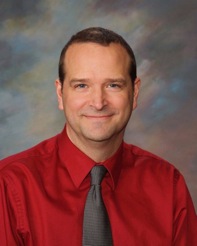
Caption: Jordan Tinney
Credit: Surrey School District…when I see the power that technology gives us in terms of the new ways of collaborating and sharing, and the quality of the resources that people are sharing, I think it’s just changing everything.
What is the right combination of district-level support and school-based activities?
We know that top-down doesn’t work. People will find all sorts of interesting and innovative ways to diffuse and deflect and . . . they struggle with a top-down approach. And we know that purely bottom-up doesn’t work either. I love the Michael Fullan quote about a thousand flowers where he says that if you take that approach, it turns out that a thousand flowers actually don’t [bloom] and those that do aren’t perennial. It’s a perfect quote. We know that it has to be a balance of top-down and bottom-up. But I think the top-down piece is not ‘hey, you should be doing this.’ The top-down piece is we know that when we put teams of teachers together with a focus that is around improving instruction that they will do great work. But they need some support and guidance
So what does that support look like?
…it doesn’t look like us coming to them and saying ‘hey have we got a deal for you.’ It looks like us saying we believe that implementing technology can support instruction and help support teachers be more effective in the classroom and in some ways make your job easier. We want to make this offer to you. If you’re interested in exploring technology we’ve got some money available for you and we can support you with hardware. Here’s what we’re looking for from you: a commitment of time, a commitment to collaborate and a commitment to share out with us at the end. It’s an in-between. I think it’s top-down in that the top is committing philosophically that we value this and that we will value and support it. And it’s from the bottom up in that teachers want to do this work, they want to do it well and they know they need support. And so they look to the district for that support.
Why are you writing a blog?
A [It] was just kind of a hobby, really…now it’s gotten to a place where I realize that the writing is changing my way of thinking and what I want, sort of my purpose of doing the writing. So I’ve taken the blog (www.jordantinney.org) and I’ve changed it to be a series of lessons in leadership, and I’ve now got it linked up to iTunes so that it’s a Podcasting series as well. It’s very much a work in progress. I’m working with Apple and writing an iTunes U course for a series of seminars or courses, which I will provide free – the whole point is to give it away to anyone who wants to use these modules on leadership on the district level or the school level. Take this, use it, massage it as you will. The reason I tell that story is: when I see the power that technology gives us in terms of the new ways of collaborating and sharing, and the quality of the resources that people are sharing, I think it’s just changing everything. You ask any teacher what they want. They say: time and resources. The resources are there. They just need to be able to get access [to them] and to start to figure out how to use them in a daily way in the classroom.
How is the digital revolution changing how we think about teaching and learning?
I think that the way we envisioned learning in the past truly is about to be left completely behind. The way in which we’re seeing the youth of today – and the adult stuff today – the number of adults I hear saying “I can’t get my student off their texting.” But have you ever gone to an adult meeting and watched how many adults are texting? The demographic is changing and it’s coming with the kids and into the adult life. The ways in which technology is being used is changing everything.

Caption: Students at Vancouver’s John Oliver Secondary School work with an iPad for a class project.
Credit: Vancouver School DistrictThe whole notion that the teacher is the content expert is just gone. But the teacher is and will always be that magical link between how do you take that content knowledge and apply it to the real world, to the world that is meaningful to the student. So the teachers are just the masters of that, and we know that the research says that the number one thing that improves learning in the classroom is the quality of the teacher and that interaction between the teacher and the student.
But I just think the nature of that interaction is changing, from Dr. Tinney is the guy who knows everything about physics to: Dr. Tinney is the guy who showed us this website and showed us how he was using this, and we can now go here with it. It’s a totally different relationship and it’s far more a coach than it is a content expert. If you’ve played a lot of sports or you know kids who play sports, the respect that they have for their coach and the admiration for what the coach did for them, it’s a different relationship from classroom teacher. And it doesn’t mean that the coach herself was the greatest hockey player or the greatest volleyball player or basketball player, but they knew something that allowed the kids to make it real for themselves. And it was that something that made the coach special. I think the relationship of the teacher is more important than ever, but I think we have to let go of the fact that the content is just gone.
How does the 21st century learner look compared to 15-20 years ago?
There’s no fact that kids don’t know anymore. They can simply Google it. If you give them five minutes, they can find anything out. You can’t say I am going to teach you all there is to know about glaciation in the next six months. They can go find it right now. That changes again the relationship between the student and the teacher, and I think the learner feels way more responsible and way more self-empowered than they have in the past. In the past, the teacher could play the role of a gatekeeper of knowledge. But that gatekeeper is gone. So the teacher has lost that power-over piece. And I don’t mean power in a negative sense. But they were the ones who had the key and they don’t anymore. But you still can’t Google what’s in your heart. So while the teacher no longer holds the key to the content, they may still hold the key to “Jordan, what I’ve noticed that what really gets you excited is . . .” and “Have you ever seen . . .?” It’s that type of a gatekeeper. It’s way more of a guide, but an expert guide, an absolute expert guide. I think the learner has changed completely in that the learners feel more empowered and capable than ever, but they still need that guide.
How do you know quality learning is happening?
You listen to the kids, you listen to teachers. I asked the question the other day online: If there is a set of core competencies for the 21st century, where are the assessments and what do they look like? I don’t know. It’s a fair point. When I sit and talk to a student, I feel I know a lot about what they know because they can describe it to me. But how do we monitor how we are performing as a system? I don’t have an answer for that yet. I really don’t know. But what people will gravitate to immediately will be what are the essential competencies of the 21st century curriculum and how will we assess them? And I wouldn’t be surprised if they come out as something very typical and traditional in reading and writing and numeracy, but then have them embedded in a much larger context around things like civic literacy, environmental literacy, and sustainability.
How do you know technology is making a difference in learning?
Perhaps people need to step away from that and say, look, if you look at the way in which technology is changing society now, life and our knowledge and everything that goes with it, it’s a given that technology is embedded in your life. If it is, how can we make sure that technology is also embedded in school life so that schools aren’t something that are so drastically different from daily life, so that when students then make that transition to life after school, it’s seamless. Yes, I’ve used this before and I’m familiar with it and can apply it in this new circumstance.
EN BREF – Une interview auprès de Jordan Tinney, directeur adjoint du Surrey School District, le plus grand conseil scolaire en Colombie-Britannique. Il est chargé de la coordination des programmes éducatifs, y compris des technologies utilisées pour soutenir l’apprentissage.
-
Mentor eases teachers into expanded technology deployment
Comments Off on Mentor eases teachers into expanded technology deploymentMargie Trovao has taught at Lord Nelson Elementary School in east Vancouver for the past 15 years, but this fall she is also a student in her own classroom.
Under an initiative by the Vancouver School Board, Ms. Trovao is being mentored by a tech-savvy teacher from another school on how to use iPads and other devices in her split Grade 6-7 classroom.
“It’s wonderful,” says Ms. Trovao of working with mentor Zhi Su, a teacher for the past 11 years who runs a mini-school program for students from Grades 8-10 at John Oliver Secondary School. He was selected as one of four teacher-mentors for the district and, this fall, is spending half his time at John Oliver and the other half as a coach-advisor to Ms. Trovao and four other instructors at other Vancouver schools.
In Ms. Trovao’s case, she rates her proficiency with computers as “medium.” She was unfamiliar with the iPad until the board gave her one to practice on last Christmas. She says she only discovered the potential of the mobile device for the kind of project-based learning she encourages in her classroom after working with Mr. Su.
“If someone said ‘here is an iPad, use it in your classroom and figure it out,’ that would be very overwhelming for most people and would be overwhelming for me, even though I sort of knew what I wanted to accomplish,” she says. “Having someone there and teaching it with me and showing how it can be used has made it easier for me. I have not been uncomfortable learning how to use it.”
At 101-year-old Lord Nelson, the school has a computer lab but no wireless access to the Internet yet. For the mentoring project, the board loaned an iPad cart to Ms. Trovao and two other teachers at the school for the fall semester. Mr. Su will be embedded in Ms. Trovao’s classroom over the course of a month or so, in two-hour blocks of time.
In his mentor role, Mr. Su first visited Ms. Trovao’s classroom to learn about her teaching style and the projects she planned for her students. Then, with her curriculum goals in mind, he suggested ways to use the iPads to enhance the learning experience for students. He also taught Ms. Trovao and her 27 students (who share 15 iPads) the basics of the device for capturing images, note-taking and research.
“I am offering the curriculum just the same [as before] but there are different pieces – engagement, multi-media and a digital citizenship [on the appropriate use of the Internet] piece that they otherwise would not receive,” he says.
For example, one class project is a biography of someone who has made a difference in the world. In the past, students would collect information from a book, at school or at home, write out the information by hand and present the findings on a poster board. This year, students work in pairs on the iPad to search for images and information from the Internet that, when complete, will be a printed booklet.
The speed with which students now can gather information holds their attention for the project, says Ms. Trovao. “Because it is done on a computer, there is so much more they can do” she says. “They are engaged in it, take more pride in it and they want to learn more.” Since students now spend less time copying information from books, Ms. Trovao find they talk more to each other, and to her, during the project to explain what they are doing – and why.
For another project, Mr. Su plans to teach the Lord Nelson students how to create a comic strip-like graphic novel on the iPad. “They will take on the characters and act out the scenes, using apps,” he says. “They will upload photos and embed them into the comic strip layout and enter the dialogue boxes to tell the story.” In the process, he says, the students will develop skills in arts, communication and technology as they create a digital artifact for themselves, their classmates or their parents. He says the process encourages students to feel more ownership of their work. “They know at the end it is not just something they are handing to the teacher and the teacher is the only one who sees it,” he says. “Everybody sees it.”
As a teacher who is also a student this fall, Ms. Trovao says she is showing her students that “it is okay to say you don’t know something and to have struggles with something.”
From working with her mentor, Ms. Trovao says she has learned that she doesn’t have to change much of what she does to integrate technology into her lesson plans. “People are afraid it might be time consuming to learn these things,” she says. “All you really have to do is have somebody show you one or two things to help you do what you are already doing. That is why Zhi [Su] is so important.”
For Mr. Su, the mentoring initiative is a way to reach fellow teachers who are curious but not experienced about technology. “If they have the desire to learn you are able to go in and work with them,” he says. “The idea is to build capacity and build a community that is built on reciprocity.”
-
Guiding high school students through applied internship projects in college environments: A Met School story
Comments Off on Guiding high school students through applied internship projects in college environments: A Met School storyCaption: Said Hassan, an instructor in pharmaceutical manufacturing at Red River College in Winnipeg, is a mentor to students in the Seven Oaks Met School internship program.
Credit: Photo courtesy of Red River CollegeMany high school students are faced with the dilemma of “what next?” as they go through their final years at school. With new-economy jobs becoming more complex and career paths increasingly convoluted, the decision-making process is no simple task. What do these jobs and careers entail? How does what they are studying in school relate to them? A few students with good scores do end up in their profession of choice, normally a well-known career such as medicine, engineering or law, but many others face the challenge of picking something that is within their reach, interests them and possibly has some career prospects.
Resources within and outside school systems are increasingly being invested to tackle this problem and there are some successes but they are few and far between. There is no single solution to this problem. All parties involved – school boards, postsecondary institutions and public and private enterprises – need to work together to make an impact. Out-of-the-box thinking is needed and new approaches need to be tried and effective models developed.
As a teacher of an applied technology program at a college, I experience the effect of this problem first-hand. Year after year we see students become disillusioned with their educational/career choices, resulting in high failure and dropout rates. In the last couple of years I have talked to high school teachers and guidance counsellors, made presentations and participated in educational events to provide information on the program I teach (pharmaceutical and biotechnology manufacturing) and the industry. The idea is that some dots will connect and some students will be informed about an area that they would not know otherwise.
In 2009 I met a science teacher from Seven Oaks Met School, a school with a unique vision and model of teaching and learning. It didn’t take long for me and my colleague at Red River College, Philip Cheng, to be all ears, listening to and imbibing the concept of Met School. We learned that, as part of their educational model, Met School students spend time twice a week in a work environment of their choice. They then share their learning and experiences with their schoolmates and teachers through project presentations and other activities. At that time a Grade 9 student was interested in an internship in pharmacy and medicine, a close match with the field my colleague and I teach and we decided to give it a try. When we explained our program to the student she became very excited about the prospect of doing her project in our labs. In the next few months she participated in my labs where I was teaching the process of tablet manufacturing. I then engaged her in another project involving chemical analysis of a marketed product to determine its quality. She went on to work with Mr. Cheng on a microbiology project that she subsequently presented in a major science competition (Sanofi Aventis Biotalent Challenge).

Caption: Met School Grade 11 broadcasting student, Adam, with his internship mentor from Breakfast Television, and his teacher, Nancy Janelle. Adam started with Breakfast Television in Grade 9 and worked behind the scenes and on-camera, even producing his own item on distracted driving.)
Credit: Photo courtesy of Seven Oaks School DivisionStudent motivation and commitment affect me directly and it is not something I could simply wish away. I am also getting an opportunity to learn about high school student mentality, the system they go through and what makes them tick. This provides invaluable insight in how to help them when they arrive in my class.
Through these projects, she not only learned a variety of scientific techniques but also developed insights into many different careers in pharmaceuticals and biotechnology. Her work apparently generated some interest among her classmates and we ended up doing a presentation on biotechnology and biotech industry to her class. I learned that last year she chose to spend time in a pharmacy environment furthering her knowledge and experience of the field. Irrespective of what she is going to opt for in her future education and career, I think the experiences she is taking away from being out in the field are invaluable in helping her make the right decision. Last year, as a result of her presentations at her school, another student showed interest in the field and spent a full term in my lab learning different aspects of pharmaceutical technology. We are hoping to have more students from Met School and expand the scope of the projects.

Caption: Grade 11 student, Candace, at her internship with Mondragon Bookstore and Coffeehouse. Candace immersed herself in all aspects of the cooperative business from the restaurant to the bookstore.)
Credit: Photo courtesy of Seven Oaks School DivisionAs I reflect on my experiences with Met School students and other mentorships I have taken on, I can’t help thinking that this model could certainly be part of the answer to the “what next?” question, a small part but a crucial one nevertheless. College environments present some advantages as incubators for such projects. College programs tend to be a closer simulation of actual work environments while maintaining academic components. Besides, the emphasis on direct application of learning to solving industrial problems, in my opinion, is a strong motivator to high school students who are disillusioned with the value of what they learn at school.
The big question is: can we replicate the Met School model on a larger scale? College teachers may wonder how to find the time on top of teaching and everything else. I have to say that some investment in terms of time and energy is inevitable. In my case, I had the participating students attend my regular labs, for most part, while giving them some extra coaching. I also had help from an educational assistant and a research assistant in my program area. As I mentioned, more than one instructor was involved with the same student, which further divided the responsibility.

Caption: Met School Grade 11 student, Madison, at her internship with 10,000 Villages. Madison has a strong interest in social justice and organized a fair trade challenge in her larger school community.
Credit: Photo courtesy of Seven Oaks School DivisionI personally think that the rewards of getting involved in this type of work are well worth the effort. Student motivation and commitment affect me directly and it is not something I could simply wish away. I am also getting an opportunity to learn about high school student mentality, the system they go through and what makes them tick. This provides invaluable insight in how to help them when they arrive in my class. When I finished high school, computers weren’t around so a few things have changed as you might agree! This year I am looking forward to interacting more with Met School staff and students and participating in more ways than just mentorship projects. I am also hoping that other programs at the College will take part in the process. Perhaps together we will have a few more of the “what next?” questions answered.
-
Superintendent’s frustration: There Should be more takers for an alternative school that really works
Comments Off on Superintendent’s frustration: There Should be more takers for an alternative school that really worksI found my locker and I found my classes
Lost my lunch and I broke my glasses
That guy is huge! That girl is wailin’!
First day of school and I’m already failing.This Is Me in Grade 9
By the Barenaked LadiesToo much of our students’ high school experience is impersonal. It leaves them feeling alone, vulnerable, and alienated. Evidence from The Learning Bar’s “Tell Them From Me,” the widely subscribed Canadian student survey, tells us that only half of the students in Canadian high schools find their learning interesting, enjoyable, and relevant and only a third report that they are interested and motivated in their learning. For too many kids, high school is more of a gauntlet than a sanctuary. Witness the “It Gets Better” campaign encouraging LGBTTQ youth to hang in, handle the homophobic bullying, and believe that life will be better after high school.
Three years ago our school division initiated the first Canadian high school modeled on the highly successful Met School, founded by Dennis Littky and Elliot Washor, believing that high school could be both fundamentally different and much better, that learning in high school could be built around students’ interest and passion. We’ve been successful, but probably less so than we had thought and with much more effort and greater challenges than we could have imagined.

Caption: Brian O’Leary
Credit: Photo courtesy of Seven Oaks School DivisionVirtually every teacher I know became a teacher in order “to make a difference.” In high school the structure gets in the way. Too often the strong teacher/student relationships and motivation we prize are found more in extracurricular involvements than in class. We need to work to see that all of our schools are organized in ways that help us realize our ideals.
We started the Met School full of optimism. We assumed that there was a substantial demand for doing high school differently and better, and that in the space of three years the Met School would be at capacity. Three years later our enrolment is half what we expected. The students and parents who’ve enrolled love the school and its approach. They credit it with altering their lives for the better. But many other students who might well benefit from an education that fosters their passion and self-knowledge opt for a more conventional high school education for what James Herndon termed, “the way it spozed to be.”
This unanticipated challenge underlines for me the need for us to persist in building the Met School as a credible alternative to the conventional high school. Virtually every teacher I know became a teacher in order “to make a difference.” In high school the structure gets in the way. Too often the strong teacher/student relationships and motivation we prize are found more in extracurricular involvements than in class. We need to work to see that all of our schools are organized in ways that help us realize our ideals.
Thanks to Adair Warren and the Met School teachers we have developed a wonderfully different kind of high school, one that has changed the course of students’ lives in profound ways.
When we initiated the Met School we hoped that our three high schools would see and adopt some of the Met’s approaches: advising, internships, long-term relationships, clear pathways to post-secondary entrance, learning in depth, true family partnerships. In our other high schools we have implemented a universal teacher-advisor system and are working to make it as effective as the Met’s (Met students are twice as likely to say they have a real advocate at school as other high school students). We’ve implemented effective internship and mentorship programs and are working to make them universal like the Met’s. We are working to ensure that every high school student in our system has at least one real-world internship experience.
The first students graduated from the Met this past June. Each gave a valedictory address. Attending the grad was a wonderful experience. Students spoke of their passion for learning, the relationships and experiences of their high school years and of their confidence and optimism for their futures. In a large high school it’s not possible for every student to give a valedictory address, but we’ve discovered that it is possible to recognize every grad with a personal citation touching on their best memory of high school, thanking someone who made a difference in their life, and commenting on their plans for the future.
Our goal here is not so much to innovate, to restructure or to reform high school; our goal is to improve the school experience and life prospects for our students and with the example of the Met we are doing so.
-
Students tackle academics in practical context at Skateboard Factory
Comments Off on Students tackle academics in practical context at Skateboard FactoryHigh school student Nick Robertson came to Oasis Skateboard Factory (OSF) from a suburban Toronto district where, he says, “I was being spoon fed the exact same education as parents and grandparents, and that did not fit with me. They tried to diagnose me as ADD, ADHD.” He says his average grade was about 60. He “squeaked by” in Grade 9 and finished Grade 10 “in bits and pieces.”
He was surfing the web when he spotted a reference to Oasis Skateboard Factory, an alternative program in the Toronto District School Board. He says his first reaction was “Skateboards in school? It didn’t seem possible.” He applied, was accepted and took up residence with a relative in Toronto. He started in September 2011 as a Grade 11 student.
He became immersed in OSF and adopted the brand “Kid Sqwid” for his boards and other artwork. In his previous school experiences, he tried to avoid writing but not now. Nor are there any issues about meeting deadlines. “There is a lot more pressure on us [than in previous school experience] – not negative, but you have deadlines to meet. We have done writing in magazines; there’s a sense of pride that goes with that.”
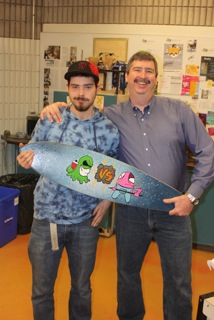
Caption: Oasis Skateboard Factory student Jacob Skinner and his dad, John
Credit: Photo courtesy of Jennifer LewingtonHe now expects to return to his suburban Toronto high school in January, a move he sees as a “lot easier” after his OSF experience. “I can get a lot of work done. I have learned to cope with deadlines; it’s been really good practice.”
“One of the main things about this place is that I can actually draw and not feel like I am doodling away and being yelled at for drawing on the side of my notes,” he says. “[Drawing] is an actual talent I have that can be used.”
Jake Skinner, 19, attended a high school in a suburb east of Toronto. By Grade 12, he was still six credits short of graduating and unhappy at a school he felt was too impersonal. “They are not trying to teach you; they are talking at you like a wall,” he says. He discovered OSF through an aunt who lived within the Toronto District School Board catchment area and now stays with her while attending OSF.
He is thrilled about his school experience at OSF. “One of the main things about this place is that I can actually draw and not feel like I am doodling away and being yelled at for drawing on the side of my notes,” he says. “[Drawing] is an actual talent I have that can be used.” Having learned the business side of art at OSF, he now plans to apprentice at a tattoo shop and start his own business.

Caption: Oasis Skateboard Factory student Carly Bond and her toy creation
Credit: Photo courtesy of Jennifer LewingtonHis parents, John and Kimberly Skinner, were “thrilled” to discover a school where their son could pursue art. When she attended an open house early in the school year, Kimberly Skinner says, “Craig couldn’t say enough good things about Jacob, [including] his maturity level and his leadership skills. I thought, ‘are we talking about the same boy?’” John Skinner adds, “[In the past] a teacher meeting would start with an apology. This was different.”
Jake received a scholarship to attend a course at the Ontario College of Art and Design (OCAD). After that, says Ms. Skinner, “who knows? We got through high school and that was a big step.”
At her previous school, Carly Bond, 17, often skipped school and finally got kicked out. She credits her then-school guidance counselor for recognizing her preference for hands-on learning and recommending she attend Oasis Alternative Secondary School. Then a friend suggested OSF, one of three Oasis alternative schools. Carly says she “fell in love with everything” at OSF, including “how all the projects are not fake.” Moreover, she says, “now that I know my project is going somewhere and being sold, I am going to work really, really, really hard on it because of that.”
“I go to school because it is giving me experiences of what I want to do with the rest of my life.”
She stayed at OSF for three semesters. In her final semester last spring, she did a job shadow with street artist Slurg, who makes model toys. Carly has made her first toy, Snapper, a “man-eating ice cream cone.” She eschews “sexist” toys such as Barbie and says she will create “more playful and creative toys, not just a girl with clothes.”
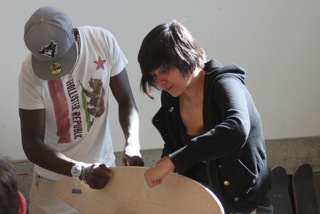
Caption: Oasis student leads workshop at Art Gallery of Ontario
Credit: Photo courtesy of Jennifer LewingtonShe still needs more credits to graduate but doesn’t want to go to school just to get credits. “I go to school because it is giving me experiences of what I want to do with the rest of my life.” Her parents, she says, “are really happy. I used to be a bad kid when it came to school. Now I get better grades than my sister or brother.”
At the Toronto District School Board, Karen Grose is Central Coordinating Superintendent of Strategy and Program Planning and has oversight responsibility for the system’s alternative schools. She is clearly impressed with OSF. “The anecdotal comments from parents and from students and from staff around the Skateboard Factory [show] they’re positive, they’re passionate,” she says. “It’s just inspiring.”
Does the TDSB intend to replicate it? “It’s only just three years old, she reflects, “but I think we have enough data and enough understanding of the success of this program, the passion that the students have for this type of learning to know that these are the types of things that we need to move forward with. We’ll explore possibilities for where Skateboard will go next. I think there are a number of possibilities.”
OSF teacher Craig Morrison gives much credit to Ted Hunter and Norah Jackson, co-owners of Roarockit Skateboard Company, for their close participation in the work of the alternative program. Mr. Hunter is a fulltime professor at OCAD specializing in furniture design. His wife, Ms. Jackson, comes from a graphic arts background. Mr. Hunter has a special feeling for the OSF students whose learning styles often don’t fit well in mainstream schools. “That’s exactly how I went through school,” he says. “Finally for me it was one teacher at the end of high school who said ‘boy, you’ve got to go down to the Ontario College of Art and take some courses.’ That one teacher totally changed my life. That’s the way Craig is.”
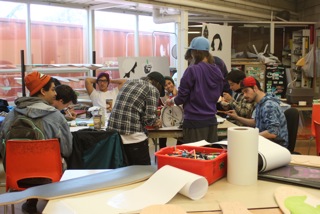
Caption: Students at work in Oasis Skateboard Factory
Credit: Photo courtesy of Jennifer LewingtonFor their business, the couple invented a kit that enables youths – or anyone – to build a professional-quality skateboard, a key starting point for activities at OSF. As well, the two have worked side-by-side with Mr. Morrison during the school year to sponsor social events (part of the program’s student engagement strategy), mentor OSF students engaged in higher-level skateboard builds and coach advanced students to become instructors for Roarockit workshops.
EN BREF – Renseignements additionnels au sujet de l’Oasis Skateboard Factory
-
Students, parents give thumbs-up to Flipped Classroom
Comments Off on Students, parents give thumbs-up to Flipped ClassroomAs Graham Johnson noted in his personal account of his first year using the Flipped Classroom approach to learning, the feedback he has received from students and parents has been “overwhelmingly positive.” Carolyn Durley, OKM Biology teacher, says she has had no negative feedback from parents. Both teachers experienced student pushback in the early days of introducing the Flipped Classroom approach, which puts students largely in command of their day-to-day learning.
Cameron McDermid, a Grade 10 student who took Grade 11 Math last year, says Math is probably his strongest subject. He appreciated the fact that the video lesson, usually about 15 minutes long, consumed much less time than presentation of the same material in class, which would typically be accompanied by time-consuming questions from students. Now, he says, “If they have a question, they can just pause or rewind the video. If you understand each part of the video you can just fly right through it without pausing.”
Erin Gamble, a Grade 11 student who took Grade 11 Math last year, was ecstatic about the Flipped Classroom. Because she had often struggled with Math in the past, she said she appreciated the opportunity to watch the video lessons multiple times if necessary, make notations about things she did not understand, and pose those questions to her teacher the next day. She said she and her tablemates in the class talked about the fact that the Flipped Classroom “was always a good environment and we knew that [the teacher] could help us out a lot and we could probably leave understanding what we were having troubles with.”
Her mother, Leslie Gamble, was equally ecstatic. “It’s just unbelievable, from a parent perspective, just watching my daughter just totally gain confidence,” she says. “It was just amazing to see her actually go from being frustrated to coming through and actually teaching her friends that were going to a different high school Math by watching his tutorial and then she would go through it with them.”
Scott Mclean was principal at OKM (he moved this year to another high school in the district) when three teachers, including Mr. Johnson and Ms. Durley, asked him if the school would sponsor their attendance at a Flipped Classroom conference in Colorado late spring of 2011. “They were so excited about it that you knew something good was going to come out of it,” recalls Mr. Mclean. When they returned after the conference, he helped them get ready to introduce the Flipped Classroom that fall by finding a handful of laptop computers for each classroom for use by students who didn’t have their own devices.
Mr. Mclean said he views the Flipped Classroom as “a potential game-changer” because learning takes place before the student enters the classroom, allowing the teacher “to broaden and deepen” the learning. “It’s the way learning should be for kids. They take control of their learning and they can work at their own pace.”
This past June, OKM sponsored a Flipped Classroom conference much like the one in Colorado that inspired Mr. Johnson and Ms. Durley. They expected a turnout of 40 to 50 people; more than 100 attended, many of them from School District No. 23, home to OKM. A number of those teachers have introduced the Flipped Classroom to some or all of their classes this year.
EN BREF – La classe inversée ne convient pas à tout le monde, mais elle a été bien reçue par les élèves de biologie et de mathématiques et leurs parents de l’école Okanagan Mission Secondary School (OKM) à Kelowna, en Colombie-Britannique, et est fermement appuyée par le directeur d’OKM, Scott Mclean.
-
Biology teacher’s Flipped Classroom: ‘A simple thing, but it’s so powerful’
Comments Off on Biology teacher’s Flipped Classroom: ‘A simple thing, but it’s so powerful’What is your teaching background?
I’ve taught for 20 years. I’ve taught sciences, math and now all I teach is Senior Biology. In B.C. that’s Grade 12 – Biology 12 is what it’s called. I teach as AP (advanced placement) Biology as well. It is the biology course set by the College Board. They’re the same body that does the SAT and that’s taught internationally; it’s not a provincial curriculum. The students write the AP exam in May. My class size varies from 24 to 32.
What caused you to change your style of teaching?
I had been successful with what I was doing. I had amazing provincial exam results. I had positive feedback. I had great relationships with students. But three or four years ago students began changing in subtle but significant ways. They didn’t have to get the biology from me anymore. They could sit there and look it up on their phone. They could go home and watch a lecture on YouTube. They weren’t buying into me spouting off – you know, the fountain of knowledge – anymore.
To me the cornerstone of my practice was that I had strong connections with students, and I didn’t want to disconnect.
It wasn’t like all 30 kids, but one or two kids would say “I watched this video last night on YouTube” or… “I read somewhere on the Internet that . . .” and it started to be this slow trickle into the classroom that kids were shopping around. So I thought hmmm, they’re watching a lecture on biology on YouTube and so when they show up here maybe they’re not hearing it for the first time. It was a very subtle change, and also kids were more interested in texting and Facebook; they wanted to interact in different ways. I admittedly was very unfamiliar with that. I was like whoa, what are you doing? What do you mean you want to spend an hour texting? I really did not get it. But I realized I had to change if I was going to connect with them in the way that I had really enjoyed. To me the cornerstone of my practice was that I had strong connections with students, and I didn’t want to disconnect.
I had tried many changes in my classroom but I found that nothing was transformative; nothing really shifted or changed the setup. It was more like layering more on top of what I was already doing. I spent 20 years trying to reinvent the wheel and it didn’t happen, and then I stumbled upon an idea that was so simple and all of a sudden it all fell into place. It’s such a simple thing, but it’s so powerful. And it’s what I had been searching for.
How did the Flipped Classroom change how you organized and conducted your class?
The flipped classroom starts with making the videos, using the lecturing and organizing tools I already had. Having made and archived the videos, I’m now free from repeating the lecture that I’ve done for 20 years. My time has been repurposed. Wear and tear on me is diminished, because I’m not lecturing, not dealing with so many behaviour problems in class. My time is now focused on trying to differentiate the classroom and the learning experience, trying to work with students where they’re at in a timely manner, and remediate when they need that remediation.
My design for the Flipped Classroom evolved over the year. For the first semester I thought, oh, I’ll just give them all these choices and I’ll be free and oh, this will be great. That did not work at all! Students are not ready for a leap into a whole class of self-directed time. They didn’t know how to do that. They’re used to being controlled by teachers.
So the second semester I structured it differently. I started with 10 minutes of what I call “flex time” (where students are invited to make choices) and we grew that time to 20 minutes to 30 minutes to 40 minutes until at the end of the semester students could self-regulate and get engaged in the learning all on their own for the entire class.
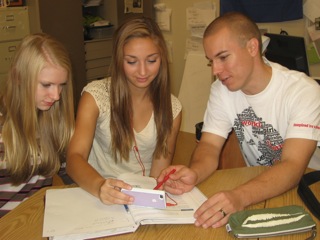
Caption: Math teacher Graham Johnson with two students in his Grade 12 Flipped Classroom
Credit: Photo courtesy of Jennifer LewingtonI also did a little bit of “stand and deliver” because I found that some students were angry at me when they showed up in Grade 12 and said, “What do you mean you’re not going to teach me. That’s what you do. Come on.” They needed proof that I was still their teacher, that I do know the content, I still can entertain. I think that’s still a big part of what students like about being direct-taught, and that’s part of what makes you a good direct-instruction teacher: you’re very good at entertaining kids, and I was good at that. So it was a bit of a loss, a grieving process for me to let go of that persona. It was a change that I had to work with them to buy into and demonstrate to them that I was still their teacher, and then slowly let go of the old role. Students didn’t notice that by the end of the year I wasn’t doing any direct instruction, that they were in charge, that the classroom was run by them and that I was really just a facilitator.
You have to be ready to change and you have to be ready to embrace failure.
But it took time to develop those self-management skills. So at the beginning of each unit I provided a packet with a list of the possible activities, with the lectures, the screencasts, that should be watched for that unit. Some things are optional activities. Some things we’ll do as a group, like a lab. They get the packet of choices at the beginning of each unit. The students during the flex time can decide what they should or want to do next. I tried to decrease the time in class that I organized, and increased the time in class that they organized. I weaned them off of me and weaned them onto themselves.
You have to be ready to change and you have to be ready to embrace failure. It’s really hard. And as I tell other teachers, as a 20-year teacher I was used to my class running perfectly, I had everything “tickety-boo-lovely.” To go from that to not-so-lovely was very uncomfortable. I was very stressed because it was not perfect; it was rather messy and discombobulated. So I had to embrace failure and learn from it and change to make it better.
How do students respond to the Flipped Classroom style of learning?
It’s funny. A lot of people say the flipped classroom is probably only good for high-end students, and not good for struggling learners. I find the reverse is true. Students that are most angry or frustrated with this change at first are high-end students, the ones best at “playing school,” regurgitating exactly what you said yesterday back to you. They are really good at playing school but they are not necessarily connected to their own learning. They have the most to lose, because they’ve always done really well at the old system. They don’t want to take risks because they’re the perfectionists – girls, a lot of them. They want the 96, the 97 and if they don’t get it, it really upsets them. So you have to spend time appeasing their anxieties.
But I think they are recognizing that learning is not about regurgitating the notes the teacher gave you, that learning is messy, that learning can be risk-taking and it takes time. Regurgitating is not really a satisfying activity nor is it really meaningful to the bigger picture in moving ahead in life and moving on to university or whatever their next challenge is.
If you point these students in the right direction, they will do the extension activities you have provided them. You can kind of light the fire within them and then set them on their way. They’re also the ones that you can leverage to help – and when I say that, I don’t mean carry or be burdened by, but to have conversations with – people that are perhaps struggling a bit on another unit. They just need that freedom to know that it’s not for points, it’s not going to affect their GPA, and rightly so, because they’re going to get into university based on their marks.
I found running the classroom this way created, initially, more of a separation, almost like the middle group has disappeared a little bit. Kids now are much more motivated because there are opportunities for retesting and more than one opportunity to show what they know. I saw a whole bunch of kids who might have been traditionally B’s want to work harder and go back and relearn things and understand them more and move into the A range. As well, my students who would be low A’s (88-90) want to work harder to push their learning into the high 90s because they can.
Another thing I noticed was that students don’t necessarily learn in a linear fashion. It looks like nothing’s going on and then all of a sudden they have this huge breakthrough. I think they realize they have to do something. It’s different data from what I’ve experienced in the past. In the past I was very data-driven and now the data that I’m trying to collect is not just based on points and numbers. I’m trying to have conversations and I’m trying to have students offer their input into their learning and I’m trying to focus more on learning rather than on achieving “7 out of 10.” I’m trying to focus on what did you understand, what did you not understand. So I’m having very different conversations; in the past I was collecting data but it was more like data extraction.
How has the Flipped Classroom shifted the classroom dynamic?
The basic idea of the flip, of me archiving my lectures permanently somewhere where students can access them when they need to or when it’s appropriate for them, fundamentally shifted the dynamic in the classroom like no other thing that I’ve tried in my career.
The dynamic had always been that I was the driving force in the classroom. I decided what we’re doing, when we’re doing it, and how we’re doing it. When kids have to sit, be quiet and listen for 40 minutes, you’re always trying to redirect their attention and a lot of my energy went into getting their attention back when I want them to do the learning because they all supposedly had to do the learning at the same time and in the same way. So my energies in the classroom have been repurposed.
Archiving my lectures means the students now have choice as to when they access the video or the lecture or if they want to access it at all. They now own the learning.
The most fundamentally transformative thing I’m doing is having meaningful conversations. When I was standing and delivering, I felt obligated to cover the curriculum because students are getting prepared for university, so I never had that time to have deep, meaningful conversations and connect with the students where they were at. Now in class I have time to talk to students in a meaningful manner. I also have time to do more involved projects and more inquiry-based labs. More peer-to-peer interaction goes on, and there is more time to reflect on the learning process.
So are students now taking responsibility for their own learning?
The whole power of the flip is that that students grow into becoming responsible, self-regulating learners, but that doesn’t happen over night. It’s definitely scarier than me controlling their learning, because if I control it, then I feel that they are going to learn it. So it’s that release of control and trying to offer them many entry points along the way so they can connect to learning in a way that’s meaningful for them. For some kids this takes a week and some kids are very stubborn; they don’t want to take responsibility. Some kids take two months. We use the term: “supported failure.” They have to experience the failure of not doing something for themselves and then they have to make the decision: “Oh! I don’t want to fail. I want to succeed and this is what I have to do.”
Kids have been trained to “play school.” They fill in worksheets, they do labs, they hand in assignments and they get points. But they don’t really know how to play learning. You have to keep offering quality activities to students, and sooner or later they will see the light: “Wow! This lab IS exciting!” Some kids take right to the end of the course for the light to go on. The lights go on for them in the last two weeks of the course, and then they pull it all together. Some students realize that their efforts are too little too late and have selected to do the course again, because they realize that they want to do better. But this was their decision.
What about the depth of their learning?
I think I’m getting more understanding, whereas before I think I was getting a lot of memorization. For example, in a unit like The Cell, students would memorize the parts of the cell, but if you talk to them about what a cell is, they really wouldn’t understand that a cell is a building block of life. To me, the enduring understanding that all life is made of cells is much more important than memorizing the ten parts of a cell. If you understand how it’s connected to your life and life beyond the classroom, it’s going to deepen your understanding about the world, about biology, and about science.
Learning becomes more authentic because students are now honest: “I don’t understand that, Ms. Durley.” They can say that without fear, because it’s not a point-driven game. I won’t take away points if they admit they don’t understand something; so we can have an honest conversation: “Well, let’s talk about that, or let’s do this or let’s do a lab.” We have to have time and opportunity to look at what they don’t understand in many different ways.
We’re doing interactive labs now. We’ve also done some inquiry-based labs where the student is trying to design or come up with a question. Then they design a lab to try to answer that question, and they run the experiment to collect the data and make sense of it for themselves. I give them time to reflect on what they’re doing using learning journals. Some students aren’t used to that habit.
My passion is teaching, but I’m also passionate about biology. For kids going off into life, you hope they have some understanding of life and their own bodies. I think it’s important, just for that scientific literacy, that they have an interest in how science affects their life and keep them over the course of their lives open to that.
How do you deploy technology in your Flipped Classroom?
I invite students to bring their technology to class and we use things like Facebook and Twitter in an effort to communicating in ways that are authentic to them. Facebook was controversial but now I think it’s becoming less so. I have a Facebook group. I don’t have to “friend” students but they can join the group. Students take pictures about what’s going on in class and post them to our Facebook page and then students will interact around those pictures. That’s really authentic to students. That’s how they live their lives. I think of it like a living bulletin board.
I do tutorials on our class Facebook page. I tell students I’ll be online Wednesday night between 8 and 9, so it’s kind of a modern version of the tutorial. I don’t stay after class; instead, I’m online for an hour at night answering questions. It’s been really effective. That’s what I mean by many entry points. It’s like having different invitations. Something will catalyze the reason why they want to buy in, and for some students it’s: “Oh, the teacher is on Facebook.” For some it’s they can do a hands-on lab. For some it’s that they are writing in a journal. And so it’s just trying to provide many different rich, authentic activities for them.
The Facebook page is a private group. At the end of the course I dissolve the group. It’s not for personal interactions. I want to be very clear about that. It’s for what is going on in the classroom. But it does have a fun feeling to it and it is light. But it is interactive and I think for students it’s very, very authentic. That’s what education or learning has to be. It has to be authentic.
Most of the Grade 12 students in front of me have smartphones; why not leverage that? That’s what they’re doing. They’re talking to each other. I have a Twitter account just for my classroom. I use it as a daybook, how I used to write on the board – and I still do write on the board – “next day we’re going to do the lab on such-and-such; remember to bring this to class.” So instead of writing it on the board, I tweet it out. I tweet out reminders, I tweet out little hints, so if students – and parents – want to follow me to get those reminders; again an easy way to keep in touch with them.
I learned how to screencast (making the digital recording for the YouTube-based lesson) on my own. I didn’t take a course. I learned by watching videos on how to screencast myself. I’m middle-aged, so if I can learn it, I say to anyone who wants to try: you can learn it too. I really wanted to change. I knew that things were not working and I really, really wanted to make something happen. It’s doable, but there’s definitely a learning curve there.
How do you measure academic progress?
What has been the impact academically of the Flipped Classroom? It would be premature [to draw conclusions] after one year of flipping my classroom. In general we traditionally have wanted empirical data in terms of testing results. For myself, it is important to have test data. But I think it is more important that when I interact with students it is meaningful; that is an important piece of data for me. My relationships with students have improved, the time for making relationships has increased, and my stress and student stress has reduced. From students that’s what I hear consistently. We did feedback sheets at the end of the year and that was one of the big ones that students say: “I have less homework; I am much less stressed because the teacher is available to talk to me and help me when I need help.” That speaks to me more as a teacher than standardized test results. I used to have really good test results but it came at a cost of a lot of stress on me and a lot of stress on students. My goals have changed.
I think they find their learning more authentic. I think they feel more connected to the process of learning; they are aware of what they’re supposed to be learning whereas before I was aware of what they were supposed to be learning. And some kids say: “oh it’s much harder when I (as the student) have to do the learning.” Yes, I agree, it is harder when you have to do the learning. For the most part they speak of the experience in a positive way. For many it is not until the course is coming to an end that they are able to explain the advantages.
What are the must-haves in developing a Flipped Classroom?
You have to be willing to fail and that’s what we want for students. I have to be willing to model to students that it’s not going to be perfect for me or for them. It’s also critical to have a collaborative person or team in your school; that was my lifeline. I don’t think I would have made it otherwise. We worked closely together and he [Graham Johnson, Math teacher] was my support network. When things went badly, we would debrief it and find a better way. I think that really accelerated our growth in developing the Flipped Classroom because he’s a very different person and teacher than I am, and so we have different ideas. Also, I think it’s beneficial to work with someone who’s in a different discipline from your own, because they see things differently. They often know how to fix the problem because they can see it in a different way.
I have a community of support – people doing flipped classroom around the world – out on the Internet via Twitter, so when I’m looking for solutions to problems, I can tap into hundreds of different people if I’m challenged by something in particular and I can do it really quickly. Technology has allowed me to be connected beyond the walls of my own classroom, so to be connected is essential. And then there’s the support of your admin. That was fundamental. Our principal supported us 110 percent. He said go for it. He bought into us taking that big risk and he was there all the way. He listened to our problems and our challenges. I think that support is fundamental.
How does Flipped Classroom accommodate student self assessment?
We move as a class through the course. But I found that students, regardless of where you’re moving, move at their own pace. If they are still stuck on the first unit or they’re still stuck on the second unit, and they are very aware about what they do and do not understand. If we have an assessment [test] covering units A, B and C, and the student’s learning for unit A was not in place when that assessment was written, they have the opportunity to apply for a re-assessment, they show up again and do a different assessment to show the learning that they now have in place for that unit A. Students really want to show what they know and figure out what they don’t understand.
They can rewrite that unit A any time throughout the year. They have to fill out an application and show that they have done some work (we call it evidence for learning) and have done some growth in that area. They can’t just show up and hope that they do better. They have to have a conversation with me. That’s been very powerful. Students are trained in the idea that they only get one chance to show what they know. For some of them it took three months. Finally three months in they would say: “You mean I can redo that test?” and I would respond: “Yes, you can redo that first test.” At first, they really couldn’t understand that idea, on an intuitive level because it was so fundamentally different to them. So some of them, when they realized they can show you what they know because now they understand it, were willing to do that. That was a fundamental shift for them in terms of how we operate in the school.
How do other teachers view the Flipped Classroom?
There are a lot of misconceptions about what the Flipped Classroom is. I think a lot of people get hung up on the idea that it’s like the Khan Academy, that it’s just kids watching videos and that it’s all about homework. It would be good for teachers to visit a Flipped Classroom. I have an open-door policy. If teachers want to see it, I think that’s the best way.
This movement for us was really from the bottom up, and all the other ProDs [professional development activities] that I have been to were top down. Anything else that I’ve been involved with has been kind of directed from the principal or other administrators, so the buy-in was not as great. Our development of the Flipped Classroom was completely self-initiated and self-directed. To me it parallels exactly what I’m wanting for my students in my class. I don’t want them to feel that they have to try something because I said it’s good. You have to want it for yourself and you have to choose it for yourself. I think it’s word of mouth a lot of times and I think it is beginning to grow by word of mouth.
At the Flipped Classroom conference we sponsored at our high school in June 2012, 40 of the 100 teachers who attended were from our district. For some, they had bought in and were ready to go. Some, I think, were intimidated by the use of technology. Some older teachers look at it and feel overwhelmed. You have to give teachers some time, space and a sense of safety to learn something new, because it is really scary to learn something new. But I definitely saw a lot of teachers who were ready, willing and wanting to change.
A reality about real, sustainable long-term change is that the teacher has to own it; it has to be authentic to the teacher. It is slow but I think a lot of teachers are ripe for change. They feel the same change is afoot in their classroom and they’re looking for a way.
The Flipped Classroom is not a silver bullet. You’re still working with kids and they’re still teenagers. They still have struggles and challenges along the way. It won’t fix all the problems, but it fixes a lot of problems that I could not fix with any other method that I had tried.
Any feedback from parents?
We haven’t had any bad feedback, so in teaching it’s a good thing, because sometimes that’s the only kind of feedback, especially for Grade 12. All the feedback that we’ve had has been really positive. For high-flying kids who are really into athletics and are on the road a lot – I had some skaters and skiers, some hockey players – they wouldn’t have been able to do the Biology 12 course at this level and do as well in a regular setting.
EN BREF – Carolyn Durley est une enseignante de biologie chevronnée qui a opté pour la classe inversée pour l’année scolaire 2011-2012, la même année que Graham Johnson l’a adoptée en mathématiques. Ils enseignent tous deux à l’école Okanagan Mission Secondary School à Kelowna, en Colombie-Britannique. Voici ses observations sous forme de questions et de réponses.
-
Empowered Mi’kmaw community builds a high school of its own
Comments Off on Empowered Mi’kmaw community builds a high school of its ownIn fall 2010, after several incidents of student suspensions and expulsions at a nearby provincial high school, members of Potlotek First Nation in Nova Scotia talked about having a school of their own.
Discussions came to a head several weeks later for the Mi’kmaw community on Cape Breton Island when two more students were suspended on the same day in the first week of classes in January 2011.
One month later – in response to community concerns – Potlotek set up its own high school program based on Mi’kmaw traditions and the provincial curriculum, with an initial intake of 35 students.
“We felt this was the only way we could see to save our kids.”
“They were the ones who said ‘we want a school’ and they got a school,” says Nancy MacLeod, Director of Education for Potlotek, citing pleas from students and parents in the community of 600 people.
The speedy response was possible, in part, because Potlotek is a member of the Mi’kmaw Kina’matnewey (which translates as the “whole process of learning”) education authority. In 1999, federal government legislation recognized Mi’kmaw self-governance in education, enabling members of Mi’kmaw Kina’matnewey to make local decisions about elementary and secondary schooling without seeking bureaucratic approvals under the Indian Act.

Caption: Mi’kmaw students at Potlotek High School receive an outdoor science class with a history of treaty right to fish lesson from Kerry Prosper of Paqtnkek First Nation.
Credit: Photo courtesy of Potlotek First NationPotlotek has an elementary school but, until last year, high school students had to travel off-reserve to a provincial school where they experienced low graduation rates and complained of incidents of bullying. “The community propelled us forward to be as aggressive as possible in promoting the concept of the school,” says Potlotek band manager Lindsay Marshall, a former band chief who helped negotiate the self-governance accord in the 1990s. “We felt this was the only way we could see to save our kids.”
Speedy implementation of a high school program, in barely a month, “would have been almost impossible” under the Indian Act, he adds.
Others assisted the grassroots effort too. Mi’kmaw Kina’matnewey, the education authority, and the Council on Mi’kmaq Education, worked with the Nova Scotia Minister of Education and her department’s Mi’kmaq Liaison Office to ensure the Mi’kmaw-enriched curriculum, taught by certified teachers, met the requirements of the province’s high school diploma.
With no physical building of its own yet, the high school borrows space from administration facilities (used for daytime adult education) and rooms in the elementary school to deliver classes from 3pm to 8pm. As a central support agency for member communities, Mi’kmaw Kina’matnewey also provided funding for books, materials, and teacher training.
“It has a lot to do with the community deciding and telling us what they needed,” says Eleanor Bernard, Director of Education for Mi’kmaw Kina’matnewey. “That is the biggest factor.”
In Potlotek, what community members wanted was success for a new generation of learners. In its first year, the school hired four teachers (native and non-native) as well as a Mi’kmaw social worker to help students cope with drug, alcohol, and social issues. With classes starting in mid-afternoon, five members of the community take turns preparing a hot meal at 5:30pm every school night for students. This year, enrolment climbed to 50 students and five teachers.
Students follow the provincial curriculum enriched by in-class and outdoor activities that included Mi’kmaw traditions and ceremonies. For example, elders teach students how to fish for salmon – an opportunity for them to learn about their treaty rights as well. Several times a year, the school puts on language camps to foster student awareness of their cultural identity. The band is in the process of developing land on a nearby island as a science camp for students to learn math, biology, and other subjects from a traditional perspective.

Caption: At a Potlotek Mi’kmaq language camp in June 2012, elder Frank Augustine teaches student Sonny Doucette how to skin an eel.
Credit: Photo courtesy of Potlotek First NationThe school also brings a Mi’kmaw approach to teaching and learning. Instead of issuing suspensions for unacceptable behaviour, the school gives students a choice. If a conflict erupts, students can meet with the social worker to draft a “wellness” plan and participate in a “talking circle” that gives everyone at school a voice to speak about the incident. Alternately, students of legal age (16 years) can choose to withdraw from school.
“I feel my heart is going to burst with pride,” she says. “We are a small community but every one of these kids belongs to us.”
In its first 18 months of operation, the school had only one incident that required a talking circle, says Ms. MacLeod, the Education Director. Mr. Marshall recalls an incident when a male student was caught smoking marijuana at school and sent to the office. The student was told “the good news is that you are not suspended. The bad news is that you are spending a day with the elders.” “That young man never smoked in school again,” says Mr. Marshall.
In 2011, the school had its first graduate, now in second year of university, and three more graduated last June. Margaret Poulette, a community member who works with adult learners and youth on special projects, says the graduation ceremony is an emotional moment. “I feel my heart is going to burst with pride,” she says. “We are a small community but every one of these kids belongs to us.”
Ms. MacLeod, a non-Mi’kmaw active in Nova Scotia native education for almost 30 years, makes no pretense that dropouts are among several challenges for the school. But consistent with its community-based focus, Potlotek brought together students (those doing well and struggling), parents, teachers and others this fall to discuss potential solutions. Meanwhile, the community has embarked on a fundraising campaign to build a traditional longhouse that, when completed, will include space for an actual high school.
In the meantime, Grade 10 student Gideon Doucette says he likes going to Potlotek High School because it offers small classes and regular exposure to Mi’kmaw teachings and tradition. Before school, he teaches drumming to younger students, an experience he says reinforces his Mi’kmaw identity.
The 16-year-old failed Grade 9 at the provincial school, successfully repeating the program at Potlotek last June. He now rates as “very high” his chances of graduating in a couple of years.
“I want to move forward in my life,” he declares. “I plan to be lawyer and stand up for our treaties and our rights and help more Mi’kmaw people.”
-
Community Learning Campus: The hard work begins after the ribbon-cutting
Comments Off on Community Learning Campus: The hard work begins after the ribbon-cuttingWe knew the hard work really begins once the grand opening ceremonies are over and the dignitaries leave town – just as newlyweds settle down after the wedding to meet the challenge of living “happily ever after.”
From the outset, we tried hard to operate by consensus instead of forcing a vote on choices. We did make motions, but I can’t recall one that sparked opposition. Despite the disparate interests involved – a school board, a college, the town of Olds and others – the partners shared a commitment to provide “seamless, quality, accessible and innovative education” for all learners. To that end, the planning team made a concerted effort to model behaviour that would demonstrate the culture of collaboration that was the essence of the CLC.
One secret to the success of multi-stakeholder partnerships is taking time to nurture relationships. It takes time and effort to get to know individuals from different organizations, and to understand them and their institution’s complexities. As noted by Hora and Miller[i] in their discussion of affinity groups, an organization is made up of numerous sub-cultures with the potential to derail a project. For example, it took time to understand the implications of a partnership between a school district with an elected board and a college with appointed board members. Chinook’s Edge relies on government grants and little fundraising, while Olds College has to raise funds privately to supplement grants from the province.
Trust is another key ingredient. Your reputation either works for you or against you. In moving a project forward, it is essential to attract trustworthy individuals with high levels of integrity and a commitment to making the process inclusive.
Sometimes we were asked “why are you always talking about Olds High School?” We knew we had a strong story to tell about innovative approaches to learning for students and adults, but that alone will not capture the imagination of political decision-makers and the public.
With so many different interests involved, we knew we had to put in place an effective communications plan with a strong message about the project’s potential to deliver more for Olds and the wider community than any one partner could do alone. Early on, to the dismay of some, we generated a lot of publicity to catch the attention of provincial ministers. By design, we constantly wrote articles and newsletters and made a point of talking to the media. Every time we had a little bit of success we published the heck out of it. Sometimes we were asked “why are you always talking about Olds High School?” We knew we had a strong story to tell about innovative approaches to learning for students and adults, but that alone will not capture the imagination of political decision-makers and the public. As a result, we were relentless about publicity and marketing, which became regular topics at meetings of the partnership. We weren’t just eating cookies there! What might have looked serendipitous to others was a ton of work for the partners.
Now the CLC has entered the toughest phase: implementation. Most of us who were there at the beginning have moved on to other positions or retired.

Caption: Dorothy Negropontes
Credit: Photo courtesy of Chinook’s Edge School DivisionIn November of 2011, Olds College and Chinook’s Edge School Division asked me to conduct a review of the Community Learning Campus to assess progress to date and identify needs for the future. I had been part of the original planning team and served as Executive Director for the project from 2005 to 2009, so I was a participant-observer. But by the time of the review, I also had some distance, too, as I had retired from Chinook’s Edge in 2010.
As one measure of their commitment, the partners sought candid comments as they looked for ways to reconnect with the initial vision for CLC. I interviewed 62 respondents, including representatives from the college, the school district, the community and students. Many of them lauded the shared facilities, the collaborative vision underpinning CLC, and the willingness of skilled people to work together across organizational boundaries. However, some could not see benefits for Olds students beyond the facilities.
Others new to the project did not have a clear understanding of the CLC concept while others who had been engaged for some time were frustrated by what they saw as loss of potential. Olds College and Chinook’s Edge School Division had their own new initiatives and heavy workloads, making it harder to maximize the collaborative opportunities embedded in CLC.
Meanwhile, most of the branding of shared programs occurred early on during the construction phase, without much follow-up after the project’s completion. With the exception of the Health and Wellness Facility, most new programs were rolled out under the banner of Chinook’s Edge or Olds College instead of a unified CLC. As a result, one or other of the partners took the lead with community groups or worked in isolation. Several of those interviewed saw a need for stakeholders to work more closely in setting out schedules and information on course offerings.
The shared facilities created an amazing environment for innovative learning and, between the college and school board, user agreements evolved to meet the needs of the community and beyond.
Despite the best hopes of the CLC visionaries, Community Engagement Sites to provide education and training opportunities for the central Alberta region failed to gain traction locally because no one seemed to have ownership of the programs. Those interviewed felt that a clearer understanding of the Campus Alberta framework and its implications for programming would help in fostering a closer relationship between the partners, particularly with the Community Engagement Sites. Exploring opportunities to connect with local communities in the region was seen as a top priority for the next phase of CLC.
Despite criticisms, some shining examples highlighted the potential of the CLC. One was the shared effort by the college and school district in developing so-called dual credits that allow high school students to register for college courses. The shared facilities created an amazing environment for innovative learning and, between the college and school board, user agreements evolved to meet the needs of the community and beyond.
In assessing the progress to date, I concluded that all stakeholders saw a need to clarify roles, interests, needs, standards and procedures to repair frayed relationships. Implementing the authentic vision of CLC as a shared initiative would be the greatest challenge going forward.
Guided by the work of Hora and Millar on collaborative partnership, I recommended the partners take corrective action to:
- Define their organizational aspirations and see how they aligned with the CLC vision, recognizing the need to recommit to the collaboration.
- Identify capacity and resources that would lead to a better understanding of each organization’s culture, with a focus on those able to cross institutional boundaries.
- Focus on leadership, with an eye to nurturing dedicated personnel to facilitate the work of the CLC under a shared-governance structure.
- Revisit accountability to gauge progress on outcomes in a meaningful manner.
Since my review, Chinook’s Edge and Olds College are taking action on the recommendations, recognizing they must work with stakeholders to fulfill the promise of the CLC. “Happily-ever-after” may be a myth, but the leaders of both organizations are making strong efforts to realize the vision of the CLC.
As I reflect on the experience of CLC, including successes and missteps, I have identified a ‘top 10” list for successful collaborations:
- Develop strong relationships by building trust and demonstrating courage.
- Establish a shared understanding of operating principles and practice mutually beneficial behaviour.
- Ensure leaders model collaborative practices as they lay out the mission and vision.
- Identify, support, and encourage those who cross organizational boundaries.
- Understand the structure, complexity, and needs of partner organizations.
- View challenges as opportunities and actively seek ways to anticipate potential problems.
- Recognize that it takes hard work to stay true to the mission and vision.
- Engage and inform internal and external audiences through meaningful communication.
- Understand that agreements and protocols are essential, but must not become barriers to innovation and action.
- Focus on the purpose, be it building a facility, creating a budget or drafting a budget. Create a compelling vision and resources will follow.
EN BREF – Dorothy Negropontes a joué un rôle clé dans la mise sur pied du Community Learning Campus (CLC), une collaboration innovatrice de dirigeants du milieu de l’éducation et de la collectivité à Olds, en Alberta. Ancienne directrice adjointe du Chinook’s Edge School District, elle a coprésidé le comité directeur qui a élaboré le projet, en a assuré la direction générale pendant la construction et, après sa retraite de Chinook’s Edge, a été pressentie pour rédiger un rapport d’étape en 2011. Elle explique ce qui a été nécessaire pour faire avancer le projet et, après l’inauguration, pour soutenir la vision initiale.
[i] A Guide to Building Education Partnerships: Navigating Diverse Cultural Contexts to Turn Challenge into Promise, Matthew T. Hora and Susan B. Millar, Stylus Publishing, 2011
-
Community Learning Campus: It takes a simple message to build a complex project
Comments Off on Community Learning Campus: It takes a simple message to build a complex project—Dream big, build small, act now: “Build small means try to get this down to an explainable, simple message in everything you do because this has a high potential of being extremely complex. So you’re continually honing that message down to the point where anybody could explain it any time. Because people will do an outstanding job of making anything like this complex.”
—Keep a low profile at the design stage: “We did not involve many people at the design stage. We got [the concept] pretty much refined before it was rolled out and started to involve many more people. Many of the individuals and groups that have visited the CLC tell us their war stories, that the dreamers at the front end are so quick to hold that public announcement. The next thing you know, what they’ve got is a fragmented idea that people are just shooting holes at, and the next thing you know it loses its energy and just kind of falls like a blimp out of the sky.”
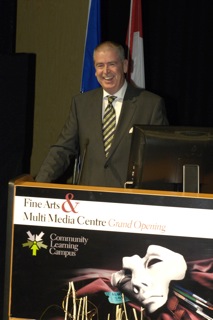
Caption: Tom Thompson at the opening of the CLC Fine Arts Building
Credit: Photo courtesy of Chinook’s Edge School Division—Take a business approach: “The stark reality was this is going to cost money to get it built and it’s going to cost money to operate it and it’s going to cost money in places that we can’t even envision right at the moment. So rather than blind yourself at the outset to the dream of an integrated learning environment and start calling world-class consultants that will tell you where parts of your dream are presently in operation, and before you start putting people on airplanes and flying them to four corners of North America, let’s get a really good look at some mini-budgets and some overall budgets here of what this thing is going to take (a) to sell it; (b) to build it; (c) to operate it. That’s reality.”
–Get 75 percent of the facts and get going: “There’s such a high tendency in our sector to over-analyze something. If you have your realities that you’re talking about, somewhere in there has to be a primary sponsor, and if that primary sponsor just happens to be your provincial government, that provincial government has ebbs and flows. If you know that it is strategically the right time to go with your proposition, you have to take advantage of that, because those ebbs and flows are not a constant, they’re variable, and they have to be taken into consideration in the building of the proposition.”
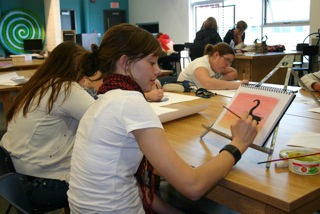
Caption: Olds High art students in the CLC’s Fine Arts Centre
Credit: Photo courtesy of Chinook’s Edge School Division—Attain momentum and don’t take your foot off the gas: “When inflation hit the CLC project as buildings were coming out of the ground, we said we had to have a come-together, we had to sit down, we had to look at it from a business perspective and we had to say, ‘well, here’s the reality: if we don’t fix this ourselves and keep driving this forward, somebody somewhere else is going to pull the plug.’”
—Preserve at least some of your intellectual capital to get you through a lull: “The lesson in there is really founded in your commitment. I think that, for instance, if I had retired or left, and Jim Gibbons left, we might not be having this today. … I don’t want that to sound arrogant. The lesson learned is if you have to go through a lull, hopefully you’ll have some intellectual capital remaining that will help you through the lull.”
EN BREF – Education Canada a demandé à Tom Thompson, président du Olds College et l’un des principaux artisans du Community Learning Campus (CLC), quelles leçons ont été tirées de ce projet éducatif particulièrement ambitieux.
-
From Rhetoric to Reality
Comments Off on From Rhetoric to RealityDeep, meaningful change seldom comes easily.
When Alberta high school principal Tom Christensen and his teaching staff envisioned an education environment that demanded students take more responsibility for their learning, some of the teachers he most respected left because they felt the changes would take them out of their comfort zone.
“Those are pretty much tipping points,” he told Education Canada, “where you wonder are we going too much for what this community and this district can handle? … I think that’s what causes a lot of people to not make the change. They realize that friendships could be affected, you’re going to be challenged and it’s almost safer just to hide, not to change.”
That willingness to confront the status quo is a common thread that runs through this special theme issue of “From Rhetoric to Reality.” Whether it is a Mi’kmaw community in Nova Scotia fighting for its own high school or a Toronto high school teacher dreaming up an innovative alternative program, their stories are powerful reminders about the central purpose of education: to equip the next generation to play its full role in society.
For Tom Christensen, change was inevitable. “It’s just such a different world from the one we were living in even 10 years ago,” he says. “I don’t want to be that guy who 20 years from now they’re cursing … because he just created a school that looked the same as the one built in 1905.”
In Winnipeg, Seven Oaks School Division Superintendent Brian O’Leary knows that meaningful change requires patience and resolve. Three years ago, his school division opened Met School, a school-within-a- school. Progress is slower than he had hoped, but the school has opened new paths for learning. “We underestimate how much work it’s going to be and overestimate the results; if we didn’t have that capacity for self-deception, we’d never start anything.”
Toronto high school teacher Craig Morrison was convinced he could re-engage students with an alternative program that taught them to design, build, and market skateboards. Mr. Morrison and an unlikely group of supporters, including the small-business owners of a skateboard shop, shared a belief that young people, in the right academic setting, could find their feet.
In Kelowna, B.C., high school teachers Graham Johnson and Carolyn Durley had successful teaching practices. But they “flipped” their classrooms upside-down because they wanted their students to experience math and biology in a deeper way.
Elsewhere, education leaders are rethinking school design and trying to get a handle on technology to better serve a new generation of learners. These inspiring trailblazers, sensitive to the needs of today’s young learners, are quietly, steadily turning rhetoric into reality.
-
Liberated Spaces: Purposeful School Design Says Goodbye to Cells and Bells
Comments Off on Liberated Spaces: Purposeful School Design Says Goodbye to Cells and BellsAfter a 30-year career as a design consultant, Ron Christie joined Regina Public Schools in 2004 as the manager of planning and maintenance. His first impressions of the system’s schools took him back in time.
“As soon as you walk in the door you think my god, nothing has changed since I went to elementary school and that was a long time ago,” says Mr. Christie, now general manager of educational facilities for the district.
Since his first impressions, Regina and other school districts in Canada have joined a growing international movement on school design for 21st century learners. “If you want to have students come to school and feel pleased about being there, then don’t put them in a junky old school from the 1950s that really hasn’t had any significant upgrade in 50 or 60 years,” says Mr. Christie.
In Regina, the impetus to change came with plans to merge or close schools in some neighbourhoods and build new ones elsewhere. “It [the discussion] was interwoven in a very positive way from the beginning in terms of looking at the learning agenda and the management of facilities,” says Regina Director of Education Julie MacRae, of the strategy adopted by her predecessors before her appointment last year.
This September, the board opened Douglas Park Elementary, a 50,000-square foot building that replaces an existing facility on the same suburban site and epitomizes current thinking about architecture’s role in learning.
Gone is the traditional layout of long corridors with classrooms on either side – the so-called “cells and bells” model of the traditional school, replaced with flexible spaces for individual and group learning activities and plenty of natural light. A “school within a school” format divides 400 students into learning communities (K-2, grades 3-5 and 6-8), each with separate entrances to the playground and all connected to the building’s central learning commons.
The open layout is a far cry from the unstructured space of “open-concept” schools in the 1960s. Douglas Park has 33 distinct learning spaces, including 11 classrooms known as “learning studios” with flexible seating and mobile carts for books and specialty rooms for special-needs children (connected to the classroom). With the school positioned on an east-west axis, sun pours through a large-windowed south wall to the central atrium. One of the most intriguing spaces is a 133-square-metre “DaVinci Studio” for science labs, fine arts, or interdisciplinary projects. The $19.5-million project came in on budget and met Saskatchewan ministry guidelines for a Leadership in Energy and Environmental Design silver rating for sustainable construction.
No wonder, according to the Regina Leader- Post, that school board chairwoman Katherine Gagne told the opening-day audience “this is a place of innovation, creativity, expression and learning.”
The reimagined school design fits today’s economy, says Randall Fielding, chairman of Fielding Nair International, the educational facility planner and design architect for Douglas Park. (Regina-based Number TEN Architectural Group was the executive architect on the project.)
“In addition to the reality of collaboration, there is the reality today of what modern, successful companies are like,” he says. “If we look at Apple and Google, their offices are not just a series of enclosed rooms with doors anymore.”
He cites two recent peer-reviewed studies that report increased learning retention with inquiry-based teaching methods – the kind of pedagogy supported by progressive school design.
While fluid spaces at Douglas Park encourage cross-disciplinary activities, Mr. Fielding says young learners also need time to work alone.
“Good creative work is done by an individual often stimulated by interaction with others and they often work together in a team to create things,” he says. “But you really need to support individual learning as much as collaborative learning.”
That view is shared by Ontario-based architect Paul Sapounzi, a partner in +VG Architects, whose schools designs feature flexible classroom spaces, natural light and fewer corridors.
“We are starting to implement elements in our school so that the building itself becomes a tool for learning,” says Mr. Sapounzi. At some schools, his firm has made the mechanical systems visible so students see what accounts for 30 percent of a building’s costs. Like Mr. Fielding, he encourages schools to imagine space for different uses: the “work-horse” classroom, tutorial spaces for group learning and quiet places for students to work alone.
“Doing the stuff in between [formal classroom activities] is where some of the most important learning takes place,” says Mr. Sapounzi. “That means we need to create spaces in the lobby, atrium, the library and even in the classroom at times where students go off on their own.”
Of half a dozen obstacles to modern school design, Mr. Fielding ranks teacher professional development at the top of his list. Without it, he warns, school will not reap the full benefits from learning-friendly architecture.
EN BREF – Les conseils et commissions scolaires du Canada font partie d’un mouvement international grandissant mettant l’emphase sur la conception d’écoles qui comblent mieux les différents besoins et styles d’apprentissage des élèves au 21e siècle. Des espaces diversifiés et adaptés aux activités individuelles et collectives, des « écoles dans des écoles », le soutien de la collaboration interdisciplinaire des élèves et du personnel enseignant et l’utilisation généreuse de la lumière naturelle comptent parmi les caractéristiques distinguant la nouvelle approche de construction d’écoles. Le perfectionnement professionnel des enseignants sera nécessaire pour profiter à fond de ce type d’architecture propice à l’apprentissage.
-
It’s Not About the Toys: Putting Technology in its Place
Comments Off on It’s Not About the Toys: Putting Technology in its PlaceDepending on your age, you’ve probably heard some enthusiast rave over the latest piece of high-tech hardware – Smartboards, laptops or electronic tablets – and how it would single-handedly revolutionize the classroom. Sadly, you probably have a story too about out-of-date computers or Smartboards lying idle in the storage room. Across the country, with tight budgets and constant pressure to upgrade in the name of “21st century learning,” school boards are struggling to put technology in its place. In British Columbia, two boards with different profiles have come to the same conclusion – that effective integration of technology in the classroom requires on-the-ground support for teachers and students.
The Vancouver School Board, with 55,000 students and declining enrolment, has 110 schools, including several around a hundred years old. That creates special challenges to upgrade the physical infrastructure for adequate Internet bandwidth and wireless capability. As of 2012, the board had more than 650 mobile devices available for classroom use.
Southeast of Vancouver, the suburban Surrey School District is the largest in the province, with 70,000 students, enrolment growth and more than a dozen new schools in the past 20 years. So far, according to officials, the district has distributed 5,000 iPads to classrooms and expects to have all 125 schools with wireless access by the end of the year.
But the superintendents of the two school boards – Steve Cardwell of Vancouver and Mike McKay of Surrey – talk the same language about posing the “what” question about technology: what will the devices do to improve the education experience of students and teachers?
Mr. Cardwell, recalling his experience at a previous board, says “every school became wireless and we purchased laptops for all of the teachers at the elementary level from grades 3-7 and put two mobile laptop carts in every school. That certainly sparked interest and innovation, but not across the board. And that’s my concern: I would much rather support innovations and build on them as islands, not unto themselves, but as significant movement forward in using technology appropriately for teaching and learning. Really it is about what we are doing with the technology.”
Mr. McKay adds his own cautionary note. “We’re still not all the way there, around defining kids’ use of it as a tool and a resource rather than as an end in itself. It’s a means to an end around effectiveness and efficiency of learning, around pulling in access to people and resources, and around interconnecting in ways that are highly strategic and efficient and so on. But we’re getting there. We’re almost at the end of the journey because for a lot of years there was a pretty poorly architected technology plan.”
In both cases, the boards have adopted similar strategies to create opportunities for teachers to explore how the new devices can expand the repertoire of inquiry-based learning projects and other activities in the classroom. In Vancouver, a strategic technology plan released earlier this year defined “student engagement, learning and success” as a central goal and declared the district’s priority is “to provide technology supports and resources to students and to school-based teaching and support staff.” In Surrey, the district promotes collaborative inquiry by teachers to explore how technology and other tools can transform the learning environment for students.
“We are making sure that our school leaders, and school principals, are provided with opportunity to experiment, to learn and to recognize the power [of technology],” says Mr. McKay. “We’ve had seminar sessions all through this year, in spite of the [now-concluded] job action, and dinner series for people to listen to and work with educators who have a sophisticated approach as to how to use technology to support learning. We do that with principals, we do that with teachers who connect with schools.”
Caption: Students at Vancouver’s John Oliver Secondary School work with an iPad for a class project.
Credit: Vancouver School DistrictIn Vancouver, one sign of the evolution in thinking about technology came two years ago when the district struggled to close an $18-million budget shortfall. That year, says Mr. Cardwell, only one new item was added to the annual budget: the position of District Principal of Educational Technology.
The position was filled by a veteran teacher well-versed in technology and deliberately combines elements of “top-down” and “bottom-up” strategies for change. In her board-wide capacity, District Principal Audrey Van Alstyne evaluates school needs and where to place scarce equipment. But a lot of her work (she jokingly renames her job title as “classroom of tomorrow”) is spending time in schools with teachers to support and encourage their use of mobile devices in classroom activities that connect students to each other and even to their peers in another country working on the same project.
She looks for receptive teachers and schools that become models for what is possible in the classroom. In a version of “pay-it-forward,” she will provide iPads for three months to a group of two or three teachers who receive in-service training and use of an iPad cart (with wireless access) for the classroom. Ms. Van Alstyne says teachers can keep their devices if they agree to share their experiences with other schools in at least three workshops. “Everyone has agreed to facilitate workshops for us and the word has got around,” she says. “Now when I go to schools, teams of four to six teachers are interested in supporting this initiative.” In what for her is an encouraging sign, even shy teachers want to practice with the devices. “They say it is changing their teaching.”
This year, the board approved four half-time positions for classroom teachers to act as mentors (see story online: www.cea-ace.ca/ theme2012) to instructors at other schools who are interested in, but unfamiliar with, using technology for classroom projects. Again, the strategy is to encourage peer-to-peer collaboration where teachers and schools are ready to explore using technology to engage students.
Jordan Tinney, a former senior official with Vancouver who became Deputy Superintendent in Surrey in August, says technology is “absolutely a game-changer” for the role of the teacher.
“It will be the students themselves who are going to change it, by demanding new ways of learning and demonstrating new ways of learning themselves,” he predicts. In 2011, he worked with Math teachers in Vancouver and Surrey in a three-day workshop that gave teachers access to any technology they wanted to develop online Math modules for all Grade 10 and 11 teachers – the beginning of what Mr. Tinney hopes is an online repository for secondary mathematics. “What was really fascinating was watching the range of teachers who came to the workshop, what they built and their own learning that went along with it,” says Mr. Tinney, who writes a blog on education leadership (www.jordantinney.org). “I learned a lot in those three days about what teachers are going to need for support. But I also learned that there is so much material already out there, and it is quality material.”
We make the assumption that the ability to use the stuff translates into the ability to use it in the classroom. That’s not true. It requires thoughtful architecture.
Surprisingly, say administrators, a younger generation of tech-savvy teachers don’t necessarily know how to adapt mobile devices or other tools for effective classroom instruction. “We make the assumption that the ability to use the stuff translates into the ability to use it in the classroom,” says Surrey’s Mr. McKay. “That’s not true. It requires thoughtful architecture.”
That need for “thoughtful architecture” also applies to faculties of education responsible for training a new generation of teachers. At some schools, technology is a stand-alone course while others have structured programs to embed technology-enhanced instruction across the curriculum for teachers.
At Simon Fraser University’s Faculty of Education, prospective teachers learn about technology over the course of their 12-month program through a blend of on-campus and field practicums.
“So you don’t take a course in technology,” explains Dean of Education Kris Magnusson. “You ask questions like how might have technology helped me solve that thing I just saw or did in the classroom? So it is much more of an original problem-based learning.”
In addition, he says, teachers in training are expected to use “reflective practice” to examine their own skills and knowledge, incorporating self-assessment and feedback from others to identify where they need to do more work. As part of a “curriculum-mapping” initiative, the faculty is evaluating the delivery of content, including technology, to ensure coverage of key issues.
“For example, in technology, most of them would introduce a workshop on certain aspects of technology integration within the classroom…Students would go through all that and be expected to demonstrate how they’ve used their learning in a practicum-type situation and to reflect on how that went,” says Prof. Magnusson. “We think genuine learning doesn’t necessarily happen because you label a three-credit course ‘Technology Integration in the Classroom.’” The approach taken by his faculty, says the Dean, “is much messier and harder and more difficult to pinpoint but ultimately a more effective way to go at it.”
As thinking continues to evolve on how to harness the latest tools for tomorrow’s classrooms, Surrey’s Mr. Tinney says it’s time to gain a sense of perspective about technology. “Let’s not put it on a pedestal,” he urges. “Let’s talk about it being just like the air we breathe – it just is. So how can it be part of the experience? So that when you leave school you’re leaving with a set of competencies and tools at your fingertips.”
EN BREF – Partout au pays, dans un contexte budgétaire serrés, constamment poussés à s’adapter à l’enseignement au 21e siècle, les conseils et commissions scolaires ont du mal à instaurer les technologies. En Colombie-Britannique, deux conseils scolaires dont les profils sont très différents sont arrivés à la même conclusion : l’intégration efficace des technologies en classe passe par le soutien sur place des enseignants et des élèves. À Vancouver et à Surrey, on privilégie le mentorat et les initiatives de formation aidant le personnel enseignant intéressé à explorer le potentiel des technologies de transformer l’environnement d’apprentissage des élèves.
-
Success, but Slowly, as Met School Redefines Learning
Comments Off on Success, but Slowly, as Met School Redefines LearningThree years ago, one of the featured stories in the Education Canada Theme Issue (“Innovation: Challenging the Status Quo”) described an alternative school that had just opened in the Seven Oaks School Division in Winnipeg, Manitoba. Met School, for grades 9-12, was designed for “kids who want a rich relationship with a teacher that extends over time, real-world learning opportunities” and a program built around students’ needs and passions, Seven Oaks superintendent Brian O’Leary told Education Canada at that time.
Seven Oaks Met School was then, and still is, the only high school in Canada that is part of the Big Picture Learning network of innovative schools that started with a single Met School in Providence, Rhode Island, in 1995. Big Picture schools embody the values described by Mr. O’Leary.
This fall, Seven Oaks Met School entered its fourth year. It graduated its first class of Grade 12 students in June. This seemed a good time to ask: How well has the school fulfilled the vision described by Mr. O’Leary?
It has been a godsend for Darlene Woiden, a mother who had despaired of finding a school that would engage the interest of her son, Parker Hubley. “I love him to bits, but he’s not academically inclined,” she says. “He never was from K to 8.” She described how most days of those nine years started with a struggle to get him to go to school.
Caption: Grade 11 student, Eric, at his internship with Minute Muffler. Eric learned how to repair tires, do oil changes and kept the shop clean and orderly, including tallying and ordering stock.
Credit: Photo courtesy of Seven Oaks School DivisionFor high school, she considered enrolling Parker in a private school with smaller classes. Then she received a newsletter from Seven Oaks School Division describing its new “Met School” as an alternative approach for some students. She was attracted by the school’s emphasis on a hands-on style of learning that included internships at businesses and institutions in the community. At the time, mistakenly, she wondered if the Met school was a special education class by another name and worried “he’s not going to learn what he needs.” In fact, Met School is designed for students seeking an alternative learning environment in which to pursue their passions and develop a closer relationship with teachers and students. In the end, deciding they had nothing to lose, Parker and his parents took part in an interview – a requirement for coming to the Met school. In 2009, Parker was accepted as a Grade 9 student.
A distinguishing feature of the Met School experience is that a cohort of students stays with the same teacher (known as “advisor”) over four years of high school. The approach is an extension of a practice by all three Seven Oaks high schools to connect every graduating Grade 8 student with a teacher-advisor who introduces stu- dents to high school, helps them navigate the next four years and is the caring adult who presents them with their diploma at graduation.
Another characteristic of the Met School is small “advisory” classes with no more than 15 students, so they get to know each other and interact in a way generally not accommodated in a larger school. By sticking with the same group of students throughout high school, the teacher/advisor gets to know the student on an individual level and stays in regular communication with the parents. That familiarity, says David Zynoberg, one of four Met School teachers, helps put a student’s actions and behaviour in context and guides the advisor on what’s needed in any given situation. “We’ve had parents really highlight how much a student has grown because of having that relationship in life, that adult who cares about them and really pushes them and looks for the best in what they’re capable of,” he says.
In the early months of Parker’s first year at Met School, Ms. Woiden was concerned that the work he was bringing home seemed “vague.” But over time she watched as he became immersed in his studies, especially impressed when her son discovered that his auto mechanics internship required knowledge of the same equations he struggled with in Math. “He took off with that math and he got an 80 out of it,” she recalls.
Internships with businesses and institutions in the community are a core element of the Met School experience, with students spending two-and-a-half to three months in a workplace setting. During a school year, a student may have as many as three internships linked, or not, to career exploration. By working in a professional environment, students develop work and social skills and, as Met School Principal Adair Warren explains, “a broader understanding of the work that people have done to develop their own careers.” Placements have included a college pharmaceutical manufacturing lab, health and medical settings, media, documentary filmmaking, technology, art, animal sciences, robotics, and prosthetics and orthotics, and those are just a few.
In an experience rare for high school, Met students report quarterly on their internships, individual school projects and their academic progress in stand-up “exhibitions” for fellow classmates, parents, staff, internship mentors and anyone else they choose to invite. Typically, a student’s first presentation is a bit awkward, not well focused, and brief, says Mr. Zynoberg. But students improve with each succeeding exhibition, thanks to follow-up activities that include a feedback form for the audience and meetings between the student and staff and family after the presentation.
During the year, advisory-group workshops focus on presentation skills and techniques to help students get ready for their presentations. They need to strike a balance between style and substance, says Mr. Zynoberg. “They want to be proud of their work and look really smart [while presenting] some really complicated things, but at the same time make it accessible to everybody,” he says. “It’s a challenge that they face every presentation.”
Darlene Woiden recalls Parker’s first presentation in 2009: “He would stare at the floor, he was kicking at an imaginary spot, he was mumbling; you could barely understand him.” Then, with obvious pride and a bit of emotion, she described his most recent exhibition, delivered this past June: “He’s animated, he’s looking straight at all the students, he’s telling jokes, he’s getting them involved and he’s passing out samples of the work that the kids did at the Y for him as a present for going away.” (The family moved to Ottawa this past summer.)
Core subjects such as English and Social Studies are very much a part of the Met School program, but typically are integrated in the students’ individual projects and internships. Matt Gereta, a student of Mr. Zynoberg, studied the history of computer processors, used applied math to build a pie chart accompanying his comparative analysis of several video games and wrote an essay comparing two Internet protocols. Mr. Gereta says he “didn’t like reading at all” when he entered high school, but read 13 books in his first year in Met School. Some, but not all, were related to his avid interest in computers. He is one of the five Met School graduates this year and now attends Red River College in Winnipeg where he is studying Business Information Technology.
MASTER OF EDUCATIONAL TECHNOLOGY
Since Met School does not offer Math, Calculus, Biology, Chemistry, Physics and Band, students take those classes at Garden City Collegiate, housed in the same building as the alternative program.
Diversity describes the profile of students who elect to attend Met School, says Ms. Warren, the principal. “Whether it’s honour-roll-type kids or kids who really like to work with their hands more than the academics, we are an inclusive place for all of them,” she says. In its early phase, with little time for Met School to establish its identity, some students found it not was not a good fit for them and left. Others, also unsure, stuck it out and ultimately found the program to their liking. Some students were enthusiastic from the start about the program’s promise of a better way to learn and flourished.

Caption: Met School Grade 11 film student, Anna, working on her documentary film on refugees called “Fight for Freedom.” Anna’s film was accepted into a California film festival.
Credit: Photo courtesy of Seven Oaks School DivisionFar from the laid-back image often associated with alternative schools, Met School puts its energy into helping students develop self-knowledge, essential skills and a sense of direction – a strategy common to schools in the Big Picture education reform movement.
As a result, says Mr. O’Leary, students seeking a crack to hide in at school soon discover they won’t be overlooked by the teachers. Students are challenged to find and declare their interests and passions and then, with the help of their advisor, begin to build the pieces that will make up their learning plan. This includes courses, research, projects and internships, and is done in full view of – often with the help and cooperation of – their peers in the advisory.
When Seven Oaks established the Met School, Mr. O’Leary put two personal expectations at the top of his list. One was that it provide, as he puts it, “an alternative for kids looking for a more authentic personal experience in high school that doesn’t follow the standard and unfortunate recipe of grouping all at-risk kids together and just dumbing it down” and second, that the school would “help kids get to know themselves.”
Based on feedback from students and parents, he’s gratified that Met School is meeting those expectations. “I think lots of kids go through school on auto-pilot,” he says. “Unless we can really tap into their motivation, we won’t succeed with them. They have to be doing it for their own reasons, and ultimately just for the joy of the experience and learning.”
I think lots of kids go through school on auto-pilot. Unless we can really tap into their motivation, we won’t succeed with them. They have to be doing it for their own reasons, and ultimately just for the joy of the experience and learning.
Still, he is disappointed that Met School was not able to reach and retain everyone. Some students, he said, saw Met School “as a relief from what they’ve found to be kind of a boring routine. But people [here] know them and they’re in their face more and they really have to get engaged to deal with stuff.” When confronted with the need to face up to their challenges, some students are not ready to do so.
Met School’s enrolment of 50 students is less than half the 120 that was projected before the school opened – a disappointment but not a game-changer for Mr. O’Leary. “One of my rules in starting things is that we delude ourselves as to how much work it’s going to be: We underestimate how much work it’s going to be and over-estimate the results. If we didn’t have that capacity for self-deception, we’d never start anything.”
Looking ahead, Mr. O’Leary is encouraged that recruitment this year for Met School “is much easier than it’s been. Kids are coming forward. We have staff who come to the division and want to work there. We have huge competition to work there, and really talented people. We almost always get to the point that [new programs such as Met School are] better than we expected , but years one, two, and three are always more work than we had thought.”
Some elements of the Met School program elements can now be found in the three Seven Oaks mainstream high schools. All three schools have teacher-advisors and are adding to their roster of internships. In one case, West Kildonan Collegiate has changed its timetable, occasionally allowing a “whole-period day” that gives students the day to carry out a variety of integrated activities related to a particular course.
West Kildonan also has divided its 800 students into four learning clusters, each with its own science lab, with the same teacher for core courses in Grade 9 and Grade 10. “What that’s done is really cut down on failure rates,” says Mr. O’Leary. “Instead of teachers feeling pressured that they have limited time, they know they have two years, 240 hours with these kids over time. If the kid does not get the credit, the teacher who taught them is responsible for remediating them.”
Mr. O’Leary noted “a strong correlation between kids failing a single credit in Grade 9 and not graduating.” He adds “keeping students with teachers for a second year, keeping teachers responsible for kids who don’t meet their standards” is a way to reduce failures.
From his perspective as the top official in Seven Oaks School Division, Mr. O’Leary is convinced that Met School values and learning framework have had “a profound effect” on Seven Oaks high schools. Still, despite media attention and a constant flow of visitors interested in the work of Met School, he frets that “we’ve not challenged the thinking of people in other at-risk programs.” He says “people tend to see what [Met School is] doing and usually not dismiss it but say, ‘Oh, we’re doing that already’ – when they don’t.”
But those in the Met School family know exactly what the program is doing for their children. Susan Mitchell says her daughter, Candace Houle, entered Met School in Grade 9 when the school opened three years ago and has had the same teacher-advisor, Nancy Janelle, as a constant presence in her high school life. Ms. Mitchell says Candace needed a more flexible, active learning style after struggling in middle school. “Particularly in the high school years … you need to have a nurturing environment where the teachers are willing to go the extra mile. That’s what Met School has given Candace.”
For her part, Ms. Houle has sparked to the Met School experience. She’s had internships at the Winnipeg Zoo, a vegan bookstore and café, two different record labels and a local radio station. The latter two have spurred her to pursue a career in the music industry and she expects to enter Fanshawe College in London, Ontario, next fall in music, arts and industry. “I’m glad I made the decision to go [to Met School],” she says. “It’s been super-great for me.”
Haily Seguin, now in Grade 10, last year did a project on brain development in young children and another on 9/11, as well as collaborating with a friend on a project they called “What’s in Your Burger?” Met School has made a difference for her, she says, “because it allows me to see what the real world is going to bring me once I graduate.”
Darlene Woiden still marvels at the transformation of her son, Parker. In preparation for the family’s move to Ottawa, she and her husband took Parker to an Ottawa high school she describes as much like Met School in orientation. “He was this young adult in the room that my husband and I had never seen. He spoke of the program and he spoke of his army cadets, and he explained to them … that from his Met School he learned that learning was fun and he wanted to be in a school that could help him to keep that attitude. And the Vice-Principal just kind of looked at [me and my husband] and I just got teary-eyed and almost had to leave the room.”
EN BREF – Seule école secondaire canadienne faisant partie du réseau américain Big Picture Learning regroupant des écoles innovantes, l’école Seven Oaks Met School a remis des diplômes à sa première cohorte ce printemps. Les stages réalisés dans des entreprises et des établissements constituent un élément fondamental de l’expérience de cette école. Les élèves préparent un rapport portant sur leur stage, ainsi que sur des projets individuels et sur leurs progrès scolaires, et présentent des exposés oraux trimestriels d’une heure devant des camarades de leur groupe consultatif, des parents, des membres du personnel, des mentors de stage et d’autres invités qu’ils choisissent. L’enseignant-conseiller de la classe suit le même groupe d’élèves pendant leurs quatre années au secondaire.
-
The Skateboard Factory: Curriculum By Design
Comments Off on The Skateboard Factory: Curriculum By DesignSince its opening three years ago, Oasis Skateboard Factory (OSF), founded by teacher Craig Morrison, has attracted considerable media exposure and received a Ken Spencer Award from the Canadian Education Association (CEA) for its innovative program. OSF is one of three programs offered by Oasis Alternative Secondary School, one of 22 alternative secondary schools of the Toronto District School Board (TDSB). Students design, build and market skateboards, along with paraphernalia for the skateboard culture, and earn academic credit. Students may enrol for as many as three semesters.
Students who fared poorly in their previous schools re-engage through their OSF experience. Nearly all OSF students graduate from high school. What goes on at the Skateboard Factory that makes this happen? Here is what Mr. Morrison told Education Canada:
What gave you the idea to start the Oasis Skateboard Factory?
When I was curriculum leader at Oasis Alternative Secondary School, I was the onsite principal’s representative. So I had a great experience at how to run a whole school. At the same time, I was also the arts teacher and I ran a street-art program.
I started a skateboard design class with the help of Roarockit Skateboard Company and its co-owner, Ted Hunter, who had adapted a method of pressing skateboards. He’s a professor at the Ontario College of Art and Design (OCAD). Prior to that, the whole skateboard industry was constantly telling kids: you can’t make your own skateboards or that a real skateboard had to be bought from a company in California. And the irony of that is all the wood is Canadian – hard- rock maple – which gets shipped to China, then sent to a skateboard company in California, to put their logo on it and ship it back to us.
People had been doing skateboard building in shop classes. I was interested in this as a vehicle for graphics originally, the really funky street-art graphics that we were doing, until I realized that it could be a vehicle for so much more. Early on in that program, I started a blog. I’d take a picture of a kid who’d finished a board, just simply that. If there’s anything that has made this explode, it’s people’s responses to a picture of a kid holding that skateboard. The look on their faces … that really helped me convince people why they should support this. So we have a kid who never comes to school, never gets credits, and all of a sudden they’re engaged in their education. I had good attendance in that class and good achievement.
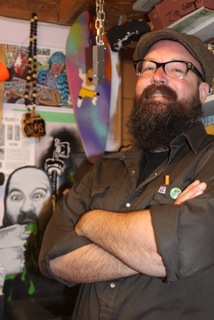
Caption: Oasis Skateboard Factory teacher Craig Morrison
Credit: Photo courtesy of Jennifer LewingtonI ran the skateboard art class for three years. The kids were selling their boards. I thought if I had a whole school, I could teach the whole curriculum through this, through the experience of running it as an entrepreneurial business. So three years ago I pitched to my school and then to the principal the idea that I would step down from my position to do a satellite program, because my skateboard class was super-successful.
I have to say, that was a huge leap of faith, although I did have resources. I had a gallery I had done shows with before; my skateboard class did an art show in a coffee shop; and I had the Roarockit Skateboard Company and all the people I knew in the arts community. It also arose from my frustration of wanting things to happen.
You see these students, who are superstars, just no one has given them the spotlight or the focus, or no one has put the wedge in the door before it slams shut. I wanted to do this thing with these kids. Right now we have a 100 per cent success rate; for the previous two years, I had like 97 percent last year, it was in the 90s in the first year of the program. That’s a huge success rate for any kind of alternative school, let alone school.
What happens at the Oasis Skateboard Factory?
Students go to school 10:30am to 3:30pm. It’s a workshop for five hours a day in order to get the four credits…So we’re probably one of the latest-starting schools. You know, many kids are always late in the morning. Let’s get them in and engage them and then keep them the whole day. So I don’t really do breaks and they’re with me all day. And it means they’re really productive, like kids don’t go out and smoke pot and come back late. I have hardly any classroom management issues. We have breakfast and lunch here. We eat together. We don’t have a lunch hour but we eat while we’ll have a business meeting. Or if it’s a workshop day like today, they’ll just eat at their own pace when they need to. They know their projects. They get assessed and given feedback every day; being on task, being on time, being respectful (laughs), being a good advocate for our program – the leadership part of this, the outreach part.
How is the course structured?
It’s a semester school; students receive four credits per semester. I’ve got students here now who have been here for three semesters – it’s usually a semester then students do a leadership program with me and our community partners.
What is your teaching background?
I went to teachers college at Queen’s University in the artists-in-community-education program. I’d done a lot of activism with youth and I’m an artist and designer. So I did the community-artists-in- education program in which you got to design your own practicums. I made sure I did one of them at an alternative school in Toronto. There I started an arts and social change program, and this is back in the old days in alternative schools where they were called catalyst teachers and it was just people in the community who were experts in their field, so me being really tapped into street art, I’d teach a bunch of classes to kids who were interested. My first job was at Lakeshore Collegiate in Etobicoke. Then I took my daughter to Alpha (opened in 1972, the first alternative elementary school in the TDSB), one of the freest alternative schools and I walked upstairs to Oasis and I said, hey, I’m a teacher and I love alternative schools. I started the next day!
How do OSF students earn credits?
I’m probably running 20 different courses. And that’s just something alternative schools teachers do. You have classes that are Grade 9, 10, 11 and it’s up to me to differentiate that. We have four groupings of courses: English and leadership; business and entrepreneurship; art; design.
I do an English grouping: English Grade 10 and 11, English Media then leadership. A lot of what we do is writing, for promotion, non-fiction, a focus on business writing. They’re writing about their products – how do you write technical specs, advertising, that kind of stuff.
We do a skateboard “zine” [a small-circulation self-published magazine], which is a hugely popular form of alternative media, so they can promote what they’re interested in. Our theme is always around street art or skateboard culture. We do interviews with bands and skateboard makers in our local community. We distribute the zines and sell them at art shows.
Every semester we write for Concrete Wave Magazine, which is the professional skateboard magazine. This year we get four glossy pages. You know, it’s funny how kids who don’t want to write or would never check their spelling or grammar do awesome work when they know it’s going to be read…The last one we did was really interesting: the emotions of skateboarding, the stoke you feel when you’re skateboarding.
The next step is a leadership course and we do a lot of outreach in that. Our students become teachers. Last semester we did a workshop series at an elementary school, a workshop series at a Montessori school and another through a youth arts program at the Art Gallery of Ontario (AGO).
Business credits include a grouping of courses like Business 9 and 10, Grade 11 Entrepreneurship and Grade 11 Marketing. That grouping of courses we run in partnership with The Baitshop in Parkdale. We’re taking kids through the experience of building their own company, branding that company and making the products that surround those skateboards: buttons, skateboard stickers, and other merchandise…We make really professional t-shirts, which we sell.
Then it’s double art. It’s visual art, street-art class. We’re doing street art, legally, of course. We deal with people’s businesses for space. It makes kids realize the legalities and how to negotiate, because some of these kids do this on their own outside of school whether adults like it or not. It’s helping them to see they can actually connect to something bigger – a mural, for example.
And the last course is the skateboard design class. People a lot of times think of the school as a skateboard school. Actually it’s a skateboard design program. It’s a design school. Usually schools don’t encourage kids to take more than one credit in art in high school. Here I connect art to the central skills that are the most valuable skills, and make connections to transferable entrepreneurship and business skills.
How do you assess students?
We don’t do exams. But students are evaluated. I’m seeing curriculum through the lens of skateboard culture. There’s boring stuff, like in the business textbooks. Characteristics of an entrepreneur – you know how boring that is to read to a kid? But you show them Big Daddy Roth, grandfather of custom cars. Let’s look at how he embodies that. What can we learn about that with our skateboards? All of a sudden it’s wild and exciting. Or we’re talking about design. Why are we looking at famous artists? What about the graffiti right on the corner? You build from their experience.
I completely cover the curriculum. These kids do more than the curriculum, because they’re connecting the curriculum to the world in a real physical way. We’re out in the community. We’re doing projects. This semester they’ve taught workshops to OCAD students. It’s this great inversion. There’s this person who’s a designer and artist, who’s an authority on teaching others. He said our kids are better behaved, better engaged than kids from university. They’re superstars. It’s amazing.
How are OSF students benefiting beyond the credits they’re earning?
We like to work independently. At the same time, we’re part of a team. When we get into jams and deadlines, we’re working together. There is no acceptable late here, because late doesn’t cut it in the world. Like that board over there has to be finished on Friday to go to a client.
There’s no pre-existing economy for student-made skateboards. So these kids are creating that economy. We’re not just about making a profit. It’s about working with good people we want to work with. They share our values.
Then there’s the embedded learning, how we look at a board as being about a lot of things. It’s not just a design project or a business project. It’s everything all together. It’s project-based learning. The projects go out into the world. That board when it’s done will have been shown in an art show. It will probably have been bought by someone in a shop. It will have been written about. The kid will have learned to market their business.
We’ve got boards right now in Longboard Living in Kensington Market, which are sold alongside professional skateboard brands, and people buy our stuff. So we’re not making toys, we’re making professional-level stuff using technology and methods developed by Roarockit Skateboard Company. We don’t do just passing-level work. I have high expectations of them, and they thrive on that. They see the real stuff they’re capable of. So when they experience that, it’s powerful. So it’s high expectations, which is hard for some kids. But we offer support for them. This is something alternative schools are really good at, because we’re not authoritarian; we know as much as possible the individual needs of our students.
Why does OSF work for kids who had been disengaged from school?
Because of the engagement with art. You show me a better engagement tool; I don’t think it exists. Every project we do here is art or design in a way, even in business class or English class. Everything we do gets shown in public. I have a really strong negative feeling about projects that a teacher marks and puts in a file folder and that’s the end of it.
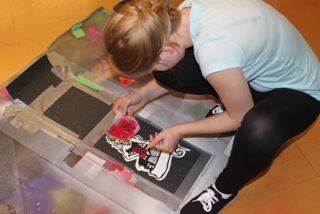
Caption: Oasis Skateboard Factory student applies stencil art to skateboard
Credit: Photo courtesy of Jennifer LewingtonWe’re a re-engagement program and we are reconnecting kids with something that got them in trouble: graffiti and skateboards, things that adults don’t like. Half the books in the art section of a bookstore are on graffiti and street art now. Graffiti is not a marginal activity. Young folks who work in advertising agencies have backgrounds in street art, appreciation of graffiti. You see it all around us. So I hook kids with the things that get them in trouble to a productive outlet. And we reconnect them to adults. So they have adult mentors in the community, and their parents actually start to reconnect with them because these kids do art shows – we show everything. The parents show up to the art shows, our events, our sales, our pop-up shop [classroom]. All of a sudden they’re proud of their kids. That’s a nice feeling to feel proud of your teenager.
What is the selection process for new students?
We do hour-long info sessions, which is my advertising for this program. At the end of that I give them an information package. I ask them to design a skateboard – just a rough thing. I’m not looking for art skills; I’m looking for something I can use to engage them in conversation. Then we invite them in for a group interview. We run them through an experience with our students. I get to see how they work as a team. I take kids who I think will benefit from this experience. Here a kid doesn’t need to be good at art, but they have to want to do it. It’s for that kid who’s into skateboarding but also likes art or likes computer or visual culture or graphics.
What happens to students when they leave OSF?
Students are here for a semester. Then, if they have success, which they all do, they can move on to the leadership program. And the kids want to do that because they do all this stuff that’s really cool. And some kids have been here for three semesters because they just don’t want to leave. For some girls who are in that situation this year, we wrote a grant. They work with middle school girls. The girls got materials to start their own companies. So when they’re done with this, they can just do it themselves.
I often counsel students to go to another kind of alternative school because they still get that arm around the shoulder, someone is there for them. Some kids want to go back to a regular school because of the program, like a shop or music program. They come in needing so many credits to graduate. I help them get over the hump. I had a girl who wouldn’t talk to anyone when she started, wouldn’t pick up a pen. Last year she was valedictorian at her school and graduated.
How does your location benefit the program?
The Toronto District School Board has always had a classroom here [in the Scadding Court Community Centre]. Oasis Skateboard Factory is one of three components of Oasis Alternative Secondary School. The other two are The Triangle Program [LGBTQ] and The Arts and Social Change Program. I saw the opportunity here because we have a skate park right here – an infamous skate spot. You have all these other official skate spots built of concrete. This is a real infamous skate spot right here. Kids built their own ramps. It’s a real great location. For an entrepreneurial business like ours, what better spot to be than across from Kensington Market? New Canadians are opening businesses, young people are opening things like vintage clothing stores and screen printing studios, and you have young fashion designers. The arts district has spread up here. We have a gallery show coming up near here. So it’s really an amazing, rich-in-resources area in terms of visual culture. Then we have the more corporate kind of art, which is the advertising and marketing all down King Street with all the design firms. So we’re in a perfect location to capitalize on the resources the community brings to us. We work with community partners all the time.
How is the community involved in the OSF program?
Ted’s [Ted Hunter, Roarockit] really my partner that started this. We have many partners, but he’s really the core of what we do. He teaches at OCAD and these kids get to work with him on advanced projects like this one right here (shows a student’s skateboard). It looks like a boom-box, sort of a radio thing with a handle. Ted helped that kid figure that out. No one’s ever done something like that in the world of skateboards. That’s why we get a lot of attention from the skateboard community. Here are these high school kids doing stuff that no one’s thought of. It’s amazing. And we’re bending wood like that drop-deck (shows another board). That’s a saleable shape in longboards right now. We’re figuring out how to bend wood like that. We’re getting expert mentorship. A lot of resources are in-kind, like working with people who believe in our mission. Our mission this year is to be doing professional work. We want no one to ever say, ‘oh that’s a student product.’ Some of our designs this year would sell on the spot. Skateboard shirts. Kids wear those things.
If you go on our website and look at the clients we have and have built boards for, we do almost every independent coffee company. Most are owned by young people who probably skateboarded when they were in high school or have that value about supporting their local community. They support us. So I put these kids in relationship with other young people who are next up the path: graduated high school, maybe from an alternative high school, and are now young business persons. When kids sell a board it’s really about a relationship they’re building with the client.
Could OFS be a prototype for other alternative schools?
People talk to me all the time: how do you expand on this? Don’t just expand this. Take the model we’re doing here and just apply it to something else, because it doesn’t have to be skateboards. Take that auto shop that no one is doing something with, and instead of just repairing motors all the time, start painting those cars with pinstripes and flames and stuff, like “Pimp My Ride.” Engage them in visual culture, which they’re experts in and consumers of; they just don’t experience being makers of it. I’m trying to turn that around, making stuff with your own hands, making your own culture.
Oasis Skateboard Factory, a program of the Oasis Alternative Secondary School and the Toronto District School Board, opened in 2009 at Scadding Court Community Centre in Toronto. Craig Morrison is the creator and teacher of OSF.
EN BREF – Fondée il y a trois ans par l’enseignant Craig Morrison, la Oasis Skateboard Factory (OSF) (l’usine de planches à roulettes Oasis) a fait l’objet de nombreux reportages et son programme innovateur lui a valu le prix Ken Spencer de l’ACE. L’OSF compte parmi les trois programmes de l’école Oasis Alternative Secondary School, l’une des 22 écoles secondaires alternatives du Toronto District Board of Education. Les élèves, qui peuvent s’inscrire à l’OSF pendant trois sessions, dessinent, fabriquent et commercialisent des planches à roulettes et des accessoires connexes, obtenant ainsi des crédits scolaires. Grâce à l’expérience OSF, des élèves autrefois désengagés ont raccroché aux études. Presque tous les élèves de l’OSF obtiennent leur diplôme d’études secondaires.


IDEAS TO SUPPORT EDUCATORS : Subscribe to the EdCan e-Newsletter
Quality research, reports, and professional learning opportunities.