Archive
-
Digital Literacy is not a tool or a series of checklists
Comments Off on Digital Literacy is not a tool or a series of checklistsToday I will return from maternity leave to a slightly reconfigured position which includes two new blocks of digital literacy coordination/leadership/support (I’m not totally clear on the name yet).
Digital literacy is one of those phrases that starts out meaning one thing and ends up meaning nothing. It gets politicized, jargonized, and sometimes tossed out.
So, as I move into this new role, I want to be clear about this hot potato term:
- Digital literacy as a tool. The tool metaphor worked for a long time, basically characterizing the idea that technology can help us deliver our lessons in more flashy and engaging ways.
- Digital literacy as a field of study. Here digital refers to anything technological and literacy as the skills necessary to make meaning. Marry the two and we have the idea that “reading” technology as a text requires a different skill set than more traditional texts like books, paintings and advertisements.
- Digital literacy as something we teachers must add to our list of things to get through. Looking at the curriculum and considering the idea that we need to add more to what we already do is enough to make any teacher sigh and contemplate a simpler job with fewer pressures (like say, for example, almost anything else this side of molecular neuro-surgery – if that is in fact a thing).
- Digital literacy as something that distracts us from the core subjects. This framework requires a belief that technology is a fad. As long as we keep our heads in our books, this whole computer thing with laptops, blogs, twittering, Prezi and other made-up words will blow over.
None of these definitions work for me.
Recently Gary Kern our Director of Instruction for Technology & Innovation referred to technology as a space for learning to occur. This metaphor puts me closer to a helpful understanding because it connects technology to learning more immediately than any of the others.
Our goal is not to entertain students. It is not to pacify learners or distract them or discipline them or satisfy them. Our goal is to disrupt them just enough that they move into learning constantly and with a degree of independence.
If we look at digital literacy as a series of checklists like
- 12 great ways to use Twitter in the classroom
- The top 5 reasons for student blogging
- The best 30 apps for science students
we can too easily skip over these deeper understandings around our current context:
- that technology is a significant and often embedded part of how we communicate
- that as the rate of change increases we need to rely on sharp, ready critical thinking to navigate our world successfully and independently, and
- that content is important too.
I intend to use my role to support teachers in their teaching. Technology will enter the conversation not as a way to jazz things up but as a way to deepen the relevance, application and communication of the stuff of learning.
Over the next few blog posts I will write to sharpen these ideas. Please feel free to challenge me with questions and comments; I welcome the discussion.
-
Ways and Means
Comments Off on Ways and MeansIn my last blog, I pontificated (don’t all bloggers pontificate?) that it is time to move beyond the school orthodoxy of successes/failures, winners/losers to a more benign atmosphere for learning. Alas, easy to say but very difficult to realize. The difficulty resides in the stubborn fact that public schooling reflects the values of the surrounding community where success, typically, is judged in terms of credentials, income and material display.
A recent column by Jeffery Simpson in the Globe and Mail lays out some shocking details about income inequality in Canada. Though the problem is worse in the U.S., it is nevertheless severe in Canada. Nearly a third of Canadians are rated, according to Simpson, as “concerned” about income inequality, more concerned than they are about crime, immigration, environment and climate change.
That large segment of Canadians upset about income inequality largely explains the Occupy Movement now fizzling before the harsh winds of winter. Yet there is no discernible political drift to radical political solutions such as confiscatory income tax on incomes over, say, $300,000. Most of us are satisfied with the free market system for determining the price of toothpaste and the salaries of the high-flyer executives who run the corporations. The market is neither good nor bad. It is the “unseen hand on the tiller”, say the stand-pat majority. But income inequality most assuredly goes to the heart of the equity-in-education issue, the issue that comes out the spout as unfairness.
It is not fair that children of privilege can be readily moved to a private school or a special public school while underprivileged children cannot. It is not fair that children who are hungry or lacking dental care or skill with the language are doomed to do poorly in certain aspects of standardized testing. It is not fair that advantaged students receive higher scores on tests and exams just because of the circumstances of their birth. These unfair elements of the system are toxic in their effects on some children caught in the age-grade achievement orthodoxy. When unfairness at school is discussed at home over the supper table, usually in anger, the student will exaggerate it in thinking about his/her difficulties at school.
Short of a socio-economic-political revolution, there is only a slim hope of a major change in the scene of inequality in education. But the inequity hydra can be strangled in lots of practical ways without any major political upheaval. The unfairness of universal standardized testing could easily be replaced by randomized testing only for system wide diagnostic purposes. The unfairness of invidious comparisons of schools based on universal test results could be resolved. The competition among teachers for official commendation based on test results could and should be ended.
Short of a socio-economic-political revolution, there is only a slim hope of a major change in the scene of inequality in education. But the inequity hydra can be strangled in lots of practical ways without any major political upheaval. The unfairness of universal standardized testing could easily be replaced by randomized testing only for system wide diagnostic purposes. The unfairness of invidious comparisons of schools based on universal test results could be resolved. The competition among teachers for official commendation based on test results could and should be ended.
The unfairness of assessing individual progress in school within the framework of a class of 30 kids moving lock step through the grades can be confronted, though with some difficulty. That is a structural feature, historic and therefore ingrained. But step-by-step modification is feasible. Individualized learning facilitated by the computer and the World Wide Web is already happening but needs lots more official support. Repealing compulsory attendance laws and mandatory textbook use would help. More than any of these, encouraging teachers to move up to a higher level of professional autonomy would kick-start learning for the 21st century in manifold ways, a style of learning that, one hopes, would bring greater equity in a world searching for peace and harmony.
-
Parents Please BYOD
Comments Off on Parents Please BYODRight, another acronym you have to remember. On the slim chance the term BYOD has not cropped in your conversations, I’m referring to the use of mobile devices in the classroom thus ‘Bring Your Own Device’ (BYOD). I know I said parents BYOD so let me explain.

-
Equity in Education and the Digital Age
Comments Off on Equity in Education and the Digital AgeCanada is well known for its efforts to ensure an equitable education opportunity for its citizens. The inclusive education model is one expression of Canadian values in this regard; an underlying principle that all children should have equitable access to Canada’s learning systems. Canada’s ongoing efforts to successfully integrate children with disabilities into the regular classroom are to be lauded and emulated.
(more…) -
Restoring Our Schools: The Quest for Equity in the United States
Comments Off on Restoring Our Schools: The Quest for Equity in the United StatesA visit to Nan Chiau Primary School in Singapore finds fourth and fifth graders eagerly displaying the science projects they have designed and conducted in an “experience, investigate, and create” cycle that is repeated throughout the year. Students study plants, animals, and insects in the school’s eco-garden; they run their own recycling centre; they write and edit scripts for the Internet radio program they produce; and they use handheld computers to play games and create mathematical models. Teachers, meanwhile, engage in research sponsored by the government to evaluate and continually improve their teaching.
Contrast the picture of this typical school in Singapore with the description of a California school, from a lawsuit filed recently on behalf of low-income students of colour in schools like it throughout the state:
At Luther Burbank, students cannot take textbooks home for homework in any core subject because their teachers have enough textbooks for use in class only… One dead rodent has remained, decomposing, in a corner in the gymnasium since the beginning of the school year…. The school library is rarely open, has no librarian…the latest version of the encyclopedia in the library was published in approximately 1988…. Classrooms do not have computers…. The school no longer offers any art classes…. Eleven of the 35 teachers at Luther Burbank have not yet obtained full, non-emergency teaching credentials, and 17 of the 35 teachers only began teaching at Luther Burbank this school year.
Certainly not all schools in the United States look like this, but what distinguishes high-achieving nations like Singapore from the United States is that the high quality of education in Singapore is replicated systemically throughout the entire nation. And Singapore is not alone. Canada and many nations in Asia and Europe are pouring resources into forward-looking systems that educate all their citizens to much higher levels—and the gap between the United States and these high-achieving nations is growing.
Canada and many nations in Asia and Europe are pouring resources into forward-looking systems that educate all their citizens to much higher levels—and the gap between the United States and these high-achieving nations is growing.
Inequality has an enormous influence on U.S. performance, far more than most nations. The impact of socio-economic factors on variance in U.S. student performance in Programme in International Student Assessment (PISA) 2009 results is 16.8%—almost double of that in Canada. In Canada, the majority of students attend “mixed” schools, rather than highly advantaged or disadvantaged, and there is greater equity of access to resources within and across schools.
For a brief period in the mid-1970s, when the United States worked to reduce poverty, desegregate schools, and enhance funding in poor districts, the United States saw achievement gaps close substantially. To regain lost ground, the United States must make strong investments in children’s welfare—adequate healthcare, housing and food security — so that children can come to school each day ready to learn, and level the playing field in schools.
In education, the United States must roll back the theory of reform developed during the Regan years that focused on outcomes rather than inputs – that is, high-stakes testing without investing. Instead, investments must be made in high-quality preschool to close achievement gaps that already exist when children enter kindergarten; equitably funded schools that provide quality educators and learning materials; a system that ensures that teachers and leaders in every community are extremely well prepared and are supported to be effective on the job; standards, curricula, and assessments focused on 21st century learning goals; and schools organized for in-depth student and teacher learning and equipped to address children’s social needs.
Achieving these conditions will require as much federal attention to opportunity-to-learn standards as to assessments of academic progress, and greater equalization of federal funding across states. It will require incentives for states to provide comparable funding to students across districts. Finally, an equitable and high-achieving system will need to address the supply of well-prepared educators—the most fundamental of all resources—by building an infrastructure that ensures high-quality preparation for all educators and ensures that well-trained teachers are available to all students in all communities.
Related Education Canada articles:
-
Putting a Sustained Focus on Equity in Education
Comments Off on Putting a Sustained Focus on Equity in EducationThe recognition is growing in both Canada and the U.S. that educational equity is critical to our collective future. Although Canadian education systems perform much better in terms of both equity and quality, gaps in student achievement and educational opportunity remain.
What is the biggest challenge in ensuring more equitable outcomes among students? What is the most important or promising thing that schools can do to advance equity? What is the most important or promising school board or government policy to advance equity?
We have an impressive list of policy experts, researchers, educators, parents, and students to share their informed perspectives to help answer these questions. Our blog will showcase a two-week focus on equity in education from November 21st to December 2nd featuring guest bloggers who are from the inclusive education, First Nations, LGTBT, racialized minority, and parent engagement communities, as well as researchers specializing in urban schools and marginalized students – all sharing their ideas on how we can ensure that all learners have equitable opportunities.
This initiative is a follow up to a 2010 international symposium on equity and innovation co-hosted by CEA and the Stanford Center for Opportunity Policy (SCOPE). A newly released special equity themed issue of Education Canada builds on the provocative presentations and discussions that took place at that event, with a particular focus on how to achieve greater equity by moving local innovations to effective practices across the education system.
So please visit our blog often for the next two weeks. We hope that you will enjoy reading the Education Canada articles, the daily dose of equity information resources on our Twitter feed, and the blog commentary and encourage you to get involved and contribute your thoughts and opinions to this important information campaign.
-
Equity in Education: Next Steps
Comments Off on Equity in Education: Next StepsIn October of 2010, CEA, in conjunction with colleagues from SCOPE (Stanford Centre for Opportunity Policy in Education), hosted an event entitled Achieving Equity through Innovation: A Canada-United States Colloquium. This two-day event provided an important platform for the exchange of ideas, insights, and strategies on how to best improve the learning and teaching conditions in classrooms. From this event emerged a broad agreement that equity and more precisely, the specific conditions needed in our societies to ensure equity, required further reflection and development.
To paraphrase an OECD report in 2007 about equity in western nations, addressing these challenges requires the creation of three specific orientations: policy, practice, and resources. Much has been written about policy development and how effective such policies have been in the past. But where the work really needs to be enhanced is in the area of classroom practice. During the colloquium, delegates were provided with specific examples, from both sides of the border, of “equity-based” classroom practices, how they were initiated, and the results they generated. The prevalent objective of these initiatives was to reduce achievement gaps in classrooms and throughout educational systems.
The colloquium served as an excellent platform for CEA to deepen the important relationship that exists between creating a more equitable and fairer educational environment and emerging innovative classroom practice and assessment. As most readers will know, CEA has been actively involved in the What did you do in school today? research focusing on deepening the intellectual engagement of students. Added to this work, the ongoing research from the Youth Confidence in Learning and the Future initiative and the Teachers’ Aspirations Project continue to inject other spheres of educational activities that play a crucial role in the entire equity discussion.
Adapting classroom practices and encouraging deeper links between the school and the community can and do play vital roles in the creation of an equitable educational system. One of the most important, yet less discussed classroom activities is in the area of assessment. Evaluation rubrics are the driving force behind pedagogical practice in classrooms and play a significant role in the development of a child, regardless of socio-economic or cultural backgrounds. In simpler terms, assessment drives instruction.
Formative assessment has been identified as critical to shifting classroom teaching practice and truly addressing the needs of all children in the classroom. It is an approach that is much more labour-intensive than the more prevalent summative formats. However, such an investment in ensuring that all children learn “better and deeper” will definitely pay dividends for society, in both short and long term contexts. For this reason, CEA will soon begin further inquiries into how effective assessment models can be developed and integrated into Canadian schools. Our current research has now demonstrated that children know how to “do school and tests”, and they do them quite well. But we also know that once they leave the classroom environment, they face a new learning curve. Success in the workforce and in life depends on meeting expectations and demonstrating skills that were not the focus of classrooms and assessments.
We owe all of our students, regardless of background, a better fate than preparing them to be successful in 1991 assessment measures, and not in 2011’s realities.
-
Implementation and Innovation: The Route to Equity
Comments Off on Implementation and Innovation: The Route to EquityThis edition of Education Canada developed from a project between the Canadian Education Association (CEA) and the Stanford Center for Opportunity Policy in Education (SCOPE) to foster dialogue about equity and educational improvement in Canada and the U.S. Although the two countries have many distinctive features, as discussions progressed we realized that we had less to learn from comparing each other in isolation than from developing our understandings of concepts, evidence, and issues relating to educational equity and improvement and – importantly – from exploring implementation strategies and innovations that may make a difference. The framing question became, “If we are really serious about equity in education, what will it take to achieve improvements?”
Considerations of equity need to be grounded in an understanding of the wider demographic, social, economic, and political contexts in which inequities are being created, sustained, magnified, reduced, or addressed. A daunting reminder about the equity challenge is the current scale and spread of inequities. Both Canada and the U.S. witnessed a growing gap between rich and poor during the 2000s; however, the size, depth, and impact of such income inequality are larger in the U.S., with significant consequences. The latest U.S. census figures indicate that 46.2 million Americans are now living in poverty – the largest number on record and equivalent to almost one and half times the entire population of Canada. Around 16.4 million of those Americans in poverty are children – indeed, now 22 percent of American children overall live in poverty, a statistic that masks different experiences by race; 35 percent of Hispanic and 38 percent of Black children live in poverty. The scale of inequality is staggering.
The situation in Canada is less extreme but there is no ground for complacency. The most recent (2006) census statistics indicate that 13 percent of Canadian children were living below the low-income cut off (after tax), generally taken as a proxy for low socio-economic status. The interrelationship with race is more complex in Canada, as the visible minority population is growing and very diverse with over 200 ethnic origin groups reporting in the census. Recent immigrants to Canada are two to three times more likely to experience low income than non-immigrants, although as their time in Canada lengthens, their prospects improve. However, the probability of low-income status is greater for visible minority immigrants than for either other immigrants or non-immigrants. Interestingly, Canadian-born visible minorities are actually slightly less likely to experience low income than other Canadian-born citizens, although the difference is small.[1]
Poverty need not be destiny. But overcoming the impact of poverty on educational outcomes requires sustained attention and systemic responses. It cannot be left to individual effort or chance.
There is long-standing evidence of the effect of socio-economic status on educational performance, but there is also evidence that students and schools in all socio-economic contexts can perform at all achievement levels. Poverty need not be destiny. But overcoming the impact of poverty on educational outcomes requires sustained attention and systemic responses. It cannot be left to individual effort or chance.
At the national level, the interplay between socio-economic background and educational success differs between Canada and the U.S. Based on analyses from the Programme in International Student Assessment (PISA) by the Organization for Economic Cooperation and Development (OECD), both the U.S. and Canada have income inequalities above the OECD average.[2] This inequality is larger in the U.S. and has a stronger relationship with educational outcomes. The U.S. is identified as having an above average relationship between academic achievement and socio-economic background, whereas Canada has a below average relationship. Among 34 OECD countries, Canada has the fourth lowest impact of socio-economic status on variance in student performance, whereas the U.S. is ranked 28th.
The OECD defines student resiliency – one measure of social and economic mobility – as the capacity of students with low socio-economic status and achievement results in the lowest performance range to move into the highest ranges. Students in both Canada and the U.S. are doing this; however, students in Canada are demonstrating above average resiliency, ranked ninth out of 65 participating countries, whereas the U.S. ranked 27th.
Another measure of social and educational mobility is the success of immigrants. Among participating PISA countries, first generation immigrant students perform below average overall. Nevertheless, while almost one out of four students in Canadian schools has an immigrant background (compared to one out of 10 across OECD countries), there is little overall difference in the performance levels of these students when compared to Canadian students overall.
So we have an international picture in which social and economic inequality can and does interact with educational inequality, yet there are also examples of countries, including Canada, with both high performance and lower inequality. As the OECD concludes:
Korea, Finland, Canada and Japan, as well as the partner economies Hong Kong-China and Shanghai-China, show high mean performance and a low or, at most, moderate relationship between socio-economic background and student performance… These countries combine high average performance with equity and have a large proportion of top-performing students, which demonstrates that excellence and equity can go together.[3]
Such national data do not tell us about the diversity of experiences within and across Canada, although local evidence points to the need to attend to race, ethnicity, student mobility, poverty, and the long-standing issue of supporting Aboriginal students to succeed in school and beyond.
We know that success in education confers both individual and societal benefit: higher earnings, better social and health outcomes, and greater participation in the civic life. Societal benefits include reductions in the need for public services – reduced reliance on social welfare, lower health care costs, reduced demands on the justice and correctional systems – and lower unemployment rates. An OECD analysis of literacy levels found that a 1 percent increase in adult literacy produces a permanent 1.5 percent increase in gross domestic product. For Canada, that would result in a permanent increase of approximately 18 billion dollars per year.[4] Analyses of achievement gaps between the U.S. and other countries in PISA assessments concluded that:
…had the United States closed the education achievement gap to levels comparable to Finland and Korea, the impact on GDP would be 1.3 to 2.3 trillion higher (a 9% – 16% increase); if the gap between black and Latino student performance and white student performance was similarly narrowed, the GDP would have been 310 to 525 billion higher; if the gap between low-income and high-income students were narrowed, the contribution to the GDP would be 400 to 670 billion higher[5].
The recent work of Wilkinson and Pickett shows that, in countries where the income gap is high, health and social problems are worse, levels of mental illness are higher, and measures of child well-being are lower.[6] Countries with greater equity (e.g.: Canada and the Scandinavian countries) have also achieved higher levels of intergenerational mobility than have the U.S. and Europe.[7]
Both Canada and the U.S. face tough social, cultural, political, and economic challenges that make the need to raise the educational attainment of those disadvantaged by current arrangements a public policy imperative. While public policies that reduce poverty among children would have important benefits (and certainly improve fairness), they are unlikely to deal with the interaction between schooling and socio-economic status that seems to influence educational outcomes more than the early ability of children.[8] Different approaches to closing achievement gaps reflect alternative understandings of this interaction between schooling and socio-economic status.
Part of our response to the question of how to achieve both excellence and equity in and through education requires the identification of existing promising and/or effective policies and practices with accompanying attention to how to strengthen, spread, and sustain their implementation. Traditionally, a concern with equity has focused on access to public education. Over time, attention shifted to a focus on outcomes. National and local approaches to specifying achievement targets, gathering test data, and examining performance – and in particular No Child Left Behind in the U.S. – have drawn considerable attention to “achievement gaps” for different student groups. More recently, we have been examining issues of equity of processes within schools and beyond. The concept of “opportunity policies” is concerned with examining what resources, conditions, experiences, and supports are available to students, educators, schools, and communities.[9] Do disadvantaged students and schools have access to sufficient numbers of highly qualified teachers? Do they have learning resources available in classrooms? Do they experience engaging curriculum and teaching for higher-order skills? Are school facilities safe and do they provide adequate learning environments? Expanding educational equity and excellence requires attention to all these factors – access, outcomes, and opportunities.
We need implementation strategies that combine a universal commitment to educational improvement with targeted strategies to address existing inequities in educational performance and socio-economic status. The particular blend of universal and targeted strategies will vary, depending on the specific context and local needs.[10] Recent analyses of education systems that are moving toward greater equity suggest the importance of sequencing priorities, starting with the “basics of literacy and numeracy”, moving on to building the foundations of a solid education system – including appropriate human, capital, and material resources – to supporting excellence in teaching and learning through professional collaboration, capacity, and innovation.[11] While the specific scope and sequence of such strategies can be debated, consensus is growing about the vital importance of leadership and professional capacity to support student learning and equity with accompanying attention to necessary resources and supports. This is long-term work that requires sustained attention and capacity to identify and implement effective and promising practices with a commitment to continuous improvement and high expectations for all educators, students, and communities.
An important component of advancing excellence and equity is therefore balancing implementation and innovation. Innovation is not new to education. Many of the defining features of current schooling – for example, special education, language immersion programs, Kindergarten, second and third language learning programs, anti-racist education, inclusionary practices – began as local school or district level innovations that spread, garnered public and professional support, and were eventually adopted as policy. These innovations differ from the myriad of abandoned pilot projects in important ways. Most notably they had system level sponsorship that ensured the necessary financial, technical, human, and social resources.
The dual imperative of “raising the bar and closing the gap” requires strategies that improve the overall performance of all students and at the same time improve outcomes for the lowest achieving students at a much faster rate.
The dual imperative of “raising the bar and closing the gap” requires strategies that improve the overall performance of all students and at the same time improve outcomes for the lowest achieving students at a much faster rate; otherwise the “gap” will be maintained or even widen. This accelerated rate of improvement is particularly important because we have considerable evidence that the achievement gap for some groups widens as students progress through school.
Achieving equitable outcomes for children and youth from certain racial and lower socio-economic groups is a serious, complex, and persisting problem. Solving it may require more extensive solutions than we currently seem willing to envision. Existing policies and resource allocations constrain potential innovations so that most new ideas are “add-ons” to existing arrangements. More fundamental redesign of schooling sometimes occurs through the creation of new schools, some of which offer potential prototypes for system-wide transformation. However, reliance on policy models of charter or alternative schools runs counter to commitments to opportunity policy and universality, and to the need for systemic solutions focused on supporting all students rather than individualized successes and failures.
As Ben Levin (quoting James March) reminds us, all organizations require “‘exploration’ (another word for innovation) and ‘exploitation’ (another word for system-wide improvement based on known ways of getting results).”[12] The question therefore is not whether we need innovation or system-wide improvement. We need both. Identification of where innovation might generate more effective solutions and where focused implementation of what we already know gets results may not be straightforward, but it is an urgent and important agenda for educators, researchers, and policymakers. The importance of equity is clear: existing inequalities are unacceptable and have widespread negative consequences for collective society as well as for individuals. Evidence is also mounting about what is required to close the equity gap: building professional capacity and improving education overall, alongside targeted strategies and innovations for lower performing and disadvantaged groups. However, such calls for equity need to move beyond rhetoric and recipes; educators need to wrestle with the challenges of combining excellence and equity through policies, professional capacity, and practices that balance proven strategies with innovation. This will require a commitment to transparency of practice and results, drawing on evidence and experience to spread improvement. It is not about quick wins, naming and blaming those who are struggling (educators, students, schools, or communities), or imposing mandatory accountability measures or predetermined models to target failure. Those remedies have been tried and failed.
Are we really serious about equity in education? If so, it will take complex and challenging work, creativity and capacity, resolute focus, resilience to stay the course over the long haul, and our collective commitment – indeed demand – that we advance this goal together through educational practices, policies, and research.
Carol and Penny were co-moderators of the Canada-U.S. Colloquium held in 2010.
EN BREF – « Si nous prenons l’équité en éducation au sérieux, comment peut-on réaliser des améliorations? » Cette question a orienté un projet lancé par l’Association canadienne d’éducation et le Stanford Center for Opportunity Policy in Education pour stimuler le dialogue sur l’équité et l’amélioration en éducation. Malgré leurs contextes sociaux et éducatifs différents, les deux pays tentent de réduire l’impact de la situation socioéconomique sur la réussite scolaire. Assurer des résultats équitables aux enfants et aux jeunes de certains groupes raciaux et socioéconomiques peu fortunés pose un problème complexe qui soulève des réactions. Les inégalités actuelles ont des conséquences défavorables étendues pour la société comme pour les particuliers et les mesures de responsabilisation instaurées pour résoudre ces problèmes ont échoué. Pourtant, pauvreté n’est pas nécessairement synonyme de destinée. Les preuves s’accumulent quant aux éléments requis pour combler l’écart d’équité. Nous devons rehausser la capacité professionnelle, améliorer la réussite scolaire de tous et instaurer des stratégies ciblées et des innovations à l’intention des groupes défavorisés et ayant de plus faibles résultats.
[1] Boris Palameta, “Low Income Amongst Immigrants and Visible Minorities,” in Perspectives on Labour and Income 5, no. 4 (Statistics Canada, 2004).
[2] OECD, PISA 2009 Results: Overcoming Social Background: Equity in Learning Opportunities and Outcomes, vol. II (Paris: Organization for Economic Cooperation and Development, 2010).
[3] Ibid, 101.
[4] The Promise and Problem of Literacy: An Agenda for Canada (Toronto: Canadian Education Association, 2004). www.cea-ace.ca/research-publications/policy-papers
[5] Analyses by McKinsey & Co. (2009) cited in Michael Fullan, All Systems Go: The Change Imperative for Whole System Reform (Thousand Oaks, CA: Corwin, 2010),16.
[6] Richard Wilkinson and Kate Pickett, The Spirit Level: Why Greater Equality Makes Societies Stronger (New York: Bloomsbury Press, 2009). Data slides available at www.equalitytrust.org.uk/resources/slides
[7] Jo Blanden and Stephen Machin, “Report for Sutton Trust Recent Changes in Intergenerational Mobility in Britain” (Economics Department, University of Surrey and Centre for Economic Performance, London School of Economics, 2007).
www2.lse.ac.uk/intranet/LSEServices/ERD/pressAndInformationOffice/PDF/Recent%20Changes%20in%20Intergenerational%20Mobility%20in%20Britain.pdf
[8] Ibid.
[9] See Linda Darling-Hammond, The Flat World and Education: How America’s Commitment to Equity will Determine our Future (New York, N.Y.: Teachers College Press, 2010).
[10] See OECD.
[11] M. Mourshed, C. Chijioke, and M. Barber, How the World’s Most Improved School Systems Keep Getting Better (New York: McKinsey & Company, 2010).
[12] Ben Levin, “Do We Need More Innovation in Education?” (Seminar Series 199. Centre for Strategic Education, 2010).
-
Equity, Innovation, and Educational Success
Comments Off on Equity, Innovation, and Educational SuccessIf there’s one message the articles in this special theme issue of Education Canada send out loud and clear, it’s that true equity in an educational context is the by-product of a society in which equity is an inherent value. Schools and school systems charged with the task of “closing the gap” while simultaneously “raising the bar” are hard pressed to deliver unless broader social policies are in place to ensure that all children have the supports they need outside, as well as inside the classroom.
As the authors in this issue remind us repeatedly, we will not improve student outcomes across the board by testing and punishing; we will only do it by ensuring that the best educational practices are in place for all children.
Canada is at an advantage here. Its history of collective action and collective responsibility has given birth to a more inclusive network of social supports, an educational funding model that fosters equity, and a relative willingness to pony up for the taxman. As a result, the Canadian public education systems, as a whole, outperform those in the U.S. in terms of both equity and outcomes.
But, lest we Canadians become too smug, we need to remind ourselves that many children in our country – including a scandalously large number of Aboriginal children – still live in conditions that diminish their educational and life chances.
It’s also important to note that the American school system features pockets of unparalleled excellence and experimental practices that have sprung from that nation’s historical commitment to innovation and individual freedom. Dedicated educators have implemented programs to compensate for the inequities that disadvantage poor and visible-minority students.
Schools and school systems can do a lot to improve both equity and outcomes. But it’s an uphill and often lonely battle to close the gap without the universal social supports that take some of the burden off the schools, themselves. And a commitment to equity alone, without a simultaneous commitment to improved practices and “raising the bar”, threatens to mire educational systems in a state of perpetual mediocrity.
The challenge, then, is to marry the social values of inclusion and equity with the determination to seek out the best possible practices – and then apply them to all children in all schools. The contributors to this special issue of Education Canada make it clear that Canada and the U.S. have much to learn from each other.
-
ConnectED Canada: Building a National Network for Change
Comments Off on ConnectED Canada: Building a National Network for ChangeI think it’s an exciting time to be involved in the world of education.
Across our country, school jurisdictions are rolling out plans and policies with the hopes of making school a more engaging place of learning for students. As our profession makes this foundational shift, I get excited imagining classrooms that are places of vibrant, technology-supported, hands-on learning where all learners are supported and find success. As I read these various visions I hope that all students are able experience a learning environment buzzing with discussion, activity, and engagement as students invent, share, refine and improve their own and each other’s ideas.
To support these visions, I think we also need to shift what teacher learning looks like. Many 21st Century frameworks for student learning (for example here and here) revolve around skills such as collaboration, networking, creativity, communication and innovation, and I believe teachers need opportunities to learn and grow in similar learning environments. I believe teachers need opportunities to see compelling images of contemporary teaching and learning being lived out in classrooms with opportunities to share, discuss, collaborate and learn from others. We need professional development that is built on teacher engagement, networked learning and collective improvement.
With that in mind, a group of educators from across the country have created ConnectED Canada – an annual gathering of teachers, students, parents and other stakeholders, each coming with a similar goal of making school more relevant and purposeful for students. The goal of ConnectED Canada is to provide a platform for discussion and idea generation – all situated within a school community striving to live out the best of 21st Century Teaching and Learning.
ConnectED Canada is open to teachers, administrators, superintendents, and ministry representatives in additional to students and parents. We want to bring together engaged professionals from across the country gathering to talk about what’s currently working , what’s emerging and where we might go next.
The first year of ConnectED Canada is taking place May 25-27th 2012 at the Calgary Science School, a school of 600 students focused on inquiry-based, technology-supported and outdoor education-enriched learning. You can see examples of our approach to teaching and learning here on our school blog.
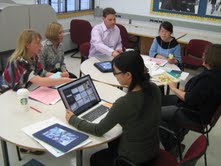
As a staff member at the Science School I am so pleased we are hosting this first event. While we feel we have some great things happening at our school the idea of opening up our classrooms to 300 outsider visitors is both thrilling and nerve-wracking! As the first day of the three-day event will be a normal day at the school, our teachers welcome the opportunity to share their ideas, questions and struggles with a wider audience. Also, we are eager to provide our students opportunity to share their experiences with a national audience.
The second and third days of the event will be built around conversations and discussions. We are currently looking for facilitators willing to host and lead 90 minute discussions. Topics of discussion can range from technology implementation to policy development to assessment practices – all framed around how we might better the needs of learners in the modern world.
We hope you’ll consider bringing forth a topic for sharing and discussion – the deadline for proposals in Dec 8th, 2011. You can submit a proposal here.
Our hopes for ConnectED Canada are many. We hope this event will give participants a chance to engage in rich and timely discussions about meaningful topics and innovative ideas in education. We hope that participants will initiate new relationships and deepen existing ones. We hope that the student and parent voice will play a significant role in the discussion. We hope participants will experience engaging learning taking place in real classrooms. Overall, we hope that ideas will be shared – and that participants will leave invigorated and excited about the wonderful work that is teaching and learning in the 21st Century.
-
The 21st Century Personalizing Teacher
Comments Off on The 21st Century Personalizing TeacherPersonalized, learner-centered pedagogy is all the rage these days. There is a great deal good about that when it works but it scares me to think about what it could mean when it is done poorly. Inquiry learning can be powerful, but if it is taken to just mean doing projects it is probably little more than busy work. However, it also might be educational malpractice. Uncritical enthusiasm for thinly conceived and shallowly implemented versions of potentially empowering practices could take us back to the worst abuses of Whole Language – another excellent idea when done well and a mess when done poorly.
In the good old days, the teacher knew and the students needed to know. The process was pretty simply. Teacher talks. Students listen. Teacher tests. Grade and move on. That’s how it was when I went to school and its still quite common. Of course, nobody wants to admit to such a caricature of transmissive teaching, and there are plenty of examples of much more sophisticated practice, but teaching as telling followed by summative assessment is still, in broad strokes, the underlying conception in many classrooms.
As we move towards more student-centered practices in which the teacher shares responsibility for the learning with students, and becomes a co-learner (partly in terms of the discipline being taught but primarily in terms of understanding his/her particular students’ learning and the profession of teaching) it is important to do so with equal measure of ingenuity and skepticism. Good is the enemy of great and the good of the past is not sufficient for the future so we have to get better, but as we change we have to be sure we also improve and that we don’t lose anyone in the transition. How can we be sure of that? Standing pat with traditional methods is not the answer, so how do we learn our way into superior practices?
In Visible Learning professor John Hattie of New Zealand reports on his survey of 8500 meta-analyses of educational research related to student achievement. Many have seen his book as another list of “what works” but Hattie warns specifically against cherry-picking research results and presents an entirely different message about teaching and learning – it needs to be more visible.
He says, “It is critical that the teaching and learning is visible … The teacher must know when learning is correct or incorrect; learn when to experiment and learn from the experience; learn to monitor, seek and give feedback; and know to try alternative learning strategies when others do not work. What is important is that teaching is visible to the student, and that the learning is visible to the teacher. The more the student becomes the teacher and the more the teacher becomes the learner, then the more successful are the outcomes.” (p. 25)
To make teaching and learning visible there has to be lots of formative assessment and feedback in both directions. Learning to build such ongoing assessment and reflection into the teaching-learning process is essential if we are to personalize learning in order to generate the deeper engagement that will enable achievement of the transformational goals of 21st Century Learning. You can’t just try something and hope for the best. Every innovation must include an ongoing assessment strategy that provides continuous feedback to both students and teachers. Trying things out and looking at the results after a year is not professionally responsible. Quality control and adjustment has to be continuous.
The superior instructional practices and school organizational patterns that will be required to better prepare students for an increasingly complex and dynamic world cannot be copied from Finland or Australia or anywhere else. They have to be developed through innovative practice right here at home, and as they are developed we also have to make sure that what is happening within our innovation is made visible so that we can actually learn from it and avoid any harm in the process.
The 21st Century Personalizing Teacher has to be, above all, a self-regulating learner, not just a follower. To adapt a well-worn phrase, you have to be the change you want to see in your students.
-
From Paradigm Shift to Narrative Shift
Comments Off on From Paradigm Shift to Narrative ShiftI remember clearly the first time I heard the phrase Paradigm Shift. I was sitting in an after-school staff meeting and my principal had just returned from a conference, inspired by the idea that education was about to undergo a substantial re-think.
“We’re making a move”, he declared, “And our whole way of thinking about school is about to change. We’re about to undergo a paradigm shift!”
-
Equity of Output Must Become the Next ‘21st Century’ Objective
Comments Off on Equity of Output Must Become the Next ‘21st Century’ ObjectiveIn my first year as CEO of the CEA, I’ve had the pleasure of sharing our vision and mission with so many educators across Canada. I’ve realized that the courage it takes to provoke a shift among deeply entrenched mindsets of traditional teaching and learning is long overdue. We can all agree that we want all our young people to be ‘21st Century’ problem solvers, critical and creative thinkers, collaborators, and great communicators, but our vision for how we get there ranges from a little tinkering to a massive makeover, and most innovators face roadblocks when they push the envelope for the latter. This is why it’s time to move beyond 21st Century rhetoric and build strategies that will nurture innovation and not deter it. CEA is working hard to convince you that this transformation needs to happen.
At the 2011 CEA Council Meeting, 21st Century Learning: From Rhetoric to Reality, participants will have the opportunity to hear from three speakers who have a first-hand knowledge and experience with innovative pedagogy internationally, in a Canadian school, and in a Canadian classroom. Following presentations, speakers will explore the barriers they face in moving their innovative thinking towards more systemic transformation.
This Council meeting is not about simply assembling experts in the field of education and from the private sector together to look at what innovative practices can be. It’s about developing a deeper sense of commitment amongst the participants to finally move the discussions and debates to more pragmatic realities. Pilot projects in education have been the easiest means to demonstrate that innovation and transformation of education can occur, but rarely have these projects become systemic.
For decades, education has placed a considerable amount of resources and energy into establishing equity, especially at the student entry points. However, education stops the application of this fundamental principle and an increasing number of children leave education, either disillusioned or seriously questioning the pertinence of what they have learned. Equity of Output, ensuring that all children achieve their potential, must become the next ‘21st Century’ objective. Ensuring Equity of Output obliges all education stakeholders to focus on the establishment of new learning/teaching environments that meet the needs of all children and not only a minority of them.
This Council meeting will bring this principle to the forefront and provide a critical platform for exchange and debate on how to truly meet the needs of ALL children.
-
The EdCamp Movement
Comments Off on The EdCamp MovementI returned from the very first EdCamp Toronto event last Saturday afternoon somewhat weary, more than a little excited and a whole lot intrigued!
Months of planning, combined with an early alarm on the day of the event accounted for the weariness. The positive energy and feedback that organizers received before, during and after the day inspired the excitement.
[ibimage==3842==Original_size==none==self==null]
-
How is a School System Like a Modern Automobile?
Comments Off on How is a School System Like a Modern Automobile?I had a fascinating conversation today with my mechanic. I had brought my 2005 Toyota in for a 70 point inspection in order to help me decide whether I should hang on to it for a few more years, or whether it might be better to dump it and take advantage of the peace-of-mind offered by driving a newer model.
Tom was in a talking mood and I took advantage of his enthusiasm and knowledge. As a result, I came away with a deeper appreciation of the technology that drives the modern automobile. In particular, our conversation focused on the complex set of computer modules that are used to control almost every aspect of functionality. We spoke of body control modules, ECM’s, oxygen sensors, emission and fuel controls. For me, the discussion really became interesting when Tom explained how each of the system controls “talk” to each other, adjusting functionality and performance based on the information received from other components. I came away thinking of my car as this perfectly synchronized ecosystem, complete with a finely-tuned feedback loop designed to respond to a series of quality controls and performance indicators.
If something happens in one control system, a component somewhere else will either respond or refuse to respond. This, in turn, may trigger a response from another module which will either adjust its performance or begin a series of pre-determined tests. The final result of this process may result in the activation of an indicator light on my dashboard which, when investigated, will provide a full report on what has gone on as well as a code that can be used to find a plan of action to correct the problem.
Now, it just so happens that, while waiting for Tom to complete the inspection, I was reading our Ministry of Education’s School Effectiveness Framework (really, I was!), a support document that identifies evidence-based indicators of successful practice in a number of components of effective schools. The SEF document encourages educators at all levels of the system to use these indicators as a way of building coherence and aligning practices across an entire school.
Ontario’s SEF outlines six components ranging from assessment practices, leadership at various levels of the system, quality of classroom instruction, programs, and partnerships between school, parents and community. A great deal has been written on this site and elsewhere about each of these components, but the SEF does a nice job of bringing them together into a unified whole. But the SEF goes further by offering a series of indicators and observable points of evidence that make quality within each of the components visible and, as a result, actionable.
This is a process that is to be carried out with integrity and transparency for the purpose of promoting reflection, collaborative inquiry and ultimately improved student learning.
—Mary Jean Gallagher and Raymond Théberge(Introduction to the Ontario School Effectiveness Framework, 2010)
Just like my automobile, I came away from reading our SEF with a sense that our school systems are another type of ecosystem, made up of component parts that, when they are running smoothly and effectively, are a thing of beauty.
The School Effectiveness Framework that is now part of the drive toward quality and accountability in Ontario presents a vision for integrated, evidence-based planning and practice. It has something to say to folks working at every level of the system.
In the long term, the SEF has the potential to drive the transformation agenda for years to come. In the short term, it forces us to look beyond the political darlings that currently drive our planning agendae—large-scale assessment scores and graduation rates— and focuses our vision on the actual components that ground these narrow indicators.
Beyond that, however, the School Effectiveness Framework invites us to look at how each of the components within our modern education system is interconnected and interdependent. It’s a complex way of thinking, to be sure. At the same time, by placing our role in the system within the larger context of a tool like the SEF, our school systems become a thing of immense beauty—a marvellous type of ecosystem!
Over the next few weeks, I would like to take a closer look at Ontario’s School Effectiveness Framework, exploring each of the component parts in a little more detail. But I would also love to hear about your experience in working with this type of process in your own district, in your own province. Have you been exposed to a similar tool for effectiveness planning? Are you involved in similar conversations at the school, district or community level?
-
The Space for Imagination in Our Schools
Comments Off on The Space for Imagination in Our SchoolsIt’s one thing to agree that more imagination is needed in our 21st century schools. It’s another thing to actually step aside and make room for that imagination to live and grow. Creating a model of school that will encourage, honour and nurture imagination on the part of both students and teachers will take vision and it will take courage.
It will take a vision that values dreaming about the future just as much as learning about the past. It will take a vision that understands that creativity and innovation are not cheerleaders chanting from the sidelines for some pre-established truth, but important catalysts on our journey to explore and discover what can be known about the world. And it will take a vision that is grounded in the belief that schools can and should be places of deep engagement and engaging depth!
One practical way to begin to make this type of vision a reality is to establish imaginative spaces within our schools, both physically and conceptually.
A complaint that I’ve heard from a number of my colleagues, especially the ones that have recently moved into new school buildings, is that classroom space is getting smaller and less functional. Many comment that the physicality of their classroom is preventing them from developing the type of program that they dream about running. Alternative groupings, teacher-student conference areas and claiming spaces for physical movement and artistic exploration is all very challenging.
Imaginative work is both inspired and supported by physical environment, and if teachers and students don’t have access to spaces that invite a certain degree of “spreading out” then it is unlikely that creativity is going to take flight!
Beyond physical environment, conceptual/temporal (!) space is also important for imaginative work to be taken seriously. Currently, I would suspect that most school days are subject to a set of fairly rigid timetables, with very little space for thinking beyond the borders established by traditional curriculum.
But, what would happen if we were to set aside an extended portion of each day to step outside the traditional curriculum boundaries and the accompanying instructional strategies and allow for some imaginative freedom? This could involve work in the Arts, design projects, work outside of the school building, or outside the school firewalls! What would happen if, each and every day, students and teachers and members of the larger community had the opportunity to collaborate on ideas that mattered to them and had that work matter to others.
We can talk about imagination and creativity all we want, but the reality of the schools that I know these days leads me to believe that things are becoming more and more defined for us on every level: curriculum expectations, teaching strategies, timetable allotments and our ability to bring a sense of individuality to our work as teachers.
Imagination, by its very nature, defies boundaries and borders, and until we decide to give teachers and students the ability to re-imagine what time and space could look like in our schools, then there’s not a great deal of chance that transformation will occur.
But, I believe we can do it. I believe that there are enough educators and parents who have a different sort of vision of what this space called school could look and feel like. I believe that there is a growing energy and sense of courage building around the need to make room for imagination in our schools and in our communities.
Schools are currently locked into a way of thinking that claims that if our work as teachers is well-planned, well-defined and well-executed, then students will be more successful. The spirit of imagination challenges that notion.
Consider what might have happened if Martin Luther King had stood up and declared, “I have a plan.” Do you think he would have been able to inspire an entire nation into action. Instead, his words were, “I have a dream”. And dreaming, my friends, is what imagination is all about!
So, let’s continue to dream about the education that we want for our children, and let’s continue to push for more dreaming and imagination in the work that we do in this place and space called school!
-
Hard Truths for Educators
Comments Off on Hard Truths for EducatorsA review of Tuned Out – Engaging 21st Century Learners by Karen Hume, Pearson Canada, 2010. ISBN-10: 0138020132
The phrase “21st Century Learning” has become commonplace. True to its title, Karen Hume’s new book Tuned Out: Engaging the 21st Century Learner promises to be a valuable resource for educators looking to engage students in the art of learning for the 21st century.
Before Hume defines what it means for students to be engaged learners, she addresses different views on engagement. Staffrooms around the country have probably hosted this discussion many times. Some believe that “students have changed, but not for the better.” Others believe that “students have changed, but their teachers have not” (p. 3). Hume acknowledges truths in both of these perspectives and uses them to formulate her own definition of student engagement: “the relationship that students have to someone or something” (p. 5).
According to Hume, there are five aspects of schooling in which educators can engage learners: “Competence, Creativity, Community, Context, and Challenge” (p. xi). She outlines and discusses each of these in its own chapter, containing a description of the main theme, case studies, sample lessons, and strategies that educators and leaders can employ. These five content chapters are bookended on the front end by a chapter that discusses the concept of engagement and on the back end by one that offers practical tips for achieving engagement in schools.
My mental model of what it means to be “tuned out” led me to believe that this book would focus on supporting learners in becoming less engaged in technology and more engaged in learning. Indeed, Hume addresses the role that technology plays in disengaging students from their learning, but she will not let educators blame technology for that disengagement. Nor does she suggest that we need to use technology to engage students. In fact, she is firm: “I do not believe that more technology in our schools…is the magic bullet that will solve the problem of our disengaged students” (p. 160). As educators, we are responsible for supporting learners in acquiring the skills it takes to be engaged citizens. Hume is clear in her stand that using websites, blogs, or other technologies in classrooms is not going to do that; creating engaging learning opportunities for students, such as inquiry projects, or collaborative learning opportunities, will.
Hume does not shy away from hard truths. While she maintains, throughout the book, her belief that “teaching is the most important profession in the world and its practitioners are among the most dedicated, thoughtful, and caring people on the planet” (p. 207), she doesn’t sugarcoat anything for educators: “If your students are disengaged you need to change what you are doing” (p. 208). This simple statement is not as easy at is sounds; reflecting on changing one’s practice is hard! Fortunately, Hume makes this task less daunting by providing readers with simple and specific strategies for a number of different situations. For example, if students are not working as a cohesive group or team, she suggests adding in a challenge element (a la Survivor) or shortening the time allocated to complete the activity.
Hume does a skillful job of synthesizing a variety of research data from well-known researchers and authors, and creating an easy-to-read, engaging and inspiring book for educators. I particularly enjoyed the sidebar references, quotes, comics, and diagrams, and the number of references to authors whose work I have already read and enjoyed. I am a fan of anyone who can refer to both Marzano and the Heath brothers in the same book!
While I would absolutely recommend this book to my colleagues, I did find myself frequently annoyed while reading it. Hume does almost too good a job of coupling the traditional method of educational reading with current trends in online media. Tuned Out is not only a book; it is also a website, blog, and extension of today’s social media. I don’t know about the majority of those who partake in educational reading, but I know that when I sit down to read a book, I am not sitting in front of a computer. While I was always engaged and interested in the content in the book, I was often irritated at the staggering number of references to the website for details, further examples, or information.
Technology nitpicking aside, Tuned Out is a gem for teachers and educational leaders. Its balance of hard truths, respected research, interesting stories, and online components (for those readers who aren’t as picky as I am when it comes to transitioning between a book and the computer) make it a valuable resource for educators looking for specific strategies for moving forward into 21st century learning.
-
Adding the 4Cs to the 3Rs: Making a Place for Creativity in the Curriculum
Comments Off on Adding the 4Cs to the 3Rs: Making a Place for Creativity in the CurriculumThought leaders, CEOs, and governments around the world universally agree that an organization/country’s ability to innovate will be one of the key determinants of success in the 21st century economy. IBM’s recent International survey of 1,500 CEOs re-affirmed that claim, citing creativity as the most important attribute needed for success in the global economy.
The Conference Board of Canada ranked us 14th out of the 17 major industrialized nations on measures of innovation, further commenting that it was “Canada’s greatest economic weakness (a ‘D’ grade).” The World Economic Forum also ranked us 14th, and what is even more alarming, we are getting worse; last year we were ranked 13th. We are literally in a race for last place!
The Conference Board of Canada ranked us 14th out of the 17 major industrialized nations on measures of innovation, further commenting that it was “Canada’s greatest economic weakness (a ‘D’ grade).”
Our productivity track record has fared no better; we stand a troubling 15th, with the annual output per Canadian worker roughly 75 percent that of an equivalent American worker.
These measures lead to some obvious questions:
- Since our economic health seems to be the envy of the world, what accounts for such a poor showing in our innovation and productivity?
- How can our economy and culture be so tightly linked to the U.S., which is a world leader in innovation and productivity, when our own showing in these areas is much poorer?
There have been numerous debates about the root causes for this lacklustre performance, with “too much reliance on our natural resource wealth” being the most common theme, but I believe there is another fundamental issue that has been overlooked for years across Canada – one that has had an even greater impact on the very foundations of Canada’s national innovation/productivity strategy and success.
The Foundations
Experts around the world agree that education is the key foundational building block for innovation skill development, and that the seeds of innovation – curiosity, inquisitiveness, experimentation, risk taking, teamwork, and interest in science and math – are best planted in Grades 3-7. The research further suggests that in Grades 8-12, the roots take hold, with creativity development being key to the whole process, and in university and beyond, the investments finally start to bear fruit.[1]
So, here is the question: Is Canada’s K-12 system doing a good job of developing these key (and strategic) creativity and problem solving foundational skills – the ones that are the building blocks for tomorrow’s world class innovators?
Over the past half century, fundamental change to Canada’s K-12 education system has definitely been a challenge. It is still very much fashioned after the Industrial Revolution model, with standardized testing the norm; individual results the focus as opposed to teamwork; memorization and regurgitation standard practices; the agrarian calendar with summers off; and little focus on developing higher level skills.
Over the past 18 months, I have had the opportunity to meet with more than half of Canada’s Superintendents/Directors/Directors General of Education. When asked to comment on these observations, they agreed: “We’re educating the creativity out of children…they’re afraid to take risks…they think there is only one right answer…they have limited if any team skills…success is measured only by grade point average… we’re doing a poor job in developing the key skills they need for the 21st century economy.” One summed it up best: “We need to add the four Cs…creativity, critical thinking, collaboration, and communication…to the three Rs.”
Additionally, our universities are adding fuel to the fire, often using grade point average as the only criterion for admission.
To make the job even more challenging, the recent Kaiser Family Foundation Media Study found that 8-18 year-olds in America are now connected to some form of media (Internet, TV, music, etc.) 12 hours per day. Hence the question: Are today’s classrooms in sync with how these kids now think, or do the kids have to “dumb down” the minute they enter the classroom?
Billions of dollars have been invested by the Canada Foundation for Innovation since its formation in 1997 to improve Canada’s performance, yet we continue to fall behind. Could it be because our “National” Innovation Strategy doesn’t click into high gear until the post-graduate level? Have we left it too late? Why isn’t K-12 curriculum part of the national innovation dialogue? One Superintendent commented, “To use a hockey analogy, it would be like giving Sydney Crosby hockey equipment at age 21 and asking him to become a world-class hockey player, overnight! He started at age 3 in Tim Bits. K-12 has to be part of Canada’s national Innovation strategy.”
Educators are the first to agree that there is a gaping hole in Canada’s national education strategy when it comes to “4C” development, but what can we do quickly and cost-effectively to address this need? While there is consensus that the national K-12 curriculum needs to be revisited, a number of significant issues make reform difficult, including political risk, aversion to change, stakeholder buy-in, funding cuts, union resistance, lack of national standards, and parent pressures, to name but a few.
Canada’s teachers continue to do an admirable job of bridging the gap between how 21st century kids think and the curriculum they are being asked to work with, but the gap is widening, and student engagement continues to be a daunting task. When Google puts the world’s knowledge base at our fingertips, do we need to focus as much on content? Should typing replace script writing? Should process/assessment skills be the new norm?
Much needs to be done – and quickly. Some suggested actions include:
- The Federal Government has to include K-12 in the national innovation dialogue…and now!
- Every Ministry of Education should have 21st century skill development as their number one priority, with an ADM appointed to help drive the agenda.
- Parents need to understand the challenge, and advocate for change, even though it may conflict with how/what they, themselves, were taught.
- Every school district in the country should have a 21st century learning plan, with a pilot program starting this fall.
- Business/industry needs to be actively engaged in the process of reform, as they will be the recipients of these changes.
- Universities must broaden their entrance requirements to include alternate measures of success.
Destination ImagiNation
While curriculum reform must remain Canada’s number one education priority, shorter-term solutions must also be found that are cost-effective, scalable, politically acceptable, complementary to the curriculum, and agreeable to all the stakeholder groups.
While curriculum reform must remain Canada’s number one education priority, shorter-term solutions must also be found.
I have the privilege of supporting the world’s largest non-profit, “4C” development program for students, Destination ImagiNation. If its principles – reflected in this article – were incorporated into every school district’s 21st century Development plan, we could go a long way toward nurturing creativity in our young people and closing the innovation/productivity gap that threatens to undermine our enviable economic status.
Now in its 28th year – and literally millions of kids later – Destination ImagiNation helps young people discover their true creative potential and fills in the skill gaps that might be overlooked in the classroom. Children learn how to become better team players, communicators, presenters, researchers, budgeters. and “out-of-the-box” thinkers, all while becoming world-class problem solvers and innovators.
Destination ImagiNation operates in all 50 U.S. states, nine Canadian provinces, and more than 30 other countries worldwide, and has a volunteer base measured in the tens of thousands. The program is competition based, with more than 400 tournaments held annually around the world. The program year culminates with a Global Finals competition, attracting more than 16,000 students and parents from around the world the last week of May. The event takes place in Knoxville, Tennessee, on the University of Tennessee campus.
Typically offered as an after-school, parent-driven program (but with more and more schools now moving the program right into the classroom), teams of up to seven participants work together for an hour or two a week over several months to create solutions to exciting Team Challenges, which can have a scientific, technical, structural, theatrical, improvisational, or current events focus. Teams also learn and practice creative quick thinking skills for the Instant Challenge portion of the program, where they will have just five or six minutes to solve a challenge they have never seen before.
The Destination ImagiNation program is a process-based program grounded in well-established creative problem solving theory, and helps young people build lifelong skills in a fun, cost-effective, and supportive environment.
Conclusion
Combining the “4Cs” with the “3Rs” will be key to strengthening Canada’s long-term international competitiveness. While volunteer-run, optional programs like Destination ImagiNation are filling the gap for some students, our school systems need to respond urgently to this country’s lagging performance by implementing similar programs for all children.
EN BREF – Le Conference Board du Canada nous classe 14e sur le plan de l’innovation parmi 17 grands pays industrialisés. Notre fiche de « productivité » n’est guère plus reluisante. Des experts du monde entier conviennent que l’éducation constitue la pierre d’angle du développement des compétences d’innovation et que les graines de l’innovation – curiosité, soif de connaissances, expérimentation, prise de risques, travail d’équipe et intérêt pour les sciences et les mathématiques – sont idéalement semées de la 3e à la 7e année. Depuis son établissement en 1997, la Fondation canadienne pour l’innovation a investi des milliards pour rehausser le résultat du Canada, mais notre stratégie d’innovation « nationale » ne s’enclenche vraiment qu’au niveau des études universitaires supérieures. Destination ImagiNation, un programme géré par des bénévoles, comble le vide pour certains élèves plus jeunes, mais nos systèmes scolaires doivent réagir d’urgence à la faible performance du pays en instaurant des programmes semblables pour tous les enfants.
[1] Based on personal communication with Dr. Don Treffinger and Dr. Scott Isaksen, authors of numerous books/articles on creative and critical thinking.
-
Whole Education: Provoking a Movement for Change in the UK
Comments Off on Whole Education: Provoking a Movement for Change in the UKThe gulf between what education systems provide and what children and young people need is widening. Schools and colleges rightly try to ensure that young people are literate, numerate, and gain academic qualifications. But the emphasis on testing and passing exams often squeezes out the development of other skills and qualities that are just as vital in today’s world.
Whole Education began in England in 2010 in response to this challenge. Its seeds can be traced back to 2008, when the Royal Society for Arts, Manufacture and Commerce brought together a large number of organizations to develop and sign a “Charter for 21st Century Education.”[1] A number of organizations involved in this process were keen to move beyond a simple charter to take action; thus Whole Education was born as an independent, non-political, non-profit organization committed to ensuring all young people develop the range of skills, qualities, and knowledge they will need for the future. At our heart is a list of partner organizations that share our views. Together, we are working with a growing number of schools that – despite the pressures of league tables (school rankings) – remain committed to helping young people develop in a more holistic way.
Most schools committed to providing what we would call a “whole education” tend to be led by the brave leaders who swim against the tide. They have a clear vision of learning and a strong moral purpose to do what is best for their students, not simply to get the school high up on league tables. They appear to be in the minority. We intend to change that.
In the English education system, the most important assessment of students and schools occurs when, at age 16, students pursue their General Certificates of Secondary Education (GCSEs). A key measure of school and system success is the number of students who attain five good GCSEs (A-C grade) and are thereby eligible to obtain the A-level qualification necessary for university.
When Tony Blair’s Labour government came into power in 1997, it heralded a fundamental change in the role of government in education. Despite the introduction of a National Curriculum in 1992, implementation had been left largely in the hands of local education authorities. Under Tony Blair, government assumed greater responsibility for delivery by setting targets and monitoring outcomes, effectively diminishing the role of local authorities. Their role was further diminished by the introduction of the Academies Program, with academies funded by central government and independent of local government control.
Despite some undoubted achievements, the Labour government was criticized for excessive centralized micromanagement and overburdening schools with a constant stream of initiatives; encouraging a culture of “teaching to the test”; failing to tackle the divide between academic and vocational education; failing to deliver the knowledge, skills, and qualities employers need; and presiding over an escalation in the number of young people not in education, employment, or training (NEET).
The coalition government of David Cameron, which came into power in May 2010, has introduced its own reforms. Most notably they have rapidly expanded the Academies Program, with some estimates suggesting over 80 percent of all secondaries will be academies by 2013. The general direction of reform of the current government is to give greater autonomy to schools over what to teach and what to include in the curriculum – albeit with increased accountability for results.
While the context of the system has changed, Whole Education sees a number of longstanding challenges that need to be addressed:
- Lack of workplace skills. Employers continue to express concerns about the lack of employability skills in young people. A recent report by the Confederation of British Industry entitled “Building for Growth” highlighted a number of issues regarding the skills and qualities businesses need but are not finding in too many school leavers.[2]
- High levels of disengagement with learning. The number of young people “not in education, employment or training” has escalated to a record high, from 600,000 in 2000 to almost one million in 2010.[3] In addition, record numbers of young people are dropping out of university, struggling to cope as independent learners after years in “exam-factory” schools.
- Well-being and mental health concerns. In UNICEF’s investigation into child well-being across the world’s industrialized nations, the UK came in at the bottom, below countries with significantly lower levels of GDP and higher levels of poverty.[4]
- Dominant assessment system. We have an assessment system that has rewarded schools for teaching to the test, at both the primary and secondary levels, rather than nurturing the potential of the child. A report from the Education Select Committee on the newly introduced English Baccalaureate – which places schools on a league table based on numbers of students achieving A-C grades in English, Maths, Science, Languages, Humanities – has provided some damning conclusions about the impact of such a measure young peoples’ ability to pursue a broad and balanced education.[5]
In short, we have created a system in England – which other countries appear to be following – that is very high on targets and league tables based on exam results. This trajectory is being continued with the current government, with promises of increased data transparency and more local discretion on what pupils should learn. However, local discretion may not work in favour of a more balanced curriculum; many head teachers (particularly those who have become heads in the last ten years) have become accustomed to top down prescription and “playing the exam factory game.”
Of course, helping young people succeed academically is – and should be – a top priority for all schools. But there is a growing feeling in the profession that too much focus on the “system measures” is squeezing out a wider set of skills (leadership, teamwork, communication) and qualities (resilience, empathy, creativity). It is in response to this challenge – and the current policy environment – that Whole Education has emerged. We are seeking to be a constructive partner to work with schools, policymakers, and a wide range of stakeholders to help young people develop the full range of skills, qualities, and knowledge they will need for life and work in the 21st century.
There is a growing feeling in the profession that too much focus on the “system measures” is squeezing out a wider set of skills (leadership, teamwork, communication) and qualities (resilience, empathy, creativity).
Our work is evolving in the context of David Cameron’s “Big Society” agenda. Instead of relying on local authorities, officials, or central government to respond to issues they face daily, individuals and communities are to have more power and responsibility for improving their own neighbourhoods and local services. This creates a conducive environment for Whole Education to support schools, and in doing so to support reform in the system.
Whole Education’s eleven common beliefs that all stakeholders and partners adhere to can be distilled down into three key points:
- Helping young people develop a range of skills, qualities, and knowledge they will need for the future;
- Making learning more relevant and engaging, with young people at the centre of their own learning, balancing practical and theoretical learning;
- Recognizing that learning does not just take place within the school or the classroom, and that the best schools engage with the wider community to raise aspirations and opportunities for learning.
About 30 partner organizations are already working with young people to help provide a “whole education”. Any organization or project wishing to be a partner has to show how its offer to schools or young people relates to the above points. Some partners focus on specific issues. For example Speakers Trust helps develop communication skills, and UK Sports Leaders helps develop leadership skills through sport. Some focus on specific qualities, such as Channel 4, which has developed online games that help foster resilience and well-being in young people. Others focus on making subject knowledge areas more engaging, such as Discovering Language. Some of our partners offer alternative forms of assessment. One example is the Certificate of Personal Effectiveness from ASDAN (Award Scheme Development and Accreditation Network). Another is the Effective Lifelong Learning Inventory (ELLI) – a tool that measures young people’s “learning power” along seven dimensions. Some of our partners – like Building Learning Power, RSA Opening Minds, and Learning Futures – encompass many of the points above (see footer).
All but a few of our partners are non-profit organizations, and their projects range in size from the largest, ASDAN, which works with over two thirds of all secondary schools in England to smaller, innovative projects and organizations doing very exciting work in a few schools. All share a passionate commitment to the beliefs and mission of Whole Education.
That mission is to ensure that all young people have access to a holistic education, as reflected in the above three points, within ten years. In pursuit of that goal, we have three operational aims we are focused on in the next three years:
- To support the development and spread of “whole education” practice in schools;
- To engage schools and a wider group of stakeholders (i.e. young people, parents, local communities and employers) to collectively influence policy;
- To create a sustainable organization capable of delivering against our mission.
In December 2010, our first annual conference (entitled What Are Schools For?) was a sellout. School leaders, academics, and employers in attendance all agreed that we need to provide young people with a more rounded education, and that the skills and qualities employers are seeking are the same skills and qualities that young people need for life, to build relationships, and to be happy. This led to a full-page article in The Times.[6] Since then, we have embarked on a series of events (entitled Whose Curriculum Is It Anyway?) targeted specifically at school leaders. These events allowed school leaders to engage with our 30 partner organizations in one place, encouraged them to be creative with their curriculum and to “look out, not up” (to government) when planning the curriculum.
At these events, we encourage schools to join the Whole Education Network so that they can continue to learn and engage with our partners and – more importantly – with each other. Within less than six months more than 200 schools have signed up. We aim to have 1,250 by August 2012 and 3,000 by August 2013. Key nodes in the network will be “champion schools” that are high performing on league tables, but also passionately committed to providing a holistic education and supporting other schools to do so. An initial analysis of the 150 secondary schools in the network so far shows their academic results exceed the national average by approximately 10 percent, and 90 percent are showing an upward trajectory in results. It appears that the schools attracted to Whole Education so far are those that might be seen to be leading the system.
Our aim is to spread whole education practices among and within all schools. However, focusing on that alone will not help us achieve our mission. Early focus group research showed that young people, parents, teachers, and employers already agree with our views. So, in a sense, within the education community we are preaching to the converted. We need to influence the wider system to recognize that education is more than getting the exam results you need to get into the best university – important though that is for most young people.
This is where our second aim is key – engaging a much wider group of stakeholders. If we can add growing numbers of young people, parents, community members, and employers making the same case, this will become a movement.
The early signs are positive. We are working with a few large businesses that are keen to engage with Whole Education Network schools to offer work experience opportunities. Through one of our partners, Space Unlimited, we will be working with young people to help “refresh” these businesses’ work experience programs to improve the experience for all. We are also discussing plans to support the development of Whole Education towns and villages, to explore what it will look like to have local communities working together – young people, scouts, girl guides, sports teams, local employers, parents…and more – to help all young people develop the skills, qualities, and knowledge they will need for the future.
Our main aim in the next three years around influencing policy is to be both “unignorable” and a constructive partner with government. Our activities so far have been mainly reactive. We are coordinating a campaign in response to the English Baccalaureate, which we believe will have an overall negative impact. However, rather than negative campaigning, we are building on a groundswell of opposition to focus on what “A Better Baccalaureate” would look like.[7]
If we meet our goals – if in three years we have 3,000 schools actively engaged in our network, with 30 champion schools at the heart of that network that are deemed by the system to be outstanding – our ability to influence government and policymakers will grow. If we have large numbers of young people and parents supporting our beliefs, we will be a powerful voice that government cannot ignore. If we can show what towns and villages can achieve by working together in support of young people, we will be demonstrating the Big Society in action. And if we have big employers actively endorsing what we are doing, will have a significant impact on those who make decisions about the policies governing our education system.
If we have large numbers of young people and parents supporting our beliefs, we will be a powerful voice that government cannot ignore.
For now though, most of our focus is on supporting schools committed to providing a whole education and – through the Whole Education Network – helping them to do so. If you want to follow us on our journey visit www.wholeeducation.org or email douglas@wholeeducation.org
EN BREF – Le fossé entre ce que procurent les systèmes d’éducation et ce qu’il faut aux enfants et aux jeunes s’élargit. L’accent mis sur les tests et la réussite aux examens nuit au développement d’autres compétences et qualités qui sont tout aussi vitales aujourd’hui. Le réseau Whole Education (éducation entière) a vu le jour en Angleterre en 2010 afin de relever ce défi. Il s’agit essentiellement d’un groupe d’organisations partenaires qui travaillent avec un nombre croissant d’écoles qui désirent aider les jeunes à se développer de façon plus holistique. Whole Education vise à constituer un partenaire constructif qui collabore avec les écoles, les responsables de politiques et un large éventail de parties prenantes afin d’aider les jeunes à acquérir toute la gamme des compétences, qualités et connaissances qu’il leur faut pour vivre et travailler au 21e siècle. Son objectif plus large consiste à exercer de l’influence sur la société et à lancer un « mouvement » qui se répercutera sur les responsables de politiques.
Whole Education Partners at Work
RSA Opening Minds is an imaginative competency-based curriculum that meets the requirements of the national curriculum and examining bodies. Teachers design and develop a curriculum for their own schools based around the development of five key competences: citizenship, learning, managing information, managing situations, and relating to people. It offers students a more holistic and coherent way of learning which allows them to make connections and apply knowledge across different subject areas. http://www.rsaopeningminds.org.uk/
Learning Futures focuses on learner engagement. Students are encouraged to have a “deep engagement” with learning, caring both about the outcome and the development of their learning. The belief is that learning should connect students’ academic and personal lives; foster a sense of value and agency; extend beyond examinations to independent informal learning; appeal and matter to students.
Learning Futures schools have co-constructed four principles for enhanced school engagement:
- Enquiry based learning, often within an extended project.
- School as “base camp” where learning is organized, taking students into their communities and further afield.
- Extended, reciprocal learning relationships – peer to peer, student-teacher, or involving parents, external mentors, businesses, external experts, and others.
- School as a “common ground”, with all its users sharing access to its resources and responsibility for its development
http://www.learningfutures.org/
Building Learning Power (BLP) helps young people become better learners, both in school and out, by systematically cultivating habits and attitudes that enable young people to face difficulty and uncertainty. These include the 4R’s: resilience, resourcefulness, reflectiveness, and reciprocity. BLP offers a wide range of practical seeds and frameworks that stimulate and guide the development of culture change in the classroom.
http://www.buildinglearningpower.co.uk/
[1] http://www.thersa.org/projects/past-projects/education-campaign/education-for-the-21st-century-a-charter
[2] CBI Building for Growth: business priorities for education and skills; Education and Skills Survey (2011)
[3] Department for Education (2010) – www.education.gov.uk/rsgateway/DB/STR/d000987/index.shtml; www.guardian.co.uk/news/datablog/2011/feb/24/neets-statistics
[4] Unicef, Child Well Being in Rich Countries
[5] House of Commons Education Select Committee Report: www.publications.parliament.uk/pa/cm201012/cmselect/cmeduc/851/85102.htm
[6] “How a Holistic Approach to Education can Help Business,” The Times, 10 December 2010.
-
2011 Ken Spencer Education Award – $15,000 in Prizes
Comments Off on 2011 Ken Spencer Education Award – $15,000 in PrizesRon Canuel, CEA CEO, invites educators to apply for the 2011 Ken Spencer Award.


IDEAS TO SUPPORT EDUCATORS : Subscribe to the EdCan e-Newsletter
Quality research, reports, and professional learning opportunities.