
Archive
-
Self-Reg Summer Symposium 2018
Comments Off on Self-Reg Summer Symposium 2018This year’s Self-Reg Summer Symposium will focus on reframing resilience, perseverance and motivation through the lens of Self-Reg. How do stressors affect children’s ability to develop and make the most of these key qualities and how can adults support them? Keynote speakers include Dr. Stuart Shanker and Dr. Jean Clinton.
-
Walk Alongside: A Parent Engagement Forum
Comments Off on Walk Alongside: A Parent Engagement ForumWalk Alongside: A Parent Engagement Forum will offer participants the opportunity to deepen their understanding of what parent engagement is, why it matters, and how to embed it in practice. Teams of parents and educators will work together to build a plan for systematic parent and family engagement in their school or organization.
-
Parents and School Choice: What are the implications?
Comments Off on Parents and School Choice: What are the implications?School choice allows parents to decide where to send their children to school, regardless of their location of residence. Research reveals that families – across ethnicities, income levels and socioeconomic statuses – consider common factors when choosing schools. These factors include high academic results, curriculum offerings, teacher quality, small class sizes, and the availability of day care and extracurricular activities. However, parents of lower socioeconomic status tend to rank safe environment as their primary concern, while parents of higher socioeconomic status prioritize the values that schools embrace. Although public schools are often assigned to children based on where they live, this difference in priorities reflects the diverse needs, interests and expectations of both students and parents when choosing a school.
Allowing parents to select which schools their children will attend has several implications, including:
- Increasing parents’ choice over how and where their children are educated. This gives parents a sense of ownership and enthusiasm, which contributes to improvements in student performance.
- Recognizing that learners are individuals with unique talents and specialized needs. Choice gives parents the freedom to find a school that will design curricula to accommodate their children’s needs. This is especially advantageous for children with learning differences, allowing schools to focus specifically on supporting students with special needs.
- Forcing schools to compete for student enrollment. If schools are to survive in a competitive education market and continuously attract students, they must adapt their programming to reflect parental wishes. While this may bring new approaches into schools and support greater accountability, constant adaptation can take attention away from building durable initiatives that enhance student learning in the long-term.
- Increasing student turnover. More desirable schools may receive greater enrolment, leading to decreased enrolment in less desirable schools and an inability of these schools to offer quality programming.
Evidence suggests that increased choice can lead to greater inequality across schools, reduce diversity and further negatively impact students from lower socioeconomic backgrounds. As disadvantaged parents are more likely to have limited access to information and resources, they may experience difficulty in making informed school choice decisions. Therefore, ensuring equity must be considered in school choice initiatives to offset any barriers related to income and other resources.
Additional Information Resources
Burke, L. (2014). “The value of parental choice in education: A look at the research.”
Retrieved from http://www.heritage.org/education/report/the-value-parental-choice-education-look-the-research
Lubienski, C. (2008). “The politics of parental choice: Theory and evidence on quality information.” In W. Feinberg & C. Lubienski (Eds.), School choice policies and outcomes: Empirical and philosophical perspectives (pp. 99–119). New York, NY: State University of New York Press.
Raty, H., Kasanen, K., & Laine, N. (2009). “Parents’ participation in their child’s schooling.” Scandinavian Journal of Education Research, 53(3), pp. 277–293.
References
OECD (2012). Equity and Quality in Education: Supporting Disadvantaged Students and Schools (pp. 64-72), OECD Publishing.
Bell, C. A. (2008). “Social class differences in school choice: The role of preferences.” In W. Feinberg & C. Lubienski (Eds.), School choice policies and outcomes: Empirical and philosophical perspectives (pp. 121–148). New York, NY: State University of New York Press.
Brighouse, H. (2008). “Educational equality and varieties of school choice.” In W. Feinberg & C. Lubienski (Eds.), School choice policies and outcomes: Empirical and philosophical perspectives (pp. 41–59). New York, NY: State University of New York Press.Gibbons, S., Stephen, M., & Silva, O. (2006/7). “The educational impact of parental choice and school competition.” Retrieved from http://cep.lse.ac.uk/pubs/download/CP216.pdf
Glatter, R., Woods, P. A., & Bagley, C. (1997). “Diversity, differentiation and hierarchy: School choice and parental preferences.” In R. Glatter, P. A. Woods, & C. Bagley (Eds.), Choice and diversity of schooling: Perspectives and prospects (pp. 7–28). London, UK: Routledge.
Gordon, L. (2008). “Where does the power lie now? Devolution, choice and democracy in schooling.” In W. Feinberg & C. Lubienski (Eds.), School choice policies and outcomes: Empirical and philosophical perspectives (pp. 177–196). New York, NY: State University of New York Press.
Paulu, N. (1995). “Improving schools and empowering parents: Choice in American education: Benefits of choice.” In M. D. Tannenbaum (Ed.), Concepts and issues in school choice (pp. 452 470). New York, NY: The Edwin Mellen Press.
Reich, R. (2008). “Common schooling and educational choice as a response to pluralism.” In W. Feinberg & C. Lubienski (Eds.), School choice policies and outcomes: Empirical and philosophical perspectives (pp. 21–40). New York, NY: State University of New York Press.
Tannenbaum, M. D. (1995). “Vouchers.” In M. D. Tannenbaum (Ed.), Concepts and issues in school choice (pp. 7–15). New York, NY: The Edwin Mellen Press.
Teske, P., Fitzpatrick, J., & Kaplan, G. (2007). Opening doors: How low-income parents search for the right school. Washington, DC: Daniel J. Evans.
Willms, J. D., & Echols, F. H. (1993). “The Scottish experience of parental school choice.” In E. Rasell & R. Rothstein, R. (Eds.), School choice: Examining the evidence (pp. 49–68). Washington, DC: Economic Policy Institute.
-
CCPA 2018 Annual Conference
Comments Off on CCPA 2018 Annual ConferenceThis national conference offers participants a professional development opportunity to network, share their best practices, as well as connect and network with other mental health professionals. Participants have research tools, meetings and services in their daily work with their clients. Register Today: goo.gl/AJGkW1
-
A Different Kind of School Re-Entry
Comments Off on A Different Kind of School Re-Entry“It’s a pleasure having your son in my class; he is a positive influence in the classroom.”
The high school teacher who sent this email probably had no idea what a relief it was to read these few kind words.
Before landing in that teacher’s classroom, my son had been on a learning journey that was as unique as he is. With his twice-exceptional profile (he is gifted and has Asperger’s Syndrome and ADHD), Calum has never been a typical student. His first four years of public school were challenging, ending in a tough decision to try an online learning program, hoping that it would be flexible enough to meet the needs of my quirky son.
I questioned my decision constantly during the first three years of online learning – during which he flatly refused to do almost any schoolwork.
At some point in Grade 7, though, something changed. Calum’s interest in learning was ignited, and he discovered a passion and talent for math and science. With the help of tutors, Calum moved up three grade levels in math, then in science. But alongside his clear academic strengths, he struggled with many things a typical student might do without a second thought. Calum needed help to break down large projects into manageable tasks, or he would find himself unable to get started. He refused to watch the videos for his online pre-calculus course, citing frustration with the slow pace of the material, but would then struggle to complete assignments because he didn’t know how else to learn the concepts. He seemed incapable of keeping track of textbooks or the schedules he and his study skills tutor created to track what he should work on each day. If he didn’t understand the expectations for an assignment, he had a tendency not to ask for help, and to fall further and further behind. I wasn’t sure whether he knew what resources were available to help with his assignments, or how to make use of them. And yet when he could overcome these obstacles and get his work done, he got excellent grades.
No, Calum was not your typical student, but with university clearly in his future, it was time to develop some non-academic skills that he would need. If he was going to get used to the routines and expectations of a classroom, better that he do so in high school than struggle with these demands during his first year at university.
By Grade 10, Calum felt ready to try school “in a building” again – I just wasn’t sure that I was ready for the stress of making that transition! How would my outside-the-box learner, with his uneven set of learning skills, taking courses at three different grade levels, fit back into a school system that is designed for more typical learners?
My hands were shaking as I picked up the phone to call the local high school and ask if we could visit. But the secretary who answered couldn’t have been kinder. In fact, from the day of our first visit to the school, every person we talked to helped to make the transition smoother, from the secretary who kindly answered my first hesitant questions, to the vice-principal, resource teacher and counsellor who made time in their busy schedules to meet with us when we came to tour the school, to the classroom teachers who took a couple of minutes to check in with my son and ensure he was settling in well after classes started. Every single person in that building communicated that my son was welcome there and that they were genuinely pleased to have my quirky teen as part of their school community. Our distance learning teacher was equally kind and supportive – she made it clear that Calum would be welcome to come back if our school experiment didn’t work out, and even called a few weeks into his first semester at his new high school to find out if things were going well.
Educators are busy people, with many students to support. But the willingness of this school’s staff to make time for me and my son made his transition smoother; it made us feel cared for. The time they took to reach out, ask what we needed, and give us reassurance made all the difference for one teenager and his anxious mom.
We want to know what you think. Join the conversation @EdCanPub #EdCan!
Photo: Kati York
First published in Education Canada, December 2017
-
Opening the Doors
Comments Off on Opening the DoorsI’ve had three kids go through the public school system. That’s a lot of school. And looking back over all those encounters, here’s the incident that stands out – among many very positive experiences – as the thing that made me feel devalued as a parent:
It was the night of the annual fun fair, an event that, incidentally, depended on parents to both help organize and attend with their kids. It was late fall, so it was dark and cold by dinnertime. And as we dutifully arrived at the school a few minutes before the official event time of 7 p.m., the heavens opened and it began to pour rain.
And the doors were all locked. There was a new principal that year who had decreed that no one would be let inside the school until the stroke of seven. We huddled outside, soaked and cold, locked out of our own school. To this day I clearly recall the resentment I felt towards the principal who treated his students’ parents like a bunch of potential shoplifters who couldn’t be trusted to wander in unsupervised.
In her article, Debbie Pushor observes there are less obvious, and more damaging, ways that schools can make parents feel locked out. But she also describes schools that are making real efforts to welcome all parents – even those who “don’t have the right words” – into the school community.
For children with special needs, a strong parent-teacher partnership takes on extra importance, and Jeffrey MacCormack offers an insider’s view on working with these parents. Gail Prasad shares how welcoming and incorporating home languages into the classroom recasts parents and students whose first language is not the language of instruction as valuable experts. And on a bigger scale, David Price reminds us that parent support is often the overlooked missing link in effecting educational change.
Partnering with parents is a messy, complex undertaking. Parents may have language barriers or a personal history that makes communication challenging. Some may be difficult, demanding or indifferent. But they all play a crucially important role in their children’s lives,and are therefore key players in their children’s education. In this issue, we rethink educators’ relationships with parents and parents’ role in education. How can we build better communication, understanding, trust and teamwork with our students’ parents – and work together for positive change?
Write to us!
We want to know what you think. Join the conversation @EdCanPub #EdCan!
Send your letters or article proposals to editor@edcan.ca, or post your comments about individual articles on the online version of Education Canada at: www.edcan.ca/magazine
Photo: Dave Donald
First published in Education Canada, December 2017
-
Pushing The Limits
Comments Off on Pushing The LimitsThis is a book of educational anecdotes from successfully innovative Canadian schools, with an interwoven thread of commentary about the importance, and the viability, of educational programs that foster not only academic understanding but also the personal skills that prepare all students to thrive in a turbulent, complex and pluralistic world.
Those who accept the authors’ premises will find affirmation, encouragement and perhaps inspiration in the stories and helpful comments on the motivation for, and the logic of, the student-centered constructivist educational programs they describe. Those who do not are liable to remain unconvinced, because the pedagogical commentary is too sporadic to convert traditionalists. But that is not the purpose of this book.
A brief introduction is followed by a rich, eclectic collection of stories about schools and individuals that is sorted into chapters focused on math, creativity, social-emotional learning, technology, choice, parental/community involvement, and creating school systems that both push and support teachers to learn continuously. The stories are the strong focus of the book and the commentary, while insightful, is secondary. In the authors’ words, “Schools of the future exist in the here and now, and in this book we go out and find them.” (p. 8) This they do to good effect. However, the implication in the title that the book may explain (as opposed to illustrating) how schools can prepare our children today for the challenge of tomorrow is not fulfilled by the interspersed pedagogical discussion. I only wish there were a more clearly structured and conceptually sufficient discussion of theory and practice to make the most of the powerful anecdotal substance of the book.
Nonetheless, the stories themselves are engaging and illuminating. The book would be ideal for a study group of educators who wonder if the sort of innovation that they are expected to pursue is actually possible, and it could provoke very productive discussions in which participants might clarify and refine their own beliefs and intentions. Parents who wonder about the motivation for current educational reforms might also find this very accessible book to be an engaging introduction that whets their appetite for more extensive inquiry and gives them productive direction.
We want to know what you think. Join the conversation @EdCanPub #EdCan!
Photo: Dave Donald
First published in Education Canada, December 2017
Doubleday Canada, 2017 ISBN: 978-0385685382
-
Parents as Multilingual Experts
Comments Off on Parents as Multilingual ExpertsLinguistic diversity has become a defining feature of Canadian classrooms today. Multilingual students, who speak different languages at home and at school, have become the norm rather than the exception, particularly in major urban centres. Take the Toronto District School Board and the Vancouver School Board: they both report over 120 languages spoken by their students and their families. It’s not uncommon for teachers today to have classes filled with students who speak many different languages at home. At a time when people are constantly on the go and technology makes it relatively easy to communicate around the globe 24/7, researchers have observed that children navigate their different language and literacy practices with natural ease; they have grown up in a world that depends on flexible language and literacy practices. Many teachers, however, don’t share students’ diverse linguistic backgrounds or experiences with growing up in a digitally mediated world. And teacher preparation programs often offer little required work with English learners and their families. Yet as classroom populations continue to diversify, the need to develop inclusive multilingual pedagogies also grows.
Are there ways to bridge this divide? How can teachers draw on students’ diverse cultural assets and build on the linguistic expertise that students bring into today’s classrooms, rather than constraining it? Surely, all students should leave school with more expansive linguistic repertoires rather than losing their home languages in the process of acquiring the language of instruction. Further, how can teachers engage parents in their children’s language and literacy development if parents don’t speak the language of instruction? Teachers, naturally, don’t speak all of their students’ home languages!
Multilingual learning
Dr. Jim Cummins has advocated that teachers engage multilingual students in the creation of what he calls “identity texts”: students are encouraged to use their home languages and cultural understanding alongside the language of instruction to produce multimodal texts for academic purposes that reflect students’ identities in positive ways.[1] Over the past decade, researchers and teachers across the country have been putting this idea into practice through the creation of a range of dual-language books, documentaries, installation art exhibits and dramatic performances.
Beyond the ESL classroom, identity text work can offer mainstream teachers a powerful strategy for building all students’ appreciation of linguistic diversity and for leveraging students’ and their families’ multilingual literacy expertise. Over the past seven years, I have collaborated with classroom teachers across English and French schools in Canada, France and the U.S. to explore the affordances, challenges and outcomes of engaging students collaboratively in multilingual project-based learning (MPBL). Most recently, I’ve partnered with elementary teachers in Toronto in English, French immersion and French language schools, as well as a private school, to design and implement MPBL across content areas such as social studies and science.[2] Over a two-year period, we worked with children in Grades 4-6 to produce collaborative multimodal and multilingual books using English, French and students’ home languages. Examples of students’ work can be seen on the project website: www.iamplurilingual.com.
Across these school partnerships, five principles emerged that can guide teachers and administrators seeking to cultivate a multilingual orientation and to design collaborative multilingual inquiry projects to enhance learning and to build social understanding of linguistic diversity:
1. Draw on the diverse languages of the school community, including but not limited to incorporating students’ home languages, local Indigenous languages, and the language(s) of instruction. Even if your student population does not include many speakers of other languages, teachers can always incorporate Canada’s official languages – English and French – local Indigenous languages and other languages represented across the wider community. Investigate language resources in your community so you can cultivate a rich language ecology in your classroom.
2. Invite parents, families and community members to contribute their language and cultural expertise to help students bridge diverse home, school and community language and literacy practices. Parents, grandparents and other family members may be hesitant to volunteer in a school where they don’t speak the language of the classroom. Invite them in to share their languages and experience as multilingual role models, not only for their children but also for the entire class.
3. Group students of different language backgrounds to work collaboratively on content-based projects, as a context for developing language and literacy skills along with content knowledge and understanding. While having students who speak different languages work together may seem counter-productive at first, keep in mind that the goal is not that they become fluent in all of the languages represented, but rather to develop a welcoming curiosity about languages and one another.
4. Build students’ metalinguistic awareness explicitly by actively comparing different languages and how language(s) function, and identifying patterns for cross-linguistic transfer. Draw students’ attention to how languages work and how they are related. Bridge from what students already know in their home and community languages to the language of instruction.
5. Publish collaborative multilingual projects for authentic audiences through an end-of-project celebration, and through the use of technology to reach broader audiences. Celebrate students as creative, multilingual producers rather than consumers. Plug into other schools, community groups and families to share the multilingual work that students generate to extend it beyond your classroom and to receive feedback and inspiration to keep on.
Students’ reflections about themselves and their work speak to the importance of inviting students’ languages into the classroom. One student said about her group’s multilingual book, “No one knew I can speak Swahili before. It’s like now they know me for real.” Another student commented, “My work makes me feel original. I am the only person in the class who can read and write these three languages and that makes me special.” And yet another student remarked, “Before this project, I never liked reading and writing. Now I think I like it!” These powerful identity statements highlight how supporting students’ use of their home languages within the classroom increases their engagement; consequently, they produce high-quality work in which they take pride.
Engaging parents
Beyond the students’ positive responses, teachers consistently report that doing multilingual work with students shifts how they see culturally and linguistically diverse parents.
MPBL creates an authentic opportunity to invite parents into the classroom and the school as language and literacy experts. This positioning of multilingual parents as having valuable language expertise allows parents who might otherwise feel marginalized because they don’t speak the language of the classroom, to feel welcome into the school. Furthermore, when teachers host celebration events to present students’ multilingual work to their families, teachers have noted that they have greater turnout and that in many cases, parents and extended family members have come to the school for the very first time. As one teacher explained, in reference to newcomer families:
“I’ve seen a greater confidence of parents in school… the fact that we valued their home language and culture within our French class allowed parents to be involved in the learning of French in some way. Even if it may seem paradoxical, the fact that we purposefully drew on their family’s language created a reassuring context for engaging in learning. They knew that we were not trying to exclude their culture or their identity.”
In my interviews with parents, I’ve found myself surprised by parents’ expressions of appreciation that the school affirmed to their child the value of their family’s home language and culture through MPBL. The sense that has emerged is that MPBL builds reciprocal relationships among teachers and families. One mother, for example, who had compared trying to get her daughter to learn Farsi to forcing her to eat her vegetables, recounted:
“[My daughters] weren’t curious about this ‘other’ language for a long time and the writing the translation in Farsi was a good thing and [my daughter] was happy that I could actually do it for her… it kind of opened up the door a little bit. Like she now thinks she’s more interested in the language.”
When schools affirm students’ home languages and cultures, parents become language and literacy experts in the eyes of their children, and multilingual parents are empowered to actively participate in their child’s learning at school and at home.
Another parent further explained how valuable it is for parents to have their children’s home languages affirmed by the school:
“I think the project has been good for [my daughter] because I think sometimes you need to mirror back to a child what they have… It hasn’t been apparent to them as a gift possibly and so having the school… pay attention to that is a way of saying to them, ‘You guys have gifts! [It’s] a really lucky thing that you have access to another language!’ It’s also powerful when it comes from teachers… As a parent when you hold the mirror up to your child to say, ‘This is the wonderful gifted person I see you are,’ it’s like, ‘Whatever, Mom.’ I think [kids] dismiss it. I think they’re pleased on one level but you as a parent sometimes don’t have as much weight. But when an external person validates that, it gives them a level of thoughtfulness about themselves that they don’t necessarily get when it’s just a parent mirroring back… When it’s valued elsewhere it’s a solid reinforcement!”
This parent’s reflection highlights that MPBL can forge mutually beneficial relationships among teachers, students and parents that multiply opportunities to affirm children’s identities as they integrate creatively their home and school language and literacy practices.
My current research investigates MPBL as a school-wide strategy for building multilingual language awareness and intercultural understanding with a local elementary school in Madison, Wisconsin. In this work, parents’ reflections about their children’s collaborative multilingual work continue to affirm that teachers and parents must be partners in raising children to become thoughtfully engaged citizens in our diverse world. In closing, listen to the responses of parents following the creation of multilingual class books with five Grade 1 classes as part of a science unit about plants:
• “I was so pleased with the book I was almost brought to tears. Particularly considering the xenophobia in our culture today, it’s a wonderful way to promote the inclusion of different languages and cultures. Thank you!”
• “I think it was great to have [children] working on something together. This book is definitely something we will keep and reflect back on and share with other family members.”
• “We wished we could have contributed with a foreign language of our own! [Our son] can recognize the different languages (mostly) on sight. He was very proud of being able to say a few sentences in Arabic.”
• “My sense is that seeing… languages together in the book gives children the visual reminder of other classmates’ perspective. This project seems original, creative and useful!”
Around the world where racial, linguistic, religious and political differences threaten to divide communities, the need to build bridges among teachers, students and families from diverse backgrounds is critical. Affirming and leveraging students’ cultural and linguistic assets helps move towards building more inclusive schools and gives students an opportunity to learn how to work together across their differences, within the microcosm of their classrooms.

We want to know what you think. Join the conversation @EdCanPub #EdCan!
Image: courtesy Gail Prasad
First published in Education Canada, December 2017
-
The Value of Parent Councils and Home and School Associations
Comments Off on The Value of Parent Councils and Home and School AssociationsHome and school associations or parent councils form an important part of the school team. These associations/councils are composed of an Executive and parents and/or community members who volunteer within the school. These groups support programs such as breakfast and hot lunch programs, fundraisers, construction of playgrounds, libraries and physical education activities and the procurement of technology for classrooms and offer parental educational sessions.
Research has proven that children whose parents are active in the school environment are better achievers. Parents are a child’s first teacher; they know their child better than anyone. Partnering with the school gives parents and educators a better insight into changes in the education system, and allows parents to actively support these changes as well as discuss their concerns and the effect of these changes on their children. The teamwork of the students, parents and educators leads to the success of program changes in education.
Being a member of a provincial organization brings parents together with Department of Education committees and offers the opportunity to consult on issues and attend educational workshops, which would not be available to individual parents. Parents are a vital asset to success in education and need to be seen and respected as collaborators.
At the national level, the Canadian Home and School Federation (CHSF), parent volunteers meet with educational associates to discuss issues that are shared across the country. Parents and educators alike are examining best practices in the fields of mental health, physical health, stress in both our educators and children, use of technology, and inclusion – to mention a few topics. CHSF is a member of the Education Coalition (Copyright), continuing to support the current copyright legislation. The opportunity to speak with Senators and Members of Parliament on the bills coming before them for consideration and the ability to bring their messages back to provincial parents and to share parental concerns is invaluable.
Home and School Associations and Parent Councils support excellence in public education and advocate for the social well-being of children and youth.
We want to know what you think. Join the conversation @EdCanPub #EdCan!
Photo: Anne-Sophie Hudon-Bienvenue
First published in Education Canada, December 2017
-
Familycentric Schools
Comments Off on Familycentric SchoolsRecently I read a viewpoint about parent engagement stating that it is critical for parents to speak the language of education if their children are to succeed and, thus, it is a responsibility of educators to build parents’ capacity in this regard. When I read this comment, I was immediately drawn backward in time to a poignant moment I experienced with an Indigenous parent. An attendee at a workshop I was facilitating on parent engagement, this mom approached me during the nutrition break and said to me, “I want to be engaged but I can’t go to my kids’ school. I don’t have the right clothes and I don’t have the right words.” Looking into the mom’s face and hearing the painful emotion in her words, it was heartbreakingly apparent that the place for change did not rest with the mom, but instead with the structures and practices being lived out on the school landscape.
The statement about parents troubles me for two foundational reasons. First, it reflects a “schoolcentric”[1] way of thinking, one in which the current structure of school is accepted as is and left unquestioned. The focus of conversation, then, centres on how parents can serve and support that taken-for-granted school structure, rather than on the changes that are needed in the school structure in order to realize the strengths, needs, and desires of parents. Second, when educators assume the need to build the capacity of parents, they are placing themselves in a hierarchical position above parents, as both more knowing and more capable. In both instances, parents such as the mom I mentioned are left to feel lesser and excluded by the school. As I share practices that I feel are familycentric[2] rather than schoolcentric, I make central my belief that embracing a philosophy and pedagogy of “walking alongside” is at the heart of working with all families.
Walking alongside
To walk alongside parents means to be with them – whoever they are, whatever the context in which they live. It means to recognize them as individuals who began their children’s education at birth and who are continuing to educate their children throughout their lives, as they strive to realize their hopes and dreams for their children. It means to see them as individuals with capacity, with parent knowledge of their children, and of teaching and learning.[3] It means, as a teacher, to see oneself in relationship, as someone who accompanies[4] parents on this journey, supporting them by providing schooling for their children. It means, as a teacher, to “care for” and to “care about” parents,[5] to be concerned with creating a rightful place and voice for all parents in their children’s learning – whether or not they have the “right” words and clothes. It means acknowledging that the teacher cannot achieve alone what it is possible to achieve when parent knowledge and teacher knowledge of children are used together.
Go into the community
So, how might one walk alongside? A new school year often begins with a “Meet the Teacher Night,” a historical and deeply ingrained schoolcentric practice that places the focus on the teacher and the curriculum to be covered in each grade level or course that year. How do we interrupt such a practice for parents with a residential school history and a resulting distrust of schools? For newcomer parents who do not yet speak the dominant language or understand the school system in Canada? For parents who do not have the right words or the right clothes? For parents who do not have childcare, transportation, or a work schedule that enables their attendance? We can discard this practice and replace it with a familycentric approach in which teachers go to homes and communities to meet families and to learn with and from them. This creates an opportunity to build trust and relationships early, for teachers to learn of parents’ hopes and dreams for their children, and to become awake to the capacity parents possess.
Whether going into the community takes the form of a community walk or canvas to say hello and make introductions, brief purposeful drop-by visits, or scheduled home visits, it lets parents know, “You matter to us. You have something to offer your children’s schooling. We have much to learn from you.” Heidi Hale, an educator working in a core neighbourhood in Saskatoon, made home visits to meet the parents of her Kindergarten students. At the end of one visit, an Indigenous grandmother, with tears in her eyes, said to Heidi, “No teacher has ever come to our home before.” Katelynn Moldenhauer, a Pre-Kindergarten teacher working in a culturally diverse neighbourhood, jokes that she has to be careful not to schedule too many home visits in one day, as she is not able to eat and drink all of the beautiful cultural food and beverages that are specially made for her visit. In a community canvas to share information about Howard Coad School’s summer programming for children, parents, and families, four of us visited approximately 30 homes. The very next afternoon, 65 children and parents took part in programming, an increase of about 40 individuals over typical attendance to that point. When teachers visit in homes and in community, a one-way relationship becomes two-way and reciprocal. Teachers shift from solely expecting parents to learn from them and the school to being open, also, to learn from parents and from their rich knowledge and experiences.
Extend a warm and genuine greeting
Once parents are comfortable to enter the school landscape, how do school personnel welcome them in order to ensure they feel “good” or “right” enough about being there and to keep them coming back? I believe we can learn some lessons from Princess Alexandra Community School in Saskatoon. School staff recognized that when they required children to go to the office for a late slip, they were defeating their own desire to increase children’s instructional time and their sense of inclusion in the school community. Upon reflection, they dropped this practice and, instead, welcomed children warmly into the classroom, at whatever time they arrived, saying something like, “We are so glad you are here. Have you eaten?” Caring for and caring about the children, the staff enacted a strength-based approach in which they expressed appreciation for the children’s presence and ensured the children were well positioned to learn.
Seeing the results of this change, the staff extended their welcoming practice to parents as well. Upon entering the school, parents too were greeted, perhaps offered a cup of coffee or asked if they had had breakfast, perhaps asked how they were doing, whether they needed assistance, or perhaps offered a place to sit, a computer to use, or a newspaper to read. Initially, the school’s elder, known as Kokum Ina, often did the greeting as did Ted Amendt, a Métis man who served as the community school coordinator. Both individuals were well known in the community and presented a “mirror” to parents, reflecting back to them their own Indigenous identity. Soon school leadership realized that if greeting was important, it had to become the work of the entire school community and not be left to one or two individuals. At school assemblies, all staff and students were taught and were given time to practice extending a warm greeting to parents, family members, and visitors entering the school. As the wave of greetings became the daily norm at the school, the landscape shifted. Instead of harbouring reservations such as, “I can’t go to my kids’ school. I don’t have the right clothes and I don’t have the right words,” the parents at Princess Alexandra felt a part of the school.
Golden Greeters are retirees who visit Archbishop M.C. O’Neill High School in Regina on a regular weekly basis, greeting students as they enter the school. The mission statement of the Golden Greeters reflects their belief that “no child should go to school without their name called in love.”[6] I believe that neither should parents enter a school without their name called in love. A warm and genuine greeting, which reflects both caring for and caring about, creates a feeling of safety and belonging for parents and honours who they are and what they bring to the school landscape.
Work in culturally responsive ways
Once parents are present on the school landscape, how are school structures created or adapted to give them an authentic and meaningful voice? I frequently hear parents say such things as, “Oh, I didn’t know I could attend the School Community Council meeting” or “I thought that notice was for other parents but not for me.” Further, the governance structures and practices of parent bodies – official and prescribed roles, voting processes, formalized meeting procedures such as Robert’s Rules – are often threatening or intimidating to those who are unaccustomed to them and serve to marginalize or silence many parents, or to keep them away all together.
Schoolcentric practices, typically reflective of a Eurocentric worldview, are often at odds with the communal and collective approach characteristic of Indigenous ways of thinking, being, and doing. When Vernon Linklater was “chair” of the School Community Council at his sons’ elementary school in Saskatoon, a school with a student population which was about 95 percent Indigenous at the time, he chose to organize their meetings in a circle, with school leadership, staff, and parents intermingled, all visible and present to one another. As Vernon explained, a circle, in First Nations culture, has always held significance and deep meaning because it is a prominent symbol in nature. With no beginning and no end and all members positioned equitably, Vernon found that a talking circle was a richer and more inclusive way to give everyone voice, to make decisions, to discuss issues, or to solve problems. When schools and school bodies work in culturally responsive ways, parents do not have to have the words of the school or of unfamiliar governance structures to participate. They are able to join the circle, to speak from their own knowing, to share their own wisdom and insights, and to positively influence outcomes for their children and their families.
Closing thoughts
As a core neighbourhood principal in Saskatoon, Yves Bousquet put a great deal of time and thought into issues such as attendance, retention, and transiency. His belief was, “We can teach students successfully when they are here. Our challenge is to get them to school and keep them engaged with us over time.” This is true for parents as well. I believe strongly that all parents want to be engaged in their children’s teaching and learning and to do whatever they can to support and facilitate their children’s success. To get them to school, we need to first extend ourselves to them, get to know who they are, see their capacity, and learn from them about their children, their families, their cultures, and their hopes and dreams. It is then, when we are walking alongside, connected through trust and relationship and equitably positioned on the school landscape, that we can share with them the language of education, of why and how it is used and what it means, of how it can become part of their repertoire too. We can support them in realizing their capacity so that when it is important for them to know and use the language of education, they have the right words and are confident to use them.
We want to know what you think. Join the conversation @EdCanPub #EdCan!
Notes
[1] M. A. Lawson, “School-family Relations in Context: Parent and teacher perceptions of parent involvement,” Urban Education 38, no. 1 (2003): 77-133; D. Pushor, “Bringing into Being a Curriculum of Parents,” in D. Pushor and the Parent Engagement Collaborative, Portals of Promise: Transforming beliefs and practices through a curriculum of parents (Rotterdam, NL: Sense Publishers, 2013), pp. 5-19.
[2] D. Pushor, “Walking Alongside: A pedagogy of working with parents and families in Canada,” in L. Orland-Barak and C. Craig (eds.), International Teacher Education: Promising pedagogies (part B) (Bingley, UK: Emerald Group Publishing Ltd., 2015), pp. 233-251.
[3] D. Pushor, “Conceptualizing Parent Knowledge,” in D. Pushor and the Parent Engagement Collaborative II, Living as Mapmakers: Charting a course with children guided by parent knowledge (Bingley, UK: Emerald Group Publishing Ltd., 2015), pp. 7-20.
[4] M. Green and C. Christian, Accompanying Young People on their Spiritual Quest (London,
UK: National Society/Church House Publishing, 1998).
[4] N. Noddings, Starting at Home: Caring and social policy (Berkeley, CA: University of California Press, 2001).
[6] Dr. Jerry Goebel, Communities of Trust, personal communication.
-
This Is Not a Simulation!
Comments Off on This Is Not a Simulation!An engaging buzz begins to move throughout the building as the narrow hallways fill with people. Familiar music played over the public address system signals a change of energy and the smell of homemade grilled cheese sandwiches and popcorn begins to waft through the air. Strategically placed members of the local constabulary ensure a sense of order and safety, while elected officials seize the opportunity to connect with their constituents. The local bank opens for the day as merchants make final preparations before opening their doors to eagerly waiting customers.
A scene from the local shopping mall? You might think so. In this case, however, as surprising as it might sound, it’s Market Day at Aspen Heights Elementary School in Red Deer, Alberta. It’s the day of the week when student-run enterprises, not-for-profits and services open their doors to the public. And it’s the day when members of the community – students, staff, parents and sponsors – come to support and participate in Canada’s only MicroSociety school.
Nearly ten years ago, two Aspen Heights teachers, Milt Williams and Allan Baile, were concerned about the level of apathy that seemed to be building among students, as well as a sense that more could be done to engage the parent community. After researching programs that might help address these challenges, they landed on MicroSociety, a U.S-based not-for-profit founded on the belief that, if we want to educate today’s children to be able to run the world, we have to give them a world to run. And that’s exactly what the Aspen Heights MicroSociety does.
A MicroSociety is a living, breathing, fully-functioning community, facilitated by adults but organized and run by young people. An annually-elected government allows students to create the laws and ordinances that will govern the community, while the Royal Aspen Mounted Police have the authority to issue tickets and fines and, in more serious cases, move grievances through an internal court system.
At Aspen Heights, students are free to develop their own ideas for new initiatives, learning how to create the business models, not-for-profits and social services to bring those ideas to life. In the context of their enterprises, they develop new products, hire staff, learn to maintain financial records, pay taxes and even buy and sell stocks.
At the start of each year, all students are required to attend MicroUniversity, where they learn the business skills that they will need to carry on their work throughout the year. Business and service owners hold job fairs, accept resumes and conduct interviews with prospective workers.
For students, half of the six hours per week dedicated to MicroSociety is spent developing products, meeting with their employees and taking care of any enterprise-related issues. The other half is spent participating in Market Day, either as shoppers or business operators.
A look down the main corridor of Aspen Heights reveals that these students have considered much of what is needed to ensure that their community is thriving. The bank converts Canadian dollars to Stingers, the official currency of Aspen Heights. The smoothie bar is always busy, as is the Penguin Ave. Café. The Ace Theatre offers students a chance to relax, enjoy some popcorn and take in an episode of their favourite TV program. There’s a wellness centre, a bottle recycling depot and Helping Hands – a charitable outreach program. On the sustainability side, some students spend their time learning about hydroponic gardening, while others raise the urban chickens that provide fresh eggs for the school’s breakfast program.
Some may look at what is happening at Aspen Heights as an impressive and engaging simulation, while others may wonder how it’s possible to find time in a busy schedule to make this work.
For the students, staff and parents at Aspen Heights, it is clear that this is not preparation for some life beyond graduation. This is life – very real life! It’s what draws them to this place every morning and it’s what captures their imagination when away from school. Business owners think about how to improve their products and services. Employees consider how they might strengthen their skillset.
And teachers look at what is happening in the MicroSociety to help inform their curriculum. Amanda Williams, a Grade 2 teacher at Aspen Heights, appreciates how the model connects the entire school, regardless of age, grade and ability. But, like her colleagues, she also watches for opportunities to ensure that her classroom program resonates with what students are doing in the MicroSociety community. “You work with it, you plan with it, you get involved,” says Williams as she warns against seeing MicroSociety as an extra-curricular initiative. Instead, it becomes a powerful context for learning both inside and outside the classroom.
Current coordinator Allan Baille passionately underlines the point that this is not a simulation. For Baille, MicroSociety begins with a very engaging invitation and challenge: “Let’s bring the community to us and not have these walls be the limit of the education of our students.” And that invitation has become a game changer for Aspen Heights. Students who, in the past, may have been apathetic about coming to school are voting with their feet, leading to some of the highest attendance numbers in the entire division. Parents, once reluctant to come into the school, are now seeing Aspen Heights as part of their identity and their life.
A parent satisfaction rating of 97 percent speaks volumes about how MicroSociety has transformed this community. And the willingness of outside businesses and organizations to support what is happening at the school brings the idea of partnership to a whole new level.
There is no doubt that students graduating from Aspen Heights after six years of life in this MicroSociety will have an enviable array of business skills and competencies. They will have a keen sense of what it means to live in the world as creative thinkers, risk takers and problem solvers. They will have the capacity to communicate their ideas more effectively and with greater confidence. But they will also have experienced the learning that begins when you get out from behind your desk and get involved in something that really matters.
We want to know what you think. Join the conversation @EdCanPub #EdCan!
Photo: EdCan Network
First published in Education Canada, December 2017
-
Bear With Me
Comments Off on Bear With MeQuinten was four years old when his mother, Rina, finally “accomplished” his diagnosis of autism spectrum disorder. “Accomplished” is how she describes it. Rina called around and found three pediatricians who could give a diagnosis, but the waitlists were almost a year long. Paying for a private diagnosis was not an option; Rina had left her job to care for Quinten’s needs and money was tight. The wait was excruciating, because everything Rina read about autism told her that early intervention was crucial to long-term success. Every day she would sit with Quinten, trying to engage him in some social play. She watched the days slip by as she waited to hear back from the doctor’s office. Rina cried on the phone to her mother and tried to explain why she felt so powerless and frustrated. In fact, she found herself crying a lot during those months.
In an act of sheer desperation, she called the doctor’s office and pleaded to be moved up the waitlist. “I was not a pretty picture,” she would later tell her friends, but through the weeping and her stubbornness, the office secretary finally broke down and found a timeslot for Quinten. It worked! It actually worked! After a lifetime of being polite and waiting her turn, Rina realized that she was going to have to be ferocious for Quinten. As the relief washed over Rina, she resolved to never let Quinten lose out on something because she was too mild-mannered to demand it.
In my role at the Faculty of Education, it often falls on me to explain to new teachers how to collaborate with parents. Parent-teacher collaborations can be difficult and, as a teacher and as a parent of a child with special needs, I know first-hand how complicated and combative these relationships can be.
One of the first things I tell my student teachers about collaborating with parents is that parents of students with special needs, like Rina, are dealing with pressures beyond those faced by all parents. The research on the well-being of parents of students with special needs is very clear: the added pressure often leads to toxic stress, depression, and chronic health concerns. When parents like Rina are overloaded with those stressors, it has been my experience that they may respond in two extreme ways. I call those two extreme responses the Summer Bear and the Winter Bear.
The Summer Bear describes an active, protective parent that uses will, strength, and dedication to navigate the school system.
Summer Bear
Quinten is starting Grade 5 now, and since his diagnosis, Rina has stuck to her resolution to be a powerful advocate for her son. At first Rina found the school system to be slow to respond to Quinten’s needs but, with a little prodding, she found that it can be moved to action by passionate, informed parents like her. It may have taken some intense conversations with his resource teacher, some toe-to-toe battles with Quinten’s classroom teachers, and even threats of legal action, but Quinten has had the resources and supports that Rina knew he needed. She doesn’t even mind her reputation for being a pushy parent. She has found that Quinten’s new teachers have been less resistant to her ideas if they are somewhat intimidated by her.
You may have already crossed paths with one or two Summer Bears during your career. The Summer Bear is an unstoppable force. A Summer Bear will call you at your home to ask you about the student’s progress in geometry. Then, when you let the call go to the answering machine, the Summer Bear calls your principal to discuss the school’s failure to communicate clearly. If the principal is not available, the next call goes to the superintendent. Sound familiar? Summer Bear-type parents are so notorious that representations of them have been popping up in prime-time television shows.
In the opening sequence of the first episode of ABC’s Speechless, a sitcom about a family with a son with cerebral palsy, mom Maya DiMeo wants to treat her family to breakfast with a nearly expired 50-percent-off breakfast coupon. With three minutes until the coup-on expires, Maya loads her family in the car and drives wildly through town to the restaurant, at one point using the shoulder as a passing lane. As might be expected, the speeding van is noticed by two police officers in their cruiser. The younger police officer turns on the siren and readies himself to begin pursuit, but is stopped by the older police officer. “Not her,” the older officer says, turning off the sirens and sitting back. “Life’s too short.”
Although the representation of Maya DiMeo as a force for her children is played for laughs, the intensity and dedication of parents like Maya DiMeo can make the work of educators very difficult.
Winter Bear
Quinten is in Grade 7 and Rina has been advocating for him tirelessly for years. Recently though, Rina finds herself exhausted by the process. Her battles with the school have worn her out. Starting in January, Quinten’s educational assistant support was reduced by .25 and, rather than organizing a meeting and demanding it be returned, Rina let the issue go. Not only that, but Rina has been finding herself less able to do the small things, like pack Quinten’s lunches. She used to use Sunday afternoon to cook a week’s worth of organic lunches, but for the last couple of weekends, she has spent her Sundays recuperating. Last week, she bought some of those pre-packaged meals from the grocery store and sent those in for lunches. Every day for years, she spent an hour after supper reading with Quinten and reviewing his homework – but now she just can’t summon the energy. “What happened to me?” she wonders as she cues up Quinten’s favourite YouTube show on her iPad and passes it over to him.
Another response to the parental demands of raising a student with special needs is the Winter Bear. To understand this parent, imagine a bear, still sleepy from its winter nap. The Winter Bear parent is slow to respond and may appear to only do the minimum to support the student. The Winter Bear won’t respond to your emails and has to cancel meetings at the last minute. It can be frustrating working with Winter Bears, but do not be too quick to judge them as inadequate or selfish.
Okay, confession time: the reason I know about the Summer Bear and the Winter Bear is because I have been both types of parent. Like Rina, I worked extremely hard for several years and then – though I’m not proud of it – I had to take a step back. I was completely exhausted! As for my daughter’s teachers, I have no doubt they had a difficult time working with me in both of those phases.
Working together
So, what do I tell new teachers about working with parents of students with special needs?
When working with parents of students with special needs, we should navigate three fundamental tensions: communication, access, and power.
Communication
Communication with parents of students with special needs involves more than sending a weekly newsletter and placing an occasional phone call home. Meeting early and meeting often will help you to “recruit” parents to your vision for the classroom. And, make no mistake, you need to convince parents to join your team. In my experience, meeting your child’s new teacher in September is terrifying, like you are about to throw your child into the river. It is hard to pass over custodianship of a vulnerable child’s academic and social needs to a stranger. Parents are, quite rationally, reluctant to trust you. Communicating effectively with parents is important because they need to know that you are capable, willing, and dedicated to the cause.
Here are the types of things that you can say during the first meetings to recruit parents to your side:
“I’ve read over your child’s reports and spoken with some of his former teachers, and now I’d like to hear from you. Tell me about your child.”
“Besides academic outcomes, what are your goals for your child this school year?”
“What are some of your anxieties about this year?”
You will also need to communicate throughout the school year. Be sure to set up a two-way system of regular communication. Establishing a “best time and method” of communication gives parents and teachers optimal access to each other when communicating.
Access
Because parents of students with special needs often do their own research and come prepared with pointed and clear questions, it can be intimidating to discuss accommodations with parents. There may be no more passionate scholar of mild intellectual disorders than the mother of a student with a mild intellectual disorder. That said, it is a mistake to use edubabble as a defense tactic. Edubabble is the acronym-heavy and overly technical language we use to communicate a lot of information efficiently with other teachers. And, as you may have discovered, edubabble also has the adverse effect of shutting down parents by confusing them with unfamiliar language.
Parent: “Yes, but the new diagnostic tools have eliminated that criteria from the condition. I can’t believe you didn’t know that.”
Teacher: “Well, that issue is more of an IPP issue so it will be more relevant on the IPRC than the PAT. If you check out the TPA, you’ll see that I’m right.”
Without formal training in education, parents may be unfamiliar with the specialized terminology often used by teachers – but they will recognize and resent when it is used tactically to assert authority. Whether the discussion is about identifying a child as exceptional, developing an individualized plan, or giving more information about a project, the purpose of the conversation between the parent and teacher is about sharing information so that they can work together to better support the child. With this in mind, technical language should be avoided or defined clearly.
Power When tensions arise between parents and teachers, they tend to be about power. Who knows best? Who makes the decisions? Parents and teachers contribute different areas of expertise: teachers tend to be the experts on learning and classroom policy in a general sense (“I know how children learn”) and parents are experts on their son or daughter (“I know how this child learns”). It is important to recognize that both parents and educators offer important contributions to the discussion. Additionally, educators and parents should avoid making one-sided decisions and then forcing them on the other side. Arriving to a meeting with a list of demands may inspire resistance rather than cooperation. What is the solution? Instead of prescribing, try describing. When parents and teachers describe the situation, power is shared.
Examples of prescribing language:
“You need to use a different math technique.”
“You need to change how you get Sandeep ready for school in the morning.”
Examples of describing language:
“I’ve noticed Sandeep often becomes distracted during my lessons – have you ever noticed this type of thing at home?”
“Do you have any ideas about what the issue might be for him, or what I can do help him stay focused?”
When we use description-based statements, we are agreeing that both sides are equipped to recognize the situation and evaluate the solutions.
When parents need support
Avoiding tensions related to communication, power, and access is an important first step to working with parents of students with special needs, but we may need to do more. For example, working relationships with parents of students with Fetal Alcohol Spectrum Disorder (FASDs) may require a gentle touch. There tends to be a lot of stigma related to being the parent of a student with FASDs, particularly for mothers. Also, family breakdowns are common when children with FASDs are involved; many children with FASDs come from single-parent homes. The stigma and family pressures related to FASDs compound the difficulties we face when trying to develop positive relationships. It is important to consider the perspectives of these parents – potentially feeling guilty, judged by others, overworked, and alone – and to appreciate that in order to support students, we may also need to be a support for parents. We can do a lot to support families that are struggling, but we also have to recognize our limitations. Teachers are not therapists, and sometimes we help the most when we point parents to family services and other appropriate professional supports.
Final thoughts
The purpose of this piece was not to suggest that parents of students with special needs are only ever Summer Bears or Winter Bears. I also don’t mean to say that these parents are caught in a cycle of yo-yoing between those two archetypes. I single these two patterns out because, in my experience, these responses are widely misunderstood and can ruin home/school relationships.
Look, it can be really tough being a parent of a child with special needs. That is just the truth of it. Parents don’t need your pity, though; they need educators to be understanding and to let them have some space to not be at their best. By supporting the parents and helping when possible, educators are building teams. After all, students only have two allies: parents and educators. If educators allow power struggles and the intensity of parental responses to deteriorate working relationships, the student suffers the most.
In closing, let me leave you with this advice: don’t fight the bear. Rather than resisting parents, find ways to be supportive. When we can work together, we do a better job of protecting the cub.
The
ElephantGrizzly in the RoomEven when teachers and parents agree on what needs to be done, funding can be a confounding tension. Schools are often asked to do more with less, so allocations of educational assistant funding and school resources may be shifted suddenly. From a school perspective, triaging funding to support the greatest need may make sense, but those funding changes can feel like a catastrophe to parents. I remember how hard I worked to secure the resources and support my daughter needed and how terrible it felt to have it all taken away. “Look how well she is doing,” I was told. “She no longer needs full-time educational assistant support. It’s good news.” As a parent, I was unconvinced. Losing the supports that helped her to be successful seemed like a pretty unfair reward for her finally doing well.
We want to know what you think. Join the conversation @EdCanPub #EdCan!
Photo: iStock
First published in Education Canada, December 2017
-
Aspen Heights Microsociety
Comments Off on Aspen Heights MicrosocietyStudent Voice and Choice Shapes School Culture
Aspen Heights Elementary School (Red Deer Public Schools)
Red Deer, Alta.Imagine a school where children experience math by having jobs, paying taxes and running businesses that sell everything from smoothies to clothing to dreamcatchers; a place where students study logic and law by taking their peers to court and fining them in the school’s currency; a place where kids come to understand politics by drawing up their own constitution, and drafting their own bills and laws; a place where these laws are enforced by the Royal Aspen Micro Police (RAMP). Imagine a school where citizenship is not just a character pillar that is talked about, but a continuous experience in playing with the building blocks of modern society. The Aspen Heights MicroSociety is just such a place. MicroSociety is embedded into the daily program of this K-5 school and is learning-by-doing at its finest. It’s a thriving, modern-day, mini-country – complete with an elected government, entrepreneurial hub, non-profit organizations, consumer marketplace, courts, police, university/college and community gathering spaces – created and managed by students and facilitated by teachers and community mentors. By making informed decisions in a safe and caring environment, students gain insight into what to expect in the real world of business and finance while honing their financial literacy, service learning, environmental awareness, community involvement, cultural appreciation and their health and wellness.
Read the article about the Aspen Heights MicroSociety
-
Healthy Principals, Healthy Schools
Comments Off on Healthy Principals, Healthy SchoolsWhen it comes to supporting well-being in the public education sphere, principals tend to be an afterthought. Some stakeholders subscribe to the notion that principals should expect to experience some degree of stress and work complexity, and that they are rewarded for the increased responsibility and risk with higher salaries, some additional benefits, and a greater sense of social prestige. Many would also argue that, after students, teachers’ health and well-being is second most important overall, as they are widely considered the front-line workers in education. Given that there are more teachers than principals, this argument could also be based on volume. As a result, it appears that principals have become less of a priority. I would argue, however, that it is equally significant and timely to consider school leaders’ well-being.

Although there may be fewer principals in the public education system than teachers, this does not necessarily mean they have less influence on student success. As education scholar Ken Leithwood has argued for years, “There is no documented case of a school successfully turning around its pupil achievement trajectory in the absence of talented leadership.”1 Principals who are struggling with burnout or their own personal well-being are less able to support teaching and learning in their schools.
In this context, “well-being” refers not only to an absence of any kind of distress associated with our cognitive functions, emotional state, social interactions, or physical health, but also to having a feeling of joy, contentment, fulfillment, happiness, and accomplishment.2 School principals have great pride and joy in their work, even when they simultaneously experience symptoms of burnout. For example, in a study I led in 2013, 78 percent of surveyed Ontario principals indicated that they were satisfied with their job most of the time, 91 percent of principals believed their school was a good place to work, and 92 percent of principals felt their job makes a meaningful difference in the school community.3
Although most Ontario principals are satisfied with their job, this does not mean their work is easy. Despite school leaders’ positive outlook, they work long hours: Principals in Ontario work, on average, 59 hours per week, and in some other jurisdictions they work more. Principals are also completing a higher number of regular tasks associated with their position. For example, they have always been involved with discipline issues, but now these issues are becoming more complex, involving new challenges such as cyberbullying. On top of increasing traditional daily tasks, principals now have additional roles connected to student well-being.
Moreover, advances in information and communication technology mean principals work in faster paced environments with higher expectations and demands – a process known as “work intensification.” As one principal described it: “There is no job so draining.” Even more concerning, 21 percent of the surveyed principals said that, if they could relive their career, they would have remained teachers or pursued careers in another sector.
Principals are feeling these changes in their work. As one study participant explained:
It is a role that never gets smaller. Nothing ever comes off the plate. It is just more that gets added to the plate. The bottom line is the plate is only so big. You can only get so much on it.
One significant symptom of principals’ work intensification is burnout. One principal described the impact of these work demands on their physical and mental well-being:
I will ask for a move, just because I’m finding that I’m tired, personally. I mean I have high expectations for myself and what I deem [is] acceptable for me – and I don’t feel that I’m acting on all 150 cylinders. That’s, to me, a weakness… I just feel that I’m just not as effective as I was two or three years ago. It’s constant.
Specifically, our research determined that the more time principals spend on student discipline/attendance, working with parents, and district school board office committees, the more likely the work will put them in emotionally draining situations. Principals only spend, on average, five hours per week on curriculum and instruction – a number that 82 percent of the principals from the 2013 survey would like to see increased.
There are several ways principals manage their workload. Some are individual coping strategies similar to those recommended for anyone working in a stressful environment—spending time with loved ones, being physically active, and cultivating hobbies outside the workplace, for example. Based on recent studies, however, there are some strategies and practices specific to the role of the principal that school leaders can use to promote and manage their own well-being.
Cultivating informal peer networks
Some principals find it useful to connect with other school leaders to share, troubleshoot, and problem-solve in a nonthreatening context. Principals can also associate with other work colleagues, especially those in similar roles. However, only 18 percent of principals in the 2013 study indicated that they have high or very high levels of interaction with other principals. One principal told us:
Being a principal can be a lonely job, but it is only lonely if you let it be. You don’t have to make all the decisions on your own. There are 27 other principals out there that I can call on the phone, and others have called me as well that have their own strengths and weaknesses and specialties and that sort of thing. So, you can call them and say, ‘I don’t know what to do with this particular kind of situation, what do you think?’
Principals can rely on their leader colleagues for guidance and support, and prevent isolation by reaching out to their informal network of peers. These informal networks often begin with encounters at formal meetings/events/gatherings – such as district meetings and professional learning opportunities from associations and higher education institutions – but they continue on an informal basis, usually with the aid of communication technology such as phone calls, texting, Twitter, LinkedIn events, and Facebook chat.
Place boundaries around email communication
Principals described the impact email and social media as a “double-edged sword.”4 On the one hand, these tools allow principals to reach multiple stakeholders simultaneously, complete more work tasks than before, and create an accountability trail in ways not previously possible. On the other hand, they increase principals’ volume of communication, extend their workdays and workload, increase their pace of work, and blur the boundaries between work and home.
Principals can better manage email overload by setting personal boundaries around its use to delineate between their home and work lives. By choosing to only check email at certain times, or removing email access from their personal devices, principals can ensure they have time to “turn off.”
One participant described their strategy in detail:
A strategy was to not take my laptop because that’s where I get my email now. I would not take it home on weekends… And I’d show up Monday morning extra-early: 7:00 a.m. [to catch up on email]. That worked for me. I’m an early morning person anyway.
Another told us:
I don’t have email on my phone. I took it off five years ago. And it was one of the best strategies I used.
Buffering staff from initiatives
Ministries of Education and school boards regularly expect educators to implement multiple initiatives. For many teachers and principals, these initiatives can translate into additional pressure, stress, and workload.5 Principals can engage in strategies to mediate the cumulative impact on school staff.
At first, it might appear that this buffering, while protecting teachers’ well-being, is additional work for principals that would add to their job stress. However, according to the principals in the 2013 study, as a result of buffering principals deal with fewer discipline issues and more satisfied parents, are better equipped to meet students’ needs, and have more time to work toward their schools’ annual goals – all of which contribute to a more manageable workload and decrease burnout.
How principals use these strategies will depend on their personal needs and preferences. The key to success is engaging in the selected strategies intentionally and over a prolonged period, and being mindful of when the boundary between work and home begins to blur.
I do not want to solely focus on what principals themselves can do, however. Some aspects of principals’ work context are the result of policies, mandated practices or social realities that are outside of their control, and therefore it is unreasonable to think that individual school leaders merely need to be more resilient or learn different kinds of coping strategies. Principals alone cannot mitigate all of the factors that influence their well-being. They need support from school boards, professional associations, and/or provincial or territorial governments as well.
System supports
Organizations and institutions can actively support principals’ well-being. System support can come from several different sources: district school boards, professional associations, higher education institutions, and in Canada, provincial and territorial governments.
For example, ministries and departments of education can consider the current organizational structure of public schooling. School operations are growing increasingly complex as a result of increased accountability, advances in technology, changing approaches to leadership and schooling, and advances in how we understand student learning and teaching – to name a few. And yet, little has changed for principals in their work structure. If governing bodies want school leaders to be the agents of change who lead improvements in student outcomes, then consideration must be given to their role. There has always been a fragile balance in the principal role between being a manager/administrator and being the lead learner in schools. Lately, the scales have tipped toward the paperwork and policy aspects at the expense of facetime and instructional leadership. One way to reduce principals’ stress and avoid burnout is to create a dedicated school building management position. Implementing this structural change and creating this new position would distribute some of the managerial and administrative aspects of principals’ work to this new role, allowing principals to dedicate more time and energy to being lead learners in their schools.
Professional associations can also play an integral part in supporting principals. As mentioned earlier, the pool of active principals is small compared to other groups of educators in the public sector and often the voice of school leaders can be overlooked. Moreover, the general public has perceptions and assumptions about principals and their work – but many of these are unfortunately inaccurate. For there to be any level of system change, there first needs to be public and system awareness. It is essential for professional associations to intentionally devise public awareness campaigns targeting school leaders’ well-being concerns, because public awareness is one way to generate the necessary public and political will to positively allocate resources for principals. Another way professional associations can support principals’ well-being is to advocate on their behalf for access to services that might not be found within the education system – such as different forms of professional counselling and support groups, and other services within the health field such as suitable coverage for massage therapy and physiotherapy, for example.
Professional learning opportunities
Unsustainable work-life practices can lead to role overload and burnout. For this reason, district school boards need to target professional learning in two ways:
- Profesional learning that focuses on job-embedded skills and knowledge that allow school functioning to improve, thus mitigating the factors that contribute to burnout and emotional exhaustion. For example, effective leadership styles and management practices can improve school climate, reducing the number of emotionally draining incidents.
- Professional learning opportunities regarding well-being and work–life balance, with a focus on the various strategies principals can use to cope with the changing nature of their work. In these forms of professional learning, principals learn how to recognize various forms of stress (emotional, physical, cognitive, and social) and how to employ strategies to cope with these stresses, such as progressive muscle relaxation, exercise, meditation, and positive communication strategies when saying “no.”
If we want healthy, positively productive schools, then we need to consider the well-being of all those within the school environment. This means caring for the well-being of school principals as well. Most principals are resilient and resourceful and many engage in positive coping strategies that help them reduce burnout and succeed at their work, but their success also depends on support from the organizations in which they work. Principals are a part of a larger public system where existing structures and processes influence them on a daily basis, but are beyond their control. It is at this larger scale that provincial and territorial governments, district school boards and professional associations need to consider the role they must play in supporting principals’ well-being.
Illustration: Dave Donald
First published in Education Canada, September 2017
1 Kenneth Leithwood et al., “School Leaders’ Influences on Student Learning: The four paths,” in The Principles of Educational Leadership and Management, eds. T. Bush, L. Bell, and D. Middlewood (London: Sage, 2012), p. 1.
2 Nic Marks and Heten Shah, “A Well-Being Manifesto for a Flourishing Society,” Journal of Public Mental Health 4 no. 2 (2004): 9–15.
3 Katina Pollock, Fei Wang, and Cameron Hauseman, The Changing Nature of Principals’ Work: Final report (October 2014): 1–42. www.edu.uwo.ca/faculty-profiles/docs/other/pollock/OPC-Principals-Work-Report.pdf
4 Katina Pollock and D. Cameron Hauseman, “The Use of Email and Principals’ Work: A double-edged sword,” Leadership and Policy in Schools (2017).
5 Kenneth Leithwood and Vera N. Azah, Elementary Principals’ and Vice-Principals’ Workload Studies: Final report (2014): 1–100. www.edu.gov.on.ca/eng/policyfunding/memos/nov2014/FullElementaryReportOctober7_EN.pdf
-
“Schools aren’t mental health treatment facilities – Educators need more support”
Comments Off on “Schools aren’t mental health treatment facilities – Educators need more support”
Toronto – September 19, 2017 – Education leaders from across Canada will gather in Toronto for the Educator Well-Being: A Key to Student Success symposium from October 5-6 to discuss how they can create a climate that supports well-being for all.
The EdCan Network is concerned that the steep hike in reported cases of student anxiety[1] and suicidal ideation[2] is creating stress and emotional exhaustion among teachers.[3] Schools aren’t mental health treatment facilities – principals and teachers cannot be expected to shoulder the entire burden.They can, however, be an important part of the solution.[4]
Registration spaces are still open. This is an essential opportunity for School Board Mental Health Leads and Administrators, Guidance Counsellors, Principals and Community Health and Social Workers to shift the conversation from ‘fixing symptoms’ to addressing how we can proactively support our educators to develop wellness within entire school community cultures.
“In today’s world, classrooms don’t turn off at the 3:00 p.m. bell,” says Darren Googoo, Incoming Chair of the EdCan Network. “Education leaders have roles to play in providing safe zones for teachers and principals to navigate their own journey to well-being and continue a long career.”
Through this symposium’s hands-on group discussions and case study presentations, leading experts will explore what it means to embed well-being in diverse school and community contexts. Participants will return with new ideas for building resiliency in themselves, their colleagues and their students.
For more information about the Educator Well-Being: A Key to Student Success symposium, please visit: www.edcan.ca/well-being and follow #EdCan on Twitter @EdCanNet.
With over 125 years of experience as the leading independent national voice in Canadian K-12 education, the Canadian Education Association is proud to launch the EdCan Network to support the thousands of courageous educators working tirelessly to ensure that all students discover their place, purpose and path.
[1] R.C. Kessler, P. Berglund, O. Demler et al, “Lifetime Prevalence and Age-of-Onset Distributions of DSM-IV Disorders in the National Comorbidity Survey Replication,” Archives of General Psychiatry 62, no. 6 (2005): 593-602. See also: Health Behaviours in School Aged Children, Ontario 2014 data, and The Mental Health and Well-Being of Ontario Students, Centre for Addiction and Mental Health, 2016.
[2] Findlay, L.,“Health Reports: Depression and suicidal ideation among Canadians aged 15 to 24,” Statistics Canada (2017).
[3] D.M. Rothi, G. Leavey, and R. Best, “On the Front-Line: Teachers as active observers of pupils’ mental health,” Teaching and Teacher Education 24 (2008).
[4] Kenneth Leithwood et al., “School Leaders’ Influences on Student Learning: The four paths,” in The Principles of Educational Leadership and Management, eds. T. Bush, L. Bell, and D. Middlewood (London: Sage, 2012), p.1.
– 30 –
For more information:
Max Cooke
EdCan Network Director of Communications
416-427-6454 mcooke@edcan.ca @max_cooke
-
Teach Resiliency
Comments Off on Teach ResiliencyListen to podcast
Canadians are talking about mental health like never before, through newspapers, social media, radio and television. We are finally asking the critical questions as we work together to address the challenges of mental illness.
Schools are increasingly viewed as an essential part of the system of care for children and youth. Simply put, it is where most children are and where their universal needs of development in the physical, emotional, learning, and social areas are met and nurtured. The evidence is now clear, identifying:
- the 15-20 percent prevalence of mental health illness and distress among children and youth1
- the challenges in promotion, prevention and intervention in child and youth mental health2
- the ways in which mental health is connected with well-being, school success and retention. When children are experiencing mental illnesses or mental distress, there are both short- and long-term consequences: children with mental health problems are absent 40 percent more school days and underachieve, and 14 percent of school dropout cases are related to mental health disorders.3

Mental health literacy
Teacher roles are changing as they find themselves on the front line of child and youth mental health. Research has indicated that teachers are often overwhelmed by students’ mental health concerns, which pose a serious threat to their ability to work effectively. And, while most teachers report feeling inadequately prepared to take on this important role, they are unanimous in their recognition of its importance. They report being eager to learn more.4
Mental health literacy in education is broadly defined as a range of cognitive, social and professional skills that promote mental health and wellness for students, families, teachers and school communities. Teachers, in their role as caring adults, can – and do – make a positive difference in the lives of students through their professional knowledge, supportive relationships, cultural and community awareness, and inclusive attitudes and practices. It is important to be clear that their role does not stretch to being a mental health expert, but rather the caring professional who notices, understands and positions student behaviour and performance as a function of well-being (physical and mental). The expected outcomes of mental health literacy for teachers and school leaders include increased awareness of the connection between mental health and engagement in school and work, and knowledge of existing resources that support wellness and how to access them.
Teachers and mental health
Mental health is important for teachers and for students, and research has helped us better understand how each can affect the other. We know that teachers’ reports of higher levels of stress are related to higher levels of stress among primary school students, and that higher levels of teacher stress are connected to lower achievement and academic disengagement for students.5 These data, however, do not paint a complete picture.
In 2014 we investigated what teacher education programs in Canada were teaching preservice students about child and youth mental health.6 We crossed the country holding round-tables, interviews, focus groups and informal conversations with teachers and teacher educators, asking what teacher education candidates need to support their understanding of mental health. An important theme emerged: teachers need support for their own mental health before they can address the mental health needs of their students. “What about me?” said one teacher. “I’m drowning here and no one is helping me!”
Understanding how to develop and maintain mental health and resilience for teachers is critical in a profession where attrition can mean both the loss of highly qualified teachers from the profession, and the loss of experienced teachers in classrooms. High quality research on the topic of teacher attrition in Canada is lacking, but has been estimated at 30 percent for teachers in the first five years of their career.7 The vast majority of those who leave cite stress, student behavioural problems, workplace stress, or a combination of all three as the reason.8 This loss is a problem on numerous levels: the unacceptably high distress among teachers, the loss of resources that have been dedicated to their education and development, and the impact of their loss on students and the school community.
This “parallel” experience of stress and mental health challenges for both teachers and students led us to develop a resource that places educator well-being front and centre. It is based on the premise that for educators to help students, they must have their own wellness needs met.
The project
Teachers emphasized that they did not want more curriculum resources. As one educator lamented, “There’s no dearth of curriculum out there… I have boxes I could give you.” Rather, they called for resources that would help them support the needs of their students and their own wellness. They needed these resources to be accessible within the limited snippets of time they have available each day before the students arrive and after their administrative and preparatory work is done. Our task became clear: to bring critically important resources to teachers to support mental health at school and work, and do it in a way that works for teachers.
Our vision was to create an innovative website that curated resources – one that was built with teachers, not simply for teachers. It would be intuitive in its use and responsive to the needs of educators. We brought together a Working Group that included educators, school leaders, mental health professionals and researchers and used an active and iterative design process to create the website and the resources within it. Working as a team, we defined the problem as a fundamental lack of learning, exchange and support opportunities to develop mental health literacy that are accessible, relevant to teaching and teachers, and embedded in professional knowledge and practice.
We formed three working groups, to approach challenges in supporting:
- teacher mental well-being
- student mental well-being in elementary schools
- student mental well-being in secondary schools.
Each group worked to identify and fill gaps in available resources; for example, the teacher wellness group came up with a brief “tip sheet” and shared the things they wish they had known as new teachers that would have made a positive difference in their personal and professional well-being. Relevance came from their experience in the education system; accessibility was assured in that it was brief and digestible with links for deeper information. All resources were piloted with a wider audience. This co-production method for developing resources builds on strengths, good relationships, peer support networks, addressing barriers between stakeholders, and creating the conditions for giving and receiving support.
To guide all phases of this project, we also co-developed a number of guiding principles so that no matter what activities or tasks we took on, we were clear in our purpose. These goals included: enhancing teachers’ knowledge, confidence and resources to encourage resilience for their students; enhancing and supporting mental health literacy; engaging teachers in a community of practice; and offering effective and practical strategies to support their own and their students’ mental health.
We focused on the lived experience and expertise of teachers as well as the evidence-based literature. In identifying which intervention programs were evidence-based, we undertook detailed analyses of the quality of the research evidence and the strength of recommendations for universal and early intervention programs spanning resilience, anxiety, depression, and mindfulness for students and teachers, that also included occupational health and safety for teachers.9 We also developed a list of criteria for curating the external resources for mental health and deciding those that would be included on our site.
We worked closely with the Centre for Addiction and Mental Health (CAMH), who not only provided a wealth of excellent resources, but who have the technical expertise and capacity to create a new kind of web-based source for tools designed specifically for the needs of teachers, including:
- Tip Sheets that provide the quick “Top 10” list for teachers who have five minutes between tasks to find ideas for supporting themselves or their student
- Podcasts that can be played while commuting to work
- Print Media that provides a “deeper dive” for those who wish for it.
We created these tools and resources when we had a synergy of interest and expertise within our Working Group, along with the research evidence to support the tools.
The result, www.TeachResiliency.ca, was officially launched in May 2017. Teach Resiliency serves as an online access point through which educators can search and organize relevant evidence-informed mental health resources. All resources are, as directed by our Working Group, “searchable, digestible, and social.”
Plans and evaluation
There are plans to develop an online community of practice, and for an empirical evaluation of users’ experiences of Teach Resiliency. Preliminary assessment of available resources and the framework of Teach Resiliency was conducted through a mixed methods case study.10 Results suggest that participants viewed the website as effective, indicating their intention to reuse the tool and recommend it to others. In particular, participants were pleased with the accessibility of the online access. One participant shared:
I definitely would [recommend this tool] as there is so much here and it is all in one place. It saves time in trying to search various resources to solve a problem. It also presents information in a variety of formats to adapt to different situations.
This project has demonstrated that bringing together teachers, schools, mental health practitioners and researchers to develop practical, evidence-informed strategies and practices to support child and youth mental health is itself a process that supports educators. Developing longer-term and ongoing connections promises to further support resiliency and mental health wellness. We have discovered that learning together fosters knowledge, not only regarding what is available, but of who to call and how to open up dialogue. We hope that a more visible, ongoing network of activities for teachers will also help normalize mental health awareness and further reduce the stigma.
TeachResiliency is a new kind of resource – a searchable data base designed with teachers, featuring co-created resources for mental health and resilience that align with the best research evidence and respond to their needs, their lives, and their classrooms. When you ask teachers what works, what they need, and what their students need, they have terrific ideas!
The Teach Resiliency Website
www.TeachResiliency.ca is designed to support mental health and resilience for teachers and their students. The site includes quick search functions, podcasts, videos and tip sheets on topics including teacher stress, resilience, mental health, and workplace health. The site and all materials are accessible through any smart phone, mobile device or computer.
TeachResiliency.ca is a partnership with Western University, the Centre for Addiction and Mental Health (CAMH), and Physical & Health Education Canada (PHE). The project is funded by Physical & Health Education Canada with support from The Cooperators.
Photo: courtesy Susan Rodger, Kathryn Hibbert and Alan Leschied
First published in Education Canada, September 2017
1 R. C. Kessler, P. Berglund, O. Demler et al, “Lifetime Prevalence and Age-of-Onset Distributions of DSM-IV Disorders in the National Comorbidity Survey Replication,” Archives of General Psychiatry 62, no. 6 (2005): 593-602.
2 K. Grimes and G. Roberts, Return on Investment – Mental Health Promotion and Mental Illness Prevention (Ottawa: Canadian Institute for Health Information, 2011).
3 D. Santor, K. Short, and B. Ferguson, Taking Mental Health to School: A policy oriented paper on school-based mental health for Ontario (Ottawa: The Provincial Centre of Excellence for Child and Youth Mental Health at CHEO, August 2009).
4 D. M. Rothi, G. Leavey, and R. Best, “On the Front-Line: Teachers as active observers of pupils’ mental health,” Teaching and Teacher Education 24 (2008).
5 A. K. Arens and A. J. S. Morin, “Relations Between Teachers’ Emotional Exhaustion and Students’ Educational Outcomes,” Journal of Educational Psychology 108, no. 6 (2016): 800–813S.
6 S. Rodger, A. Leschied, and K. Hibbert, Mental Health Education in Canada: An analysis of teacher education and provincial/territorial curricula (Physical and Health Education Canada, 2014).
7 S. Rodger, A. Leschied, and K. Hibbert, Mental Health Education in Canada.
8 Canadian Teacher Federation, “Teacher Recruitment and Retention: Why teachers enter, stay or leave the teaching profession,” Economic and Member Services Bulletin (Ottawa: October 2004).
9 S. Rodger, R. Bourdage, K. Hancock, et al, “Supporting Students: A GRADE analysis of the research on student wellness and classroom mental health support, Canadian Journal of School Psychology (Dec. 2016).
10 R. Bourdage, “Supporting Educator Access to Evidence-Informed School-Based Mental Health Programs: An effectiveness evaluation” (2017).
-
Personalized Learning for All
Comments Off on Personalized Learning for All
It started with a conversation about a couple of highly vulnerable learners whom we felt we could do better by. It led to a year of exploration that has not only sustained itself, but propelled us into another year of learning and celebration as we see the impact it has had, not only on the students, but also on the participating teachers.
In the 2015-2016 school year, I facilitated a Case Study Inquiry project for teacher teams (consisting of one learning services teacher and one classroom teacher) from each of our district’s eight schools. Supporting the project was myself, as District Principal of Learning Services, our SET-BC (Special Education Technology – British Columbia) District Partner (a learning services teacher who helps coordinate referrals and services from SET-BC), and our Technology Education Resource Teacher. A SET-BC Consultant also helped us to facilitate some of the training sessions.
The Case Study project had two goals:
• To put an extra lens of care toward highly vulnerable kids to increase their success with academic learning and improve their overall social-emotional well-being
• To engage the teachers in developing strategies that would benefit all of the learners they support.
Over the course of the year, teachers participated in ongoing collaboration, anchored by four structured sessions, where they explored whole-class instructional approaches as well as ways to personalize learning for individual learning tasks. We began in late October with an information session where we outlined the goals of the project and the expectations of participants. Four additional half-days were scheduled for November, February, April and May.
The evolution of the individual teams was really interesting to watch. Over the course of the year, the emphasis of the conversation shifted from a focus on what the students couldn’t do, to a celebration of their strengths and knowledge of themselves as learners. (See Figure 1.) There was never a moment where we “decided” to change our lens. A strength-based approach just grew.
What was responsible for this shift? How did these teams grow to know their learners so deeply, and move them so far, over the course of a single school year?
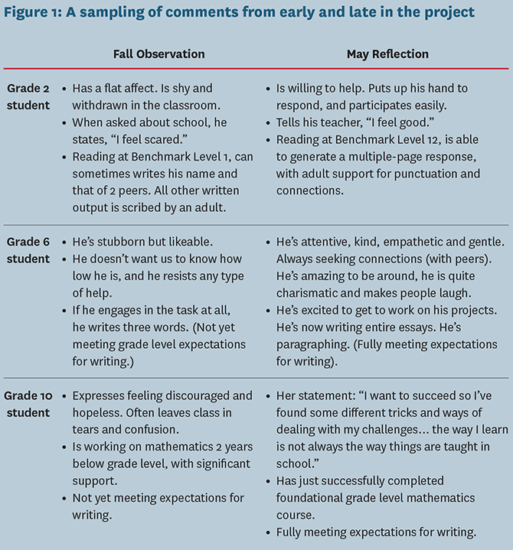
Charting a course
The conversation in our initial gathering was challenging. The planning team noticed that most of the data focused on poor student engagement and the challenges the teachers were having to adapt the curriculum in a way that met their students’ needs. We had very little data describing areas of strength that we could use as a springboard for further work. At the same time, it was clear that the teachers had chosen their focus students because they were actively seeking new ideas and strategies. These were hard kids to figure out, and their teachers were concerned about them. Helping the teams find a way to engage these vulnerable learners and include them in the classroom community became the most important place to start.
Teaching to ALL
For our first full afternoon together, the Case Study team explored the ideas of Universal Design for Learning (UDL) and differentiated instruction. Our district had been working with Shelley Moore,1 a consultant who is passionate about inclusion. Shelley talks about beginning at a place where everyone can access the learning, rather than teaching to the middle and adapting from there.
Using some of Shelley’s templates, as well as our own model, we introduced the concept of “all, most and some” in developing unit and lesson plans. Jolin Olson, Case Study participant and classroom teacher in a multi-age (8-10) program, explains:
“Planning in a multi-age classroom was almost overwhelming in the beginning, however if I structure my lessons according to Shelly Moore’s idea of “all, some and few,” the teaching becomes very fluid and all of the students feel involved and successful.”
Our goal was to provide whole-class instruction in a way that included all students, not in an adapted or “sit-with-an-education-assistant-at-the-back” kind of way, but in a “we-picked-a-starting-point-everyone-can-launch-from” kind of way. (See Figure 2.)

When we checked in with teachers a few weeks after our initial planning meeting, they reported that they were more aware of ways to include all students in lessons, but that they needed some tools to be able to do this in a seamless and sustained way. When we met in January, we split into three groups, and each facilitator modelled a whole-class lesson using the differentiated planning templates in combination with instructional strategies and technology tools. Our goal was to demonstrate how whole-class lessons could be moved into individual student work in an inclusive way. Strategies and resources were selected based on the feedback and questions we’d received after the first session. One group focused on reading response, a second on intermediate mathematics, and a third on secondary mathematics.
Three weeks later, the teams completed a survey to identify which tools were being used successfully and which needed more support or adjustment. The facilitators then joined planning conversations and visited the classrooms of the individual teams, to provide additional coaching.
The mid-year blues
Like most long-term projects, we hit a bump in the road. As we approached our April session, several teams were concerned they would have little good news to share. Some of the students had started off well, but had not sustained their high levels of engagement or success. The teams had jumped in enthusiastically with their initial changes, but we were working with structures and strategies that were new, and lessons hadn’t always worked as successfully as they’d envisioned.
Fortunately, these dedicated, empathetic educators weren’t stepping away from a challenge. We offered additional training and support, and the teachers tweaked and adjusted their approaches.
Our conversations continued through the spring, and for our final session in May, the facilitators moved from a focus on whole-class lessons to a focus on personalizing the tools for individual students. Participants were looking for ways to add additional layers and options for their classes. They were once again excited to share the progress made by their focus students. We had come through the period of frustration and worry, and now had much to celebrate.
Participant Janis Proctor, a Grade 6/7 teacher, describes how things shifted for her:
“I have seen students become more in charge of their own learning… We introduced new tools to ALL of the students without suggesting which students should use which tool. We let them decide what would help them the most. There were so many ways that students accessed these tools, and this changed depending on what the assignment/task was. This is such an important step in them becoming more reflective about their own learning. It put them in the driver’s seat!”
Reflections
Each session was designed to address the questions or concerns raised by the participating teams. At each gathering, we engaged in reflection and problem solving, and prompted participants to consider specific questions in terms of identifying students’ strengths and lagging skills. We explored teaching strategies and resources to support their focus students, and encouraged teams to work together.
Learning Services Teacher Julie Whynacht summarized her experience this way:
“There were many students that this case study project benefitted in our school. In fact, students who were not even on our “radar” use the tools that we introduced on a daily basis. These tools have supported both their academic growth and their overall self-confidence in their own learning. It helped to create a voice for each student – as each student learned something about themselves as learners.”
Personalizing learning for the adults allowed them to personalize it for their students. For me, this is the true benefit of this project. We began with a conversation about meeting the needs of a highly vulnerable group of individual students. Today, we continue to celebrate and deepen our capacity to provide personalized, differentiated learning for all.
For more information about the EdCan Network’s Educator Well-Being: A Key To Student Success Symposium
Photo: iStock
First published in Education Canada, September 2017
1Shelley Moore, Blogsomemoore: Teaching and Empowering all students. https://blogsomemoore.com
-
Second-Hand Harm
Comments Off on Second-Hand Harm“What do you think Mommy would say if she saw you doing that? Do you think she would be happy?”
“Just leave him, he has been crying for no reason all day. He does this every single time he is dropped off.”
Emotional well-being. Mental health. We know these are important – but we don’t always recognize that it is as important to pay attention to educators’ mental health as to students’. In fact, student mental health, in many ways, relies on the emotional well-being of the educator. How so? The emotional well-being of the educator is critical in building a strong and positive teacher-student relationship. There is widespread agreement in the literature that teacher-student relationship quality is directly associated with increased academic achievement, social-emotional development, and decreased behavioural challenges. Researchers have even found that highly sensitive teachers may “buffer the effects of a negative family context for children who have insecure attachments with their mothers by reducing children’s risk for aggressive behavior.” 1
When teachers’ well-being is compromised, there is increased risk of misconduct towards children in their care. Educators who identify higher levels of work and personal stress report a decreased use of effective approaches towards child guidance, and reduced amount of time being spent on developing positive relationships with children with challenging behaviours. 2
Children who exhibit challenging behaviour such as disruptiveness or inattention may add an immense strain to resources, and educators may quickly become frustrated with the children and engage in power struggles, negative reactions and verbally abusive behaviour. While it seems the teacher’s actions occur in response to challenging behaviour, there must also be careful consideration given to the opposite notion. Educators must be reflective of the role their own depression, anxiety, and stress may have in influencing children’s behaviour.
Despite anecdotal concerns expressed by students and their parents, sensationalized media reports, and legislation developed to prevent and address maltreatment by educators, raw and honest discussions of classroom management strategies that may be emotionally damaging to children are often lacking among colleagues and in empirical research. But these dialogues must take place if we are to destigmatize getting support and deepen the culture of trust among peers. This is why attending to educator mental health must be a shared priority for all those working in or researching education settings.
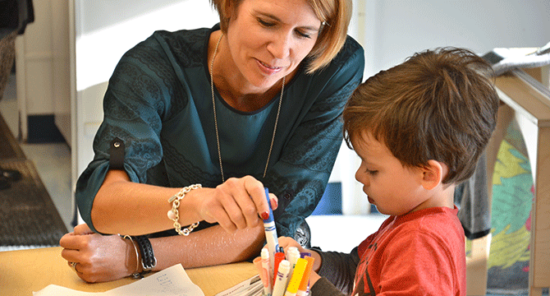
High quality teacher-student relationships are characterized by warm and respectful bi-directional interactions, strong emotional support, high levels of closeness and low levels of conflict. Educators in high quality relationships with their students provide a supportive environment that promotes emotional security and student confidence, even when difficulties arise.
On the other hand, in environments where there are high levels of conflict or negativity such as yelling, sarcasm, irritability, or rigidity, there are often low levels of positive, individualized communication with each student. While factors such as child-to-teacher ratios and rotation among teachers for different subjects influence the quality of teacher-student relationships, the capacity to build high quality relationships is equally dependent on the educator’s own emotional well-being. Of course not all, or even most, educators who are highly stressed engage in overtly negative interactions; however, they may become less engaged with and attentive to their students, with minimal individualized interactions or indifference/unresponsiveness to the unique needs of each student. Such “average” relationships are not benign; they parallel a reduction of potential regarding the child’s development in these areas.
Discussions of abuse by educators can be emotionally charged and embedded in controversy. The Government of Canada, Department of Justice (2013) states that emotional abuse and/or psychological abuse is “when a person uses words or actions to control, frighten or isolate someone or take away their self-respect.” 3 Educators across Canada are bound by codes of ethics and standards of professional conduct that acknowledge the educator’s special position of both trust and power. Though the criteria for these standards differ slightly across the country, the common goal is to treat children with dignity and respect at all times.
The vast majority of educators establish positive relationships with children that support their development. But it is important to acknowledge that some educators may be unaware of the impact of their behaviour on children. Abusive conduct does not require an abusive intent on the part of the educator, and ignorance or good intent does not lessen its impact.
Yelling at students, disguising and promoting an imbalance of power as part of regular practice (“Because I said so”), rejection, shaming, degrading, humiliating, or singling out one student to criticize and punish, using emotional messages intended to invoke fear or guilt – these are all emotionally and psychologically damaging behaviours that should not take place in educational settings. Ignoring a student, being unavailable or unresponsive to a student’s needs, are acts of omission that can also be damaging.
Damaging behaviours such as those listed above do occur, and are often associated with depression, anxiety, or stress in the educator. Educators who are struggling with mental health and/or emotional well-being may not recognize if they are conducting themselves in an inappropriate or potentially abusive manner, or understand the influence their actions may be having on the child’s own behaviour and mental health. Candid discussion among colleagues and administrators is essential for peer support to address expectations of appropriate conduct. So is increased support to help reduce stress in teachers who are struggling, and a reduction of the stigma surrounding the admission that help is needed.
When children have an emotionally positive experience in school, this can be expected to positively influence the child’s functions at home, school, with peers and in the community. As educators, we must begin prioritizing our own mental health, and taking the time to care for ourselves, so that we never lose sight of the impact we may have on a child.
Notes
1 E. Buyse, K. Verschueren, and S. Doumen, “Preschoolers’ Attachment to Mother and Risk for Adjustment Problems in Kindergarten: Can teachers make a difference?” Social Development 20, no. 1 (Feb. 2011): 33-50.
2 C. Li Grining, C. Cybele Raver, K. Champion, et al., “Understanding and Improving Classroom Emotional Climate and Behavior Management in the ‘Real World’: The role of Head Start teachers’ psychosocial stressors,” Early Education & Development 1 (2010): 65-94.
3 Government of Canada, Department of Justice, About Family Violence (2013). www.justice.gc.ca/eng/cj-jp/fv-vf/about-apropos.html#emo
Images: Rob Newell, courtesy West Vancouver Schools
-
The E-Principal
Comments Off on The E-PrincipalCANADA’S SCHOOL LEADERS report a seemingly paradoxical work life: while the career path of the principal is extremely rewarding, it is characterized by unsustainable hours of work, high levels of psychological demands and role overload. These conclusions are underscored in the 2017 report A National Study of the Impact of Electronic Communication on Canadian School Leaders, a study led by André Lanctôt and Linda Duxbury, both of Carleton University. This report was the first instalment of a two-phase collaborative effort sponsored by the Canadian Association of Principals (CAP) and undertaken by the Alberta Teachers’ Association (ATA). 1
This article examines the impact of electronic communications on the work of school leaders, drawing on the full report2 with the anticipation that readers will look to the published report for further context.
Email: A double-edged sword?
Why a study on email use? Simply put, electronic communication, such as email, has become the pervasive form of communication at work. One study of employed Internet users found that most employees feel email is very important for doing their job — more important than other forms of communication used in the workplace such as landline telephones, cellphones and social media sites.3
Some see email as a work tool that can help them balance work and family, while others see it as a taskmaster that never sleeps. But which is true? What is the link between the volume of emails a person processes per day and employee and organizational well-being? What is the link between the types of emails a person sends and receives and employee and organizational well-being? How can employees and organizations manage electronic communications to maximize the benefits of the technology while minimizing the drawbacks?
The study designed by Lanctôt and Duxbury aimed to improve our understanding of how principals evaluate and process work-related email, linking this email use to outcomes of interest to their school system or jurisdiction. Based on responses from 1,150 members of the CAP, the research team identified a complex relationship between email use and the growing role overload experienced by school leaders. Some of the highlights of the study:
- On average, school leaders send/receive 112 work-related emails each day, including 27 work-related emails from home.
- In their average 61-hour work week, a typical Canadian school leader spends 17 hours processing email, including 5.8 hours at home.
- The hours spent in email per week is a stronger predictor of email overload than the number of messages sent and received per week. 4
- Principals who spend 20 hours or more per week processing emails will likely experience high levels of email overload.
- 5 per cent of respondents report high or moderate levels of email overload.
- 86 per cent of respondents report high or moderate levels of work-role overload.
- 5 percent of respondents report high or moderate levels of job stress.
Citing a growing body of research from across the globe, the study concludes that email overload is a symptom of deeper cultural and technological shifts globally affecting the organizational life of schools, and is associated with work-role overload and work-related stress for Canadian school leaders.
Email overload has real implications for school leaders, affecting their well-being and their ability to do their jobs (see Figure 1 and Figure 2).
Figure 1 Figure 2
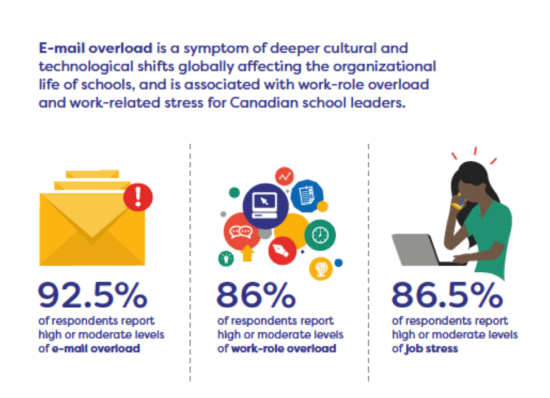
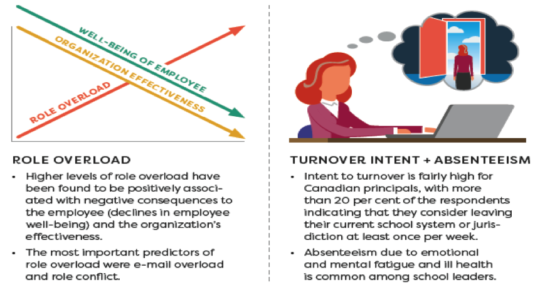
(source: graphics from the study’s summary document, You’ve Got Mail.)
School and system cultures are nested within the broader social milieu shaping the ecology of email use; consequently, change will require strong leadership and commitment from all levels of the organization. Managing expectations and norms at the individual and organizational levels is key, especially if one considers the following key indicators of work intensification:
- Nearly 90 percent of the sample reported high or moderate stress scores. Only 11 percent reported low levels of perceived stress.
- More than half of the CAP respondents consider leaving their organization at least once per month, and more than one in five consider leaving at least weekly.
Managing mail
The study uncovers a strong link between time spent on email and email overload. While the number of hours (17) per week that principals spend processing email is of interest, the real story here is that email overload contributes to outcomes associated with poor organizational health, since it is strongly associated with role overload and job stress.
Given these findings, the researchers suggest that school boards help principals manage the overload precipitated by email and, perhaps more importantly, address the organizational culture that tethers school leaders to tasks that do not enhance their capacity to do their work. They identify strategies for triaging electronic communications. These include both organizational and personal changes, ranging from establishing clear expectations and policies surrounding email use to individuals setting more parameters around the ways they monitor, answer and organize their emails.
The study’s recommendations reinforce a growing body of research on the work life of school leaders. For example, The Future of the Principalship in Canada: A National Study 5 found that the ubiquity of electronic communication tools was diminishing the quality of work life for principals in three key areas: the growing central management and surveillance of school operations, increasing expectations to be available 24/7, and the sometimes pernicious use of social media among students (and in some cases parents) that contributed to cyberbullying and the deterioration of school climates. Policy pronouncements about the role of principals as instructional leaders are problematic given that, in the same study, school leaders struggled to find six hours in a 56-hour workweek to spend time in classrooms or in contact with teachers. The study also found that 90 percent of Canada’s school leaders report significant levels of work-related stress.
A growing body of international research illustrates how email is indeed a double-edged sword. Email overload is symptomatic of broader international trends related to the ubiquity of electronic communication tools in the workplace. The proliferation of information and communication technologies, if ineffectively managed or regulated, can affect the health of workers across all sectors. For example, in the U.K., the amount of time people spend typing, texting, talking or gaming through smartphones, tablets and desktops is now more than time spent sleeping. Human capital experts argue that this constant supply of technology consumption can lead to decision paralysis due to increasing stress, and lower productivity as people manage a broader range of data and communications and are overwhelmed by feelings of never being able to disconnect from their work.
AS WE CONTINUE TO monitor and reflect on the work life of school leaders in increasingly digitally saturated environments, future research efforts ought to consider the complex ecologies of schools nested in communities where technology continues to grow in its influence. We must remain mindful, as Marshall McLuhan reminds us, that we shape our tools and then our tools shape us. Therefore, future research ought to be grounded by the recognition that optimal conditions of practice for school leaders are not only critical for their work-life balance, but ultimately extend benefits to student success and to the school-community that school leaders serve.
Resources
The full report, A National Study of the Impact of Electronic Communication on Canadian School Leaders, is available on the Alberta Teachers’ Association (ATA) website at www.teachers.ab.ca. Click on Publications> Education Research. Ordering information for print copies is available under Publications> Other Publications.
The ATA has undertaken a number of other research studies examining the changing conditions of practice for Alberta teachers and school leaders. The following studies can also be accessed at www.teachers.ab.ca. Click on Publications > Education Research.
- The Changing Nature of Teachers’ Work – Teaching and Learning Conditions in Alberta: A Global Perspective (2015)
- A Week in the Life of Alberta School Leaders (2014)
- Reflections on Teaching: Teacher Efficacy and the Professional Capital of Alberta Teachers (2014)
- The 2011/12 National Study on Balancing Work, Life and Caregiving in Canada: The Situation for Alberta Teachers (2013)
- The New Work of Teaching – A Case Study of the Worklife of Calgary Public Teachers (2012)
- Impact of Digital Technologies on Teachers Working in Flexible Learning Environments (2011)
Notes
1 A second study, The Canadian School Leader: Global Forces and Future Prospects, offers a broad analysis of the critical influences shaping the work life of school leaders, specifically focusing on the changing characteristics of Canadian society, the role of commercial interests in education, and district supports for technology, inclusion and professional development.
2 André Lanctôt and Linda Duxbury, A National Study of the Impact of Electronic Communication on Canadian School Leaders (Edmonton, AB: Alberta Teacher’s Association and Canadian Association of Principals, 2017). (Special thanks to Dr. Lindsay Yakimyshyn of the Alberta Teachers’ Association, who shepherded the report through to publication.)
3 K. Purcell and L. Rainie, Technology’s Impact on Workers (PEW Research Center: Internet Science & Technology. www.pewinternet.org/2014/12/30/technologys-impact-on-workers/.
4 Email overload is a type of information overload: “a condition in which the volume of information exceeds a person’s capacity to process it.” (Thomas et al., 2006).
5 Alberta Teachers’ Association (ATA), The Future of the Principalship in Canada: A National Research Study (Edmonton, AB: ATA, 2014), p. 11.
Images: courtesy Alberta Teachers’ Association
-
Strengthening Teacher Instructional Practices in the N.W.T.
Comments Off on Strengthening Teacher Instructional Practices in the N.W.T.When we compare instructional hours, students in the Northwest Territories (N.W.T.) receive about four more years of schooling than their peers in Finland – and yet Finnish students’ achievement consistently ranks among the highest in the world,1 while N.W.T. students, the majority of whom are of Indigenous descent, continue to lag behind their Canadian counterparts.
So why are Finnish students starting at age seven, in school for just 632 hours (elementary) and 844 hours (secondary) per year,2 and excelling in their core subjects, while N.W.T. students are starting a year or two earlier, in school for 997 hours (elementary) and 1,045 hours (secondary) per year,3 and not doing as well or better?
It turns out that the quality of instruction is more important than the quantity of instruction. Research does not support a relationship between instructional hours and student achievement, but it clearly shows that well-prepared, quality teachers have a strong impact on student outcomes.4 “The amount of time spent in school is much less important than how the available time is spent, what methods of teaching and learning are used, how strong the curriculum is, and how good the teachers are,” states the OECD Educational Indicators in Focus Report (2014).5
While Finnish teachers spend fewer hours at the front of the classroom, they are able to devote more time to designing instruction and interventions that maximize achievement. They have time to ensure success, which strengthens their sense of efficacy and worth, and reduces the exhaustion and burnout.
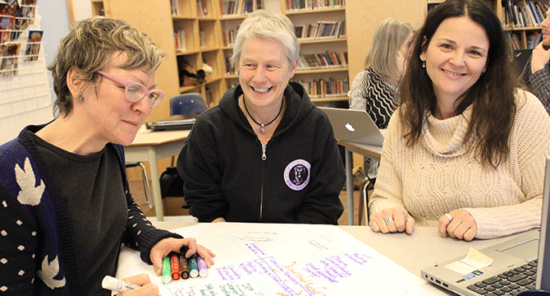
Overwhelming expectations
The professional expectations on teachers have expanded rapidly in the last few decades, with the change from a focus on teaching to a focus on ensuring student learning. Now, teachers must find time to work collaboratively to determine the Essential Learning Outcomes (ELOs) in the otherwise bloated curriculum guides for each and every grade and subject, and to ensure that all students, even those who do not attend regularly, are making the best possible progress. To that end, teachers complete frequent pre- and post-assessments to know each student’s strengths and stretches in relation to the ELOs. With that information, teachers prepare evidence-based lessons that differentiate and maximize growth for each student. Further, the best teachers engage students and their parents in setting short-term goals for improvement.6
Education in the 21st century, and in Indigenous cultures, must take into account the whole person – teachers are expected to impart not only academic teachings, but also the values and skills that help a child grow into a competent adult. Teachers in the N.W.T. also build their programs on the foundation of Aboriginal culture, and deliver them in a more Indigenized way. And these skills, attitudes and world views – incorporating concepts like truth and reconciliation, self-regulation, resilience, and a positive sense of identity – take time to learn and understand.
Quality teaching and learning, as described above, is a monumental and insurmountable task in a 40-hour work week, considering that for the majority of that time (up to 30 hours) teachers are in front of the class (compared to 18 hours a week for Finland’s teachers).7 Teachers also prepare report cards, supervise children on their breaks, and are extensively involved in student extra-curricular activities. The list goes on.
With so much to accomplish, N.W.T. teachers report working over 52 hours a week on average. If we take a moment to do the math, some teachers are working 2,028 hours per year, compared to other government employees who average 1,725 hours yearly. And that’s after their respective vacation times have been subtracted.8 It’s no wonder teachers feel increasingly stressed by their job demands. This phenomena is not isolated to the North – across the country, teachers are doing more while having less time to recharge. Teacher workload studies, conducted by teachers’ associations across Canada, consistently report that teachers work 50-55 hours each week.9
The N.W.T. STIP Initiative
Starting in the 2017-18 school year, as a result of negotiations between the N.W.T. Teachers’ Association (NWTTA) and the Government of the N.W.T., schools were permitted to submit proposals to redirect up to 100 hours of instructional time divided evenly between teacher professional duties and collaborative professional learning. This Strengthening Teacher Instructional Practices (STIP) time still ensures that students in all grades are in class for a minimum of 945 hours per year – a number more in line with the majority of Canadian provinces, though still much higher than Finland.
The STIP proposals require majority agreement of the school’s teachers, and further approval of the superintendent, the assistant deputy minister, and the president of the NWTTA. It is the locally elected District Education Authority (DEA) that approves the school year calendar, so the principal must ensure the calendar meets legislative requirements and receives the DEA’s approval.
How schools are responding
Principals, teachers, and their local DEAs worked together to determine what would work best for the parents, students, and staff of each community. They analyzed past school attendance records and considered the implications that schedule changes could have on things like busing and childcare. While schools were given the autonomy to determine how to redistribute the time, they were all required to approach the task with the same priority: to improve staff and student wellness and achievement.
For some schools, this means Friday afternoons free of student contact time, giving students an early start to their weekend and staff a chance to decompress as well as plan for the next week. For others, Monday mornings have the poorest attendance, making that the logical STIP time. And a few chose to attach full STIP days to holidays and other breaks through the year.
At Paul W. Kaeser High School in Fort Smith, classes used to begin at 8:30 a.m. sharp. But student attendance and tardiness is an issue in the mornings. So in 2017-18, students will begin their lessons at 9:10 a.m. as their teachers take the first 40 minutes to analyze student assessments, share strategies, and prepare more effective lessons. Principal Al Karasiuk, one of Canda’s Outstanding Principals in 2012 (The Learning Partnership), says, “We are going to work towards very specific data analysis – understanding the data, setting short-term goals to target learning outcomes, and ensuring that the kids are ‘getting it.’”
While the teachers are hard at work, students will be invited – and bused – to arrive early to school and enjoy a free hot breakfast and a slow start to their day in the foyer. Educational assistants will be available to supervise, tutor, and facilitate morning extra-curricular activities.
Karasiuk sees his proposal as a win-win for both staff and students. Teachers will have time to orient themselves for the day and collaborate with their colleagues, while the teens will be able to snag an extra half an hour of sleep or fill up on the oft-touted “most important meal of the day.” By the time the instructional part of the day officially starts, they are more likely to be rested, well-fed, and prepared to learn.
Deninu School in Fort Resolution, a small community of 500 Chipewyan people, kept the importance of teamwork at the forefront when redirecting 74 hours. The school has had success hiring educators who have been teaching internationally, in places as far away as China or South Korea, before deciding to return to Canada. But Beijing and Seoul are very different from the N.W.T., and when asked for their feedback on how the hours might be redistributed, the current teachers reported that a few extra days near the beginning of the year to help ease them back into the Canadian curriculum, and to get support with the development of integrated year plans, would be helpful.
The other STIP days are dispersed throughout the year, in line with Deninu School’s planning cycle. Every four to six weeks, the staff will have time to meet and prepare for the upcoming units they will be teaching. “We chose to schedule full days of STIP time,” explains Principal Kate Powell, a co-recipient of a Premier’s Award for Excellence and a Ministerial Literacy Award. “To have meaningful conversations and collaboration, teachers suggested that we needed long periods of time. We plan to use the mornings of these days for collaborative planning, marking, assessing, and goal setting; and then the afternoons for teachers to work independently incorporating the morning’s learnings in the preparation of their units and lessons.”
The value of Professional Learning Communities
Professional Learning Communities, or PLCs, have long been proven as one of the best strategies for ensuring all students learn at high levels. In what is touted as the largest ever evidence-based research in education, Hattie synthesized those factors that the research shows to have the greatest impact on student achievement, with Collective Teacher Efficacy ranking the highest.10
Frequent PLC meetings provide opportunities for teachers in similar grade or subject areas to work together to address challenges and share best practices, driven by actual classroom evidence. The result is stronger, more confident teachers who no longer feel isolated in their concerns about students or the curriculum. By sharing and learning together, teacher wellness and effectiveness is supported and enhanced.
Expected results
A quick search of the Internet shows that teaching is often rated in the top ten most stressful professions, and our educators are facing increasingly high expectations in regard to unique student needs, cultural relevance, truth and reconciliation, accountability, testing, and student achievement.
As counter-intuitive as it may appear, the evidence suggests that reducing instructional time can result in more effective instruction and in more students achieving their potential, provided the “found” time is used for teacher professional duties and collaborative planning.
By giving teachers up to 100 hours of collaborative professional learning and working time throughout the school year to be more effective, we are hopeful that we can offset the high number of hours they work each year, while increasing their job satisfaction and well-being.
If the expected results occur, more teachers will be energized to come to work every day instead of feeling emotionally exhausted. Improved wellness should lead to less sick time and less money spent on substitute teachers (who are in extremely short supply or unavailable in most small outlying communities), resulting in a more stable, supportive environment for our students to grow. We are hopeful that the domino effect will include students being motivated to come to school, attending regularly, performing well on tests, and graduating in larger numbers.
The evolution of education demands a culture of both wellness and success in order for both staff and students to thrive. Along with the partners involved in this pilot project, we are keen to monitor and evaluate its effects on staff and student well-being and achievement.
Photo: courtesy Curtis Brown and Sarah Pruys
First published in Education Canada, September 2017
1 Programme for International Student Assessment, “PISA 2015 Results in Focus,” Organisation for Economic Co-operation and Development (2016). https://goo.gl/TsLeC3
2 European Commission/EACEA/Eurydice, “Recommended Annual Instruction Time in Full-time Compulsory Education in Europe 2015/16,” Eurydice – Facts and Figures (Luxembourg: Publications Office of the European Union, May 2016).https://goo.gl/0T4tpm
3 Canadian Education Statistics Council, “Education Indicators in Canada: An international perspective,” Statistics Canada (February 13, 2015). https://goo.gl/GRcpUU
4 J. Hattie, Visible Learning: A synthesis of over 800 meta-analyses relating to achievement, 1st edition (London, New York: Routledge, 2009).
5 Organisation for Economic Co-operation and Development, “Education Indicators in Focus,” OECD (April 2014). https://goo.gl/SLE2gv
6 Adapted from the work of the DuFours in Learning by Doing: A handbook for professional learning communities at work, 3rd Ed. (Bloomington, Indiana: Solution Tree Press, 2016).
7 Kristen Lewis, “Lessons From Finland,” Scholastic. http://bit.ly/2qBQg1c
8 Government of the Northwest Territories, NWT Teacher Time and Workload Study (GNWT, January 2017). https://goo.gl/9XT24A
9 Compiled by C. Naylor, E. O’Neill, and K. Rojem, Teacher Worklife Research (BC Teachers’ Federation). https://goo.gl/HJxsYq
10 The larger the effect size, the more powerful the influence. Hattie concludes that an effect size of 0.4 is medium and 0.6 is large. His research shows an effect size of 1.57 for Collective Teacher Efficacy.


IDEAS TO SUPPORT EDUCATORS : Subscribe to the EdCan e-Newsletter
Quality research, reports, and professional learning opportunities.