Archive
-
Professional Development Starts with a Learner Mindset
Comments Off on Professional Development Starts with a Learner Mindset“It is difficult for teachers to create, for their students, experiences and social conditions they have not experienced for themselves.” Brown & Cherkowski
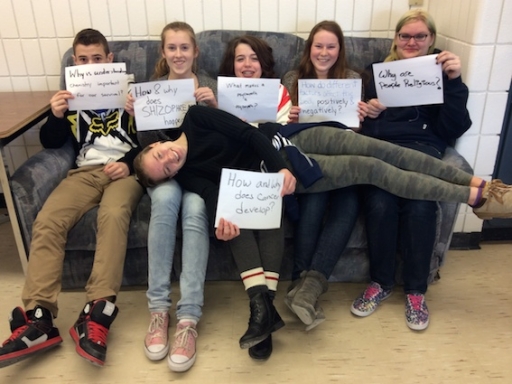
BUILDING MY IDENTITY AS A LEARNER, RATHER THAN A TEACHER
-
Five Ways for Teachers To Take Charge of Their Own Learning
Comments Off on Five Ways for Teachers To Take Charge of Their Own LearningIn Manitoba there are traditionally five provincially mandated PD days per year. This year the topics for the first four of my school’s PD days were ‘Cultural Proficiency’ (a division sponsored event), an ‘EdCamp’ (facilitated by division coordinators), a day where teachers work with other teachers from around the province in their teaching area, and a school-based session on ‘Deeper Learning and Critical Thinking’ with support from a division coordinator. Our final day will be on the topic of ‘Positive Behaviour Interventions and Supports’. We will join one of our feeder elementary schools, and the day will be facilitated by divisional educational support services staff.
Although these sessions have all been of great value, and have resulted in many thoughtful conversations, the days are somewhat disjointed. The topics for each day are chosen by divisional administration or school-based administrators, without the input of the teachers that will ‘benefit’ from the PD sessions. To make these PD days more valuable, teachers need to keep the conversations going on these important topics for deep learning to occur, or this ‘one size fits all’ model needs to be abandoned for a more teacher directed PD model. If teachers are in charge of the topic of their personal PD, they will be more likely to own this time and use the division sponsored PD days as a catalyst to deeper learning and connections to other professionals within their own building and beyond. Teachers need going beyond the four or five division sponsored PD days to ensure personal and professional growth.
HERE ARE FIVE WAYS THAT I FEEL THAT TEACHERS CAN MAKE THIS HAPPEN:
1. LEVERAGE TECHNOLOGY TO PERSONALIZE YOUR PD
PD for teachers need to be relevant, flexible and personalized for sustainable growth to occur for both new and experienced teachers. Technology can and should be a major driver of relevant and real time PD. There should be an expectation that teachers are in control of, and responsible for, enhancing their practice during and after the school day. Administrators can set up schedules to encourage sharing and collaboration. No longer can teachers be isolated in their own classroom and keep up with the demands of teaching in today’s world. PD needs to be ongoing, job-embedded, and connected in a significant way and happen more frequently than the four or five division or school sponsored PD Days.
Teachers, as professionals and learners, need to be in charge of, and responsible for, their own learning. Opportunities can be provided by division and school-based administrators for teachers to work together, learn together, and solve problems together. Technology is key to help connect teachers locally and globally. Using social platforms like Twitter can provide teachers the opportunity and flexibility to collaborate in real time with educators from around the world in real time.
2. CREATE OPPORTUNITIES FOR HANDS-ON PD WITH YOUR PEERS
To foster a culture of learning in a school, strong relationships need to be built, which includes teacher-to-teacher relationships. New pedagogies for deep learning is a focus for many schools across Canada. Deep learning happens when teachers focus on skills like character education, citizenship, communication, critical thinking and problem solving, collaboration, and finally creativity and imagination. The same goes for teachers too. If teachers aren’t proficient in these areas, it’s hard to expect them to teach or assess students who are expected to learn these important skills as well. According to Evangeline Harris Stefanakis, “The word assess comes from the Latin assidere, which means to sit beside. Literally then, to assess means to sit beside the learner.” Teachers need to able to ‘sit beside’ the learner and model these expected skills. Connected teachers, in effective Personal Learning Communities (PLCs), are more likely to grow their practice and attain a higher level of practice.
Using technology and social media are not silver bullets for teacher PD – it can and should happen within the school day as well. Scheduled times for teachers to meet, co-teach, visit other classrooms and schools are important aspects of professional growth. Encouraging teachers to share and collaborate will enhance teaching and learning in the classroom especially if it is done within a family of schools. This hands-on approach while working directly with colleagues encourages further development of the skills that are being taught to students in the classroom.
3. CULTIVATE YOUR PERSONAL LEARNING COMMUNITY (PLC)
For teachers entering the profession, building a strong PLC and collaborating is the best advice I can give. Getting connected through the use of social media is an easy and effective way to consistently learn and grow, stay relevant and have fun. An example is by taking part in ‘edchats’ on Twitter is a great way to build a PLC. There are so many smart people out there, constantly doing innovative things. What I’ve come to understand is that someone else is probably already doing it and seeing their ideas and adapting them to fit my situation is far more practical than inventing new ways to support and engage students.
Taking care of and engaging kids in deep learning is our job and finding ways to become a champion for their students is vital. This is a great video for all beginning teachers (and ones who have experience) as well. I suggest that this video be watched on an ‘as needed basis. It’s a great reminder of what good teachers do every day.
Building strong relationships with all of students is rewarding work and can be, at times, extremely difficult. New teachers need a support system to develop skills to be able to do this well. Supporting teachers new to the profession and encouraging them to build their own PLC will help them meet the demands of their important job.
4. BE ‘SOCIALLY’ CONNECTED WITH YOUR PEERS
Social platforms like Twitter don’t provide the PD. Social platforms provide the opportunity to build strong relationships with people, which, in turn, provide the opportunity for real professional growth to occur. Twitter is the gateway to find articles, blogs, have discussions build relationships with other professionals with like (or unlike) views on similar topics.
Learning is social. It begins when a strong relationship is formed. The quote ‘You can’t take care of the Bloom’s stuff until you take care of the Maslow’s stuff’ also applies to teachers. Learning occurs when people feel safe. A teacher who is connected feels safe and therefore will likely be more open to and adept at taking chances allowing them to navigate the confusing and often times uncomfortable seas associated with professional growth.
5. BE A MODEL LEARNER IN YOUR SCHOOL
PD for teachers should look similar to what good teaching looks like for students. It needs to be personalized, hands-on, relevant, and provide opportunities to build strong relationships with colleagues. Technology and social media can play a huge role in having all teachers build strong relationships with people within their own school and all over the world. Having a school filled with a group of connected teachers who are modelling learning, and continually sharing, helps to build a school’s culture of learning for everyone.
This blog post is part of CEA’s focus on the state of Teacher PD in Canada, which is also connected to Education Canada Magazine’s Teachers as Learners theme issue and The Facts on Education fact sheet, What is Effective Teacher Professional Development? Please contact info@cea-ace.ca if you would like to contribute a blog post to this series.
-
Teaching is a ‘Way of Being’ – Part 1
Comments Off on Teaching is a ‘Way of Being’ – Part 1
Excellent teaching requires that teachers possess a particular way of being—not merely own a repertoire of recipes and protocols like the three-part lesson or inquiry lesson plans!
Now, be gentle with me!
-
Effective Teacher PD in Canada in the New Millennium
Comments Off on Effective Teacher PD in Canada in the New MillenniumWhat constitutes effective educational professional development (PD) in a rapidly changing diverse country like Canada? Well, given that our nation is vast, stretches in all directions, consists of ten provinces and three territories, and boasts a multiethnic, multicultural and multi-linguistic population of over 34 million people, PD is going to look remarkably different from one region/community to the next. It may even look different from one school to the next within the same community. And in our minds, it should.
The “one-size-fits-all” PD session that many educators lament about cannot address the educational requirements for teachers and educational leaders in the new millennium. We are hardly the first writers to have observed this. From our research and experience, as well as drawing from the interactions with many graduate students in our leadership program – many who are studying online with us from across Canada – we continue to wonder and worry if this isn’t the PD process that many districts across our nation are still employing. In fact, many of our graduate students are confirming what we suspect – that is, PD is vertically driven from the top down and educators have minimal input for the PD that their districts are directing them to engage in. This may leave many educators unsure how the PD they are involved in within their schools and districts supports them in their work with students they teach.
In this era of increasing accountability for educators in North American schools, PD is often dedicated to simply raising tests scores for children[1]. Though we support PD in core curricular subjects, we also believe teachers require PD support in other important areas, especially given the changing nature of the schools and communities they work in. Our current research interest lies with the demographic changes occurring in Canada and how to effectively help teachers respond to them. All over Canada, communities are changing rapidly – not only in the mega-city landscapes that we have drawn extensively from the past few years [2] [3] [4]. Rural regions across Canada are also undergoing change and it is in this context that we would like to suggest that educational leaders consider PD topics that are focused on supporting educators working in their increasingly diverse communities. We argue that it’s equally – if not even more important – to help students and their families in Canada increase their cultural understandings and competencies, share their histories, values, knowledges and worldviews. We advocate for schools and district leaders across Canada to lead the way.
First and foremost, we have to help children get along with each other
In our mind, we believe this is a more profound and effective form of PD for our ripening diverse Canadian society. Admittedly, we might not make this claim if we felt PD was consistently focusing on topics related cultural diversity in our country. We do not believe there is enough being done. We have the fear that if our children cannot get along together, do not know much about each other and cannot break the shadowy stereotypes about each other and their families that they may harbour, it may not matter how well they can read or perform math operations in the future.
Effective PD is focused on topics related to diversity that will help “teachers transform their instructional practices and classrooms and enable them to build their capacity to function effectively in highly diverse classrooms and schools”[5]. This should take place in both urban and rural contexts, everywhere. Essentially, teachers would be encouraged to learn more about how to serve children from multiple linguistic, religious, racial and cultural backgrounds. Our university institutions have an opportunity to help in this educational process by initiating lead action on this as new teacher candidates enter education programs across each year. New and experienced teachers in Canada will be educating students who will be living in a diverse, globally-networked society and using digital technologies that put them in touch with people from all over the world. Most importantly in our thinking, it does not matter if students exist in a monoculture dominated by one language, which still occurs across Canada in many rural regions. These children, even more so perhaps, require diversity education and it is important that educators help children understand their own worldviews, backgrounds and values, before they engage children who do not see the world as they do, do not practice the same religion or speak the same language. There is no question in our minds; children in Canada will engage multiple cultures and languages. They need to be prepared to do this effectively and their teachers need to help them do this.
Related Reading
Lyle Hamm wrote this feature-length article in the Nov 2014 issue of Education Canada Magazine.The Culturally Responsive Classroom
A proactive approach to diversity in Canadian schools
http://www.cea-ace.ca/education-canada/article/culturally-responsive-classroom
This blog post is part of CEA’s focus on the state of Teacher PD in Canada, which is also connected to Education Canada Magazine’s Teachers as Learners theme issue and The Facts on Education fact sheet, What is Effective Teacher Professional Development? Please contact info@cea-ace.ca if you would like to contribute a blog post to this series.
[1] Starratt, R. J. (2005). Responsible leadership. The Educational Forum, 69, 124-133. https://login.proxy.hil.unb.ca/login?url=http://search.ebscohost.com/login.aspx?direct=true&db=eric&AN=EJ683738&site=ehost-live&scope=site
[2] Lund, D. (2008). Harvesting social justice and human rights in rocky terrain. The Ardent Review, 1. 62-67. http://www.arts.ualberta.ca/~aadr/contentsvol1no1.htm
[3] Ryan, J. (2003). Leading diverse schools. Dordrecht, NL: Kluwer Academic Press.
[4] Stewart, J. (2007). Children affected by war: A bioecological investigation into their psychosocial and educational needs. Unpublished doctoral dissertation, University of Manitoba, Winnipeg.
http://search.proquest.com/pqdtft/docview/304401163/EACCE3FDC4E04F4APQ/1?accountid=14611
[5] Hamm, L. (2014). The culturally responsive classroom: A proactive approach to diversity in Canadian schools. Education Canada, 54(4), Web exclusive. www.cea-ace.ca/educationcanada -
Is Good Teaching Only for Students? What about the Teachers?
Comments Off on Is Good Teaching Only for Students? What about the Teachers?What doctor would be exposed to a new medical procedure then be immediately sent on their way to perform the procedure on a patient? What reputable company creates a new product to sell, but only gives a one-time training session to representatives, then expects glowing results in sales? These things would just not happen, yet we as educational leaders do it to teachers all the time. We find a new teaching strategy or a new idea on how students learn best, we gather all our teachers together to sit and listen to a speaker explain it, then we send the teachers back to their classrooms, expect them to implement the new strategy perfectly for immediate results and ask, “has student learning increased?”
Of all the things we should put the most consideration to in education, it is on teacher professional development (PD). They are the front line people. They have the most influence on student learning. But what and how should that PD be provided? We talk a lot in education about differentiation and for teachers to find out how their students learn best, investigating in the first days of school each students’ learning style, then adapting lesson plans accordingly, using a “universal design for learning” lesson plan. This is all well and good; however, we fail to recognize all these good teaching practices when we, educational leaders, are planning PD for teachers. The fact that even the word “we” is used in this last sentence is in and of itself something that should be considered. Should it be “we” determining what PD each and every teacher gets? A new teacher does not need the same PD as a veteran teacher. Not every teacher is at the same place as their colleague with their learning. And if there is a professional learning opportunity that is so mind-blowing that all teachers should hear it, that one-shot deal often does not change the teachers’ practice, thus has no effect on student learning anyway.
So what is needed for effective teacher PD?
First, we need to know how teachers learn. It’s great to teach teachers effective teaching strategies, but we can’t assume that teaching it to them is as straightforward as only requiring a presentation or lecture. In fact, it’s quite ironic that we continue to do that as more and more PD on effective teaching strategies and yet we tell teachers to move away from lecture style teaching to students. We have learned the importance of teaching to where students are in their learning and making the learning environment more inclusive with students involved. That begs for even more discussion, but back to the focus on teacher PD.We know that research indicates that lecture style of PD is not effective for everyone and would probably be considered the least effective way. And to top that, it does not support teachers during their time of teaching. We must remember, teachers do not have the luxury to practice a new teaching strategy to see how it works. Their evaluation of how they did must be done in the midst of doing the strategy, with twenty to thirty bodies in front of them critiquing. Yet, mastering a new skill does not happen overnight and a natural response would be to not continue with the newfound knowledge. Mastering takes much practice, re-adjusting, and massaging. The principal cannot alone “make” that happen. All teachers need to be involved with supporting, mentoring, and coaching, so that PD remains active. And the main source of PD should be in the area that the teacher is teaching in. There are certainly areas in teaching that are consistent, regardless of the subject, but the subject area takes it to another level of meaning and shows courtesy to the teacher in supporting their subject matter and respecting their interest.
If we, as educational leaders, want to be most effective in teacher PD, it would be to provide time during the week for teachers to be in their subject professional learning communities. During that time, teachers can examine student data together, develop interventions to ensure student learning, discuss innovative ideas on how to improve their teaching, offer support to each other, design lesson plans together, develop subject web sites for parent information and learning, share professional readings, develop common assessments, design intervention plans, implement specific teaching strategies and techniques, and plan meaningful professional development based on their needs. Even greater support by educational leaders would be giving teachers time to visit other classrooms to learn from their colleagues first-hand about an effective teaching strategy, while in progress. These methods of support allow for real, authentic, effective teacher PD which is continuous and active which is just good teaching to teachers. So yes, we need good teaching to students, but we must not forget about good teaching to teachers. Don’t you agree?
Related Reading
Nancy Matthews wrote this feature-length article in the Nov 2014 issue of Education Canada Magazine.The Courage to Lead Change
Making difficult changes to school culture requires perseverance – and a thick skin!
http://www.cea-ace.ca/education-canada/article/courage-lead-change
This blog post is part of CEA’s focus on the state of Teacher PD in Canada, which is also connected to Education Canada Magazine’s Teachers as Learners theme issue and The Facts on Education fact sheet, What is Effective Teacher Professional Development? Please contact info@cea-ace.ca if you would like to contribute a blog post to this series.
-
Learning in Flocks, Hives and Swarms
Comments Off on Learning in Flocks, Hives and Swarms -
Winning at PD
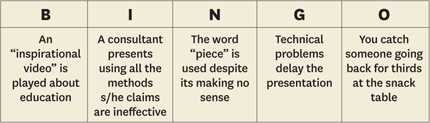
Comments Off on Winning at PDA teacher friend recently showed me a mock BINGO card. It’s allegedly to be played during bad professional development sessions, and it nicely captures how predictable and frustrating some PD events can be. The one-line sample below conveys the gist:
-
“Daddy, I Want You To Come To Shark School”
Comments Off on “Daddy, I Want You To Come To Shark School”My cell phone rang yesterday morning at about 8:00, just as I was making Sunday breakfast for the kids. My display indicated that the call was coming from an upstairs extension in my own home. Curious, I answered and was surprised to hear the voice of my five year-old on the other end of the conversation.
“Daddy, it’s your son. I want you to come to Shark School today at 12:35. Here’s what you need to bring: your backpack, something to write with and a snack!”
-
Sir, Can We Have Free Time?
Comments Off on Sir, Can We Have Free Time?I just poked my head outside the front door. It’s a little too early to tell but, judging by the size of the snow drifts on our street, I’m pretty sure that this will be one of those days when, at the very least, the “buses are cancelled but the schools are open”. One step below an official Snow Day, it will be one of those surreal days where the level of attendance is down but, in my experience, the level of excitement is up!
(more…) -
Defining Play
Comments Off on Defining PlaySister Valerie Van Cauwenberghe became a school principal in London, Ontario in the late 1960’s, just as the release of the Hall-Dennis report, Living and Learning, was threatening to affect a seismic shift in the way that public education in that province was to be imagined and constituted. Although the report left very few of the foundational stones of the public education system unturned, it was the move towards a more child-centred approach that most will remember as being the defining spirit of the time.
-
I Got Schooled
Comments Off on I Got SchooledI got schooled yesterday. A team of behaviourial specialists and a learning assistance teacher descended into my room yesterday to elementary-ify me.
A few months ago I brought up one of my learners to school-based team (a meeting where we discuss children who need more support) because of a huge lack of organization skills and behaviours that were interfering with learning in the classroom – that of this learner’s and the others in the room.
The support team walked through my classroom, observed the student, and interviewed me about the management systems I have set in place. It was then resolved that a make-over was in order.
Now, I do not claim to be an expert at teaching but in my old life I was a fairly good secondary school teacher. My Advanced Placement Literature students and I got along great. We’d sit in a circle and discuss the ins and outs of character development, metaphor, and imagery for the whole hour while sipping our tea, hot chocolates or coffees. We’d revise paragraphs for entertainment. High school is my comfort zone.
By contrast, I am writing this blog from a desk in my new context: a grade six / seven classroom at a neighbouring elementary school.
The contrasts between then and now strike me often – to my amusement and sometimes to my slack-jawed astonishment.
For example, at the elementary school when a fire drill announces itself with a shrill screech the children line up in silence. Then, they follow the teachers in single file out of the building – still in silence – and line up on the field – still in silence – where they wait – in silence – for further instructions. At the high school 900 or so people follow their teachers in formations that do not resemble lines to the nearest exit then burst from the building and move en mass in a cacophonic roar to the field where teachers and students find one another again and chat until the “all-clear” bell rings.
I look up from the list of changes I need to make and consider my classroom. I have bulletin boards decorated with borders and a variety of tools to make learning visible. Prior to this year I had no idea how to design a bulletin board.
I have a “flow of the day” chart that a student or I update every day so as to make it clear what each period will hold – in addition to the agenda on the board to announce what will happen within each period.
This is as elementary as I have gotten. But, this learner that I brought up to school-based team makes me realize that this is not enough.
I need to teach organization, which means…
- I am going to make friends with something I have avoided thus far: a label maker – and label each child’s cubby.
- I am going to make a strategy board, something that the behavioural specialist introduced me today. Based on the work of Sarah Ward, my strategy board will boast a photo of my classroom set up perfectly. Then, when it’s time to clean up at the end of the day or a period, I will point to the picture and my learners will scuttle around to make the room match the image. The board will feature other visual expectations like what the cloakroom should look like (I have a cloakroom in my class! Gone are the days of lockers to keep student paraphernalia out of sight and out of mind).
- I will acquire bins – then label them – so each child can have a place to keep all their learning tools.
- I will require each student to have a binder with colour coded dividers: red for art, green for math, yellow for out units of inquiry, etc.
- If I want to get really good at this elementary school thing I should photocopy handouts on coloured sheets to match the corresponding binder section. I don’t think I am ready for that.
- I will stop class early at the end of each period, wait until all 28 or so children have their agendas in hand then circulate to ensure that each student has written the homework into his or her agenda – and double check that they have written it onto the correct page. It is not enough to say, “okay everyone, take out your calendars and write down what is due for next class.”
- And, perhaps the biggest difference, I will create and use a marble jar so I can drop a marble into it to reward good behavior. Once the marbles reach certain markers on the jar, I will reward the class in some way which we all agree upon and are excited about.
Oh my.
I feel affronted by this list where each item points to a weakness I hadn’t known I had, weaknesses that would have passed unnoticed, perhaps, save for this student who needs something different. The result, of course, will be that all the students benefit.
I waver between being thankful that this student is providing me with such a well-supported opportunity to learn and bemused that I am constantly putting myself in these situations where I am vulnerable and taking a risk – and doing so in such a public way! It’s humbling.
Moving from high school to elementary school requires a growth mindset. Time to practice what I preach, roll up my sleeves and make a strategy board.
-
Teachers in Crisis: A Crisis in Teaching?
Comments Off on Teachers in Crisis: A Crisis in Teaching?Whenever I meet folks for the first time and they ask me what I do for a living, I always respond “I’m a school teacher”. Then I either get one of two responses. Response a) sounds something like “Nice! Summers off. Steady pay. Good pension.” while response b) is often more along the lines of “Wow! I do not know how you put up with those little (insert expletive of your choice here) all day. I couldn’t do it.”
Regardless of which comment I am facing, my response is usually pretty much the same for either. For a), I nod and smile and reply with “Yup! Best job in the world”. For b), I nod and smile and reply with“Bah! Best job in the world.”
Now, the mimicry here is not only because I truly believe teaching is the best job in the world, but rather because it is the best way to attend to the penchant people have for oversimplifying what I do. Yes, I do have summers off, steady pay and a fair pension, but even taken together, those three things are not what keeps me in teaching. They may, at one point, have drawn me into the profession, but they are miles away from representing the best of what I get out of it. Similarly, the kids can sometimes be a challenge, pushing buttons that I didn’t even know I had, but unless you have gotten into the wrong career, the kids should never drive you out. They can anger you, yes, frustrate you, certainly, and sometimes make choices or suffer fates that can devastate you in a way few outside the profession can comprehend. The kids, however, are not what makes teaching so difficult. What often makes teaching so difficult, in the name of oversimplification, is all the other “stuff” that is associated with the job.
And, according to a variety of sources, this “stuff” is starting to take its toll.
In November of 2014, a British educational organization called The Association of School and College Leaders (ASCL) released results of a survey which indicated that country is having a hard time finding teachers to fill positions. According to one BBC report, despite offering top B.Ed graduates bursaries of £25,000 (about $45,000 Canadian), teacher trainee programs have fallen some 6,000 teachers short of targets over the past three years. In some subjects, such as physics, recruitment targets were 67% below expectations.
Another report, carried by TES magazine, looked further into the survey results and found that a full two-thirds of head masters had been unable to recruit enough math teachers, and half reported not being able to fill science and even English positions, an area in which a lack of graduates has not traditionally been an issue. One expert predicted that, if this trend continues, many students will start courses in September of 2015 with an untrained teacher at the front of the room, or perhaps no teacher at all.
When asked to explain this sudden lack of interest in teaching, headmasters were quick to point out that increased workload, high pressure accountability, and “teacher bashing”, (read “stuff”) were exacerbating the problem. Add to that an increase in population in students and an improving economy where more careers are vying for university graduates, and you have a recipe for what some consider a potential educational “catastrophe”. The issue caused British Prime Minister David Cameron to launch a £67 million campaign partially dedicated to encouraging university graduates to enter into the teaching profession.
Alarm bells have not just been isolated to the UK. In July of 2014, a group called the Alliance for Excellent Education released a report on teacher attrition in the US which determined that in that country, “Roughly half a million U.S. teachers either move or leave the profession each year”, citing lack of support and poor working conditions as contibuting factors. In December of 2014, an article appeared on Forbes.com, fittingly entitled “It’s The Constant Criticism That’s Putting Teachers off Teaching”, which referred to the ASCL survey, and offered similar reasons for the high attrition rates. This trend is starting to have a huge impact on the already beleaguered American education system. In Arizona, for instance, there were over 500 vacant teaching positions still unfilled in September of 2014.
It is not only drawing teachers into the profession that is proving challenging, but keeping them as well. In 2013, a magazine called The Epoch Times carried a story in which McGill associate professor Jon G. Bradley came out in public with some fairly staggering statistics around Canadian teacher attrition rates. Speaking to The Montreal Gazette on the issue, Bradley estimated that nearly half of all new teachers are leaving the profession in this country within the first five years. According the Bradley, similar results are coming out of the US and Australia. University of Ottawa professor Joel Westheimer, also speaking to the Gazette, summed up the issue rather nicely when he said “Any other profession that had that kind of turn over would look at working conditions…and other things surrounding the teaching environment.” Westheimer also asked what a corporation like Microsoft would do if they were facing a recruitment shortage and high turnover rates in programmers, and speculated that they would look to improve working conditions, not test the programmers.
Westheimer is not far off the mark in his analysis. Large companies like Microsoft and Facebook are indeed facing an impending shortage of programmers and have responded very aggressively by developing something called The Hour of Code. An international initiative by major players in the communications world, The Hour of Code tries to interest students in programming as a viable career option by engaging them in fun, free coding exercises. The initiative also comes complete with promotional videos that show how good the working conditions are for programmers in some companies. Shots of open-space offices where folks zip around on skateboards and Segways abound, as do testimonials from fulfilled-by-their-career programmers.
Ironically, the Hour of Code is aimed at schools and designed to be delivered by teachers.
Teaching has never been an easy profession. Over the past ten years or so of my career, it has certainly gotten progressively harder for me. Like so many in my profession, I blame myself for that. I never feel like I am doing enough for the kids in my classroom. And, as I have commented many times, there seems to be no shortage of folks happy to tell me that I am right in that view. But even as some jurisdictions across the country and, indeed, around the world struggle with the issue of recruiting and retaining teachers, others seem content to ignore it. Content to continue to criticize and berate the system based on test scores, to dismiss concerns around working conditions as idle, unionist whining, and to remain somehow convinced that attacking teachers will improve education for students.
However, a word of caution.
Teaching is one of the few professions to which almost everyone has extensive exposure throughout their lives. As such, it is one of the few professions that kids get to see in action everyday. I think that it is this exposure and the impressions that are formed in the classroom that get young people thinking about teaching as a viable career option.
One wonders, however, what sort of impression about the joys of teaching the overburdened and undervalued educators of today are making on the graduates of tomorrow.
I love what I do. I love it despite the fact that it is something at which I will never be good enough. I also have little doubt that I, at least, will remain in the profession for the remainder of my career. However, if we continue to demand more and more from our teachers in the name of accountability and offer them less and less in the name of restraint, we run the risk of making the profession less and less attractive to the next generation.
A generation who may decide that summers off, a steady pay and a fair pension are not nearly enough to warrant putting up with all the other “stuff”.
-
Using Design to Listen Deeply to Our Students
Comments Off on Using Design to Listen Deeply to Our StudentsDo our children run into the school in the morning as quickly as they run out at the end of the day?—Milton Chen, Edutopia

-
Is Empowerment a Dirty Word?
Comments Off on Is Empowerment a Dirty Word?In response to an aside from a presenter during the FNESC’s annual conference, when the presenter said something about the word “empowerment” being insulting and that well-intentioned programs built around empowering others actually insinuate that the “other” inherently lacks capacity. A dangerous and destructive assumption. This was a new perspective for me and I found myself wrestling it for the rest of the day. This post is based on the notes I wrote while sitting in the conference, wrestling.
Do I need to be empowered? Here I am in a place of discomfort and wanting – feeling like the education system just isn’t fitting quite right. Do I need someone to empower me so I can find my way through this discomfort? No.
Rather, I need the space, freedom and safety to find my own way. I have the power within me; I do not need to be gifted this strength. What I need is a community to learn with me, so we can ask questions and travel together. I need the space to make mistakes and the time to learn from them. I need the generosity of spirit from myself and others to be gracious and forgiving about my mistakes and missteps.
It isn’t empowerment I need. It is opening. I don’t even need an invitation. I need a place… some space in which to explore, play, fail.
I used to say, “just give teachers space and time and amazing things will happen.” I will revise that now to frame teachers as learners: give learners space and time and amazing things will happen. Give us space and time to explore, question, play and fail and we will fail forward. We will fail our way right into a new place. A place of new understanding and knowledge… the kind of knowledge we can build from and share.
Places like the Networks of Inquiry and Innovation have created openings, places and spaces, for us learners to feel agitated and learn together. The Networks have opened spaces for me to have conversations with mentors like this. Masters programs like this do the same thing – connecting learners to mentors and supporting the learner in his or her journey while sharing the learning of others.
I don’t feel empowered on my learning journey – I feel supported.
Now back to my original question… Do I need to be empowered? No. The idea that we need to empower learners of any kind, Aboriginal or not, places the learners in a passive position, divesting them of agency. Leaders do not need to empower anyone; leaders need to open places and spaces and support the magic that emerges as soon as they do.
-
Is Inquiry-Based Learning Effective?
Comments Off on Is Inquiry-Based Learning Effective?Is Inquiry-Based Learning Effective?
How can a teacher ignite students’ interest in school subjects? Instead of the teacher telling students everything they need to know, inquiry-based learning asks students to construct their own knowledge through experiences and explorations. Inquiry-based learning emphasizes learning by doing and mirrors the work of scientists as they actively discover knowledge. In inquiry-based learning, students undertake some or all of the follow activities:
- formulating a question or a set of questions;
- designing an investigation to research the question(s);
- identifying and collecting relevant resources;
- developing explanations based on evidence and scientific knowledge;
- sharing investigation procedures and findings;
- reflecting on the learning process and outcomes.
Research has found that inquiry-based activities can boost students’ learning in a wide range of school subjects. There is evidence that inquiry-based learning can motivate students to learn and advance their problem solving and critical thinking skills. However, the effectiveness of inquiry-based learning depends on the guidance provided by teachers. Unguided or minimally-guided inquiry may not work for students who have less previous knowledge or ability in the subject area. When the demands of the learning activities exceed students’ abilities, their learning is blocked and they may develop misunderstandings about the topic.
Therefore, appropriate guidance must be incorporated into students’ inquiry learning. For example, teachers should guide students to develop a good question for investigation, monitor their inquiry process, and provide guidance when they encounter difficulties. Teachers should give students ongoing feedback and encourage them to constantly assess their own learning.
Compared with having the teacher present all of the information, research offers clear evidence that teacher-guided inquiry works in the best interests of students and their learning.
ADDITIONAL INFORMATION RESOURCES
Alberta Education: Inquiry Based Learning
https://education.alberta.ca/teachers/aisi/themes/inquiry.aspx
National Science Foundation: Thoughts, Views, and Strategies for the K-5 Classroom
http://www.nsf.gov/pubs/2000/nsf99148/htmstart.htm
YouthLearn: Intro to Inquiry Learning
Thirteen Ed Online: Inquiry-Based Learning
http://www.thirteen.org/edonline/concept2class/inquiry/
REFERENCES
Artigue, M., & Blomhøj, M. (2013). Conceptualizing inquiry-based education in mathematics. ZDM Mathematics Education, 45(6), 797-810.
Atkinson, M. P., & Hunt, A. N. (2008). Inquiry-guided learning in sociology. Teaching Sociology, 36(1), 1-7.
Retrieved from http://www.jstor.org/stable/20058621
Edelson, D. C., Gordin, D. N., & Pea, R. D. (1999). Addressing the challenges of inquiry-based learning through technology and curriculum design. Journal of the Learning Sciences, 8(3-4), 391-450.
Friesen, S., & Scott, D. (2013). Inquiry-based learning: A review of the research literature. Paper prepared for the Alberta Ministry of Education. Retrieved from http://galileo.org/focus-on-inquiry-lit-review.pdf
Furtak, E., Seidel, T., Iverson, H., & Briggs, D. (2012). Experimental and quasi-experimental studies ofinquiry-based science teaching: A meta-Analysis. Review of Educational Research, 82(3), 300-329.
Harris, C. J., & Rooks, D. L. (2010). Managing inquiry-based science: Challenges in enacting complexscience instruction in elementary and middle school classrooms. Journal of Science Teacher Education, 21(2), 227-240.
Kirschner, P. A., Sweller, J., & Clark, R. E. (2006). Why minimal guidance during instruction does not
work: An analysis of the failure of constructivist, discovery, problem-based, experiential, and inquiry-based teaching. Educational psychologist, 41(2), 75-86.
Little, S. (2010). Inquiry-based learning in the social sciences: A meta-analytical study. CILASS: Centre for Inquiry-based Learning in the Arts and Social Sciences, University of Sheffield. Retrieved from www.shef.ac.uk/polopoly_fs/1.122795!/file/IBL_in_SocSci-FINAL.pdf
Minner, D. D., Levy, A. J., & Century, J. (2010). Inquiry‐based science instruction — what is it and does itmatter? Results from a research synthesis years 1984 to 2002. Journal of Research in Science Teaching,
47(4), 474-496.
Saunders-Stewart, K. S., Gyles, P. D. T., & Shore, B. M. (2012). Student outcomes in inquiry instruction: A literature-derived inventory. Journal of Advanced Academics, 23(1), 5-31.
-
Addressing the Knowledge-Doing Gap
Comments Off on Addressing the Knowledge-Doing GapOne of the main barriers to turning knowledge into action is the tendency to treat talking about something as equivalent to actually doing something about it.—Jeffrey Pfeffer and Robert Sutton, in The Knowing-Doing Gap

-
Tackling the Challenge to Change Canadian Education
Comments Off on Tackling the Challenge to Change Canadian EducationFrom April to August 2014, CEA organized a series of regional meetings across the country so that educators and education stakeholders could answer: What’s standing in the way of change in education? We’ve received much praise and some criticism for daring to ask such a question – and for holding these provocative events – which tells me that this question is as invigorating as it is threatening depending on where you sit in the sector. But there’s no denying that this blunt question produced some very insightful feedback from participants at our events, which we will be sharing with the launch of a follow up report on October 23, 2014 in Toronto.
I believe that the lack of a sense of urgency and trust are very significant impediments to change in education, yet I often hear from school district leaders that this change has to be “managed” properly if it is to occur throughout the system. But this isn’t just a simple procedure of ensuring that the change conditions are either top-down or bottom-up that will make the difference. It will be by trusting the “Courageous Leaders” (teachers, principals, superintendents, directors, trustees) – the true change-makers that are found in our classrooms who are willing to take risks everyday; who prefer to beg for forgiveness rather than ask for permission, and who don’t tow the party line. Within the Canadian education system, these individuals not only exist, in some limited cases, are actually thriving. But overall, they risk becoming outliers within many school districts that are far more preoccupied with projecting an image of supporting innovation rather than actually scaling it throughout their schools.
Our research, Teaching the Way You Aspire to Teach, clearly demonstrated that innovative teaching was happening in our classrooms, but that the “system” simply tolerated it until it created waves of disruption. The result, as the research demonstrated, is that such innovative pedagogical practices are kept “under the radar”. If we then couple this research with that on organizational wisdom, which states that systems considered “not smart” value conformity, compliance and control, whereas successful organizations and institutions clearly value creativity, risk-taking and critical thinking are designated as “wise”, you can quickly understand the challenges that we face in transforming a system. We know, first hand, that our school districts are filled with brilliant people working within a fundamentally “not smart” system. How can we emancipate these individuals to be permitted to Teach to the way they aspire and Lead to the way they aspire? Start with trust! Less regulation and more trust!!
Sadly, the change rhetoric continues take precedence over reality. The significant amount of attention given to exploring 21st century notions in curriculum and assessment is at the forefront of many educational organizations. When I scan school district websites, I review the content, especially the Visions section and then I conduct the real “litmus test” by checking the schools’ websites within these districts and look for evidence of similar 21st century learning orientations. Alas, in many cases, I find little to no evidence the district’s vision and even less of such new learning or engagement, but plenty of emphasis on standardized scoring on literacy and numeracy. This too is not surprising since parents want to know about the rankings and how their school fares against others. Hence, we see increasing market-driven strategies that squeeze out any attempts at new learning and pedagogical strategies by teachers, new assessment rubrics that go beyond measuring 19th century skills and new school and classroom designs that we now know create better environments that are conducive to effective learning. (I won’t even mention a recent OECD report stating that the evidence is pointing out that market driven strategies to improve education are not working. That will be another blog post!)
So this is the uphill road that we face – when image outweighs action. Most leaders I speak with will admit to me (after some prodding) that making change is a tough slog, and that they’re barely scratching the surface of where they need to be, particularly when many critics continue to dismiss innovative evidence-based practice, or the latest neuroscience findings on how the brain learns best as “mumbo-jumbo”.
So successfully transforming the education system remains elusive. As the honest broker in Canadian education, CEA is committed to ensuring that there are well-informed discussions and debates about how we develop conditions for change to flourish in our schools. Many of our regional meeting participants told us that they were already well aware of the barriers to change in the system and didn’t need to develop a vision – they wanted to get to ‘the how’, as in how the heck are we going to work together to change education to where it needs to be for all of our students?
Our upcoming Challenge to Change Symposium will focus on ‘the how.’ We have a very challenging day planned for our pan-Canadian group of participants. In fact, I’m confident that this will be a very inspiring and positive day for courageous educators who want to contribute to moving a true change agenda forward and I invite you to join our discussion in person or at #CanEdChange on October 23rd.
-
New Pedagogies for Deep Learning – Innovation and Change Essential!
Comments Off on New Pedagogies for Deep Learning – Innovation and Change Essential!Education is at an inflection point. There is an increasing focus on shifting from a system that doesn’t serve the current needs of all students in an increasingly complex world, to one that is driven by innovation and change. Innovation and change is needed because there is not a clear picture of what the new learning goals and pedagogies are that will deliver the Deep Learning outcomes we want for all students, so that they can flourish in this increasingly complex world.
For me, the heart of this change is a focus on supporting the type of system transformation needed to provide a model where all parts of the system are aligned and working towards equipping students with Deep Learning competencies that enable them to be creative problem solvers who can collaborate effectively within and across teams, and who can pursue leadership for action in a sustainable context. Focusing on developing Deep Learning competencies for the ‘6 Cs’, as Michael Fullan calls them (Citizenship, Character, Collaboration, Communication, Creativity and Critical Thinking), and leveraging the increasing digital ubiquity available will require a sustained focus on implementing innovation and change.
While there is an increasing focus on this work, many people are asking ‘how’ this will be achieved. To help answer that question, I am part of a global partnership with education leaders such as Michael Fullan, that is working at implementing such change across several countries, including Canada. The global partnership is called New Pedagogies for Deep Learning, and we are working with clusters of 100 schools in up to 10 countries to identify the new pedagogies that will deliver Deep Learning outcomes for all students, leveraging digital to accelerate and deepen the learning.
Because there is no existing blueprint for the change we hope to enable, we are working with clusters, schools, teachers and other stakeholders in what we call an “innovation implementation partnership.” This means each cluster needs to be willing to challenge current assumptions and orthodoxies, and to learn from the work when answers aren’t always clear. Learning by doing, a willingness to innovate based on collaborative inquiry and a commitment to learning from the other schools and clusters are all key. Combining this with what Michael Fullan’s work describes as the key conditions for Deep Learning at the school, cluster and system level – a clear and agreed vision, focusing on a small number of ambitious goals, building capacity focused on pedagogy, measuring what we value and leadership at all levels – provides new opportunities to extend Deep Learning for all students so they are able to flourish in an ever-changing and complex world.
You may ask, “What are new pedagogies and why do they matter?” We believe that equipped with new pedagogical models, a growing digital ubiquity and new learning partnerships, students will shift from learning about life to learning being living. Driven by the new learning partnerships – the changing relationships between teachers, students, families and communities, with teachers taking on the role of activators – new pedagogies bring together existing contexts with Deep Learning competency development that leverages digital to accelerate and deepen the learning. In this way, education is not about students ‘learning’ answers to the already known, it is about them applying learning to real-world problems that necessitate the creation of new knowledge. This requires teachers to feel comfortable as part of learning partnerships where they don’t know the answers!
Leaders wishing to embark on such a journey will need to have the courage to challenge their current situations, let go of what isn’t working, and focus on collaborative innovation and inquiry that will generate the new knowledge to propel their organizations. There is no standardized approach for this journey, and so being ready to be a leader and learner and challenge yourself and those you work with to ask the difficult questions is critical. It is when we admit that we don’t have all the answers that we can truly become learners.
As programmer and facilitator of CEA’s upcoming Challenge to Change Symposium, I’m thrilled to be able to weave these Deep Learning concepts into the day to inspire a change mindset among participants, and some good ideas about how they can return to work and make this meaningful change happen.
-
Innovative Practice: Creating Dynamic Collaborations Involving Schools, Communities and Universities
Comments Off on Innovative Practice: Creating Dynamic Collaborations Involving Schools, Communities and Universities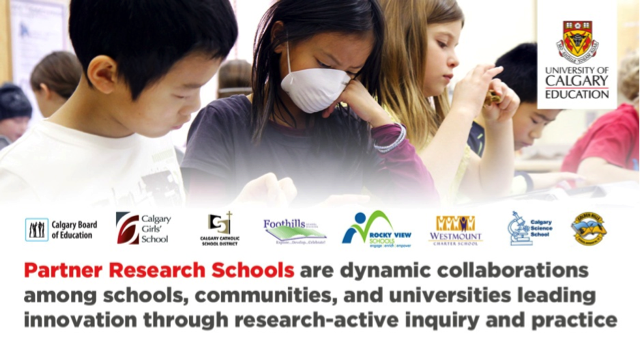
A little over two years ago I was asked to become the Director of Partner Research Schools, a new initiative in our Werklund School of Education. Delighted at the challenge, I immediately said yes and then wondered, what exactly does this mean? As time passed and people asked me what my role was and what were Partner Research Schools, I found myself stumbling for a response.
-
Creating Supportive Environments for Students with Disabilities
Comments Off on Creating Supportive Environments for Students with DisabilitiesOften when “to do” lists are presented, people think that they are doing what they should to create supportive environments for students with disabilities. I have seen far too many examples of what very well intentioned people think is participation and inclusion, but could not be farther from the truth. As long as we continue to see people with disabilities as separate in any way, they will never be included. We need to fundamentally change our mindsets in schools in order to truly welcome all students and create environments that are safe and inclusive. I use just a few examples of events that I have witnessed over my years of involvement in the inclusion movement and ask why?
Why do we create “best buddies” programs that involve the “kind” students coming to a room with students with disabilities to play games or going to the movie with them one Friday afternoon a month? There are many clubs and activities that already exist in schools. Why not find the student’s passion and interest and include him/her in activities that already exist? That is how we create opportunities for real friendships. When we do include students with disabilities in their school activities, why do we feel the need for them to travel together as a pack with the EAs attached? The number one barrier to successful inclusion is that an adult is hanging out with a kid. Think back to when you were younger. Would you want to hang out with a kid who was always with an adult? What about high school graduations? Why do we have separate ceremonies or worse yet, parade a couple of students from a segregated class across the stage at the beginning of the ceremony to receive an award and then dismiss those students and their families that are sitting in the auditorium to head back to the segregated class to continue the ceremony. We allowed special access to the “real graduation” for few minutes and then dismissed them like we have their whole school career. Think of the messages given to these families, their children, and all of the student body about the place of students with disabilities in that school.
Carol Tashie, author and public speaker, talks of creating friendships in school. Friendship is not just about people with disabilities, but often this is the group that we overlook as needing genuine friendships. We think that if we create places for kids with disabilities to have a few people without disabilities drop in, we are creating friendships. What we are doing is more like peer support. Tashie very eloquently indicates the difference between peer support and friendship. Friendship occurs when two or more people discover common interests and develop a mutually satisfying relationship. Peer support is the kind of help one student may give to another student, sometimes via an adult’s request. She also indicates that it is true that friends often provide support, and peer support can sometimes develop into friendship. However, they remain very different kinds of relationships.
There are so many opportunities that exist in our schools. We do not need to create separate or special events for people with disabilities. We need to stop the charitable notion that we are doing something “nice” for students with disabilities because we include them. Students with disabilities need to have the same experiences for growth as all students. They need to be with their same age peers learning the curriculum that is provided by the school systems. Literacy and numeracy are life skills. Friendship is a life need.
I met a boy once who changed my whole philosophy for inclusion. I used to think “how can you include kids who are nonverbal with mobility needs?” Then I looked in to his eyes and thought “how can you not include him?”. Value the dignity of the human person. Support genuine opportunities. That is how we create supportive and inclusive school communities for ALL.
This blog post is part of CEA’s focus on The New School Community, which is also connected to Education Canada Magazine’s The New School Community theme issue and a Facts on Education fact sheet How does parent involvement in education affect children’s learning? Please contact info@cea-ace.ca if you would like to contribute a blog post to this series.



IDEAS TO SUPPORT EDUCATORS : Subscribe to the EdCan e-Newsletter
Quality research, reports, and professional learning opportunities.