
This blog post is part of CEA’s focus on the state of Teacher PD in Canada, which is also connected to Education Canada Magazine’s Teachers as Learners theme issue and The Facts on Education fact sheet, What is Effective Teacher Professional Development? Please contact info@cea-ace.ca if you would like to contribute a blog post to this series.
Archive
-
The Rocky Road to Dropping Out
Comments Off on The Rocky Road to Dropping OutI’ve always understood that kids leave high school before graduating for all kinds of reasons, often affected by multiple converging factors. But the chance to speak with three young adults generous enough to share their school stories with me (and with our readers) really brought home just how varied and complex the road to dropping out can be.
I worried at first that my “sample” was not broad enough: after all, all three interviewees were now back in school. But as Christine Pinsent-Johnson points out, the majority of early school leavers in Canada do go on to earn their secondary school equivalency. And even though I was missing the voice of a student who dropped out and stayed out, I was amazed at how many threads were present in just these three stories. I heard about the sense of unwelcome, the experience of racism and the systemic “push out” experienced by many students from non-dominant cultures that George S. Dei writes about (and challenges us to address) in his article, “Reflections on Dropping Out of School”. I heard about personal crises, such as depression and addiction, that stood in the way of school success. I heard about unsuitable – or nonexistent – support for learning challenges. And I heard, loud and clear, that the standard school approach is just not a good fit for some students, and that alternative, mature student and transitional programs play a critical role in enabling students to succeed academically and personally.
I found it interesting, then, to read that as part of a province-wide push to increase graduation rates, the English Montreal School Board found it important to strengthen their early literacy and alternative school programs. The early literacy intervention will ensure that more children are equipped to succeed at school, while the alternative high school program acknowledges that for some students, a different approach is needed.
Just as there is no one path to dropping out, there is no one strategy that will help all kids graduate. I hope you will find much to think about – and renewed resolve – in this issue. And don’t forget to look up our web exclusive articles, which profile some inspiring programs that support at-risk students.
This blog post is connected to Education Canada Magazine’s Towards Fewer Dropouts theme issue and The Facts on Education fact sheet, How Can We Prevent High School Dropouts? Please contact info@cea-ace.ca if you would like to contribute a blog post to this series.
-
Making a Difference in Our Schools
Comments Off on Making a Difference in Our SchoolsI first met Ron Canuel when Reader’s Digest named him 2008’s Hero in Education. As director general of the Eastern Townships School Board in Quebec, he was an architect of Canada’s first system- wide one-to-one laptop deployment for students. The results of the program were astounding: absenteeism declined by 26 per cent, behavioural problems by 34 per cent.
I was so pleased when our paths crossed again. In 2014, the Reader’s Digest Foundation of Canada decided to launch a new awards program to celebrate and promote teachers who are improving our education system in meaningful ways. The foundation was looking for a partner to help us develop this initiative, and one of our researchers drew up a list of organizations to consider. At the top was the Canadian Education Association (CEA), which seeks to transform our education system by supporting innovations and fostering dialogue among its stakeholders. Ron is now its president.
It didn’t take long to convince Ron to collaborate on the new Canadian Innovators in Education Awards. Given out to educators who can demonstrate their work’s lasting impact, the first prize is a sizable $25,000. The second and third prizes are $10,000 and $5,000, respectively.Winners will be chosen by a jury of CEA and Reader’s Digest representatives and announced in November. For details, visit our website at rd.ca/education.
Please help us make this program successful by spread- ing the word and encouraging suitable candidates to ap-ply. Together we can maintain our school system as one of the best in the world.
This content was originally published in the May 2015 edition of Reader’s Digest Magazine and republished with permission from Reader’s Digest Canada.
-
Putting an End to Combined Grade Thinking
Comments Off on Putting an End to Combined Grade ThinkingThere was a time in my teaching career when I would happily volunteer for split grade assignments, mainly because they offered two of the elements that I appreciated most about my job: the room to be creative and a sense of professional autonomy. I clearly understood that the reasons for combining grades were purely administrative but, personally, I saw them as a type of “call to adventure”.
“I’ll accept this grade assignment,” I would tell my principal, “but I would like to have the freedom to try out some new approaches or structures.” I understood the nods of approval that I usually (!) received in response as a combination of relief and trust on the part of the administrator. In most cases, I would end up leveraging both at some point during the year!
Although the challenges of teaching in a combined grade classroom have become decidedly greater as education systems are now more keyed to policies and approaches that demand attention to specific grade level curriculum expectations, provincial testing and greater levels of standardization, there doesn’t seem to be a whole lot of conversation about alternatives. And, clearly, there are no signs that split grade configurations are diminishing in numbers. In fact, in communities where low and declining enrolment is becoming the norm, we’re likely to see an increase in the number of schools forced to combine grades.
CEA latest Facts on Education is out and it delves into the variety of research that has been done on the efficacy and effectiveness of split grade classrooms. The fact sheet is clear: in the presence of good levels of communication, quality professional development and effective strategies for differentiation, combined grade configurations can work.
And while the question of how split grade classrooms can be made to work is an important one in the short term, I believe that there are more exciting questions that could serve to propel us into some longer term thinking. Some of the ones that are bouncing around in my own mind:
Why are we still thinking in terms of age-based grading at all—especially in the earliest years of school? What assumptions hold our thinking in place about the way we organize our schools and assign students to particular classrooms? What might happen if we were to revisit how we move children through their elementary years? What are the alternatives?
First, the whole idea of combined grades is a bit misleading. Any teacher can tell you that, even in a straight grade classroom, there are usually marked differences in ability levels, maturity and experience of the world. While the existence of specific grade level expectations belies an assumption that all students in a given year should be developmentally similar, we know that a space of a whole year exists between students born in January and those born in December. Yet, in most cases, they are grouped together as one unit. In reality, every elementary class is, more or less, a split!
Second, not everything that is learned in school needs to be placed on a developmental trajectory. To be sure, there are parts of the curriculum where children benefit from careful scaffolding, but there are many others that accept, if not invite, different points of entry. Mathematics, for example, would very likely fall into the former category but think of how the natural curiosity of children can drive learning in other areas that make up a traditional school curriculum.
Third, take a careful look at how children organize themselves outside of the classroom. When left to their own devices, they tend to gravitate to activities and groups of other children involved in things that interest them. No one is standing on the street corner asking for birth certificates before someone is allowed to join a road hockey game. Mixed age groupings can be found all over the place, from the schoolyard to the local park; from the sports centre to the community theatre group. All sites for powerful multi-age learning!
I find it more than a little confounding that, in an era where creativity and innovation are on the lips of most system leaders, our restrictive thinking around age and learning still renders the combined grade configuration something of an anomaly.
I’ll share some of the ideas that I have percolating in my own headspace but, for now, I would like to leave you with some questions for consideration and conversation.
What creative thinking has your school system brought to the conversation about age-based schooling? What do you see as the areas of the curriculum that lend themselves to alternative ways of thinking about age and learning? What areas of learning demand more attention to ages and stages of development? Where are the spaces for some work at challenging our assumptions about the contexts in which children (and adults) learn best?
-
How do split-grade classrooms affect learning?
Comments Off on How do split-grade classrooms affect learning?Split-grade classrooms include students spanning two grades and are frequently deployed to balance class sizes, so that teachers aren’t teaching classrooms with too many students, and classrooms with too few students don’t stretch school district resources.
According to research about the experience of teachers and students in split-grade classrooms:
- Social outcomes (e.g.: student self-concept, social contacts and groupings, and leadership skills) show positive results for students in split-grade classrooms.
- Strategies teachers can use to improve outcomes in split-grade classrooms include cooperative learning, peer tutoring and ability grouping, and formative assessment. These classrooms may also allow teachers to better differentiate student needs.
- Because of the blended ages and grades, teachers have a range of additional tools they can use in split-grade classrooms. As a result, they need professional development in these differentiated strategies, as well as administrative support, including increased planning time and tailored curricular materials.
- Parents’ concerns about their child’s academic success in split-grade classes are reduced over time, so educators should focus on engaging and educating parents of children in these classes.
- Newer research is needed since much of it was generated in the 1990s.
When split-grade classrooms are carefully implemented to support differentiated teaching and include appropriate professional development, as well as curricular and planning resources for teachers, the learning experiences for students in these classes are positive.
ADDITIONAL INFORMATION RESOURCES
Split grade classes: Is a combined grade the best for your child?
(Today’s Parent Magazine)
http://www.todaysparent.com/kids/school-age/split-grade-classes/
Split-Grade and multi-age classes: A review of the research and a consideration of the B.C. context. (BC Teachers’ Federation)
https://bctf.ca/publications/ResearchReports.aspx?id=5560
Combined grade classrooms (What works? Research into Practice)
http://www.edu.gov.on.ca/eng/literacynumeracy/inspire/research/Demore.pdf
Combined grades: Strategies to research a range of learners in Kindergarten to Grade 6.
http://www.edu.gov.on.ca/eng/literacynumeracy/combined.pdf
References:
Cornish, L. (2006). Parents’ views of composite classes in an Australian primary school. The Australian Educational Researcher, 33(2), 123-142.
Cornish, L. (2014). Parents’ perceptions of social-emotional issues in composite classes. TalentEd 28(1/2). pp. 13-23.
Dowling, D. C. (2003). The Multi-age Classroom. Science Teacher, 70(3), 42-46.
Heins E, Tichenor M, Coggins C. (2000). Multiage classrooms: putting theory into practice. Contemporary Education 71(3). pp. 30-35.
Lataille-Démoré, D. (2007). Combined grade classrooms, in What works? Research into Practice. Ontario: The Literacy and Numeracy Secretariat.
http://www.edu.gov.on.ca/eng/literacynumeracy/inspire/research/Demore.pdf
Mariano, L. T. and Kirby, S. N. (2009). Achievement of Students in Multigrade Classrooms: Evidence from the Los Angeles Unified School District. Working Paper (WR-685-IES). LA: Rand Corporation. http://www.rand.org/pubs/working_papers/WR685.html
Mason, D. A. & Burns, R. B. (1996). “Simply no worse and simply no better” may simply be wrong: A critique of Veenman’s conclusion about multigrade classes. Review of Educational Research, 66(3), 307-322.
Naylor, C. (2000). Split-Grade and multi-age classes: A review of the research and a consideration of the B.C. context. BCTF Research Report, Section XII, 2000-EI-02.
https://bctf.ca/publications/ResearchReports.aspx?id=5560
Ong, W., Allison, J., & Haladyna, T. M. (2000). Student achievement of 3rd-graders in comparable single-age and multiage classrooms. Journal of Research in Childhood Education, 14(2), 205-215.
Veenman, S. (1995). Cognitive and non-cognitive effects of multigrade and multi-age classes: A best-evidence synthesis. Review of Educational Research, 65(4), 319- 381.
Veenman, S. (1996) Effects of Multigrade and Multi-age Classes Reconsidered. Review of Educational Research 66(3), 323–340.
Vincent, S., ed. (1999). The Multigrade classroom: A resource handbook for small, rural schools (Books 1-7). Portland, OR: Northwest Regional Educational Laboratory.
http://educationnorthwest.org/sites/default/files/multigrade-classroom-books1-7.pdf
Wilkinson, I. A., & Hamilton, R. J. (2003). Learning to read in composite (multigrade) classes in New Zealand: teachers make the difference. Teaching and Teacher Education, 19(2), 221-235.
-
Connecting Some Thinking Around Effective Professional Development
Comments Off on Connecting Some Thinking Around Effective Professional Development -
Moving Beyond “Sit’n’Git” Pro-D
Comments Off on Moving Beyond “Sit’n’Git” Pro-DI often wonder if what we see as teaching at professional learning events would be acceptable in a high school classroom. If the purpose of professional development (Pro-D) is professional learning, then what is our evidence that learning does, in fact, occur? Are we using effective teaching practices in Pro-D?
Although Pro-D is evolving, the “Sit‘n’Git” way of learning seems to still be alive and well in many conferences and workshops throughout Canada and the U.S. In the past five years, I cannot tell you how many times I’ve sat in a large conference room for a number of hours with hundreds of other dedicated educators and not been provided with the opportunity to even talk to the person beside me. People are spending hundreds and thousands of dollars to attend these events to listen to a series of lengthy lectures without the opportunity to network and wrestle with the presented ideas. I’m not opposed to a keynote address to start off the day with some inspiring, thought-provoking ideas; however, if there is no opportunity to take these ideas and move deeper, many of the thoughts that are initiated in the keynote get lost as I move on to the next session or listen to the next presenter. It’s no secret that in order for deeper learning to occur, we must DO something with a new concept; we must apply new learning to take it from an idea to implementation. Our current typical model of Pro-D makes deeper learning a challenge and often only leaves participants with a few ideas that are unfortunately left on the shelf with the many glossy white binders from workshops of years past. At some point we need to stand up and say that a high volume of “Sit‘n’Git” style of Pro-D is no longer acceptable and is an insult to those who have spent money, time, and effort to attend. While doing this, we also need to rethink the conference model and professional learning so that it better aligns with what we want to see in classrooms.
There are many articles written about rethinking professional learning (for example – http://news.nationalpost.com/2012/04/20/is-the-pd-day-broken/ and http://www.cea-ace.ca/sites/cea-ace.ca/files/cea_fone_teacherpd.pdf) For me, the experience needs to be relevant, continual, and collaborative. As educators, we need time to take an idea, wrestle with it, discuss it, and then plan for implementation. Ideally, there should also be time for follow up with reflective dialogue either as a staff or as a group.
In B.C., the current learning model for teachers is five to six separate (often not aligned, surface level) PD days, monthly staff meetings, and (optional) after school workshops. Is this the best we can do? We know the importance of professional autonomy, so how do we offer this and also ensure that professional learning moves beyond surface level workshops or lectures that give participants the chance to mentally opt out? What is our collective responsibility as schools and districts to create the conditions for deeper learning that affects positive change?
It will likely be some time before we completely rethink Pro-D, so how do we make the best use of our current model?
One of the most effective ways to create change is to focus on the bright spots and build from there. There is a powerful movement of professional learning opportunities that have moved away from the “Sit’n’Git” model to one that taps into the strengths of participants and creates more opportunities for networking. All of these require TIME and it is important for us to change the question from “CAN we provide time for Pro-D?” to “HOW CAN we provide more time for effective, ongoing professional learning?”.
Here are eight ideas to move us beyond the “Sit’n’Git”:
1. NETWORKING/COLLABORATION TIME AT CONFERENCES – We don’t have to blow up our system; we can start small and ensure that there is important “blank” space in between workshops or following keynotes for teams or groups of people to move the learning deeper. Within workshops, always provide time for participants to DO something with their learning; move from the “sit’n’git” to the “make’n’take”. We can use models that encourage inspiring ideas (keynote, workshop) as well as the time to take the WHY of ideas and move to the WHAT and HOW.
2. TEACHER ACTION RESEARCH – B.C. teacher, Jennifer Delvecchio, shared a grassroots concept of a “growing learners/pedagogy from within” group of teachers that used some of the allocated Pro-D days – along with school supported time (and some of their own time) – to take a concept and spiral deeper over time. Teachers looked at published research and then reflected on their own practices to question and implement change to benefit student learning. By continually analyzing practice in their own classrooms and making the time to meet a priority, they were able to use the published research in a way that actually created positive change in their classrooms. By tapping into teachers’ curiosity and providing small bits of time for reflective dialogue based on gathered evidence of student learning, we can drive powerful professional learning forward.
3. COLLABORATIVE TIME AND INQUIRY – This year in the Langley School District, time that was previously allocated into two learning days in the year has been spread out over the year in the form of six collaboration mornings (80 minutes each). This model is more organic and teacher-driven than the typical professional learning community (PLC) model as educators are encouraged to choose an inquiry question with a small group of colleagues and then take the time to spiral deeper into their inquiry (see Spirals of Inquiry by Halbert and Kaser). Another example of providing small bits of collaboration time at a school level (based on the passions and curiosities of staff) can be read here.
4. IGNITE EVENTS – Ignite sessions can feel kind of like an “underground” professional learning experience where a number of people meet and listen to others share a story, an idea, or an experience through a short series of slides (20 slides, 15 seconds per slide). There is some sit’n’git but the best part about the events is the networking that occurs before, during, and after the series of five-minute presentations that plant seeds of conversations.
5. EDCAMPS – More and more districts and even some schools are offering Edcamps as a way to tap into the strengths and knowledge of participants. With no formal set agenda and no formal lectures, participants bring their topics to the day and help facilitate conversation on participants’ areas of interest. The challenge with Edcamp, along with many of these participant-driven events, is keeping the passionate dialogue going beyond the event.
6. RETHINKING STAFF MEETINGS – Many schools are making professional learning the focus of staff and department meetings. If information can be sent out in a memo/email, leave it off the agenda and free up time for engaging discussions and reflections on student learning. Something as simple as “what have you tried since the last workshop/conference/collaboration that has had an impact (small or large) on student learning?” should be discussed at staff meetings.
7. INSTRUCTIONAL ROUNDS – The Kamloops School District has been exploring the use of Instructional Rounds (based on the work out of Harvard as a way to provide ongoing dialogue and reflections based on non-judgmental observations of educators by educators). The challenge is providing release time for rounds to take place but if a district is willing to consider HOW money is spent on professional learning, instructional rounds should be on the table.
8. SOCIAL MEDIA – There are many different platforms (Twitter, blogging, etc.) that can continue conversations past the event (and also help with the sharing of good ideas). Social media can help to connect people in areas of passion or curiosity who can have conversation that can lead to deeper dialogue in other platforms. Dean Shareski challenges us to connect with one person at an event and keep the conversation going beyond that event.
The Sit’n’Git, single event idea of Pro-D does not align with what we know about teaching, nor about professional learning. We need a sense of urgency to create change in this area. Start small. Build on what is working. Let’s work together to making professional learning more relevant and continual so it leads to deeper change in education.
-
Teaching is a ‘Way of Being’ – Part 3
Comments Off on Teaching is a ‘Way of Being’ – Part 3So what might be the implications for professional learning? There are four points that stand out for me.
1. Learning Stance
A major difference between Cynthia and Margot (hypothetical teachers referred to in my first blog of these series) is their learning stance. Margot is a progressive problem solver – a seeker of new learning, a questioner. We need to always encourage and cultivate these attitudes and behaviours.
-
The Patchwork Pieces of Professional Development
Comments Off on The Patchwork Pieces of Professional DevelopmentHow do we support teacher learning in schools? Do we give real, authentic opportunities for teachers to learn or do we tend to offer “sit’n’git” PD based on what we, in official educational leadership positions, think teachers need. Regardless of where teachers are in their learning, or where they are in their teaching career, relevant learning can happen throughout a school.
I recently received two requests relating to leadership. One was to speak to a group of current educators taking a leadership module and another was from a university student wanting to research “shared leadership” at my school which consisted of conducting an interview with me then with a teacher in order to find out the extent to which the sharing of leadership is occurring. In both instances the question of teacher professional development came up. It made me stop and consider leadership in general. How are we as a school embracing shared leadership and what benefits does it provide? How are we embedding continuous learning in our school culture in order to sustain shared leadership? Any school leader today would say having a successful school is not possible without both. So how does shared leadership correlate with professional learning?
As educators, I think we all would agree that PD is the key to improving the quality of all leadership in schools with the main focus on student learning. Professional learning represents a way of reform that stresses the importance of partnership and working together to make student outcomes better. With that partnership, there must be mutual collaboration. I only fully realized this through my tenure as principal, yet it reminded me of an article I read many years ago called The Pattern Quilt Metaphor by S.A. Maxwell. It stated, “Prioritizing the partnership through planning will enable the innovative aspects of reform to shape into a structured whole similar to how a seamstress combines pretty scraps of fabric into the envisioned patterned quilt”[i]. It goes on to say, “Professional growth becomes the binding to the quilt that makes a meaningful whole out of the patterned quilt of learning.”[ii] What beautiful imagery! I realized that this comparison of professional growth to a seamstress making a quilt so eloquently defines the purpose and focus of PD. That is, the major focus being on planning and the framework with which is required to make it all work, creating an environment where everyone is excited and energized to learn. It requires teaching to become an everchanging, dynamic experience that will not become stagnant. And for that to happen, there is a need for a school improvement plan that is site-based and driven by staff, enabling shared leadership and defining the PD that is needed. With that being the case, any change in professional learning would be looked at as a good thing. Different ideas would be welcomed. Individual teachers would be like a piece of the fabric in the quilt, with the teams being a block of the quilt and the quilt being the school. Each piece would be reviewed constantly, spreading the quilt out and seeing that all fits together for the whole and the pattern would be reflected on to see if the results are where we want them to be.
The article referenced is not recent so this is not a newfound phenomenon. It just begs for re-visiting. Re-visiting by looking at PD through in-servicing, school restructuring, and school reform. Working collaboratively in all these areas: in-servicing, consisting of teaching and learning for understanding; and school restructuring and reform, meaning that not only the school administrator would determine the school improvement plan, but it would be a collaborative effort to develop goals and actions. The opportunity for everyone to be involved would draw a school closer to a new reform, consisting of new positive attitudes and new teacher initiatives. Certainly there is no argument that with everyone involved with the process of implementation, there would be more ownership and keenness. That is the essence of shared leadership that is strongly aligned with teacher driven PD.
Thus, effective PD is not dictated, but is facilitated, according to identified individual teacher needs, team needs, and the needs of the school as a whole. This allows many things to happen: inclusivity, creativity, innovation, and collaboration. All together are like pieces of material making a beautiful quilt. Some can take the same fabric, but make a totally different quilt, but it would be just as beautiful. It just takes thought, planning, and options. In education, this translates to better education for students. As educators, wouldn’t we all want to be masters in quilting?
[i] Maxwell, S.A. (1996). The Pattern Quilt Metaphor: Revisiting the PDS Concept Contemporary Education, 67(4),196.
[ii] Ibid. pg. 199.Related Reading
Nancy Matthews wrote this feature-length article in the Nov 2014 issue of Education Canada Magazine.
The Courage to Lead Change
Making difficult changes to school culture requires perseverance – and a thick skin!
http://www.cea-ace.ca/education-canada/article/courage-lead-change
This blog post is part of CEA’s focus on the state of Teacher PD in Canada, which is also connected to Education Canada Magazine’s Teachers as Learners theme issue and The Facts on Education fact sheet, What is Effective Teacher Professional Development? Please contact info@cea-ace.ca if you would like to contribute a blog post to this series.
-
Meeting the Challenge of Infusing Relevant PD in Schools
Comments Off on Meeting the Challenge of Infusing Relevant PD in SchoolsWe believe professional learning is highly valued by educators and school-based leaders. However, infusing relevant and focused PD in schools is often a cumbersome task for school-based and district leaders given the time constraints and costs associated to day-to-day realities at the school level. Educators in schools who meet once per month for their professional learning may not be able to sustain a common purpose and ongoing dialogue and may be prone to dismiss or forget key ideas from their sessions if they don’t meet more frequently. Ironically, districts that have adopted, or are in the process of adopting, the professional learning community (PLC) model may discover other barriers confronting them[1] [2].
Elsewhere, we have been critical of the timing of PLCs in schools[3]. Imagine being an educator and getting up each week during a Canadian winter and travelling into a PLC session for a 7:00 a.m. meeting prior to preparing to teach all day. Or perhaps even more exhausting for educators is attending a session for one hour each week after they have finished teaching all day. This adds minimal value to the pedagogy of the educator; instead, it potentially creates mild to major anxiety and toxicity among staff and affects the school culture negatively, especially in busy schools where teachers are already performing multiple roles (i.e. coaching and leadership activities) in conjunction with their planning, teaching and assessment practices. It becomes even more problematic for educators and leaders if their district adopts this professional learning format in a vertical top-driven manner while offering limited choice, voice and opportunities for collaboration among teachers to engage in deep, dialogical and meaningful professional learning. If this is the case, and I have learned that it is in many districts in Canada, PD is then “contrived” and educators will not engage in the PD no matter how robust and clearly articulated the topic is laid out for them[4]. In our view, teacher energy and wisdom can be shared much more effectively, which may then improve the educational lives of the students they are working with. We would like to present another PD option for educators in Canada to consider.
How can school leaders provide relevant, flexible and personalized learning opportunities for both new and experienced teachers?
Teachers and administration teams are trapped in an educational era of pressing immediacy where “(T)here are always things to be done, decisions to be made, children’s needs to be met, not just every day, but every minute, every second”[5]. And this is a major reason why weekly PD sessions within the PLC framework may not be relevant or even the best fit for many schools in our country.
In our work, we have been considering alternate professional learning models for busy Canadian educators[6]. As technology become increasingly available, we believe that this may be the game changers for school districts and allow educators a chance to invent PD frameworks that may be better suited and infused into their professional lives. Using the Desire2Learn Learning Management System (D2L LMS) as our teaching and learning model, we believe it’s a viable application that may be used by teachers in schools across Canada. As we have nearly 800 graduate students in our masters and Doctorate programs, many who are learning through the D2L platform, we have to ask the question, can teachers in school districts across this large country learn the same way for the time they must devote to their professional learning in schools? Or, could a combination of face-to-face learning with online engagement help educators meet the diverse needs of their diverse student populations in Canada?
Our belief is that yes, they can. We are stretched across different climates, cultures and time zones. One of the many benefits of online learning management systems like D2L is that the technology has the potential to break down the barriers of time and location. Using D2L provides the learner with the ability to be educated whenever and wherever it fits into their busy schedules. Imagine dropping a child off at hockey practice in the morning and while waiting at the rink the learner is able to log into an online professional development course or professional learning session with other educators from their school, district or even with educators from across Canada. The networking possibilities are endless.
In this professional learning format, the learner is able to continuously build their educational and networking capacities by reading over professional development content and articles. They may contribute to and read discussions where many participants engaged in the topic share ideas and experiences. Key ideas can then be brought back to their own schools to share with colleagues and additional community educational stakeholders such as parents.
Many of us are presently using these online learning management systems to help educate our students at the university level; we believe it is entirely possible and cost-efficient for public school teachers to take advantage of these digital tools to educate themselves and help their students navigate their world. We feel educators can construct relevant and timely topics for professional learning that will change the way PD is viewed by educators throughout the country. We have reported elsewhere that “online teacher communities provide an opportunity to exchange ideas and experiences beyond the classroom walls”[7]. This PD format may provide school districts greater flexibility to provide important learning topics for Canadian teachers, while also inviting them to engage more deeply in their learning. We believe that “with commitment educators can feel connected through the relationships they form on the D2L platform and can create district, provincial, national and even international teacher networks, which otherwise, they might not do or get a chance to do in a face to face context”[8]. We believe this format for professional learning is worth considering.
[1] DuFour, R. (2007, September). Professional Learning Communities: A bandwagon, an idea worth considering, or our best hope for high levels of learning? Middle School Journal, 4-8.
[2] Fullan, M. (2007). Change theory as a force for school improvement. In J. M. Burger, C. Webber & P. Klinck (Eds.), Intelligent Leadership (pp. 27-39). The Netherlands: Dordrect.
[3] Hamm, L. (2009). “I’m just glad I’m here: Stakeholder perceptions from one School in a community undergoing demographic changes on the Alberta grasslands. Unpublished dissertation from the University of Calgary, Calgary, Alberta.
http://search.proquest.com/pqdtft/docview/734411063/A20B4679350496EPQ/1?accountid=14611
[4] Knight, J. (2007). Instructional coaching: A partnership approach to improving instruction. Thousand Oaks: Corwin Press.
[5] Ibid.
[6] Hamm, L. D. & Cormier, K. (2014, Spring). Building instructional capacity: The new face of professional development. Canadian Association of Principals. http://marketzone.ca/ebooks/CAP/CAP_T0214_EBOOK_SPRING_2014/index.html
[7] ibid
[8] ibid
This blog post is part of CEA’s focus on the state of Teacher PD in Canada, which is also connected to Education Canada Magazine’s Teachers as Learners theme issue and The Facts on Education fact sheet, What is Effective Teacher Professional Development? Please contact info@cea-ace.ca if you would like to contribute a blog post to this series.
-
Professional Development: a recipe
Comments Off on Professional Development: a recipe
The gift of time: Often underrated and underestimated
Educators know there is much to investigate, debate, and expand on in our profession. Inevitably you will hear, “there doesn’t seem to be enough time”…but time, we seem to find. Just go on Twitter and peruse for awhile, you will find dedicated educators taking risks, asking questions and issuing provocations to one another. We somehow find the time because we know our professional development (PD) is essential to the contribution we can make as teachers to student growth and innovative practices. Contrary to some current thinking out there, educators (and their practice) are always evolving, as is the curriculum that guides us.
So given the gift of time, how do we use it most effectively or more so, in the most sustainable way?
The answer: collaboratively. This sounds simplistic but it is anything but. Combining efforts and initiatives to produce more time for educators to dig deeper into action research or develop pedagogies, requires conversation and engagement at many levels:
- Administrators who are open and willing to advocate for their staff members at a district level, as well as allow a democratic process of choice of topic and study via school-based PD committees.
- Program consultants and senior administrators who visit schools often, plant seeds and have an understanding of the school community and its areas of investigation, as well as knowing those teachers who are actively pursuing such research. With this knowledge, they can easily merge the school’s efforts with greater district initiatives.
- Senior administration that gives credence and sees substance in both large-scale district PD opportunities as well as grass-roots initiatives, and provides funding as the needs arise, in real time.
- Teachers that have a willingness to meet both formally and informally to further their own action research and nurture it regardless of funding or recognition.
A tried and true recipe involves: balance and the nurturing of a growth mindset. So what are the ingredients we have to work with (which most school districts have to offer):
- on average 5-6 PD days (usually 1-2 being district/provincial ones)
- some districts offer a professional growth day that each teacher is entitled to. Teachers choose their PD opportunity based on criteria and approval (if districts don’t offer this, this is a good place to start)
- of the school PD days, one is usually devoted to the end of year/school growth plan
- districts via program consultants and ministry initiatives offer time via cohort opportunities
- the “one-off” presenter or keynote series being offered by the district for the year (this should not be discounted: implicit as well as explicit opportunities frame an important balance to individual meaning making)
Method: (by example)
A “grass-roots”, school-based initiative can turn into sustainable PD and action research if:
- a group of teachers use their individual pro-growth,
- the inquiry is incorporated into the school plan and thus can access school-based PD as well as “meet the needs of the learner” budgets,
- it can be endorsed and fall under district funded cohorts.
This can result in a small group of teachers having 4–5 days of personalized, deep learning and investigation at the onset.
An example:
A small group of teachers from three different schools facilitated by a teacher-librarian and the Early Learning program consultant had a vested interest in concepts of: documentation of learning, Visible Learning (as directed by Project Zero, Harvard) and Reggio-Emilia inspired practices. They met informally as a whole group and networked extensively amongst one another in their schools, largely on their own and using their professional growth funding.
With strong support from the principal and the program consultant networking among other schools, this small cohort began to open their classrooms as a demo classroom for other district colleagues. This resulted in the short demo turning into a half day workshop/demo, involving teachers from other districts, university faculty and other early learning stakeholders in the community. The program consultant and district began to fund these initiatives as an investigative practice and district cohort.
In the schools where these workshops were taking place, the parent community and other staff members began to take notice of these grass-roots attempts, excitement and innovative practices and, by request, this cohort began to run a larger staff initiative … what can be called “growing learners/pedagogy from within”.
With other teachers trying things out, thoughtfully and with intent in their classrooms, and with positive impact on student learning, this became a school-wide focus and was incorporated into the school-wide plan.
Eventually the district asked the original cohort to present to the superintendents conference and the university asked the group to lead a session in their innovative practices series.
This group of teachers, who initially nurtured their own interests to build upon their practice and increase student engagement on their own accord, had turned their experiences into expertise that was not only sustained among the school, but on a larger scale in their educational community.
Flash forward four years, the group is still functioning (with much support by the principal) in different capacities and right now is investigating as a cohort, on behalf of the district for the ministry pilot of: Communicating Student Learning which looks at different ways to report student learning and evaluation as an adaptation to report cards.
To sum, this was done by the will of a small group of teachers who were able to access individualized professional development funds, added to this was district funding under a cohort model accentuated by school growth plan implementation funds.
Collaboration, communication, compilation and a belief in “bottom-up” expertise can grow meaningful and sustainable professional development experiences that start with students in the classroom and end there.
This blog post is part of CEA’s focus on the state of Teacher PD in Canada, which is also connected to Education Canada Magazine’s Teachers as Learners theme issue and The Facts on Education fact sheet, What is Effective Teacher Professional Development? Please contact info@cea-ace.ca if you would like to contribute a blog post to this series.
-
Leap, Pull, Play: A Framework for Innovative Professional Development
Comments Off on Leap, Pull, Play: A Framework for Innovative Professional Development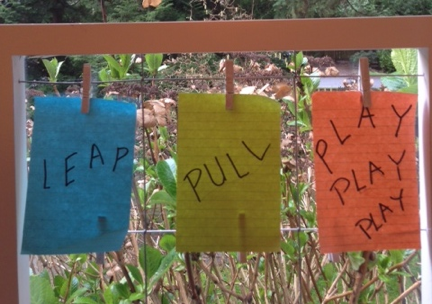
Leap, Pull, and Play is a framework of ongoing innovative PD used by the Surrey School District, B.C.NEW REALITIES
Creating engagement is not about driving a particular set of behaviors. It is much more about creating an environment in which people feel energized to do the best work of their lives.
Coles Hewett
-
My Two PD Hats
Comments Off on My Two PD HatsAs a school climate lead teacher, I often find myself wearing two hats. I receive both formal ongoing professional development (PD) opportunities alongside school board personnel and at board functions and provide the PD to my colleagues at staff meetings and on P.A. Days. Playing dress up with both hats simultaneously has in my opinion, placed me at the perfect vantage point.
When I am wearing my ‘’learner’’ hat, I have found myself metamorphosing from the once passive listener at formal functions like board conferences into an engaged learner-participant using a backchannel such as Twitter, which is 21st century ‘’note passing’’ for teachers. I can take pictures, write down direct quotes, share my thoughts and feelings and “pass’’ my note in a mere matter of seconds! If only this approach was used when I was in elementary school, I wouldn’t have been Ms. Chatty Cathy of the 8th grade! What could have turned into me not learning, growing or even networking, has suddenly become a place where I connect to anyone in my school board (regardless of their position) and pore over the material being presented, reflect on my teaching practice and refine my skill-set.
This brings me into my next point: Teachers won’t learn when you tell them to learn, they learn when they want and are ready to! A designated day for when all teachers board wide, shall or must learn, seems the tired days of our past. Almost any teacher you talk to, would prefer being an active voice in the process of deciding when and how they best learn (just like our students)! To add to this, I would argue that most teachers would choose an informal means of developing their pedagogy by way of independent book studies, release time to work with grade partner(s), blogging and reading blogs, taking part in regular Twitter chats, taking an additional qualification course, meeting with a mentor, taking part in a 4Cs model and so on and so forth.
Also, from what we know of our students and selves, it’s best to study in short segments rather than long drawn out mornings or days full of all the ‘’latest’’ teaching methodology. So, as someone who provides PD, I’m trying to take what I know from my observations as a learner and apply it to when I’m wearing my “lead teacher cap’’. I try to use games and activities that are engaging, memorable, quick and applicable for the classroom. I follow up the games and activities with a brief reflection and share further information through Google Docs. This allows teachers to decide if they like or need the information presented and when and where they will be open to receiving it. By doing this, I am intentionally respecting my colleagues’ time. I am also mindful of who I’m sharing information with. I’m not a university professor teaching a masters level course. As much as I believe in research guiding my teachers practice, I’m not about to print out full psychological studies to share with my colleagues at staff meetings and asking them to read such studies aloud paragraph by paragraph. I’m realistic about the amount of content and the information that I provide.
If there is anything that I take away from wearing my decorative hats, it is the imperative notion of building both choice and trust into PD opportunities. Choice, being given back to the teacher-learners to decide what, when and where learning should happen and trust, in each teacher-learner having the desire to improve their teaching practice and the means for that matter to select the best fit, for themselves.
This blog post is part of CEA’s focus on the state of Teacher PD in Canada, which is also connected to Education Canada Magazine’s Teachers as Learners theme issue and The Facts on Education fact sheet, What is Effective Teacher Professional Development? Please contact info@cea-ace.ca if you would like to contribute a blog post to this series.
-
A Design-Based Approach To Teachers’ Professional Learning
Comments Off on A Design-Based Approach To Teachers’ Professional LearningAs the issues and problems that challenge education and the teaching profession become increasingly complex, our collective need for innovative solutions and new knowledge for learning in diverse educational contexts increases. Yet school leaders and classroom teachers often fail to see a connection between educational theory and research conducted in universities and the real-world, complex and contextually rich teaching, learning and leading contexts in schools. Design-based research (DBR) is one response to the gap between theory and practice in education, to the resounding call for change and innovation in education systems1, and to the need for teachers to continually develop the principled practical knowledge required to design authentic, challenging and engaging learning experiences for students.2
Dr. Carl Bereiter contends that the theory and practice gap in education cannot be filled solely by practice knowledge or by traditional research. Instead, Bereiter argues that principled practical knowledge “goes to a depth that is sufficient for a field of practice to advance”. “Best practice, evidence-based practice, and reflective practice all refer to ways of making optimum use of know-how”3; however, while necessary, these are insufficient for creating new insights into practice, or “know-why” directed towards advancing practice. From our research, design-based professional learning appears to develop principled practical knowledge. Having spent the past 15 years immersed in numerous design-based professional learning studies, our findings would confirm Bereiter’s assertions.4 5
Design-based research focused on teachers’ professional learning employs research processes and methods to create and study innovation in authentic learning contexts. Within design-based research, solutions to complex problems of practice are conceptualized and then implemented and studied iteratively and collaboratively by researchers and teachers in natural settings. We contend that design-based research is necessary to create and identify productive innovations with participant teachers. Design-based professional learning, which builds upon design-based research findings and theories, provides the bridge for teachers to advance practice in a principled, practical way.
Researchers and mentor teachers from the Galileo Educational Network have adopted design-based professional learning as a way of assisting administrators and teachers to build upon the design-based research for improving student outcomes – defined as student achievement, engagement and well-being. Teachers learn to design worthwhile learning tasks and assessments for students based upon the deep understandings this work is intended to sponsor. Teachers learn to bring forward evidence of the students’ learning, to analyze and determine how that student work reflects the deep understandings identified in the design, and to determine next learning steps for students and next teaching steps for themselves. Teachers engage with each other, researchers and mentors through an iterative process of design, enactment, evaluation, and redesign. Teachers learn to:
- identify what deep understandings their students must build to make learning advances;
- collaborate with colleagues, researchers and mentors from the Galileo Educational Network to design worthwhile tasks, activities, and assessments6 for their students directed towards building these understandings;
- bring forward evidence of student learning to determine the ways in which their students built deep understanding;
- discern which instructional practices led to improved student learning and understanding; and
- assess the impact of these improved or changed teaching practices on student learning.
Through this design-based, iterative learning process, classroom teachers gain principled practical knowledge, “know-how” and “know-why”.
We have found that design-based approaches to professional learning – ones that have an explicit goal of improving student outcomes (achievement, engagement, and well-being) through assisting teachers in developing principled practical knowledge – is rare. Teachers in our design-based studies and design-based professional learning sessions report that episodic events, under the guise of professional development, still dominate. While design-based professional learning is more time consuming, we have found that this approach provides teachers with the necessary knowledge to advance their practice and provides a way for teaching to become a scholarly activity.
1 Jacobsen, M. (2014). Design based research: Sponsoring innovation in education. Education Canada, 54(5), 22-24. Retrieved from: http://www.cea-ace.ca/education-canada/article/design-based-research
2 Bereiter, C. (2013). Principled practical knowledge: Not a bridge but a ladder. The Journal of the Learning Sciences, 23(1), 4-17. DOI:10.1080/10508406.2013.812533
3 ibid.
4 Jacobsen, M., Lock, J., & Friesen, S. (2013). Strategies for engagement: Knowledge building and intellectual engagement in participatory environments. Education Canada, 53(1), 14-18. Retrieved from: http://www.cea-ace.ca/education-canada/article/strategies-engagement
5 Jacobsen, D. M., and Friesen, S. (2011). Web Exclusive: Hands On vs. Hands Up: Technology-Enabled Knowledge Building in High School. Education Canada, 51(3). Online: http://www.cea-ace.ca/education-canada/article/web-exclusive-hands-vs-hands-technology-enabled-knowledge-building-high-sch
6 Friesen, S. (2009). Teaching effectiveness framework: A framework and rubric. Canadian Education Association. Retrieved from: http://www.galileo.org/cea-2009-wdydist-teaching.pdf
This blog post is part of CEA’s focus on the state of Teacher PD in Canada, which is also connected to Education Canada Magazine’s Teachers as Learners theme issue and The Facts on Education fact sheet, What is Effective Teacher Professional Development? Please contact info@cea-ace.ca if you would like to contribute a blog post to this series.
-
A Case for Teachers to Develop Professional Wisdom
Comments Off on A Case for Teachers to Develop Professional WisdomThe knowledge and skill that would make a teacher more effective is boundless and the essence of professionalism is to constantly strive to improve, so it is clear that ongoing learning is essential for those who lay claim to professional status. What is less clear is what actually must be learned.
It’s certainly good to have an extensive repertoire of instructional techniques to support different types of learners and keep things fresh in the classroom, but teaching is much more than technique. Instructional expertise is necessary, but it‘s not sufficient.
The essential foundational ability for a teacher is to establish a trusting connection with a student that provides safety, support and encouragement, which invites intellectual engagement. Professors can simply profess and instructors can simply instruct, but teachers must, first and foremost, connect with their students.
Instruction is an important skill, of course, and it should be responsive to students but it is essentially impersonal and relatively standardized. In many cases it could be provided by technology such as the Khan Academy offers. But this should not be confused with teaching. It claims to provide “a free world-class education” but what it actually provides is training, not education.
Teaching involves much more than skillful instruction. It also involves motivation, encouragement, challenge, support and guidance within a trusting, human relationship and results not only in the acquisition of knowledge and development of skills but also in the inculcation of attitudes and nurturing of dispositions that shape a person’s self-concept and worldview. A teacher can make good use of the Khan Academy resources but the Khan Academy by itself can no more provide education than can Wikipedia.
There is neither prescription nor uniform “best practice” in education because individuals are so unique and learn in different ways. A teacher must, therefore, establish a partnership with the learner as an individual. Needless to say, the batch processing that goes on in a secondary school makes this a challenge, but effective teachers do find a way to connect with students in ways that make them feel seen, heard and valued as individuals. In the absence of this connection, there is only instruction and, in all likelihood, academic engagement at best.[1]
Therefore, while learning new subject content, instructional techniques and technology skills are useful, professional development should go much further. To be worthy of the name, pro-d should strive to develop the passionate engagement and practical wisdom of teaching as well. It should involve teachers in collective inquiry that transforms the job into a vocation and fuels both commitment and fulfillment in ways that no amount of training in techniques can ever accomplish. The teacher’s deep engagement then invites students’ deep engagement and so a virtuous circle is established to the betterment of both.
The “development” in professional development is about all the things that a professional teacher needs to know, to do and to be that can only be learned by reflecting on experience within a community of practice with other professionals who are also striving to understand, to grow and to be the best they can be.
This truly professional pro-d is much more than collegial support. It is focused and sustained inquiry into the enduring dilemmas of teaching and learning in a school setting through which teachers not only support but also challenge each other in a struggle for continuous improvement marked by an ethical commitment to the ideals of the profession and the best interests of their students. It is what raises teaching from a trade to a profession.
[1] “Academic engagement,” as defined by CEA in its What Did You Do In School Today research, is limited to diligent compliance with school requirements – what students call “doing school.” It is insufficient for transformational outcomes, which require a more sincere and internally motivated commitment to learning that CEA terms “intellectual engagement.”
This blog post is part of CEA’s focus on the state of Teacher PD in Canada, which is also connected to Education Canada Magazine’s Teachers as Learners theme issue and The Facts on Education fact sheet, What is Effective Teacher Professional Development? Please contact info@cea-ace.ca if you would like to contribute a blog post to this series.
-
Developing Teacher Candidates in a Networked World
Comments Off on Developing Teacher Candidates in a Networked WorldRecently, pre-service teachers in two of our classes at the Faculty of Education, University Regina, participated in #saskedchat, a weekly Twitter chat hosted by and for Saskatchewan educators. Although the chat typically runs on Thursday nights, organizers scheduled a “special edition” of the chat on the topic of supporting new teachers. Almost instantly, our students were immersed in a global discussion about education – and what’s more, they were instantly connected to a large network of practicing teachers who were able to provide them with advice and tips for success. But while the Twitter chat was an enriching experience for our students, participation in events like these is only a small piece of the puzzle when it comes to preparing new teachers to learn and flourish in a digital world.
As the field of education changes rapidly, it’s no longer enough for faculties of education to deliver static, technical courses on the methods of teaching. Instead, we need to help pre-service teachers develop the skills and understandings that will allow them to navigate and succeed in today’s global classrooms. And perhaps even more importantly, we need to help future teachers build the personal learning networks that will provide both the support system and continuous professional development opportunities needed to become and remain successful educators.
As instructors tasked to take on these challenges, we have focused on a number of key areas that support students’ successful entry into these new digital spaces. We’ve shared and described a few of these considerations below.
1. BUILD AN UNDERSTANDING OF OUR DIGITAL WORLD
Today’s young people are growing up in a media-rich and connected culture that is fundamentally different than it was even a decade ago. Thanks to the growing trend of posting ultrasound pictures and pregnancy selfies, a staggering 30% of children have a digital footprint before they are even born, and the average digital birth of children is at six months of age. Technology has altered every stage of life: it shapes the way we meet, how we communicate, our intimate relationships, the way we mourn, even our deaths.
If technology has shaped and altered every aspect of society, then learning is no different. Unfortunately, much of what we do in schools hasn’t changed to respond to these shifts in culture – many educators continue to teach the way they were taught and try to keep the digital world out of the classroom. But for today’s students, online and offline life is inseparable. Teachers need to understand the reality of students’ digital lives in order to make education relevant and engaging for today’s young people by bringing the digital into the classroom.
2. MODEL APPROPRIATE INTERACTIONS IN DIGITAL SPACES
If we want teachers to open their classrooms to the world, we need to model effective and appropriate uses of connected spaces: both new and experienced teachers should have opportunities to see how lead learners interact in networks for professional learning. For instructors working with pre-service teachers, this means demonstrating appropriate interactions in spaces such as Twitter (as in our introductory #saskedchat example) or modeling the curation of a professional digital identity through an About.Me page or an academic blog. In the field, principals can model appropriate digital presence through the creation and maintenance of a professional social media presence, like Chris Lehmann’s Twitter account or Tony Sinanis’ weekly video updates.
Even those in the upper levels of educational leadership should be modeling what it looks like to learn and lead online; for example, Chris Kennedy, Superintendent of West Vancouver School District, uses blogging to model transparency, open leadership, and lifelong learning.
Of course, in order to demonstrate high levels of connected learning, instructors (and other lead learners) must be able to leverage their own existing online networks. For example, in order to support our students and practicing teachers, we were able to tap into Alec’s considerable personal learning network to create a collaborative document of writing prompts for pre- and in-service educators. This means that lead learners must actively work to build their own networks so that they can be effective role models and collaborators.
3. DEMONSTRATE THE PEDAGOGICAL VALUE OF NETWORKS AND TOOLS
Just as instructors and other lead learners must demonstrate appropriate online interactions, they must also help new and experienced teachers understand the pedagogical value of networks and tools. In our classes, pre-service teachers research, create resource sites for, and present on various apps and programs, being sure to tie them into the curriculum (for instance, this site that discusses several apps to support language arts and this one that explores the use of iPads for inclusive education). These future teachers also have the chance to experience what it’s like to learn in a connected environment through our own use of various social media platforms and other tools in our post-secondary courses. For instance, we model the use of open learning and connected teaching through course blog hubs and class Twitter hashtags, through the use of Google Plus communities and course sites for communication, and through the incorporation of Google Docs for professional collaboration.
Pre-service teachers must also be provided with rich exemplars from the field, showing practicing teachers’ innovative uses of technology to create connected classrooms that support 21st century learning. For instance, we introduce our students to the Global Read Aloud, Quadblogging, and Mystery Skype. We also discuss the pedagogical possibilities of Twitter and point to hashtags like #comments4kids (where teachers can post student blogs and ask for feedback from their online networks) or teacher-created resources that support the use of technology in the classroom (like this tweet about how to comment on blogs, shared by one of our graduate students).
4. DEVELOP PRE-SERVICE TEACHERS’ DIGITAL LITERACIES AND NETWORKED LITERACIES AND GUIDE THE DEVELOPMENT OF THEIR ONLINE IDENTITIES
Along with these examples of great digital pedagogy and online interaction, we need to prepare pre-service teachers to be great connected leaders themselves by helping them learn and create using different elements of digital literacies and pedagogies. In our classes, students explore what it means to take part in “anytime, anywhere” digital-age education by undertaking a Learning Project where they choose a skill to learn entirely online. They also create summaries of learning that highlight the skills and networked literacies they have learned throughout the semester. Additionally, since we want these new teachers to model appropriate online presence in their future classrooms, we ask our students to build professional e-portfolios in order to take control of their digital identities (some students even choose to buy their own domains) as they work to become digital residents rather than simply digital visitors.
5. UNPACK ISSUES OF POWER AND PRIVILEGE IN ONLINE SPACES
As we encourage pre-service and practicing teachers to bring the digital world into their classrooms, we must be sure to address oppression and inequity as they play out in online spaces. On a technical level, we need to help educators understand the legal aspects of terms of service agreements and the implications of big data when asking students to enter online worlds in their school work. Additionally, pre-service teachers are often hesitant to speak out about “touchy” subjects online, fearing that it might affect their future careers, but this type of silence on the part of educators creates a dangerous hidden curriculum that announces that these topics are unimportant. We need to have frank and open discussions about how gender or racial inequity can be both reinscribed and deconstructed online (for example, interrogating the GamerGate hashtag, discussing the events in Ferguson and the subsequent Black Twitter movements like #BlackLivesMatter, or examining the rise of #IdleNoMore). We also need to provide opportunities for students to reflect on these topics in digital spaces both through course assignments and by providing support for student initiatives (such as the StarsRegina site set up by pre-service teachers to create a hub for information about anti-oppressive education). And as lead learners, we need to model the importance of having these discussions out in the open.
Clearly, there’s a lot of work to be done if we want to prepare both new and existing educators to teach in ways that take up the incredible affordances of our global community and digital spaces. But there are also so many inspiring examples of teachers, principals, and other lead learners doing great things online – we’ve only scratched the surface of what’s already being done around the world. What amazing things have you seen in your own learning community, and how are you helping the next generation of educators to be connected future leaders in our field?
This blog post is part of CEA’s focus on the state of Teacher PD in Canada, which is also connected to Education Canada Magazine’s Teachers as Learners theme issue and The Facts on Education fact sheet, What is Effective Teacher Professional Development? Please contact info@cea-ace.ca if you would like to contribute a blog post to this series.
-
Some Simple Changes for Dramatic Gains
Comments Off on Some Simple Changes for Dramatic Gains
If you took a random sample of students and asked them what they think of school, you’ll get a wide variety of answers. Some may say they like it, a few might love it, many more might likely say it’s boring and a few more even say it sucks. When you ask most teachers what the term “professional development” means to them, you’re likely to receive a very similar set of responses.
-
Teaching is a ‘Way of Being’ – Part 2
Comments Off on Teaching is a ‘Way of Being’ – Part 2The distinction between expert teachers and experienced nonexperts as described in Teaching is a ‘Way of Being’ – Part 1 forces us to think differently about our PD models.
-
21st Century Learning: What’s Good for Students is Good for Teachers
Comments Off on 21st Century Learning: What’s Good for Students is Good for TeachersToday’s teachers and teacher candidates are caught in an educational quagmire. They are being asked to implement instructional strategies that support 21st century learning, but they’ve had few opportunities to partake in these types of learning experiences themselves.
The typical classroom in 2015 is more academically and culturally diverse than classes before the turn of the millennium. Unlike their own experience, where students with special needs were often isolated in ‘special’ classes, teachers today are being asked to differentiate learning and personalize the educational experiences of students with a wide array of individual learning needs and abilities. Unfortunately, the academic, linguistic, economic and cultural diversity found in most K-12 classrooms is rarely replicated in the staff room or teacher education programs, leaving teachers with limited personal experience of being part of a diverse community of learners. Compounding this challenge is the cookie-cutter nature of most teacher education programs, additional qualification courses and professional development (PD) sessions, leaving teachers with limited first-hand exposure to having their own learning experience differentiated or personalized.
Just as the student population has become increasingly diverse and complex, so has the curriculum resources and assessment tools used in the 21st century classroom. Most educators would have been lucky to have had weekly access to a computer lab when they were students, whereas current teachers have to be prepared to teach in 1:1 classrooms with ubiquitous Wi-Fi, where each student may be carrying more computing power in their pocket than most pre-millennial school computers.
In contrast to the simple set of textbooks that were the primary source of information in the classroom of the 1990’s, the 21st century classroom is inundated with web resources that teachers have to be able to quickly discern the educational value and academic appropriateness of each resource.
Unlike the occasional quiz or end of term summative test that pre-millennium students studied for, teachers today are being asked to assess for and of learning while providing formative feedback that responds to daily learning goals and success criteria.
Essential to preparing teachers to overcome these increasingly complex challenges is ensuring that their initial training and ongoing PD replicates the context of the current classroom. Thus, if authentic, inquiry-based, tech-enabled, 21st century learning is good for K-12 students, it should be good for teacher and teacher candidates as well.
In an attempt to avoid the narrow scope of learning and regurgitation of facts that was often the result of rote lessons and teacher-centred teaching, authentic and inquiry-based learning has been proposed to engage learners and foster critical thinking. Research has found that in addition to increasing student learning, an inquiry-based approach can motivate students to learn and advance their problem solving and critical thinking skills[1].Thus, in contrast to the passive nature of many teacher training sessions,
[Professional development should] create learning contexts that allow [teachers] to make decisions about their learning processes and about how they will demonstrate their learning. [Professional development] should encourage collaborative learning and create intellectual spaces for [teachers] to engage in rich talk about their thinking and learning. They create a [professional] ethos that fosters respect for others’ ideas and opinions and encourages risk-taking.
[Preservice programs should provide] opportunities to seek answers to questions that are interesting, important and relevant to [teacher candidates that enable] them to address curriculum content in integrated and “real world” ways and to develop – and practise – the higher-order thinking skills and habits of mind that lead to deep learning. [2]
(See appendix for original paragraphs)
With a few minor changes, the above paragraphs are excerpts from the Ontario Ministry of Education guide to ”Getting Started with Student Inquiry” document. The ease with which these paragraphs can be revised with references to students replaced with teachers, teacher candidates, PD and preservice programs highlights the need to have teacher learning replicate what takes place in the contemporary classroom. It is also important to note that these modified descriptions are closely aligned with the research regarding effective PD that suggests that learning opportunities that are ongoing, practical, collaborative, and participant driven[3] can be considered to effectively support teacher PD and are associated with instructional improvements and improved student achievement.[4]
The need to prepare students for a rapidly changing and digital world has resulted in calls to support the development of the 21st century skills of creativity, communication, creativity and critical thinking. If teachers are to be effective in supporting the development of the 21st century skills of their students, they must be well versed in these skills themselves. For this to occur, education systems must offer more effective professional learning than has traditionally been available.[5] Consequently, holistic opportunities to use technology to support 21st century skills should be infused throughout preservice and in-service training programs so that educators have authentic opportunities to develop these skills themselves[6].
Just as traditional forms of testing and evaluation have been shown to be inadequate in capturing the dynamic nature of 21st century skills and ineffective in supporting student learning, traditional forms of teacher evaluation may be equally poorly suited to document successful teaching or foster professional growth. While an emphasis on assessment for and of learning has been found to increase student learning while also enhancing engagement and motivation, many teachers are failing to utilize the full cadre of formative assessment practices available to them[7]. This divide may be the result of the lack of experience teachers have in personally benefiting from formative assessment and being the recipient of this type of feedback. Consequently, just as formative assessment has been found to have a positive impact on student learning,[8] opportunities for teachers to receive ongoing and timely feedback, in addition to engaging in self and peer evaluation, may improve their ability to use these types of strategies to assess their students while also directly supporting professional growth.
Proponents of formative assessment, authentic, inquiry-based, and tech-enabled learning advocate for these types of instructional strategies not just because they are innovative, but because they have the potential to enhance learning – student and teacher learning. Thus, as life-long learners, it should be evident that teachers can also benefit from participating in learning strategies that mirror those of the 21st century classroom. Reinforcing the notion that if it is good for students, it can be good for teachers.
Appendix
Teachers create learning contexts that allow students to make decisions about their learning processes and about how they will demonstrate their learning. They encourage collaborative learning and create intellectual spaces for students to engage in rich talk about their thinking and learning. They create a classroom ethos that fosters respect for others’ ideas and opinions and encourages risk-taking (Ontario Ministry of Education, 2011).As teachers give students opportunities to seek answers to questions that are interesting, important and relevant to them, they are enabling them to address curriculum content in integrated and “real world” ways and to develop – and practise – the higher-order thinking skills and habits of mind that lead to deep learning (Ontario Ministry of Education, 2011).
[1] Nesbit, J., & Liu, Q. (2014). The Facts on Education: Is Inquiry-Based Learning Effective?
http://www.cea-ace.ca/blog/john-nesbit-and-liu-qing/2014/12/3/facts-education-inquiry-based-learning-effective
[2] Ontario Ministry of Education. (2011). Getting Started with Student Inquiry.
http://www.edu.gov.on.ca/eng/literacynumeracy/inspire/research/cbs_studentinquiry.pdf
[3] Borko, 2004; Hirsh, 2004; Nord, 2004; Smylie et al., 2001; Warren-Little, 2006; Wei et al., 2009 as cited in Rutherford, C. (2010). Facebook as a source of informal teacher professional development. in education, 16(1).
http://ineducation.ca/ineducation/article/view/76/512
[4] Smylie et al., 2001; Wayne et al., 2008 as cited in Rutherford, C. (2010). Facebook as a source of informal teacher professional development in education, 16(1). http://ineducation.ca/ineducation/article/view/76/512
[5] Darling-Hammond, L., & Richardson, N. (2009). Teacher Learning What Matters. Educational Leadership, 66(5), 46–53.
http://www.ascd.org/publications/educational-leadership/feb09/vol66/num05/Teacher-Learning@-What-Matters%C2%A2.aspx
[6] Rutherford, C. (2013). Bringing Preservice Education into the 21st Century. Proceeding of the 2013 Conference of the Society for Information Technology in Teacher Education, New Orleans, LA
[7] Beckett, D., Volante, L., & Drake, S. (2010). Formative Assessment: Bridging the Research–Practice Divide. Education Canada, 50(3), no 3.
http://www.cea-ace.ca/education-canada/article/formative-assessment-bridging-research-practice-divide
[8] William, 2007 as cited in Beckett, D., Volante, L., & Drake, S. (2010). Formative Assessment: Bridging the Research–Practice Divide. Education Canada, 50(3), no 3.
http://www.cea-ace.ca/education-canada/article/formative-assessment-bridging-research-practice-divide
This blog post is part of CEA’s focus on the state of Teacher PD in Canada, which is also connected to Education Canada Magazine’s Teachers as Learners theme issue and The Facts on Education fact sheet, What is Effective Teacher Professional Development? Please contact info@cea-ace.ca if you would like to contribute a blog post to this series.
-
Effective Student Learning Depends on Effective Teacher Learning
Comments Off on Effective Student Learning Depends on Effective Teacher LearningWhy do teachers’ organizations believe professional development is so important? In short, because effective student learning is dependent on effective teacher learning.
The Canadian Teachers’ Federation defines professional development (PD) as the continuous growth of personal and professional knowledge and expertise, the primary purpose of which is to enhance teaching in support of student learning and development. In teaching, as with any profession, the knowledge base about effective practice is constantly evolving. The continual renewal of knowledge and expertise, through a broad variety of activities and experiences, is thus a central concept of teacher professionalism.
Effective PD combines many qualities. It is reflective, interactive, practical, continuous, teacher-driven and embedded in teachers’ work. It encourages teachers to explore and take risks, to think actively and deeply about their professional practice. It engages teachers in collegial and collaborative dialogue. And it is grounded in current research on teaching and learning.
Effective PD also responds to each teacher’s unique set of learning needs, goals, styles, knowledge and skills. In order to do this, it utilizes a diversity of approaches including participation in courses, conferences and workshops, professional reading, fostering professional inquiry through action research and other approaches, and mentoring new teachers, to name a few.
Research about teachers’ work and learning in Canada entitled Beyond PD Days found that teachers embrace ongoing professional learning and the overwhelming majority actively engage in it through both formal and informal learning activities.1 In addition:
- Teachers want support, flexibility of learning offerings, and the ability to direct their own learning.
- Time pressure is most often articulated by teachers as the major barrier to learning.
- Experts increasingly recognize that job-embedded learning is critical to ensure change in teacher practice.
- For new teachers, mentors and mentoring relationships were identified as an important support in their early years of teaching.
The study also found that increasing teacher workload has led to significant increases in stress which, must be taken into account when planning professional learning opportunities.
Another important finding from the research was the need to recognize and foster classroom teacher leadership. PD is key to building effective professional learning communities and to enhancing leadership capacity.
The Teacher Learning and Leadership Program (TLLP), a collaborative partnership of the Ontario Ministry of Education and the Ontario Teachers’ Federation, offers an exemplary model of the power of teacher-led PD to foster leadership and innovative teaching practice. The TLLP “operates on the belief that classroom teachers know their learning needs and the needs of their students best. Additionally, the program assumes teachers have the greatest knowledge of how to build and foster multiple learning networks in order to share their expertise both within and beyond their schools.”2
The three primary goals of the program are to support experienced teachers in undertaking innovative, self-chosen professional learning in areas that are meaningful to them; foster teacher leadership; and facilitate the sharing of exemplary practices with others for the broader benefit of Ontario’s students.
Since its inception in 2007, over 600 projects have been funded with 110 projects being implemented in the 2013-2014 school year. Project teams typically consist of two to five teachers. Not surprisingly, project themes are diverse and include differentiated instruction, literacy, integrating technology into curriculum, student assessment, math literacy, supporting students with special needs, gender-based learning, French (core & immersion), media literacy, and the arts. Social media is used by project teams to document and share their learning.3
Research conducted on the TLLP found that it has considerable benefits for teachers’ professional learning.4 TLLP teacher leaders reported improvements in their knowledge and skills, instructional and assessment practices, and leadership skills. Overall, researchers observed that TLLP teacher leaders “demonstrate the professional, educational, and financial value of self-directed, teacher-led innovative and effective practices.”5
This quote from a teacher who participated in the TLLP succinctly sums up the rationale for the program:
“Every day in classrooms, there are miracles happening. Absolute miracles. Teachers are doing fantastic things. And the teacher in the classroom next door has no idea about the miraculous things that the teacher next to him or her is doing. The teacher in the next school doesn’t know it, and the teacher in the next district certainly doesn’t know it. How do we take those miracles and share them?”
In their book Professional Capital, Andy Hargreaves and Michael Fullan describe two competing approaches to teaching – the business capital approach and the professional capital approach. These very different perspectives have implications for PD.
In the former view as Hargreaves and Fullan point out, “the purpose of public education is increasingly to yield a short-term profit with quick returns for its investors …. teaching is technically simple. Teaching doesn’t require rigorous training, hard work in universities, or extensive practice in schools. In this view, teaching can be learned over six weeks in the summer, as long as you are passionate and enthusiastic. Imagine if we said that about our doctors or architects or engineers.”6Programs such as Teach For America embody this narrow mentality.
The concept of professional capital on the other hand consists of three components: human capital (the quality of individual teachers); social capital (the collaborative power of teachers as a group); and decisional capital (the wisdom and expertise of teachers to make sound judgments about learners that are cultivated over time). As Hargreaves and Fullan note, unlike the business approach, this approach “requires technical knowledge, high levels of education, strong practice within schools, and continuous improvement over time that is undertaken collaboratively, and that calls for the development of wise judgment.”7
As in countries such as Finland, the success of Canada’s education system is due in no small part to the quality of its teaching profession and hence, to a recognition of the importance of continually investing in developing a high quality teaching profession for the benefit of all students.
Effective professional development is absolutely critical in this regard.
[1] Clark, Rosemary, et al. (2007). Beyond PD Days: Teachers’ Work and Learning in Canada. Ontario Teachers’ Federation / Centre for the Study of Education & Work, Ontario Institute for Studies in Education.
[2] Amato, Lindy, Anthony, Paul, & Strachan, Jim (April 2014). “Know how? Show how: Experienced teachers share best practices through Ontario program.” Journal of Staff Development, 35(2), pp. 46-49.
[3] Ibid, pg. 49.
[4] Campbell, Carol, Lieberman, Ann, & Yashkina, Anna (April 2014). The Teacher Learning and Leadership Program: Research Report 2013-2014. Ontario Teachers’ Federation. http://www.otffeo.on.ca/en/wp-content/uploads/sites/2/2014/08/TLLP-Final-Report-April-2014.pdf
[5] As cited in Amato et al., p. 48.
[6] Hargreaves, Andy, & Fullan, Michael (June 2013). “The power of professional capital.” Journal of Staff Development, 34(3), pp. 36-39.
[7] Ibid. pg 37.
This blog post is part of EdCan Network’s focus on the state of Teacher PD in Canada, which is also connected to Education Canada Magazine’s Teachers as Learners theme issue and The Facts on Education fact sheet, What is Effective Teacher Professional Development?
-
Professional Learning Begins and End with Ourselves
Comments Off on Professional Learning Begins and End with OurselvesResearchers such as David Hunt and John Hattie , along with my own experiences, have shaped this post about what makes teacher development work from initial teacher education through to the end of a decades-long career. Being close to career’s end, I often think about “What if I knew then what I know now”. Since I cannot reverse time I can only offer some ideas for those who may follow me.
I accept a characteristic of good teaching espoused by Hattie by striving to develop a mindset that relentlessly pursues student learning and looks for evidence of my impact on your students. In my career I have done this in a number of ways. Here are some examples:
- Early in my teaching I had students watch a video in an old-fashioned science lab where they were jammed together in pairs. I noted that if I let them work together on doing the typical “20 questions worksheet”, more students got more of the answers. A few years later, inspired by an idea from a workshop, I had students do peer editing prior to submitting their essays. The resulting increase in quality was amazing!
- Years later with more experience on what students typically found challenging in certain types of assignments, I would outline specific challenges in completing them—not to be confused with “teaching to the test”. Once again, students improved their work as they did when we used a variety of exemplars they would examine and critique. They were good at seeing quality though they needed lots of help in understanding why something was outstanding, OK or inadequate.
TEN THINGS THAT I’VE LEARNED AFTER A CAREER OF TEACHING:
- Keep an ear open to what colleagues say about teaching, and not just those who agree with you. At the same time, avoid the “tales from the trenches” or “toxic talk” about “bad” students.
- Done well, both student teachers and their school mentors can gain insights about their students. When you watch them in action and not stuck at the front of the room trying to manage things, they do get a different look and perhaps insights into their strengths or struggles.
- Take every opportunity to watch other colleagues teach. This includes veterans who have a good reputation from students as well as teachers of non-academic subjects such as music, art, drama, and athletics. I learned a lot from coaching in my early years of teaching such as the value of teamwork and the importance of specific criteria for success and quality feedback.
- I am now learning a great deal more about teaching and learning from taking improvisational theatre classes. Putting me back into the mind of a learner helps me resist the “curse of knowledge” in which we take for granted student understanding since we know so much that learners may not understand. We too easily forget what is like when we learn new things. Just because their heads nod when you tell students something does not mean they get it. In improvisational theatre the power of listening and observing, being “real”, working with colleagues, and “yes and” instead of “but” are powerful invitations for students to learn. As some student-teachers shared in a class this past February, catching students doing “good” can be a better management tool than reacting to “inappropriate behaviour” if your goal is to change students.
- When I taught high school social science, my Grade 11 classes and I would do little experiments as part of our unit on socialization and learning. Perhaps it was an example of the famous “Hawthorne Effect”, but we learned about learning. Decades later when I taught Additional Qualifications courses for teachers, I used an “action research” model in which teachers and their students tried out ideas for improving learning based on their own experiences and felt needs rather than on any “agenda” I had.
- Whenever we do professional learning and regardless of the form it takes –courses, conferences, workshops, TED Talks, etc. – recognize that there are no magic bullets. Ask the tough questions, connect the “new thing” with what you already do, and be honest with yourself. Test things out with a class and a unit with which you are comfortable and can recover if it bombs.
- Those of us who deliver a lot of PD with teachers also have an obligation to make ideas clear and do a better job of linking theory to practice. This often means providing a context for a change as well as a clear rationale. From there we model it, have participants do the same and check for understanding.
- Instead of ending the session and subsequently going our separate ways, offer opportunities for participant feedback and encourage follow-up via email. What happens when the “new thing” is tried out in a real school with real students?
- Another powerful tool for maximizing our impact comes from inviting feedback from students and listening to them. Whenever I get to work with students, this is usually the first thing they want from me—”listen to us, please”. If students bring ideas and experiences from their lived experiences we have the obligation to help them make sense of these and organize them for their benefit as well as society’s as they grow towards adulthood and fully participation as citizens.
- As our connections with our students develop, we can involve them as much as possible in shaping units and lessons, choosing topics for investigation, and setting assessment criteria for assignments; I first got interested in multicultural studies in general and Black history in particular when a couple of Grade 10 students of Caribbean background wanted to do a project looking at the history of Blacks in Canada. They were good students and it was near the end of the course, and in the 1970s I provided for independent research projects based on topics of interest and relevant to the course. Black history related to Canadian history but it was my students who showed me just how much.
SO WHAT DOES THIS MEAN FOR PROFESSIONAL LEARNING?
If you want to learn as a teacher, do not begin with an educational “expert” though they have a role to play. Begin with yourself and the mindset you bring to teaching and learning. Or as John Hattie says: “Know thy impact.”



IDEAS TO SUPPORT EDUCATORS : Subscribe to the EdCan e-Newsletter
Quality research, reports, and professional learning opportunities.