
Archive
-
Teaching Well
Comments Off on Teaching WellFind a quiet place, take a few relaxing breaths, and read Lisa Bush’s new book on how to find balance in your hectic life as a classroom teacher, and get better results from your students.
In our increasingly complex world, we find increasingly complex classrooms. Teachers spend countless hours creating and assessing content, completing paperwork, and organizing extracurricular activities. This is added to their own home life responsibilities as parents, spouses, and children of aging parents. Many teachers, often those in the early part of their career, find the workload (especially the marking) overwhelming.
In Teaching Well, Lisa Bush sets out logical steps to help teachers move from surviving in the classroom to thriving in their career. Bush argues that as workload increases, it is often the things that recharge us that are the first to go: exercising, eating right and enjoying a hobby are dropped because a test needs to be graded or emails have to be answered. Bush offers clear, practical ideas to help teachers find the balance between work and life. Next, she asks the reader to critically look around. Look for teacher allies to collaborate with. Look to change assignments from seatwork to tasks that will empower students to become experts. Finally, look at how preparation and after-school time could be organized and optimized more effectively so that there is less to take home, and a chance to refresh and recharge after the workday.
Teaching Well asks busy teachers to slow down and examine what they are doing. We know that students do better when allowed to reflect. Teachers, too, do better when they can free up time and allow creativity to flourish.
In the end, one question confounded this reviewer. Who will read this book? The teachers who should read it are drowning in their workload and may not recognize the need, and the teachers who have found the secret to teaching well already know many of Bush’s tips. My conclusion is that teacher leaders, such as a principals, should read this book to help them recognize those on staff who need support – then work with Bush’s ideas to help empower them.
Photo: Dave Donald
First published in Education Canada, December 2019
Pembroke Publishers. 2019 ISBN: 978-1-55138-337-8
-
The Positive Workplace Framework (PWF)
Comments Off on The Positive Workplace Framework (PWF)
The Positive Workplace Framework (PWF) is a made-in-Canada strengths-based approach to optimizing staff and student well-being, engagement and performance, with a focus on Mental Fitness, Resilience, and Positive Leadership.
Who hasn’t been asked to do more with less? “Doing more and more with less and less until eventually you can do everything with nothing” is a notion introduced by R. Buckminster Fuller in 1938 to describe situations where technology could be used. Today, the expression of doing more with less is commonly used when organizations, including schools, strive to lower operational costs and increase productivity in the context of cutting back on human and financial resources without an equivalent reduction in workload and expectations.
Obviously, this logic has its limits. Teachers are not robots and the extra pressure placed on them to do more with less can lead to unhealthy practices and interpersonal relationships, which increases everyone’s stress. Toxic school environments result, along with increased absenteeism, turnover, mental health problems, and burnout.

In response, many deficit-based programs designed to improve school environments have been developed. First, they identify existing problems and then intervene to solve them. But a person’s psychological well-being is not only influenced by the presence or absence of problems but also by the existence of strength-focused factors present within individuals and their social settings that contribute to positive growth and development.1
Few initiatives focus on improving existing strengths in school environments. The Positive Workplace Framework (PWF),2 a made-in-Canada strengths-based approach that optimizes staff and student well-being, engagement and performance, is an excellent example of such an initiative.
The Positive Workplace Framework (PWF)
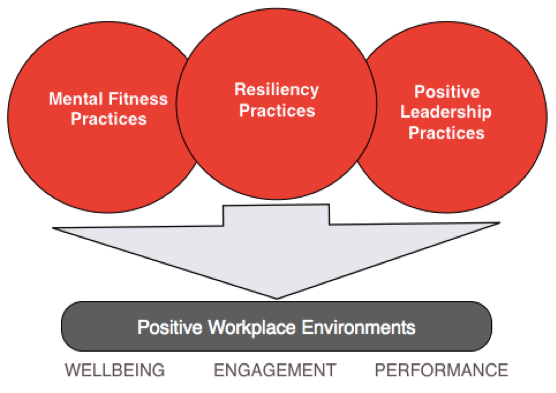
The PWF is composed of three distinct but inter-related domains: mental fitness, resiliency, and positive leadership (see Figure 1). In each domain, research-based individual and collective practices known to create positive school environments characterized by high levels of staff well-being, engagement and performance are promoted.
Figure 1: The Positive Workplace Framework (PWF)
Mental Fitness
The mental fitness domain is composed of three sub-domains – relatedness, competency, and autonomy/support – that are referred to as “needs.” Seen as the PWF’s foundation, this domain aligns itself with the elements of self-determination theory.3
Relatedness involves the development of our sense of connectedness with our co-workers. Evidence of relatedness practices being used include welcoming, exchanging with and checking in on our colleagues.
Competency focuses on our collective sense of worth, to ourselves and to the school. This mental fitness need is met when we recognize and use our strengths and build confidence in others.
Meeting our autonomy/support need is also important in building psychologically healthy and effective school environments. This can be done by ensuring everyone has a voice and choice and opportunities to collaborate with their colleagues.

Creating psychologically safe and healthy school cultures where everyone can thrive, be happy and be at their best involves being intentional about fostering relatedness, competency and autonomy/support practices within team relationships and daily routines. When this happens, we experience a greater sense of personal well-being, demonstrate higher levels of motivation, and perform optimally. Targeted training for school staff on practices that promote these conditions is an important initial step in optimizing a school’s culture.
Resiliency
Resiliency has been defined as the capacity to adapt and realize positive outcomes in daily living despite challenging circumstances4 and as the ability to persist in the face of adversity, to bounce back when challenges are encountered, to effectively navigate support systems and to apply resources that sustain well-being.5 The American Psychological Association specifies that resiliency is not a trait that people either have or do not have but that it involves behaviours, thoughts and actions that anyone can learn and develop.
The PWF builds on this latter point and extends the concept of resiliency from the individual to the group. The PWF’s second domain, resiliency, is comprised of five sub-domains (relationship, professional, attitudinal, emotional intelligence, and adaptation) referred to as assets that teams can learn and develop.
Relationship assets involve practices that build social networks of support and community. Teams displaying strong relationship assets have caring attitudes toward co-workers and ensure social support in difficult or challenging times.
Professional assets involve practices that build professional confidence, capacity, and problem-solving skills. Identifying and counting on the staff’s collective knowledge and skills, and ensuring the availability and use of appropriate and targeted professional learning opportunities are evidence of a team with strong professional assets.
Teams that apply attitudinal asset practices show increased optimism and positive dispositions even in the face of difficult situations or challenges. The theory supporting this resiliency asset has its base in positive psychology.6
Emotional intelligence involves the ability to understand and manage emotions, and to communicate in positive and respectful ways with others. Key actions associated with group emotional intelligence assets are understanding our own emotions and those of others, and ensuring positive communication with others in stressful times.
Adaptation assets involve practices that facilitate adjustment to changing situations through positive coping and thriving strategies. Strong adaptation assets are characterized by implementing plans proactively and solving problems as a team.
Teams that implement practices aligned with each resiliency sub-domain are better able to cope, learn, and thrive during challenging and stressful times and are better able to move beyond challenges and engage in new opportunities.

Positive leadership
The PWF’s third domain pertains to positive leadership and consists of five sub-domains (leadership virtues, positive communication, motivational knowledge and skills, energizing skills, operational tasks) consistent with the work of Kim Cameron.7
Leaders with strong leadership virtues foster compassionate behaviour among staff, accept and forgive honest errors and encourage expressions of gratitude. They regularly demonstrate gratitude, compassion, and forgiveness.
Positive communication occurs when supportive and affirmative language replaces negative and critical language. Supportive communication is honest, congruent, descriptive, specific and reflective. Strong leaders emphasize positive observations and prioritize solution-building approaches.
Motivational knowledge and skills refer to a leader’s awareness of employee strengths and interests and their capacity to engage everyone in using these strengths in school routines and activities. Motivational knowledge and skills are evident when leaders promote a shared vision and encourage a personal investment on the part of everyone involved in the school’s success.
Energizing skills are demonstrated when leaders keep staff feeling energized with their enthusiasm, vitality, openness, and optimism. They make time to listen to and understand people, are fully engaged in conversations, value and promote people’s contributions and accomplishments, and follow through on their commitments.
Operational tasks refer to the ability of leaders to keep staff engaged by clarifying roles and expectations and providing opportunities for teachers to grow professionally.
Overall, applying positive leadership practices improves organizational effectiveness and enables the implementation of mental fitness and resiliency practices, which lead to psychologically safe and positive school environments where everyone can thrive and be at their best.

Does the PWF apply to my school?
The Positive Workplace Framework is used successfully across Canada in both official languages. Its implementation follows a train-the-trainer approach supported by numerous online resources and validated measures. This approach has the advantage of building capacity at the school level instead of creating a dependency on external consultants. A small team of “PWF champions” are provided with the knowledge, resources and strategic individualized plans for facilitating, modeling and promoting evidence-informed positive psychology practices that contribute to healthy and effective schools.
Practices related to mental fitness needs are introduced first, in order to establish a solid foundation for the resiliency and positive leadership practices. The PWF features two validated questionnaires, the Mental Fitness and Resiliency Inventory (MFRI) and the Positive Leadership Inventory (PLI), which provide an objective profile of school environments for each of the 13 PWF sub-domains. Reports are accompanied by over 150 strategies that can be tailored to specific schools based on their respective results and realities. (See our companion articles on the MFRI and PLI). There are also validated versions of the MFRI for students (MFRI-S) and their parents (MFRI-P) available for schools who wish to have these populations contribute to the overall “picture” of the school environment.
Schools can access the Positive Workplace Framework online learning platform, where a wealth of resources such as short awareness and capacity building activities, e-books, targeted instructional videos, presentation resources for trainers, and adaptable implementation plans that provide rollout strategies, are found.
Finally, several schools also use the PWF and its resources for more specific applications: for new employee orientation, leadership development programs, professional development activities, and to support individual growth plans and professional reviews.
In an era when we are asked to do more with less, why not ensure we can thrive and be at our best at school by implementing the Positive Workplace Framework?
Photo: Diana Pham and Adobe Stock
First published in Education Canada, December 2019
Notes
1 W. Morrison and P. Peterson, Pan Canadian Joint Consortium for School Health Positive Mental Health Toolkit, 2nd Edition (WMA Products, 2016). http://wmaproducts.com/JCSH
2 WMA Wellness, Positive Workplace Framework (2019). www.wmawellness.com
3 E. L. Deci and R. M. Ryan, “Self-determination Theory: A macrotheory of human motivation, development, and health,” Canadian Psychology/Psychologie Canadienne 49, No. 3, (2008): 182-185.
4 W. Morrison and P. Peterson, Schools as a Setting for Positive Mental Health, 2 nd Edition (Pan-Canadian Joint Consortium of School Health: 2013).
www.jcsh-cces.ca/upload/JCSH%20Best%20Practice_Eng_Jan21.pdf5 W. Morrison and P. Peterson, A Review of School-based Approaches and Practices for Promoting Student Wellbeing (J.W. McConnell Family Foundation, 2015).
6 M. Seligman, Learned Optimism (New York, NY: Pocket Books, 1998).
7 K. Cameron, Positive Leadership: Tools and Techniques that Create Extraordinary Results (San Francisco: Berrett-Koehler, 2013).
-
The Idea Readiness Tool
Comments Off on The Idea Readiness ToolWhen great ideas struggle to get off the ground, it may be because people are not ready to adopt them. The Idea Readiness tool helps you take the pulse of your school community to understand how they adopt ideas and tailor your approach accordingly.
Do you have a new idea to promote workplace wellness that you would love to try in your school community, but don’t know where to start? If so, the Idea Readiness Tool may be right for you. The Idea Readiness Tool was developed by a team of researchers at the University of Alberta in partnership with education sector workplace wellness professionals. The tool has the specific purpose of helping to guide the spread of new ideas within a school community.
A new idea might be a new process, practice, initiative or policy – as long as it is new to your group. Some examples of ideas that you could try within your school community to promote workplace wellness include:
At the district level:
- create a district workplace wellness committee
- recruit and support wellness champions to plan collaborative learning events
- implement a district-wide policy to support employee well-being
- create a nutrition policy for food and drink options provided during meetings and staff events.
At the school level:
- set up a collaboration area to promote social connection
- start an after-work yoga class
- promote active transportation by creating a bike storage area
- arrange walking meetings for staff to encourage physical activity.
The Idea Readiness Tool works with any idea, no matter how big or small.

How and why did we develop the Idea Readiness Tool?
The Idea Readiness Tool started with some previous research that we did on the diffusion of smoke-free bylaws. This work looked at how municipalities learned from the policies that other jurisdictions implemented. More specifically, we used the Rogers’ Diffusion of Innovation Theory to examine policy learning. This theory looks at the process of change for innovation. The theory follows a bell curve and suggests that as more people try out an innovation, the rate of adoption continues to build until it reaches a tipping point. At this point, the rate of adoption slows and less people are trying the innovation. Using this theory and our knowledge of smoke-free bylaw diffusion, we developed the Policy Readiness Tool. The Policy Readiness Tool is an evidence-based, validated tool that was created to support policy change specifically in municipal and organizational settings.
After we developed the Policy Readiness Tool, our partners at the Alberta School Employee Benefit Plan (ASEBP) reached out to us. While they liked the Policy Readiness Tool, they found the policy language did not resonate at all levels within a school community audience. They expressed a need for a tool specifically tailored for use in school settings, so together we modified the original Policy Readiness Tool to be more applicable to the unique needs of the school community.

So what is the Idea Readiness Tool and how can it help me?
The Tool involves three simple steps for you to follow.
1. Complete a quick 10-question checklist.
This checklist will help you to identify how ready your school community is for the new idea you are thinking about. The checklist can do this by helping you determine what your group’s adoption style is.
Is your school community an innovator, majority or late adopter? Use the checklist to find out!
A couple of quick highlights about these three adoption styles:
Innovators: Are often the first to try out new ideas. They are adventurous and are not afraid to take risks, even with potential uncertainty.
Majority: Are deliberate as they take time to figure out if they want to try a new idea. They typically like to see other people try an idea before they dive in. They are of the philosophy that it is better to change as a group.
Late Adopters: Are often skeptical of new ideas and like to maintain the status quo. They like to wait for the majority group to adopt a new idea before taking it on themselves. In some cases, they may even require an organization-wide mandate to make the change.
2. Identify strategies to apply in your school community.
Now that you have figured out the level of readiness of your school community (for this idea), it is time to lay out which strategies you want to use. The Tool provides a detailed list, based on level of readiness, of strategies that you can use.
Here are some sample strategies to use based on your school community’s adoption type.
Innovators:
- Present the idea in a way that sparks the school community’s innovative spirit.
- Identify a wellness champion in the school community to help carry the idea forward.
Majority:
- Emphasize that other schools, similar to theirs, are adopting the idea (specific examples are helpful too).
- Look for incentives to help the school community adopt the new idea, such as awards and funding.
Late Adopter:
- Find evidence that shows the positive outcomes the idea can have for a school community.
- Build relationships with school administrators to gain support for your idea.
3. Use the resources to help carry out the strategies.
Accompanying all of the strategies are helpful school-specific resources to help you to move the new idea forward, such as:
- Alberta Health Services’ guide Healthy Eating in Schools: Policy recommendations
- Alberta School Employee Benefit Plan’s blog The Sandbox: Your space for healthy school recommendations
- Pan-Canadian Joint Consortium for School Health’s Positive Mental Health Toolkit.
Whether you are a teacher, support staff, administrator, parent, wellness champion, or anyone else interested in encouraging healthy school community development, the steps in the Idea Readiness Tool will support you in implementing your new idea. Find out how our partners at ASEBP use the Idea Readiness Tool with school districts in Alberta in the sidebar “From Idea to Action.”
What should I keep in mind when using the Idea Readiness Tool?
- There is not a good or bad adopter type. Every adopter type has its own strengths and weaknesses.
- Your school community may be at a different level of readiness for each new idea. It is important to come back to the checklist for each new idea, and identify new strategies and resources to support that idea.
- A new idea can be anything (e.g. a process, practice, policy or initiative) as long as it is considered new by the group thinking about its adoption.
- The checklist can be completed individually or as a group.
From Idea to Action: Bringing the Idea Readiness Tool to life
How does the Idea Readiness Tool stand up to application in the real-world of education? The workplace wellness liaisons at the Alberta School Employee Benefit Plan (ASEBP) shared how they incorporate the Idea Readiness Tool into their work with school districts.
ASEBP’s top three reasons why the Idea Readiness Tool is worthwhile:
1. Moving from Why to How
When we are excited about an idea we can quickly move from idea to action without stopping to assess how the readiness of others should impact our process to move an idea forward. Assessing readiness should happen before you start action planning and inform your action planning.
2. Common Language
When we all use the same terminology and process, we can have a mutual understanding that will lead to success.
3. Staying Motivated
It is easy to lose motivation when we pitch an idea and it falls flat. The Tool has empowered wellness champions to learn that they could have pitched the idea in a way that aligned with their colleagues’ readiness to more effectively gain buy-in.
The Tool in Action
While working with a school district wanting to advance their mental health strategy, ASEBP workplace wellness liaisons facilitated a workshop to guide the district wellness committee through the Idea Readiness Tool in order to explore the idea of offering a training program to increase staff competence around mental health.
The committee completed the Tool’s checklist in two ways – once as if the committee itself was the school community they were bringing this idea back to, and again with the actual school community in mind. This exercise showed the committee that they were Innovators, while their school communities were a mix of Majority and Late Adopters. This was an “ah-ha” moment as they realized in the past, they had moved into action too quickly. With this realization and rise in motivation, the committee then began to explore the strategies outlined in the Tool to support working with a mix of the Majority and Late Adopters. They landed on providing evidence for all those impacted and connecting with leaders throughout the school district to provide more information, before moving forward with the training.
The committee attributed their success in implementing this idea to using the Idea Readiness Tool, developing a common language around readiness and being more deliberate in planning how to communicate their idea. Now, The Idea Readiness Tool has become part of their process from generating ideas to moving them into action.
The Idea Readiness Tool has proven to be a valuable tool to support the challenging yet important task of promoting healthy workplace environments within K-12 education.
Find out more
The full Idea Readiness Tool is available in PDF format and online at www.ideareadinesstool.com. The website includes videos to explain what the Tool is and how it can be applied; the checklist; and the comprehensive list of strategies and resources. Or visit The Sandbox to spark new ideas and connect with other wellness champs!
Photo: iStock and Adobe Stock
First published in Education Canada, December 2019
-
Nunavik’s Compassionate Schools
Comments Off on Nunavik’s Compassionate SchoolsNunavik’s Kativik Ilisarniliriniq school board launched the Compassionate Schools initiative to better support its students, who experience disparities in health and well-being. Elements of the program include training in understanding trauma, Restorative Practice, and a universal system of Positive Behaviour Interventions and Support (PBIS).
Kativik Ilisarniliriniq is a school board located in Nunavik, a remote region in northern Quebec. Inuit, who have inhabited the region for thousands of years, live in 14 small fly-in villages spaced along the Hudson and Ungava coasts.
The project aims at facilitating the social, emotional and academic success of students, while simultaneously educating teachers and staff on the impacts of trauma on the brain; it also seeks to provide maximum support to teachers.
The region’s legacy of colonization includes residential schools, forced relocations to the high Arctic, sled dog slaughters and the Sixties Scoop,1 yet it suffers from an extreme paucity of resources to help people heal from the impacts of intergenerational trauma. As a result, the current generation of children experiences disparities in health and well-being.
Members of the region’s school board, Kativik Ilisarniliriniq (KI), wanted to find a solution to the resulting challenges they saw students facing. Inspired by schools in Washington that had dealt with similar challenges, KI launched Compassionate Schools as a pilot project in three of its 17 schools in 2012.
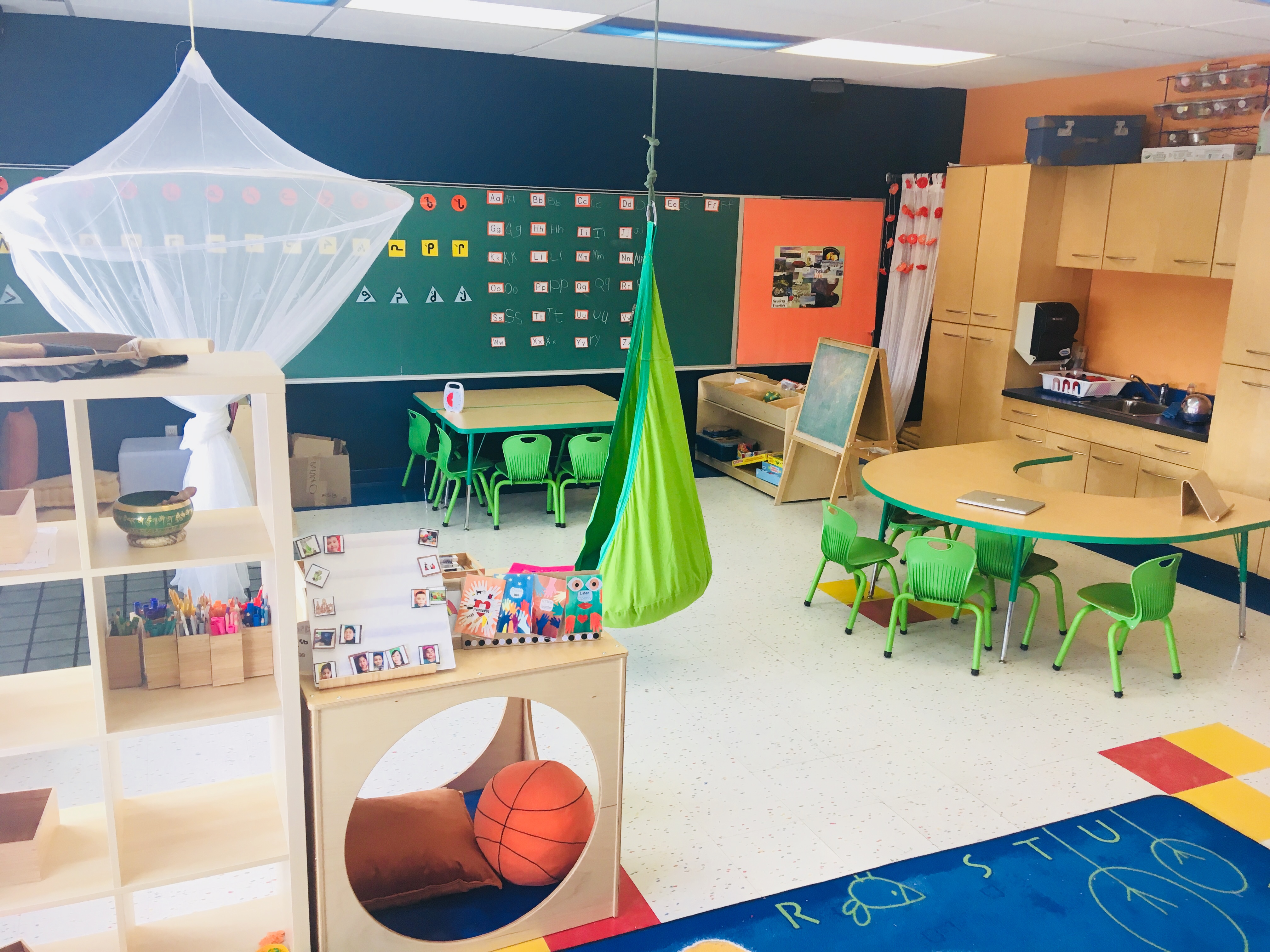
The project aims at facilitating the social, emotional and academic success of students, while simultaneously educating teachers and staff on the impacts of trauma on the brain; it also seeks to provide maximum support to teachers. Each school adapts the approach to its home community so as to establish a positive, safe, consistent and predictable framework that is culturally relevant. Schools receive training as well as individual support from a dedicated coach on staff. A travelling regional pedagogical counsellor also visits regularly to encourage reflective practices and build skills in improving class climate, student engagement, and support for students with challenging behaviours.
The progressive implementation of the Compassionate Schools framework reached an important milestone in 2017. That year, all 17 schools had received training on teaching practices that take into account the trauma that may affect some students, and were introduced to the design of a universal system of Positive Behaviour Interventions and Support (PBIS), which creates a consistent intervention approach throughout the entire school. All schools additionally received training in Restorative Practices, an approach that helps facilitate relationships and trust. Schools use these as a foundation for responding to wrongdoing in a way that promotes community outreach, empathy and accountability.
The foundation of PBIS is universal prevention for all students and staff. Examples include teaching behavioural expectations school-wide as well as adopting school-wide approaches to recognizing positive behaviours. Teachers play a major role at this tier as they build relationships with students that can break down the self-doubt, hopelessness, fear, and barriers against trust that can plague students who have experienced trauma. By having clear, consistently taught expectations with frequent feedback, teaching students self-regulation skills, providing calm areas, and striving to identify and meet the needs behind students’ behaviours, teachers and other staff are able to create environments that are psychologically safe for students; as a result, they can feel confident to take the risks necessary to grow and succeed.
Early interventions are introduced for at-risk students who do not respond to the universal prevention. “Check-in Check-out” is one such intervention that involves pairing students with a trusted mentor who provides daily encouragement and support. Goals are set using a progress report with specific co-constructed objectives for which the student receives feedback throughout the day from each teacher. To date, school teams from 15 of our schools have received training on team processes and interventions for at-risk students.
While previously Compassionate Schools Services was a stand-alone project, it has recently merged with Complementary Services. This department is responsible for special education, student counseling and psychological services, as well as a wide variety of other support services. The new department, Complementary and Compassionate Services, led by Tunu Napartuk, will be well positioned to ensure a continuum of academic, mental health and special education services at all levels of prevention and intervention, using a common framework.
With the integration of the Compassionate Schools approach into the delivery of special education and psychological services to students, we are proud to see the school board at the forefront of some of the best practices identified by recent Canadian and international research.
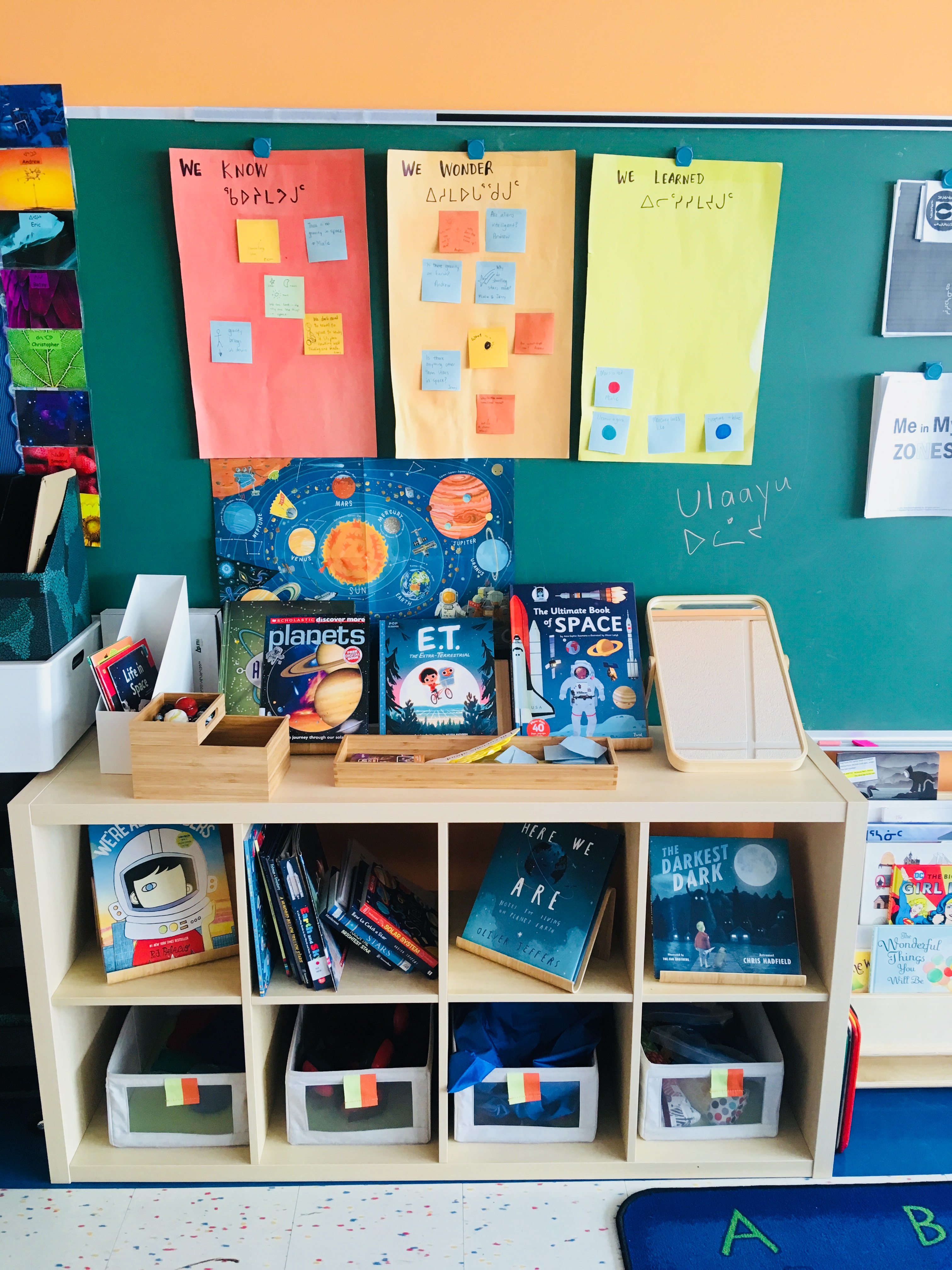
Inside the Harmony Room
By Jenny McManus
The beat of the drum brings the group together around the carpet. We celebrate the morning improvising an ayaya song to notice the subtle changes in nature – like the sun shining brighter through our window – to recognize students’ effort and achievement, and to strengthen their memory recall. Beaming with pride, the students clap out the number of stars they earned that morning as tokens for following expectations based on our school values of respect (susutsaniq), unity (tatiqatigiiniq), harmony (saimautiniq), and vision (tukimuatsianiq).
Every morning, we remind ourselves to listen openly, stick together, be peaceful, and dream big with posters on the wall that we made together, hand gestures that silently redirect, and smaller cards to flip to indicate unexpected behaviour. Each student has a colour on the wall for displaying their names, stars and evidence of learning. In the Saimautivik, or Harmony Room, they find a sense of belonging that nurtures friendships, empathy, and growth.
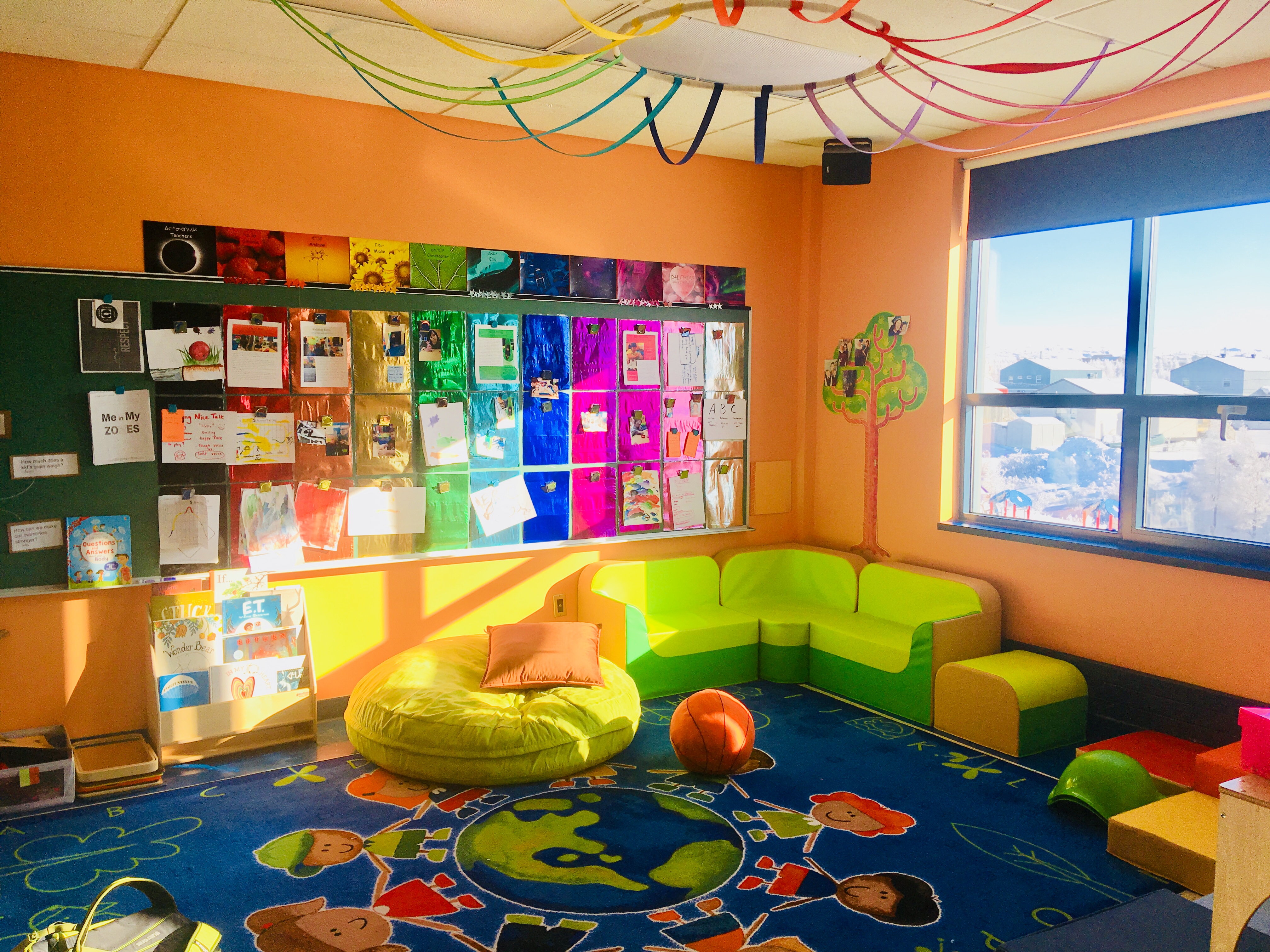
The Saimautivik is a social and emotional learning space at Pitakallak School in Kuujjuaq. Spearheaded by Jenny McManus, the Compassionate School teacher, it provides a home base for a nurture group, social skills groups, and extracurricular activities. Nurture groups are inclusive interventions for students that the Boxall profile (an online assessment tool) identifies as having delays in social, emotional, or behavioural development and who are struggling to flourish in the regular classroom environment. The Saimautivik brings together teachers and support staff to provide evidence-based practices to support our students in need and experiment with new directions in learning.
As a traditional Inuit value, harmony brings peace between people, agreement between ideas, and understanding in place of conflict. A classroom can be warm and inviting, with comfortable spaces for gathering and calming down, tables for sharing meals or collaborative projects, and nooks for using hands-on materials. The Saimautivik’s bright colours invite play and creativity, yet its organization supports the daily routines and serious, focused study.
Using tools that Compassionate Schools and Complementary Services promote the targeted interventions are supporting growth and change on a school-wide level.
Through the security of routine and predictability, caring adults who model positive relationships, clearly and mutually defined expectations, food sharing, opportunities for hands-on and paper-based numeracy and literacy, and engaging activities that are developmentally appropriate, the students make great gains in their development in a short period of time. Using tools that Compassionate Schools and Complementary Services promote, such as the Zones of Regulation and other trauma-informed approaches, the targeted interventions are supporting growth and change on a school-wide level.
Teachers, families, and the students themselves share stories of increased confidence, wider social circles, and greater academic achievement. Since the introduction of the intervention halfway through this school year, behavioural referrals have been reduced by half.
Rejected furniture and random supplies used to accumulate in this unused classroom; students would hide there when escaping their responsibilities. Now a place for healing and learning, it challenges the traditional concept of a classroom and the role of a teacher.
Find out more
Join our team! Visit www.kativik.qc.ca to view current job openings!
photo: Jenny McManus
First published in Education Canada, December 2019
Notes
1 The “Sixties Scoop” refers to the large-scale removal or “scooping” of Indigenous children from their homes, communities and families of birth. This practice took place during the late 1950s until the early 1980s and it has affected Inuit communities. The physical and emotional separation from their birth families also left many adoptees with a sense of lost cultural identity, which continues to affect adults and Indigenous communities to this day.
-
Better Together
Comments Off on Better TogetherWith wellness becoming so mainstream and direct links connecting employee wellness to productivity, why are so many educators experiencing chronic fatigue, stress-related illnesses, feeling overwhelmed or unwell – or even leaving the profession? Roth argues that we cannot expect teachers to implement health and wellness programs without support: everyone, at all levels in the education sector needs to buy in.
Every time I walk into a classroom, I find myself in absolute awe of the teacher. I’m amazed at how they accomplish their long list of daily tasks, manage 25-30 students, deal with student emotions and behaviours, and complete the math lesson they planned the night before. Educators today are faced with ever-expanding To-Do lists and frequently the expectation that they do more with fewer resources. No longer are teachers “just” responsible for instructing academic content. Educators are now required to teach emotional regulation and social skills, while managing the diverse learning needs in classrooms that exceed the optimal number for student achievement of 18 students per teacher. They also work with students from incredibly diverse backgrounds and those with challenges related to socio-economic status, physical challenges and mental health issues.
I can’t help but wonder: Who’s taking care of educators who do so much for others every day? Whose responsibility is it to care for teachers, nurture healthy schools and classrooms and ensure that everyone in the education sector is supported in their health and wellness endeavours?
Like most rewarding challenges in life, I would say it takes a village.
The case for wellness
Workplace wellness has been part of the daily vernacular in every career sector for quite some time. Extensive research on employee health and wellness clearly demonstrates that a healthy workforce is a productive workforce. And honestly, it seems like a fairly simple premise. If we are feeling good and taking care of our own needs, then we’ll be able to provide a quality product or service. With wellness becoming so mainstream and direct links connecting employee wellness to productivity, why are so many educators experiencing chronic fatigue, stress-related illnesses, or lack of job satisfaction? Why are so many feeling overwhelmed or unwell?1 Why are many leaving the profession in search of new careers? It’s easy to find ideas on self-care in this information age, so why aren’t teachers doing a better job of wellness?
We simply cannot expect teachers to implement health and wellness programs without support. When I work with teachers, they easily list what to do in the classroom to meet the needs of their students, but figuring out what they need for their personal well-being is not as simple. Upon asking a teacher what she did for her own self-care routine, she became tearful on the realization that she’d been focused on the needs of others and had completely lost sight of what she needed. Without encouragement and permission to put personal wellness on the agenda, many teachers find themselves in the same situation.
This is why we need a big-picture team approach to teacher wellness. Many of the issues that create stress in the workplace are systemic challenges that educators have very little control over. In order for wellness initiatives to take root and grow, everyone, at all levels in the education sector, needs to buy in.
In business sectors, health and wellness programs have been in place for several years and companies such as Google and Delta Hotels know that investing in these initiatives benefits the bottom line with increased productivity, lower absenteeism, improved employee satisfaction and reduced employee benefit costs. In education, there are unique challenges impacting wellness initiatives. Increasing workloads, funding limitations, insufficient support personnel, population and demographic diversity of school communities, rigid work hours, reduced autonomy, difficulty seeing improvement in one’s teaching abilities and increased pressure to demonstrate improved outcomes are factors leading to burnout.
The most important component for supporting teacher wellness is funding – and not just throwing money into an account labelled “Teacher Wellness” but taking a critical look at class size and composition, support for students with special needs, and ensuring we are implementing best-practice policies at every available opportunity. Best practice policies allow teachers to build a classroom community where students grow, thrive, and learn. Budgets are always tight, but the excuse that there isn’t enough money is hard to justify when extensive research shows that the return on investment can be significant. A 2010 review published by the Harvard Business Review stated that well-run comprehensive wellness programs could offer up to a 6 to 1 return on investment.2 This may seem too good to be true – but even more conservative data illustrates a returned 3.80 dollars in health care savings for every dollar invested.3

Cost reduction is only one of the benefits achieved by implementing wellness initiatives in school divisions. You can measure absenteeism due to stress leaves and sick days, but there are many other factors that are harder to measure. What are the effects of increased stability in the classroom, which would have a positive impact on individual student mental health and learning? Encouraging and supporting mindfulness strategies reduces stress and improves prosocial behaviours, which translates into less time dealing with behaviour management and increased time on instructional learning. In a data-driven world, measuring these outcomes can be challenging, but critical to supporting health initiatives.
Although Occupational Health and Safety measures have historically focused on physical injuries, psychological harm related to the job are included in some provincial and territorial Occupational Health and Safety Acts, which places responsibility on employers to take action to support their employees’ mental health and well-being. Mental health initiatives are in the early stages of development in many divisions, and unfortunately there continue to be individuals at all levels of management who continue to view mental health and wellness programs as “fluff.”
Levels of leadership
Allocating funds and prioritizing employee wellness programs are first steps, but if we truly want wellness initiatives to take hold, involvement at all levels of a school division is critical. A culture of wellness from the top leaders throughout all levels of employees is necessary to promote engagement and commitment. This requires a significant cultural shift, where an organization begins to emphasize employee well-being not just as a standalone program, but in all policies, programs, procedures, and behaviours. I was pleased, for example, to see more focus on the Mental Health Matters campaign and the hiring of a Wellness Consultant by my school division this year, demonstrating a willingness to support their employees’ well-being.
After years of working with many administrative and support teams, I’m often able to tell quite quickly if leaders place emphasis on their own personal wellness and that of their staff. How many principals send out emails to their staff after 6 p.m. at night or on weekends? This one small act sets the expectation that work is always on. Buy-in by the senior leaders is essential. When senior leadership shows that wellness is a priority, they become role models for work-life balance, resulting in more successful wellness programming.4
School administrators, principals and vice principals play a critical role in creating a culture of wellness. They set the tone for the school community and by placing an emphasis on teacher wellness, and they can create opportunities for daily wellness to occur. This can happen by modeling a good work-life balance, setting a wellness goal for the school, encouraging time boundaries for work activities, building wellness strategies into the day-to-day schedules of the school, and collaborating with their staff members to find out what people are needing. A whole-school mindfulness five-minute session each day, walking programs over the lunch hour, and encouragement to have a life outside of work provide options to infuse wellness into the workday.
There is a momentum or trickle-down effect of wellness. When teachers are focused on wellness and supported by funders, employers, administrators and their colleagues, health and wellness spreads to the classroom. Students learn to embrace wellness strategies and to integrate personal wellness earlier in their lives.
Personal responsibility: this is our life
The great Canadian poet and musician Gord Downie wrote “No dress rehearsal, this is our life.” Personal wellness comes from within and we have an individual responsibility to prioritize our own health and well-being. While it’s true that there need to be systemic changes, continuing to point blame at others or the system places us in the role of victim. In reality, you are the CEO of your life. Start by fostering self-awareness of what nourishes you physically and emotionally so you can ensure those activities make it to the top of your To-Do list. Understand Us, a mental health initiative and non-profit organization, created the “Share your Recipe” campaign to encourage individuals to talk openly about their “ingredients” for mental health.5 I like the analogy of creating your own personalized recipe for mental and physical wellness. Think about what might work for you and commit to pursuing those things that bring you nourishment. Consider working with other professionals such as physicians, therapists, and counsellors for additional support. Look to your professional associations and colleagues for ideas. The resources are out there, but the responsibility falls to each of us to prioritize our well-being and get what we need to feel better.

Better together
If we want healthy, happy, and productive teachers who are able to focus on and support the learning needs of their students, make positive gains in literacy, improve on-time graduation rates, and create safe schools and innovative classrooms, we need to work together to mitigate the challenges. It’s a process that requires funding, continuous work and commitment by government, school boards, school divisions, school administrators and teachers.
It’s time for that cultural shift to happen. Embracing wellness and focusing on mental health for teachers will benefit everyone. Let’s work together to give our teachers and our students the support they need for a life full of learning and the pursuit of happiness.
Photo: iStock and Adobe Stock
First published in Education Canada, December 2019
1 Bernie Froese-Germain, Work-Life Balance and the Canadian Teaching Profession (Canadian Teachers Federation: July, 2014).
2 Leonard L. Berry, Ann M. Mirabito, and William B. Baun, “What’s the Hard Return on Employee Wellness Programs,” Harvard Business Review 88, no. 12 (2010): 104-112.
3 Soeren Mattke, H. H. Liu, J. P. Caloyeras, et al., Workplace Wellness Programs Study: Final report (Santa Monica, CA: RAND Corporation, 2013).www.rand.org/pubs/research_reports/RR254.html
4 Berry, Mirabito, and Baun, “What’s the Hard Return on Employee Wellness Programs,” 106.
5 “Share your Recipe,” Understandus.ca. https://understandus.ca/uu-initiatives/syr
-
Teaching and Learning While Grieving: Lifting the curtain on grief to better support educators and students experiencing loss
Comments Off on Teaching and Learning While Grieving: Lifting the curtain on grief to better support educators and students experiencing lossBuilding strong relationships with students is a necessary part of being a good teacher, yet having the strength to be vulnerable and authentic in these teacher-student relationships often requires that educators repress their true emotions — like anger, fatigue, or frustration — in favour of more “workplace appropriate” emotions. When we think about an emotion as complex as grief, which is rarely discussed in schools, it can be easy to understand why it can be so burdening for teachers to constantly keep a smile on while masking how they truly feel.

Nine months ago, my mother was diagnosed with cancer. Because she was generally healthy and active, I was naively convinced that she would live to see her 100th birthday. Even as my mother’s health deteriorated and my family duties piled up, I continued teaching at universities and middle schools all while continuing forth presenting my research on ‘emotional labor’ at various conferences.
I thought I had been doing just fine at handling all of the stress — whether that be from accompanying my mom to radiation treatment appointments and emergency trips to the hospital, or the overall experience of witnessing my mom gradually lose her independence. Then, one day, while teaching a lesson on poetry during one of my summer school classes, my eyes had unexpectedly filled with tears as I presented a metaphor from the song “The Bridge” by Chris de Burgh.
To my horror, I had broken a “workplace appropriate” rule as I silently wept while the song played. Fortunately, the song was over four minutes long, and I could use my long hair to shield my face while I tried to wipe away my tears without anyone noticing. By the time the song had ended, I was able to compose myself and make a silly joke about sad love songs while carrying forward with my discussion on poetry.
My students were clearly uncomfortable during what must have been an awkward moment seeing their teacher cry. They ignored my outburst, kept their heads down, and carried on jotting down notes. I had told them earlier in the week about my mother’s cancer, yet the incident was never discussed and we continued with the lesson like nothing had happened.
Why there’s an emotional silence around grief in the classroom
‘Grief’ is described in the 2012 Encyclopedia of Human Behavior as the emotional response to bereavement — the loss of a significant person. The process of grieving is often described as a series of stages — denial, anger, bargaining, depression, and acceptance — as first defined by Dr. Elisabeth Kubler-Ross in 1969. More recently, grief has been described as being a more complex and nuanced response to loss, rather than merely moving through a series of stages.

The experience of grief can result in many physical and psychological symptoms including sleep deprivation, appetite changes, changes in energy levels, physical pain or discomfort, using prescription or other drugs, and increased risk of illness. While most grieving people experience these to varying degrees, symptoms will ease over time. Nevertheless, depending on the suddenness or severity of the loss, these symptoms can last for weeks, months, or years.
Grief is a taboo subject in western schools that’s rarely discussed openly between educators and students. Grieving is very common in childhood, where it’s been estimated that before the age of sixteen, 1 in 20 students in the United States will experience the loss of a parent.
Discussion on how to help students who are grieving is currently not a priority in pre-service teacher education programs or within school curricula. Classroom lessons about death, dying, grief, and grieving remain a gap in teaching and learning. This silence might stem from a fear of death and dying, or concern that talking about these subjects could trigger unmanageable emotional outbursts from students or staff. Unfortunately, grief continues to be perceived as a private and individual process that doesn’t require school-wide intervention.
How to work towards unsilencing grief in the classroom
There are key ways to surface discussions on supporting children, youth, and adults with the common human experience of grief.
Support for students
Given the probability that one or more students in every classroom is experiencing grief, educators should become more aware of the psychological and physical symptoms that are associated with it. Grieving children and youth can display a variety of behaviours including inattention, self-blame, clinginess to parents or staff, and overreaction or underreaction to emotional triggers, the latter of which could be misdiagnosed as learning problems. Staff in schools should be made aware of a student who has had a significant loss in their life so that they can be better prepared to assist and support them appropriately. Resources such as After a Loved One Dies by the New York Foundation provide caregivers with suggestions on how to support children who are experiencing the loss of someone who has passed away.
Additionally, educators should be aware that this loss of a friend or loved one can have a devastating impact on the student’s home life.

The student is likely surrounded by grieving adults who may be unable to fully support them. Daily mundane tasks, such as getting ready for school, catching the school bus on time, completing homework assignments, and making healthy lunches, can fall by the wayside due to this disruption in the student’s primary care network. Furthermore, the child or youth may not be getting the emotional support that they need and may be afraid to upset the adults around them by speaking of their own distress.
Support for colleagues
As I’ve gone about presenting my research on emotional labor, I’ve heard one dominant comment from educators: “There’s no crying in teaching!” As class sizes become larger and time is spread thinner for teachers, school leaders, educational assistants, and psychologists across more and more students, even less time is available during the school day for grieving adults to express their emotions in their everyday work.
Most adults describe grief as something that they eventually come to tolerate, but they nonetheless carry the memory of their loss with them in their daily work. For educators who have experienced loss, often the unspoken rule is that they should just “get on with it” once the immediate crisis of death has passed. Grieving educators are not given the time, space, or relational support that they need during their workday to be the caring, calm adults that students need in the classroom.
Instead of seeking the end of grief, supportive adults can help fellow colleagues work through it by understanding and adjusting to their expression of the physical and psychological symptoms of grief. Most adults have different ways of expressing their emotions and may do so through physical exercise, writing, speaking, or singing loudly in their car. Rather than moving straight to the common advice of “You need to talk to someone!”, ask “What do you need right now to release how you’re feeling?” or “Do you have the time, space, or relational support that you need to deal with your grief?”

The months-long process of witnessing my mother’s life drain away has opened my eyes to the need for educators to both give and be given space to have conversations about grief in schools. Even as a 47-year old woman, I have felt unprepared to cope with the heavy sadness and broken heart generated by losing my mother, even as I feel gratitude for her long life and legacy of love and support. Schools are a community of support for children, youth, and adults who have lost a significant person in their life. As such, educators have a responsibility to lift the curtain on grief and grieving in the classroom.
References and Additional Information
Kennedy, C., Keeffe, M., Gardner, F., & Farrelly, C. (2017). Making death, compassion and partnership ‘part of life’ in school communities. Pastoral Care in Education, 35(2), 111-123.
Hochschild, A. (2012). The managed heart commercialization of human feeling. Berkeley: University of California Press.
Kendrick, Astrid Helene. (2018). Inspiring Change: A Hermeneutic Phenomenology Exploring the Lived Experience with Emotional Labor by Female Health Champions Implementing Comprehensive School Health Reforms. Werklund School of Education.
Kendrick, A. (2018). Let go of toxic workplace ’emotional labour’ in 2019. The Canadian Press, p. The Canadian Press, Dec 20, 2018.
Kennedy, C., Keeffe, M., Gardner, F., & Farrelly, C. (2017). Making death, compassion and partnership ‘part of life’ in school communities. Pastoral Care in Education, 35(2), 111-123.
Schonfeld D.J. & Demaria T. (2016) Supporting the Grieving Child and Family. Pediatrics 138(3). AAP committee on psychosocial aspects of child and family health, disaster preparedness advisory council.
Strobe, M. & Strobe, W. (2012). Grief and Bereavement. Encyclopedia of Human Behavior. Retrieved from https://www.elsevier.com/books/encyclopedia-of-human-behavior/ramachandran/978-0-12-375000-6
Photo: Adobe Stock
-
Leading despite your job title
Comments Off on Leading despite your job titleIf you had to describe the culture of your school, what would you say? If the students, parents, or staff in your school community were asked to describe your school’s culture, what would THEY say? And what’s the impact of this culture on the well-being of your staff?
The term “school culture” refers to our beliefs, attitudes, perceptions, and ways of doing things, including the quality of the relationships that are developed between colleagues and with students. Culture is often based on both written rules (i.e. a code of conduct) and unwritten rules (i.e. how staff believe they should act and behave, or what behaviour they think is expected of them).
Whether we like it or not, even if our intentions don’t change as we transition towards a leadership role within a school, our job title often leads us to become blocked off from certain channels of information that we may have previously had access to.
Ed Catmull, author of the book Creativity Inc., explains it like this: “As my position changed, people became more careful how they spoke and acted in my presence. I don’t think my actions changed in a way that prompted this; my position did. And what this meant was that things I’d once been privy to became increasingly unavailable to me.”
Ed Catmull goes on to say that many new leaders often make the mistake of assuming that their access to these information channels hasn’t changed. He calls this phenomenon “The Hidden”: a blind spot that escapes our field of perception. Ed’s words remind me of the importance of being continually and intentionally looking for these so-called “blind spots.”
Think about it – what are the implications for school culture and staff well-being if you aren’t aware of your team’s challenges, interpersonal strains, and how your team is coping with work demands? In my estimation, the implications would likely be disastrous. As school leaders, we are stewards of culture and well-being, and so it’s up to us to raise the atmosphere and lead the change that we’d like to see. But how do we stay connected to the “true pulse” of our school culture? In other words, how do we stay constantly in the know about how staff are truly feeling in the workplace, despite our job title?

As a principal myself, I’ve been practicing two winning approaches to ensure that I’m in the loop with how staff are actually living out the culture that we seek to build, while opening up channels of information and communication. The first approach targets staff personal growth, while the second approach targets staff collective development and team spirit.
Approach #1: Monthly individual meetings
During the school year, I invite each of my staff to optional monthly coaching meetings, which usually take around 15-to-30 minutes. Meeting dates are selected in advance and marked down in our calendars. In short, we make these meetings a priority.
During these meetings, we set goals and discuss pedagogy or any other subject that has an impact on their personal and professional growth. In short, these conversations allow us to get to know each other better.

Above all, these meetings provide me with vital information that allows me to help maintain the well-being of my staff members, while allowing me to know where they’re at in terms of classroom pedagogy or other projects they’re undertaking throughout the school year.
Approach #2: Scrum-style team meetings
Instead of holding traditional monthly staff meetings, we organize “Scrum” meetings every two weeks. The goals of these meetings include sharing successful practices, keeping informed, promoting peer support, building team spirit, and ensuring positive mental health.

Here are five key elements of our Scrum-style team meetings:
1. Members must stand during the meeting
2. Each person is invited to answer three questions:
- What’s something new that I did, or something that worked well, that I could share with the team?
- What am I going to do that could be helpful to the team?
- What do I need?
3. Each person has up to three minutes to share their thoughts
4. A “Scrum Master” is designated to lead the meeting
5. A timekeeper is designated to ensure each person gets their three minutes to share.
These meetings not only allow us to learn about what each person does in their respective roles, but also grants us the opportunity to celebrate successes, offer support, ask questions, get to know each other, and laugh together. At the end of each meeting, people often stay behind to continue on the conversation, and leave with a smile on their face including a sense of satisfaction and pride in knowing that they have an important place on our team. It’s a really fantastic experience!
Maintaining a culture of staff well-being starts with you.
We all have a responsibility in helping maintain a positive school culture. But as in all workplaces, there are times when things go less-than-well and negativity can infiltrate itself into our culture.
How do you respond in these less-than-well situations?
A. Do you become easily bogged down with the negative? Is your first reaction to complain or to judge, or to react strongly on your emotions?
OR
B. Are you quick to stomp down the negative? Do you demonstrate empathy by offering help or solutions instead of judgment? Do you take the time to listen carefully so as to truly understand the situation, rather than merely provide answers?
Let’s take a few moments to think about this – do you find yourself mostly acting like A or like B? When faced with change or challenge, what position do you adopt – one that is more creative or one that is reactive?
Personally, I always strive to adopt a creative position when faced with challenges. When I allow my growth mentality to take the lead, this gives way to positivity and optimism, which in turn feeds my creativity and allows me to arrive at new solutions. Choosing to be creative has an invaluable and positive impact on well-being, and leads to increased confidence, hope, and energy – all of which keep our “bucket full.”

Building and maintaining a positive school culture starts with you, the school leader. Each person has the power to choose how they’ll react in a given situation. This reaction has an incredible influence on the overall school atmosphere, including the well-being of yourself and of those around you. That’s why it’s so important to never lose sight of the influence we have as leaders each and every day through the words we speak and the actions we undertake.
Photo: Adobe Stock
-
Building a Positive Staff Culture
Comments Off on Building a Positive Staff Culture
A positive school culture makes work and school fun, supportive, and purposeful. But how do you get there? This principal shares his learning about building school culture that is strengths-based, collaborative, innovative and focused, and grounded on the values of trust, happiness, curiosity and care.
During my 20 years as an educator, I have been part of school staffs who could not talk, would not talk, and even should not talk to each other. I have also worked and learned alongside school staffs who have embraced a positive school culture – one that makes work and school fun, supportive, and purposeful. So how have some staffs created this positive culture while others struggle to get there? This is a question that I have focused on for the past five years as a school principal.
Culture is hard to see but we can always feel it; it is the vibe of a school – the beliefs, attitudes, and behaviours that exist within a school staff. In any organization, we continually strive to make positive change; however, as Peter Drucker says, “Culture eats strategy for breakfast,” so before we can tackle real change, we need to work as a staff to create a positive school culture. How do we do this?
At the previous school where I worked as principal, our staff focused on building a positive staff culture for four years. Our goal was to achieve this, not through isolated team-building activities, but in the way we actually did our work together as a staff of educators.
In one of our first staff meetings, I introduced a collaborative activity and it flopped miserably. When I attempted to encourage more focused conversation, one of our respected veteran teachers stated, “We don’t know how to do this.” I tried rephrasing the instructions for the activity but he interrupted and said, “No, we don’t really know how to talk like this.”
This was such a turning point in our staff meeting culture, as it was clear we needed to start from there and first build trust, safety, and support. We could not dive into the real work until we established a place where this deeper dialogue could occur.
We started with creating some norms or commitments for our staff meetings and collaborative time (Hat tip to Cale Birk for the idea). The staff came up with the list below:
1. The topics will be relevant to what we do (and what we want to do) at our school.
2. We will be flexible and willing to try new things and ideas.
3. We will share the successes happening at our school.
4. We will create strategies to provide equitable opportunities for each of us to share our voice (and not be dominated by a few).
5. We will acknowledge that a sense of humour is important and will embrace opportunities for light-hearted dialogue.
6. We will stay on topic and stick to the agenda.
7. We will have a clear timeline for implementation of ideas.
8. There will be a clear purpose to the discussion and agenda items.
9. We will encourage others for their ideas and ask others for clarification, comments, ideas and suggestions.
10. We will provide time for grade-level collaboration.
11. We will always make time for getting together and having small group discussions.
12. We will respect that some may prefer to listen and reflect.
This set of commitments guided our behaviours and helped create staff meetings that felt safe enough to have the “real” conversations that often only take place in the parking lots and staff rooms. Prior to a discussion that might have some opposing views, we always reviewed and reminded ourselves of these commitments.
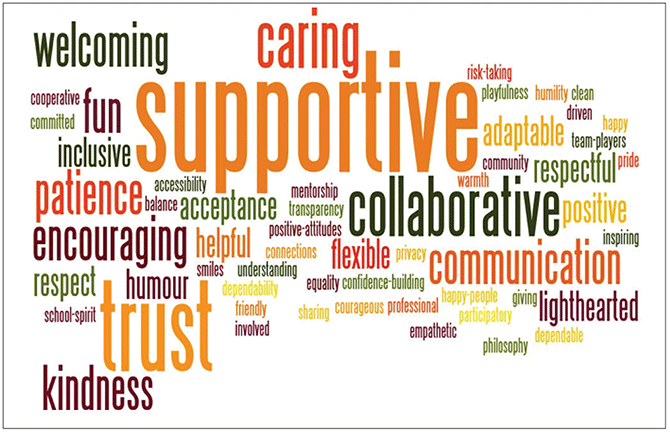
We also discussed the attributes of an effective staff culture. Staff shared their experiences with positive and negative cultures. They then captured words to describe a positive culture and we put them into a Wordle (See Figure 1; thanks to Suzanne Hoffman for the idea).
Figure 1: Staff description of a positive culture
Through our work as a staff, as well as my learning at previous schools, I came up with what I believe are the Four Pillars of a Positive School Staff Culture. They are:
• Strengths-based
• Collaborative
• Innovative
• Focused
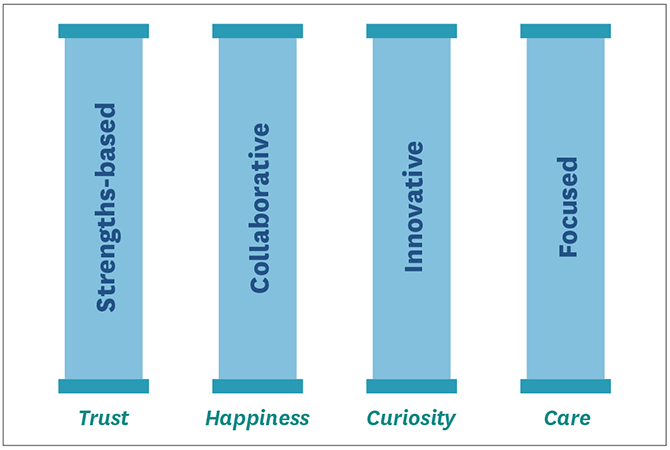
I am sure there are other attributes that could be used but these four have been most effective for the schools where I have worked. As you can see in Figure 2, these four pillars are also based on the core values of trust, happiness, curiosity, and care. These values weave their way through the pillars and without them, the pillars can crumble.
Figure 2: A Positive Organizational Culture
The four pillars
A STRENGTHS-BASED culture is one that believes that every staff member has strengths that can benefit the school as a whole. Feedback with staff always starts with strengths (character and skills), staff members are given the opportunity to determine their strengths (reflections and/or the 1), and each staff member is encouraged to use these strengths in their important work with students. Research from the (CLC) in 20022 shared that one of the most effective ways to bring out the best in your employees is to start with strengths. Performance and engagement is significantly increased when feedback and evaluation focuses on strengths rather than weaknesses. On staff surveys, many staff reported that with the focus on strengths, they felt more motivated, safer to be themselves, happier and healthier overall at school. A healthier, happier staff who feel safe and motivated can accomplish so much more with their students and for the school community.
“As leaders, we often make the mistake of listening to a problem and then jumping to solve it by ourselves.”
A COLLABORATIVE culture believes “the smartest person in the room is the room itself” (David Weinberger). Staff tap into each others’ strengths and engage in respectful, reflective dialogue to drive professional learning and create positive change. Trust is a huge part of a collaborative culture, and truly listening to others is essential to building trust. Polarizing statements and unwillingness to meet people where they are at will create a challenge to collaboration. By avoiding binary thinking, embracing the “grey areas” and listening to others’ perspectives, we grow as individuals and as a collaborative staff.
As leaders, we often make the mistake of listening to a problem and then jumping to solve it by ourselves. As a new principal, I had a teacher share a concern with me. Within minutes, I was busy shifting support schedules and trying to solve the problem. I bounced into her classroom to share what I had done, and she grew quite frustrated. She said, “I came to you so you could understand where I was at and so we could come up with solutions together. These solutions don’t really work for me and they will definitely negatively affect other teachers.” I was caught off guard by this feedback but so thankful, as I learned that my job is not to solve problems, but to work with staff to develop effective solutions together.
An INNOVATIVE culture is one in which educators feel safe to take risks, think critically and creatively, and implement new ideas with support. It moves from the question, “Can we….” to the question, “How can we…” The CLC’s research found that encouraging autonomy and risk-taking is another way to bring out the best in employees. An innovative culture is not necessarily always doing new things; it is one that understands the research around what is effective and is willing to try new ideas to help meet school goals. As Chip and Dan Heath tell us in their book Switch, we need to shrink the change. We need not always aspire for huge risks and changes, rather, we should encourage incremental changes that can be tried for a period of time to see if there is a positive impact. An important role for principals is to find the resources (time, materials, etc.) to support the innovative work of staff, so that good educators can become great educators.
A few years ago, inspired by Daniel Pink’s book Drive, I offered staff a “FedEx Prep,” which meant that I would provide an extra prep period for six weeks so a staff member could take an idea and put it into practice. The only caveat was that they had to “deliver” – sharing with staff the idea they had implemented and observing the results over the school year. We had teachers work individually and collaboratively to implement ideas in areas such as outdoor education (a school garden), technology (blogging with primaries to help with writing skills), and self-regulation (a teacher and a special education assistant redesigned their classroom and introduced tools to help students be in a more effective learning state). By providing a small amount of time and a few resources, we were able to encourage innovation at our school.
A FOCUSED culture is one that knows the key areas of growth that the school is working on, as well as the strategies that can have the largest impact. With so many ideas, policies, and procedures being sent our way, principals and school leaders need to be good filters and keep the staff focused on their vision and mission. There are many “shiny new” ideas out there that look and sound great but they may not help your school on its journey. One question we have used to focus is, “What problem are we trying to solve?” If the new idea is not helping us with the problems (or areas of growth) we are working on, we can set them aside until a later date. By having a laser-like focus on clear goals and clearly defined problems the staff is working on, you can filter and prioritize what’s most important for your school.
The four core values
Four important values guide our behaviours and our journey toward a positive school culture. To embody any of these well, we must slow down. In a fast-paced world, this is even more important!
TRUST: At the heart of trust is communication. It is so important for us all to talk less and listen more. In author Mark Goulston’s words, we need to spend more time being interested and less time trying to be interesting. As formal school leaders, we must also be as transparent as possible to make sure that people understand why decisions are made and/or have all the information they need to make decisions. Another important way to build trust is to walk the talk; if we say we will do something … do it.
Building trust takes time. When I first arrived at my previous school, I posted a sign-up schedule to meet with every staff member to learn more about them and how I could best support them. After a week, not a single staff member had signed up. When I followed up privately with a few people, it was shared that everyone assumed it was an interview and they were nervous to meet with me. This was far from the goal! But the staff didn’t trust me yet. I met with a few individuals informally and then shared that this was the type of conversation I hoped to have in the scheduled times. After that, others started to sign up and they soon realized it was a positive opportunity. Within a few months, I had met with the entire staff.
“We can still work incredibly hard to support students while also encouraging happiness with staff.”
HAPPINESS: I always knew happiness was important but until I moved to my current school at Shortreed Community Elementary, I had no idea the impact that a staff can have on each others’ happiness. By having a sense of humour, taking the time to slow down and be there for each other (in good times and bad), and by showing gratitude, we can create a much more positive school staff culture. Going to work each day where people are happy fuels others and makes the difficult work we do much more enjoyable.
Within my first week at Shortreed, I knew it was a place with a sense of humour. I had worked many hours planning my first assembly to welcome everyone back in September. I wanted to share a bit about me and a slideshow from the first week. Little did I know that the staff had their own plans. Our Youth Care Worker had asked each class to prank me by coming to the assembly and literally sitting wherever they wanted – anywhere and everywhere. As the students entered the gym, my face started to go red at the chaos. Then the whistle blew and all students, with huge grins, quietly moved to their appropriate spots. It was a reminder to not take ourselves so seriously, to have fun and create some happiness in the school. We can still work incredibly hard to support students while also encouraging happiness with staff.
CURIOSITY: We cannot grow as a school unless we are curious. By seeing challenges as opportunities that we can be curious about, we can then collaborate and work together to meet them. By being curious and ensuring we are asking the right questions, we continually grow as educators, learners, leaders, and people.
CARE: People need to feel like they belong and they matter. Small acts of caring can go a long way to building a positive culture and community of care. At my current school, our mantra is, “You BELONG here.” This drive to create a sense of belonging is not only for students but also for our families and staff. We need to lead with an ethic of care and model to our staff that we support and look out for one another.
As an educator, I have come to realize that building (and maintaining) a positive staff culture takes time. By slowing down, focusing on the four values of trust, happiness, curiosity, and care while also keeping the four pillars of strengths-based, collaborative, innovative and focused cultures at the heart of what we do, we can help create a positive school staff culture.
I am thankful to have observed the incredible power of a positive culture. When we all work together to build and maintain this, we feel healthier at school and at home, more motivated and inspired in the important work we do, and because of this, we also see improved results in the achievement and success in our students.
Illustration: Diana Pham
First published in Education Canada, December 2019
-
Self-Reg Isn’t Just for Kids
Comments Off on Self-Reg Isn’t Just for Kids -
Francophone Principals: What unique challenges do they face?
Comments Off on Francophone Principals: What unique challenges do they face?Francophone principals in linguistic minority schools encounter unique challenges because of the cultural and linguistic significance of francophone public school systems to their communities. Although francophone principals in Ontario report high job satisfaction (79.2%), there is an urgent need to promote a highly qualified teacher workforce, enhance cultural and linguistic security, and create safe workplaces.
HERE ARE 4 CHALLENGES FACED BY FRANCOPHONE PRINCIPALS
1. Substitute teacher shortage:
- Francophone principals report often or always (88.3%) having difficulty finding qualified French-language substitute teachers. This also means that teacher absenteeism is a significant challenge, with principals having to fill-in for classes.
2. Pressure from PAL:
- 54.9% of francophone principals report that their work often or always reflects the direction of Ontario’s Aménagement Linguistique Policy (PAL), which aims to improve how francophone language and culture are being lived out by young people.
- While essential, francophone principals find that this policy creates pressure to recruit and retain francophone students, including additional tasks (that English-language schools don’t have), coupled with not enough time or resources to implement it.
3. Work safety:
- Francophone principals report being harassed (e.g. verbally, psychologically) by various stakeholders including parents or guardians, students, teachers, senior officials, other school staff, substitute teachers, other principals, vice-principals, and trustees.
- Principals indicate that if they were harassed, it would most likely be by a parent or guardian (60.1%), and if physically assaulted it would most likely be by a student (34.6%).
4. Emotionally draining situations:
- Francophone principals report spending more time on student well-being than any other activity (e.g. staff well-being, French-language services, professional learning). Student mental health, discipline, and cyberbullying often or always place principals in emotionally draining situations.
- Francophone principals also report spending more time working with parents than other activities (e.g. attending to staff, managing student discipline, participating in student activities).
Professional associations, school districts, and policymakers can play a powerful role in addressing the challenges faced by francophone principals. To ease recruitment pressures on principals, professional associations can work more closely with regulatory bodies and initial teacher education programs to increase the number of qualified French-language teachers. School districts can also lead continued professional support on the PAL that better recognizes the importance of principals in implementation. To address harassment and assault, the education sector can work more intentionally to promote principals’ health and safety. Above all, acknowledging the unique challenges of francophone school leaders can allow them to lead more effectively as key drivers of language and culture.
Additional Resource Information
Read the full survey report here:
Pollock, K., & Wang, F. (2019). Principals’ work in Ontario’s French-language education systems. Retrieved from: https://www.edu.uwo.ca/faculty-profiles/docs/other/pollock/pollock-ADFO-EnglishReport-Final-V10.pdf
References
Alberta Teachers’ Association [ATA]. (2014). The future of the principalship in Canada. Retrieved from: https://www.teachers.ab.ca/SiteCollectionDocuments/ATA/Publications/Research/
The%20Future%20of%20the%20Principalship%20in%20Canada.pdfAlberta Teachers’ Association [ATA]. (2017a). The Canadian school leader: Global forces and future prospects. Retrieved from: https://www.teachers.ab.ca/SiteCollectionDocuments/ATA/Publications/Research/COOR-101-13%20Canadian%20School%20Leader.pdf
Alberta Teachers’ Association [ATA]. (2017b). A national study on the impact of electronic communication on Canadian school leaders. Retrieved from: https://www.teachers.ab.ca/SiteCollectionDocuments/ATA/Publications/Research/COOR-104%20A%20National%20Study%20of%20the%20Impact%20of%20
Electronic%20Communication%20on%20Canadian%20School%20Leaders.pdfBerger, M. J. (2017). French-language education in Ontario: A fresh perspective on leadership practices: Final report. Toronto, ON: The Ontario Institute for Education leadership & The Ontario Ministry of Education.
Langlois, L., & Lapointe, C. (2007). Ethical leadership in Canadian school organizations: Tensions and possibilities. Educational Management Administration & Leadership, 35(2), 247–260.
Photo: Adobe Stock
-
Work Intensification: How the Role of School Leaders is Changing
Comments Off on Work Intensification: How the Role of School Leaders is ChangingThe majority of principals (91.8%) and vice-principals (83.4%) in Ontario believe their job makes a meaningful difference in their school community, and they overwhelmingly find their school a good place to work. However, school leaders are grappling with longer hours, increasing demands, and higher workloads than ever before, which is threatening principal recruitment, retention, and job performance.
Here are 5 ways the role of principals and vice-principals is changing
1. Longer hours:
- Like school leaders across the globe, Ontario principals work long hours and often feel pressured to do so.
- Work often extends beyond the school office due to advances in technology through email, social media, and mobile devices, with principals regularly bringing work home and working late evenings to meet higher workloads. On average, principals spend 11 hours and vice-principals spend 9 hours reading and writing emails per week.
- On average, principals work 59 hours per week and vice-principals work 54.5 hours per week.
2. Work pace increasing:
- 60.3% of principals and 44.4% of vice-principals in Ontario agree that the pace of their work is too fast.
3. Fewer resources:
- Only 38.3% of Ontario principals feel they have the resources they need to do their job effectively (e.g. HR, training to address student or staff mental health concerns, PD on effective relationship building, other colleagues to go to for support).
4. Same day-to-day work– only more:
- Both principals and vice-principals continue to engage in the same kinds of tasks as they did in the past, but the volume of this work has increased (e.g. increased paperwork).
5. Additional work:
- In addition to their usual work of leading a school, both principals and vice-principals are taking on additional kinds of work.
- For example, in addition to leadership and management tasks, school leaders are now also responsible for attending to and supporting students’ and teachers’ well-being, which involves increased program development and delivery, additional meetings, and additional pressures to best manage already limited time and funding.
When these five factors are continually present and school leaders have no downtime to catch up on work or to recover both physically and emotionally from daily work stress, this is called “work intensification.” Work intensification involves managing condensed timelines and a simultaneous increase in the volume and complexity of tasks, activities, and other work demands. As effective school leaders are key to high-performing schools and healthy school environments, work intensification not only threatens school leader recruitment and retention, but also the well-being and performance of both staff and students.
Additional Resource Information
Pollock, K. (with Wang, F. & Hauseman, D. C.). (2017). The changing nature of vice-principals’ work: Final report. Retrieved from: http://www.edu.uwo.ca/faculty-profiles/docs/other/pollock/pollock-opc-vp-report-final.pdf
Pollock, K. (with Hauseman, D. C.). (2015). Principals’ work in contemporary times: Final report. Retrieved from: https://www.edu.uwo.ca/faculty-profiles/docs/other/pollock/OME-Report-Principals-Work-Contemporary-Times.pdf
Pollock, K. (with Wang, F. & Hauseman, D. C.). (2014). The changing nature of principals’ work: Final report. Retrieved from: https://www.edu.uwo.ca/faculty-profiles/docs/other/pollock/OPC-Principals-Work-Report.pdf
Pollock, K., & Wang, F. (2019, March). Le travail des directions d’école au sein des systèmes d’éducation de langue française en Ontario. Récupéré de: https://www.edu.uwo.ca/faculty-profiles/docs/other/pollock/pollock-ADFO-Report-Revised-Final.pdf
Pollock, K., & Wang, F. (2019 March). Principals’ work in Ontario’s French-language education systems. Retrieved from: https://www.edu.uwo.ca/faculty-profiles/docs/other/pollock/pollock-ADFO-EnglishReport-Final-V10.pdf
References
Alberta Teachers’ Association [ATA]. (2014). The future of the principalship in Canada. Retrieved from: https://www.teachers.ab.ca/SiteCollectionDocuments/ATA/Publications/Research/The%20Future
%20of%20the%20Principalship%20in%20Canada.pdfAlberta Teachers’ Association [ATA]. (2017a). The Canadian school leader: Global forces and future prospects. Retrieved from:https://www.teachers.ab.ca/SiteCollectionDocuments/ATA/Publications/Research/COOR-101-13%20Canadian%20School%20Leader.pdf
Alberta Teachers’ Association [ATA]. (2017b). A national study on the impact of electronic communication on Canadian school leaders. Retrieved from: https://www.teachers.ab.ca/SiteCollectionDocuments/ATA/Publications/Research/COOR-104%20A%20National%20Study%20of%20the%20Impact%20of%20Electronic%20Communication%
20on%20Canadian%20School%20Leaders.pdfLim, L., & Pollock, K. (2018). Secondary principal perspectives: How work intensification impacts their vice-principals. OPC Register, 20(3) 22–26.
Ontario Principals’ Council. (2017). International Symposium White Paper: Principal work–life balance and well-being matters. Retrieved from: https://www.edu.uwo.ca/faculty-profiles/docs/other/pollock/PrincipalWellBeing-17-FINAL-with-Acknowledgement-1.pdf
Pollock, K. (2017, September). Healthy principals, healthy schools: Supporting principals’ well-being. EdCan Magazine. Retrieved from: https://www.edcan.ca/articles/healthy-principals-healthy-schools/
Pollock, K., Wang, F., & Hauseman, C. (2017). Vice-principals’ work: More than being an instructional leader. OPC Register, 19(3), 20–24.
Pollock, K., & Hauseman, D. C. (2018). The use of e-mail and principals’ work: A double-edged sword. Leadership and Policy in Schools, 1–12 .
Pollock, K. (2016). Principals’ work in Ontario, Canada: Changing demographics, advancements in informational communication technology and health and well-being. Journal of the Commonwealth Council for Educational Administration & Management, 44(3), 55–74.
Riley, P. (2016). The Australian principal occupational health, safety and wellbeing survey. Strathfield, Australia: Institute for Positive Psychology & Education. Retrieved from: http://www.principalhealth.org/au/2016_Report_AU_FINAL.pdf
Wang, F., Pollock, K., & Hauseman, C. (2018). School principals’ job satisfaction: The effects of work intensification. Canadian Journal of Educational Administration and Policy, 185, 73–90.
Photo: Adobe Stock
-
How Can Education Systems Support Principals’ and Vice-Principals’ Well-Being?
Comments Off on How Can Education Systems Support Principals’ and Vice-Principals’ Well-Being?Principals and vice-principals often sacrifice their own happiness and well-being to support their staff and students. Many school leaders report working long hours, skipping lunch, feeling isolated in their roles, and being unable to spend time with friends and family because of intense and expanding workloads. The toll of these demands can leave school leaders feeling emotionally and physically exhausted.
HERE ARE PROVEN STRATEGIES TO SUPPORT PRINCIPALS’ AND VICE-PRINCIPALS’ WELL-BEING
PROFESSIONAL ASSOCIATIONS can advocate for:
- Ongoing professional development (PD) that reflects the realities of being a school leader.
- Coaching or mentoring specifically designed for principals and vice-principals that supports both their professional and personal well-being.
- Health assessment tools that allow principals and vice-principals to develop long-term health plans.
- Telephone support lines that offer confidential guidance from experienced school leaders, legal representatives, and healthcare professionals.
SCHOOL DISTRICTS can:
- Develop PD that provides strategies for principals and vice-principals to support their own well-being.
- Promote healthy work environments overall for all members of the school community.
- Negotiate employee health benefits that support school leaders’ well-being and encourage them to be used fully. Health services (e.g. massage therapy, physiotherapy, chiropractic therapy, and professional counseling) or benefits that promote healthy living (e.g. nutrition services, gym memberships) are especially effective.
- Develop realistic expectations around remote work and using email beyond office hours.
POLICYMAKERS can:
- Consider ways to position school leaders for success by focusing on their priorities as leaders of learning (e.g. by delegating, reducing, and eliminating workload).
- Clarify expectations on how school leaders should be involved in implementing new and ongoing initiatives (e.g. those related to mental health, cyberbullying, technology leadership).
- Assess options to reduce the time principals and vice-principals spend on lunch and yard duty. There is ongoing tension between being on duty to supervise students and attending to other time-sensitive issues, which means principals can have difficulty fully engaging in either task.
- Encourage school leaders to hire highly qualified teachers who are suited to the local school context. This can be achieved by promoting teacher professionalism (e.g. specialized knowledge and skills, long-term and well-resourced teacher PD).
To maximize efficiency and prevent overlap between initiatives, professional associations, school districts, and policymakers can align these strategies to better support the well-being of school leaders and school communities as a whole.
Additional Resource Information
Pollock, K. (with Wang, F. & Hauseman, D. C.). (2017). The changing nature of vice-principals’ work: Final report. Retrieved from: http://www.edu.uwo.ca/faculty-profiles/docs/other/pollock/pollock-opc-vp-report-final.pdf
Pollock, K. (with Hauseman, D. C.). (2015). Principals’ work in contemporary times: Final report. Retrieved from: https://www.edu.uwo.ca/faculty-profiles/docs/other/pollock/OME-Report-Principals-Work-Contemporary-Times.pdf
Pollock, K. (with Wang, F. & Hauseman, D. C.). (2014). The changing nature of principals’ work: Final report. Retrieved from: https://www.edu.uwo.ca/faculty-profiles/docs/other/pollock/OPC-Principals-Work-Report.pdf
Pollock, K. et Wang, F. (2019). Le travail des directions d’école au sein des systèmes d’éducation de langue française en Ontario. Repéré à : https://www.edu.uwo.ca/faculty-profiles/docs/other/pollock/pollock-ADFO-Report-Revised-Final.pdf
Pollock, K., & Wang, F. (2019). Principals’ work in Ontario’s French-language education systems. Retrieved from: https://www.edu.uwo.ca/faculty-profiles/docs/other/pollock/pollock-ADFO-EnglishReport-Final-V10.pdf
Alberta Teachers’ Association [ATA]. (2014). The future of the principalship in Canada. Retrieved from: https://www.teachers.ab.ca/SiteCollectionDocuments/ATA/Publications/Research/The%20
Future%20of%20the%20Principalship%20in%20Canada.pdfReferences
Alberta Teachers’ Association [ATA]. (2017a). The Canadian school leader: Global forces and future prospects. Retrieved from: https://www.teachers.ab.ca/SiteCollectionDocuments/ATA/Publications/Research/COOR-101-13%
20Canadian%20School%20Leader.pdfAlberta Teachers’ Association [ATA]. (2017b). A national study on the impact of electronic communication on Canadian school leaders. Retrieved from: https://www.teachers.ab.ca/SiteCollectionDocuments/ATA/Publications/Research/COOR-104%20A%20National%20Study%20of%20the%20Impact%20of%20Electronic%20Communication%20on%
20Canadian%20School%20Leaders.pdfLim, L., & Pollock, K. (2018). Secondary principal perspectives: How work intensification impacts their vice-principals. OPC Register, 20(3) 22–26.
Ontario Principals’ Council. (2017). International Symposium White Paper: Principal work–life balance and well-being matters. Retrieved from: https://www.edu.uwo.ca/faculty-profiles/docs/other/pollock/PrincipalWellBeing-17-FINAL-with-Acknowledgement-1.pdf
Pollock, K. (2017, September). Healthy principals, healthy schools: Supporting principals’ well-being. EdCan Magazine. Retrieved from: https://www.edcan.ca/articles/healthy-principals-healthy-schools/
Pollock, K., Wang, F., & Hauseman, C. (2017). Vice-principals’ work: More than being an instructional leader. OPC Register, 19(3), 20–24.
Pollock, K., & Hauseman, D. C. (2018). The use of e-mail and principals’ work: A double-edged sword. Leadership and Policy in Schools, 1–12 .
Pollock, K. (2016). Principals’ work in Ontario, Canada: Changing demographics, advancements in informational communication technology and health and well-being. Journal of the Commonwealth Council for Educational Administration & Management, 44(3), 55–74.
Riley, P. (2016). The Australian principal occupational health, safety and wellbeing survey., Strathfield, Australia: Institute for Positive Psychology & Education. Retrieved from: http://www.principalhealth.org/au/2016_Report_AU_FINAL.pdf
Wang, F., Pollock, K., & Hauseman, C. (2018). School principals’ job satisfaction: The effects of work intensification. Canadian Journal of Educational Administration and Policy, 185, 73–90.
Photo: Adobe Stock
-
IDEAS Partner Research Schools Education Conference
Comments Off on IDEAS Partner Research Schools Education ConferenceTransforming Pedagogies Learn – Design – Innovate
Since the late 20th century, new understandings of learning have continued to emerge. These new understandings arise from the fields of neurology, psychology, sociology, anthropology, and ecology. It is imperative that those responsible for optimum learning in a system understand the transformations to pedagogies that support and promote learning throughout the system. Partner Research Schools and Galileo Educational Network collaborate to bring this event alive. -
Effective Leadership Institute
Comments Off on Effective Leadership InstituteThe Effective Leadership Institute is a two-day event that provides school leaders with specific, practical actions to implement in their classrooms, schools, and districts to improve leadership, teaching, and learning. Explore leadership processes rooted in collective efficacy, collaboration, with a focus on teacher and student growth.
The event features keynotes from educational leadership consultants Peter DeWitt, Jenni Donohoo, and Dave Nagel.
-
PLC+ Institute
Comments Off on PLC+ InstituteCorwin’s PLC+ Institute is designed to support teachers, coaches, school and district leaders in the planning and implementation of collaborative structures in their schools. Join us at sessions that allow your team the space to collaborate, reflect, work through modules together, and walk away with new strategies you can embed into everyday practice to move learning forward.
The institute will feature keynotes from Douglas Fisher and Karen Flories
-
Visible Learning Plus Institute
Comments Off on Visible Learning Plus InstituteSeptember 24, 2020 – September 25, 2020
8:00 AM-3:30 PM PT
Zoom Platform – This Event is in Pacific Standard Time (PST)The Visible Learningplus Institute is a two-day event featuring John Hattie, Jenni Donohoo, and Julie Stern designed to provide you with the tools to identify key takeaways from the Visible Learning research, learn about the five strands of Visible Learning, and identify the difference between influences that impact student learning.
-
Visible Learning Plus Institute
Comments Off on Visible Learning Plus InstituteThe Visible Learningplus Institute in Newfoundland and Labrador is a two-day institute with John Hattie, designed to provide you with practical activities and take-away tools. This institute is the first step that will help you create Visible Learning Schools that systematically examine effective instructional practice in order to determine the “impact” on student learning.
-
Student Violence, Bullying and Sexual Assault
Comments Off on Student Violence, Bullying and Sexual AssaultA recent CBC-TV News series (October 24-25) featured hair-raising stories of violence, physical, psychological and sexual, inflicted on students in today’s schools (CBC Marketplace 2019). All of this came hard on the heels of the horrendous stabbing death of 14-year-old Devan Bracci-Selvey in front of Hamilton’s Sir Winston Churchill Secondary School.
Raising our consciousness about the dangers students face is much easier than grappling with why Canadian schools are falling short in addressing the chronic problem of violence, bullying, and sexual harassment. Twelve years after the groundbreaking January 2008 Toronto District School Board panel report1, The Road to Health: A Final Report on School Safety, it is hard to see much progress in ensuring student safety in schools.
School authorities from province-to-province, we learned, collect incident reports on student violence in vastly different ways, producing a crazy-quilt patchwork of data with far too many zero reports. Only two of the provinces, Ontario and Nova Scotia, require schools to share their school violence statistics with their education ministries. In the case of Ontario, that data was found to be incomplete and inaccurate. Given the paucity of reliable statistics, it was next-to-impossible to analyze this disturbing social trend in our schools.
To get to the bottom of the problem, CBC’s Marketplace commissioned a survey of 4,000 young people, ages 14 to 212, in September of this year, Nationwide, the results were startling: Two out of five (41 per cent) of boys reported being physically assaulted in high school; one in four girls (26 per cent) of girls experienced unwanted sexual contact at school; and one in four students first experienced sexual harassment or assault before Grade 7 in elementary grades.
Five key factors can be identified, based upon the CBC investigation and credible research on violence in schools.
1. Head-in-the-Sand’ Denial:
Much of the school violence experienced by students is treated as isolated incidents or events where it requires time-consuming investigation to assign blame or responsibility. In the absence of required reporting, it goes unacknowledged and, all too often, swept under the rug.3, 4
2. Ineffective Implementation:
Reporting of student violence incidents is expected or required, but not deemed a priority, unless or until a publicized incident hits the media and arouses parental unrest. School-by-school reports may be filed, as in Ontario, but oversight is weak or non-existent and zero reports are not questioned, even when it involved incidents featured in local media reports.5
3. Under-Reporting of Incidents:
School reports generated by principals and administrators normally under-report the actual school violence incidents, as revealed when compared with student-reported data. In American states, where student violence reporting is more established, data generated from the victims is incorporated into the official statistics.6
4. Fear of Reputational Risk:
School administrators are protective of a school’s reputation and reluctant to report higher counts which might result in being labelled a “dangerous school” if their numbers are high or rising from year-to-year.7, 8
5. Feeble Public Accountability:
Educational oversight by elected school boards and district educational councils is woefully inadequate. In Manitoba, the provincial school boards association president Alan Campbell claims that maintaining “a safe learning environment” is the “no. 1 priority,” while public disclosure of data is non-existent and levels of sexual harassment and hateful name-calling are higher than any other province in Canada.9 Why elected boards do not insist upon full public disclosure is hard to fathom, especially when it’s their responsibility to identify critical needs and allocate district resources.
Much can be learned from American school research and critical analyses of Ontario’s violent statistics regulation implementation over the past eight years. UCLA Professor Ron Avi Astor has published more than 200 academic studies on violent behaviour in schools. In the CBC-TV News investigation, he confirmed that Canada has no real system at all for collecting data10, exemplified by uneven provincial policies, lack of consistent definitions for offenses, varying collection systems, and inaccurate/incomplete statistics.
One of Canada’s leading experts on children’s mental health and violence prevention, University of Ottawa Education professor Tracy Vaillancourt points out that weaknesses in violent-incident and cyberbullying reporting undermine the effectiveness of school safety and prevention programs.11, 12 Acknowledging and measuring the problem is a critical first step in combatting bullying, cyberbullying and sexual harassment in schools.
Ontario deserves credit for requiring mandatory reporting, but the system does not stand up to close scrutiny. Most recent data documented 2,124 violent incidents in 2018-19, averaging more than 10 incidents province-wide each day.13 It simply does not stack up because 18 of Ontario’s 76 school boards have reported zero incidents for several years, eight show radical variations from year to year, and four boards are in non-compliance having failed to file reports for some years. While the CBC survey documented serious levels of violent incidents, more than three-quarters (77 per cent) of Ontario schools reported zero incidents over the previous year.
Negligence in reporting and underreporting simply compound the problem. When the violence statistics go unreported or are full of zeros, it becomes guesswork in allocating resources, not just funds but counsellors, psychologists, and social workers to rectify school problems with student behaviour.
Endnotes
1 Julian Falconer, Peggy Edwards and Linda MacKinnon (2008). The Road to Health: A Final Report on School Safety. Panel Report to Toronto District School Board. Toronto: Toronto District School Board, 4 January 2008. https://www.falconers.ca/wp-content/uploads/2015/07/Safety-Vol.-1.pdf
2 CBC News Marketplace (2019). School Violence, 24-25 October 2019. David Common, Anu Singh and Caitlin Taylor, CBC News. https://www.cbc.ca/news/canada/school-violence-marketplace-1.5224865 and https://www.cbc.ca/news/canada/marketplace-school-violence-sexual-violence-1.5329520
3 Julian Falconer, Peggy Edwards and Linda MacKinnon (2008). The Road to Health: A Final Report on School Safety. Panel Report to Toronto District School Board. Toronto: Toronto District School Board, 4 January 2008. https://www.falconers.ca/wp-content/uploads/2015/07/Safety-Vol.-1.pdf
4 Shawn Jeffords (2015). Ontario’s school violence statistics criticized for inaccuracy. Toronto Sun, 31 January 2015.
5 CBC News Marketplace (2019). School Violence, 24-25 October 2019. David Common, Anu Singh and Caitlin Taylor, CBC News. https://www.cbc.ca/news/canada/school-violence-marketplace-1.5224865 and https://www.cbc.ca/news/canada/marketplace-school-violence-sexual-violence-1.5329520
6 Ron Avi Astor, Nancy Guerra and Richard Van Acker (2010). How can we improve school safety research? Educational Researcher, Vol. 39, No. 1, 69-78.
7 ibid
8 Valerie Ouellet and Caitlin Taylor (2019). Why so much student violence still goes unreported. CBC News, 24 October 2014.
9 Jacques Marcoux (2019). Student-on-student sexual violence highest in Prairies, CB national survey finds. CBC News, 24 October 2019.
10 Valerie Ouellet and Caitlin Taylor (2019). Why so much student violence still goes unreported. CBC News, 24 October 2014.
11 Tracy Vaillancourt, Robert Faris and Faye Mishra (2016). Cyberbullying in Children and Youth: Implications for Health and Clinical Practice. The Canadian Journal of Psychiatry (19 December 2016), https://journals.sagepub.com/doi/10.1177/0706743716684791
12 CBC News Marketplace (2019). School Violence, 24-25 October 2019. David Common, Anu Singh and Caitlin Taylor, CBC News. https://www.cbc.ca/news/canada/school-violence-marketplace-1.5224865 and https://www.cbc.ca/news/canada/marketplace-school-violence-sexual-violence-1.5329520
13 Valerie Ouellet and Caitlin Taylor (2019). Why so much student violence still goes unreported. CBC News, 24 October 2014.
-
3 Steps to Districtwide Staff Well-Being
Comments Off on 3 Steps to Districtwide Staff Well-Being -
Beyond the Cone of Silence
Comments Off on Beyond the Cone of Silence


IDEAS TO SUPPORT EDUCATORS : Subscribe to the EdCan e-Newsletter
Quality research, reports, and professional learning opportunities.