Archive
-
IDEAS Partner Research Schools Education Conference
Comments Off on IDEAS Partner Research Schools Education ConferenceTransforming Pedagogies Learn – Design – Innovate
Since the late 20th century, new understandings of learning have continued to emerge. These new understandings arise from the fields of neurology, psychology, sociology, anthropology, and ecology. It is imperative that those responsible for optimum learning in a system understand the transformations to pedagogies that support and promote learning throughout the system. Partner Research Schools and Galileo Educational Network collaborate to bring this event alive. -
Effective Leadership Institute
Comments Off on Effective Leadership InstituteThe Effective Leadership Institute is a two-day event that provides school leaders with specific, practical actions to implement in their classrooms, schools, and districts to improve leadership, teaching, and learning. Explore leadership processes rooted in collective efficacy, collaboration, with a focus on teacher and student growth.
The event features keynotes from educational leadership consultants Peter DeWitt, Jenni Donohoo, and Dave Nagel.
-
PLC+ Institute
Comments Off on PLC+ InstituteCorwin’s PLC+ Institute is designed to support teachers, coaches, school and district leaders in the planning and implementation of collaborative structures in their schools. Join us at sessions that allow your team the space to collaborate, reflect, work through modules together, and walk away with new strategies you can embed into everyday practice to move learning forward.
The institute will feature keynotes from Douglas Fisher and Karen Flories
-
Visible Learning Plus Institute
Comments Off on Visible Learning Plus InstituteSeptember 24, 2020 – September 25, 2020
8:00 AM-3:30 PM PT
Zoom Platform – This Event is in Pacific Standard Time (PST)The Visible Learningplus Institute is a two-day event featuring John Hattie, Jenni Donohoo, and Julie Stern designed to provide you with the tools to identify key takeaways from the Visible Learning research, learn about the five strands of Visible Learning, and identify the difference between influences that impact student learning.
-
Visible Learning Plus Institute
Comments Off on Visible Learning Plus InstituteThe Visible Learningplus Institute in Newfoundland and Labrador is a two-day institute with John Hattie, designed to provide you with practical activities and take-away tools. This institute is the first step that will help you create Visible Learning Schools that systematically examine effective instructional practice in order to determine the “impact” on student learning.
-
Student Violence, Bullying and Sexual Assault
Comments Off on Student Violence, Bullying and Sexual AssaultA recent CBC-TV News series (October 24-25) featured hair-raising stories of violence, physical, psychological and sexual, inflicted on students in today’s schools (CBC Marketplace 2019). All of this came hard on the heels of the horrendous stabbing death of 14-year-old Devan Bracci-Selvey in front of Hamilton’s Sir Winston Churchill Secondary School.
Raising our consciousness about the dangers students face is much easier than grappling with why Canadian schools are falling short in addressing the chronic problem of violence, bullying, and sexual harassment. Twelve years after the groundbreaking January 2008 Toronto District School Board panel report1, The Road to Health: A Final Report on School Safety, it is hard to see much progress in ensuring student safety in schools.
School authorities from province-to-province, we learned, collect incident reports on student violence in vastly different ways, producing a crazy-quilt patchwork of data with far too many zero reports. Only two of the provinces, Ontario and Nova Scotia, require schools to share their school violence statistics with their education ministries. In the case of Ontario, that data was found to be incomplete and inaccurate. Given the paucity of reliable statistics, it was next-to-impossible to analyze this disturbing social trend in our schools.
To get to the bottom of the problem, CBC’s Marketplace commissioned a survey of 4,000 young people, ages 14 to 212, in September of this year, Nationwide, the results were startling: Two out of five (41 per cent) of boys reported being physically assaulted in high school; one in four girls (26 per cent) of girls experienced unwanted sexual contact at school; and one in four students first experienced sexual harassment or assault before Grade 7 in elementary grades.
Five key factors can be identified, based upon the CBC investigation and credible research on violence in schools.
1. Head-in-the-Sand’ Denial:
Much of the school violence experienced by students is treated as isolated incidents or events where it requires time-consuming investigation to assign blame or responsibility. In the absence of required reporting, it goes unacknowledged and, all too often, swept under the rug.3, 4
2. Ineffective Implementation:
Reporting of student violence incidents is expected or required, but not deemed a priority, unless or until a publicized incident hits the media and arouses parental unrest. School-by-school reports may be filed, as in Ontario, but oversight is weak or non-existent and zero reports are not questioned, even when it involved incidents featured in local media reports.5
3. Under-Reporting of Incidents:
School reports generated by principals and administrators normally under-report the actual school violence incidents, as revealed when compared with student-reported data. In American states, where student violence reporting is more established, data generated from the victims is incorporated into the official statistics.6
4. Fear of Reputational Risk:
School administrators are protective of a school’s reputation and reluctant to report higher counts which might result in being labelled a “dangerous school” if their numbers are high or rising from year-to-year.7, 8
5. Feeble Public Accountability:
Educational oversight by elected school boards and district educational councils is woefully inadequate. In Manitoba, the provincial school boards association president Alan Campbell claims that maintaining “a safe learning environment” is the “no. 1 priority,” while public disclosure of data is non-existent and levels of sexual harassment and hateful name-calling are higher than any other province in Canada.9 Why elected boards do not insist upon full public disclosure is hard to fathom, especially when it’s their responsibility to identify critical needs and allocate district resources.
Much can be learned from American school research and critical analyses of Ontario’s violent statistics regulation implementation over the past eight years. UCLA Professor Ron Avi Astor has published more than 200 academic studies on violent behaviour in schools. In the CBC-TV News investigation, he confirmed that Canada has no real system at all for collecting data10, exemplified by uneven provincial policies, lack of consistent definitions for offenses, varying collection systems, and inaccurate/incomplete statistics.
One of Canada’s leading experts on children’s mental health and violence prevention, University of Ottawa Education professor Tracy Vaillancourt points out that weaknesses in violent-incident and cyberbullying reporting undermine the effectiveness of school safety and prevention programs.11, 12 Acknowledging and measuring the problem is a critical first step in combatting bullying, cyberbullying and sexual harassment in schools.
Ontario deserves credit for requiring mandatory reporting, but the system does not stand up to close scrutiny. Most recent data documented 2,124 violent incidents in 2018-19, averaging more than 10 incidents province-wide each day.13 It simply does not stack up because 18 of Ontario’s 76 school boards have reported zero incidents for several years, eight show radical variations from year to year, and four boards are in non-compliance having failed to file reports for some years. While the CBC survey documented serious levels of violent incidents, more than three-quarters (77 per cent) of Ontario schools reported zero incidents over the previous year.
Negligence in reporting and underreporting simply compound the problem. When the violence statistics go unreported or are full of zeros, it becomes guesswork in allocating resources, not just funds but counsellors, psychologists, and social workers to rectify school problems with student behaviour.
Endnotes
1 Julian Falconer, Peggy Edwards and Linda MacKinnon (2008). The Road to Health: A Final Report on School Safety. Panel Report to Toronto District School Board. Toronto: Toronto District School Board, 4 January 2008. https://www.falconers.ca/wp-content/uploads/2015/07/Safety-Vol.-1.pdf
2 CBC News Marketplace (2019). School Violence, 24-25 October 2019. David Common, Anu Singh and Caitlin Taylor, CBC News. https://www.cbc.ca/news/canada/school-violence-marketplace-1.5224865 and https://www.cbc.ca/news/canada/marketplace-school-violence-sexual-violence-1.5329520
3 Julian Falconer, Peggy Edwards and Linda MacKinnon (2008). The Road to Health: A Final Report on School Safety. Panel Report to Toronto District School Board. Toronto: Toronto District School Board, 4 January 2008. https://www.falconers.ca/wp-content/uploads/2015/07/Safety-Vol.-1.pdf
4 Shawn Jeffords (2015). Ontario’s school violence statistics criticized for inaccuracy. Toronto Sun, 31 January 2015.
5 CBC News Marketplace (2019). School Violence, 24-25 October 2019. David Common, Anu Singh and Caitlin Taylor, CBC News. https://www.cbc.ca/news/canada/school-violence-marketplace-1.5224865 and https://www.cbc.ca/news/canada/marketplace-school-violence-sexual-violence-1.5329520
6 Ron Avi Astor, Nancy Guerra and Richard Van Acker (2010). How can we improve school safety research? Educational Researcher, Vol. 39, No. 1, 69-78.
7 ibid
8 Valerie Ouellet and Caitlin Taylor (2019). Why so much student violence still goes unreported. CBC News, 24 October 2014.
9 Jacques Marcoux (2019). Student-on-student sexual violence highest in Prairies, CB national survey finds. CBC News, 24 October 2019.
10 Valerie Ouellet and Caitlin Taylor (2019). Why so much student violence still goes unreported. CBC News, 24 October 2014.
11 Tracy Vaillancourt, Robert Faris and Faye Mishra (2016). Cyberbullying in Children and Youth: Implications for Health and Clinical Practice. The Canadian Journal of Psychiatry (19 December 2016), https://journals.sagepub.com/doi/10.1177/0706743716684791
12 CBC News Marketplace (2019). School Violence, 24-25 October 2019. David Common, Anu Singh and Caitlin Taylor, CBC News. https://www.cbc.ca/news/canada/school-violence-marketplace-1.5224865 and https://www.cbc.ca/news/canada/marketplace-school-violence-sexual-violence-1.5329520
13 Valerie Ouellet and Caitlin Taylor (2019). Why so much student violence still goes unreported. CBC News, 24 October 2014.
-
3 Steps to Districtwide Staff Well-Being
Comments Off on 3 Steps to Districtwide Staff Well-Being -
So you want me to talk?
Comments Off on So you want me to talk? -
Belonging in the Education Workplace
Comments Off on Belonging in the Education WorkplaceDid you know that something as simple as feeling like you belong can impact your health, happiness, and success? The science is clear – if we feel valued by and connected with our colleagues, then we work harder and more effectively while experiencing more fun and more success at work. What’s more, belonging is contagious – when we’re happy at work, then our colleagues are likely to be happy at work, too.

This is important in any workplace, but it’s of absolute importance in schools where educators have the privilege and responsibility of impacting children’s development. Educators know the power of belonging within the classroom, and they’ll often tell you about the impact small gestures can have on students’ engagement and well-being – things like greeting students at the door and connecting class activities with students’ individual, unique passions. Inversely, educators can also tell heartbreaking stories of students who are rejected or excluded, and the impacts this can have on their engagement and self-esteem.
The same is true in the adult world. Think about the best teams and the best workplaces you’ve ever been a part of. What made these teams and workplaces stand out? My guess is that your first thoughts don’t revolve around comfortable furniture or an environment where you can get a whole lot of paperwork done. You’re probably thinking about PEOPLE, and – if you were to tell me about these people – you’d probably use words related to ‘belonging’ and ‘connection’ such as “family,” “friendship,” and “trust.”
BELONGING IS BASIC HUMAN BIOLOGY
Our need for belonging is wired into our biology. Human beings aren’t the strongest nor the fastest animals on the planet and we could’ve never survived as a species if we didn’t find a way to get along and work together. To survive, we’ve evolved over millions of years to eventually become a deeply social species. Social psychologist Matthew Lieberman, for instance, tells us that our need to belong is so powerful to the point that it’s one of the primary drivers of human behaviour. If you think about the early days of evolution, then this makes total sense. If we didn’t cooperate with each other and form communities instead of hunting each other down, then we wouldn’t have survived. Period.
The Secret to Health, Happiness and Success Together | Gail Markin | TEDxLangleyED
Earlier this year, I did a TEDx presentation about the power of belonging and connection. In preparation, I explored simple gestures that can promote belonging and impact workplaces in powerful ways. For example, did you know that when you perform an act of kindness towards another person, ‘feelgood’ chemicals are released in YOUR brain, in the OTHER PERSON’s brain, and in the brains of ANYONE ELSE who just so happened to witness the interaction? Essentially, we have the power to impact each other’s brain chemistry through our words and actions.
Try this short experiment:

Turn towards someone near you, look directly at them, and give off a big smile. You’ve literally just messed with their brain chemicals!
STRESS IS CONTAGIOUS – BUT BELONGING AND HUMAN CONNECTION ARE ALSO CONTAGIOUS
Just as smiling and acts of kindness release ‘feelgood’ chemicals, stressful circumstances can have quite the opposite effect. An interesting study on stress contagion in the classroom was conducted by UBC researchers Dr. Eva Oberle and Dr. Kimberly Schonert-Reichl, who measured teachers’ stress levels and the cortisol levels (i.e. stress hormones) of their students taken from saliva samples. Unsurprisingly, there was a significant correlation between the two – as teachers’ stress went up, so did students’ stress levels, and vice versa. Instinctively, teachers know that if they’ve had a stressful morning at home (or if one of their students has had a rough start to the day), then stressful energy is likely to spread throughout the classroom.

But there’s also good news. If you lower your cortisol levels – through, for example, feeling a sense of belonging and connection with other people around you – then you can actually boost your immune system. Most people already know that when our stress levels go up, then we’re also more susceptible to illness and long-term stress, which can have a huge impact on both our physical and mental health. Yet, belonging and social connection are actually more powerful predictors of life expectancy than other important health measures like levels of smoking and obesity. So, if you want to stay healthy and live longer, cultivate belonging!

SUCCESSFUL TEAMS LEVERAGE “BELONGING CUES” TO CREATE A WORKPLACE THAT ENCOURAGES CREATIVITY AND RISK-TAKING
Belonging and social connection are also powerful predictors of team success. When we feel valued and cared for by our colleagues, then we also feel safe. When we feel safe at work, then we feel empowered to be creative, to take risks, to ask questions, and to share ideas. To be truly successful, we need to know that our teams have our backs and will not embarrass, reject, or punish us for speaking up, trying new things, or doing things differently.

Let’s go back to the classroom again for a moment. Educators want students to know that it’s okay to ask questions, to be curious, to take risks, and to make mistakes. They work tirelessly to setup structures and conditions that create a safe environment for students to do their best work. Once again, we need to apply this wisdom from the classroom within our workplaces.
In his book The Culture Code, Daniel Coyle tells us about certain behaviours which he calls “belonging cues.” These are powerful cues that allow people to know that they matter while having big impacts on how they feel and perform in group settings. Daniel had the opportunity to study some of the world’s highest performing teams, and found that simple things like working in close proximity to your colleagues, eye contact, taking turns, and other small gestures communicate three key messages:
- That your INTERACTIONS matter. You show your colleagues that you’re invested in them and that your interactions are valuable.
- That THEY matter. You show your colleagues that they are unique and valued.
- That the RELATIONSHIP will continue. You show your colleagues that your interactions aren’t one-off and that you’re committed to developing strong relationships with them in the long-term.

This research is compelling and, once again, it fits with what we already know instinctively as human beings – that we crave positive social interaction and connection with other people. Think back again to the best workplaces and the best teams you’ve ever been a part of, and I bet you can remember laughing with your colleagues and having a lot of fun throwing out creative ideas. You can probably also remember times when you struggled through something or messed something up, and how your team was there to support you. These are the types of workplaces that are needed more than ever in our schools and school districts. If we want to engage, retain, and inspire people in the education profession, then – just like students in the classroom – educators need to feel safe in their workplaces and on their teams in order to be happier, healthier, and more successful.
Photo: Adobe Stock
References and Further Reading
Oberle & Schonert-Reichl, 2016, Stress contagion in the classroom? The link between classroom teachers’ burnout and morning cortisol in elementary school students, Social Science & Medicine.
Daniel Coyle, 2018 The Culture Code. Random House Books.
Matthew Leiberman, 2013, Social: Why our Brains are Wired to Connect. Crown Publishing Company.
-
Infographic: 5 Ways to Support Principals’ Well-being
Comments Off on Infographic: 5 Ways to Support Principals’ Well-being
This infographic aims to provide strategies and practices specific to the role of the principal that school leaders can use to promote and manage their own well-being.
This infographic was inspired by an editors’ pick article by Dr. Katina Pollock that appeared in Education Canada Magazine.
-
Culture Matters
Comments Off on Culture MattersCulturally responsive education goes far beyond an initial welcome. It’s about learning to identify and question our own cultural assumptions, and to not just make room for but actively invite in and learn from our students’ varied and rich cultural perspectives.
Two years ago we published an issue on Welcoming Newcomer Students, looking at how schools can provide sensitive and reassuring support to immigrant and refugee students and their families. That was an important aspect of cultural diversity to address, but it is only part of the picture.
Culturally responsive education goes far beyond an initial welcome and orientation. It involves recognizing that our entire education system was built around a culturally specific model, and that this model tends to discount and disadvantage the “cultural capital” of a large and growing number of students whose roots are not Western European. Many educators who come from similarly diverse backgrounds are all too aware of this fact. For the rest of us – those who fit comfortably within Canada’s dominant culture – it’s about learning to identify and question our own cultural assumptions, and to not just make room for but actively invite in and learn from our students’ varied and rich cultural perspectives.
As Stephen Hurley notes in his article describing one school’s committed work toward providing “culturally responsive and relevant pedagogy” to their diverse student population, this isn’t something we can accomplish in a single professional development workshop. It requires grappling with issues of privilege, marginalization and oppression – uncomfortable, challenging and sometimes very personal work.
Policy and curriculum are also important, of course. We have seen, for example, the harm caused by omitting Indigenous perspectives and realities from Canadian history (and other) courses, and most provinces and territories have or are in the process of revising curricula to include a more complete and fair accounting of our colonial history. But policy can’t substitute for awareness and sensitivity on the part of all school staff – what Joanne Mednick Miles refers to as “intercultural competence”. Latika Raisinghani has developed a comprehensive framework for what she terms “(trans-multi)culturally responsive education,” but even here the first step is personal: “an ideological and pedagogical commitment that requires a teacher to first become a (trans-multi)culturally responsive person”. We are challenged to not rely on formal policy and curriculum, but to do what can be done here and now to acknowledge, honour and include our students’ cultural identities, and to work toward a more equitable education experience for all.
P.S. With this issue, we also launch our new department, Well at Work. Watch for more EdCan Network initiatives around workplace well-being in the year to come!
Photo: Dave Donald
First published in Education Canada, September 2019
-
Staff Well-Being in Schools
Comments Off on Staff Well-Being in SchoolsA plethora of research demonstrates a strong rationale for addressing school staff well-being. The author shares initial learnings from an initiative in three B.C. school districts, where he is a Coach with newly created district well-being teams.
This article launches a long-term focus on workplace well-being in K-12 education. Watch for our Workplace Well-Being theme issue in December 2019. For more information on the EdCan Network’s workplace well-being initiative, visit www.edcan.ca/wellatwork
“When services and schools support staff well-being, it has a positive impact on staff retention, job satisfaction and productivity as well as on children and young people’s outcomes. The responsibility for staff well-being, like the benefits it brings, is shared between the learning community and individual staff.
No matter what your role – student, educator, sports coach, maintenance servicing, or administration – everyone needs to look after their own mental health. That means everyone is responsible for doing what they can to manage their own stress and build their own sense of positive well-being. A culture of good mental health for everyone starts with the individual.
The responsibility for staff well-being also rests with leadership – when the whole learning community is aligned in its understanding and practice of mental health promotion, real change is possible. When there’s a shared language around well-being, and structures and processes to minimise work-related stressors, then individual staff feel supported and part of positive community.
Staff need to work together to create an environment and culture where all members of the learning community feel supported and have the opportunity to flourish.”1
While many school districts support addressing students’ social-emotional learning (SEL) and mental health initiatives for students, far fewer districts have a significant focus on the mental health of their staff. Yet a plethora of research shows that there exists a strong rationale for addressing staff well-being. Poor staff mental health may impact students’ well-being and ability to learn, so supporting staff well-being benefits students. In addition, the human and financial costs incurred from treating staff psychological disorders in Canada are significant. Sisak et al argued:
“If teachers’ own mental health needs are neglected, they may be unable or unwilling to consider mental health problems of the young people they teach. When teachers’ emotional health is in jeopardy, it reduces their ability to support and respond to pupils appropriately, which creates further difficulties within the classroom and more emotional distress for pupils and teachers alike.”2
So why the focus on all staff?
A school district is a highly interactive community. All staff members should be a focus of well-being approaches, because each person is one part of the whole and each can impact or be impacted by other staff, students and parents at different times. Whether a teacher, an administrator, a special education assistant, a bus driver, a janitor, or a secretary, each person interacts to varying degrees with students, other staff and parents. We need the whole community to be healthy.
Educators and others working in K-12 systems are not health-care professionals. We do not diagnose or treat physical or mental health issues. But what we can do is to maximize the well-being of staff by creating supportive and caring communities in which we work, thereby reducing the possibility of negative mental health issues arising. It’s possible to build on the positive and address some issues that may be problematic in a variety of ways in order to improve staff well-being.
The B.C. experience
British Columbia has multiple government, union, and employer well-being/mental health initiatives, and what I will share is a very small piece of that overall picture. What follows are some initial learnings from three B.C. school districts where I have worked as a Coach with district well-being teams. These teams, consisting of one senior administrator, one district-wide staff person, and one health authority representative, are part of an initiative funded by the McConnell Foundation, and led by DASH Dedicated Action for School Health, to support B.C. school districts in their approach to promoting mental well-being for students and staff.
This infrastructure of external funding and support has been crucial, and a major factor supporting staff wellness approaches.
- The Coach is a “critical friend” to the district team, aiming to support and enhance staff well-being by providing a neutral perspective, asking critical questions, and ideally engaging in dialogue with management, unions, Professional Development Chairs, and a range of committees.
- Funding for Coaches’ time and travel, at no cost to the districts involved, has created tangible supports for several school districts.
Key findings and early action steps
Figure 1 summarizes priorities for action based on data from four focus groups in one B.C. coastal school district.
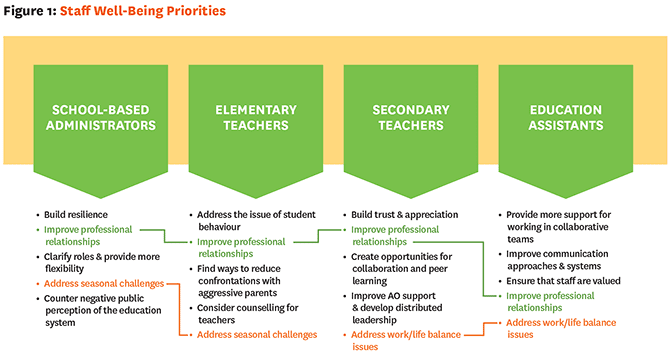
While a range of staff identified what might be considered traditional well-being approaches like resilience, addressing seasonal challenges and work-life balance, we were surprised by the focus on improving professional relationships across all four focus groups. This suggests that with the high levels of staff interaction, staff felt that communications and dialogue could be significantly improved, and that such improvement would promote well-being. From elementary teachers there was a strong focus on the need for greater support in addressing student behaviour.
While the focus group data and staff’s recommendations for priorities provided a foundation for action, we also had to consider how to proceed.
How to move forward?
If you have ever been surveyed or participated in a focus group, you may have felt that once you had provided your input, some action might reasonably follow. You may have been frustrated that action did not happen as you’d expect. So having asked close to a hundred staff what helps or hinders their well-being, and what they would like to see happen, we as a district team were keen to avoid the “We told them but nothing happened” scenario. What we came up with emerged in part from the early, wide-ranging discussions about approaches to well-being with unions and management. It’s simply this: It’s not just up to the individual teacher, administrator or support staff worker to become more resilient. Neither is it up to the district to “fix” everything. It’s a combination, with individuals, groups and the district playing different roles but all having the potential to take some action. So we have proposed:
Individual approaches: what each person might consider
One example of this was a teacher who read the Educational Assistants’ (EAs) Focus Group report, outlining some data showing that EAs often did not feel included in their school. He added the EA’s name alongside his name on a label on his classroom door. It’s a simple step that takes no time and costs nothing, but addresses the issue and potentially supports EA well-being.
Collaborative approaches: what a group may choose to explore
One small elementary school group started an inquiry group to address well-being. Other options could be a group starting an exercise program or having more social events in their school, like lunches where all staff are invited.
Collective approaches: what might be supported by a district
In one district, where professional interactions were stated as problematic in all focus groups, the district provided some funding for participation in a university Symposia series3 offered by Simon Fraser University, which aims to improve dialogue in public education, and to enable any staff to engage more productively in conversations and dialogue with peers.
What may evolve from these approaches is that all staff could be encouraged to consider what actions they can take as individuals or in groups. School districts might enable actions of their staff through funding and support. Everyone can play a role, and there is no expectation that someone else will fix everything. Participation in any actions to address staff well-being would be voluntary. Stress-inducing issues such as student behaviour and professional interactions would be addressed with district financial support, but with staff leading the changes taking place.
Because of district budget cycles and timelines, there was a priority focus on collective approaches (district actions) in one district, with the focus on individual and collaborative steps coming later. However, in the two other districts where I work, there are significant steps to create collaborative actions in schools, with a wide range of learning groups in one district and the creation of “wellness champions” in each school who act as conduits for information and catalysts for action in a second district.
By sharing the learning across all three districts, we hope to avoid reinventing wheels already created and working effectively. By sharing our ideas with other interested parties across Canada we hope to learn from the work and experiences of others while sharing what we have learned. As a staff member in one of the school districts stated, in order to address staff well-being in Canadian schools and education systems, “we are better together.”
Getting Started with Workplace Well-Being: What we have learned
- Start slow. Listen to teachers, administrators, educational assistants and other staff to build a foundation of understanding about issues and perspectives.
- Engage with both management and unions to gauge perspectives, interests and concerns so that both become allies in addressing staff well-being.
- Collect data. In two school districts, we conducted a total of nine focus groups with elementary and secondary teachers, school administrators, and other staff. I think the focus groups were a better way to collect data in these projects than surveys, as they not only provided rich data but started multiple and widening conversations in schools about staff well-being.
- Think through how you move from data to action. What do the data tell you? What to do as a result? One school district has formed a Data Action Group to access a wide range of data to support district decision-making.
- School, district and community context and culture are crucial to understand. While context is relatively straightforward, culture is less easily defined or agreed on. One school or district may have a very positive and supportive culture, while another may have deep differences and divisions. Asking five people to describe a school or district’s culture may result in five different answers, yet in some case we have found genuine levels of consensus in describing cultures less than ideal and which could be improved.
- Build safe spaces where staff can speak freely and be respected for their views, but build in critical challenges if needed once those safe spaces are created, so that everyone in meetings feels able to challenge ideas while also maintaining respect and civility.
- Communication is important. As well as the Focus Group Reports (5-9 pages) we produced one-page graphics to summarize both process and data in one district, so that anyone could quickly access the key information while also having access to the full reports should they wish to read them. After the focus groups in this district, any participant from the focus group, and any interested teachers, administrators or support staff workers, were invited to a follow-up dinner meeting to identify priorities for action. This kept more people involved and talking about actions to support well-being.
- Consider partnerships and collaborations with external agencies such as health authorities, municipal governments, and/or community organizations.
Free Discussion Kit
Download the pro-learning session, Your Role in Promoting Staff Well-Being in Your School: Reflecting on lessons learned from three B.C. school districts at www.edcan.ca/discussionkit
Illustration: iStock
First published in Education Canada, September 2019
Notes
1 https://beyou.edu.au/fact-sheets/your-wellbeing/staff-wellbeing
2 M. Sisask, P. Varnik, et al., “Teacher Satisfaction with School and Psychological Well-Being Affects their Readiness to Help Children with Mental Health Problems,” Health Education Journal 73, no. 4 (January, 2013): 1-12.
3 http://www.sfu.ca/education/cselp/past-events/RPED-symposium.html#main_content_text
-
Ozhitoon Onji Peenjiiee – Build From Within
Comments Off on Ozhitoon Onji Peenjiiee – Build From WithinThis new high school program offered through Winnipeg School Division aims to both improve access to the teaching profession for Indigenous students, and to foster and hire more Indigenous teachers in order to improve the education experience of future Indigenous students.
Indigenous student high school graduation rates are lower than the rest of the Canadian student population. In addition, the field of education continues to enroll proportionately fewer Indigenous students than non-Indigenous students. The resulting teaching workforce suffers from a lack of Indigenous teachers and role models, which perpetuates the challenges faced by Indigenous students in school. The Ozhitoon Onji Peeniee (Build From Within) program, launched in the 2018/19 school year, increases the equity in access to post-secondary opportunities in the field of Education to our current Indigenous students, and will benefit our future students by increasing the representation of Indigenous insights, expertise and experience in the teaching profession. Currently, our first cohort is entering their second year in the program.
Build From Within is an Indigenous-focused path to a career in education for Indigenous high school students in the Winnipeg School Division (WSD). The program is offered through a partnership with the University of Winnipeg (U of W) and Indspire. It supports Indigenous students to complete their education within a culturally framed program. We aim to increase students’ education achievement and life-long learning connections, and prepare them for smooth transitions from their senior high school year through the U of W to their successful teaching careers.
The primary goal of Build From Within is to build on Indigenous students’ unique strengths and experiences to create competent and motivated teachers who are passionate about their work and want to contribute back as teachers in the school division they graduated from. We believe what we as a division will contribute, the WSD community will get back ten-fold.
The program is rooted in the Circle of Courage educational framework, which grounds teaching in the development of a sense of belonging, mastery, independence, and generosity.1 Indigenous high school students are selected after a rigorous application process to embark on a journey from high school student to educational assistant to teacher with WSD. In the program, they earn their Educational Assistant Diploma (EADP) while they complete their high school credits, and will graduate from Grade 12 with both their EA and high school diplomas. Next step, the students will be enrolled at the U of W’s Integrated Bachelor of Arts and Education program and will work half-time every morning for WSD as Interns utilizing their EA training. Finally, after graduating from the U of W, the students, who now have earned their BA and BEd, will be hired as teachers with WSD.
How it works
Indigenous students are recruited from Grades 10 to 12. They complete an application and attend an information session with a parent or guardian, who will be their family support throughout the program. The program is reviewed with the student and their support person and an interview is scheduled to take place at the student’s home school. The program coordinator, along with another teacher from the WSD Indigenous Education Team, interview the students to identify a fit for the program.
On interview day, the students wait anxiously for their turn. For most, if not all the students, it is their first time experiencing an interview. They have put on their best clothes and have practiced interviewing with teachers and guidance counsellors. They openly admit they are nervous; this program could be life changing for them. While it is technically an interview, we see it as more of an opportunity to meet and build a relationship. It’s a chance for the project manager to learn more details of the student’s life and aspirations, who they are, where they come from, and where they are going.
After the candidates are selected into the program, we hold a feast to honour and start the successful students on their education journey in a traditional way. The feast last year was hosted at R. B. Russell School, whose culinary program prepared a traditional meal of stew, bannock and rice pudding. It was an intimate event with 70 attendees: just a few staff directly involved in the program, the student candidates, and their immediate families. A fire was lit in the school’s cultural area (Tipi and Sweatlodge) and after supper the students offered tobacco. This allowed the students the opportunity to make an offering for whatever reason they felt was important or needed by them personally. An interesting and emotional request came from a parent. They wanted to offer tobacco for the family member they were supporting. Other parents and caregivers lined up to make that commitment of support by offering tobacco; an event that was spontaneous and had such importance and meaning.
The next phase of the students’ journey was to create a sense of belonging amongst them. To accomplish this, students left their home schools for second semester and regrouped as a cohort at the Winnipeg Adult Education Centre (WAEC) in downtown Winnipeg. At this location, students take courses in the morning toward their diploma in the EADP (Educational Assistant Program offered by the U of W), through the U of W Professional, Applied and Continuing Education program (PACE). The courses are taught in blocks of six or 12 days by PACE instructors hired specifically for this cohort. In the afternoons, students are enrolled in high school courses.
On a cold February morning, the program began with 26 nervous and excited future teachers ready to begin their journey. The first week was spent orienting the students to their new school. Their high school courses were scheduled for the afternoon and the students started them the first week. Their EA courses were slotted in the mornings starting the second week. In their first semester, students complete the first six of 12 EA courses. This completes Part 1 of the EADP. In their second year, Semester 1 Grade 12, students complete part II of the EADP. They will finish the EA program by the end of the first semester in January, and for their final semester in high school, they will return to their home schools to complete their credits and graduate with their peers.
After graduating high school, the students will be hired as half-time EAs with WSD and attend the U of W full time from September to June. They will complete a five-year integrated Bachelor of Arts and Education degrees (Grades K to 6) in four years with a Major in English and a Minor in History. Both the major and minor will have an Indigenous focus. At the U of W, they will remain a cohort, taking the same classes and supporting each other as they complete their degrees. We often say to the students, “We are not training you to be master EAs, we’re training you to be master teachers!”
The students will gain invaluable experience working with a variety of teachers at various elementary schools and classrooms during their education journey. Once they have completed their degrees, WSD is excited to offer each graduate of the Build From Within program a teaching position. By experiencing different schools and different grade levels (K-Grade 6), the students will have a better idea where they would like to apply for those positions.
Challenges
One of our first challenges was to ensure all the students were on track not only to graduate high school but also to earn their Educational Assistant diploma. To make this work, the project manager sat down with each student and their school’s guidance counsellor to plan their high school courses for the next two years. The next challenge was to have the coursework the students completed for the EA program recognized as dual high school credits to ensure students completed the required 30 credits to graduate.
A common challenge has been the workload for the students. The rapid pace and the frequent instructor changes has presented a wonderful example of what university will be like. One student reported, “The challenge of this program is the workload of all the courses, because you have to keep up with both your university and high school work.” Another common challenge has been leaving their home school and friends. Joanna said this was her biggest challenge, but that “I now have made some really good friends that are in the same classes as me… they understand how I feel.”
The students have completed their first half of the EADP. September will bring another set of celebrations and challenges. The cohort is strong and the strength comes from within the group. Soon the group will graduate. Meanwhile, the project manager will be busy identifying schools that will best support and promote the students’ growth becoming teachers. Teacher mentors will be key, as selection of a master teacher and supportive principal are imperative to the development of student teachers. This will bring on the next set of celebrations and challenges.
Photo: Shane Bostrom
First published in Education Canada, September 2019
Notes
1 L. Brendtro, M. Brokenleg, and S. Van Bockern, Reclaiming Youth at Risk: Our hope for the future, rev. ed., (Bloomington, IN: National Educational Service, 2002).
-
Culturally Responsive and Relevant Pedagogy
Comments Off on Culturally Responsive and Relevant PedagogyA brand-new school embraces the opportunity to include culturally responsive and relevant pedagogy (CRRP) in its founding mandate. How did they do it, and what factors were essential for success? What does Culturally Relevant and Responsive Pedagogy mean and why is it important?
There was a time when Canadian students weren’t asked to leave very much at the door when they came to school each day: their collection of hockey cards, a baseball bat, an occasional slingshot. Once, if the story is accurate, a white-fleeced lamb. Like most public institutions, Canada’s schools were originally designed to reflect the cultural values and worldview of a largely white European society and, for the great majority of students, this meant a comfortable continuity between home, school and community.
Since the 1970s, we have seen a relatively rapid demographic shift and a major change in the cultural make-up of many communities. Yet in many important ways, school systems have not responded to this significant cultural shift.
Nowadays, in addition to leaving their personal belongings behind, many students are also asked to check some crucial aspects of their culture at the school door: their family stories, their language, their sense of community connection and their unique perspectives and ways of knowing the world.
It’s not you, it’s the system!
For decades, Gloria Ladson-Billings and Geneva Gay have been arguing, in separate bodies of work, that the reasons traditionally used to explain the persistent failure of black students in the United States do not suffice. Through their work, both began to insist that the answer to the thorny problem of race-related school success was not to be found by blaming the students or their family context. Instead, the mirror needed to be turned to reflect both the problem and the solution to this essential equity challenge: the systemic realities that ignored or even actively suppressed the cultural capital that students brought to school.
When Nicole West-Burns came to Canada from the U.S. to work with Jeff Kugler in the Centre for Urban Studies at University of Toronto’s Ontario Institute for Studies in Education (OISE/UT), she brought her deep knowledge and experience of this research to add to Kugler’s many years of working as an educator/administrator in Toronto’s Regent Park. Combining the theories of Ladson-Billing’s Culturally Relevant Pedadogy and Gay’s Culturally Responsive Pedagogy, they framed an approach many Canadian educators now know as Culturally Responsive and Relevant Pedagogy (CRRP).
At first their intensive work with educators was concentrated on ten “Model Schools for Inner Cities” in the Toronto District School Board, but in 2013, they were asked by the Ontario Ministry of Education’s Inclusive Education Branch to mobilize the work in a year-long pilot program, centred in two Greater Toronto Area Schools: William Burgess Public School in downtown Toronto, and Irma Coulson Public School in the town of Milton, just northwest of the city.
A framework for deep transformational work
CRRP is not a program that can be delivered to schools in a box and distributed at a staff meeting or even on a single professional development day. Instead it is a dynamic framework that provides a set of tools and lenses that, if taken seriously, can lead to thoughtful unpacking, personal reflection and honest dialogue among staff, students and communities. CRRP examines issues of power and privilege, calls participants to challenge the beliefs and assumptions about the students in their class and explores on a very deep level what is necessary to enable all students to be successful in school. It intentionally centres the cultural assets that students bring with them to the classroom and uses those assets as a way to get to know the students and their way of knowing the world, and as a way of engaging all students. But it also forces educators to consider how those assets are put to work to allow students to see themselves reflected in the curriculum and in the life of the school.
To be sure, CRRP is an approach that takes time, resources, vision and leadership. But under the right conditions, it can significantly impact the way we talk and think about race, culture, identity and equity. The story of CRRP at Irma Coulson Public School (ICPS) offers a grounded vision of how those conditions can come together in a very tangible and powerful way.
A strong vision for equity and excellence
In early 2013, Principal Merrill Mathews and Vice Principal Mary Marshall were busy preparing to open the doors of a new school in Milton, Ontario – Canada’s fastest-growing town. The neighbourhood in which Irma Coulson was to be located was also one of the most culturally diverse in the Greater Toronto Area. The ICPS catchment area drew families from seven or eight different schools in the Milton area and included a wide range of religious and ethnic groups.
It was this diversity that drew Mathews to his first assignment as principal. The belief that all students could and would excel at Irma Coulson was part of the way that Principal Mathews presented his vision for the school – to potential teachers and staff, to parents and students who would call ICPS home, to potential community partners and to district colleagues. The phrase “Equity and Excellence for All” became the official motto for the school, and appeared on the front doors of the school when they opened in the fall of 2013. On most days, members of the ICPS staff could be seen wearing school T-shirts proclaiming their belief in the work in which they were involved. At the heart of this belief was the recognition that every family enrolling at ICPS had a story richly steeped in culture, and the promise that the school would be a place where those stories were valued.
Vice-Principal Marshall recognized that Mathews’ commitment to the vision ran deep. “His own experiences as a student really played into that and his passion for equity work as an educator from the very beginning of his career. And so, when the opportunity came to be appointed as a principal for an opening school, that vision was front and centre.”
This dogged commitment to a clear and compelling vision is a necessary condition for CRRP. It was something that Kugler recognized as soon as he began to understand that Mathews’ vision would run through the entire design of the school: “The major criteria in hiring new staff to come to this brand-new building was their openness at least to working around equity issues… And to build a school upon which equity was the foundation.”
Today’s complex school context provides many challenges, not the least of which is finding the room to focus on what is important. The CRRP pilot was not an add-on, but something that supported and expressed the grounding philosophy of the school.
Intentional leadership
In many cases, educational pilot programs revolve around one or two enthusiastic teachers who are provided with the time and resources to engage in the work. By contrast, the CRRP pilots at both William Burgess and Irma Coulson demanded the involvement of all staff from the very beginning. It was a requirement for participation in the pilot.
In addition to the internal resources available at the school level, the Ministry commitment to CRRP came with extra release time for teachers to participate in monthly sessions with Kugler and West-Burns’s team, and for the “in between” work necessary to deepen the conversations among staff.
One of the most important words that emerges when Mathews and Marshall talk about their leadership role is intentionality. At Irma Coulson, monthly staff meetings were intentionally planned in advance, ensuring that the work of the CRRP pilot was maintained as a priority. School Council meetings followed a few hours later, so the admin team could intentionally involve parents in some of these same conversations. Schedules for planning time were intentionally organized to allow grade-level teams to meet together weekly. There was no doubt in anyone’s mind that this was important work and that it involved everyone in the building – not just teaching staff – and extended to the parent community.
Marshall admits that the extra resources provided by the pilot were a luxury, but insists that, if the commitment is there, the work can get done. “I believe that there’s time and space and resources in schools that make a commitment to do this work, to then undertake this work. Now, it may take longer because you haven’t got the richness of resources.” She believes, however, that strategic thinking, a strong sense of direction and the type of intentionality that instills confidence and commitment can make things happen in a very powerful way.
Support for the important conversations
Much of the transformational power of CRRP is that it requires a good deal of deep and very personal work. At the core of this identity work is understanding that most Canadian educators have grown up in and have been favoured by the system in which they are now working. It is challenging, if not contentious, to begin the process of unpacking issues of privilege, marginalization and oppression. The work can be emotionally charged and requires participants to come face-to-face with questions and realities that they may be encountering for the very first time.
ICPS teacher Shannon Morgan doesn’t remember encountering any of these ideas in her own teacher preparation program. She does remember clearly the unease on the part of many in the early days of the pilot. “It was the conversations happening, not just in the groups with Jeff and Nicole, but sidebar conversations as well,” she says. “You could really see how uncomfortable this work was, and some people not wanting to say how uncomfortable it was in a large group.”
Yet, this personal identity work is necessary if educators are going to be able to truly understand CRRP. Teacher Phil Gibson, an Afro-Canadian male, remembers the day when he realized that his experience of growing up in Burlington, Ont. was different than other staff members from the same area.
“One of our colleagues was also from Burlington. And when she talked about her experience growing up there, it was like all flowers and roses. It was a great environment. My experience growing up in Burlington was the exact opposite of that. So it kind of jump-started the conversations where people were able to say, ‘I’ve never thought of that!’”
Many leaders and participants might be tempted to back away from these types of conversations and reflection. But Nicole West-Burns insists that we need to stay with them and live through the discomfort. “We talk (to teachers) about the rumbling in your stomach or the things that stand up on your neck and that this is part of the feeling. But the discomfort sometimes is what helps us push through or figure out. And so that’s what we need.”
Moving beyond these initial feelings of discomfort is essential to the work of CRRP. The expertise and sense of confidence brought by West-Burns and Kugler helped the staff move to the next level in their conversations – a focus on the students.
“The intensity of the work built strong relationships with people and established some trust, which is always a challenge in the first year,” says West-Burns. “This wasn’t about jockeying for position, this was about coming together for the good of the kids. This project really allowed staff to establish that from the beginning: This was about the students.”
From identity to practice
The personal and group identity work formed the important groundwork for a change in the way that teachers and staff saw students and families at the school. It was noticeable in the way that parents were welcomed into the school and spoken to by office staff and administrators. It was noticeable in what was hung on the walls throughout the school. And it was noticeable in the stories of change that staff began to experience and share with each other.
Phil Gibson is a Phys-Ed teacher at Irma Coulson. He recalls what happened when, during a unit on baseball skills, he decided to bring in cricket equipment as well, placing the game in a cultural context that resonated with many of his students. Students unfamiliar with the game of baseball suddenly felt empowered and affirmed by the opportunity to teach their peers about an important part of their culture. “They were teaching them how to bowl. They were teaching the rules of cricket, talking about how to hold the bat.” Now, Gibson reports, those same students can’t wait for spring and the opportunity to get outside and play cricket again.
Shannon Morgan has many stories about the impact of CRRP but one that she remembers fondly was reported to her by a lunchroom supervisor who had listened in on a conversation among Morgan’s Grade 2 students. “They were all sharing the different creation stories from their different backgrounds and families. In a very civil manner, they were actually engaging in a rich dialogue… They were able to listen to each other and respect each others’ differences, and that was huge for me.”
Bringing it all together
It could be argued that the extra supports directed toward pilot programs makes operationalization on a larger scale difficult, if not unrealistic. It is true that lighting a pilot light may get things started more easily, but there are lessons to be learned from identifying the conditions that allowed CRRP to take root and drive equity work at ICPS.
The understanding that cultural change is reliant on focused leadership should open up important conversations about how our school leaders are chosen, trained and supported through their work. Creating the ability for principals and vice-principals to develop and maintain that energetic focus is important for everyone in the building, as is the way that we encourage school leaders to connect with each other across a district and beyond.
If a staff is going to follow a leader into uncomfortable and challenging work, there needs to be a strong sense of intentionality. One-off workshops or single-day PD events cannot replace the knowledge that this is the work that we are doing, now and throughout the year.
Finally, outside support and expertise may be necessary to guide the personal work that allows CRRP to take root. Having the resources to draw in that support, especially to facilitate the difficult but essential conversations, cannot be overlooked or taken lightly.
Culturally Relevant and Responsive Pedagogy was originally introduced in Ontario by Nicole West-Burns and Jeff Kugler as a way of addressing a specific group of racialized students proven to be marginalized by the system in Canada’s largest school district. It was soon recognized as a powerful framework that challenges all educators to see themselves and their students differently. Culturally Relevant and Responsive Pedagogy insists that we start to understand that success for all students means embracing the cultural assets that they carry with them every day, and refusing to let those assets remain at the schoolhouse door.
As the two CRRP pilot programs reveal, this is not easy work. It takes vision, time, resources and the courage to stand up to a system that is, too often, supportive of the status quo. At stake is the success of a growing number of culturally diverse students who are marginalized and often alienated by a system built for a different time and place. What’s possible is the nurturing of school communities that reflect, respect and leverage the power of the stories, experiences and ways of knowing carried by all of our students and their families.
Photo: courtesy Halton District School Board
First published in Education Canada, September 2019
EXPLORE THE LATEST EDITION OF EDUCATION CANADA, POWERED BY VOICED RADIO (MARCH 2022)
-
Going Green in K-12 Education
Comments Off on Going Green in K-12 EducationSchools can play a crucial role in fostering environmental citizenship among students, but also in mitigating their own substantial carbon footprint.
Imagine a world where the highest paid job is salvaging treasures from once coastal cities now submerged beneath the expanding oceans. No, this isn’t a post-apocalyptic sci-fi movie. It’s one of many possible futures our planet faces if we don’t take serious action on climate change.
There’s simply no denying it. Poll after poll has shown that Canadians are increasingly concerned about climate change. This is especially true among young Canadians.
Inspired by passionate young activists like 16-year-old Swedish environmentalist Greta Thunberg and the #FridaysForFuture movement, our youth are eager to see substantial action on climate change in their daily lives – including at school. The average student will spend at least 15,000 hours in the classroom from Kindergarten to Grade 12. During that time, they not only want to engage in activities and initiatives that promote environmental sustainability, but they also want to be immersed in an atmosphere where they live it. Today, John Paul II Catholic Secondary School in London, Ontario seeks to become Canada’s first carbon neutral school by 2021 through reducing greenhouse gas emissions to near zero. This is just the start.
The EdCan Network acknowledges the crucial role that schools can play in fostering environmental citizenship among students, but also in mitigating their own substantial carbon footprint. Once students and teachers become engaged, their heightened environmental awareness broadens to other issues, and spreads into their family lives and communities. Already, we have seen schools and school districts make great strides as trailblazers in this area.
Consequently, the EdCan Network is excited to announce that our March 2020 issue will focus on “Greening Our Schools” to tie in with Global Recycling Day on March 18, 2020. We’ll address topics like food waste in schools, energy reduction, how climate change is taught in classrooms, environmental leadership, and Indigenous approaches to environmentalism. But that’s not all. In the coming months, we will lead a national conversation on how the key players in K-12 education – students, parents, educators and other stakeholders – can be the catalyst to real, impactful action on climate change.
Today, talk and inaction can only take us so far in addressing climate change. If we desire a future that is closer to Star Trek than Terminator 2: Judgment Day, it’s time to go green on education.
Support Our Work!
The Edcan Network is a nonprofit organization that bridges research and practice by including voices from across the entire spectrum of K-12 education.
Become a Donor: Help us expand the reach of timely educational resources to improve education policies and support “deeper learning.”
Visit www.edcan.ca/donate to make a donation today.
First published in Education Canada, September 2019
-
The Case for Investing in K-12 Staff well-being
Comments Off on The Case for Investing in K-12 Staff well-beingNovember 22, 2019 | 7:30am – 3:30PM
Borden Ladner Gervais (BLG) Conference Room
Bay Adelaide Centre, East Tower 22 Adelaide Street West Suite 3400
Toronto, Ontario M5H 4E3 Canada
Join ministry and faculty of education representatives, Directors of Education/CEOs, and other K-12 leaders from across Canada for this EXCLUSIVE professional learning session, where you will:
- Learn the fundamental principles and evidence behind workplace well-being in K-12 education
- Find out how investing in educator well-being can heighten student achievement and save precious resources
- Discuss ways to go beyond one-off unsustainable programs to a long-term, system-wide approach
Can’t make it? Stay tuned for our Spring National Summit on K-12 Workplace Well-being
All attendees will receive FREE class passes to:

Toronto’s preeminent meditation studio
Gift raffle prize sponsored by:





ALL-STAR PROGRAMME
Download and print the schedule
SESSION 1
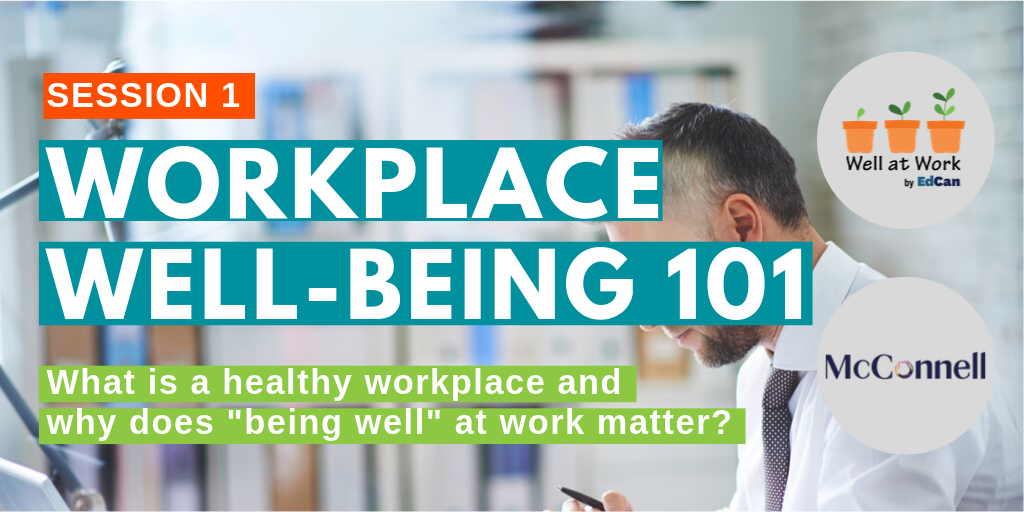
Led by the EdCan Network and the McConnell Foundation
SESSION 2
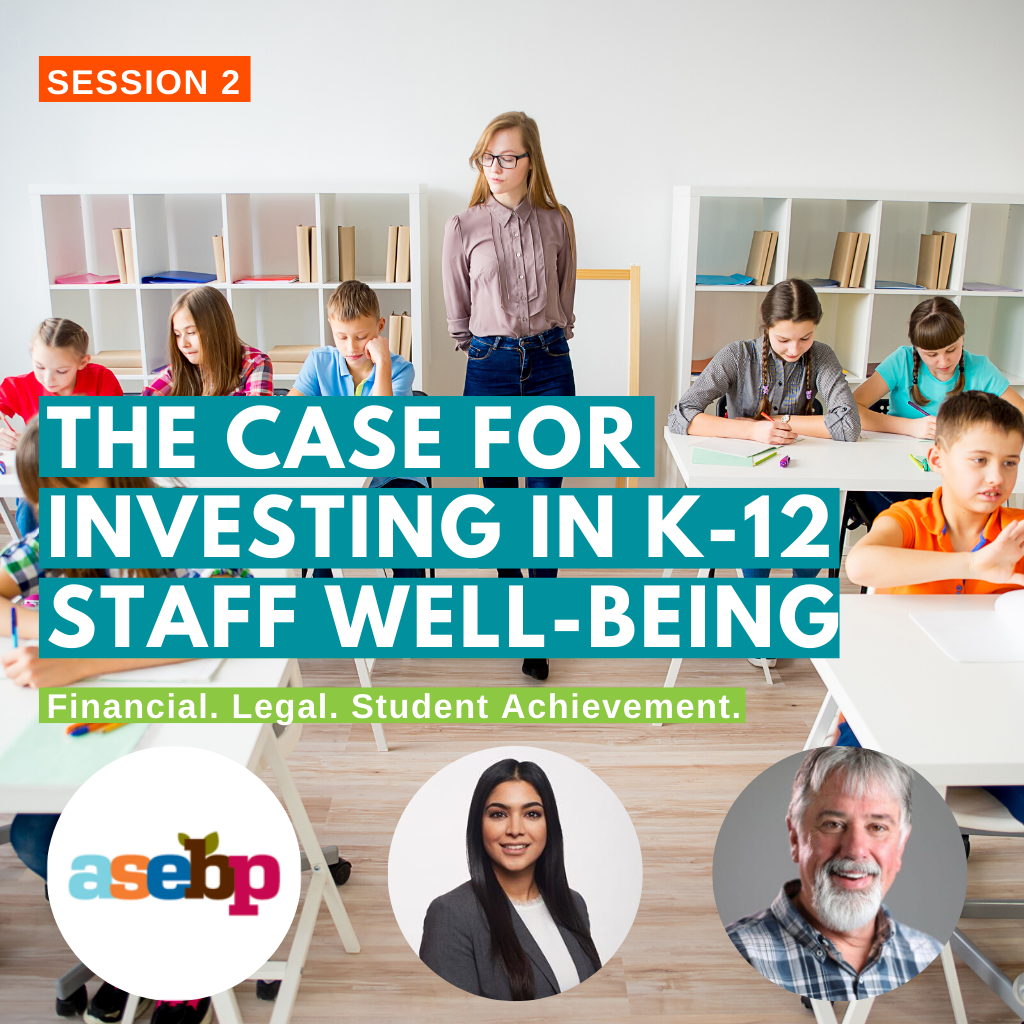
Line up:
The Business Case for Workplace Well-Being: Rationale for an Upstream Approach
Led by Leanne Keyko, Health Strategies Liaison & Trudy Lakusta, School Jurisdiction Liaison, Alberta School Employee Benefit Plan (ASEBP)The Legal Case for Workplace Well-Being: How Health and Safety Legislation Can Help You Achieve the Best Return-on-Investment
Led by Anna V. Karimian, Associate – Labour and Employment Group, Borden Ladner Gervais (BLG) LLPThe Student Achievement Case for Workplace Well-Being: Raising Student Outcomes through a Whole-System Approach to Well-Being
Led by Dr. Bill Morrison, Professor of Educational Psychology & Co-Executive Director, Health and Education Research Group (HERG), University of New Brunswick; President, WMA WellnessFollowed by a plenary Q&A
SESSION 3
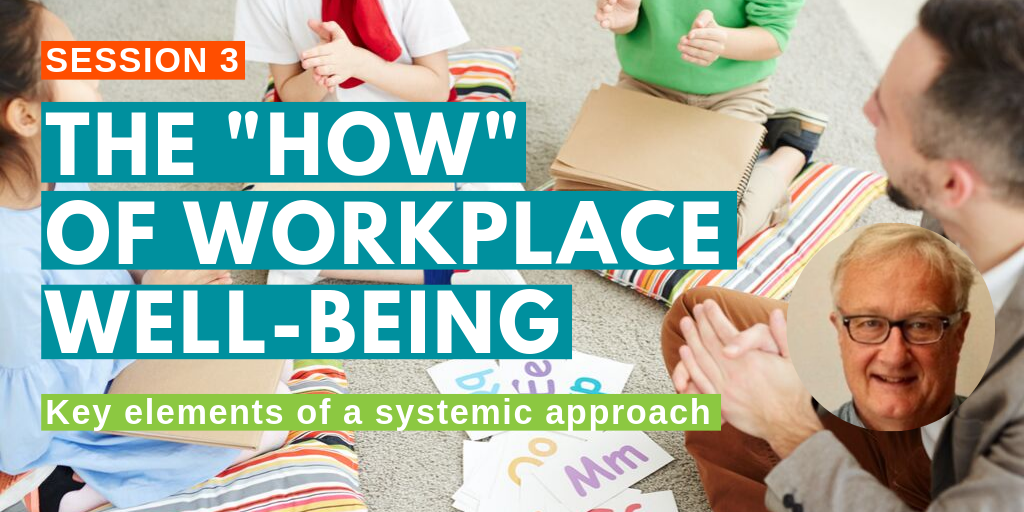
The “How” of Workplace Well-Being: Key elements of a systemic approach
Led by Dr. Charlie Naylor, Affiliated Scholar – Simon Fraser University; District Well-Being Coach; former Senior Researcher – British Columbia Teachers’ Federation (BCTF)
SESSION 4

Small group facilitated discussions will support participants to consider and share “Where they’re at,” “What they learned,” and “What they need to do to move forward” to lead greater investments into workplace well-being in their own school communities.
-
The Case for Investing in K-12 Staff Well-being
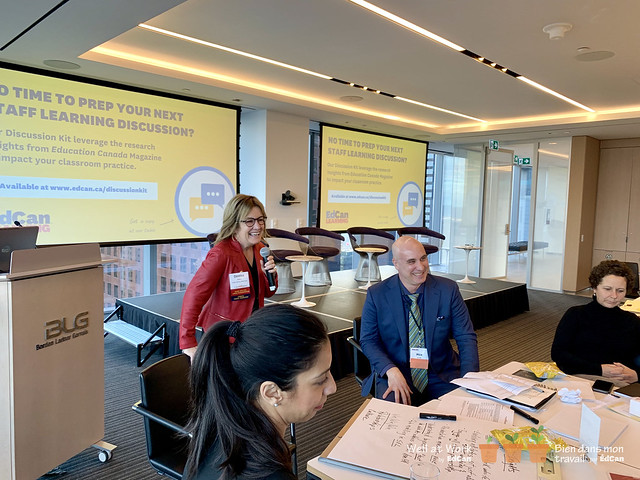
Comments Off on The Case for Investing in K-12 Staff Well-beingOn November 22, 2019, ministry and faculty of education representatives, Directors of Education/CEOs, and other K-12 leaders from across Canada attended our EXCLUSIVE professional learning session, where they:
-
Learned the fundamental principles and evidence behind workplace well-being in K-12 education
-
Found out how investing in educator well-being can heighten student achievement and save precious resources
-
Discussed ways to go beyond one-off unsustainable programs to a long-term, system-wide approach
Couldn’t make it? Stay tuned for our Spring National Summit on K-12 Workplace Well-being
Click on the album to see more photos from our event.
ALL-STAR PROGRAMME AND PRESENTATIONS
Click on the arrows to see the sessions and download the presentations.
-
-
Cannexus, Canada’s National Career Development Conference
Comments Off on Cannexus, Canada’s National Career Development ConferenceCannexus, Canada’s largest bilingual National Career Development Conference, returns to Ottawa, Jan. 27-29, 2020, to help educators prepare students for the future of work.
Bringing together more than 1,200 career development professionals from K-12, post-secondary, community, government and private sectors, the conference will provide insights on:
•Youth career education and career exploration
•Integrating career into curriculum and experiental learningThe 3-day conference is presented by CERIC, a charitable organization advancing career development research and education in Canada.


IDEAS TO SUPPORT EDUCATORS : Subscribe to the EdCan e-Newsletter
Quality research, reports, and professional learning opportunities.