
Archive
-
How Can Education Systems Support Principals’ and Vice-Principals’ Well-Being?
Comments Off on How Can Education Systems Support Principals’ and Vice-Principals’ Well-Being?Principals and vice-principals often sacrifice their own happiness and well-being to support their staff and students. Many school leaders report working long hours, skipping lunch, feeling isolated in their roles, and being unable to spend time with friends and family because of intense and expanding workloads. The toll of these demands can leave school leaders feeling emotionally and physically exhausted.
HERE ARE PROVEN STRATEGIES TO SUPPORT PRINCIPALS’ AND VICE-PRINCIPALS’ WELL-BEING
PROFESSIONAL ASSOCIATIONS can advocate for:
- Ongoing professional development (PD) that reflects the realities of being a school leader.
- Coaching or mentoring specifically designed for principals and vice-principals that supports both their professional and personal well-being.
- Health assessment tools that allow principals and vice-principals to develop long-term health plans.
- Telephone support lines that offer confidential guidance from experienced school leaders, legal representatives, and healthcare professionals.
SCHOOL DISTRICTS can:
- Develop PD that provides strategies for principals and vice-principals to support their own well-being.
- Promote healthy work environments overall for all members of the school community.
- Negotiate employee health benefits that support school leaders’ well-being and encourage them to be used fully. Health services (e.g. massage therapy, physiotherapy, chiropractic therapy, and professional counseling) or benefits that promote healthy living (e.g. nutrition services, gym memberships) are especially effective.
- Develop realistic expectations around remote work and using email beyond office hours.
POLICYMAKERS can:
- Consider ways to position school leaders for success by focusing on their priorities as leaders of learning (e.g. by delegating, reducing, and eliminating workload).
- Clarify expectations on how school leaders should be involved in implementing new and ongoing initiatives (e.g. those related to mental health, cyberbullying, technology leadership).
- Assess options to reduce the time principals and vice-principals spend on lunch and yard duty. There is ongoing tension between being on duty to supervise students and attending to other time-sensitive issues, which means principals can have difficulty fully engaging in either task.
- Encourage school leaders to hire highly qualified teachers who are suited to the local school context. This can be achieved by promoting teacher professionalism (e.g. specialized knowledge and skills, long-term and well-resourced teacher PD).
To maximize efficiency and prevent overlap between initiatives, professional associations, school districts, and policymakers can align these strategies to better support the well-being of school leaders and school communities as a whole.
Additional Resource Information
Pollock, K. (with Wang, F. & Hauseman, D. C.). (2017). The changing nature of vice-principals’ work: Final report. Retrieved from: http://www.edu.uwo.ca/faculty-profiles/docs/other/pollock/pollock-opc-vp-report-final.pdf
Pollock, K. (with Hauseman, D. C.). (2015). Principals’ work in contemporary times: Final report. Retrieved from: https://www.edu.uwo.ca/faculty-profiles/docs/other/pollock/OME-Report-Principals-Work-Contemporary-Times.pdf
Pollock, K. (with Wang, F. & Hauseman, D. C.). (2014). The changing nature of principals’ work: Final report. Retrieved from: https://www.edu.uwo.ca/faculty-profiles/docs/other/pollock/OPC-Principals-Work-Report.pdf
Pollock, K. et Wang, F. (2019). Le travail des directions d’école au sein des systèmes d’éducation de langue française en Ontario. Repéré à : https://www.edu.uwo.ca/faculty-profiles/docs/other/pollock/pollock-ADFO-Report-Revised-Final.pdf
Pollock, K., & Wang, F. (2019). Principals’ work in Ontario’s French-language education systems. Retrieved from: https://www.edu.uwo.ca/faculty-profiles/docs/other/pollock/pollock-ADFO-EnglishReport-Final-V10.pdf
Alberta Teachers’ Association [ATA]. (2014). The future of the principalship in Canada. Retrieved from: https://www.teachers.ab.ca/SiteCollectionDocuments/ATA/Publications/Research/The%20
Future%20of%20the%20Principalship%20in%20Canada.pdfReferences
Alberta Teachers’ Association [ATA]. (2017a). The Canadian school leader: Global forces and future prospects. Retrieved from: https://www.teachers.ab.ca/SiteCollectionDocuments/ATA/Publications/Research/COOR-101-13%
20Canadian%20School%20Leader.pdfAlberta Teachers’ Association [ATA]. (2017b). A national study on the impact of electronic communication on Canadian school leaders. Retrieved from: https://www.teachers.ab.ca/SiteCollectionDocuments/ATA/Publications/Research/COOR-104%20A%20National%20Study%20of%20the%20Impact%20of%20Electronic%20Communication%20on%
20Canadian%20School%20Leaders.pdfLim, L., & Pollock, K. (2018). Secondary principal perspectives: How work intensification impacts their vice-principals. OPC Register, 20(3) 22–26.
Ontario Principals’ Council. (2017). International Symposium White Paper: Principal work–life balance and well-being matters. Retrieved from: https://www.edu.uwo.ca/faculty-profiles/docs/other/pollock/PrincipalWellBeing-17-FINAL-with-Acknowledgement-1.pdf
Pollock, K. (2017, September). Healthy principals, healthy schools: Supporting principals’ well-being. EdCan Magazine. Retrieved from: https://www.edcan.ca/articles/healthy-principals-healthy-schools/
Pollock, K., Wang, F., & Hauseman, C. (2017). Vice-principals’ work: More than being an instructional leader. OPC Register, 19(3), 20–24.
Pollock, K., & Hauseman, D. C. (2018). The use of e-mail and principals’ work: A double-edged sword. Leadership and Policy in Schools, 1–12 .
Pollock, K. (2016). Principals’ work in Ontario, Canada: Changing demographics, advancements in informational communication technology and health and well-being. Journal of the Commonwealth Council for Educational Administration & Management, 44(3), 55–74.
Riley, P. (2016). The Australian principal occupational health, safety and wellbeing survey., Strathfield, Australia: Institute for Positive Psychology & Education. Retrieved from: http://www.principalhealth.org/au/2016_Report_AU_FINAL.pdf
Wang, F., Pollock, K., & Hauseman, C. (2018). School principals’ job satisfaction: The effects of work intensification. Canadian Journal of Educational Administration and Policy, 185, 73–90.
Photo: Adobe Stock
-
IDEAS Partner Research Schools Education Conference
Comments Off on IDEAS Partner Research Schools Education ConferenceTransforming Pedagogies Learn – Design – Innovate
Since the late 20th century, new understandings of learning have continued to emerge. These new understandings arise from the fields of neurology, psychology, sociology, anthropology, and ecology. It is imperative that those responsible for optimum learning in a system understand the transformations to pedagogies that support and promote learning throughout the system. Partner Research Schools and Galileo Educational Network collaborate to bring this event alive. -
Effective Leadership Institute
Comments Off on Effective Leadership InstituteThe Effective Leadership Institute is a two-day event that provides school leaders with specific, practical actions to implement in their classrooms, schools, and districts to improve leadership, teaching, and learning. Explore leadership processes rooted in collective efficacy, collaboration, with a focus on teacher and student growth.
The event features keynotes from educational leadership consultants Peter DeWitt, Jenni Donohoo, and Dave Nagel.
-
Visible Learning Plus Institute
Comments Off on Visible Learning Plus InstituteSeptember 24, 2020 – September 25, 2020
8:00 AM-3:30 PM PT
Zoom Platform – This Event is in Pacific Standard Time (PST)The Visible Learningplus Institute is a two-day event featuring John Hattie, Jenni Donohoo, and Julie Stern designed to provide you with the tools to identify key takeaways from the Visible Learning research, learn about the five strands of Visible Learning, and identify the difference between influences that impact student learning.
-
Visible Learning Plus Institute
Comments Off on Visible Learning Plus InstituteThe Visible Learningplus Institute in Newfoundland and Labrador is a two-day institute with John Hattie, designed to provide you with practical activities and take-away tools. This institute is the first step that will help you create Visible Learning Schools that systematically examine effective instructional practice in order to determine the “impact” on student learning.
-
Student Violence, Bullying and Sexual Assault
Comments Off on Student Violence, Bullying and Sexual AssaultA recent CBC-TV News series (October 24-25) featured hair-raising stories of violence, physical, psychological and sexual, inflicted on students in today’s schools (CBC Marketplace 2019). All of this came hard on the heels of the horrendous stabbing death of 14-year-old Devan Bracci-Selvey in front of Hamilton’s Sir Winston Churchill Secondary School.
Raising our consciousness about the dangers students face is much easier than grappling with why Canadian schools are falling short in addressing the chronic problem of violence, bullying, and sexual harassment. Twelve years after the groundbreaking January 2008 Toronto District School Board panel report1, The Road to Health: A Final Report on School Safety, it is hard to see much progress in ensuring student safety in schools.
School authorities from province-to-province, we learned, collect incident reports on student violence in vastly different ways, producing a crazy-quilt patchwork of data with far too many zero reports. Only two of the provinces, Ontario and Nova Scotia, require schools to share their school violence statistics with their education ministries. In the case of Ontario, that data was found to be incomplete and inaccurate. Given the paucity of reliable statistics, it was next-to-impossible to analyze this disturbing social trend in our schools.
To get to the bottom of the problem, CBC’s Marketplace commissioned a survey of 4,000 young people, ages 14 to 212, in September of this year, Nationwide, the results were startling: Two out of five (41 per cent) of boys reported being physically assaulted in high school; one in four girls (26 per cent) of girls experienced unwanted sexual contact at school; and one in four students first experienced sexual harassment or assault before Grade 7 in elementary grades.
Five key factors can be identified, based upon the CBC investigation and credible research on violence in schools.
1. Head-in-the-Sand’ Denial:
Much of the school violence experienced by students is treated as isolated incidents or events where it requires time-consuming investigation to assign blame or responsibility. In the absence of required reporting, it goes unacknowledged and, all too often, swept under the rug.3, 4
2. Ineffective Implementation:
Reporting of student violence incidents is expected or required, but not deemed a priority, unless or until a publicized incident hits the media and arouses parental unrest. School-by-school reports may be filed, as in Ontario, but oversight is weak or non-existent and zero reports are not questioned, even when it involved incidents featured in local media reports.5
3. Under-Reporting of Incidents:
School reports generated by principals and administrators normally under-report the actual school violence incidents, as revealed when compared with student-reported data. In American states, where student violence reporting is more established, data generated from the victims is incorporated into the official statistics.6
4. Fear of Reputational Risk:
School administrators are protective of a school’s reputation and reluctant to report higher counts which might result in being labelled a “dangerous school” if their numbers are high or rising from year-to-year.7, 8
5. Feeble Public Accountability:
Educational oversight by elected school boards and district educational councils is woefully inadequate. In Manitoba, the provincial school boards association president Alan Campbell claims that maintaining “a safe learning environment” is the “no. 1 priority,” while public disclosure of data is non-existent and levels of sexual harassment and hateful name-calling are higher than any other province in Canada.9 Why elected boards do not insist upon full public disclosure is hard to fathom, especially when it’s their responsibility to identify critical needs and allocate district resources.
Much can be learned from American school research and critical analyses of Ontario’s violent statistics regulation implementation over the past eight years. UCLA Professor Ron Avi Astor has published more than 200 academic studies on violent behaviour in schools. In the CBC-TV News investigation, he confirmed that Canada has no real system at all for collecting data10, exemplified by uneven provincial policies, lack of consistent definitions for offenses, varying collection systems, and inaccurate/incomplete statistics.
One of Canada’s leading experts on children’s mental health and violence prevention, University of Ottawa Education professor Tracy Vaillancourt points out that weaknesses in violent-incident and cyberbullying reporting undermine the effectiveness of school safety and prevention programs.11, 12 Acknowledging and measuring the problem is a critical first step in combatting bullying, cyberbullying and sexual harassment in schools.
Ontario deserves credit for requiring mandatory reporting, but the system does not stand up to close scrutiny. Most recent data documented 2,124 violent incidents in 2018-19, averaging more than 10 incidents province-wide each day.13 It simply does not stack up because 18 of Ontario’s 76 school boards have reported zero incidents for several years, eight show radical variations from year to year, and four boards are in non-compliance having failed to file reports for some years. While the CBC survey documented serious levels of violent incidents, more than three-quarters (77 per cent) of Ontario schools reported zero incidents over the previous year.
Negligence in reporting and underreporting simply compound the problem. When the violence statistics go unreported or are full of zeros, it becomes guesswork in allocating resources, not just funds but counsellors, psychologists, and social workers to rectify school problems with student behaviour.
Endnotes
1 Julian Falconer, Peggy Edwards and Linda MacKinnon (2008). The Road to Health: A Final Report on School Safety. Panel Report to Toronto District School Board. Toronto: Toronto District School Board, 4 January 2008. https://www.falconers.ca/wp-content/uploads/2015/07/Safety-Vol.-1.pdf
2 CBC News Marketplace (2019). School Violence, 24-25 October 2019. David Common, Anu Singh and Caitlin Taylor, CBC News. https://www.cbc.ca/news/canada/school-violence-marketplace-1.5224865 and https://www.cbc.ca/news/canada/marketplace-school-violence-sexual-violence-1.5329520
3 Julian Falconer, Peggy Edwards and Linda MacKinnon (2008). The Road to Health: A Final Report on School Safety. Panel Report to Toronto District School Board. Toronto: Toronto District School Board, 4 January 2008. https://www.falconers.ca/wp-content/uploads/2015/07/Safety-Vol.-1.pdf
4 Shawn Jeffords (2015). Ontario’s school violence statistics criticized for inaccuracy. Toronto Sun, 31 January 2015.
5 CBC News Marketplace (2019). School Violence, 24-25 October 2019. David Common, Anu Singh and Caitlin Taylor, CBC News. https://www.cbc.ca/news/canada/school-violence-marketplace-1.5224865 and https://www.cbc.ca/news/canada/marketplace-school-violence-sexual-violence-1.5329520
6 Ron Avi Astor, Nancy Guerra and Richard Van Acker (2010). How can we improve school safety research? Educational Researcher, Vol. 39, No. 1, 69-78.
7 ibid
8 Valerie Ouellet and Caitlin Taylor (2019). Why so much student violence still goes unreported. CBC News, 24 October 2014.
9 Jacques Marcoux (2019). Student-on-student sexual violence highest in Prairies, CB national survey finds. CBC News, 24 October 2019.
10 Valerie Ouellet and Caitlin Taylor (2019). Why so much student violence still goes unreported. CBC News, 24 October 2014.
11 Tracy Vaillancourt, Robert Faris and Faye Mishra (2016). Cyberbullying in Children and Youth: Implications for Health and Clinical Practice. The Canadian Journal of Psychiatry (19 December 2016), https://journals.sagepub.com/doi/10.1177/0706743716684791
12 CBC News Marketplace (2019). School Violence, 24-25 October 2019. David Common, Anu Singh and Caitlin Taylor, CBC News. https://www.cbc.ca/news/canada/school-violence-marketplace-1.5224865 and https://www.cbc.ca/news/canada/marketplace-school-violence-sexual-violence-1.5329520
13 Valerie Ouellet and Caitlin Taylor (2019). Why so much student violence still goes unreported. CBC News, 24 October 2014.
-
3 Steps to Districtwide Staff Well-Being
Comments Off on 3 Steps to Districtwide Staff Well-Being -
So you want me to talk?
Comments Off on So you want me to talk? -
Teacher moms are doing it all
Comments Off on Teacher moms are doing it allRESEARCH IN BRIEF
In news that will surprise no educators, teaching is challenging work. Besides planning for and facilitating student learning, there are a number of other demands on teachers’ time and energy, many of which — like volunteering for a staff committee, staying in at lunch to help a student, or providing students with flexible options to demonstrate their knowledge — can seem small or unnoticeable on their own. However, when demands like these begin to add up, teachers may feel that they have too many demands on their time or that their efforts are not being recognized or appreciated, which can then contribute to impaired health.
It‘s partly because of these potential negative consequences that I called my Ph.D. dissertation “Like Being Pecked to Death by a Chicken.” While a single peck (or demand) might be tolerable, an amassment could lead to impaired health, and it’s often an accumulation of relatively small things that wear down a person’s resilience.
As part of my research, I had 182 female teachers in B.C. complete a survey to see whether there are any differences between women who are both moms and teachers, in comparison to female teachers who don’t have kids. Most helpful to my research were the group discussions I led, where these teachers were able to meet and share what were often emotional stories alongside their colleagues about the ups and downs of managing family and work. I specifically wanted to find out whether an “increased burden of care” (i.e. the pressures of being a caregiver both at school and at home) was hurting the well-being of teacher moms, and what they were doing to remain resilient through it all.
WHAT WE MEAN BY “RESILIENCE”
But what exactly do we mean when we talk about “resilience,” and what seems to make the biggest difference for teachers? Resilience is well-backed by research as key to sustaining teachers’ well-being, and it mainly refers to things that enable them to continue teaching despite the challenging conditions they may find themselves in. There are typically three factors that contribute to resilience:
- Personal factors: a person’s skills, abilities, and personality
- Contextual factors: a person’s environment, such as their workplace, and how this influences their ability to stay healthy
- Interactional factors: the stress of dealing with other people
HOW FEMALE TEACHERS COPE WITH SCHOOL AND FAMILY DEMANDS
By helping teachers better understand resilience and how their emotions affect their health and their work — and by being supported to build their resilience while at school — teachers can potentially improve their well-being, health, and quality of life, while also promoting a healthy learning environment where they role model resilience strategies among their students and colleagues.
In general, I found that teachers have similar challenges regardless of whether or not they were moms, and that they seem to use similar resilience strategies to support themselves as caregivers both inside and outside of school. The majority of teachers I surveyed shared stories clearly describing the ways that so many women are able to sustain themselves while working with people all day and simultaneously raising their own children. For those women who weren’t raising children of their own, they described how they worked through challenging circumstances in their professional or personal lives. Through recounting their lived experiences, I learned six key things about how female teachers manage to stay afloat and stay resilient:
- Being aware of their emotions. By being able to stay aware of their emotions and work through them in positive ways, teachers are able to support their own resilience and help their students learn to do the same. For example, instead of suppressing their emotions (e.g. keeping a smile on when they’re angry), teachers who are able to acknowledge and deal with their emotions in appropriate ways tend to be more resilient.
- Working with people. This can actually pose a challenge to teachers’ resilience, mostly because of the emotion and care that’s required. However, it can also be an important source of resilience where teachers have healthy relationships with their colleagues and therefore find their work more meaningful and enjoyable.
- Perspective. This means being able to look at the “whole picture” and see things in appropriate proportion to other demands. Teachers talked about reframing problems to focus on things that they’re able to control or on things about their work that give them a sense of meaning or purpose.
- Staying healthy. This includes taking part in activities or behaviours that help maintain physical health (e.g. exercise, healthy eating, and avoiding substance abuse).
- Time. While this is often outside a teachers’ control, time can be a source of resilience when it allows teachers to do their work without feeling rushed or otherwise lacking the opportunity to invest deeply in their relationships and interests.
- Family. Having strong and supportive family relations was very important to those teachers who were fortunate enough to have access to them.
“Relationships” was also a keyword that teachers used — whether or not they were moms — when talking about how they’re able to sustain their work and home responsibilities. For teacher moms in particular, maintaining relationships and reaching out to other people seemed to become a more important resilience strategy as their children got older.
HOW SCHOOLS CAN HELP EASE THE PRESSURE
Research has shown that relationships are crucial to resilience, and I’ve seen this in my own observations where teachers were overwhelmingly receptive to filling-in my survey and, most notably, actively taking part in our group discussions. I’m therefore proposing that teachers be provided with more opportunities to build relationships with each other, and I’m convinced that similar group discussions that allow teachers to talk openly about their stories, express their emotions, and share strategies could be valuable in supporting teachers’ resilience.
It has often been said that teachers bear the brunt of criticism in our modern area of accountability. They receive pressure from administrators, parents, and society to increase student achievement while, in many cases, receiving fewer resources to do so. By providing even a small opportunity for teachers to meet and work through emotional stories alongside their colleagues, it’s clear that there’s potential for similar meetings to be useful in enhancing teacher well-being while creating a dedicated support network in schools.
To avoid teachers having to find ways to do this themselves, these meetings should ideally be done at a systems level so that the caring and emotional aspects of teaching can be supported just as any other aspect of teaching is covered in ongoing professional development. Alternatively, if we only focus on promoting resilience strategies for individual teachers and don’t allow for this sharing to happen in a group setting, we will potentially neglect the bigger picture of the demands that teachers face as caregivers — at home, at work, and in between.
Dr. Shirley Giroux’s Ph.D. dissertation is entitled, “Like Being Pecked to Death by a Chicken: Resilience and Work-Family Equilibrium in Teacher/Mothers.”
Author note: All of the teachers who participated in my research self-identified as cisgender female. Except for limiting my sample to female teachers, this lack of diversity was not intentional.
References and Further Reading
Brunetti, G. (2006). Resilience under fire: Perspectives on the work of experienced, inner city high school teachers in the United States. Teaching and Teacher Education, 22, 812-825. doi:10.1016/j.tate.2006.04.027
Bullogh, Jr., R. V., & Hall-Kenyon, K. M. (2011). The call to teach and teacher hopefulness. Teacher Development, 15, 127-140. doi:10.1080/13664530.2011.571488
Cinamon, R. G., & Rich, Y. (2002). Gender differences in the importance of work and family roles: Implications for work-family conflict. Sex Roles, 47, 531-541. doi:10.1177/0894845309345849
Cinamon, R. G., & Rich, Y. (2005a). Reducing teachers’ work-family conflict. Journal of Career Development, 32, 91-103. doi:10.1177/0894845305277044
Davydov, D. M., Stewart, R., Ritchie, K., & Chaudieu, I. (2010). Resilience and mental health. Clinical Psychology Review, 30, 479-495. doi:10.1016/j.cpr.2010.03.003
Day, C., & Gu, Q. (2014). Resilient teachers, resilient schools: Building and sustaining quality in testing times. London, UK: Routledge.
Day, C., & Kington, A. (2008). Identity, well-being and effectiveness: The emotional contexts of teaching. Pedagogy, Culture & Society, 16, 7-23. doi:10.1080/14681360701877743
Day, C., Kington, A., Stobart, G., & Sammons, P. (2006). The personal and professional selves of teachers: Stable and unstable identities. British Educational Research Journal, 32, 601-616. doi:10.1080/01411920600775316
Day, C., Stobart, G., Sammons, P., Kington, A., Gu, Q., Smees, R., & Mujitaba, T. (2006). Variations in teachers’ work, lives and effectiveness. Final report for the VITAE Project, DfES. Retrieved from dera.ioe.ac.uk/6405/1/rr743.pdf
Doney, P. A. (2013). Fostering resilience: A necessary skill for teacher retention. Journal of Science Teacher Education, 24, 645-664. doi:10.1007/s10972-012-9324-x
Ebersöhn, L. (2014). Teacher resilience: Theorizing resilience and poverty. Teachers and Teaching: Theory and Practice, 20, 568-594. doi:10.1080/13540602.2014.937960
Gu, Q. (2018). (Re)conceptualizing teacher resilience: A socio-ecological approach to understanding teachers’ professional worlds. In M. Wosnitza, F. Peixoto, S. Beltman, & C. F. Mansfield (Eds.), Resilience in Education (pp. 13-33). Cham, Switzerland: Springer. doi:10.1007/978-3-319-76690-4_2
Gu, Q., & Day, C. (2007). Teachers resilience: A necessary condition for effectiveness. Teaching and Teacher Education, 23, 1302-1316. doi:10.1016/j.tate.2006.06.006
Hansen, D. (1995). The call to teach. New York, NY: Teachers College Press.
Hansen, D. T. (1994). Teaching and the sense of vocation. Educational Theory, 44, 259-275. doi:10.1111/j.1741-5446.1994.00259.x
Herman, K. C., Hickmon-Rosa, J., & Reinke, W. M. (2018). Empirically derived profiles of teacher stress, burnout, self-efficacy, and coping and associated student outcomes. Journal of Positive Behavior Interventions, 20, 90-100. doi:10.1177/1098300717732066
Howard, S., & Johnson, B. (2004). Resilient teachers: Resisting stress and burnout. Social Psychology of Education, 7, 399-429. doi:10.1007/s11218-004-0975-0
Le Cornu, R. (2013). Building early career teacher resilience: The role of relationships. Australian Journal of Teacher Education, 38. Retrieved from http://ro.ecu.edu.au/ajte/vol38/iss4/1
Lindström, B., & Eriksson, M. (2011). From health education to healthy learning: Implementing salutogenesis in educational science. Scandinavian Journal of Public Health, 39(Suppl 6), 85-92. doi:10.1177/1403494810393560
Luthar, S. S., & Ciciolla, L. (2015). Who mothers mommy? Factors that contribute to mothers’ well-being. Developmental Psychology, 51, 1812-1823. doi:10.1037/dev0000051
Mansfield, C. F., Beltman, S., Price, A., & McConney, A. (2012). “Don’t sweat the small stuff:” Understanding teacher resilience at the chalkface. Teaching and Teacher Education, 28, 357-367. doi:10.1016/j.tate.2011.11.001
Palmer, P. J. (1998). The courage to teach. San Francisco, CA: Jossey-Bass.
Reivich, K., & Shatté, A. (2002). The resilience factor. New York, NY: Three Rivers Press.
Schwarze, J., & Wosnitza, M. (2018). How does apprentice resilience work? In M. Wosnitza, F. Peixoto, S. Beltman, & C. F. Mansfield (Eds.), Resilience in Education (pp. 35-51). Cham, Switzerland: Springer. doi:10.1007/97
-
Belonging in the Education Workplace
Comments Off on Belonging in the Education WorkplaceDid you know that something as simple as feeling like you belong can impact your health, happiness, and success? The science is clear – if we feel valued by and connected with our colleagues, then we work harder and more effectively while experiencing more fun and more success at work. What’s more, belonging is contagious – when we’re happy at work, then our colleagues are likely to be happy at work, too.

This is important in any workplace, but it’s of absolute importance in schools where educators have the privilege and responsibility of impacting children’s development. Educators know the power of belonging within the classroom, and they’ll often tell you about the impact small gestures can have on students’ engagement and well-being – things like greeting students at the door and connecting class activities with students’ individual, unique passions. Inversely, educators can also tell heartbreaking stories of students who are rejected or excluded, and the impacts this can have on their engagement and self-esteem.
The same is true in the adult world. Think about the best teams and the best workplaces you’ve ever been a part of. What made these teams and workplaces stand out? My guess is that your first thoughts don’t revolve around comfortable furniture or an environment where you can get a whole lot of paperwork done. You’re probably thinking about PEOPLE, and – if you were to tell me about these people – you’d probably use words related to ‘belonging’ and ‘connection’ such as “family,” “friendship,” and “trust.”
BELONGING IS BASIC HUMAN BIOLOGY
Our need for belonging is wired into our biology. Human beings aren’t the strongest nor the fastest animals on the planet and we could’ve never survived as a species if we didn’t find a way to get along and work together. To survive, we’ve evolved over millions of years to eventually become a deeply social species. Social psychologist Matthew Lieberman, for instance, tells us that our need to belong is so powerful to the point that it’s one of the primary drivers of human behaviour. If you think about the early days of evolution, then this makes total sense. If we didn’t cooperate with each other and form communities instead of hunting each other down, then we wouldn’t have survived. Period.
The Secret to Health, Happiness and Success Together | Gail Markin | TEDxLangleyED
Earlier this year, I did a TEDx presentation about the power of belonging and connection. In preparation, I explored simple gestures that can promote belonging and impact workplaces in powerful ways. For example, did you know that when you perform an act of kindness towards another person, ‘feelgood’ chemicals are released in YOUR brain, in the OTHER PERSON’s brain, and in the brains of ANYONE ELSE who just so happened to witness the interaction? Essentially, we have the power to impact each other’s brain chemistry through our words and actions.
Try this short experiment:

Turn towards someone near you, look directly at them, and give off a big smile. You’ve literally just messed with their brain chemicals!
STRESS IS CONTAGIOUS – BUT BELONGING AND HUMAN CONNECTION ARE ALSO CONTAGIOUS
Just as smiling and acts of kindness release ‘feelgood’ chemicals, stressful circumstances can have quite the opposite effect. An interesting study on stress contagion in the classroom was conducted by UBC researchers Dr. Eva Oberle and Dr. Kimberly Schonert-Reichl, who measured teachers’ stress levels and the cortisol levels (i.e. stress hormones) of their students taken from saliva samples. Unsurprisingly, there was a significant correlation between the two – as teachers’ stress went up, so did students’ stress levels, and vice versa. Instinctively, teachers know that if they’ve had a stressful morning at home (or if one of their students has had a rough start to the day), then stressful energy is likely to spread throughout the classroom.

But there’s also good news. If you lower your cortisol levels – through, for example, feeling a sense of belonging and connection with other people around you – then you can actually boost your immune system. Most people already know that when our stress levels go up, then we’re also more susceptible to illness and long-term stress, which can have a huge impact on both our physical and mental health. Yet, belonging and social connection are actually more powerful predictors of life expectancy than other important health measures like levels of smoking and obesity. So, if you want to stay healthy and live longer, cultivate belonging!

SUCCESSFUL TEAMS LEVERAGE “BELONGING CUES” TO CREATE A WORKPLACE THAT ENCOURAGES CREATIVITY AND RISK-TAKING
Belonging and social connection are also powerful predictors of team success. When we feel valued and cared for by our colleagues, then we also feel safe. When we feel safe at work, then we feel empowered to be creative, to take risks, to ask questions, and to share ideas. To be truly successful, we need to know that our teams have our backs and will not embarrass, reject, or punish us for speaking up, trying new things, or doing things differently.

Let’s go back to the classroom again for a moment. Educators want students to know that it’s okay to ask questions, to be curious, to take risks, and to make mistakes. They work tirelessly to setup structures and conditions that create a safe environment for students to do their best work. Once again, we need to apply this wisdom from the classroom within our workplaces.
In his book The Culture Code, Daniel Coyle tells us about certain behaviours which he calls “belonging cues.” These are powerful cues that allow people to know that they matter while having big impacts on how they feel and perform in group settings. Daniel had the opportunity to study some of the world’s highest performing teams, and found that simple things like working in close proximity to your colleagues, eye contact, taking turns, and other small gestures communicate three key messages:
- That your INTERACTIONS matter. You show your colleagues that you’re invested in them and that your interactions are valuable.
- That THEY matter. You show your colleagues that they are unique and valued.
- That the RELATIONSHIP will continue. You show your colleagues that your interactions aren’t one-off and that you’re committed to developing strong relationships with them in the long-term.

This research is compelling and, once again, it fits with what we already know instinctively as human beings – that we crave positive social interaction and connection with other people. Think back again to the best workplaces and the best teams you’ve ever been a part of, and I bet you can remember laughing with your colleagues and having a lot of fun throwing out creative ideas. You can probably also remember times when you struggled through something or messed something up, and how your team was there to support you. These are the types of workplaces that are needed more than ever in our schools and school districts. If we want to engage, retain, and inspire people in the education profession, then – just like students in the classroom – educators need to feel safe in their workplaces and on their teams in order to be happier, healthier, and more successful.
Photo: Adobe Stock
References and Further Reading
Oberle & Schonert-Reichl, 2016, Stress contagion in the classroom? The link between classroom teachers’ burnout and morning cortisol in elementary school students, Social Science & Medicine.
Daniel Coyle, 2018 The Culture Code. Random House Books.
Matthew Leiberman, 2013, Social: Why our Brains are Wired to Connect. Crown Publishing Company.
-
Infographic: 5 Ways to Support Principals’ Well-being
Comments Off on Infographic: 5 Ways to Support Principals’ Well-being
This infographic aims to provide strategies and practices specific to the role of the principal that school leaders can use to promote and manage their own well-being.
This infographic was inspired by an editors’ pick article by Dr. Katina Pollock that appeared in Education Canada Magazine.
-
Culture Matters
Comments Off on Culture MattersCulturally responsive education goes far beyond an initial welcome. It’s about learning to identify and question our own cultural assumptions, and to not just make room for but actively invite in and learn from our students’ varied and rich cultural perspectives.
Two years ago we published an issue on Welcoming Newcomer Students, looking at how schools can provide sensitive and reassuring support to immigrant and refugee students and their families. That was an important aspect of cultural diversity to address, but it is only part of the picture.
Culturally responsive education goes far beyond an initial welcome and orientation. It involves recognizing that our entire education system was built around a culturally specific model, and that this model tends to discount and disadvantage the “cultural capital” of a large and growing number of students whose roots are not Western European. Many educators who come from similarly diverse backgrounds are all too aware of this fact. For the rest of us – those who fit comfortably within Canada’s dominant culture – it’s about learning to identify and question our own cultural assumptions, and to not just make room for but actively invite in and learn from our students’ varied and rich cultural perspectives.
As Stephen Hurley notes in his article describing one school’s committed work toward providing “culturally responsive and relevant pedagogy” to their diverse student population, this isn’t something we can accomplish in a single professional development workshop. It requires grappling with issues of privilege, marginalization and oppression – uncomfortable, challenging and sometimes very personal work.
Policy and curriculum are also important, of course. We have seen, for example, the harm caused by omitting Indigenous perspectives and realities from Canadian history (and other) courses, and most provinces and territories have or are in the process of revising curricula to include a more complete and fair accounting of our colonial history. But policy can’t substitute for awareness and sensitivity on the part of all school staff – what Joanne Mednick Miles refers to as “intercultural competence”. Latika Raisinghani has developed a comprehensive framework for what she terms “(trans-multi)culturally responsive education,” but even here the first step is personal: “an ideological and pedagogical commitment that requires a teacher to first become a (trans-multi)culturally responsive person”. We are challenged to not rely on formal policy and curriculum, but to do what can be done here and now to acknowledge, honour and include our students’ cultural identities, and to work toward a more equitable education experience for all.
P.S. With this issue, we also launch our new department, Well at Work. Watch for more EdCan Network initiatives around workplace well-being in the year to come!
Photo: Dave Donald
First published in Education Canada, September 2019
-
Going Green in K-12 Education
Comments Off on Going Green in K-12 EducationSchools can play a crucial role in fostering environmental citizenship among students, but also in mitigating their own substantial carbon footprint.
Imagine a world where the highest paid job is salvaging treasures from once coastal cities now submerged beneath the expanding oceans. No, this isn’t a post-apocalyptic sci-fi movie. It’s one of many possible futures our planet faces if we don’t take serious action on climate change.
There’s simply no denying it. Poll after poll has shown that Canadians are increasingly concerned about climate change. This is especially true among young Canadians.
Inspired by passionate young activists like 16-year-old Swedish environmentalist Greta Thunberg and the #FridaysForFuture movement, our youth are eager to see substantial action on climate change in their daily lives – including at school. The average student will spend at least 15,000 hours in the classroom from Kindergarten to Grade 12. During that time, they not only want to engage in activities and initiatives that promote environmental sustainability, but they also want to be immersed in an atmosphere where they live it. Today, John Paul II Catholic Secondary School in London, Ontario seeks to become Canada’s first carbon neutral school by 2021 through reducing greenhouse gas emissions to near zero. This is just the start.
The EdCan Network acknowledges the crucial role that schools can play in fostering environmental citizenship among students, but also in mitigating their own substantial carbon footprint. Once students and teachers become engaged, their heightened environmental awareness broadens to other issues, and spreads into their family lives and communities. Already, we have seen schools and school districts make great strides as trailblazers in this area.
Consequently, the EdCan Network is excited to announce that our March 2020 issue will focus on “Greening Our Schools” to tie in with Global Recycling Day on March 18, 2020. We’ll address topics like food waste in schools, energy reduction, how climate change is taught in classrooms, environmental leadership, and Indigenous approaches to environmentalism. But that’s not all. In the coming months, we will lead a national conversation on how the key players in K-12 education – students, parents, educators and other stakeholders – can be the catalyst to real, impactful action on climate change.
Today, talk and inaction can only take us so far in addressing climate change. If we desire a future that is closer to Star Trek than Terminator 2: Judgment Day, it’s time to go green on education.
Support Our Work!
The Edcan Network is a nonprofit organization that bridges research and practice by including voices from across the entire spectrum of K-12 education.
Become a Donor: Help us expand the reach of timely educational resources to improve education policies and support “deeper learning.”
Visit www.edcan.ca/donate to make a donation today.
First published in Education Canada, September 2019
-
The Case for Investing in K-12 Staff well-being
Comments Off on The Case for Investing in K-12 Staff well-beingNovember 22, 2019 | 7:30am – 3:30PM
Borden Ladner Gervais (BLG) Conference Room
Bay Adelaide Centre, East Tower 22 Adelaide Street West Suite 3400
Toronto, Ontario M5H 4E3 Canada
Join ministry and faculty of education representatives, Directors of Education/CEOs, and other K-12 leaders from across Canada for this EXCLUSIVE professional learning session, where you will:
- Learn the fundamental principles and evidence behind workplace well-being in K-12 education
- Find out how investing in educator well-being can heighten student achievement and save precious resources
- Discuss ways to go beyond one-off unsustainable programs to a long-term, system-wide approach
Can’t make it? Stay tuned for our Spring National Summit on K-12 Workplace Well-being
All attendees will receive FREE class passes to:

Toronto’s preeminent meditation studio
Gift raffle prize sponsored by:





ALL-STAR PROGRAMME
Download and print the schedule
SESSION 1
Led by the EdCan Network and the McConnell Foundation
SESSION 2
Line up:
The Business Case for Workplace Well-Being: Rationale for an Upstream Approach
Led by Leanne Keyko, Health Strategies Liaison & Trudy Lakusta, School Jurisdiction Liaison, Alberta School Employee Benefit Plan (ASEBP)The Legal Case for Workplace Well-Being: How Health and Safety Legislation Can Help You Achieve the Best Return-on-Investment
Led by Anna V. Karimian, Associate – Labour and Employment Group, Borden Ladner Gervais (BLG) LLPThe Student Achievement Case for Workplace Well-Being: Raising Student Outcomes through a Whole-System Approach to Well-Being
Led by Dr. Bill Morrison, Professor of Educational Psychology & Co-Executive Director, Health and Education Research Group (HERG), University of New Brunswick; President, WMA WellnessFollowed by a plenary Q&A
SESSION 3
The “How” of Workplace Well-Being: Key elements of a systemic approach
Led by Dr. Charlie Naylor, Affiliated Scholar – Simon Fraser University; District Well-Being Coach; former Senior Researcher – British Columbia Teachers’ Federation (BCTF)
SESSION 4

Small group facilitated discussions will support participants to consider and share “Where they’re at,” “What they learned,” and “What they need to do to move forward” to lead greater investments into workplace well-being in their own school communities.
-
The Case for Investing in K-12 Staff Well-being
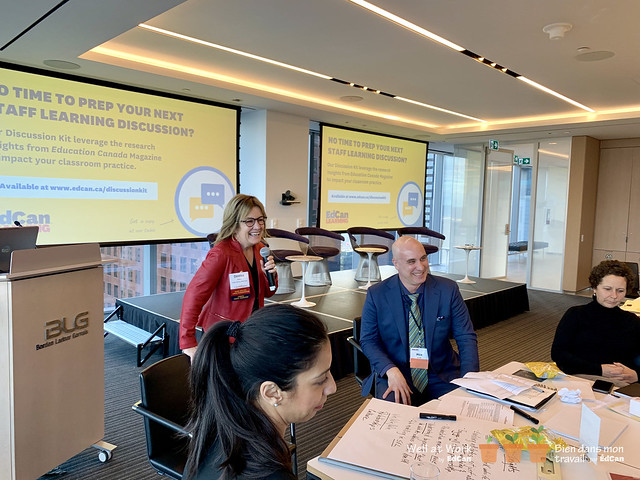
Comments Off on The Case for Investing in K-12 Staff Well-beingOn November 22, 2019, ministry and faculty of education representatives, Directors of Education/CEOs, and other K-12 leaders from across Canada attended our EXCLUSIVE professional learning session, where they:
-
Learned the fundamental principles and evidence behind workplace well-being in K-12 education
-
Found out how investing in educator well-being can heighten student achievement and save precious resources
-
Discussed ways to go beyond one-off unsustainable programs to a long-term, system-wide approach
Couldn’t make it? Stay tuned for our Spring National Summit on K-12 Workplace Well-being
Click on the album to see more photos from our event.
ALL-STAR PROGRAMME AND PRESENTATIONS
Click on the arrows to see the sessions and download the presentations.
-
-
How can we reduce stress and increase support for teachers?
Comments Off on How can we reduce stress and increase support for teachers?Well-being happens by making our physical, emotional, social, and mental health a priority. When this isn’t a priority in the workplace, staff can develop chronic stress that impacts their lives both at work and at home. As teaching is considered one of the most stressful professions, teachers who support the well-being and learning of students are more likely to experience the following types of chronic stress:
- Burnout: High work-related stress piled up over months or years including mental, physical, and emotional exhaustion that leads to not being able to cope with demands (e.g. from parents, students, policies, curriculum)
- Compassion fatigue: Feeling helpless when constantly exposed to students who you can’t help and who are suffering (e.g. from poverty, homelessness, racism, violence)
- Emotional labour: Feeling you must suppress your emotions daily (e.g. by keeping a smile on) when your personal values don’t match up with work expectations (e.g. wanting more time to support every student but needing to meet curriculum demands)
School communities that promote well-being are supportive, allow teachers autonomy, and promote healthy relationships. Part of achieving this means identifying the root causes of teacher stress.
Here are three sources of teacher stress and tips to cope with and reduce it:
1. Job Stress: Job demands (e.g. unrealistic deadlines) and lack of resources (e.g. time, materials to do the job)
Tips for school district leaders:
-
- Ensure long-term, well-resourced PD that allows teachers to continuously learn and be supported in their roles
- Provide autonomy in pedagogy and curriculum decisions to allow teachers to feel respected and in control
- Develop policies and plans to increase self-efficacy and reduce job stress (e.g. shared decision-making, employee benefits, mental health toolkits)
2. Personal Stress: Need for more social-emotional competencies (e.g. self-awareness) and more self-efficacy (confidence in one’s ability to succeed at tasks)
Tips for teachers:-
-
- Develop time management strategies that meet your needs
- Prioritize your own well-being and learn about healthy strategies to cope with stress
- Share with and learn from colleagues and supervisors who can help you cope
- Find ways to live out the values that brought you to teaching (e.g. taking time to get to know your students)
-
3. Workplace Stress: Unclear boundaries between personal and work life (e.g. lack of work-life balance, job insecurity)
Tips for principals:-
- Lead activities that model healthy habits at work (e.g. healthy eating, fitness challenges)
- Promote working “smart,” not working “long,” and limit after hours work
- Ask teachers what they need help with – don’t wait for them to come to you
- Create and share resources to streamline administrative tasks at busy times of the year
While stress is a normal part of everyday life, stress over a long-term period negatively impacts the health and well-being of teachers. Research demonstrates that teacher well-being has a direct impact on student learning; therefore, investing in supports and resources to prevent teachers from burning out creates a healthy and supportive environment where both teachers and students can flourish.
Additional Resource Information
Centre for School Mental Health at Western University
Teacher Stress and health (2016). Robert Wood Foundation.
Friedman, A. & Reynolds, L. (2011). Burned in: Fueling the Fire to Teach. Teachers College Press.
References
Koenig, A., Rodger, S., & Specht, J. (2018). Educator Burnout and Compassion Fatigue: A Pilot Study. Canadian Journal of School Psychology, 33(4), 259–278. https://doi.org/10.1177/0829573516685017
McCallum, F., Price, D., Graham, A. & Morrison, A. (2017). Teacher Wellbeing: A review of the literature . Association of Independent Schools of NSW. Accessed at: https://apo.org.au/node/201816
-
Cannexus, Canada’s National Career Development Conference
Comments Off on Cannexus, Canada’s National Career Development ConferenceCannexus, Canada’s largest bilingual National Career Development Conference, returns to Ottawa, Jan. 27-29, 2020, to help educators prepare students for the future of work.
Bringing together more than 1,200 career development professionals from K-12, post-secondary, community, government and private sectors, the conference will provide insights on:
•Youth career education and career exploration
•Integrating career into curriculum and experiental learningThe 3-day conference is presented by CERIC, a charitable organization advancing career development research and education in Canada.


IDEAS TO SUPPORT EDUCATORS : Subscribe to the EdCan e-Newsletter
Quality research, reports, and professional learning opportunities.