Archive
-
Cdn EdWire – A New Year’s Hodge-Podge of Contentious Education Issues Fill the Dailies
Comments Off on Cdn EdWire – A New Year’s Hodge-Podge of Contentious Education Issues Fill the DailiesMinister launches school reforms – Edmonton Journal
Shorter bus rides, community facilities, college credits in high school included in Lukaszuk’s 10-point program
Opening of specialized schools reignites fairness debate – Globe and MailJody Carr cuts school districts to 7 – CBC NB
Education reform will save $5 million annually
Official bilingualism costs $2.4B a year: study – National PostOTHER NEWS
Apple pushes education content to boost iPad use in schools – Vancouver Sun
Education minister plans Twitter chat Thursday to get education reform feedback – Vancouver Sun
Public schools expel junk food – Calgary Herald
Cafeterias go chip-freeNo more ‘A for effort’: New wave of educators drop empty praise – Globe and Mail
Teachers seek hefty salary hike – Vancouver Sun
Minister says 15-per-cent increase a non-starter – Vancouver SunParents don’t have time to help kids learn, poll finds – CTV
Sell value of good education to your children – Globe and Mail
Kindergarten in a retirement home proves a hit with young and old – Globe and Mail
EDUBLOG HIGHLIGHTS
Education and Social Media in British Columbia – Culture of Yes
In the past year we have moved from several dozen blogs around K-12 education, to numbers in the hundreds, with representation in every area of the education system. The #bced tag on Twitter is one of the most engaged with conversations about the ever-changing education profession, and there are many other social sites having these conversations as well.The conversations around the profession itself are very interesting. In social media, ‘role’ becomes less important; there is a flattening of society and it is ‘ideas’ that have increased value. There are also incredible opportunities to reflect, share, and learn without the limitations of geography. I could go on, and there have been many others who have covered the ground about the value of social media for educators, and how Twitter and blogging can be extremely powerful in professional development…(Read more)
Relationships are Priceless – 4 moms 1 dream
It is easy to build working relationships between principals, educators and support staff because they work day in and day out together. But where do parents fit into the relationship equation? We know from experience that it is often very hard for parents to make the first steps to build the type of relationship we are talking about so we would ask you, as the educators, to take that first step. Start by greeting parents at the door as they come into the school. Say hello, introduce yourself, ask how their children are doing that day and build from there. Don’t wait until there is a problem before reaching out to the parents. Relationships take time and they are easier to make when there is not an issue/problem to address. If you can build those relationships when times are good, the problems that might arise when times are not so good are much easier to handle. As well, when you have a good relationship with everyone who has a vested interest in ensuring success for each child, you become part of the solution…(Read more) -
The Pedagogy of Play
Comments Off on The Pedagogy of PlayAs autumn slips into winter, I eagerly anticipate the cold winter days, the long dark evenings, and the inevitable coming of snow. My children, born of the prairies, equally anticipate winter and the endless possibilities snow presents for their play. As I walk to pick up my children from school during the winter months, I marvel at the amazing array of snow forts that make up the landscape of their schoolyard.
Each day my children come home from school with stories of snow fort “culture”. They tell me of the intricate rules and building teams. They tell me of the schoolyard collaboration and of who gathers the snow blocks left by the bulldozer at the edge of the schoolyard. They tell me about who compromises the snow-building community by taking the largest snow blocks for themselves and the consequences of these actions. They tell me about the father who arrived at lunch with an ice-breaking shovel to help children get larger pieces of ice and the schoolyard hysteria that resulted. They are happy, engaged, and excited about their work of play.
Play is important. Environmental educators Sobel and Louv write about the relationship between children and outside play and suggest that early transcendental experiences within nature allow children to develop empathetic orientations towards the natural world.[1] Children who play out-of-doors develop an appreciation for the environment and accordingly develop the groundwork to become stewards of the earth.
Other educators suggest that out-of-doors play activities support many of the skills necessary for adult life including social competence, problem solving, safety, and creative thinking. Cultural critics Wendell Berry and Kay Hymowitz write about the ongoing relationship between how, where, and what our children play and the foundational citizenship and democratic skills developed through the childhood work of play.[2]
As I drive through our city, I have noticed an interesting and alarming phenomenon. While inconsistent, there seems to be an absence of snow forts in schoolyards within low-income communities. Perplexed by this phenomenon I began to explore the ideology of play and socio-economics. A variety of studies indicate that modern children engage in different outdoor activities than children in previous generations. These studies indicate that fewer school-aged children engage in imaginative play and street games (child-initiated games using child-initiated rules such as jump-rope or kick-the-can). Children are increasingly participating in adult-structured activities (play dates, after school sports, lessons), leaving little time for child-initiated activities. Accordingly, the development of skills related to creative play such as cooperation, imagination, creativity, and ownership decrease as responsibility for play is transferred to responsible adults.
Research also indicates that children living within low socio-economic neighbourhoods spend more time watching television, are more sedentary, and spend more time playing video and/or computer games than their higher income counterparts. These factors are linked to the lower health, school engagement, and academic achievement of lower income school-age children.
Obviously, the relationship between play, socio-economics, academic achievement, and pro-social behaviours are very complex. However, it seems possible to suggest that children who are more engaged with adult-directed, structured, technological, or indoor worlds build different personal, social, and academic capacities. It also seems probable that our children are being provided with inequitable futures when the freeing experience of play is not part of the repertoire of all childhood experience.
Sometimes at night, after a large snowfall, when my children are tucked warmly into bed, I sneak into the back alley and join the community of men working silently in the alley. I watch the neighbour confidently baring his stretch of alley with the roar of snow blower, the neighbour who carefully brushes the edges of his brick walkway with a broom and the old man who throws the snow with reckless abandon into messy piles beside his garage. I meekly acquiesce to the fastidious neighbour who admonishes me for letting my piles of snow fall into the roadway and take a moment to chat with another who relishes in our mutual work. I believe our work as children and our work as adults forms us as a society. Through work we learn the rules of our collective spaces, develop community, and negotiate our identities. Through the work of play, our children learn the rules of our collective spaces, develop their own sense of community, and negotiate their emerging identities. I wonder about a childhood that does not include play and how this will change us as a society and as a people.
[1] R. Louv, Last Child in the Woods: Saving our Children From Nature-deficit Disorder (Chapel Hill, North Carolina: Algonquin Books of Chapel Hill, 2005); D. Sobel, Childhood and Nature: Design Principles for Educators (New York, New York: Stenhouse Publishers, 2008).
[2] W. Berry, What Are People For? (New York, New York: North Point Press, 1990); K. Hymowitz, Liberation’s Children: Parents and Kids in a Postmodern Age (Lanham, MD: Ivan R. Lee Publishing, 2003).
-
realfriends: A Student Social Action Project
Comments Off on realfriends: A Student Social Action ProjectIt began last October when a Grade 12 student asked if I was on Facebook. I replied with my standard, flippant response: “No, I have real friends.” Apparently, that struck a chord. I didn’t hear it at the time but a few days later, I felt the reverberations.
One student, Mitch Redden, came back to me and explained, “I was interested when you said that you have “real friends”. I have more than 500 friends on Facebook, but if I had a problem, I wouldn’t discuss it with any of them…. I am surrounded by people my own age here at school, and yet, it’s hard to meet new people because everyone is in their own social clique.”
“What do you want to do about it?” I asked. And that’s how it all began.
realfriends is a social action project created by Grade 12 students in my English class. We followed the directions of the Imagineaction program offered by the Canadian Teacher’s Federation. One student convinced his class, who in turn involved 240 students at our school as well as an unknown number of people beyond our school who became interested in this social action initiative. The purpose of realfriends was to create a face-to-face social network that would help change the school climate into a more social space. Quickly, the students acknowledged that social action projects have the potential to expand and that realfriends could influence people (or other communities) beyond our school.
Interest in socializing is nothing new for teenagers, but these students articulated a worry that people their age may be losing their social skills due to technologically assisted communication. For my generation, technology is understood to be a tool – something to pick up and hold in your hand when it is useful. I see young people using technology in specific ways: to send text messages, Google, listen to music, or update their social network site. But perhaps my lens is outdated, and technology permeates the classroom in less visible ways. For my students’ generation, technology has become an appendage, an environment, or a way of thinking. It is no longer exclusively exterior to the body, but has invaded mental and social processes. For example, students commonly expressed the concern that text messages and social networking sites may be deteriorating young people’s confidence in social settings. This worry is represented in the students’ motto for realfriends: stop cliquing, start connecting.
For example, students commonly expressed the concern that text messages and social networking sites may be deteriorating young people’s confidence in social settings. This worry is represented in the students’ motto for realfriends: stop cliquing, start connecting.
realfriends started as a series of socializing activities. Students planned four activities (or steps), expecting that the number of participants would double with each step. It began with 30 students who were identified by staff to represent a broad range of students in our school. At lunch, the English class facilitated the 30 participants in the first activity – blindfolded speed-friending. At the end of the session, people left without knowing who else had participated. They were given a plastic bracelet embossed with “realfriends” and encouraged to look for others in the school with one of the 30 bracelets. When they saw someone wearing a bracelet, they would know that they could safely initiate a conversation. In fact, they may have already spoken with them during the blindfolded speed-friending. Participants were invited to attend the second step and to bring a friend.
The activity in the second step was “speed-gaming”. The 60 participants were randomly organized into small groups based on the colour of their realfriends bracelet. The groups moved to various spaces in the school where my students facilitated “ice-breaker” games so that the participants would get to know each other. The third step, with 120 participants, was designed to bring people together through a common cause. The English class chose to endorse the Children’s Wish Foundation, and they met with the participants at lunch to educate them about this charity. The fourth step, involving roughly 240 participants, was a laughing flashmob (a planned event that was kept secret until it was performed to an unsuspecting public audience). The flashmob was used to get the attention of the school and to bring awareness to the school community about the Children’s Wish Foundation.
Following these four steps, the English students published a book entitled realfriends: Stop Cliquing, Start Connecting. In this collection of essays, each student responded to a unique inquiry question, such as:
- What are the dangers for today’s young generation in losing their skills of face-to-face communication due to technology?
- In what ways does technological dependency limit personal communication skills?
- How has technology influenced communities?
- What are the advantages and disadvantages of technological socialization?
- What kinds of thinking habits are shaped by using social networking sites?
- Why should we stop cliquing and start connecting with others?
- How can we overcome social cliques in high schools?
- How can teenagers practice more social behaviour?
- In what ways can social networking change societal behaviour?
- What is it like to experience realfriends as a facilitator?
- Will the experience of realfriends encourage people to be less dependent on technology?
- In what ways has the project of realfriends improved community involvement?
Students used these individual inquiry questions to think about issues that were critical for their current and future lives. In one chapter, entitled “Avatars Not Included”, Adam describes how he sees the current problem of digital communication:
Text messaging, instant messaging, tweeting, BBMs, Facebook, chat rooms, forums, blogs, Myspace, comment box, instant updates, instant feed, online gaming, online dating, Skype, Apple’s “facetime,” cell phones, smart phones, flip phones, touch phones, touch screens. These communication channels have all been given the name revolutionary because they possess the power to connect people – no matter the distance. It is impossible to argue the immense capabilities of these devices and services, but every rose has its thorn and the thorn on the social network’s rose is the size of a large stalactite. With new technology, we are drifting away from one another when we should be closer than ever. The more ways we get to communicate electronically, the more we alienate each other when we’re actually in a face-to-face situation. So, what will the next generation look like if this trend continues?
There is something disquieting about students overtly wanting to talk about how to socialize. Media often taints the reputation of teenage socialization with impressions of strange subcultures, rebellious activity, suspicious behaviour, and secretive peer-communication. In contrast, it has been my experience that young people show willingness, openness, and readiness for teachers to help them develop problem-solving and social skills. Perhaps more than ever before, teachers need to model and facilitate face-to-face communication in classrooms. Perhaps because of a heavy reliance on technology to communicate, teaching how to speak and listen should not be taken lightly in our classrooms.
Perhaps more than ever before, teachers need to model and facilitate face-to-face communication in classrooms.
Throughout this experience, I have witnessed how a student-driven social action project can transform our classroom and our school. More importantly, I have witnessed how realfriends transformed my students. Social action projects can help students’ sense of efficacy and teach them that they can solve problems, contribute to positive change, and respond to societal needs. My students have left me thinking about my own face-to-face network and the value of my real friends. More importantly, they have left me thinking about my role – and teachers’ roles in general – in promoting and participating in social action.
I acknowledge that students have plenty to teach me as well. Why only last week, Mitch was teaching me the word “pwn” when I thought it was a typo in his movie script. (“Pwn”, by the way, is computer-gaming slang – a verb meaning to dominate an opponent.) Students offered ideas about our project that were beyond the realm of my experience or imagination. I was impressed. Sometimes, however, I asked critical questions to challenge their ideas.
For example, I challenged students to think about equity issues during the planning process of realfriends. One activity they considered was a flashmob at the local hockey rink during a Friday night game. This would have allowed realfriends to breach the school walls and infiltrate into the community. I asked, “How much does it cost to attend the game?” and “How will students who do not have access to transportation get to the game?” More than 80 percent of our students are bussed to school; some are on the bus for an hour and half. As they continued to respond to critical questions about their ideas, the students thought through issues of inclusive language, gender-bias in activities, and about the range of skills that their peers would need in order to participate in realfriends.
Facilitation of student-driven social action projects is tricky business. While we negotiate what is realistic or even feasible given limited time and resources, it is important to support students’ enthusiasm for making a difference in their world. Despite such challenges, I encourage teachers to find ways of involving students in social action. I am hopeful that social action projects can transform not only how students engage in schools, but also how they understand their roles as citizens who actively contribute to societal change. By the way, Mitch Redden – the boy whose question first inspired the idea of realfriends – received the Nova Scotia Premier’s Power of Positive Change Award in June, 2011 for his part in realfriends. As I write this, I wonder who else will take up the work of these students and continue expanding realfriends.
The story of realfriends can be followed in a two-part documentary, available on the Imagineaction website (www.imagine-action.ca) or at www.stevenvanzoost.com, where you can also read how previous students have been watching realfriends closely – some closing their Facebook accounts, some visiting my current class to make a pitch for realfriends to expand into post-secondary institutions.
EN BREF – Des élèves d’anglais de 12e année à Windsor, en Nouvelle-Écosse, ont créé le projet d’action sociale « realfriends » pour engendrer un réseau social face à face contribuant à faire de l’ambiance scolaire un espace plus social. Le goût de socialiser n’est rien de nouveau pour les adolescents, mais ces élèves s’inquiètent que les gens de leur âge perdent des compétences sociales à cause des communications technologiques. Le mot d’ordre de realfriends manifeste cette préoccupation : arrête de cliquer, commence à connecter. Les médias sociaux salissent souvent la réputation des jeunes par des insinuations de sous-cultures étranges, d’activités rebelles, de comportements suspects et de communications cachottières entre pairs. Pourtant, les jeunes font preuve de volonté, d’ouverture et d’empressement à développer la résolution de problèmes et des compétences sociales. En raison de l’utilisation intensive des technologies pour communiquer, il importe plus que jamais que les enseignants montrent et facilitent la communication face à face en classe.
-
Men, Masculinities, and Sexualities in Education and Society: A Call for Evolution!
Comments Off on Men, Masculinities, and Sexualities in Education and Society: A Call for Evolution!Feminists have long sought to examine the multiplicities of female identities, power, and marginality. It is time to do the same for boys and men – and to question ongoing assertions about male privilege and patriarchy. To this end, I seek to examine which identities in society are authorized and made legitimate and, conversely, which identities are unauthorized, punished, and even made invisible, to bring to light knowledge about boys and men that, for some, may be difficult to bear.
A disturbing caveat to those daring to delve into the ways in which males lack power and are marginalized is the threat of being labeled misogynous. Studying boys and men as other than victimizers and privileged can even engender moral outrage. This prejudice impedes addressing the challenges facing many males, from their flagging literacy rates to their significantly higher rates of suicide, incarceration, homelessness, addiction, and workplace injuries and fatality. According to the Programme for International Student Assessment (PISA), female students significantly outperform male students in literacy in every country and in every Canadian province;1 and as a single indication of the greater risks men face in their daily lives, in Canada, in 2008, there were 987 workplace fatalities for men and 48 for women.2
Boys in school are subjected to homophobia, racism, classism, and shame as a means of policing their burgeoning identities, and stifling anything that may be construed as “feminine”, so that being studious becomes considered “gay” or “sissy” or even “White”.
Portrayals of men in popular culture tend to be brutish, ignorant, and violent – often in sexual and predatory ways. Boys in school are subjected to homophobia, racism, classism, and shame as a means of policing their burgeoning identities, and stifling anything that may be construed as “feminine”, so that being studious becomes considered “gay” or “sissy” or even “White”. Both girls and boys, and men and women, enforce these behaviours in implicit and explicit ways. I contend that narrow social expectations, and lack of options for enacting socially acceptable masculinities, are at the root of contemporary struggles for boys and men, and become negative self-fulfilling prophecies.
At the same time, the majority of boys and men – who behave honourably and contribute to the betterment of society in their work, at home, and in their communities – are frequently ignored. Society fuels greater resources towards girls and women, from scholarships for postsecondary education3 to research on female health issues,4 and this despite the fact that girls and women dominate in most professional faculties today – including law and medicine,5 and, it can be argued, enjoy longer and healthier lives.6 There are programs for teen moms, but far fewer for teen dads. Do we value young men as fathers less, then? It is difficult to gain funding for programs for boys and men, or for research into their problems. Either we are wearing blinders that obscure the barriers confronting many of our boys and men, or we believe that that they will stoically “man up”.
Parents, guardians, educators, and scholars are starting to realize the plight of many males. There are committees to enhance the teaching and learning of boys, including exploration of single-sex classrooms and school options, such as the recently opened All–boys Alternative Program at Sir James Lougheed School in Calgary, a male-mentor reading program in conjunction with St. Thomas University in Fredericton, and the Boys2Men mentoring program in the Toronto District School Board. Times are changing, but we need to gain momentum and stop ignoring a long-standing, problematic, social and gender code for males.
To become a “man”, I (and others) argue that males still must undergo a rigorous, even punishing process of socialization whereby boys and men are forced to repress many emotions and attain autonomy at all costs. Indeed, “manhood” may be such a shaky state that it is unattainable for any significant period and must be constantly re-earned. Risky behaviours, including suicide, dramatically increase when boys enter adolescence and young adulthood, for this is when uncompromising pressures to become “a real man” intensify. Indeed, Martin Luther King, Jr., Bell Hooks, and other writers on freedom, equality, and democracy suggest that oppression can be defined as a lack of options.
It is time to confront the implicit and explicit ways that society – including men and women of diverse backgrounds, affiliations, and identities – contribute to maintaining status quo assumptions and options surrounding what it is to be a boy or a man.
It is time to confront the implicit and explicit ways that society – including men and women of diverse backgrounds, affiliations, and identities – contribute to maintaining status quo assumptions and options surrounding what it is to be a boy or a man. We must strive to provide more options for our boys and men on their journey through life, just as we have successfully done for girls and women over the past decades. Pollack describes a so-called “Boy Code” which delineates traditional gender roles for boys, in which – like “sturdy oaks” – boys are encouraged to be stoic, stable, independent, and never show weakness; boys are pressured to achieve status, dominance, and power, to avoid shame at all costs; perhaps most damaging of all, boys are taught to inhibit expression of feelings or urges erroneously seen as “feminine”, such as warmth, dependence, and empathy; and finally, boys are destructively led to believe that they should act macho, even to the point of violence, and engage in risky behaviours that could injure themselves or others – like their role models in popular culture from wrestling, hockey, and football, to action movies and video games.7
Increasingly, researchers in the growing field of boys’ and men’s studies are challenging traditions that perpetuate a patriarchal perception of boys and men, and instead subscribe to “masculinities”, or validating varied ways of being “male”. These new identities may include being a metrosexual, bisexual, or heterosexual; a househusband, artist, or a chief executive officer; a high school hockey player or a peer mentor to junior boys; a boy who loves to read or a boy who loves sports; a straight guy who defends his peers against homophobia and heterosexism, a gay truck driver, or a man who chooses to pursue a career as a daycare worker. However, stubborn societal prejudices persist that inhibit this enlargement of gender roles for boys and men – prejudices related to misandry, androgenophobia, and erastephopbia.
Misandry may be defined as the fear, distrust, and contempt of men, rife in popular culture and our legal system. It is unfortunate but revealing, that not only must I define this little-known misandry, but also that I had to invent two new terms – androgenophobia and erastephobia, to frame contemporary impediments to evolution in our treatment and expectations of boys and men.8 Androgenophobia is the prevalent societal conviction that maleness, the male body, and male sexualities are somehow unclean, perverse, and menacing, while erastephobia is the fear of impending pedophilia by males in general, including fathers, youth workers, volunteers, and male teachers in schools. All three concepts operate to confine and restrict what boys and men may become, and are omnipresent in our popular culture, from movies to video games, and in our school systems, thereby contributing to a kind of mass contempt for males.
Elements of misandy, androgenophobia, and erastephobia are incorporated in the following list, which I present here to provoke debate, break silences, and highlight some of the constraints facing diverse males in social and educational contexts.9 This list was inspired by my years of research into men, masculinities, and male sexualities, listening to boys and men tell their stories, and a multitude of sources in both academic literature and popular culture.10 It is my hope not only that dualisms of male-female, White-colour, and privilege and lack-of-privilege be challenged, but also that all boys and men may be looked at with sympathy, love, and compassion, rather than annoyance, impatience, suspicion, and fear, as is far too often the case. Our expectations – for better or worse – can and do become realities.
- Starting in primary school, when I yearn for more active learning, play, and levity, I am punished. Especially if I am not White. And/or from a low social class. And English isn’t my native tongue.
- I have a much greater chance of being segregated in a remedial reading class, or behaviour difficulties class. Especially if I am not White. And/or from a low social class.
- If I act “effeminate” or display so-called feminine traits such as caring, compassion, and gentleness, I risk being punished. These are human traits.
- I am expected to be competitive with members of my sex and only to confide in a female mate. Therefore, I am permitted few if any intimate friends of either sex.
- When I report assault or abuse, whether sexual, physical, or verbal, there are few if any social services available to me, other than to treat me as a potential criminal. Especially if I am not White. And/or from a low social class. And English isn’t my native tongue.
- I have less chance of attending university than many women – at least many of the White, middle-class ones. Especially if I am not White. And/or from a low social class.
- As a teacher, daycare worker, father, or youth club volunteer, I am vulnerable to suspicions of being a pedophile.
- Even though I am more likely to be the chief breadwinner in my family, I am often seen as an exploiter and privileged.
- My health is not good. I am more likely to die of prostate cancer than a woman of breast cancer, and have higher incidences of lung cancer, heart disease, and suicide. Where is the public outcry?
- I am more likely to be an alcoholic, drug addict, be in a car accident, commit suicide, end up on the streets, or be injured or killed in the workplace. Does anyone care?
- When I marry, I have only one respectable choice – to work full-time. If I stray from full-time work, I am viewed as a parasite.
- I can never truly attain manhood. It is impossible. This undying stress is with me every moment of every day.
- When I die, no one will have truly known me.
EN BREF – Des préjugés sociaux persistants entravent l’élargissement des rôles assignés aux garçons et aux hommes. Dans la culture populaire, les hommes sont fréquemment représentés comme des êtres brutaux, ignorants et violents – souvent de façons sexuelles et prédatrices. À l’école, les garçons font l’objet d’homophobie, de racisme, de classisme et de honte pour policer leurs identités en devenir et étouffer ce qui pourrait être vu comme étant « féminin ». Être studieux est ainsi qualifié de « gai », d’« efféminé », ou même de « blanc ». L’exiguïté des attentes sociales et l’absence d’options de masculinités socialement acceptables sont à la source des difficultés contemporaines des garçons et des hommes et risquent de devenir des prophéties négatives auto-réalisatrices. Dans le domaine grandissant des études des hommes et des garçons, les chercheurs remettent en question les traditions perpétuant une perception patriarcale, souscrivant plutôt au principe des « masculinités » et validant des façons multiples d’être « mâle ».
1 D. Klinger, L. Shulha, and L. Wade-Woolley, Towards an Understanding of Gender Differences in Literacy Achievement. (Toronto: The Education and Accountability Office, 2009).
2 National Work Injury, Disease and Fatality Statistics, 2006-2008, Report of the Association of Workers’ Compensation Boards of Canada (AWCBC):103-105; 134-138.
3 C. Abrahams, (2010, October 21). “Designated Scholarships Overwhelmingly Favour Women, Globe and Mail, 21 October 2010. www.theglobeandmail.com/news/national/time-to-lead/failing-boys/designated-scholarships-overwhelmingly-favour-women/article1766443/
4 “Men’s Mental Illness: A Silent Crisis,” Canadian Mental Health Association, 2011. www.cmha.ca/bins/content_page.asp?cid=3-726
5 J. Intini, “Are We Raising Our Boys to be Underachieving Men?” MacLean’s (25 October 2010): 66-71.
6 “Health-adjusted Life Expectancy, by Sex,” Statistics Canada (2010). www40.statcan.ca/l01/cst01/HLTH67-eng.htm
7 W. Pollack, Real Boys: Rescuing Our Sons From the Myth of Boyhood (New York: Random House, 1998).
8 D. Gosse and A. Facchinetti, “What’s in a Male?” Education Today 11, no. 2 (2011): 26-30.
9 D. Gosse, “A Misandrous Queer List,” in Jackytar, A Novel (St. John’s, NL: Jesperson Publishing Ltd., 2005), 122-125.
10 D. Gosse, ed., Breaking Silences and Exploring Masculinities: A Critical Supplement to the Novel Jackytar (St. John’s, NL: Breakwater Books, 2008); Peggy McIntosh, White Privilege and Male Privilege: A Personal Account of Coming to See Correspondence Through Work in Women’s Studies. Working paper #189 (Wellesley, MA: Wellesley College Center for Research on Women, 1988).
-
Cross-Canada Election Check-In
Comments Off on Cross-Canada Election Check-InThis article provides commentary on the role of education in recent provincial elections across the country, from the perspective of four provincial school board associations.
Newfoundland and Labrador
“While education may not have been high on the radar for many Newfoundland voters, it was not because of a lack of interest in public schooling,” said Milton Peach, President of the Newfoundland and Labrador School Board Association. The government has assigned a high priority to education over recent years, and significant public dollars have been invested in both program and infrastructure areas. These investments have continued, and voters likely saw no pressing reasons to raise education issues in response to several other major issues of an economic nature that were dominating the agenda. Indeed, there is general satisfaction with public education within the province.
It is fair to conclude that no significant downsizing will take place within the kindergarten through senior high school budgets. There is a widely held and frequently stated view in Newfoundland and Labrador that educational growth and improvements are major factors in building the future of the province.
One challenge, according to Peach, is the falling rate of voter participation. “Improved ways and means have to be explored to reverse this trend and render elections into a higher prominence within our democracy.”
Ontario
In late Spring, the Ontario Public School Boards Association (OPSBA) issued a media release titled OPSBA Member Boards Challenge all Provincial Candidates, and recommending to member boards that Education Day take place on September 20 – a day for candidates from the four major provincial parties to share their views and answer questions on the issues affecting public education. This strategy inspired attention from both the media and all four major parties
To support Education Day meetings, OPSBA disseminated resource materials for local organizers, issued media releases, built a presence on the web to spark dialogue and interest. Many trustees reported that OPSBA’s Questions for Candidates were distributed widely and used at the Education Day meetings, as well as other all-candidates debates.
In a strategy to increase media involvement, some trustees invited education reporters and other members of the media to moderate their Education Day candidates’ meetings.
The overwhelming success of Education Day has created a precedent that OPSBA will build on to broaden support and keep a sustained focus on the importance of a strong public education system.
Manitoba
The Manitoba School Boards Association focused its election efforts on three policy areas – financial investment, student supports, and community participation. It provided resources to help school boards explore these issues with local candidates and undertook a modest media campaign in an attempt to shine a light on these issues provincially. Despite these efforts, education policy matters never made it to the public arena.
Education-related promises were made, but they were, by and large, partial or piecemeal approaches to addressing the complex issue of student achievement. While some of the inequities in our education system were acknowledged – lower graduation rates for Aboriginal learners and students living in poverty – that acknowledgement did not lead to an in-depth examination of the underlying causes.
This lack of attention may indicate a high level of satisfaction with the status quo; financially, Manitoba’s public school system has fared better than many. However, not all students are benefitting equally from this investment.
Based on the 2011 experience, advocates of public education should not count on having their voices heard during an election campaign. Instead, they need to enter into meaningful policy discussions with the government of the day, pre- and post-election.
Saskatchewan
Education has rarely been a topic of discussion and debate during Saskatchewan provincial election campaigns. It was heartening, therefore, that during the provincial leader’s debate, the subject of Pre K-12 education was the subject of much discussion between Saskatchewan’s Premier and the Leader of the Opposition.
Over the past two years, the Saskatchewan School Boards Association (SSBA) has worked hard to bring education to the forefront in the minds of the public and our province’s politicians by providing in-service and resources to boards of education to increase the effectiveness of their advocacy efforts. The Association has also undertaken an extensive public engagement strategy and media campaign intended to raise parental and public awareness of the challenges facing schools today, and the need for schools, families, and communities to work together to enhance student learning and well being.
The advocacy approach adopted by the SSBA has been one of collaboration and cooperation. Rather than viewing the provincial government as an adversary, we have chosen to build a relationship in which school boards and the government are partners in the process. It appears that these efforts at cooperation – focused on student achievement – may have begun to bear fruit.
-
Politically Correct Preschools and their Discontents: One Teacher’s Story
Comments Off on Politically Correct Preschools and their Discontents: One Teacher’s StoryEditor’s Note: Does this story from south of the border resonate with Canadian educators? Have schools crossed the line from sensitive to censorship? Where is that line? Post your thoughts below….
Politically Correct or “PC” thinking is a potent force, operating at all levels of education in the U.S. Not even my preschoolers are immune from censorship – of traditional tunes and gender-specific toys. But, as a music specialist, I want these young students to enjoy age-old songs and their favourite toys.
Superheroes
“Faster than a speeding bullet, more powerful than a locomotive, able to leap tall buildings at a single bound” – but for all that, the Man of Steel couldn’t break into the preschool classroom where I assist twice a week.
During “free play”, two little boys had asked me to draw Superman on their construction paper. It was early in the year, and obliging their request seemed a harmless way to help them feel comfortable in school. They looked proud holding up their drawings of Superman.
When they told me they wanted to take the drawings home, I suggested that they add their own decorations. Indeed, I turned the tables around, and asked them to draw a picture of Superman for me so that I would have something to take home. But before long, one brave Superman flew into the hands of Miss Nicole, the head teacher of this class. “We don’t allow drawing of action figures from the media,” she explained, primly tearing in half and disposing of the rendered intruder.
I’m still not clear about the rationale for this prohibition. Did permitting me to draw Superman imply that children at our extraordinary school actually watched and enjoyed television sometimes?
My friend Tracy, an assistant teacher in another classroom, wasn’t handled so gently. “When I first got here, you know, I was trying to win the kids over so I drew SpongeBob and the whole gang.” For this offense, Tracy had been harshly berated by our supervisor. “What’s wrong with you?” the supervisor demanded. “Are you rebellious? Are you sick?” The confrontation left Tracy in tears.
The next thing I knew, reins were tightened and I was prohibited from drawing with the children altogether. The final, indicting picture – a cake and candles I’d sketched for a birthday child – was held over my head like a dripping murder weapon as Miss Nicole hissed at me, “I thought we discussed this. There is to be absolutely no evidence of adult artwork here!”
I then learned the grounds for this prohibition: it was “bad for children’s self esteem” to “see my drawing as a standard that they couldn’t meet, and it would discourage them from drawing themselves.” But at the end of the day I was allowed to take out my guitar and play songs for the children, even though the kids couldn’t play a guitar as well as I. Why couldn’t I wield the magic marker? What did that mean?
No Winners Allowed
This philosophy of protecting fragile young egos extended to “table toys” and board games such as Snails. The children were excited when Miss Nicole cracked opened a new box. The pieces that moved towards a finish line were different coloured snails. To play, we rolled the dice with the different snail colours. If the dice landed on green, then the green snail could move forward, and so forth.
Immediately the children got busy choosing their colour and crowing that they were going to win. Miss Nicole frowned on their jubilation. “This game has no single winner,” she declared. “When the first snail crosses the finish line then everyone’s a winner. We all win!” In the moment of silence that followed, the children looked blankly at each other. Quickly they resumed their cheerful boasting, “I’m gonna win. I’m blue! Blue is the best. Blue is gonna win.”
“This game has no single winner,” she declared. “When the first snail crosses the finish line then everyone’s a winner. We all win!” In the moment of silence that followed, the children looked blankly at each other.
All Miss Nicole had managed to do was confuse them. When she left our area, I allowed the children to continue the snail game as it was intended to be played. None of us could see the point of playing a game that had no winner. Besides, winning and losing are natural parts of life. Imagine removing the glory of watching The World Series or the Olympic games! We do children a great disservice by not preparing them to tolerate difficult experiences, or to celebrate triumphs.
Guns and Roses
Without meaning to, I became a reluctant leader in the nursery school underground. Before I knew it I found myself asked to smuggle weapons.
“Bang, bang!” Little boys would point fingers at each other in our schoolyard.
“Watcha doin’?” I asked, as if I didn’t know.
“Shhhhh,” they’d beg me. “Don’t tell Miss Nicole. We’re playing with guns.”
I’m no handgun advocate, but it’s simple-minded to think that guns mean to these children what real guns do to an adult. Besides, a pointed finger in a playground is not a real gun any more than a water balloon is an atomic bomb. To hold a “gun” is to wield power. Children simply won’t buy it if you try to tell them otherwise; they’re too smart. Policemen with guns protect our safety and even the most cloistered child in our culture sees heroes toting guns in movies and cartoons.
The little boys – and yes, they are mostly boys – are only releasing energy and aggression deferred in a long morning of good behaviour. They are simply letting off steam. To remove their “guns” is to remove the exciting edge to their game. It’s like asking them to eat tasteless food, and brings us inanely back to the artificial world of Miss Nicole’s snail game, where everybody’s a winner, and nobody is.
Trying to suppress a child’s desire to hold a gun doesn’t seem to work. Friends who forbid their children to play with “guns” have seen them desperately vie for water pistols in the less enlightened homes of their playmates. I have actually witnessed a child nibble a gun out of a piece of toast. A child’s desire to hold a gun in an exciting game will, like a determined rat, gnaw through the bars you set against it.
I have actually witnessed a child nibble a gun out of a piece of toast. A child’s desire to hold a gun in an exciting game will, like a determined rat, gnaw through the bars you set against it.
In 2009, the preschool staff attended a conference on The Importance of Play in Early Childhood. Speakers maintained that allowing children time to play, with only minimal adult supervision, was vital for their social and physical development and their ability to solve problems. These speakers stressed that children learned as much in unstructured play times as during formal classroom lessons. Putting such insights into practice for me meant encouraging children to choose their own games, even allowing a “shoot out” or two.
Of course, during one recess it wasn’t just the firearms that had to be confiscated. In this instance the boys were using jump ropes to tie up the girls in a corner of the yard for a rather frisky game of “playing jail”. While I agreed with Miss Nicole that tying girls up with ropes was too hazardous for school, even the shyest girls weren’t interested in her clueless suggestion that everybody join hands and play “Sally Go Round the Sun” as an alternative.
No Angels Need Apply
By the time December’s cold temperatures were keeping us indoors all day, I was in trouble yet again. I was found to be in possession of a far deadlier contraband then even toy guns and jump ropes.
“We don’t sing Santa Claus is Coming to Town at our school. It’s too holidayish for us,” I was reprimanded when I lit into this old seasonal favourite. Now Santa Claus, like Superman, wasn’t allowed down this chimney. Also blacklisted were Chanukah songs, anything sung in Hebrew or Latin as well as English lyrics resplendent with Christmas trees, holly, silver bells, mistletoe or even the most abstract and diluted reference to a spiritual existence.
Although we had no African-American children enrolled, songs commemorating the more recently established holiday of Kwaanza fared slightly better. It seemed that only songs for holidays that none of the kids celebrated at home were found acceptable. At what some herald as “the most wonderful time of the year” – a time in New York City so rich in varied traditions, history, and sentiment – my songs with the children were restricted to Jingle Bells and This Little Light of Mine.
Working on the Railroad
Holding my job at this school meant that I had to concede to the head teachers’ requests. I tried. But when Miss Nicole tried to block the railroads I went on strike.
In January, I was assigned the after-school program on Tuesdays. This meant that for two hours I was responsible for entertaining anywhere from two to seven children who already had logged in many hours of school. Little girls were often temperamental and cranky. They’d hide in the play loft, refusing to come out for snack, or cry if they couldn’t hold a beloved toy from home because that created too much distraction in the room. And often the boys, strained from hours of good behaviour, would erupt into biting and strangling matches that I had to quell.
I’d noticed that these little boys of two and three, who’d spent nearly as many hours in school as adults do on nine-to-five jobs, loved to play with toy trains and Brio tracks. They’d string a row of cars together, lie on their sides and dreamily push the trains back and forth. After enjoying this private, quiet retreat, they were ready to play together peacefully again. With this in mind, I would set the trains on the floor when I arrived so my toughest customers could help themselves. Until Miss Nicole came upon me setting down the tracks, and told me that she didn’t want our little boys playing with trains.
Girls were allowed to play with their dollhouse or with the basket of dress-up clothes they were drawn to. But now Miss Nicole was telling me that the little boys would be denied their beloved trains, presumably because they would fight over the cars. But it was more than that. Miss Nicole was beginning to embrace a worrisome pedagogical trend: the active suppression of gender difference in a preschool setting. To this “egalitarian” end, I was to address the class as “children” rather than “boys and girls.” It wasn’t enough to abolish winners and losers. Boys and girls, lads and lassies, were now also taboo designations. Miss Nicole clearly resented boys behaving aggressively and gravitating towards traditionally boyish toy trains. Their behavior violated her construct of hegemony, perhaps made her recognize its fraudulence.
So I didn’t cave. I negotiated on behalf of the boys, reminding her that after a long day they’d fight over anything. Better they fight over the train cars than that they strangle each other!
Even she couldn’t disagree. The boys were allowed their calming moment with toy trains and Brio tracks, and I promise that it will not make them male supremacists. I’ve heard objections to Halloween, Thanksgiving, and St. Patrick’s Day, and I’ve seen veritable war waged over Christmas. I’ve seen competitive games sabotaged and toy guns banned. Now toy trains. What next? Will certain letters be forbidden from the alphabet? Maybe provocative letters, like F or L or N or XXX could be forbidden from our ABCs.
Soon they’ll be trying to fit the Table of Elements into their agenda. They’ll be telling us that the earth doesn’t turn, and that it’s flat. Or I can hear it now: “I’m just not comfortable with the Gregorian Calendar… it was introduced by the Pope, and the dates are based on Christian holidays, like Easter. Why do we have to have March, April and May? Let’s just have Cold Time and Warm Time.”
Who would have thought I’d come to agree with conservative Christians, who rallied to retain gender-specific pronouns in the New International Version of The Bible? I simply agree with them that some people are female, and some are male. This is also true of flowers, trees, and animals. There is no harm or inequality implied in acknowledging gender differences. It seems to me that we should be teaching tolerance and honesty rather than denial of the obvious.
But society expects us educators to inculcate its values, even when these values are not congruent: for example, we value individual freedom and we value conformity; we value competition and altruism; we value immigration and high fences. PC thinkers believe in a static society in which all such conflicts have been settled. They are the proud possessors of new answers to old questions. They feel comfortable, if not righteous, in blotting out differences that were freely acknowledged in the past. Pretend – indeed insist – that we are all the same: boys and girls, men and women. Reduce religious differences to a dull sameness. Banish festive holidays.
I don’t want to teach in the narrow playrooms spawned by such certainty, in PC purgatories where nobody wins or loses, nobody can be more talented than anyone else, and nobody belongs to a religion that’s older than 1990. No teacher’s drawings, no trains, no superheroes, no moms, no dads, no girls or boys.
I say, where is Superman when you really need him?
EN BREF – La rectitude politique est une puissante force agissant à tous les paliers éducatifs aux États-Unis. Même le jeu préscolaire est assujetti à la censure des chansonnettes traditionnelles et à la condamnation des jouets assignés aux sexes. Des superhéros aux fusillades imaginaires, des fêtes officielles aux jeux de société, le personnel enseignant risque d’offenser des collègues et des parents. La société s’attend que les éducateurs inculquent ses valeurs, même si elles s’opposent : nous valorisons à la fois la liberté individuelle et la conformité, la compétition et l’altruisme, l’immigration et les barrières.
-
Leah Wells: Have schools crossed the line from sensitive to censorship?
Comments Off on Leah Wells: Have schools crossed the line from sensitive to censorship?Skype interview excerpts with Leah Wells, a New York-based educator, musician, and Education Canada author.
-
TedXWilfrid-Bastien
Comments Off on TedXWilfrid-BastienBetter than a cup of coffee in the morning is listening to a good TEDx talk. Most people know about TED (www.ted.com), which stands for “Technology, Entertainment and Design”. Founded in 1984, it provides a platform through which ideas can be shared between communities and inventors, thinkers, scientists, educators and the like. TEDx has since become a huge influence in creating important dialog, inspiring minds, sparking innovation and beyond-the-box thinking everywhere it goes.
TEDxWilfrid-Bastien, is an independently organized TEDx event – by the people, for the people – to discuss, reflect on and celebrate education. Exclusively dedicated to today’s education, this conference will feature a number of important speakers who will share their innovative ideas in addressing the important question of the transition to a 21st century pedagogy.
This rare event is a great honour and as well as a first for the small elementary school Wilfrid-Bastien. It is furthermore the first ever independently organized TEDx event to be held exclusively about canadian education in French!
TEDxWilfrid-Bastien, will be held on February 29th, 2012, between 7-10pm at 8420 Boulevard Lacordaire in Saint-Léonard, Quebec, Canada. There are only a very limited amount of tickets available, so please hurry and visit http://tedxwilfridbastien.eventbrite.com to buy your ticket(s) today!
Co-written by Amber Judge
Note: The video footage of each talk will only be released for viewing on the web when they are translated with subtitles in English.
-
“Hello Equity, we’d like to introduce you to Accountability”
Comments Off on “Hello Equity, we’d like to introduce you to Accountability”When one enters a hospital for cardiac surgery, one expects that the Ministry of Health and the hospital administration has ensured that the surgeon completing the procedure possesses the latest and most successful methods for treatment AND that the surgeon is expected to do the BEST for ALL patients. No one would ever expect that the surgeon would not be held accountable to the highest standard.
In the education system today, how are we all being held accountable? As far as many practitioners see accountability at this time, it is only around the results of standardized tests. It is time to move to accountability around the truly important issues in education.
In the education system today, how are we all being held accountable? As far as many practitioners see accountability at this time, it is only around the results of standardized tests. It is time to move to accountability around the truly important issues in education.
As we work with educators, mostly across the Greater Toronto Area, the question of accountability in the work of equity often comes up. We are aware of wonderful, award-winning equity policies and Ministry frameworks that speak to the many complex and intersecting components that make up this work, they are but one step in making the day-to-day experiences and outcomes better for all students.
As part of the Centre for Urban Schooling’s work in the field, one frustration we often hear from teachers is that they feel isolated in trying to raise, initiate, program around, or push issues of equity. They recognize the importance of this work, but do not feel that they are operating within a system that truly values it or wants to really make systemic change.
As practitioners, one step removed from schools, we see this as well. We too ask: “Where is the accountability?” In terms of opportunity gaps, where are the intentional, specifically detailed action plans to close them? Where is this focus broadly, intentionally and specifically stated? Who is following up on the plans to see that they are being implemented and that changes are occurring? Who is providing support in terms of money, professional learning, and visioning? Why is it that institutions, which discuss these gaps regularly, have relatively few people whose job it is to ensure change? Where are the discussions on power and privilege that intimately tie to all concerns regarding equity?
As practitioners, one step removed from schools, we see this as well. We too ask: “Where is the accountability?” In terms of opportunity gaps, where are the intentional, specifically detailed action plans to close them? Where is this focus broadly, intentionally and specifically stated? Who is following up on the plans to see that they are being implemented and that changes are occurring? Who is providing support in terms of money, professional learning, and visioning? Why is it that institutions, which discuss these gaps regularly, have relatively few people whose job it is to ensure change? Where are the discussions on power and privilege that intimately tie to all concerns regarding equity?
Demographic data that disaggregates based on components of social identity is a step in the right direction. We know that how one views this data is based on personal beliefs about the capabilities of all students. We believe this data clearly illuminates an inequitable system. Based on aspects of social identity, this data tells us that due to systemic issues, not all students will have the same opportunity to achieve academically; to be engaged in their learning; to be given appropriate support for post-secondary options; and to graduate and be afforded the chance to determine their own futures.
One thing that we believe helps move this discussion and practice forward are tools that system and school leaders can use to encourage and promote a forward progression in terms of equity. Our experience also tells us that even when administrators are very supportive, they are not always sure of what the particular equity practices might look like.
Based on this, we offer one tool that might be helpful in this work: The Centre for Urban Schooling Equity Continuum: Action for Critical Transformation in Schools and Classrooms. We encourage school administrators and system leaders to think seriously about the issue of accountability. We believe that real systemic change will require activism at the system, school and classroom levels, in conjunction with strong community pressure, in particular from the voices of those in historically marginalized and racialized communities.
If real change and equity are the goal, we must treat education in a similar way to how we treat medicine. We have to hold all members of our systems accountable for closing the opportunity gaps and making educational experiences equitable for all.
Related Education Canada articles:
-
Are We Star Gazing? Can Canadian Schools Really be Equitable and Inclusive?
Comments Off on Are We Star Gazing? Can Canadian Schools Really be Equitable and Inclusive?We are a long way from achieving equity for kids with intellectual disabilities in Canadian schools. In some ways I am an accidental participant in this discussion. I began my career in education as a high school history teacher and then elementary school principal. My interest in strategies to address the needs of students who were not having success in school eventually led me to be an “advocate” for inclusion for students with disabilities. I must say the journey on this issue has been an interesting one. After thirty years of being engaged on this question, I continue to wonder if I am a practical and pragmatic educator from small town New Brunswick – with a realistic vision of what inclusion can do to assure equity for all students; or am I one of those well intentioned but idealistic advocates often accused of “star-gazing”?
The fact is I am more convinced than ever that equity and quality in education can be achieved by an inclusive education system. In the context of the Charter of Rights, the fact that much of the Canadian education system has not made this a reality is disappointing.
It is also a sad commentary on the indifference many senior leaders of our system pay to achieving this goal. In the last ten years, some of our largest Canadian school districts are not only maintaining the number of students in self-contained special education, they are actually increasing it. And this is at a time when overall student population is declining.
In the last ten years, some of our largest Canadian school districts are not only maintaining the number of students in self-contained special education, they are actually increasing it. And this is at a time when overall student population is declining.
This is shocking to many, but actually it is not surprising. When you have a school system that encourages teachers and parents to think that special programs and expert teachers are more important than being part of a class in your community school with your peers, this is what happens. Teachers and parents are encouraged to think that it is better that kids with diverse needs get their education from a specialized program out of the mainstream.
The failure of our education leaders to define and communicate a vision of schooling that can be both inclusive and effective and that balances the diverse needs of individual students is striking. Students with intellectual disabilities, autism, and many others, are routinely sent to special programs, in many instances, away from their neighbourhood or community school and as a result away from their siblings and peer group. Many parents have told me about the choice they were given by their school authorities: stay in their community school, in a regular class, but with no additional support, OR have their child go to another school with a “special program”. These special programs, of course, have a “special teacher” who can provide a more suitable alternative for your child and others with similar needs. To most parents, this is not a real choice. No additional support, or accommodation – as the Human Rights language would describe it – means it is a risky choice at best and one most parents fear to make. It is hard to imagine it is meant to be anything else. This is the reality in far too many Canadian school districts. It is a reality we need to change.
The ironic fact is that this is not the only reality in Canada. Many schools, school districts, and indeed several provinces work hard to provide the kind of “inclusion” for kids that we “star gazers” have in mind. They provide support to teachers and students and they direct funding to make this result in success outcomes. There are enough of these schools and districts throughout the country that we should not have to entertain questions about whether this is realistic, feasible, or affordable option. It is an approach that is in the best interests of the students – all of them – who are part of this “inclusive classroom”.
In my view it is all about leadership. Leaders who can bridge the divide between the vision of the “star gazers” and the reality of the classroom in the neighbourhood school.
Do we have leaders who take inclusion for all students seriously? If we do the evidence will be there at the school and classroom level. The gaps we see in Canadian schools are far too wide.
Where we don’t, we have leaders who fail to recognize the effect on their schools of a system that legitimizes systemic exclusion of some groups of students. These leaders fail to consider the effect of exclusionary programs on teacher attitudes toward student diversity. The effect is negative!They fail to consider the effect of diverting funding from enhancing capacity in regular schools. They legitimize moving both the students and the resources to the margins through programs of “special education”.
Leadership is the issue. It’s not the students and not the teachers. They can handle the challenges of “inclusive education” if their leaders provide the conditions we know are needed for success. We know how to do it. Academics are publishing more and more articles and books on how this can be done.
So what are the obstacles to achieving the kind of leadership that will bring about equity and inclusion in our schools? I have three thoughts to leave with you.
First, we need to repudiate the notion that “special” or “expert” is better when the result is a program that is “segregation” and “exclusion”. We have the knowledge and know-how to provide “special” and “expert” support to teachers and students in “inclusive classrooms”.
First, we need to repudiate the notion that “special” or “expert” is better when the result is a program that is “segregation” and “exclusion”. We have the knowledge and know-how to provide “special” and “expert” support to teachers and students in “inclusive classrooms”. There indeed are exceptions, but a personalized learning plan for a child can be put in place to address these cases.
Second, leaders need the courage to take up the challenge. They need to manage the changes needed in attitudes, expectations, and capacity to put inclusive schools and classrooms in place. Many of the teachers, parents and other stakeholders will be understandably sceptical since they may have had no exposure or direct experience with a properly supported inclusive approach. They cannot be faulted on this score. School leaders have to purposefully manage the change process to alleviate this scepticism. The good news is they have many leaders in schools and school districts in Canada who can share their positive experience in making this happen.
Finally, we need nationally recognized leaders to challenge their peers to recognize their responsibility to lead. They need to contribute more explicitly to the conversation on equity and inclusion. This includes senior education officials, researchers and academics.
I offer by example my New Brunswick colleague Doug Willms. In a notable interview for the Ministry of Education in Ontario this summer, he was asked “… what umbrella comments or advice would you have for principals who want to improve their practice and effect change for students?”
Doug Willms: “The single most important piece of advice I’d give is to embrace the philosophy and ideal of an inclusive school. And that would include building a framework of understanding among school staff that says “this is the philosophy of an inclusive school – this is what an inclusive school looks like.
An inclusive school is one where children learn how to make positive friendships. They learn what bullying means and doesn’t mean. They learn about including others.
Finally, we need to address inclusion at the system level as well; it is not only an issue at the school level. We need to take steps to ensure that we have inclusive schools and an inclusive school system. It comes down to refusing to accept the “status quo” – do we really need to accept the fact that one-quarter of Canadian students are disengaged?”
I would conclude by asking if we really need to accept the fact that so many Canadian students are excluded from their community schools. Are those of us who think not to remain “star gazers”?
For the full interview with Doug Willms: http://www.edu.gov.on.ca/eng/policyfunding/leadership/Summer2011.pdf
Related Education Canada articles:
-
Schools & Communities: A Partnership for Equity
Comments Off on Schools & Communities: A Partnership for EquityWe live in a very diverse country and there is no better place to see that diversity than in our education system: urban, rural, Aboriginal, immigrant, inner city, large and small schools. These are just some of the factors that challenge schools today with respect to equity in education. With the vast diversity in our schools, we can’t have a one size fits all approach to deal with inequities. Schools alone cannot be expected to ensure equity in learning for all students. Legislation and policy can work to ensure equity in some areas, but with all the challenges for tax dollars there will never be enough money to address the many forms of inequity in the education system. So how do we all work to ensure that all children receive an equitable education regardless of where they live, their circumstances, where they go to school and how they learn? Schools will need to looks outside of their walls for the solutions. They will need to embrace and build on the diversity of learners, their families and the support systems within their communities to address some of the challenges.
It would seem that there are two big challenges that schools and community must overcome and address.
- Over the last few decades, there is an expectation by society that the education system shall have the responsibility for addressing some of the issues around raising our youth – i.e. poverty and hunger, immigrant and settlement issues, etc. Because funding is tight for many agencies, it seems that it is easier to download some of the issues onto the schools to deal with rather than find ways to address it within their own agency. It seems that the education system is then left to not only provide education to our youth, but also to support the social needs of our most vulnerable students. Schools cannot do this work alone, nor should they be expected to.
- The perception – and in some instances – the reality is that schools have become silos within the community. Rod Paige wrote that “one of the biggest problems of schools today is that they have pulled themselves away from the public”. If the education system is to address the equity issues in their schools in the future, they will need to open their doors to the community.
Thomas Segiovanni defines community as “collections of people bonded together by mutual commitments and special relationships, who together are bound to a set of shared ideas and values that they believe in, and feel compelled to follow. This bonding and binding helps them become members of a tightly knit web of meaningful relationships and moral overtones. In communities of this kind, people belong, people care, people help each other make and keep commitments, people feel responsible for themselves and responsible to others.” Our communities are an untapped and wealthy resource waiting to be discovered and invited in. The potential for community contributions to support and enhance student learning is huge. Peter Gretz states that “By building partnerships with existing agencies and groups within the community, school leaders can enhance student achievement and success by creating learning communities that have access to resources beyond those within the school.”
Our communities are an untapped and wealthy resource waiting to be discovered and invited in. The potential for community contributions to support and enhance student learning is huge.
We believe that if schools are to be successful in ensuring an equitable education for all our youth, society will need to change the way schools and the community view education: how it is delivered and who is responsible. It will require time and commitment by everyone. Schools and community will need to work together to identify the challenges to ensuring equity within their schools and then find the solutions together. How each school and respective community addresses these issues will be different as no two schools or communities are the same. However, regardless of the school, community or inequity trying to be addressed, the mission should remain the same: “It takes a community to raise a child”. All it takes is an open door and an invitation… so what are we waiting for?
Related Education Canada articles:
- Whole Education: Provoking a Movement for Change in the UK
- Parent Advocacy: The Good, the Bad, and the Ugly
-
Isn’t it about time we admit that race matters?
Comments Off on Isn’t it about time we admit that race matters?In a recent Toronto Star article: “The face of education: is it too white?”, education reporter Louise Brown writes that in one school board “community members staged a protest” in which they were demanding that “more South Asian teachers” be hired. The presumption is that with “more diversity among teachers” – specifically “visible minority” teachers – racial minority students with be able to have, as the president of the Elementary Teachers’ Federation of Ontario (ETFO) puts it, “appropriate role models’ – people who ‘look’ like them and with whom they are “able to relate more completely” because “they have some background experience in common.” And as the Ontario Minister of Education asserted, “It’s critical students see themselves reflected in their teachers and principals.”
If indeed we are to eventually have a teaching population that is representative of the students, then we need to do more than base our assertions on hunches, and move to collect data, including race data, on the composition of the teacher and student populations. How else will we be able to ascertain that the goal of representation is attained? But more than representation, inclusive and equitable schooling requires recognition that race, like gender, social class and sexuality (and their interrelationship with each other), operates to inform the education and schooling experiences of students. We cannot be colour-blind and still expect to create an equitable and inclusive schooling environment.
This role model discourse of equity and inclusivity for racial minority students seems to be gesturing toward an acknowledgement that race is a significant factor in the lives of racialized students – at least in terms of their relationships with teachers. And notwithstanding that we live in a society where there is a reluctance to identify people by colour, it is encouraging to see our educational leaders asking that teaching staff “reflect” or “mirror” the student population. If indeed we are to eventually have a teaching population that is representative of the students, then we need to do more than base our assertions on hunches, and move to collect data, including race data, on the composition of the teacher and student populations. How else will we be able to ascertain that the goal of representation is attained? But more than representation, inclusive and equitable schooling requires recognition that race, like gender, social class and sexuality (and their interrelationship with each other), operates to inform the education and schooling experiences of students. We cannot be colour-blind and still expect to create an equitable and inclusive schooling environment.
The fact is, for some decades now, school boards and educators throughout the country have been grappling with how best to respond to the needs, interests, and aspirations of their diverse student populations. A pivotal period in their attempts was the 1970s with the introduction of multicultural education, following the establishment of the Federal Multicultural Policy (1971). But the problems of student disengagement and concomitantly low academic attainment persist, particularly in the case of racialized students. This situation has not gone unnoticed, as the above newspaper article demonstrates, for educators continue to grapple with how best to meet the needs of these students. In terms of my experiences in Southern Ontario, the educational and schooling programs (with their related curricular content and pedagogy) based on paradigms of interculturalism, cross-culturalism, race relations, antiracism, and more recently, culturally relevant and responsive pedagogy, coupled with sensitization workshops for teachers have not produced the expected outcomes.
Achieving a schooling environment which is equitable for all students has been an elusive goal of many school boards. Nevertheless, it is a goal that cannot be sidestepped for ultimately our democracy and economy is strongest when we have a population with at least a high school diploma. To this end, therefore, we need to build a culture in school in which diversity is not a code word for race, and racial minority teachers are not brought in merely to be “role models” for racial minority students but because they bring approaches to teaching and learning that are necessary and relevant to all students. It is also a culture of schooling in which teachers and educational leaders want to know and are comfortable knowing, based on data, the composition of their school population in terms of gender, class, race, ethnicity, sexuality, language, home neighbourhood etc. because these factors play a role in the educational experiences, knowledge and aspirations of students.
Related Education Canada articles:
-
The greatest opportunity for advancing equity lies in leadership
Comments Off on The greatest opportunity for advancing equity lies in leadershipAnin Sikwa, Tansi, Et-lan-eh-tay, Ho…
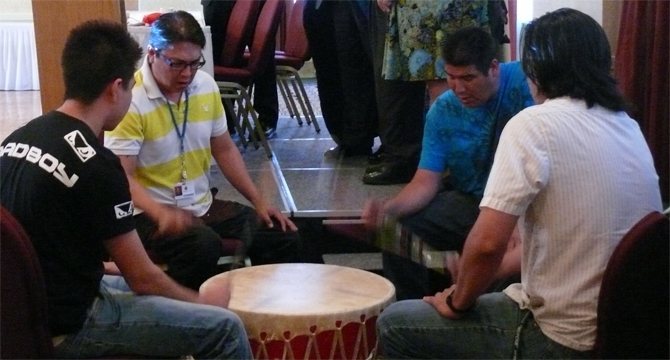
As I have reflected on my experience with equity both as an individual and as a professional working in the educational field – I am struck by the lack of appreciation of those inside and outside of the school system – of the definition of equity.
-
Equity is Happiness
Comments Off on Equity is HappinessEquity is happiness. In order to ensure student achievement, it is critical to employ equitable practices in schools, both inside and outside the classroom walls. Being the main place of socialization for students, from a young age until their years as emerging young adults, one’s school experience can make or break the futures of students who feel threatened or uncomfortable at school. Just to think that the smallest things that one’s peers might do has the potential to make another’s life completely miserable is a daunting thought that, personally, redefines my priorities as a student leader. Not Long ago, I might have had organizing school dances and spirit days at the top of my extra-curricular to-do list, but now I find myself looking at things with a lens tinted with thoughts of equity and inclusion.
Not Long ago, I might have had organizing school dances and spirit days at the top of my extra-curricular to-do list, but now I find myself looking at things with a lens tinted with thoughts of equity and inclusion.
Although they are incomparable to each other, students face a wide variety of inequities at school. Whether it is based on one’s faith, sexual orientation, ethnicity, age or gender, I am confident that every student can relate to having felt excluded or unfairly treated at some point over the course of their schooling. A small, yet significant example of how a student may feel inequitably treated at school could be regarding religious holidays. The fact that our school systems, like the rest of our society, officially acknowledge only select religious holidays, while the rest are simply mentioned, represents a huge inequity. When a student takes multiple days off of school during their faith-specific religious holiday, upon their return to school, they will have to work doubly hard to catch up on the work they missed. Another example of inequity is when the travel time between classes may not be sufficient for students with physical disabilities (i.e. wheelchairs, walkers, etc.). Although some of these difficulties may seem avoidable, the first step in the right direction is certainly awareness and education on these diverse topics.
The fact that our school systems, like the rest of our society, officially acknowledge only select religious holidays, while the rest are simply mentioned, represents a huge inequity. When a student takes multiple days off of school during their faith-specific religious holiday, upon their return to school, they will have to work doubly hard to catch up on the work they missed.
By tackling this issue from every facet of the school, from staff to students to administration, school culture improves significantly and this makes a statement on how the school, as a whole, feels about equity. When a student can look to any school authority for guidance, support or information, and receive more than they need, we know that we are making a fantastic, pro-equity effort in school.
As a student, I can see that teachers play a huge role in students’ lives, encountering them on a daily basis for multiple hours at a time, both inside and outside the classroom. By ensuring that teachers are also aware of these equity-related issues, we provide students with both an alternate source of potential support, coupled with a better education on the topic of equity. The efforts made by students outside the classroom are also vital in this plight for equity in schools, and certainly have an impact on their peers, but I believe that an all-encompassing approach would be much more efficient. By tackling this issue from every facet of the school, from staff to students to administration, school culture improves significantly and this makes a statement on how the school, as a whole, feels about equity. When a student can look to any school authority for guidance, support or information, and receive more than they need, we know that we are making a fantastic, pro-equity effort in school. Integrating it into classroom practices and potentially also into aspects of the curriculum would go a long way in reaching out to uninformed students. Adolescence in particular, is a difficult time for most students as it is; so ensuring that support and well-informed staff can always be found at school would make all the difference to many students who find themselves frustrated with equity-related issues. Students need to know about equity, and they need to know that their entire school community is there to support them – we cannot afford to ignore or improperly tend to these needs.
Related Education Canada article:
-
The Multi-Faith Secular: Changing the Discourse on Religious Accommodation in Schools
Comments Off on The Multi-Faith Secular: Changing the Discourse on Religious Accommodation in SchoolsIn the 2007 Ontario Provincial Election there was a great uproar of the idea of funding faith based schools as comparable to Roman Catholic schools. The Liberals, who opposed the idea, defeated the Conservatives (or rather John Tory), who were pushing this concept on a principal of fairness. Yet what is often missed in that analysis was that many parents in the province were actually saying that they wanted to keep their kids in public schools – but
to have the schools and the education system recognize that religion, faith, and spirituality were deeply intertwined with their childrens’ identities.To their credit, the Ontario Ministry of Education, previously led by Kathleen Wynne, consulted with best practices and made religious accommodation a tenant of the Ontario Inclusive Education Strategy. Unfortunately, religious accommodation is a deeply legal term that doesn’t speak to the shifting nature of a new generation of Canadian students and spiritual identity – and the discourse of religious accommodation doesn’t protect schools and boards when they make an “accommodation” based on a public backlash.
An example of this was the recent manufactured controversy over Friday Prayers in Valley Park Schools in the summer of 2011 when Toronto District School Board trustees and leadership were put on the defensive on issues ranging from gender discrimination, proselytizing, to the secular nature of education.
The entire public education system in Canada needs to accept that how people make meaning (read here: people not just Muslims) in their lives, is as much a part of their identities as issues of race, class, culture, sexual orientation, gender, and disability.
The entire public education system in Canada needs to accept that how people make meaning (read here: people not just Muslims) in their lives, is as much a part of their identities as issues of race, class, culture, sexual orientation, gender, and disability. For example, the University of Toronto, in creating their Multi-Faith Centre for Spiritual Study and Practice states that while the institution is secular in nature, it recognizes that their students, staff, and faculty bring their whole selves wherever they go.
The problem with religious accommodation as a framework is that it waits for students, or in some cases staff, to make a request rather than putting the responsibility on the board and school from designing institutions that take into account the need for students to authentically express themselves.
The problem with religious accommodation as a framework is that it waits for students, or in some cases staff, to make a request rather than putting the responsibility on the board and school from designing institutions that take into account the need for students to authentically express themselves.
To do this, school boards will have to be brave and forge into uncharted territory because the mere mention of topics of spirituality – or faith images of domination by one faith – and forced conversions are conjured up. Muslim students are the most visible example, as their needs, combined with the rampant culture of ‘Islamaphobia’, makes for splashy front-page headlines.
Yet I would argue that every student makes meaning and has a right to explore that meaning. As educators, we need to get over our fears and push forth a more inclusive and equitable framework that embeds meaning-making as a part of identity.
To create spiritually inclusive schools, we will need to create a set of ground rules about spirituality in public education settings, and by extension public society. We will need to wade into the thorny issues of:
- faith and sexual orientation
- faith and gender equity
- opposition of different faiths
- freedom of religion and freedom from religion
- people switching world views after getting exposure to others
- people who don’t define their meaning-making in one category or another
No one person has the solution here but differing and contrary viewpoints are needed to find a solution for a challenge that is not going away. The Multi-Faith Secular is more than creating a prayer space in schools it’s about creating a space for questions of meaning that every human contends with. As educators, we owe our students a better future than lumping them into categories of religious and secular, a framework that will fail them in a global multi-faith world.
The author’s view does not represent the views of the University of Toronto.
Related Education Canada articles:
-
Building a Better Sense of the Equity Picture
Comments Off on Building a Better Sense of the Equity PictureIn recent weeks I’ve been bringing up the metaphor of the six blind men and the elephant quite a bit, often getting a blank-faced stare in return. The story tells of the six men coming in contact with a (presumably very patient) elephant, whom they all grasp to get a sense of what the creature is like. One, holding on to an ear, says the elephant is like a fan. Another, holding the tusk, says the elephant is like a spear. Another, on the trunk, calls out, “snake!” And so on.
-
CEA’s Focus on Equity Blogs – Week 1 in Review
Comments Off on CEA’s Focus on Equity Blogs – Week 1 in ReviewThe focus ranged from high level equity policy and practice reflections, to the responsibilities of education systems to ensure equity, to the need to increasing access to postsecondary, for more integration of technology in classrooms to level the playing field, and a call for the expansion of specialized programs tailored to the unique needs of many learners before they fall through the cracks. If you missed any of last week’s blog posts, scroll down the list below and click on the links to get caught up.
Week 2 contributors will share First Nations, LGBT, and racialized minority perspectives and continue to provoke reflection on how we can do better for all of our children.
Parents please BYOD
By Lorna Costantini, Co-host of Classroom 2.0 Live“When parents become active participants in their child’s learning – something that is made amazingly easy with mobile devices – everyone benefits. Home and school partnerships are strengthened. Classroom teachers start feeling supported. Everyone on the same page. All students benefit. My kind of school.”
Equity in Education and the Digital Age
By John Kershaw, President of 21st Century Learning Associates, Inc.“A 21st Century model of learning offers the potential to realize this vision, when learning is enabled by ICT rich learning and teaching environments. Equity in education will only be realized when learning is personalized and every student has the ability to access information at their individual speed of learning.”
Equity Begins with Education
By Harvey Weingarten, President and CEO of The Higher Education Quality Council of Ontario“More than 80 per cent of Ontario secondary school students enrol in some type of postsecondary institution by age 21, but gaps in access remain for some – most notably those who identify as Aboriginal or whose parents have no postsecondary experience. In fact, our research shows that having no family history of college or university is the most significant obstacle to postsecondary education for those students who would most benefit from it.”
Yes, we can eradicate child and family poverty!
By Laurel Rothman, Director of Social Reform at the Family Service Toronto“With 639,000 children and their families living in low income, it’s no wonder that school drop-out rates persist and many young children enter the formal education system already somewhat behind in social and cognitive learning.”
Much-needed specialized school programs that build equity must expand
By John Campey, Executive Director of Social Planning Toronto“I’m frustrated, angry, and sad that our school systems do not – yet – clearly and fully acknowledge the continued, pervasive and corrosive impact of discrimination, economic inequality, and homophobia.”
Restoring Our Schools: The Quest for Equity in the United States
By Linda Darling-Hammond, Professor of Education at Stanford University and Co-director of SCOPE at Stanford University“Canada and many nations in Asia and Europe are pouring resources into forward-looking systems that educate all their citizens to much higher levels—and the gap between the United States and these high-achieving nations is growing.”
Investing in human development
By Penny Milton, Former CEO of the Canadian Education Association“What I’ve learned from parental, political and professional experience is that what is effective for poor children is what is effective for all children. And we know a lot about that. The difference is that poor children are more likely to depend on their school experience whereas the success of middle class children can often be in spite of it.”
The time is Now: Excellence and Equity for All
By Avis Glaze, President of Edu-quest International Inc.“As educators, the future of this country is in our hands. Schools are, indeed, be a laboratory of what effective human relationships can look like. Our diversity offers us the opportunity to be a model to the world of empathy and inclusiveness across the lines that often divide us in society.”
Equity: After the Poetry Comes the Prose
By Bruce Beairsto, Retired Superintendent of Schools in Richmond, British Columbia“If we are committed to equity then we are committed to eliminating inequity, and that means be willing to change the way schools function and the way we behave in order to eliminate, or at least minimize, it. Equity does not result from equality.”
Equity in education is not rocket science
By Peter H. Hennessy, Retired Professor of Education at Queen’s University“Historically, people assumed that children of privileged parents would shine at school and those of under- privileged families would languish, quit and get a job after Grade 10. So long fella! Good luck Susie! The computer revolution has changed all that. Technological unemployment steadily worsens the prospects for unskilled labour. Success in school is now part of the job hunt; success referring primarily to measurable competence in language, science, and mathematics. Standardized testing has become the practical means of ensuring these competencies – paired with accountability (the cold-hearted flip side of the coin). In the outcome, about a quarter of high school students fail to graduate and are adrift in the ‘Mc-job’ market. Adult education and training-on-the-job offer longer-term hope for some.”
What will it take to achieve equity in and through educational improvement?
By Carol Campbell, Associate Professor at the Ontario Institute for Studies in Education of the University of Toronto“Although Canada is faring the economic crisis globally better than some countries; rising income inequalities, fiscal restraint, budget deficits, unemployment and other challenges ahead are very present. Locally, we can identify students, families, communities and schools experiencing serious disadvantages and inequities. So we need to be vigilant about arguing and advocating for equity.”
-
Parents Please BYOD
Comments Off on Parents Please BYODRight, another acronym you have to remember. On the slim chance the term BYOD has not cropped in your conversations, I’m referring to the use of mobile devices in the classroom thus ‘Bring Your Own Device’ (BYOD). I know I said parents BYOD so let me explain.
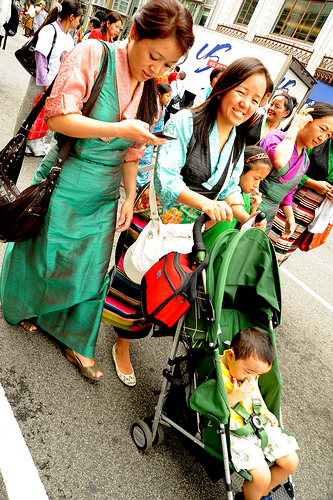
-
Equity in Education and the Digital Age
Comments Off on Equity in Education and the Digital AgeCanada is well known for its efforts to ensure an equitable education opportunity for its citizens. The inclusive education model is one expression of Canadian values in this regard; an underlying principle that all children should have equitable access to Canada’s learning systems. Canada’s ongoing efforts to successfully integrate children with disabilities into the regular classroom are to be lauded and emulated.
(more…) -
Yes, we can eradicate child and family poverty!
Comments Off on Yes, we can eradicate child and family poverty!This week we mark the 20th report card from Campaign 2000, a cross-Canada, non-partisan coalition raising awareness about child and family poverty and promoting policies to implement the unanimous 1989 House of Commons’ resolution to end child poverty in Canada by the year 2000. In 1992, the first report card was something new – a citizen’s monitoring report on government action – or inaction – in Canada. Many of you may know who we are and what we do. For those who are less familiar, Campaign 2000 is a diverse network of 120 groups representing low-income people, those providing key services including affordable housing, health care, and child care. These are the faith communities and service organizations, social planning councils, food banks, social workers, teachers, school boards, unions, women’s groups and many more in every province.
I doubt that those energetic activists back in 1992 thought that a report card would still be needed after 20 years. As Campaign 2000 issues its 20th monitoring report on child and family poverty, we are struck by the lack of progress over two decades. With 639,000 children and their families living in low income, it’s no wonder that school drop-out rates persist and many young children enter the formal education system already somewhat behind in social and cognitive learning. The economy has more than doubled in size, yet the incomes of families in the lowest decile have virtually stagnated. The gap between rich and poor families has continued to widen, leaving average-income families also struggling to keep up. With considerable evidence from academic, community-based and government research, and from extensive testimony from people with lived experience of poverty, we probably know more about how to eradicate poverty in Canada than we did twenty years ago. Yet, structural barriers hinder significant progress on eradicating poverty.
With 639,000 children and their families living in low income, it’s no wonder that school drop-out rates persist and many young children enter the formal education system already somewhat behind in social and cognitive learning.
At the same time, the younger generation – children of the baby boomers – is struggling more than their parents. They carry a heavy debt burden if they have pursued postsecondary education and often put off establishing long-term relationships and family formation. Many young people are unemployed or underemployed.
Postsecondary education, which has always been seen as a pathway out of poverty and a means to prevent poverty, is a pre-requisite for 70% of newly listed jobs. This academic necessity comes with a large price tag, averaging $5,366 per year for a full-time undergraduate degree in Canada and resulting in more and more postsecondary graduates finding themselves deeper in debt on leaving college and university. Currently, over $13.5 billion is owed to the federal government in student loans – the overall student debt, however, is estimated to be much higher if we include provincial loans, private lines of credits, credit cards and personal loans.
Many low-income students find themselves struggling to make ends meet and must take multiple jobs while pursuing their studies. Postsecondary graduates who have to borrow are at a higher risk of falling into low income and poverty as they seek to meet their debt repayment commitments. A number of these students choose to pursue any employment opportunity on graduation for financial purposes – potentially forgoing good jobs that help them establish their careers.
Canada has the know-how and the resources to make real progress on eradicating poverty. To start, we need a federal action plan that involves the provinces, territories, Aboriginal governments, the community sector, the private sector and people living in poverty. Secured in legislation, such as Bill C-233, An Act to Eliminate Poverty in Canada, a wise federal plan that will identify key roles for all of us and will recognize the particularities of how Quebec pursues social policy in the Canadian context.
Related Education Canada articles:
- Oh Canada! Too Many Children in Poverty for Too Long
- Which Way to the Good Life? The Social Policy Implications of Child and Family Well-Being


IDEAS TO SUPPORT EDUCATORS : Subscribe to the EdCan e-Newsletter
Quality research, reports, and professional learning opportunities.