Archive
-
Equity Begins with Education
Comments Off on Equity Begins with EducationEquity begins with education – because everything we know about a high quality of life and a robust economy points to the need for well-educated, skilled, and innovative people. Economic analyses repeatedly confirms that those with postsecondary education have higher employment levels, are more buffered in times of job loss and earn more than those without these credentials.
More than 80 per cent of Ontario secondary school students enrol in some type of postsecondary institution by age 21, but gaps in access remain for some – most notably those who identify as Aboriginal or whose parents have no postsecondary experience. In fact, our research shows that having no family history of college or university is the most significant obstacle to postsecondary education for those students who would most benefit from it.
More than 80 per cent of Ontario secondary school students enrol in some type of postsecondary institution by age 21, but gaps in access remain for some – most notably those who identify as Aboriginal or whose parents have no postsecondary experience. In fact, our research shows that having no family history of college or university is the most significant obstacle to postsecondary education for those students who would most benefit from it.
The Higher Education Quality Council of Ontario (HEQCO) is Canada’s only provincially-funded research organization focused on postsecondary access, quality, and accountability. While our mandate is higher education, our research clearly indicates that the influences encouraging or discouraging participation in higher education are at work long before a student is thinking (or not) of enrolling in a college, university or apprenticeship program.
A different approach is required to increase participation rates, as money alone will not work. We used to think the accessibility gap was relatively easy to solve: just make sure there is lots of financial assistance to support these students and they would pursue higher education. The research shows, though, that putting more money on the table is a necessary but insufficient solution. Students often make decisions about higher education early in life and there are a host of socio-cultural and attitudinal factors that make students from under-represented groups reluctant to pursue higher education.
Their reluctance, I’m sorry to say, is aggravated of late by what I call the postsecondary contrarians (most of them holding postsecondary credentials) who overstate the economic costs and risks, understate the benefits, ignore the effects of a recessionary economy on graduate job prospects and celebrate a handful of postsecondary dropouts for their entrepreneurial bravado. The fact is we should be talking a lot more about getting under-represented students into postsecondary education and a lot less about who can get by without it.
We need to focus on the barriers and find more effective ways of educating students about the costs and benefits of higher education. We need accurate and easy-to-understand information on the financial and other support available, more assistance in understanding the complex array of educational choices available and guidance on how to navigate application and registration processes. And we need to start well before high school. Finally, and perhaps most importantly, we need better communication between the secondary and postsecondary sectors to create smoother pathways for students. If equity begins with education, it really begins with us.
Additional HEQCO Information Resources
- HEQCO Community Report
- Financial Literacy of Low-income Students: Literature Review and Environmental Scan
- Access to Post-secondary Education: How Ontario Compares
- Educational Financial Literacy: Organizations on the ground and making a difference
Related Education Canada article:
-
Yes, we can eradicate child and family poverty!
Comments Off on Yes, we can eradicate child and family poverty!This week we mark the 20th report card from Campaign 2000, a cross-Canada, non-partisan coalition raising awareness about child and family poverty and promoting policies to implement the unanimous 1989 House of Commons’ resolution to end child poverty in Canada by the year 2000. In 1992, the first report card was something new – a citizen’s monitoring report on government action – or inaction – in Canada. Many of you may know who we are and what we do. For those who are less familiar, Campaign 2000 is a diverse network of 120 groups representing low-income people, those providing key services including affordable housing, health care, and child care. These are the faith communities and service organizations, social planning councils, food banks, social workers, teachers, school boards, unions, women’s groups and many more in every province.
I doubt that those energetic activists back in 1992 thought that a report card would still be needed after 20 years. As Campaign 2000 issues its 20th monitoring report on child and family poverty, we are struck by the lack of progress over two decades. With 639,000 children and their families living in low income, it’s no wonder that school drop-out rates persist and many young children enter the formal education system already somewhat behind in social and cognitive learning. The economy has more than doubled in size, yet the incomes of families in the lowest decile have virtually stagnated. The gap between rich and poor families has continued to widen, leaving average-income families also struggling to keep up. With considerable evidence from academic, community-based and government research, and from extensive testimony from people with lived experience of poverty, we probably know more about how to eradicate poverty in Canada than we did twenty years ago. Yet, structural barriers hinder significant progress on eradicating poverty.
With 639,000 children and their families living in low income, it’s no wonder that school drop-out rates persist and many young children enter the formal education system already somewhat behind in social and cognitive learning.
At the same time, the younger generation – children of the baby boomers – is struggling more than their parents. They carry a heavy debt burden if they have pursued postsecondary education and often put off establishing long-term relationships and family formation. Many young people are unemployed or underemployed.
Postsecondary education, which has always been seen as a pathway out of poverty and a means to prevent poverty, is a pre-requisite for 70% of newly listed jobs. This academic necessity comes with a large price tag, averaging $5,366 per year for a full-time undergraduate degree in Canada and resulting in more and more postsecondary graduates finding themselves deeper in debt on leaving college and university. Currently, over $13.5 billion is owed to the federal government in student loans – the overall student debt, however, is estimated to be much higher if we include provincial loans, private lines of credits, credit cards and personal loans.
Many low-income students find themselves struggling to make ends meet and must take multiple jobs while pursuing their studies. Postsecondary graduates who have to borrow are at a higher risk of falling into low income and poverty as they seek to meet their debt repayment commitments. A number of these students choose to pursue any employment opportunity on graduation for financial purposes – potentially forgoing good jobs that help them establish their careers.
Canada has the know-how and the resources to make real progress on eradicating poverty. To start, we need a federal action plan that involves the provinces, territories, Aboriginal governments, the community sector, the private sector and people living in poverty. Secured in legislation, such as Bill C-233, An Act to Eliminate Poverty in Canada, a wise federal plan that will identify key roles for all of us and will recognize the particularities of how Quebec pursues social policy in the Canadian context.
Related Education Canada articles:
- Oh Canada! Too Many Children in Poverty for Too Long
- Which Way to the Good Life? The Social Policy Implications of Child and Family Well-Being
-
Put Bragging Rights on Hold, Canada
Comments Off on Put Bragging Rights on Hold, CanadaWhile Canada can feel smug about its recent success in international testing, the underlying effects of poverty on children’s health, academic achievement, and society in general persist in disturbing ways.
Despite an all-party House of Commons resolution to end child poverty by the year 2000, the child poverty rate persists at 1989 levels, and, according to the Conference Board of Canada, the increase in income inequality has even been more rapid in Canada than in the U.S. since the mid-1990s[1] The relationship between social-economic status (SES) and school achievement has been clearly established, so it is instructive to examine the achievement of low-SES students living in Toronto, which has the Ontario’s highest proportion of children living in poverty.[2]
According to Ben Levin, family income can account for up to 50 percent of differences in academic achievement. “Thirty years of careful social science has provided overwhelming evidence that socioeconomic status (SES) has been and continues to be the best single predictor of how much schooling students will obtain, how well they will do at their studies, and what their life prospects beyond school are.”[3]
The most recent data published by the Toronto District School Board showed that only 16 percent of students who took most of their courses at the academic level in Grades 9 and 10 dropped out, compared to 56 percent of those taking most of their courses at the practical level. Students living in higher-income neighbourhoods dropped out at a rate of 16 percent, compared to 43 percent for students living in low-income neighbourhoods.[4]
Tracing achievement back to Education Quality and Accountability Office (EQAO) math and literacy results in Grade 3 reveals a 20-30 percent difference in achievement between students coming from families earning over $100,000 per year and families earning less than $30,000 – and the gap widens by Grade 6. These students come predominately from visible minority, immigrant families, where English is the second language. They are disproportionately single parent moms, boys, and/or from families with low levels of education.[5]
In Canada, we have narrowed the achievement gap between rich and poor by focusing on these injustices in society and developing programs to address them in schools. Whether it is the Aboriginal Schools, Songide’ewin, or Rising Sun in Winnipeg, or Pathways to Education in Toronto, we have proven that schools can make a difference – sometimes a big difference. Across Canada, the Reading Recovery program has proven conclusively that the reading level of children in poverty can be raised to match that of their advantaged peers,[6] and reading competency is the best predictor of academic – and economic – success.
Schools can do a lot, but they can’t do it all. Child poverty persists as a cancer in our society, taking a toll on children’s health, development, and school achievement – and on the public purse. The public cost of poverty in Canada in 2007 was low-balled at $24.4 billion.[7] Poverty contributes significantly to healthcare costs, policing costs, diminished educational outcomes, and depressed productivity. In 2004, the OECD concluded, “failure to tackle the poverty . . . of families and their children is not only socially reprehensible, but it will also weigh heavily on countries’ capacity to sustain economic growth in years to come.”[8]
As Ben Levin has pointed out, “Poverty is such an enormous negative influence, that it must be part of the educational reform agenda whether justified on grounds of economic interest or of social justice.”[9]
Yes, by international standards we have made a lot of progress. But, as current statistics show, we still have a long way to go.
[1] Conference board of Canada, Hot Topic: World Income Inequality: Is the World Becoming More Unequal? (2011). Accessed September 28, 2011 from http://www.conferenceboard.ca/hcp/hot-topics/worldInequality.aspx
[2] Children’s Aid Society of Toronto, Greater Trouble in Greater Toronto: Child Poverty in the GTA Report (Fact Sheet, Toronto, 2008).
[3] Ben Levin, “Educational Responses to Poverty,” Canadian Journal of Education 20, no. 2 (1995).
[4] S. Brown, Making the Grade: The Grade 9 Cohort of Fall 2002: Overview (Toronto District School Board, 2009).
[5] J. O’Reilly an M. Yau, 2008 Parent Census, Kindergarten-Grade 6: System Overview and Detailed (Toronto District School Board, 2009).
[6] J. Douetil, “At Last, Some Good News about Children in Poverty,” Literacy Today, Summer, 2011.
[7] National Council of Welfare, The Dollars and Sense of Solving Poverty, vol. 130 (Autumn, 2011).
[8] Organisation for Economic Cooperation and Development, Messages from PISA 2000 (Paris: 2004).
[9] Levin, 21.
-
Cdn EdWire – A diverse array of serious education issues play out in the dailies
Comments Off on Cdn EdWire – A diverse array of serious education issues play out in the dailiesCYBERBULLYING AND TEEN SUICIDE
The tragedy of teen suicide: can schools stop it? – Toronto Star
Time to bring controversy, politics into classroom, experts say – Postmedia
A MOVE TO ABOLISH QUEBEC SCHOOL BOARDS
School boards dodge budget cutback bullet – The Suburban
Quebec school boards fear budget-cut proposal – Montreal Gazette
School boards have to go, says Coalition de l’avenir’s Legault – Laval News
School boards in the crosshairs – Montreal Gazette
Keep them? Kill them? For the anglo community, it’s a sensitive issueFAILING FIRST NATIONS STUDENTS
Former PM calls education ‘absolute key’ to improving aboriginal life – Postmedia
Canada failing First Nations kids with education system, UN told – Postmedia
Ottawa accused of failing aboriginal children – CBC
CONFRONTING THE PERSISTENT DROPOUT ISSUE
Child immigrants over 9 more likely to drop out – CBC
Anti-dropout program is working, report card shows – Montreal Gazette
B.C. TEACHER LABOUR UNREST
In B.C. school wars, the pupils are the losers – Globe and Mail
Gov’t orders B.C. schools to prepare report cards – CTV
BCTF gives failing grade to new education plan – CBC
OTHER NEWS
Have schools ‘professionalized’ the role of parent? – Toronto Star
From $3,000 to zero, fees vary wildly for prestigious high-school program – Globe and Mail
Education Act put on hold – CBC Alberta
Parents fear sex-crime gap in school safety net – Montreal Gazette
Pardoned pedophiles can teach; Police say they’re unable to do same checks done for staff at daycares, hockey teamsImmersion review not welcomed by everyone – Moncton Times & Transcript
Parents uneasy with French immersion reforms – CBC NB
Cheating policy can work, consultant says – CBC Newfoundland
EDUBLOG HIGHLIGHTS
How to Stop Good Ideas from Getting Shot Down – Culture of Yes (Chris Kennedy)
I was listening to Canadian Education Association CEO, Ron Canuel, recently and he referenced John Kotter, a professor at the Harvard Business School. It was a name I knew, but I hadn’t previously been exposed to his work. Canuel shared Kotter’s list of the four strategies people use to help kill good ideas.- Fear mongering involves creating infectious anxiety, scaring others into believing a good idea is far too risky to pursue
- Death by Delay entails stalling an idea with never-ending questions, straw polls, and meetings—until the idea eventually loses momentum and fizzles out
- Confusion consists of peppering a conversation with a stream of irrelevant facts and convoluted questions, making it near impossible for the innovator to keep the discussion on track
- Ridicule is a direct attack on the character of the person who proposed the idea, creating indirect doubts about the idea itself (read more)
Flipping It – Webb of Thoughts (Kyle Webb)
I’m currently 7 weeks into my student teaching. Recently, I have drastically changed things in my classroom. My classroom used to look like the classroom I had when I was a high school student. Students would sit in their desks and take notes (maybe) as I stood up front speaking to them or worked through a problem on the board. A few students would give me their undivided attention and build a decent understanding of the concept. A few students wouldn’t pay any attention at all and secretly text under their desk or have Facebook pulled up on their tablets. And most students would pay attention for as long as they could, lost attention for just a moment or two, and be lost the rest of the lesson. I would employ all sorts of classroom management strategies to keep my students quiet and paying attention. Then I would wrap things up, maybe give them a few minutes to try some problems, if I had finished things quicker than planned. Most of the time, however, I sent them home to try to tackle problems that they should have learned about during class (and some beyond that). The result? (read more) -
Cdn EdWire – Should poor students receive financial incentives?
Comments Off on Cdn EdWire – Should poor students receive financial incentives?School board to mull rewards for at-risk students – Toronto Star
Experts support rewards for at-risk students – Toronto Star
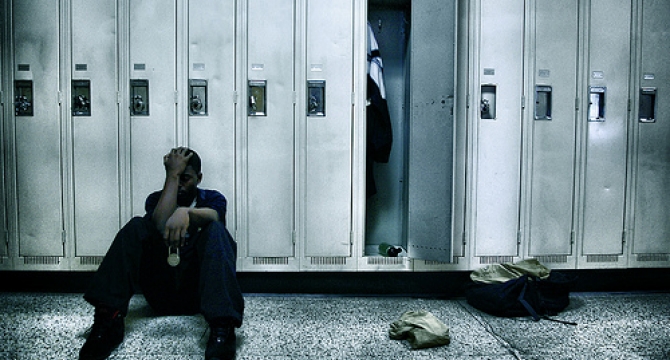
Photo by John Steven Fernandez http://www/flickr.com/photos/stevenfernandez/2370347860
-
Poisonous Praise
Comments Off on Poisonous PraiseI find myself praising my daughter for doing absolutely nothing. She’ll be lying on her play-mat, moving her toys around and smiling and I’ll coo variations of “Oh, good girl! Aren’t you smart! What a good girl!”
According to Dweck, when I praise her for being something like a “good girl” or a “smart little baby” I am unwittingly confining her to those labels, teaching her to develop a fixed-mindset as opposed to a growth-mindset. One day, when she’s contemplating speaking out against the status quo she might keep quiet because voicing an unpopular opinion isn’t what “good girls” do. Likewise, instead of taking risks with her learning and attempting a challenging task, she might stick with the familiar, a task she knows she can tackle with success.
This is a hard habit to break. I do it with my students too.
I don’t do it in writing. I don’t deface the margins of their papers with fixed-mindset-encouraging exclamations like “Well done!” and “Great work!”
Instead, I do it to their faces, in front of others, their peers. During discussions, when students contribute their ideas I often respond, “Good idea,” or “Great, thank you.” How many learners have I silenced because they had felt uncertain about the Good-ness of their idea?
As I write this, my daughter is struggling to crawl and I watch her practice. She pushes the top half of her body into the air, but struggles to rise up to her knees. In yoga, she’d be doing the perfect cobra. I fight against the urge to praise her intelligence and strength
“Wow, Abby! You’re working so hard! Excellent effort, my girl! Good job.”
-
Poisonous Praise
Comments Off on Poisonous PraiseI find myself praising my daughter for doing absolutely nothing. She’ll be lying on her play-mat, moving her toys around and smiling and I’ll coo variations of “Oh, good girl! You’re so smart! What a good girl!”
According to Dweck, when I praise her for being something like a “good girl” or a “smart little baby” I am unwittingly confining her to those labels, teaching her to develop a fixed-mindset as opposed to a growth-mindset. One day, when she’s contemplating speaking out against the status quo she might keep quiet because voicing an unpopular opinion isn’t what “good girls” do. Likewise, instead of taking risks with her learning and attempting a challenging task, she might stick with the familiar, a task she knows she can tackle with success.
This is a hard habit to break. I do it with my students too.
I don’t do it in writing. I don’t deface the margins of their papers with fixed-mindset-encouraging exclamations like “Well done!” and “Great work!”
Instead, I do it to their faces, in front of others, their peers. During discussions, when students contribute their ideas I often respond, “Good idea,” or “Great, thank you.” How many learners have I silenced because they had felt uncertain about the Good-ness of their idea?
As I write this, my daughter is struggling to crawl and I watch her practice. She pushes the top half of her body into the air, but struggles to rise up to her knees. In yoga, she’d be doing the perfect cobra. I fight against the urge to praise her intelligence and strength.
“Wow, Abby! You’re working so hard! Excellent effort, my girl! Good job.”
-
Bullying: Responding to a Sad Fact of Life
Comments Off on Bullying: Responding to a Sad Fact of LifeBullying is a fact of life. It has always been so and it always will be, because bullying is part of our human nature. We see it in politics, in professional sport, in the movies and, not surprisingly, we also see it in schools – playgrounds, staff rooms and board meetings included. Aggression and dominance are a part of our make-up; it can be managed, but not eliminated.
That doesn’t mean, however, that we should accept it. What it does mean is that suppression is not an adequate response and is doomed to fail. Of course there has to be “zero tolerance” but the only constructive interpretation of this term is that we can never look away. Responding to bullying with vengeance doesn’t get at the root of the problem and therefore does not resolve it. It may push it away but it doesn’t eliminate it. The “just say no” approach is both naive and irresponsible.
There are much better ways to go. You can set clear expectations for behaviour, you can provide adequate supervision, you can teach students how to respond if they encounter bullying, you can intervene decisively if it happens and you can use restorative justice to heal, for example, but by far the best approach is to build students’ resilience.
Personal resilience is rooted in our own characteristics, of course, but also in the social environment that we construct for ourselves and others. We might refer to this as our personal network, or our community, or the social capital in our society. Schools have an important role to play in developing both students’ internal and external assets, but I want to comment particularly on the external assets – the social capital upon which students can draw.
In “Bowling Alone,” Robert Putnam defines social capital as “a norm of generalized reciprocity: I’ll do this for you without expecting anything specific back from you, in the confident expectation that someone else will do something for me down the road.” Others might talk about Social Responsibility or the Golden Rule. Whatever you call it, what matters is how we go about creating a society in which, when bullying occurs, there is immediate, supportive and constructive response from those who observe it – both for the victim and the perpetrator.
Schools are not solely responsible for building social capital, but they have a very important role to play. In fact, the creation of social capital is one of the main reasons for having a public school system.
So how might schools go about this task? Well, simply bringing the whole community together is a very good, indeed essential, start. But then, of course, schools have to operate in ways that exemplify and inculcate the values they espouse. If they operate on the basis of “might makes right” authority in which adults claim inherent dominion over children – for their own good, of course – they are not doing that. What students learn from such an experience is quite likely the opposite of what we would hope and what they require in order to forge a civil society in the diverse and dynamic realities of the modern world.
Therefore, as part of a pro-active response to the fact of bullying and and for the greater good of society, social capital development should be high on the priority list for twenty-first century transformation. This “hidden curriculum” needs to come out of the closet and take its place beside human capital development in the discourse about school quality. Without this rebalancing of educational goals, all the focus on individual academic achievements and technological prowess may be for nought.
-
How to set up community-based education?
Comments Off on How to set up community-based education?Exactly how would one go about setting up community-based education? Alas, there is no exact answer. A single high school with authorization to run an experiment on a conditional basis would proceed very differently from a whole school system with the green light after public debate and a full airing of the pros and cons. Let us assume that we’re talking about the latter. The political debate is over, the administrative leadership has been set up and a set of community bodies and organizations, public and private, have signified their willingness to participate.
Here are some features of such a plan in operation:
STEP ONE – Students in third or fourth year high school may participate with parental permission. The approved students, without regard to their academic standing, will select a community posting from an approved list. Each posting will be for a minimum of two weeks and may be repeated. The maximum posting in any year will be the equivalent of 20% of the total regular class hours. A limit of two credits towards a diploma may be earned through community placements.
STEP TWO – The receiving persons or organization will ensure that an assigned student receives daily opportunities to learn through managed participation in the activity originally identified. For example, a student assigned to an auto repair shop, will be able to assist in actual auto repair and become familiar with the shop as a whole. One assigned to a department store will be involved in merchandising decisions, display, and maintenance work on the floor. A student in a chemical lab will be able to see the practical relationship between the lab’s function and finished products or services in the market. A student with a construction company will learn about the tools of the trade and have some practice in actually using the tools. One assigned to a seniors’ home will meet on a regular basis with an inmate or more for socialization. In other cases, teams of students will engage in modified apprenticeship roles in house building projects. An assignment will be deemed a failure, but not the student, where the student is merely left on the sidelines.
STEP THREE – A pivotal role will be played by the school team. They will keep records on each assignment including assessment of outcomes. The school team will be in pursuit of pre-determined objectives as agreed in the original approval process. School team members will familiarize themselves with placement opportunities without interfering in the working details of the placement.
STEP FOUR – Each student on community placement will keep a file about the experience including descriptive material supplied by the community agency, essays about the experience, pictures and sketches. The file (excepting private material) will be part of the assessment process managed by the school team. There will be one of two grades assigned after a community placement: Successful or Unsuccessful. Comments from the community agency may be included in the student’s report card.
Anyone reading this brief sketch will be tempted to say: “Why bother?” Why, indeed. The answer lies in the near certainty that teenagers with a good dollop of community experience under their belts will have acquired a sense of social responsibility needed for citizenship in a democracy. More to come!
-
Can We Accurately Predict a Student’s Future Success?
Comments Off on Can We Accurately Predict a Student’s Future Success?Educators often feel that they can predict students’ academic futures. For instance, they may think that they can tell how students will perform in Grade 8 or Grade 9 as early as Grades 1 or 2. There is research evidence to show that predictions about students’ futures are often wrong.
There are strong links between characteristics of students, such as their socio-economic status or their school readiness, and their later achievement but these relationships do not hold for all individuals. Many studies show that these predictions turn out to be wrong much more often than most people think. Canadian data shows that more than 40 percent of students scoring at the bottom reading level at age 15 were in post- secondary education at age 21. Research also shows that the accuracy of predictions about students declines over time; that is, one year’s achievement predicts the following year’’s quite well, but is less accurate in predicting achievement 3 or 4 years later.
The key thing that the research tells us is that students can and do change. With the right supports, students can achieve far more than anyone thought they could. Encouragement and support from both schools and families can also make those negative predictions less likely to be true.
Parents and educators should be cautious in assuming that the future of their child may be predicted based on their current performance. Secondly, parents should be actively involved in supporting and advocating for their child rather than accepting a negative future. This might include being optimistic with the child about the future, or the child’s teacher to identifying areas where home and school can work together
Additional Resources For Parents
Promoting Parental Involvement, Improving Student Outcomes by Gina Gianzero: This paper discusses how different forms of parental involvement increases student success in school.
http://www.sandiegodialogue.org/pdfs/Parental%20Involvement%20doc.pdf
Ontario Ministry of Education: This site provides tips on a variety of ways to help parents may help their struggling children.
http://www.edu.gov.on.ca/abc123/eng/tips/
Special Needs Opportunity Window: This link provides web based resources and community organizations that support parents whose children may have special needs.
http://snow.idrc.ocad.ca/content/view/242/132/
People for Education: This site provides tip sheets to parents on various ways that they can help support their child in school. The tip sheets are offered in 19 different languages.
http://www.peopleforeducation.com/resources/tips.html
Research References Informing this Issue
Badian, N. (1988). The Prediction of Good and Poor Reading Before Kindergarten Entry: A Nine-Year Follow-Up. Journal of Learning Disabilities, 21(2), 98-103.
Brownell M., Roos, N., Fransoo, R., Guevrèmont, A., MacWilliam, L., Derksen, S., Dik, N., Bogdanovic, B., & Sirski, M. (2004). How do educational outcomes vary with socioeconomic status? Key findings from the Manitoba Child Health Atlas 2004. Winnipeg, MB. Manitoba Centre for Health Policy.
Bowers, A. (2007). Grades and graduation: Using K-12 longitudinal cohort data to predict on-time graduation. Paper presented to the American Educational research Association, Chicago.
Gleason, P., and Dynarski, M. (2002). Do we know whom to serve? Issues in using risk factors to identify dropouts. Journal of Education for Students Placed at Risk, 7(1), 25-41.
Morgan, P., Farkas, G. and Wu, Q. (2009). Five-Year Growth Trajectories of Kindergarten Children with Learning Difficulties in Mathematics. Journal of Learning Disabilities, 42(4), 306.
OECD (2010). Pathways to success: How knowledge and skills at age 15 shape future lives in Canada. Paris: OECD.
-
Let’s get serious about community-based education
Comments Off on Let’s get serious about community-based educationIt does not take much persuasion to grasp that engaging high school students in the everyday activities of the community is terribly important to their maturation. A list of reasons pours out of my fingertips:
- An escape from the school cocoon – its boredom, repetitiveness, irrelevance, passivity.
- Innovative power of involvement in community activities where imagination is tempered by practicality.
- Hands-on activity as a supplement and relief from textbook learning.
- Adult role models to stoke the admiration of teenagers.
- Interaction between teachers and the world of economic and social activity around the schoolhouse.
- Career counseling from the grass roots.
The obstacles are nearly as numerous and much more formidable:
- Personal safety anxieties in a fear-ridden society.
- Professional jealousies.
- Curriculum erosion, which might devalue the graduation diploma.
- Job security fears among teachers.
- Loss of monopoly power over schooling by the politicians.
Any one of these obstacles could strangle a proposal for community-based education at birth. But the ways and means of a democracy are ingenious and quite durable. A start-up committee broadly representative of the community (i.e. inclusive of the public and private sectors) would likely need a year or more to explore the multiple possibilities for implementing the idea. After that it would be a matter of trial and error for another year or longer to get it right. A myriad of questions would bedevil the committee:
How to gain the approval of the central education authority? Recruit the support of the municipal council? Engage the private sector in the planning? Respond positively to media curiosity and criticism? Assure the teachers and administrators that community-based education is a well-tested idea that will not cause the sky to fall.
It is obvious that the committee would need to do a lot of homework. The question will be asked a thousand times: Why bother? We’ve got a good working system now. My answer: the publicly supported schools of Canada and the U.S. are under threat. Home schooling and private schooling are undermining the walls of the public system. Changing the system to foster civic enthusiasm, democratic enhancement, and vocational excitement can reverse the slide.
-
From Competition to Transition: Sharing Resources to Ensure Student Success
Comments Off on From Competition to Transition: Sharing Resources to Ensure Student SuccessThe fundamental thing that we all agree on in our learning community here at Edmonton Public Schools is that we want our children to successfully complete high school. One way to achieve that is to focus on the transition from Grade 9 to Grade 10 – from middle school to high school. In Jasper Place High School, we had often looked at this time as a point of recruitment. In our school district we have open boundaries so there is no automatic feeder school to high school connection.
In a system of site-based decision-making, where dollars follow students, we have found ourselves competing for students. It was essential for our school to be well-populated in order to have ample resources to operate effectively for student learning. It is also essential for students, once enrolled, to succeed; in Alberta, high school funding is based on the number of students successfully completing courses. When students are unsuccessful in their course work, the school loses funding for those students.
Many Grade 10 students poked their heads in the door early in September, saw how big we were, and slipped away before we even knew who they were.
In a school of 2,400, students can easily slip through the cracks – and they were. When we delved into the matter, we found that students were most vulnerable in the first five months of their Grade 10 year. Many Grade 10 students poked their heads in the door early in September, saw how big we were, and slipped away before we even knew who they were. But, if they stayed long enough to get a successful semester under their belts, they usually completed the three years with us.
Once we determined who we were losing and why, we began to look differently at the transitioning process. We scrapped the word “recruitment” and adopted the word “transition”. I met with principals from our 12 feeder junior high schools and spoke about how we might provide service to their students earlier and over a longer period of time. The goals were to know the students who were coming to us and to identify their needs earlier. The junior high principals were excited about this opportunity and embraced the idea that we needed to change how we were working with Grade 9 students before they moved into Grade 10.
As a group of principals, we generated many ideas about how to personalize the service from our high school for each junior high feeder school. The feeder schools had very different populations, and they required very different strategies for the transition of their students. Drawing from our entire administrative team, student services team, outreach personnel, and mental health team staff, we formed smaller teams to work with two feeder schools each. This was a dramatic change from the one counselor “road show” and open house that had occurred for junior high presentations in the past. Each junior high brought its own team of key personnel, and together the high school and junior high school teams developed plans for what the Grade 9 students needed to make a successful transition into Grade 10. These plans included:
- authentic learning activities at the high school in specific classes ranging from honours activities to options;
- shadow days;
- school tours;
- staff meetings held in our school to familiarize the junior high teachers with high school;
- library presentations and project work with junior high students;
- mini options over a week period with our teachers teaching the courses alongside junior high teachers;
- accessing mental health services for at-risk junior high students.
We continued to meet as principals and debrief the strategies that seemed to be working. One thing became apparent very quickly: we needed to know our at-risk students in more depth before they arrived in September. Junior high principals brought some individual students to access some of our student services early, and we began to form relationships with those students and to anticipate the effect those relationships might have the following year.
What, we wondered, would be the outcome if we formally identified those students before June and invited them to join us in summer school to complete some key courses? What were the courses our “at-risk/ at-promise” kids did not typically complete? Could we offer physical education and career and life management (CALM), both courses necessary for a high school diploma? Could we tailor our courses to just meet the provincial requirements of three credits each, a philosophical change for our school policy? In our school these were typically five-credit courses and only one could be taken in the month of summer school. What would the outcome be if we offered two three-credit courses that these students could complete during the summer? They would then have completed two “gatekeeper” courses, have six credits under their belts, and we would “know” them.
Early intervention is the key. We believe we are getting a great bang for our buck in moving these resources to the junior highs.
We sent our success coaches out to the junior high schools to talk with counselors and to identify the neediest, most at-risk Grade 9 students. Two “rock star” teachers, who would probably be teaching these students the following year, agreed to teach this summer school course. In 2009, our first summer, we had 20 students come in for the summer programming. Eighteen of the 20 completed the courses and are still attending our school and demonstrating success in Grade 11.
Based on the success of our first year, we decided to expand the program the following summer. Three success coaches, trained youth workers, were already working in our school, supporting our mainstreamed at-risk students. I decided to hire an additional success coach at Christmas break who would take on a new role in two of our junior high schools. She would spend two days in each school and one day at our school coordinating any services needed for those Grade 9 students with whom she was working. The junior high principals were very receptive to the idea and excited about additional support available for their Grade 9 at-risk students.
A success coach costs roughly $50,000. We believe strongly that the relationship with a success coach formed prior to starting high school will lead to an effective transition into high school. Early intervention is the key. We believe we are getting a great bang for our buck in moving these resources to the junior highs.
The success coach we hired was Angel King. Her job was really undefined, and we asked her to document the work in the form of a journal because this was unchartered territory. We felt that putting our resources into our needier junior highs – supporting our neediest students early – would pay off, but we weren’t sure how it would all unravel in the schools.
As Angel began to send us her journals, and we met with her on her Wednesdays to review her work, we began to realize some key components to establishing this work. Job one was the establishment of relationships with the personnel in these two feeder schools. Angel documented her introductions to the staff at the schools and attempted to outline what her role might be and how she could provide support to teachers and students.
Excerpts from Angel’s journal entries
I am your new success coach/ transition coach and will be at Hillcrest Tuesdays, Fridays and part of Wednesdays until summer. I have a Bachelor of Arts in Psychology with a minor in Education. I work for the Family Centre and have been hired by Jasper Place to help transition students from junior high into high school. My job is to help students independently discover what may be hindering their performance in junior high and what things may deter them from succeeding in high school. Although my formal clients will be in Grade 9, the entire school could be thought of as an informal client.
I will introduce Grade 9 students to high school and attempt to make their first experience a positive one.
The second lesson learned was that students needed to establish trust with Angel in very fast order. This was helped by school administration being on the same page and assisting this process. The junior high school principal was the key to making this fly!
This week was full of introductions and relationship building. It has been going well; Wednesday was awesome. I think the part that was most successful was being in the office with Kim and Mike [junior high counselors] during their discussions with students. I believe meeting them in this way told the students that they could trust me and outlined my role with them. I independently met with approximately six students who were each on an in-school suspension and was shocked with how open they were to talking with me. In most cases I asked very few questions and the students led the conversation. The majority of the students subsequently asked how they could contact me. I am very excited about what the upcoming weeks hold!
The work in each school developed as needed, based on the school administration and the students’ needs. There was no set agenda for what it would look like, but the outcomes were identical. Students would know a Jasper Place staff member well, and would feel supported in coming to our school.
Things are going fairly well, I have now done four after school groups, two at Westlawn and two at Hillcrest. Hillcrest always has more students [for me to see], but they also have more Grade 9 students in the school. At Hillcrest there are generally 10 students that stay and about 20 that come and go. At Westlawn there are about seven, and 15 that come and go. The kids that come appear to really enjoy this time and have asked what they did to deserve a party.
We monitored our success by the interest generated in summer programming and the number of students willing to give up part of their summer to join us for a month at Jasper Place. These students had not previously demonstrated interest in school and certainly were not typically motivated to attend “more school”. The numbers were up significantly from the previous year, and this was from only two feeder schools. It looked like the power of having Angel build relationships with students was having a definite impact.
Things have been going quite well. GYM/CALM Summer School registration (going to introduce the class to various junior high schools as well as collecting and submitting forms from Hillcrest and Westlawn to Jasper Place) has been taking most of my time… So far we have more than 30 students registered!
That second summer, teachers from our Jasper Place staff taught the 50 students. Angel was with them to support the summer programming, and more than 95 percent of the students registered in the two courses completed their six credits. Angel was key to this process because the students came in anticipating her presence and did not miss a beat in getting right down to learning.
When I met Kyle in Junior High School, he had less than 30 percent attendance. When I started working with him, I was told I was wasting my time. I invited Kyle to attend the Gym/CALM programs summer school classes at Jasper Place. Kyle was unable to pay for the course, so we paid for it and gave him bus tickets to and from school. Kyle attended summer school almost every day and passed both classes.
We watched as these students acted as ambassadors for their peers. In many cases they were the leaders in those first few weeks. It was a joy to see them so at ease and so comfortable in our school.
The plan was that Angel would be at Jasper Place fulltime from September to January. She was a familiar face for students from both junior high schools, and she was a necessary support for those students she had identified the previous year. Her client list was full. It was remarkable to see how these students were coming into their Grade 10 year. They were confident and happy; they had already experienced success with us, and they had six credits in their high school portfolio. They knew their way around the school, knew key personnel, including their teachers and the administration team. We watched as these students acted as ambassadors for their peers. In many cases they were the leaders in those first few weeks. It was a joy to see them so at ease and so comfortable in our school.
By October, I was receiving calls from the two feeder school principals asking when Angel was coming back. I reminded them of the plan to have her work with Grade 10 students at Jasper Place until January and then go back into the junior highs. The principals expressed how much teachers and students were missing the additional support. We met as a team and decided to modify our original plan. We currently have four success coaches working in our school. We decided to target an additional two feeder schools and each coach would spend one day per week in a junior high feeder school until January. After January their time would be increased to two days per week.
That is where we are right now. Four junior high schools are receiving front line support from Jasper Place personnel. The message is clear to our learning community. We want our students to be cared for and assisted in their goals to complete high school. We are not just vying for students to keep our schools alive, and we are not just looking for “desirable” students who will help our academic standing. We want to provide great service and resources to all students who come to us, and we want to make sure they are prepared and supported when they come to high school. We are striving for success with every student who enters our school.
EN BREF – Quand l’école secondaire Jasper Place à Edmonton commença à s’efforcer moins d’attirer le plus d’élèves possible des écoles intermédiaires environnantes, privilégiant plutôt de retenir ses élèves, elle s’est rendu compte que le processus de transition constituait la clé du succès. La direction d’école et les conseillers scolaires de Jasper Place ont collaboré avec leurs homologues des écoles intermédiaires pour cibler les élèves à risque et amorcer la transition dès la dernière année d’école intermédiaire. À partir de 2009, Jasper Place a offert à ces élèves l’accès à un « accompagnateur de réussite » en 9e année et la possibilité de suivre deux cours obligatoires du secondaire au cours de l’été précédant la 10e année. À leur arrivée à l’école secondaire en septembre, ils avaient donc acquis une expérience de réussite, leur dossier du secondaire comptait déjà six crédits et ils connaissaient les locaux de l’école ainsi que le personnel clé. Souvent, ils étaient des leaders au cours de ces premières semaines.
-
The Neuroscience of Poverty: Implications for Teaching
Comments Off on The Neuroscience of Poverty: Implications for Teaching“We will ensure that Canada remains the best place in the world to raise a family.”
– Speech from the Throne, March 3, 2010As Canadians, we pride ourselves on our values of justice and equality. After all, we have the Charter of Rights and Freedoms, and we have signed and ratified the United Nations Convention on the Rights of the Child. Yet according to the 2010 Report Card on Child and Family Poverty in Canada, one in ten children (610,000) and their families live in poverty.[1]
Poverty is a complex concept, but can be divided into two broad categories: absolute poverty and relative poverty. Absolute poverty describes a scarcity of basic necessities, such as shelter, running water, and food. This is uncommon in Canada, where the majority of poor families struggle with relative poverty – a more subjective concept referring to an income insufficient to reach the average standard of living in a given society.[2] Statistics Canada applies a relative measure, the low-income cut-off (LICO), whereby families must spend 20 percent more of their income than the average family on food, shelter, and clothing in order to be recognized as living in poverty. In 2007, 11 percent of the Canadian school-aged population (5- to 24-years-old) lived in such circumstances.[3]
In the specialized literature, LICO is generally referred to as low socio-economic status (SES), so for the purposes of this article, poverty is synonymous with low SES.
Risk factors associated with poverty have been shown to impact children’s school readiness and academic achievement; the effects on children’s behavioural and cognitive capabilities have been well documented. Recently, interest in the neurological effects of poverty on children’s academic learning has been growing, and researchers are finding associations between SES and areas of the brain responsible for attention, inhibitory regulation, and language. The effects of stress on the brain have also been associated with low SES and pose a threat for children’s learning.
At this point, however, it is important to distinguish the living conditions themselves from the frequently-observed family dynamics, stresses, etc. that accompany them. Not all children living in poverty or in a low-SES family will suffer negative outcomes or be stressed and unhappy, and SES is not a neurological condition that can be directly mapped onto genetic predispositions. Whatever the effects of SES on children’s brains, they are brought about by the environmental living situations.
The Neuroscience of Poverty
“Sit down and pay attention!” This is a common command in the school setting. But what if you pay too much attention?
Recent studies in cognitive neuroscience have demonstrated that lower-SES children pay as much attention to irrelevant information as to relevant information, whereas higher-SES children block out distracting information and focus on what is pertinent.[4] By comparing segments of electroencephalographic recordings of brain activity in response to target and distracting auditory stimuli, it was discovered that, on average, lower-SES children demonstrated more brain response to irrelevant information than did their more affluent counterparts.
These differences in brain activity did not, however, appear to affect the performance of relatively simple tasks. One experiment, for example, asked children to distinguish a target tone of a certain duration from three other similar tones.[5] Another required them to focus on a story played in one ear while ignoring a second story played in the opposing ear.[6] Their performance was tested by such tasks as pressing a button for certain tone frequencies and withholding for others or by answering comprehension questions related to the stories heard. Interestingly, in both studies, low- and high-SES children had similar speed and accuracy in completing the tasks.
The combination of greater brain response to irrelevant information and similar performance on these tasks may indicate that children’s learning styles differ depending on SES background; it is possible, for example, that lower-SES children “filter out” irrelevant information at a later stage in the response process than their more affluent peers. Since it is clear that paying attention to all information offered is more exhaustive and requires more mental effort than filtering it out immediately, the suggestion here is that lower-SES children must work harder to perform equally to higher-SES children. In simpler tasks, as those described above, this has not been found to be disadvantageous; however, more complex tasks requiring a multitude of information may more easily overwhelm brain resources. This is yet to be demonstrated in research.
Other potential learning challenges that may arise in association with the inability to block irrelevant information are delays in oral language and literacy development. Stevens et al. explain that distractions within the classroom environment may render listening and following directions difficult for children who cannot focus their attention. In addition, learning to read requires that children focus on specific letters, words, and sentences. The ability to inhibit automatic responses from prior learning is also required when learning new words, such that a child must resist reading cat when presented with the new word cot.[7] This notion is supported by studies that have found differences in the areas of the brain associated with spelling and phonological awareness and with visual word processing in relation to SES.[8] While the importance of stimulating learning environments and parental engagement in developing early literacy skills – and the influence of SES on the availability of such supports – is well documented, these studies indicate that these same factors may also play an important role when it comes to neurological development.
The effects of stress on the brain also play a significant role when it comes to children’s learning. Animal studies have demonstrated the direct impact of stress on parent-to-child interactions; emotional interaction has been shown to promote brain activity in young rats, who continued to display better learning and memory as adults.[9]
Chronic stress in children’s lives… makes emotional memories more salient and easily attained than factual knowledge and learning obtained in school.
In humans, parental stress due to poverty often leads to harsher disciplining techniques and more authoritarian parenting styles,[10] which in turn may lead to neglect and, in more extreme cases, verbal and physical abuse.[11] Neglected and abused children experience extreme stress, which has been shown to alter brain development. The release of cortisol (the main stress hormone) affects the hippocampus and the prefrontal cortex regions of the brain, leading to impaired memory and learning, and impaired executive functioning (such as planning, attention, and organizing). Chronic stress in children’s lives leads to an increased complexity of neural networks in the amygdala (area of the brain involved with emotion), making emotional memories more salient and easily attained than factual knowledge and learning obtained in school; hence the former memories can overshadow and impair learning of new information in settings such as the classroom.[12]
Implications for Educators
Many of the difficulties children living in poverty experience in school may be related to these recent findings in brain science. As previously mentioned, these children may demonstrate more difficulty paying attention and concentrating. Much like children with ADHD, children living with the stresses of low SES may be easily distracted by irrelevant information and may experience challenges blocking out classroom noise and visual distractors. Narrowing in on important aspects when it comes to reading and writing may also prove to be especially difficult. Material learned in class will be harder to remember for children who are faced with the extreme stress that is sometimes the result of poverty. Changes in the emotional centres and circuitry of the brain may result in higher emotional reactivity and may impact these children’s ability to form peer relationships. The stigma associated with poverty also places these children at risk for bullying and isolation.[13] Loneliness and depression may follow, leading to a sense of helplessness and hopelessness.[14]
We should change our view of lower-SES children’s learning style as a deficit and recognize that it is simply a difference… Under the right conditions, the adaptations made by children experiencing the stresses of low SES may actually allow them to excel.
If poverty sets the stage for possible cognitive and social difficulties in school, what can educators do to help?
Jensen explains that it is important “to change the school culture from pity to empathy.”[15] Pity leads to lowered expectations resulting in learned helplessness, whereas empathy leads to understanding of challenges as differences and demonstrates respect rather than creating stigma. In the case of children living in poverty, this means recognizing that the conditions of their lives may have led to learning styles that compensate for difficulties in filtering out irrelevant information, in remembering factual information, or in controlling emotional responses.
In other words, we should change our view of lower-SES children’s learning style as a deficit and recognize that it is simply a difference. This perspective was first proposed by David Elkind in his pioneering work on the interpretation of intelligence tests in low SES adolescents.[16] Today, new advances in conditions such as ADHD show that deficits may be best interpreted as adaptive or regulative difficulties.[17]
For children living in poverty it is especially important that the classroom be as stress-free as possible. At the same time, however, it is imperative not to lower the bar; the expectations of achievement and behaviour should be the same across the social ladder, since there is no evidence to suggest that low SES-children are, in the end, less capable of achieving at a high level. Indeed, evidence suggests that, under the right conditions, the adaptations made by children experiencing the stresses of low SES may actually allow them to excel. Older research shows that low-SES children may perform better than or similar to their high-SES counterparts if they receive the appropriate level of social, cognitive, and environmental stimulation.[18]
Last but not least is the importance of supporting the family and keeping open the lines of communication between the school and the home. This is especially important for children living in poverty. For example, absenteeism and withdrawal are major contributing factors to the learning difficulties experienced by low SES children, in part because they are stigmatized by their peers. Lower-SES parents also face the stigma attached to poverty and may feel uncomfortable becoming involved in their children’s school. Yet we know that parents’ participation is one of the most powerful predictors of their children’s success. This is why it is crucial that teachers have an open-door policy that invites parents to participate in the classroom or to become involved with the school in ways that they are comfortable with.
At the same time, because – unarguably – poor families deserve respect, understanding, and appreciation, teachers should be sensitive to the struggles these families face on a daily basis, without condescension. As one of the writers (who grew up as a low-SES child) can testify, teachers’ acts of empathy may appear very small in the context of a classroom, but they can be very large in the context of a students’ life.
EN BREF – L’importance d’environnements d’apprentissage stimulants et de l’engagement parental pour le développement en bas âge de compétences en littératie – de même que l’influence du statut socioéconomique (SSE) sur la disponibilité de ces soutiens – est bien documentée. D’après des études récentes, ces mêmes facteurs pourraient aussi jouer un rôle important en matière de développement neurologique. Des études de cerveaux d’enfants de faible SSE ont démontré qu’ils sont moins en mesure de filtrer les informations non pertinentes dans une situation d’apprentissage. Quoique cela ne semble pas se répercuter sur l’exécution de tâches simples, cela laisse entendre qu’ils peuvent devoir travailler plus fort pour obtenir les mêmes résultats que d’autres enfants. Par contre, dans les bonnes conditions, les adaptations faites par les enfants exposés aux tensions d’un faible SSE pourraient même les aider à avoir d’excellents résultats. Ces études indiquent aux éducateurs des façons dont on peut aider les enfants défavorisés à profiter le plus possible de leurs possibilités d’apprentissage.
[1] Campaign 2000, 2010 Report Card on Child and Family Poverty in Canada: 1989 – 2010. Retrieved January 7, 2011 from www.campaign2000.ca/reportcards.html
[2] Definitions from E. Jensen, Teaching with Poverty in Mind: What Being Poor Does to Kids’ Brains and What Schools Can Do About It (Alexandria: ASCD, 2009).
[3] Statistics Canada, School-age Population Living in Low-income Circumstances , December 2009. Retrieved January 7, 2011 from www.statcan.gc.ca/pub/81-599-x/81-599-x2009004-eng.htm
[4] A. D’Angiulli, A. Herdman, D. Stapells, and C. Hertzman, “Children’s Event-related Potentials of Auditory Selective Attention Vary with their Socioeconomic Status,” Neuropsychology 22, no. 3 (2008): 293-300; C. Stevens, B. Lauinger, and H. Neville, “Differences in the Neural Mechanisms of Selective Attention in Children from Different Socioeconomic Backgrounds: An Event-related Brain Potential Study,” Developmental Science 12, no. 4 (2009): 634-646.
[5] D’Angiulli et al.
[6] Stevens et al.
[7] Ibid., 643.
[8] D. A. Hackman and M. J. Farah, (2008). Socioeconomic Status and the Developing Brain, Trends in Cognitive Sciences 13, no. 2 (2008): 65-73.
[9] D. A. Hackman, M. J. Farah, and M. J. Meany, “Socioeconomic Status and the Brain: Mechanistic Insights from Human and Animal Research,” Science and Society 11 (2010): 651-659.
[10] D. E. Kohen, T. Leventhal, V. S. Dahinten, and C. N. McIntosh, “Neighborhood Disadvantage: Pathways of Effects for Young Children,” Child Development 79, no. 1 (2008): 156-169.
[11] Jensen.
[12] Ibid.
[13] L. M. Robinson, L. McIntyre, and S. Officer, “Welfare Babies: Poor Children’s Experiences Informing Healthy Peer Relationships in Canada,” Health Promotion International 20, no. 4 (2005): 342-350.
[14] H. Ursin and H. Eriksen, “The Cognitive Activation Theory of Stress: A Review,” Psychoneuroendocrinology 29, no. 5 (2004): 567–592.
[15] Jensen.
[16] David Elkind “Borderline Retardation in Low and Middle Income Adolescents,” in Theories of Cognitive Development: Implications for the Mentally Retarded, eds. R. M. Allen, A. D. Cortazzo, and R. P. Toister (Coral Gables: University of Miami Press, 1973).
[17] Amadeo D’Angiulli and Sebastian Lipina, “Cognitive Sciences and Child Poverty: Facts and Challenges.” Available from Nature Proceedings http://dx.doi.org/10.1038/npre.2010.4679.1 (2010).
[18] see Theodore D. Wachs and Gary W. Evans “Chaos in Context” in Chaos and Its Influence on Children’s Development: An Ecological Perspective, eds. Gary W. Evans and Theodore D. Wachs (Washington, DC: American Psychological Association, 2010).
-
How Can We Prevent High School Dropouts?
Comments Off on How Can We Prevent High School Dropouts?How do we help students stay in school?
For most people, completing secondary school has become a basic requirement to be able to live satisfying and productive lives. Much has been learned about the factors that keep young people on track to successful high school graduation.
The most important single factor is students’ feeling of connection to the school and in particular, the belief by every student that there is at least one adult in the school who knows and cares about that student. Schools can do many things to promote this, such as assigning teacher advisors, and taking action early when a student shows signs of being in difficulty, both personally and academically. Schools can reach out to struggling students to offer extra support; sometimes only a small amount of such support is enough to make a big difference.
Also important are an engaging curriculum and effective teaching practices. Many students do not find their lessons intellectually stimulating. Students want and need work that challenges their abilities but that also provides the opportunity to be successful. This is only partly a matter of the content; it is also a matter of effective teaching and of fair assessment practices. Students do better when they feel they have some input into the kind of work they do, opportunities to improve their work, and teaching that pays attention to their background knowledge and interests.
The fourth key factor is a respectful environment, where staff and students treat one another with consideration and thoughtfulness, where students have a voice in how the school operates, and where rules show consideration for students’ individual needs and circumstances.
High schools that embody these features will have better outcomes and better graduation rates.
Additional Resources For Parents
GLOBAL VOICES IN CANADA: What Did You Do in School Today?: This article looks at the importance of student engagement in high schools. http://webspace.oise.utoronto.ca/~levinben/Kappan1002levWDYDIST.pdf
In Canada: 20 minutes to change a life?: The article discusses the positive impact of supportive adult attention on students facing challenges in high school.
http://www.cea-ace.ca/education-canada/article/20-minutes-change-life
National Center on Secondary Education and Transition: This website provides tips for parents on strategies that promote graduation and school achievement.
http://www.ncset.org/publications/viewdesc.asp?id=3135
Ontario Ministry of Education: This website provides options for parents to help children graduate from secondary school.
http://www.edu.gov.on.ca/studentsuccess/index.html
School Leavers: Understanding the Lived Reality of Student Disengagement from Secondary School: This report was prepared by Resource Group The Hospital for Sick Children For the Ontario Ministry of Education and Training, Special Education Branch, Toronto, Canada
http://www.edu.gov.on.ca/eng/parents/schoolleavers.pdf
What Did You Do in School Today?: This report discusses the need for social, academic and intellectual engagement for adolescents learners.
http://www.cea-ace.ca/sites/default/files/cea-2009-wdydist.pdf
Research References Informing this Issue
Balfanz, R. et al. (2007), “Preventing Student Disengagement and Keeping Students on the Gradation Path in Urban Middle-Grades Schools: Early Identification and Effective Interventions” in Educational Psychologist, Vol. 42, No. 4, pp. 223-235.
Hammond, C., Linton, D., Smink, J., & Drew, S. (2007). Dropout risk factors and exemplary programs. Clemson, SC: National Dropout Prevention Center, Communities In Schools, Inc.
Jerald, C. D. (2006). Identifying potential dropouts: Key lessons for building an early warning system. Washington, DC: American Diploma Project Network, Achieve, Inc.
Lyche, C.S. (2010). Taking on the completion challenge: A literature review on policies to prevent drop out and early school leaving. Paris: OECD
Mac Iver, D.J. and M. A. Mac Iver (2009), Beyond the Indicators: An Integrated School-level Approach to Dropout Prevention, The George Washington University Center for Equity and Excellence in Education, Arlington
Rumberger, R.W. and Lim, S.A. (2008), Why Students Drop Out of School: A Review of 25 Years of Research, California Dropout Research Project, Santa Barbara.
-
The Museum as a Catalyst for Education and Citizenship: Breaking Barriers in Rio de Janeiro
Comments Off on The Museum as a Catalyst for Education and Citizenship: Breaking Barriers in Rio de JaneiroWe believe in the role played by the National Museum of History as an agent for helping individuals understand themselves and the world in which they live, through the senses and through the chain of knowledge arising from them, making it possible to develop their reasoning, memory, and imagination.
Brazil’s National History Museum, Museu Histórico Nacional (MHN), established in 1922, is located in downtown Rio de Janeiro. It is the largest and most important history museum in Brazil and the first ever oriented to public education in the country. Over its eight decades in operation, MHN has maintained its tradition of educational improvement.
In Brazil, such educational services initiatives started in the 1950s in art museums, reflecting the period’s trend of organizing free art ateliers for children and young people. The movement grew stronger in the years that followed and reached into realms other than the arts.
During these years, the MHN’s Education Sector started a guided tour program to the galleries, stimulating historical perception by exposing young people to the items in its collection; but initially, there was not a truly educational program. However, after the 1980s, we developed a project for educators and primary school children based on the creation of action-producing images aligned with the construction and acquisition of knowledge and linked to the museum’s collection. Although valuable for the children involved, these programs did not reach the growing underclass in Rio de Janeiro society.
In the 1990s – and after 2001 in particular – the Museum’s Social Sector was established to undertake the difficult task of establishing relationships between the museum and the wider society, catering to children and young adults and working with a number of other organizations that assist children and adolescents and work to reintegrate social outcasts into the community.
By following the new museum-related trends and strategies advocated by the International Council of Museums (Icom), which is responsible for defining which institutions must be at the “service of society”, the MHN is expanding its programs, breaking new ground, and maintaining its role as a social player and an educator’s ally.
The Museum and the City
The city of Rio de Janeiro is internationally renowned for its breathtaking natural beauty. Located between the sea and high mountains, its urban growth stretches between maritime landfills and the settlements on the hills. The poorest segments of the population live both in mountainous regions and in urban outskirts: the ‘favelas’ are located in those regions.
Sadly, during the 20th century, drug dealing became a serious problem. Children and young people began abandoning their families, dropping out of school, and joining organized gangs, some of which are highly dangerous. These young people have little interest in the future. Their average life expectancy is around 25 years, and they live a “short-termist” lifestyle, with no future goals. MHN – located in the city center, with a commitment to education and the preservation of symbolic objects of the national inheritance – could not ignore this reality around it. So, in 1992, an educational program oriented to this segment of the population was started, and as of 2001 it gained a special dimension.
By searching for a better understanding of the past, we are showing that everyone – regardless of social environment – can play an important role in the great theatre of life. In this way, museums are active in safeguarding the future as well as the past.
The Program
This project grew out of the museum’s educational purpose and its preserved collection, which includes the testimonies and artifacts relating to the building of the country, a virtual trail of attitudes and actions.
As institutions that preserve cultural heritage, museums deal with the concepts of remembering and forgetting. They use historical figures as role models to work on the relationship between these two concepts and to show that everyone, regardless of age or historical context, can grow and contribute to a better society. By searching for a better understanding of the past, we are showing that everyone – regardless of social environment – can play an important role in the great theatre of life. In this way, museums are active in safeguarding the future as well as the past.
The target population for these programs includes disenfranchised children and young people aged 10 to 20 – those living in the streets, ex-street dwellers, children from poor communities, and young people from penitentiaries. These youth are often referred to MHN by other institutions and NGOs, many of which have formed partnerships with the Museum. Highly dangerous youngsters on parole are referred through the Federal Justice Ministry and the Justice Court of the State of Rio de Janeiro. In spite of concerns initially raised about possible damages to the property caused by this needy population, throughout these ten years not a single incident of property damage or physical injury to the employees and visitors has been observed.
Program activities are guided by monitors in the Museum’s Educational Sector, by restoration technicians, file specialists, and librarians working in the museum, and by professors hired on demand for specific projects. The resources come from institutions set up for the care of minors, from some NGOs, and from partnerships with banks, public and private enterprises, and educational institutions, which offer scholarships to the top students of each group.
The activities designed for this student population are divided into three major categories, subdivided into a number of programs:
- Cultural Leisure: Sowing the Seeds of History. This program is comprised of many guided tours to the exhibition galleries as well as activities geared to children. The purpose is to create a relationship with the museum space and – based on the proposed objectives – to establish the link between the past, the present, and the future. These activities are often accompanied by short videos or musical performances because these children and young people, due to their chemical addictions, often display very limited attention spans.
- Professionals of the Future. This program is subdivided into short- and long-term courses, some of which may last as long as a year. They train young people, providing them with theoretical and practical knowledge in handcraft, gardening, chair stuffing, furniture shining, cabinet-making, book and document conservation, to name a few. Technicians and museum restoration specialists, along with specially hired teachers, supervise their work, using the museum collections in the practical training. In order to meet the high demand for such activities, the Social Sector has contacted other cultural institutions, museums, collectors, and decoration stores which have started to accept the services provided by these young people. After completing the courses, many are hired for practical training at those places.
- Working World. This program is a training course to prepare young people for the formal job market, taught by museum staff and specially hired teachers. As reinforcement, classes are taught in Portuguese grammar, mathematics, and history, using museum exhibitions, information technology, public relations, etc. At the end of one course semester, the students start practical training in businesses. The business partners are committed to respect the school hours of the young people. The MHN itself receives close to 34 student trainees per year, offering them the opportunity for apprenticeship and the chance to experience the day-to-day routine and administrative rules of an institution.
In 2009, 5,489 young people attended these programs. In recent years, the Museum has also begun offering special programs for disabled children, senior citizens, and adults living in poverty.
Program Evaluation
Initially, our expectations were very low. The first groups consisted of 15 to 30 students, and little did anyone know whether the program would continue. The results, however, year after year, have shown a significant increase in both new programs offered by cooperating institutions and the number of young people enrolled. These marginal communities, which used to perceive museums as high-end spaces forbidden to the less fortunate, can now see that the barriers separating the poorest communities from the museums have fallen.
Many young people who attend the programs have managed to free themselves from drug addiction, stop smuggling, and move away from a life of crime. Some have even become instructors and managers of new groups and have established a highly emotional bond with the MHN. For this reason, in recent years a “Big Get-together” has been held to reunite ex-students and serve as a socializing event with the current students. Many bring their spouses and children.
Conclusion
The MHN senior management and the entire team are involved in the program, sharing the belief that the education task carried out in museums should not be limited to the exhibition of collections in permanent or temporary exhibits, reducing the discourse to merely praising the objects and rendering them intangible to the less fortunate. By opening its doors to a population deprived of cultural and educational contacts, the museum has become a catalyst for many types of social transformation.
Through this process, everybody learns: employees, teachers, visitors (who often express surprise that these young people – often regarded as dangerous – are appreciating works of art), and students. It is a painstaking task, requiring patience and persistence.
If, out of each group we receive, one young person would be rehabilitated to live in society, this alone would make life worth living! The importance of the Museum to human development has already become apparent.
EN BREF – Le Musée d’histoire naturelle du Brésil à Rio de Janeiro tend la main aux jeunes les plus marginalisés et s’établit comme un important partenaire en leur offrant des solutions de rechange à une vie de crime et de toxicomanie. La population ciblée de ses programmes comprend les enfants démunis et sans droits et les jeunes de 10 à 20 ans – les sans-abri, les ex-itinérants, les enfants de quartiers défavorisés et les jeunes de pénitenciers. Les programmes d’éducation tirent parti des collections du musée pour que les jeunes s’identifient à leur histoire et à leur place dans la société et pour qu’ils acquièrent des compétences qui leur permettront de travailler. En ouvrant ses portes à une population privée de contacts culturels et éducationnels, le musée est devenu un catalyseur de transformation sociale et de protection de l’avenir, ainsi que du passé.
-
Penny Milton, Cailey Crawford, and Ron Canuel on What did you do in school today?
Comments Off on Penny Milton, Cailey Crawford, and Ron Canuel on What did you do in school today?Penny Milton, Cailey Crawford, and Ron Canuel talk about the What did you do in school today? project.
-
Marginalized Youth and Education: Voices from Regent Park
Comments Off on Marginalized Youth and Education: Voices from Regent ParkThey say I’m less than average
They say I can’t succeed
Because I live in Regent Park
They say there’s just no need.Excerpt from a poem called, They Say, written by Zeinab Mohamed, then aged 14 and a Grade 8 student at Nelson Mandela Park School in 2003-04.
Former Regent Park resident and Pathways’ alumnus Andrew remembers the incident well and considers it a defining moment in his life.
It was 1999, just prior to the establishment of Pathways. Andrew, then 13 or so, was on his way home from a skit put on by 51 Police Division’s Community Partnerships office. The skit, ironic given what was to transpire, was born in the early days of community policing and illustrated the tension felt between Regent’s community members and the police. It was intended to forge better relationships with the people who lived in the community by getting to know them better, engaging with them, dealing with them as individuals. After all, not all of Regent’s youth were drug dealers, petty criminals on their way to a life of violent crime – many of them were just plain good kids, some of them in the wrong place at the wrong time. So it was for Andrew and his friend.
As the two young teens were walking away from the event, they were nabbed by police, frisked, more than a little roughed up, and held briefly in connection with a car robbery that had taken place moments before, near 51 Division. They tried to explain where they had been, only to be told to quiet down. They were scared and shaken up.
Andrew (not his real name) came to Canada as a refugee from Kosovo two years prior to the incident with the police, with his parents, one brother, and two sisters. He came from a place where folks made every effort to avoid such confrontations. In Kosovo, to see the police show up in your neighbourhood meant almost certain danger, and potentially even death. Most of Andrew’s male family members had had violent run-ins. As a result, this incident was particularly traumatizing for Andrew, and it upset his parents greatly.
This could have been a turning point for Andrew, and in a way it was. Andrew was pretty shaken up. Relations between the police and youth in Regent Park were not good – some would say downright hostile. Quite often, young people who experience such encounters are tempted out of anger and pride to retaliate, to make bad choices that reflect this anger that sometimes take them down a dangerous road. But instead, Andrew kept his anger in check and committed himself to avoid, if possible, all such future exchanges with the police. He would keep his head down and concentrate on doing well in school and getting into university. And he did.
Andrew had what the researchers are calling these days, “resilience”. But that so-called resilience didn’t reside in his genes or his neuro-networks, or at least that’s not how Andrew sees it. “I could have gotten angry and focused on getting even, retaliating. But I didn’t. If it weren’t for Pathways, it might have been a different story.” In fact, a few years later, Pathways staff facilitated a formal apology from the police to Andrew and his father for the 1999 run-in.
Nowadays, lots of kids who live in Regent Park begin their sentences with, “If it weren’t for Pathways…” For them, Pathways represents a parent figure, less emotionally vested in the kids’ lives, but equally committed to their success. The program was first established in Regent Park in 2001, following a lengthy period of research and consultation with the community. Regent’s residents were clear in what they considered was the principal challenge of their community: to better support their young people in finishing high school, which would enable them to attend college or university and to gain more meaningful employment. Today, Pathways remains committed to ensuring that all youth in its programs – regardless of their social or economic situation, or where they were born – have the same opportunity for success, in school and in life.
Pathways’ students now talk about a new culture of expectation… They say words such as disadvantaged, poor, violent, and at-risk do not address the fullness of reality and life in their community.
The Pathways Program itself consists of four principal components, which each address the academic, emotional and cognitive, social, and financial barriers that young people in vulnerable communities face as they move through adolescence. They include: the assignment of a Student Parent Support Worker; access to tutoring and mentoring, including career mentoring in their later years of high school; opportunities for peer mentoring and social supports; and the provision of some financial assistance, whether in the form of bus tickets or meal vouchers. Together, these four major supports ensure the successful completion of high school, which enables young people to move into early adulthood poised to make the choice that’s right for themselves, one which reflects their interests and personal aptitudes, be it going to college or university, or entering the workforce.
Pathways, as well as the rebuilding of Regent Park, have profoundly changed the community. Pathways’ students now talk about a new culture of expectation. They bristle at, and obviously reject, most of the labels the media and others place on them and, by extension, their community. They say words such as disadvantaged, poor, violent, and at-risk – to cite a few – do not address the fullness of reality and life in their community. In fact, if you ask the young folks who live in the community today, the feelings and dynamics captured both in the poem excerpt and Andrew’s run-in with the police are coming to represent more Regent Park’s past than its future. Even its present is looking pretty good. Though the relationship with the police is still not perfect, there is a sense that the legacy of struggling against a set of circumstances that have conspired to limit their possibilities relates to the past. As one student put it, “the labelling and other negative things associated with Regent are more related to the older kids… because now this community has changed and now we don’t face the same obstacles.”
This even applies to the classroom. Because Pathways students attend high schools from all over the city, they often find themselves in highly diverse settings, and are just as likely to find themselves sitting next to the son or daughter of an accomplished business person or academic as they are to attend school with a friend from the community. Historically – for some of the older Pathways students – teachers, however unconsciously, held Regent Park students to a different set of standards. Youth from Regent Park were just not expected to do as well. Today our program participants say that has changed. “We proved to them we could be as smart as everyone else, if not smarter,” said one recent Pathways graduate.
The results concur. And now, as graduation approaches for yet another cohort of Pathways students, not applying to college or university is simply out of the question.
EN BREF – Les élèves du projet Pathways à Regent Park parlent maintenant d’une nouvelle culture des attentes. La plupart des étiquettes que leur attribuent les médias et d’autres, et donc la collectivité, les hérissent et ils les rejettent. Ils affirment que des termes comme défavorisés, pauvres, violents et à risque – pour ne citer que ceux-là – ne décrivent pas toute l’envergure de la réalité et de la vie de leur collectivité. En effet, si vous consultez les jeunes qui y vivent aujourd’hui, ces termes sont en voie de mieux représenter le passé de Regent Park que son avenir. Même que son présent semble plutôt positif. Comme le dit un élève : « L’étiquetage et les autres choses négatives associées à Regent se rapportent davantage aux jeunes qui sont plus vieux… parce que maintenant cette collectivité a changé et nous ne faisons plus face aux mêmes obstacles. »
-
Viewpoint: Changing Academic Standards, One Community Centre at a Time
Comments Off on Viewpoint: Changing Academic Standards, One Community Centre at a TimeAcross Canada there exist pockets of “high-risk” communities that share certain characteristics, most of which experts and researchers correlate to poverty. These communities are normally portrayed in the media as hubs for violence, troubled youth, and drug saturation. While it is true that there are some pervasive issues directly related to lack of resources, one may need to take a second glance before siding with the media’s portrayal and/or one’s very own predetermined perceptions of what environments set the precedent for academic success. If you have ever thought that youth living in lower-income neighbourhoods were destined for lower academic success due to lack of opportunity, resources and/or desire, I urge you to keep reading and discover, as I have, a very different world than the salacious world of gun-slingers and drug traffickers typically portrayed in the media as the prime activity in low-income housing communities.
The Alexandra Park Community, also known as the Atkinson Co-op, is nestled unassumingly in the downtown core of Toronto. There are 806 residential units serving approximately 2,000 residents, most of whom live on a fixed income. There is a burgeoning contrast between the Atkinson Co-op, which visibly lacks in resources, and the trendy overflow of splendour that surrounds it. During my exploration I was able to uncover this community’s best kept secret. While visiting the Alexandra Park Community Centre, I discovered that it housed and kept safe the most valuable treasures and ostentatious investments of this community: the youth.
Contrary to the reflection of how undervalued community centres may be to greater society (i.e. decreased presence in communities and lack of financial support for programming), “out of school programs serve as critical partners in assisting schools to fill […] gaps, especially those serving low-income and working-class children of immigrants of colour.”[1] Research done by Irby, Pittman and Tolman emphasises that schools are only “one of a range of learning environments that share responsibility for helping students learn and achieve mastery… Community-based organizations, museums, parks, libraries, families, etc., are also themselves settings for learning and engagement.”[2] Community centres offer a range of learning opportunities and educational support not otherwise accessible in the schools. According to Lee and Hawkins, “community-based after-school programs have the potential to utilize resources and connect with children in different ways than school.”[3] Irby et al highlight that “because they are not necessarily associated with the expectations of school or other major institutions, students may feel more at home in intermediary spaces.”[4] Community centres offering after school programs create a space of belonging, and familial and academic support, which ultimately serves to enrich the student’s educational life through academic achievement and greater potential for success.
Mr. Olu Quamina, Child and Youth Program Coordinator at the Alexandra Park Community Centre, would attest that the community centre “is the nucleus of the community.” The roster of various programs catering to the residents of this richly diverse community has the ability to transport the youth past any stereotype to a point well beyond notions of social responsibility and program participation. Exchanges happen here. Ideas are born here. In many contexts, lives are saved here. Youth who would not otherwise have had an interest in school have traded in their long-standing ideas pertaining to the unimportance of academia for new ones geared toward goal attainment and academic success.
Executive Director Donna Harrow, Atkinson Outreach Worker Donnohue Grant, and Quamina work to implement specific program initiatives that propagate and ensure self-sufficiency while partnering with schools for visible continued support. S.E.R.V.E. (also known as Social. Emotional. Recreational. Vocational. Economic.-Opportunities for Youth, named after the five areas Quamina believes will make a difference in the lives of youth) and Concrete Roses are a few of Quamina’s recently designed programs geared toward the enhancement of youth’s lives through creating bridges of awareness between the relevance of skill development, academic success, and all other aspects of life. “We have changed the standard here. It is no longer ‘cool’ for youth to drop out of school,” says Quamina.
This sentiment is echoed by Patrick, who largely credits Quamina and the Alexandra Park Community Centre staff for supporting him in the successful pursuit of the Co-operative Housing Federation of Toronto (CHFT) scholarship. Although Patrick is aware that those unfamiliar with the Alexandra Park Community perceive his neighbourhood to be “a criminally-based environment”, the environment that he has come to know and love is much different. For Patrick, much of his environment is guarded safely between the walls of the community centre. “The Dexler Johnson program, movie nights, homework club… all of the centre’s activities helped to keep us out of trouble” explains Patrick. He has participated in these programs for several years and has had the opportunity to assume leadership roles. “The centre is where I learn how to become a better person while being an example for others.” When asked where he sees himself in a couple of years, Patrick answered with a smile, “I want to be in a position where I am able to give back to my community and pay tribute to all those who have helped and taught me along the way – furthering my education will help me to do just that”.
Ellie also largely attributes the tenacity of her academic second wind to Quamina and the support she felt throughout the community centre. “Prior to moving to this area, I was going to drop out [of school].” At that time, Ellie had just lost her mother. She was also recovering from an eye operation. Although she had been born visually impaired, the operation had rendered her completely blind. “The centre was incredibly welcoming and was definitely an instrument of change.” Not only is Ellie one of the beneficiaries of the centre’s initiatives, but she has also assumed a role as an imparter of those same initiatives. Ellie is a role model for the youth at the centre. She helps and supports children who are not visually impaired to learn how to read. “I felt that I had a greater purpose.” Ellie has since switched schools, career paths, and with the support and resources of the community centre, has also been successful in the attainment of the CHFT diversity scholarship. “These programs help to spotlight a group of people that most would glance over,” says Ellie glowing with appreciation. “We are here, we have voices, and we are beating the odds.”
Community centres may be seen as an oasis that refreshes and rejuvenates the spirit of academia. The youth who frequent the Alexandra Community Centre strongly vocalised how important the centre was to them. So on their behalf, and on the behalf of youth from communities across Canada who may not have the opportunity for their stories to be heard, a special thanks goes out to those whom Ellie refers to as “the unsung heroes”: community centres responsible for joining the Quamina’s, the Harrow’s, the Grant’s, the CHFT diversity scholarships, and schools of the world, whose collaboration has resulted in changing the academic standards in marginalized and non-marginalized neighbourhoods alike, one youth at a time.
EN BREF – Les médias représentent généralement les collectivités à faibles revenus comme des plaques tournantes de violence, de jeunes en difficulté et de toxicomanies. Mais les jeunes vivant dans des quartiers défavorisés ne sont pas nécessairement condamnés à une réussite scolaire moins brillante par suite d’un manque de possibilités, de ressources ou de volonté. Des centres communautaires comme l’Alexandria Park Community Centre à Toronto offrent un éventail de possibilités d’apprentissage et de soutien éducatif dont ils ne disposeraient pas ordinairement à l’école, suscitant un lieu d’appartenance et un soutien familial et scolaire qui enrichit la vie éducative des élèves en leur ouvrant la porte à la réussite scolaire et à un potentiel plus élevé de succès. On doit à ces centres, répartis à travers le pays, de changer les normes scolaires dans des quartiers marginalisés ou non, un jeune à la fois.
[1] A. Wong, “’They See Us as Resource’: The Role of a Community-Based Youth Center in Supporting the Academic Lives of Low-Income Chinese American Youth,” Anthropology & Education Quarterly 39, no. 2 (2008): 184.
[2] M. Irby, K. Pittman, and J. Tolman, “Blurring the Lines: Expanding Learning Opportunities for Children and Youth,” New Directions for Youth Development 97 (2003): 18-19.
[3] S. Lee and M. Hawkins, M. (2008) “’Family Is Here’: Learning in Community-Based After School Programs,” Theory Into Practice 47, no. 1 (2008): 53.
[4] Irby, Pittman, and Tolman, 18-19.
-
Young People Speaking Back From the Margins
Comments Off on Young People Speaking Back From the MarginsThe line I want to take in this article is that how we position young people has a profound bearing on how we deal with them, both in terms of policy and practically. In doing this, I want to draw upon some of the issues that have emerged from my own research with young people in Australia over the past two decades or so. The young people I have worked with are predominantly from backgrounds where they, their families, and their communities have been put at a disadvantage through the effects of social, economic, and political forces and by the flow-on effects of globalization that have effectively devastated their communities and lives. Their diminished educational opportunities and subsequent life chances have been dramatic, even to the point of being catastrophic. Having said that, these young people are not hapless victims, nor are they passive recipients of deficit categories like “at riskness”, placed upon them by the media, politicians, agencies, and some academics. Rather they are active agents exercising choices and making decisions about their lives in situations that amount to speaking back.
I want to explore what is happening when young people from contexts of disadvantage adopt a position of making choices against the institution of schooling that appear to be against their own long term economic interests and that may have the effect of further exacerbating their apparent marginalization. I want to reflect upon how they go about making lives for themselves while speaking back to notions of mainstream schooling and – in many cases – finding their way into alternative and more amenable forms of learning. Another way of putting this is to ask the question: what are the conditions around schooling that young people speak back against, and what are the alternative conditions they argue need to be brought into existence for them to re-connect to and become re-engaged with learning?
These young people from the most complex of backgrounds are involved in making all kinds of decisions around their own identity formation.
What is going on in young educational lives?
One thing that gets conveniently overlooked when schools are prevailed upon and assailed by so-called “reforms” from outside, driven by external agendas, is that the young people whose lives are most closely and directly affected, and who are the most intimate witnesses of schooling, are the group (along with their teachers) that is the most actively denied an official voice. There is rather an irony in all of this because in almost all other aspects of their lives these young people from the most complex of backgrounds are involved in making all kinds of decisions around their own identity formation. They are significant figures in holding families together economically through part-time work and in dealing with the complexities that come with family dysfunction and wider social fragmentation and disintegration.
A number of themes come through repeatedly and most consistently around what repels these particular young people from school and turns them into exiles from the social institution of schooling:
- School treats them as immature – as if they were infants or small children.
- It fails to respectfully acknowledge their lives – their class backgrounds, the communities they come from, their life experiences, or their aspirations for the future.
- It homogenizes them in the way in which one-size-fits-all policies are applied to them – especially around fractious issues like discipline, dress codes, illegal substance use, punctuality, and the like.
- It has an inability to be flexible around the complexities of their lives – especially around issues that have to do with their lives beyond and outside of school.
- It provides these young people with no real meaningful opportunity to own their learning – what they learn, where they learn, or how they learn. In this regard, schooling rides over their lives.
- It has no real sense of justice – in a context where young people often have a highly developed, if somewhat exaggerated, sense of what is fair.
- It fails to grasp the fact that young people have emotional lives – it is as if they are being asked to park these at the school gate or the classroom door.
- It is boring and irrelevant. If schools have a redeeming feature at all, it is as places in which young people are able to socialize with their friends.
- It bears no relationship to the lives these young people want to live beyond school.
- Schools are, mostly, stifled by uninspiring teaching, made so by relentless testing and other mindless forms of accountability.
- Teachers, with a few exceptions, are switched off and burnt-out.
- Many of these unsavoury aspects are held in place by parents who have been sold the idea by political regimes and the media that schools are places of unregulated choice, consumption, and extraction – league tables, calibration, image, and impression management – all in the interests of continuous comparisons.
- A toxic and narrow version of vocationalism operates in schools, relegating these kinds of students to low-level tracks that convert them into factory fodder for insecure menial work.
The upside is that, when asked, young people are very insightful and eloquent in describing the recuperative conditions that have to be created for them to re-engage with learning.
None of this is to pillory teachers or castigate schools for the predicament they find themselves in with these young people; the picture is much larger and more complex than apportioning blame in such a simplistic way. As Richard Gibboney has argued recently, these are all artefacts of the way in which “an undemocratic capitalism has brought public education to its knees”.[1] The upside to it is that, when asked, young people are very insightful and eloquent in describing the recuperative conditions that have to be created for them to re-engage with learning – and these conditions are demonstrably different from the ones that repelled them in the first place.
How can we bring young people in from the margins?
Another perplexing irony in all of this is that these young people – who are ignored, silenced, and marginalized, whose lives are ridden over, and who either self-exile themselves from schools or are propelled out of them – are the same young people who have some extremely perceptive views on the very different conditions that can and need to be created for them to learn. Again, there are some consistent themes in what they say:
- When the learning culture of the school is not one of fear, intimidation, punishment, and retribution, young people who often find schools to be hostile and alienating places find they can learn.
- When schools welcome these young people for who they are, where they come from, and the strengths and assets they bring with them rather than labelling them according to their past histories, then learning occurs.
- When the adults who are charged with assisting them are prepared to reveal something about themselves and their own lives as human beings, then a relational basis that is crucial to learning is created.
- When their teachers convey a sense of genuinely liking these young people for who they are, regardless of perceived imperfections attaching to individuals, family, or social class background, then learning becomes possible.
- When the institutions they are required to learn in are able to flex around their lives – which is to say, acknowledge in practical ways the complexities of their lives – then an essential foundation for learning is brought into existence.
- When learning experiences are built around issues that are of interest to these young people, then learning is re-ignited around their passion and desire to learn. They need to see this connection to their lives and the fact that they have genuine space in which to negotiate their learning.
- There need to be non-authoritative ways of resolving interpersonal differences that do not paint young people into corners. This involves providing dialogical approaches to the resolution of differences.
- Above all, there needs to be a genuine atmosphere of trust that these young people are indeed capable of learning, and that the role of adults is to provide the necessary support.
What, then, are the impediments to this occurring?
Everything I have said so far sounds eminently reasonable and hardly contestable – and herein lies the major problem. There are several obstacles that present as barriers and result in significant slippage between a reasonable set of propositions and the reality of ensuring that they become deeply embedded in educational practice.
They go something like this:
- Schools and teachers need to have ways of interrupting their habituated practices to critically reflect upon and question themselves about how they are travelling in respect of the issues noted so far. Put another way, they need ways of doing a collective audit on how they are doing from the vantage point of young people.
- They need to do these collective self-assessments in a climate of non-retribution and a context in which there is a genuine preparedness to challenge the status quo and to change.
- They need to be prepared to foreground the issues of advancing young people’s lives as non-negotiable core issues. This requires considerable courage and leadership, especially in a climate and an ethos that celebrates decisiveness, managing people and outcomes, image and impression management, and fixing things through approaches that name, shame, and expose recalcitrants.
Courage can be in very short supply when those in ascendant positions have to be prepared to jettison their accustomed role.
Courage can be in very short supply when those in ascendant positions have to be prepared to jettison their accustomed role, which requires them to demonstrate that they have “solutions”, that they have “can-do” policies, and that they are “results-driven” – many of which may be demonstrably wrong-headed approaches. It requires incredible courage to hold to the line that those in subaltern positions might just have important knowledge worth listening to. Approaching complex, multi-faceted questions in the more democratic and inclusive way being suggested here requires more time, can be considered to be more tedious, can appear more untidy, and may not always appear to be moving in a desirable linear direction. Anything less than the kind of political and policy re-alignment being suggested in this paper can only result in young people continuing to be sold short – and that is not a viable long-term option.
The ideas that form part of this paper come from an Australian Research Council funded project entitled Re-engaging disadvantaged young people with learning.
I express my appreciation to the ARC for its funding support and to the young people concerned for their honesty and generosity in sharing their stories.
EN BREF – Les possibilités réduites en éducation et, ensuite, dans la vie, de nombreux jeunes marginalisés sont dramatiques, au point d’être catastrophiques. Mais ces jeunes ne sont ni des victimes impuissantes, ni des porteurs passifs des étiquettes – comme « à risque » -véhiculées par des catégories de déficits et que leur apposent les médias, les politiciens, les organismes et certains chercheurs. Plutôt, ils sont des agents qui exercent des choix et qui prennent des décisions au sujet de leur vie, dans des circonstances qui équivalent à répliquer. Quand nous les écoutons, ils nous disent très clairement ce qui en fait des exilés des institutions sociales d’éducation. Ils expriment aussi des points de vue très perspicaces au sujet des conditions très différentes qui peuvent et qui doivent être créées pour leur permettre d’apprendre. Seul un réalignement sur le plan des politiques permettant aux voix des jeunes marginalisés d’être entendus et d’avoir des suites peut engendrer les changements nécessaires pour faire des écoles des lieux où ils peuvent s’engager de nouveau dans l’apprentissage.
[1] Richard Gibboney (2010) Why an undemocratic capitalism has brought public education to its knees. In J. DeVitis & L. Irwin-DeVitis (eds) Adolescent Education: A Reader. New York: Peter Lang Publishing, pp. 223-237.
-
Including the Excluded: De-Marginalizing Immigrant/Refugee and Racialized Students
Comments Off on Including the Excluded: De-Marginalizing Immigrant/Refugee and Racialized StudentsIdentities, Identification, and Marginalization
Why do Identities Matter?
Identity is about connection with others. It is about a sense of rootedness to particular places, cultures, histories, contexts, and politics. It is also about comparisons based on perceived similarities and differences, and the concomitant demarcation through identity construction and negotiation of social boundaries that serve to either include or exclude individuals and groups from access to social resources and statuses.
For young people, the development of their identities as unique individuals is an integral part of their identity formation across the developmental trajectory. This process occurs within societal contexts that seek to include, marginalize, or exclude both individuals and the social groups to which they are seen to belong. Various cultural, racial, religious, linguistic, national, age, sex/gender, socio-economic (class), territorial, and other identification criteria are used in these personal and social identification processes, all of which reflect various types of commonality or difference deemed socially salient at the time. The corresponding identity “markers” serve at once to affirm oneself and the relevant collectivity, while simultaneously demarcating “I – you” and “we – they” boundaries. The resulting personal and social identities may be myriad and complex; they may intersect or overlap; they are in constant flux, as they are constructed, negotiated, and sometimes even contested. They may also intersect with disadvantaged minority statuses in ways that either intensify oppressions and marginality or empower individuals to work for social change and transformation.[1]
Youth’s personal and social identities are critically important in the learning process. They affect not only how our young people see themselves, but also how they are perceived by both educators and school peers, how they engage with schooling, and how they themselves produce knowledge about everyday experiences. This begs the questions: What role do we play as educators and education researchers in these identification processes? How does the way that we see – or don’t see – the personal identities and lived social realities of our students affect them, particularly in their learning and educational outcomes? What might be our own complicities in processes of social inclusion or exclusion of our students, particularly of our culturally diverse and/or racialized youth? How does this impact them? How might we best understand students’ responses accordingly? Most importantly, what can we do to break existing patterns of social dislocation and marginalization to ensure the educational success – and associated life outcomes – of all of our students?
Marginalization is a process, not a label – a process of social de-valuation that serves to justify disproportional access to scarce societal resources. As social actors, we do this to others.
What is Marginalization? Who Does It? To Whom?
The word “margin” comes to us from the Latin word margo, meaning “edge”, and with time has come to also convey a sense of “little effect or importance”.[2] “To marginalize” is an active verb; it is something that is done by someone to someone else. In the case of “marginalized” students, it is educators, teachers, along with other adults and peers, who – through their identifications, their “seeing” and “not-seeing”, their social inclusion or exclusion – relegate certain individuals and social groups toward the edge of the societal boundary, away from the core of import. Marginalization is thus a process, not a label – a process of social de-valuation that serves to justify disproportional access to scarce societal resources. As social actors, we do this to others. Because of our own agency, we can also change this.
“we’re relegated to this label and there’s no way to move out of it…”**
What characterizes the experiences of a child who is so excluded? How exactly does marginalization occur? Who are the marginalized youth so affected? Are some more likely than others to experience social devaluation, invisibility, silencing, unresponsiveness, and inaction?
A marginalized child is a child
- whose social location is not understood and whose identities are contested or denied;
- whose life circumstances are not known and not considered;
- whose voice is not heard or has been silenced;
- whose needs have been left unfulfilled;
- whose promise is not recognized and whose protest is ignored.
In theory, social exclusion or inclusion via recognition or denial of shared commonalities may affect any child. In practice, they disproportionately affect youth sub-populations whose “otherness” is most apparent. These social “others” include our newcomer immigrant/refugee, ethno-culturally diverse, and racialized students.
Contested Identities
Why is it important to look at identity, identification, and marginalization among newcomer, immigrant/refugee, and/or racialized students? The answer is threefold. First, our educational system and structures need to be responsive to changes in the composition of Canadian society. Second, diverse youth sub-populations may face unique challenges that affect their educational trajectories and thus have distinct needs. Third, identification processes – particularly for contested identities – affect learning, and thereby the educational performance and associated life outcomes of our youth.
Increasing Societal Diversity and Complexity
Canadian society is becoming increasingly complex along cultural, linguistic, and racial lines. One in five of all Canadian children under the age of 15 is a new immigrant or a refugee. An increasingly significant youth sub-population in Canada, immigrant and refugee youth are culturally diverse, with backgrounds reflecting any of 247 diverse ethno-cultural origins[3] as well as various world regions in Asia, the Caribbean, South and Central America, the Middle East, and Africa.
Almost three quarters (73 percent) of immigrants who arrived between 2001 and 2006 are members of diverse visible minority populations. These new migrants join longer established racialized populations that include our African and Asian Canadian communities as well as our aboriginal First Nations peoples. It is estimated that by 2016 Canada’s visible minority population will account for one fifth of the total population – and one quarter of all of Canada’s children. These figures are already much higher in larger urban centres; it is estimated that close to half of all elementary and secondary school students living in Toronto are from racialized minority populations. The majority are first- and second-generation immigrants and refugees from Asia, the Caribbean, South and Central America, and Africa.[4]
Unique Challenges Faced by Each Youth Population
Both immigrant/refugee and racialized youth face unique challenges when compared to their school peers, challenges that extend well beyond those associated with the mastery of the curriculum content and requirements. Newcomer immigrant and refugee youth grapple not only with learning a new language but also with numerous resettlement stresses. The latter include difficult migration experiences and trajectories, linguistic barriers, acculturation difficulties, adaptation challenges, and experiences of social isolation. A key resettlement challenge often faced by newcomer families is the difficult labour market integration of the parents, including parental unemployment, underemployment, and/or double shift work, stressors that readily translate into financial distress, parental absences, and the concomitant need for young newcomer youth to assume adult roles and responsibilities at home. At school, non-recognition of prior schooling, interruptions or changes in schooling, differential educational levels, lack of familiarity with the Canadian school system and practices, mismatches between home-school cultural values, and unwelcoming school environments often present additional challenges for these students.[5]
“I never thought I’m gonna skip, quit school and stuff, but the way [the Principal] was to me, he was never like that to other people you know”*
Many immigrant and refugee students, moreover, do not speak the language of instruction as their mother tongue and/or speak a heritage language at home. In Toronto alone, close to half of secondary students are non-native English speakers; a full two-thirds of these are recent newcomers who speak English as a second language.[6] In all, between 20 and 50 percent of the school population in Canada’s large urban centres are non-English speakers. Linguistic mastery of an official language by newcomer students is essential to student learning, social integration, academic performance, and successful transition into the Canadian labour force. The risk of early school leaving prior to high school completion for English-as-a-Second-Language students is two to three times higher than it is for other youth.[7]
“The main problem was my language.”*
Our racialized visible minority youth, both newcomer and Canadian-born, grapple with negative societal messages and stereotypes, negative school climates that alienate minority students, negative student-administrator relationships, unfair/arbitrary/ineffective discipline systems, inequitable school structures and systems, as well as a school curriculum that does not reflect their lived realities and experiences. These visible-minority students are furthermore over-represented in families from the lower socio-economic bracket – 63 percent versus 38 percent for “non-visible” populations[8] – and need also to cope with the attendant risks and challenges associated with access to fewer resources, poverty, and social-stigmatization.
“Teachers…they seen the skin colour, they want to pick on you. I think the main issue those people pick on me is because of my skin.”*
Marginalized Identities and Learning
How do identities affect learning? Are there links between various marginalized identities and educational outcomes?
Identity is an important site of knowing. It is, in effect, a lens through which one reads and responds to one’s world. Young learners understand everyday issues in their homes and communities in terms of who they are, who they are seen to be, where they feel they belong and are allowed to belong. They make sense of and assign meaning to these lived experiences in ways that are very much connected to their particular histories and realized within societal contexts and social spaces. It is precisely for this reason that minority learners often lament the absence of diversity in teacher representation within their schools, indicating there is something beyond educators’ knowledge, skills, and capacities that is important to the teacher-student dyad. The background of an educator is as relevant as that of the learner in making sense of knowledge and teaching and learning.[9] We all speak from particular social locations, experiences, and histories; this is true of our students, and it is true of us as educators as well. Not to recognize this fact is to “push into the margins” the lived realities and life prospects of those who are “not like us”.
“[The students of the school are] mostly Black right now…the teachers mostly White.”*
The existing research literature clearly points to differential educational outcomes both across different immigrant and refugee populations and between foreign-born and Canadian-born children and youth. Research exploring issues in minority youth education reveals that students themselves point to connections between identity, representation, schooling, and knowledge production, and that the need to feel connected to school and to identify with the curricular, instructional, and pedagogical practices that they find there is critical to their educational success.[10] A school system that fails to recognize and tap into youth’s myriad identities and most salient identifications as valuable sources of knowledge is one that shortchanges learners.
“They assessed me wrong, because they put me in … Grade Ten, right, and I was supposed to be in Grade Twelve.”*
” I didn’t really feel like I belonged.”*
Complicities and Responses
As educators and education researchers, we need to ask ourselves about our own complicities in the selective de-centering, dislocating, and fragmenting of youth identities. What do we do to marginalize our own students, through our “self-other” identifications, representations, and selective dislocation? How can we best understand student responses accordingly? What is it that we don’t do – or haven’t yet thought to do – to create and sustain an educational system that is more truly inclusive of all of our children?
Understanding Student Responses: Resistance, Resilience, and Re-Valuation
Our failures to tap into the rich histories and community reservoirs of knowledge resident in our learners often leads to a desire and push, particularly among minority students, to reclaim their own cultural, racial, and/or religious identities and associated “ways of knowing”. Such strategic claims for plurality and difference in marginalized spaces within schooling and education constitute political forms of youth resistance to pressures for conformity, sameness, and mainstreaming. To better understand youth resistance to their marginality and concomitant agency to produce change, it is therefore necessary to situate their responses in the “cultural politics of schooling”.
They resist and respond as and where they can…this resistance often takes various forms of protest and affirmation of lived experiences, cultures, histories, and social realities … a re-valuation of precisely those identities being contested.
It is important to understand how youth understand, articulate, and respond to their marginality and why they do so. Students who have been effectively marginalized can often readily identify those moments that negate their self, personhood, and collective identities. They are also very much aware that processes of inclusion and exclusion are organized through particular identities, and that these processes not only affect them as individuals but extend beyond to the population categories or social groups with which they are identified and/or themselves identify. Many minority students are moreover very much in tune with the “politics of representation”, as well as attempts to individualize processes of exclusion in ways that effectively hamper their articulation of a shared, collective experience about schooling that is itself often muted, negated, dismissed, or de-legitimized. We cannot understand marginality outside the context of minority youth students’ resistance and resilience that seeks to reclaim newcomer, visible minority, or aboriginal identities as political and subversive. They resist and respond as and where they can. In the context of every day marginalization and marginality, this resistance often takes various forms of protest and affirmation of lived experiences, cultures, histories, and social realities … a re-valuation of precisely those identities being contested.
“The teachers …don’t treat me the same as Portuguese people. I wouldn’t say racist because there are Black people there too. They just don’t like new people … a new kind of race coming in.”*
Educator Responses: Including the Excluded
If we are to equip all learners with the requisite tools to function in contemporary society, the issue of marginality and youth resistance in education must be fully addressed. As educators, we must bring a critical understanding to youth marginality and resistance … and then act upon it. To do this we need to better understand, consider, and respond to the social location and life circumstances of our diverse students. We need to acknowledge both their social and personal identities, listen attentively to their voices, seek to address unique needs associated with social location, and understand the sources of their resistance or protest. Most of all we need to unfailingly recognize the inherent potential in each learner and ever strive to see this potential fully realized.
“The role teachers have cannot be underestimated. Just having some kind of approval… that kind of affirmation goes a long way.”**
For our newcomer immigrant and refugee students, this means understanding that mastery of the language of instruction is critical. Migration and resettlement stresses can also present daily challenges, particularly for recent newcomers. The need for both parents to work long hours, often at multiple jobs, can readily translate into less parental presence and supervision, as well as increased responsibility for care of younger siblings and household tasks; parental underemployment can in turn lead to the need for youth employment to help support the family. Teachers, principals, vice-principals, counselors, and school staff who understand these unique challenges can more effectively support their students in their educational trajectories. Initiatives that make a real difference include: assessment and recognition of previous academic accomplishments; strong, secure, sustained English-as-a-Second-Language programming; administrator, teacher, staff awareness training; facilitation of integration within the school; support linkages to relevant social and/or resettlement services; outreach to parents and communities; and implementation of cultural competence within the classroom. For older students, school flexibility in terms of balancing family/work/home/school responsibilities is often key to ensuring successful educational outcomes.
“You do better when you have more support from home. My parents try but they’re new to this country also, and it’s hard for them and they have problems of their own.”*
For our racialized visible minority students, an educational curriculum that is relevant to lived experiences and reflective of diversity is key. School programming needs to be sophisticated enough to allow students to engage the complexities of their daily existence. Rather than devalue or diminish the social histories, identities, experiences, and cultural or collective knowledge that our students bring with them to school, we need instead to incorporate them directly into the learning process itself.[11] Inclusive programming that reflects social histories, identities, and experiences with which they can relate allows each learner to feel not only welcome, but a true sense of deep belonging. Other factors that make a real difference include: anti-discrimination awareness, training, and strategies; a positive, inclusive school ethos; a climate of mutual respect between teachers and students; supportive principals, vice-principals, teachers, counselors, and school staff; building upon youth’s own hopes and aspirations.[12]
“I was just mostly lonely.*
Identifications based on race, culture, language, religion, class, and gender and their representations in schooling point to particular embodiments of being, social existence, and thus knowledge production. By recognizing that learners’ identities are important not only to understanding the complexities of our world today but also to the actual learning process itself, we can help to ensure better educational outcomes for all our youth. What will you do?
This article is based on papers originally presented at the “Marginalized Youth and Contemporary Educational Contexts” hosted by the Community Health Systems Resource Group, The Hospital for Sick Children, 2009.
*For source of student comment, see reference cited in endnote 12.
**For source of student comment, see reference cited in endnote 9.
EN BREF – L’identité personnelle et sociale des jeunes se répercute sur leur façon de se voir, sur la manière dont ils sont perçus par les éducateurs et leurs pairs à l’école, sur leur engagement scolaire et sur la façon dont ils produisent des savoirs par suite d’expériences de tous les jours. L’exclusion sociale fondée sur des identités partagées affecte de manière disproportionnée les jeunes dont l’altérité est la plus évidente. Si nous voulons fournir à tous les jeunes les outils nécessaires pour fonctionner dans notre société contemporaine, nous devons acquérir une compréhension critique de la marginalité et de la résistance des jeunes… puis y donner suite. Pour ce faire, nous devons reconnaître leurs identités sociales et personnelles, écouter attentivement leurs voix, chercher à répondre aux besoins particuliers découlant de leur lieu social et comprendre les sources de leur résistance ou de leurs protestations. Et surtout, nous devons reconnaître sans faute le potentiel inhérent de chaque apprenant et constamment nous efforcer d’atteindre pleinement ce potentiel.
[1] J. A. Rummens, “Identity and Diversity: Overlaps, Intersections and Processes,” Canadian Ethnic Studies 35 (no. 3, Special Issue: Intersections of Diversity): 2003:10-25.
[2] On-line Etymology Dictionary. www.etymonline.com
[3] National population statistics are from the 2006 Canadian census.
[4] M. Cheng and M. Yau, The 1997 Every Secondary Student Survey: Detailed Findings #230 (Toronto: Toronto District School Board, 1999).
[5] J. A. Rummens, K. Tilleczek, K. Boydell, and B. Ferguson, “Understanding and Addressing Early School Leaving Among Immigrant and Refugee Youth,” in Why Do Students Drop Out of High School? Narrative Studies and Social Critiques, ed. Kate Tilleczek (Edwin Mellen Press, 2008), 75-101.
[6] Cheng and Yau.
[7] People for Education, Quick Facts – Support for ESL Students (Toronto, 2006). Accessed in 2008 from www.peopleforeducation.com
[8] Cheng and Yau.
[9] G. J. S. Dei with Alana Butler, Gulzar Charania, Anthony Kola-Olusanya, Bathseba Opini, Roslyn Thomas, and Anne Wagner, Learning to Succeed: The Challenges and Possibilities of Educational Development for All (New York: Teneo Press, 2010).
[10] G. J. S. Dei, L. Holmes, J. Mazzuca, E. McIsaac and R. Campbell, Push Out or Drop Out? The Dynamics of Black Students’ Disengagement from School. Final report submitted to the Ontario Ministry of Education and Training, Toronto, 1995; G. J. S. Dei, J. Mazzuca, E. McIsaac, and J. Zine, Reconstructing ‘Dropout’ (Toronto: University of Toronto Press, 1997).
[11] G. J. S. Dei, M. James, Sonia James-Wilson, L. Karumanchery, and J. Zine, Removing the Margins: The Challenges and Possibilities of Inclusive Schooling (Toronto: Canadian Scholars’ Press, 2000); G. J. S. Dei, S. James-Wilson, and J. Zine, Inclusive Schooling: A Teacher’s Companion to Removing the Margins (Toronto: Canadian Scholars’ Press, 2002).
[12] B. Ferguson, K. Tilleczek, K. Boydell, Joanna Anneke. Rummens, Dara Roth Edney, and Daniel Coté, Early School Leavers: Understanding the Lived Reality of Student Disengagement from Secondary School (Ontario Ministry of Education, May 30, 2005). www.educ.gov.on.ca/eng/parents/schoolleavers.pdf


IDEAS TO SUPPORT EDUCATORS : Subscribe to the EdCan e-Newsletter
Quality research, reports, and professional learning opportunities.