This blog post is part of CEA’s focus on the state of Teacher PD in Canada, which is also connected to Education Canada Magazine’s Teachers as Learners theme issue and The Facts on Education fact sheet, What is Effective Teacher Professional Development? Please contact info@cea-ace.ca if you would like to contribute a blog post to this series.
Archive
-
Don’t call me a dropout!
Comments Off on Don’t call me a dropout!The new issue of Education Canada (“Towards Fewer Dropouts”) has prompted a moderate despair for me. I had hoped that parents, teachers, researchers, students and administrators had come down a long painful path together; a path towards knowing why students do not “drop out” but rather how they enter into a complex spiral of leaving school before they graduate. As it turns out, a lot of youth do leave school early; especially those who have been made socially and/or economically marginal by society and/or Aboriginal youth for whom schools did not work – or much worse. As the Truth and Reconciliation Commission of Canada has just aptly shown, Aboriginal youth were in fact harmed within school walls and in the name of a perverse form of education. Did the young Aboriginal students who ran for their lives and dignity “drop out” of residential schools? Absolutely not. This is the wrong term, and it leads to the wrong spirit of understanding education and youth. The term is therefore a purposeful call by CEA to provocation. It must be.
The term “drop out” has long been contested, found wanting, and thrown onto an ever growing, steaming pile of useless educational concepts and jargon that turn young people into the demons of day. On the contrary, most young people are actively working diligently and negotiating the intellectual engagements required by good teachers and schools. Some are not, and the reasons vary from having no time or opportunity to do so to finding themselves in a school or class that is a poor fit for bringing out the best in them. Some have also gone too far down the tech-industry’s rabbit hole to pay attention, but that is another long story.
The story here is that the system of public education often pushes students away from schools, but not from the true education they value, seek and demand. The act of leaving school is part of a longer-term process of disengagement and only one step in reclaiming education at a later date. But researchers and teachers don’t often get to follow these kids over time in the way that their parents do, it only appears like they have “dropped out” but they have important critiques and messages to share about public education. In fact, a growing number of young people and parents are turning these messages and demands for education into a political action. Politicians now contend with the fact that failing school systems will lead to fewer votes. Some students who leave school before receiving their diploma do so for very good reasons and show signs of courage in leaving. This is why “drop out” was a term I had hoped not to encounter again. But, see it we must. The good news is that my despair has been moderated in knowing that the CEA knows this history and has called us to action. And, in reading the articles by George J. Sefa Dei and Konrad Glogowski and the youth stories embedded in this new issue, there is much cause for hope over despair. In my next blog entry, I will tell you why.
This blog post is connected to Education Canada Magazine’s Towards Fewer Dropouts theme issue and The Facts on Education fact sheet, How Can We Prevent High School Dropouts? Please contact info@cea-ace.ca if you would like to contribute a blog post to this series.
-
Reflections on “Dropping Out” of School
Comments Off on Reflections on “Dropping Out” of SchoolWhat are the transformative possibilities of schooling and education today? I answer this question with two words: hope and caring. I am hopeful that we can begin to address the problem of school dropouts. I also believe strongly that most educators care about and want the best for their students. However, as many educators have also noted, sometimes our good intentions are not enough. We need to focus on the effects and outcomes of our practices.1 It is imperative that as educators and practitioners, we take students’ perceptions seriously and examine our practices and beliefs to ensure that students get to know who we truly are, that we do care about learning, teaching and administration of education and that we are intent on creating an inclusive learning environment for all.
In the early 1990s, I led a longitudinal study examining Black youths and the Ontario public school system. We concluded that the term “push out” was more appropriate than “drop out.”2 Our contention was not that educators literally push students out of the door. However, the messages sent by schools – what is valued and deemed legitimate knowledge, what is discussed or not discussed in classrooms, what experiences and identities count or do not count, and how students are perceived by educators – lead a fair number of Black youth to feel unwelcome and, consequently, become disengaged. It is no longer acceptable for educators and local communities to accept dropping out as simply a matter of individual responsibility. So how do we interrogate conventional knowledge?
Tuck, in an excellent read, discusses how schools push out students through humiliating experiences and assaults on learners’ dignities such that these students no longer want to be in school. She reasons that U.S. schools produce dropping out as a “dialectic of humiliating ironies and dangerous dignities”3 that stem from educational practices including assessments, exit exams, testing, and school rule enforcements that students find very humiliating. Clearly, when students leave school prematurely they are fully aware of the consequences of their decision in the context of the social and cultural capital assigned to education. Therefore, we must seek to understand why students make these decisions and acknowledge the interplay of institutional and personal responsibilities when accounting for school dropouts.
What educational research in Ontario tells us
Statistics can help us establish the nature and context of a problem. However, considering the general reluctance to engage with race, recent statistics often employ coded language to speak about the experiences of racialized students. For example, studies often focus on language, country of origin, length of time in Canada, or citizenship status as it relates to student disengagement. These studies can provide a glimpse into the issue, though without an honest conversation about the role of race, it remains an incomplete picture.
Research conducted by the Toronto District School Board (TDSB) on dropping out by key languages shows that Portuguese-, Spanish-, and Somali-speaking students leave school at the highest rates: 38 percent, 37.5 percent, and 35.1 percent respectively.4 By region of birth, English-speaking Caribbean and Central/South American and Mexican students leave at the highest rates, 38 percent and 37 percent.5 Combined with earlier statistics, these indicate issues that extend above and beyond language and place of origin and point, instead, towards a hostile learning environment for racialized students.
Educational research on the performance of Ontario high school students shows that despite successes, Black/African-Canadians, First Nations/Aboriginals, and Portuguese- and Spanish-speaking students are at the forefront of student disengagement from school.6 Disproportionate numbers of students from these groups are also enrolled in special education and non-university stream programs.7 Even for those students alleged to be doing well (e.g. Asian “model minority” students) we observe narrow fields of academic choices, such as the over-subscription in science/mathematics-related occupations.8
But the figures do not tell us about the human side of dropping out. In our study, we noted the human dimensions to the story of Black and minority youth disengagement from school. These are stories of personal struggles, of family and home hardships, socialization and peer culture struggles – of youth with stolen dreams and unmet expectations who develop a lack of faith in the system. There are also the challenges of navigating the school system, unfriendly and unwelcoming schooling environments, low teacher expectations of minority students, the differential treatment by race, gender, sexuality or class, and the lack of curricular, pedagogic and instructional sophistication.9 For Black/African students, the cost of school/academic success may be one’s identity and emotional stability.10 The process of disengagement starts early in the life of the student, culminating in the decision to leave school prematurely.
This calls for a critical interrogation of the structures and processes of educational delivery. Such interrogation allows us to hold systems accountable while also calling for community and parental responsibility. Producing school success is more than an individual undertaking. In asking parents and communities to share responsibility for the education of their children, we must avoid pathologizing families, individual learners and their communities. Such pathologies only reinforce constructed or false negatives of marginalized (working class and racialized) communities and stifle counter-debate. We often throw out the term “taking responsibility” without situating discussions with the recognition that taking on responsibility is only possible when we have the means to support our actions. It easy to sit in the comfort of one’s living room and say, “Gee… these people must take responsibility.”
Hence, in addressing youth dropping out of school we can maintain blind spots on the daily struggles and challenges of families and their resilience to succeed against all odds – and fail to learn from these real-life struggles. We do not value counter- and oppositional stances; yet, it is these counter-stances and strategies of resilience that offer crucial lessons for re-visioning education and thereby promoting change.
Dropping out: philosophical contentions
Rather than pinpoint specific causes and factors contributing to youth dropping out of school, I want now to work with a different intellectual gaze, highlighting some philosophical contentions. I see such analysis as part of a needed paradigmatic shift to understand schooling and education. A major discursive position I am taking is that dropping out is actually a consequence of the structure of the Euro-Canadian/American educational school system, and the collective inability or failure to look at its foundations. The foundation itself contributes to students dropping out – yet we are adding stories to a weak foundation rather than building a new one.
The current school system focuses on individual excellence and success. There is a heavy play on meritocracy, which promotes and sustains rugged individualism and competition. The values and credentials privileged by the Euro-American school system simply mask Whiteness, White power and privilege as the norm. What is presented as “universal” is, in fact, the particularity of the dominant. The values of the dominant that undergird the educational system do not hold for everyone. They are being questioned not because they are wrong, but because they are not universally tenable. They are not inclusive and we need to cultivate values shared by all of our humanity.
We are all in a collective struggle to transform our communities; we are each implicated in the existing inequities.
The implication for dropping out is that the absence of a “school community of learners” they can identify with makes some students feel alienated and disengaged. For example, while a competitive mode may help generate individual brilliance and creativity, it does not necessarily create sustainable communities for everyone. We need to bring back a positive reading to “community.”
It’s important to recognize that we are all in a collective struggle to transform our communities; we are each implicated in the existing inequities. As an educational response we must have all hands on deck, with value given to everyone’s knowledge, history, experience and contributions. This includes students, educators, administrators, policy makers, private, business and public sectors and parents, guardians, community workers and our varied communities – and especially dropouts. We cannot find solutions outside the contributions, experiences and voices of the school dropouts themselves.
Integrating learners into society is seen as an important mission of school. In Canada, there is unquestioned faith in integration, which is rooted in the multicultural paradigm. Our approach to integration is one size fits all. Those who do not fit are cast aside. But we must begin to ask: Integration for whom, how and at what/whose expense? Those who drop out do not find a place in the school system as currently designed. One size cannot fit all. Multiple visions of schooling, including educational innovations and initiatives from marginalized communities, must be envisaged and encouraged. They must equally be valued, promoted and supported. At the policy level, it is troubling to see how a blind faith in integration continues to lead even non-dominant, immigrant, racial minority, and Indigenous learners along the path of “cultural destruction.”
We cannot hope for success while continuing to do the same thing that is failing us. The denial of White dominance distorts reality and does not allow us to put our collective hearts and minds together to find solutions. We have not developed any explicit investment in creating a level playing field. This is because we have failed to recognize the uneven and inequitable circumstances in which education is embedded – the a priori inequality existing among students, within school cultures and educational discourse and in the Euro-American curricula. Teaching and learning should be about decolonizing minds, bodies, souls and spirits to be more critical of ourselves and of our communities.
Strategies for student retention
Dropping out of school is fundamentally a problem of youth disengagement from and disaffection with school. While solutions must embrace school, home and community connections, there are also some concrete strategies that educators and administrators can undertake to retain students in schools.
Many of the strategies discussed here relate to inclusion issues. I am increasingly skeptical of the bland and depoliticized talk of inclusion that ignores issues of power, transparency and accountability. I believe inclusion should lead to structural transformation rather than simply adding to what already exists, since oftentimes what already exists is the source of the problem. Instead, I want to work with “radical inclusion.” We need to recognize the space in between ourselves and others, where all the history, pain, trauma, resistance and love live, in order to see inclusion as about a wholeness, completeness and varied, complex communities.
Education must work with students’ lived experiences, myriad identities, histories, cultures, and knowledge bases – in other words, it must be meaningful and relevant to the students themselves. A holistic education should encompass the material, social, cultural, political, physical, psychological, spiritual and metaphysical realms of learners’ existence, including teaching about society, culture and Nature (i.e. environments and Lands). We need to reclaim multiple and multi-centric ways of knowing. Such knowledges are key to affirming learners’ and educators’ myriad identities, histories and social contexts of learning and teaching; promoting Indigenous cultures and language heritages; and addressing broader questions of curricular, instructional and pedagogic relevance.
All students must feel included and welcome in our schools. Identity is linked with knowledge production. Teaching must recognize the myriad identities that our learners bring to classrooms (e.g. racial, gendered, classed, sexual, (dis)abled). These social differences implicate schooling and are consequential for educational outcomes. Therefore, educators should teach about social difference as sites of power, strength and identity. Teaching must engage the home and community cultures of students. Local and Indigenous languages of learners must be broached alongside teaching in dominant lan-guages. Students must see themselves reflected in the school culture and in the visual and physical landscape of their schools. A diverse teaching and administrative staff will allow students to identity with people in positions of power and influence as equally coming from their own communities.
It is important for educators to access pertinent resources for developing an inclusive curriculum. Students themselves can be used as knowledge holders of their own experiences; parents, Elders, and guest speakers from diverse backgrounds can be welcomed as teachers engaging in multiple conversations with students and staff. Public conferences, seminars and community workshops, local print media and television, community bookstores and public libraries, and popular culture are all resources for youth education. These resources can be employed with a discussion of their social contexts and histories as entry points of dialogues.
Nasir highlights “four aspects of teaching and learning that support this sense of belonging and identification: fostering respectful relationships, making mistakes acceptable, giving learners defined roles, and offering learners ways to participate that incorporate aspects of themselves.”11 These strategies hold lessons for the classroom. Fostering respectful relationships and making mistakes an acceptable part of the learning process can create cohesion, a sense of community, and build confidence by reframing failure as an opportunity to learn and grow. Defining informal roles based on interests and strengths gives learners a sense of expertise and a valued identity within the group.
Educators should strengthen students’ abilities to ask new and difficult questions in class. The students can begin by questioning their own selves and local communities, the school and wider society. Teaching should also emphasize learners’ responsibilities to their communities, peers and to themselves. Allowing all students to showcase their own voices and knowledges, and to reflect on and assess their own schooling, are important educational strategies of inclusion. Prioritizing students whose voices and knowledges are absent is critical. Educators can also examine their own classroom pedagogies, diversifying the curriculum through the infusion of multiple teaching methodologies. For example, there must be a consideration of more dialogical curriculum co-creation involving students, parents, local communities, and schools.12
Educators must re-conceptualize rigid Euro-centered evaluation and assessment methods and work with multiple definitions of success. Classrooms should promote collective successes, with evaluations taking into account how students are supporting each other. A failing class would be one that could not support all its members. We could evaluate on the basis of improvement. We can introduce peer reviews and grading, so that the teacher is not solely in control of grades and the hierarchies are less severe.
Educators can recognize and honour multiple ways of knowing and being by enabling students to be creative and present non-traditional papers (arts-based, multimedia).13 We can consider orality as an equal medium to written text. Educators must include community-based events, which often provide access to Elders or other “teachers,” as sites of learning. School-based learning becomes more meaningful and practical when students can connect it to community work.
These strategies allow students to develop a sense of ownership of their knowledge and knowledge creation process.
Decolonizing education is about looking critically at the structures and processes of educational delivery and changing the ways we teach, learn and administer education. Decolonizing education is about promoting counter and oppositional voices, knowledges and histories, bringing into focus the lived experiences of students who have been marginalized from the school system. Through inclusive practices that engage the diverse group of learners, schools can become welcoming spaces, and the resulting sense of belonging and ownership of the schooling process can help engage students and allow them to stay in school. It is difficult to understand why someone who feels welcome, valued, and engaged will decide to leave school prematurely.
Thanks to Kate Partridge of the Department of Social Justice, OISE/UT, for commenting on an earlier draft of this article.
En Bref – Comment peut-on revoir la scolarisation en fonction des besoins des élèves différents? Dans cet article, George J. Sefa Dei réfléchit aux liens existant entre le décrochage scolaire et les pratiqueséducatives (enseignement, pédagogie et initiatives liées au curriculum, ainsi que culture d’école) qui sont et peuvent être documentées par les apprenants, leurs histoires, identités, mémoires culturelles et patrimoines, ainsi que par leurs expériences et attentes de tous les jours. Il confronte des questions difficiles relatives au pouvoir, au discours et à la représentation des expériences des jeunes qui provoquent et contextualisent le décrochage scolaire. Il se demande comment nous pouvons commencer à démanteler les relations hiérarchiques du pouvoir liées à la scolarisation. Il examine également certains facteurs conventionnels menant au décrochage scolaire et suggère aux éducateurs et aux écoles des façons pouvant favoriser la rétention et la réussite. Il est reconnu que le milieu de scolarisation peut être inhospitalier pour les élèves ne faisant pas partie de la culture dominante (marginalisés par la race, le genre, la sexualité, la classe, etc.) et qu’en décolonisant l’éducation, plus d’élèves auront un sentiment d’appartenance et s’approprieront leur éducation.
Photo: Rich Legg (iStock)
First published in Education Canada, May 2015
1 M. Fine, Framing Dropouts: Notes on the politics of an urban public high school (New York: State University of New York Press, 1991).
2 G. J. S. Dei (with L. Holmes, J. Mazzuca, E. McIsaac, and R. Campbell), Drop Out or Push Out? The dynamics of Black students’ disengagement from school. Report submitted to the Ontario Ministry of Education and Training, 1995; G. J. S. Dei, J. Mazzuca, E. McIsaac, and J. Zine, Reconstructing “Dropout”: A critical ethnography of the dynamics of Black students’ disengagement from school (Toronto: University of Toronto Press, 1997).
3 E. Tuck, “Humiliating Ironies and Dangerous Dignities: A Dialectic of school push out,” International Journal of Qualitative Studies in Education 24, no. 7 (2011): 817.
4 R. S. Brown, Research Report: The Grade 9 Cohort of Fall 2002: A five-year cohort study, 2002-2007 (Toronto: Toronto District School Board, 2008),16.www.tdsb.on.ca/Portals/0/AboutUs/Research/The%205%20Yr%20Study%2002-07.pdf
5 R. S. Brown, Research Report (2008).
6 R. S. Brown, A Follow-Up of the Grade 9 Cohort of 1987 Every Secondary Student Survey Participants (Toronto: Toronto Board of Education, Research Services, Report No. 207, 1993); M. Cheng, M. Yau, and S. Ziegler, The Every Secondary Student Survey, Part II: Detailed profiles of Toronto secondary school students (Toronto: Toronto Board of Education, Research Services, Report No. 204, 1993).
7 R. S. Brown and G. Parekh, Research Report: Special Education: Structural overview and student demographics (Toronto: Toronto District School Board, 2010), 35.
8 M. Cheng, “Factors that Affect the Decisions of Racial/Ethnic Minorities to Enter and Stay in Teaching and their Implications for School Board’s Teacher Recruitment and Retention Policies” (Ed.D diss., Department of Sociology and Equity Studies, OISE/UT, 2002).
9 Fine, Framing Dropouts; Dei et al., Drop Out or Push Out?
10 Dei et al., Reconstructing “Dropout”; G. J. S. Dei, “Schooling and the Dilemma of Youth Disengagement,” McGill Journal of Education 38, no. 3 (2003): 241- 256.
11 N. Nasir, “Everyday Pedagogy: Lessons from basketball, track, and dominoes,” Phi Delta Kappan 89, no. 7 (2008): 530.
12 G. J. S. Dei, “Decolonizing the University Curriculum,” Socialist Studies/Etudes Socialistes 10, no. 2 (forthcoming: June 2015). www.socialiststudies.com
13 Dei, “Decolonizing the University Curriculum.”
-
Why School Was Not for Me
Comments Off on Why School Was Not for MeThe most important voices in a discussion on reducing the dropout rate are those of the people most affected: the students who leave school early.
The three youth who shared their stories with us range in age from 18 to 25. They have all, since dropping out, returned to some form of schooling and are working hard at it. The special programs they’ve taken advantage of have been crucial to their academic success. While their paths and challenges were all different, what they have in common is that the regular high school program did not work for them.
PAUL-ÉMILE HÉBERT, Montreal, QC
Paul-Émile is fluent and articulate in his second language, English. High school for him seems to have involved a series of setbacks, complications and discouragements, all reinforcing the message: “School is not my thing.”
How did you come to leave high school early?
Things started to go wrong when I left the private school I had attended through Grade 7 and followed my older brother into public school. There, based I guess on reports from my old school that I was inattentive and had ADD, they placed me in a “chemin particulier de formation”– a class of about a dozen students, all different ages and learning needs. I found it weird that I was put in this group and although I got myself out of it a year later, I didn’t get the proper depth for the regular program.
In Grade 9 I failed French and Math. Then in Grade 10, repeating French, I failed it again. It was an extremely difficult class; there were a lot of bright students in that class yet the average grade was maybe 65. Still, I couldn’t understand why my grades were so low. I would show my texts to other students and they couldn’t see what was wrong with them. At that point I started losing hope, though I did still have some pride in my other classes.
Going into Grade 10 I had a lot of anxiety, about my academic path and in general. There was a lot of pressure at school and from my father. I had broken up with my first girlfriend, and hooked up with a different group of people who did a lot of partying. That year I failed a bunch of classes and went to summer school.
In Grade 11 I switched to an alternative school and at first it went well. The semester system they used was better for me: I could do fewer classes at a time for a shorter period. I did well in the first semester. In the second semester, I sort of impulsively moved in with my girlfriend, an hour’s bus ride from the school. She was going through a difficult situation and I felt I had to help her out, so I skipped a lot of classes. I failed that semester.
In the third session (Sept.), the school suddenly adopted a hard-line policy about lateness and absence. I wasn’t able to adapt, and I ended up getting kicked out.
What have you been doing since?
Right after leaving school I was living back at home and working at McDonald’s. It was a sad winter – I was depressed about my life, and only getting a few hours when I really wanted full-time work. But with all that free time, I started developing an interest I’d been dabbling in through high school, which is DJ’ing events. I started doing a lot more gigs and working on my own music.
In April I got a full-time job in a better restaurant, and had enough money to go out and connect with people I wanted to work with in the music industry. It gave me a new perspective, in that a lot of people in music don’t have big academic backgrounds.
What’s going on in your life now?
I’m attending an adult centre to complete my high school. It’s not the standard “here’s a huge textbook; go home and come back when you’re ready to write the exam” kind of program. I attend class, with a teacher, every afternoon. We do one course at a time and complete it in six weeks and this is way better for me. I passed my first English course with flying colours and am almost done my next course. I’m still working part-time and doing some DJ sets, so right now things are going pretty well. I should be ready to graduate around the time of my 19th birthday.
What would have helped make school work for you?
I would have liked clearer criteria: Tell me what, exactly, am I being graded on? And there was so much weight placed on the final exam, but what was on the exam didn’t seem to reflect what we did in class – as if nothing you did in class mattered. So I guess for exams to match the content of the class better.
For me, and I would guess for many kids with ADD or ADHD, a ten-month course can seem excruciatingly long. Fewer courses at a time for shorter periods of time works so much better for me.
I don’t feel I really got any support or accommodation at all with my ADD issues.
Any future goals?
I want to work full time for a while to support the costs of my music, which I plan to continue with, and so I can afford to move into my own place. But longer-term, I’d like to qualify for a trade, and I’ve started looking into various options, like pharmacy assistant or cooking.
I’ve come to a place where I feel my personal goals and talents matter more than my grades. A degree is not the most important thing about a person.
NATALIE GERMAN, Toronto, Ont.
Natalie has returned to an alternative program after taking a year off school. Though she sounds confident and energetic in our interview, this is not how she felt through her teen years. Her story shows how vulnerabilities in mental health and a poor fit with the standard academic program impede school success.
How did you come to leave school before graduating?
School was pretty much OK for me until high school. Then I started really having a hard time showing up, arriving on time, or getting motivated to do my assignments.
I wasn’t skipping school to party or anything. Really I guess it was part of a larger teenage depression. It was more than not wanting to go to school; I often didn’t even want to leave the house. I had really low self-esteem and school was just more than I could deal with.
My mom tried putting me in therapy, and I went to one or two sessions, but I didn’t like them and I stopped going.
Even with all that, I was on track to graduate going into Grade 12, but then I failed that year and didn’t go back.
What have you been doing since?
I took a year off and worked as a fitness instructor for kids. That year helped me in lots of ways. I took on a more adult role and was working with adults. I had to come out of my shell, talk to my co-workers, talk to the kids’ parents. That was good for my self-confidence; I can talk to people now. And it’s a really direct reward system: you show up for work, you get paid. Miss work, you don’t. It makes you grow up.
I enjoyed the job, but it also motivated me to return to school. I realized I don’t want to work at minimum wage forever, you know?
I tried to finish high school doing online courses, but I didn’t succeed. It was way too self-directed for me at that time. I couldn’t even manage to show up for classes, let alone read chapters upon chapters of material and write essays all on my own time.
Looking back, is there anything that could have been different at your school that would have worked better for you?
I did have some teachers who were involved and really cared and who tried to help, but with others, it was like if you fell off the radar they just cut you loose. Like they had other things to worry about. So you just get moved through the system – it’s too institutional.
I also think schools need to be able to approach things differently, for kids like me who learn creatively and are more hands-on. The academic approach – read this, write this essay – doesn’t work for them. There could be more options for students to learn the same concepts in a different way. They don’t even really have vocational schools any more.
What’s going on in your life now?
I started at the Oasis Skateboard Factory in September,1 and just started my second semester. I heard about it from some friends who went, and so far it’s going really well. It’s more arts- and reality-based; less like high school, more like a studio. I think also because of the time I took away from school, I’m ready to take advantage of this.
The environment in this program is more relaxed; we do have assignments and deadlines but we can work at our own pace. And the relationship with our teachers is more personal; it’s like we have one teacher and one boss. I’ve been OK this year, but there are students who are struggling with personal issues and the teachers give them a lot of support.
Any future goals?
I’m actually in the process of applying to university right now. I’ve applied to OCAD, but my number one choice is Ryerson for Interior Design. The only thing I know for certain is that I want to work in an art-related field, but I’m willing to change what that is specifically, depending on how these next few months pan out for me. In the meantime, I’m working towards building an online presence so that I can work as a commission artist.
MORRIS CROW SPREADING WINGS, Lethbridge, Alberta
From a young age, experiences of racism, addiction and personal loss turned schooling into a struggle for Morris Crow Spreading Wings. His story is tough to hear, yet it also speaks to hope and resilience.
How was your early school experience?
I started school on the Blood Reserve, but we moved to Lethbridge (Alta.) after my parents divorced. I was only in Grade 2 when a little girl asked my why I had braids and brown skin, and when I told her I was Aboriginal she said, “Aren’t they the bad people?” That was the start of the racism I encountered throughout my life. Teachers and students would question whether I was a girl because of my braids. I was blamed for fights, accused of stealing when things went missing, and received punishments more severe than those given to White students.
Junior high was not much different, except the racism from other students became more vicious and hurtful. I was routinely called abusive names in front of teachers, with no repercussions. Once a kid lost his saxophone reed in band. I wasn’t sitting anywhere near him at the time and didn’t even play a reed instrument, but he decided that I stole it. The teacher brought me into the office and accused me relentlessly. I was so shocked and upset I couldn’t speak up for myself for fear of breaking out in tears.
When I was 12 my father broke my arm. There was no one I could trust enough to tell, so I said I fell down the stairs. They wouldn’t let me take my pain pills at school, assuming I would likely abuse them.
How about high school?
Soon after this I began experimenting with drugs and alcohol, and by high school I was pretty deep into the drug culture. I became the stereotypical “bad kid,” I guess.
I had a social studies teacher who would put me on the spot as the only First Nations student, asking things like, “Do you think it’s right that First Nations people get all this stuff for free?” I didn’t know how to respond and the rest of the class fed off that.
When I was 14, my mom kicked me out of her house and moved to Ontario, so I went back to my dad’s. He was terminally ill and I tried to look after him. He died the next year, and then I was on my own. The school was aware of this, but nobody made any attempt to offer me support or make any accommodations.
I felt threatened by my step-brothers, who wanted my father’s property. I got in trouble for sleeping at school, but it was because I stayed awake all night, on guard against them with my father’s loaded rifle.
By Grade 12 I was really only going to school to sell drugs and make money. I was just focused on survival. I quit in my second year of Grade 12.
What happened with your life after you quit school?
I got a job and worked for the same employers for seven years. Through that time I was constantly the butt of racist comments from my bosses, my colleagues and the customers. I believe that led me further into hard drugs and addiction. I made a number of attempts to get clean over the years, but always fell back.
What made you decide to return to school?
It was in the sweat lodge at the Young Offenders’ Centre, in 2011, that I made the decision. A career counselor hooked me up with the Red Crow Community College upgrading program. I took it seriously and excelled, even while I was working full time and still struggling with addiction. In two years I completed my upgrading and got into the University of Lethbridge First Nations Transition Program, in the Health Science stream.
I was successful in the program, but still couldn’t shake the addiction and the codependent relationship I was in that supplied it. Finally in March 2014 I started on a methadone program and got clean. I had a relapse in August but recovered and have been clean since then.
Where do things stand for you now?
I’ve found my goal – to be an addictions counselor – and am in my second semester of the program. In my first semester I had a GPA of 3.4 and this semester I’ve won a TA position.
School is going great. But I am still struggling with many areas of my life. I’m overcoming the challenges though. I have positive feelings about what the future holds for me.
En Bref – Lorsqu’on parle de réduire le taux de décrochage, les voix les plus importantes à écouter sont celles des personnes les plus concernées : les élèves qui quittent l’école prématurément. Trois jeunesâgés de 18 à 25 ans partagent leur expérience scolaire avec Éducation Canada. Tous trois ont décidé de décrocher avant d’obtenir leur diplôme d’études secondaires. Depuis, ils sont tous retournés aux études sous une forme ou une autre, et les programmes spéciaux dont ils ont profité ont été déterminants pour leur réussite scolaire. Quoique leur parcours et leurs enjeux diffèrent, ils ont quelque chose en commun : le programme régulier d’études secondaires n’a pas fonctionné pour eux.
Photo: M. Evans (istock)
First published in Education Canada, May 2015
1 OSF is an alternative program offered by the Toronto District School Board, previously profiled in the Theme 2012 issue of Education Canada: www.cea-ace.ca/osf
-
6 Secrets for Engaging Males in Learning
Comments Off on 6 Secrets for Engaging Males in LearningThe vast majority of school dropouts are male. It is my profound belief that the core of the problem has to do with student engagement and effort in learning. Any teacher knows that these are important, but the brain science demonstrated to me that they are more than that – they are indispensible for learning – and staying in school.
-
The Rocky Road to Dropping Out
Comments Off on The Rocky Road to Dropping OutI’ve always understood that kids leave high school before graduating for all kinds of reasons, often affected by multiple converging factors. But the chance to speak with three young adults generous enough to share their school stories with me (and with our readers) really brought home just how varied and complex the road to dropping out can be.
I worried at first that my “sample” was not broad enough: after all, all three interviewees were now back in school. But as Christine Pinsent-Johnson points out (p. 9), the majority of early school leavers in Canada do go on to earn their secondary school equivalency. And even though I was missing the voice of a student who dropped out and stayed out, I was amazed at how many threads were present in just these three stories. I heard about the sense of unwelcome, the experience of racism and the systemic “push out” experienced by many students from non-dominant cultures that George S. Dei writes about (and challenges us to address) in his article, “Reflections on Dropping Out of School” (p. 12). I heard about personal crises, such as depression and addiction, that stood in the way of school success. I heard about unsuitable – or nonexistent – support for learning challenges. And I heard, loud and clear, that the standard school approach is just not a good fit for some students, and that alternative, mature student and transitional programs play a critical role in enabling students to succeed academically and personally.
I found it interesting, then, to read that as part of a province-wide push to increase graduation rates, the English Montreal School Board (p. 26) found it important to strengthen their early literacy and alternative school programs. The early literacy intervention will ensure that more children are equipped to succeed at school, while the alternative high school program acknowledges that for some students, a different approach is needed.
Just as there is no one path to dropping out, there is no one strategy that will help all kids graduate. I hope you will find much to think about – and renewed resolve – in this issue. And don’t forget to look up our web exclusive articles, which profile some inspiring programs that support at-risk students.
Write to us!
We want to know what you think. Send your letters or article proposals to editor@cea-ace.ca, or post your comments about individual articles on the online version of Education Canada at: www.cea-ace.ca/educationcanada
-
Homework Zone
Comments Off on Homework ZoneThere is a controlled chaos in the cafeteria. It is 3:30, classes are over and most kids have already left for the day. Yet groups of five to ten still remain seated or mill around the picnic-style cafeteria tables. There is a buzz about the room. Some students are reading, some are completing math assignments, others are making collages, but most everyone is deeply engaged in one or many conversations, all at once. This is Homework Zone (HZ).
Homework Zone connects McGill students with an after-school tutoring program for inner-city children between the ages of six and twelve. The goal of HZ is to help elementary students form an emotional connection to school through positive educational experiences. The rationale behind the project is an aspirational one: that the forging of strong links can impact the young in positive ways; that tutoring can give them the tools to be successful learners; that mentorship can provide a model of educational attainment that young learners can identify with.
Mentors volunteer for many reasons, but they all agree that it is as much a growth experience for them as it for their mentees. Friendships blossom over weeks and months, and what is learned goes well beyond the textbook. The older students mentor about hard work and perseverance, while learning about active listening and relational being.
One volunteer recounts helping his student persevere: “I was trying to teach him Mathematics and he was just giving up too fast. I was like, ‘Come on. We’ll do it together.’ And I was really trying to show him my support and not be hard, like, ‘I’m with you.’” Working through hard problems together, mentors provide an affective anchor, giving the students the support they need to find their own solutions. The mentors create a safe place for the mentees where they can learn to do things with the help of a more knowledgeable other – what Vygotsky termed the zone of proximal development, where students can try things they might not yet be ready to do on their own.
Now in its third year, Homework Zone is a partnership between McGill’s Social Equity and Diversity Education (SEDE) office and Montreal’s Lester B. Pearson School Board (LBPSB). Matthew Albert, project leader and consultant with LBPSB, builds links with local Montreal organizations to improve student retention and success rates as part of the Hooked on Schools initiative. SEDE is one such partnership. Anurag Dhir, community engagement coordinator for SEDE, has helped build up a network of local partners that enables McGill to connect and share resources with the Montreal community at large. Together they coordinate HZ activities along with a cadre of undergraduate volunteers. Gabrielle Jacobs, a full-time political science major at McGill, has been the HZ Program Coordinator for the last two years. Hired by SEDE, she’s responsible for the day-to-day operations of HZ including recruitment, training, and providing year-long support for the mentors at the schools and through mentor reflection events. Gabrielle believes strongly in the transformative power of HZ. She says, “It’s really amazing to witness how volunteers grow out of their shell. A really shy volunteer in the fall semester will have turned into a leader by the winter.”
SEDE organizes two training events for the HZ volunteers, an orientation at the beginning of the semester, and a reflection event, near the end. These events are meant to equip students with tools and strategies but also to have them reflect on their role with the program by asking, “What does it mean to be a mentor?” and “What is community engagement?” During one such reflection event, Anurag leads a dialogue about establishing and maintaining a positive mentoring relationship, dealing with conflicting agendas, and fixing a mentoring identity between being a friend and a figure of authority. Once these practical concerns have been addressed, there follows a deeper reflection of the goals and ends of mentoring and community engagement. The hope is that students will pursue their mentoring relationship beyond their initial commitment. Many students do choose to continue over more than one term; unfortunately, many others find it hard to negotiate the demands of a full-time university course load and their volunteering work. As an added incentive, SEDE provides their volunteers with a certificate attesting to their experience, which they can add to their resumé.
So what is being a mentor? It’s about empathy – about transcending horizons of difference. In the words of one volunteer, “It’s a lot about sharing your experience and about hearing theirs and trying to teach them something at the same time. You have to be open-minded. You have to realize that this person might be very different from you, in terms of background, or opinions or values.”
Homework Zone may ostensibly be a tutoring program but the structure of the day belies a more complex reality. In addition to providing help with homework, mentors and invited guests lead workshops throughout the year. But most tellingly, HZ just feels different; it’s less study hall, more drop-in centre. In fact, witnessing HZ, one is struck with the impression that it is more about human connection than homework. Sure, the original impetus lies with tutoring in numeracy and literacy, but as is so often the case when we talk about education, discussions of academic achievement conceal the multifaceted character of the educational project. Defining school solely by its activities “misses the forest for the trees.” In the end, school is fundamentally a relational enterprise, connecting people and places and ideas. Many students struggle with feeling disconnected; Homework Zone gives them a place and a community to connect with.
In September, when Matthew greets the newest cohort of undergraduate student mentors, he repeats what’s become the mantra of Homework Zone: “Just the fact of your being here, makes you successful,” he tells these university students. “Just you being here, in this role, makes you a hero in these kids’ eyes.”
More info
For more information, visit Homework Zone’s website:
Photo: courtesy David Lemay
First published in Education Canada, May 2015
-
Professional Development: a recipe
Comments Off on Professional Development: a recipe
The gift of time: Often underrated and underestimated
Educators know there is much to investigate, debate, and expand on in our profession. Inevitably you will hear, “there doesn’t seem to be enough time”…but time, we seem to find. Just go on Twitter and peruse for awhile, you will find dedicated educators taking risks, asking questions and issuing provocations to one another. We somehow find the time because we know our professional development (PD) is essential to the contribution we can make as teachers to student growth and innovative practices. Contrary to some current thinking out there, educators (and their practice) are always evolving, as is the curriculum that guides us.
So given the gift of time, how do we use it most effectively or more so, in the most sustainable way?
The answer: collaboratively. This sounds simplistic but it is anything but. Combining efforts and initiatives to produce more time for educators to dig deeper into action research or develop pedagogies, requires conversation and engagement at many levels:
- Administrators who are open and willing to advocate for their staff members at a district level, as well as allow a democratic process of choice of topic and study via school-based PD committees.
- Program consultants and senior administrators who visit schools often, plant seeds and have an understanding of the school community and its areas of investigation, as well as knowing those teachers who are actively pursuing such research. With this knowledge, they can easily merge the school’s efforts with greater district initiatives.
- Senior administration that gives credence and sees substance in both large-scale district PD opportunities as well as grass-roots initiatives, and provides funding as the needs arise, in real time.
- Teachers that have a willingness to meet both formally and informally to further their own action research and nurture it regardless of funding or recognition.
A tried and true recipe involves: balance and the nurturing of a growth mindset. So what are the ingredients we have to work with (which most school districts have to offer):
- on average 5-6 PD days (usually 1-2 being district/provincial ones)
- some districts offer a professional growth day that each teacher is entitled to. Teachers choose their PD opportunity based on criteria and approval (if districts don’t offer this, this is a good place to start)
- of the school PD days, one is usually devoted to the end of year/school growth plan
- districts via program consultants and ministry initiatives offer time via cohort opportunities
- the “one-off” presenter or keynote series being offered by the district for the year (this should not be discounted: implicit as well as explicit opportunities frame an important balance to individual meaning making)
Method: (by example)
A “grass-roots”, school-based initiative can turn into sustainable PD and action research if:
- a group of teachers use their individual pro-growth,
- the inquiry is incorporated into the school plan and thus can access school-based PD as well as “meet the needs of the learner” budgets,
- it can be endorsed and fall under district funded cohorts.
This can result in a small group of teachers having 4–5 days of personalized, deep learning and investigation at the onset.
An example:
A small group of teachers from three different schools facilitated by a teacher-librarian and the Early Learning program consultant had a vested interest in concepts of: documentation of learning, Visible Learning (as directed by Project Zero, Harvard) and Reggio-Emilia inspired practices. They met informally as a whole group and networked extensively amongst one another in their schools, largely on their own and using their professional growth funding.
With strong support from the principal and the program consultant networking among other schools, this small cohort began to open their classrooms as a demo classroom for other district colleagues. This resulted in the short demo turning into a half day workshop/demo, involving teachers from other districts, university faculty and other early learning stakeholders in the community. The program consultant and district began to fund these initiatives as an investigative practice and district cohort.
In the schools where these workshops were taking place, the parent community and other staff members began to take notice of these grass-roots attempts, excitement and innovative practices and, by request, this cohort began to run a larger staff initiative … what can be called “growing learners/pedagogy from within”.
With other teachers trying things out, thoughtfully and with intent in their classrooms, and with positive impact on student learning, this became a school-wide focus and was incorporated into the school-wide plan.
Eventually the district asked the original cohort to present to the superintendents conference and the university asked the group to lead a session in their innovative practices series.
This group of teachers, who initially nurtured their own interests to build upon their practice and increase student engagement on their own accord, had turned their experiences into expertise that was not only sustained among the school, but on a larger scale in their educational community.
Flash forward four years, the group is still functioning (with much support by the principal) in different capacities and right now is investigating as a cohort, on behalf of the district for the ministry pilot of: Communicating Student Learning which looks at different ways to report student learning and evaluation as an adaptation to report cards.
To sum, this was done by the will of a small group of teachers who were able to access individualized professional development funds, added to this was district funding under a cohort model accentuated by school growth plan implementation funds.
Collaboration, communication, compilation and a belief in “bottom-up” expertise can grow meaningful and sustainable professional development experiences that start with students in the classroom and end there.
This blog post is part of CEA’s focus on the state of Teacher PD in Canada, which is also connected to Education Canada Magazine’s Teachers as Learners theme issue and The Facts on Education fact sheet, What is Effective Teacher Professional Development? Please contact info@cea-ace.ca if you would like to contribute a blog post to this series.
-
A Case for Teachers to Develop Professional Wisdom
Comments Off on A Case for Teachers to Develop Professional WisdomThe knowledge and skill that would make a teacher more effective is boundless and the essence of professionalism is to constantly strive to improve, so it is clear that ongoing learning is essential for those who lay claim to professional status. What is less clear is what actually must be learned.
It’s certainly good to have an extensive repertoire of instructional techniques to support different types of learners and keep things fresh in the classroom, but teaching is much more than technique. Instructional expertise is necessary, but it‘s not sufficient.
The essential foundational ability for a teacher is to establish a trusting connection with a student that provides safety, support and encouragement, which invites intellectual engagement. Professors can simply profess and instructors can simply instruct, but teachers must, first and foremost, connect with their students.
Instruction is an important skill, of course, and it should be responsive to students but it is essentially impersonal and relatively standardized. In many cases it could be provided by technology such as the Khan Academy offers. But this should not be confused with teaching. It claims to provide “a free world-class education” but what it actually provides is training, not education.
Teaching involves much more than skillful instruction. It also involves motivation, encouragement, challenge, support and guidance within a trusting, human relationship and results not only in the acquisition of knowledge and development of skills but also in the inculcation of attitudes and nurturing of dispositions that shape a person’s self-concept and worldview. A teacher can make good use of the Khan Academy resources but the Khan Academy by itself can no more provide education than can Wikipedia.
There is neither prescription nor uniform “best practice” in education because individuals are so unique and learn in different ways. A teacher must, therefore, establish a partnership with the learner as an individual. Needless to say, the batch processing that goes on in a secondary school makes this a challenge, but effective teachers do find a way to connect with students in ways that make them feel seen, heard and valued as individuals. In the absence of this connection, there is only instruction and, in all likelihood, academic engagement at best.[1]
Therefore, while learning new subject content, instructional techniques and technology skills are useful, professional development should go much further. To be worthy of the name, pro-d should strive to develop the passionate engagement and practical wisdom of teaching as well. It should involve teachers in collective inquiry that transforms the job into a vocation and fuels both commitment and fulfillment in ways that no amount of training in techniques can ever accomplish. The teacher’s deep engagement then invites students’ deep engagement and so a virtuous circle is established to the betterment of both.
The “development” in professional development is about all the things that a professional teacher needs to know, to do and to be that can only be learned by reflecting on experience within a community of practice with other professionals who are also striving to understand, to grow and to be the best they can be.
This truly professional pro-d is much more than collegial support. It is focused and sustained inquiry into the enduring dilemmas of teaching and learning in a school setting through which teachers not only support but also challenge each other in a struggle for continuous improvement marked by an ethical commitment to the ideals of the profession and the best interests of their students. It is what raises teaching from a trade to a profession.
[1] “Academic engagement,” as defined by CEA in its What Did You Do In School Today research, is limited to diligent compliance with school requirements – what students call “doing school.” It is insufficient for transformational outcomes, which require a more sincere and internally motivated commitment to learning that CEA terms “intellectual engagement.”
-
Some Simple Changes for Dramatic Gains
Comments Off on Some Simple Changes for Dramatic Gains
If you took a random sample of students and asked them what they think of school, you’ll get a wide variety of answers. Some may say they like it, a few might love it, many more might likely say it’s boring and a few more even say it sucks. When you ask most teachers what the term “professional development” means to them, you’re likely to receive a very similar set of responses.
-
Teaching the Tension
Comments Off on Teaching the TensionPopular, independent, and social media across Canada are currently filled with stories of conflict related to natural resource development and exploitation in Indigenous territories. Protest and advocacy in response to proposed pipelines such as Northern Gateway, Keystone XL, Energy East, and the Kinder Morgan Burnaby expansion, hydraulic fracturing (“fracking”) in Mi’qmaqi/ New Brunswick, and social movements such as Idle No More are often motivated by inadequate recognition by government, industry, and much of Canadian society of Indigenous treaty and Aboriginal rights.
Despite recent efforts to increase Indigenous perspectives and knowledge in provincial curricula across Canada and the growth of land-based education programs, educational programming that addresses and explores Indigenous ecological knowledge, philosophies, and associated rights remains largely inadequate. As educators working with students in any level or subject area, it behooves us to become familiar with the underpinnings of these issues in order to apply our understanding in our pedagogical praxis.
During the fall of 2012 and winter of 2013, I lived and taught in Prince George, B.C. My role as an assistant professor of Indigenous Environmental Studies at the University of Northern British Columbia (UNBC) proved to be especially interesting, as I arrived during the peak of hearings and protests related to the proposed Northern Gateway pipeline that would pass just north of Prince George en route to the Pacific Coast. That year also marked the introduction of the federal government’s omnibus Bills C-38 and 45, which contained drastic changes to environmental regulations, and the subsequent emergence of Idle No More.
After over a decade of working in outdoor and environmental education settings across Canada with both Indigenous and non-Indigenous youth, moving to UNBC at this time proved to be catalytic for my understanding of and connection to the link between contemporary socio-ecological issues and education. As a Métis academic and educator originally from Calgary, teaching predominantly Indigenous students from across northern B.C. and becoming involved in activism and advocacy as a faculty and community member also forced me to become much more familiar with the relationship between historical and contemporary treaties or lack thereof, constitutional and case law, and contemporary socio-ecological events. This experience also led me to a much deeper understanding of the historical and constitutional underpinnings of Indigenous rights that form the basis of most socio-ecological conflicts today – an understanding that I believe is lacking for many Canadians.
As an educator, I naturally came to view these events and my participation in them through a pedagogical lens, and I observed that significant teaching and learning was happening before, during, and after these rallies, marches, and protests.
I have now returned to Calgary, an economic and intellectual hub of natural resource development, where I work with education students at the University of Calgary to raise not only their awareness, but also their comfort level and confidence to engage with potentially controversial concepts in their studies and future teaching.
As such, I also experience tension at times when facilitating difficult conversations related to contemporary Indigenous and environmental issues. These dynamics have now become a major focus of my research. For example, I am currently leading a study into the pedagogical experiences of Indigenous and allied activists and educators involved in socio-ecological conflicts such as those described above.
In this article, I share insights from my recent experiences teaching and studying the tensions inherent in contemporary socio-ecological issues. I also introduce and discuss the duty to consult as an example of a commonly misunderstood area of Indigenous land and ecological rights. I conclude by providing suggestions based on my recent research in this area as well as links and resources for educators interested in learning more about historical and contemporary Indigenous ecological and educational topics in order to incorporate such discussions into their teaching practice.
Untangling the roots of conflict
The reverence for and maintenance of longstanding reciprocal relationships with specific geographical areas is a key aspect of Indigenous cultures around the world.1 This is certainly the case in Canada, where Indigenous peoples across the country have developed and maintained intricate relationships with particular territories prior to and after contact with Europeans and other settler groups.2
These reciprocal relationships have shaped Indigenous cultures, languages, epistemologies, and ontologies as well as the landscapes which our ancestors inhabited and cared for over thousands of years. These relationships are also practical in nature, as our ancestors learned over time how to survive and thrive in particular areas.2 As such, threats to Indigenous land rights are not only legal, political, and economic in nature; they threaten the very foundations of Indigenous cultures, wellness, and ways of being.
Unfortunately, many non-Indigenous Canadians remain unaware of the multifaceted centrality of the Land for Indigenous peoples and its recognition in rights that were affirmed in early treaties and the Canadian constitution.3 This lack of understanding often manifests in harsh, prejudicial and misinformed reactions to contemporary conflicts over land, such as recent events related to hydraulic fracturing on Mi’kmaq territory near Elsipogtog, New Brunswick.
(Mis)understanding Aboriginal and treaty rights
Early treaties contained specific “treaty rights” to various benefits such as medicine, education, and farming implements.4 However, in recognition of our ancestors’ longstanding relationships with specific territories, they also acknowledged inherent “Aboriginal rights” to continue traditional land-based activities such as hunting, fishing, and harvesting beyond designated reserve lands in territories subsequently designated as Crown land that were traditionally used by particular communities.
Fiduciary limitations on the potential disruption of these activities by settler governments and industry were clarified in Section 35 of the Constitution Act of 1982 and subsequently affirmed through a series of provincial and federal court cases as the “Duty to Consult and Accommodate.”4 Canadian courts have ruled in favour of Indigenous groups in the vast majority of cases,5 firmly placing the onus on government in partnership with industry to adequately consult and accommodate Indigenous groups potentially impacted by developments in their traditional territories.
Justice Beverley McLachlan’s recent decision in favour of the Tsiqhot’in people of central British Columbia (Tsilqhot’in v British Columbia) has further affirmed, clarified, and extended Indigenous communities’ rights to make decisions regarding development in their traditional territories. Indigenous groups potentially impacted by resource or other development on or near their traditional territory must be adequately consulted and, if an agreement is reached to move ahead with the development, adequately compensated for the disruption.
There have been a number of recent cases of adequate consultation and accommodation that have led to mutually beneficial resource developments and co-management of parks and other areas of land.6 For example, the Haida Watchmen have successfully co-managed Gwaii Hanaas National Park in partnership with federal and provincial authorities since 1993, protecting their coastal waters and fisheries in keeping with traditional practices as well as preserving and sharing traditional knowledge for the benefit of local residents and visitors alike. For more information on the Haida Watchmen visit: http://coastalguardianwatchmen.ca.
However, despite such progress, broad societal misunderstanding and ignorance of Indigenous rights, the duty to consult, and what constitutes adequate consultation and accommodation are still at the root of many conflicts related to natural resource development and management today. Education about these issues is therefore critically important; however, educators attempting to engage their students in such critically informed discussion often encounter strong resistance and tension.
Challenges and strategies for educators
Formal and informal educators attempting to raise discussion and encourage critical thinking regarding social and environmental issues often experience personal stress as well as conflict with other educators, administrators, students, parents, and community members. Reflecting on personal experiences with socio-critical pedagogy, well known educational theorists Aoki7 and Haig-Brown8 invoke Paulo Freire to note that these processes are often characterized by conflict within one’s self, organizations, and the rest of society.
Mi’kmaq scholar Battiste9 also notes that educators engaging with critical Indigenous issues are faced with the dual task of not only providing facts, but also disrupting deeply seated societal assumptions and prejudices towards Indigenous peoples. Educators attempting to introduce critical environmental issues into their praxis also encounter considerable tension and resistance. As Jickling suggests, “the relationship between environmental education and advocacy is a stormy one.”10 Jickling also questions the role of educator as advocate and proposes that critical educators walk a fine line between merely promoting their personal opinions and facilitating authentically critical and open-minded thought by their students.
Education about these issues is critically important; however educators… often encounter strong resistance and tension.
Regardless of the sensitivity or reflexivity of critical educators, they often still encounter intense resistance from students, peers, administrators, and parents since merely raising issues for discussion can be viewed as controversial. It is therefore understandable that many educators consciously or unconsciously respond by distancing themselves from controversial issues.
However, as discussed by several participants in my recent study, those committed to continue working in critical areas often find success through strategies such as:
- Seeking out resources to ensure that you have the content background and confidence to support your students’ learning;
- Valuing controversy and fostering critical discussion rather than oppositional debate;
- Embracing ambiguity and maintaining a sense of humour;
- Facilitating case-based inquiry connected to current events;
- Fostering interaction between your institution and a variety of stakeholders from the broader community; and
- Reaching out to form relationships with supportive allies and even perceived opponents, an approach that Niblett11 describes as “appreciative resistance.”
Fortunately, inspiring cases of educators embracing these strategies are rapidly emerging and often shared, at least in part, on the Internet. A recent project by Grade 7 Science students at Connect, an inquiry-based middle school in Calgary, is a great example. These students had the opportunity to engage in an experiential research project exploring the social, cultural, economic, health, and environmental considerations of the Northern Gateway Pipeline. Their process and findings are shared on their website through a variety of media such as a sophisticated interactive map developed using ArcGIS technology, a physical model of the pipeline’s proposed route built to scale, and video.
This case exemplifies several of the strategies suggested above. The teacher, Greg Neil, clearly went to great lengths to invite various stakeholders into the classroom, foster critical discussion and inquiry, and connect with the broader community through several special events where the class shared their impressive work. Of particular note are the shifting and varied perspectives expressed by students before, during, and after the project. These students were provided with the necessary resources, tools, and intellectual freedom to conduct an inspiring case-based inquiry into a critical socio-ecological issue.12
As societal leaders working with learners of all ages, educators play a key role in questioning and shaping Canada’s understanding of itself. Sharing and gaining a deeper understanding of the challenges and successes experienced by educators and students who engage with critical socio-ecological issues such as Indigenous land rights, is a crucial first step in developing and providing better resources, curricula, and policies to support this highly important work.
En bref – Les médias populaires, indépendants et sociaux du Canada fourmillent actuellement de récits exposant des conflits en matière de développement des ressources naturelles et d’exploitation des territoires autochtones. Les protestations et les pressions qui en résultent et les mouvements sociaux tels Idle No More sont souvent issus du fait que le gouvernement, l’industrie et une grande partie de la société canadienne ne reconnaissent pas les traités et les droits des Autochtones. L’auteur de cet article fait état des constatations tirées de son expérience récente d’enseignement et d’étude des tensions inhérentes aux questions socioécologiques contemporaines. Il présente et examine également l’obligation de consulter, à titre d’exemple, un aspect souvent incompris des territoires autochtones et des droits écologiques. Enfin, des suggestions fondées sur les recherches récentes de l’auteur sont formulées à l’intention d’éducateurs souhaitant explorer les sujets des territoires autochtones et de l’écologie.
Original Photo: Michelle Caron (wikipedia.com)
First published in Education Canada, March 2015
1 G. Cajete, Look to the Mountain: An ecology of Indigenous education (Skyland, NC: Kivaki Press, 1994).
2 L. Simpson, “Anticolonial Strategies for Recovery and Maintenance of Indigenous Knowledge,” American Indian Quarterly 28, no. 3 & 4 (2004): 373-384.
3 G. Jardine, “An Invitation to Explore the Roots of Current Aboriginal/ non-Aboriginal Relations in Canada,” One World in Dialogue 2, no. 1 (2012): 25-37.
4 D.C. Natcher, “Land Use Research and the Duty to Consult: A misrepresentation of the Aboriginal landscape,” Land Use Policy 18 (2001): 113-122.
5 Jardine, “An Invitation to Explore the Roots of Current Aboriginal/non-Aboriginal Relations in Canada”; Natcher, “Land Use Research and the Duty to Consult.”
6 P. Nadasdy, “The Case of the Missing Sheep: Time, space, and the politics of ‘Trust’ in co-management practice,” in Traditional Ecological Knowledge and Natural Resource Management, ed. C. Menzies (Lincoln, NE: University of Nebraska Press, 2006), 127-151; S. Tsetta, V. Gibson, L. McDevitt, and S. Plotner, “Telling a Story of Change the Dene Way: Indicators for monitoring in diamond impacted communities,” Pimatisiwin: A Journal of Aboriginal and Indigenous Community Health 3, no. 1 (2005): 59-70.
7 T. Aoki, “Experiencing Ethnicity as a Japanese Canadian Teacher: Reflections on a personal curriculum,” Curriculum Inquiry 13, no. 3 (1983): 321-335.
8 C. Haig-Brown, “Taking Control: Contradiction and First Nations adult education,” in First Nations Education in Canada: The circle unfolds, eds. M. Battiste & J. Barman (Vancouver: UBC Press, 1995), 262-287.
9 M. Battiste, “Post-Colonial Remedies for Protecting Indigenous Knowledge,” inTeaching as Activism: Equity meets environmentalism, eds. P. Tripp & L. Muzzin (Montreal: McGill-Queen’s Press, 2005), 224-232.
10 B. Jickling, “Environmental Education and Advocacy: Revisited,” The Journal of Environmental Education 34, no. 2 (2003): 20-27.
11 B. Niblett, “Appreciative Resistance: Balancing activism and respect,” Pathways: The Ontario Journal of Outdoor Education 20, no. 4, (2008): 4.
12 To view the project summary visit: https://connectcharterschoolblog.wordpress.com/2014/09/25/an-inquiry-into-the-northern-gateway-pipeline/
-
Professional Learning Begins and End with Ourselves
Comments Off on Professional Learning Begins and End with OurselvesResearchers such as David Hunt and John Hattie , along with my own experiences, have shaped this post about what makes teacher development work from initial teacher education through to the end of a decades-long career. Being close to career’s end, I often think about “What if I knew then what I know now”. Since I cannot reverse time I can only offer some ideas for those who may follow me.
I accept a characteristic of good teaching espoused by Hattie by striving to develop a mindset that relentlessly pursues student learning and looks for evidence of my impact on your students. In my career I have done this in a number of ways. Here are some examples:
- Early in my teaching I had students watch a video in an old-fashioned science lab where they were jammed together in pairs. I noted that if I let them work together on doing the typical “20 questions worksheet”, more students got more of the answers. A few years later, inspired by an idea from a workshop, I had students do peer editing prior to submitting their essays. The resulting increase in quality was amazing!
- Years later with more experience on what students typically found challenging in certain types of assignments, I would outline specific challenges in completing them—not to be confused with “teaching to the test”. Once again, students improved their work as they did when we used a variety of exemplars they would examine and critique. They were good at seeing quality though they needed lots of help in understanding why something was outstanding, OK or inadequate.
TEN THINGS THAT I’VE LEARNED AFTER A CAREER OF TEACHING:
- Keep an ear open to what colleagues say about teaching, and not just those who agree with you. At the same time, avoid the “tales from the trenches” or “toxic talk” about “bad” students.
- Done well, both student teachers and their school mentors can gain insights about their students. When you watch them in action and not stuck at the front of the room trying to manage things, they do get a different look and perhaps insights into their strengths or struggles.
- Take every opportunity to watch other colleagues teach. This includes veterans who have a good reputation from students as well as teachers of non-academic subjects such as music, art, drama, and athletics. I learned a lot from coaching in my early years of teaching such as the value of teamwork and the importance of specific criteria for success and quality feedback.
- I am now learning a great deal more about teaching and learning from taking improvisational theatre classes. Putting me back into the mind of a learner helps me resist the “curse of knowledge” in which we take for granted student understanding since we know so much that learners may not understand. We too easily forget what is like when we learn new things. Just because their heads nod when you tell students something does not mean they get it. In improvisational theatre the power of listening and observing, being “real”, working with colleagues, and “yes and” instead of “but” are powerful invitations for students to learn. As some student-teachers shared in a class this past February, catching students doing “good” can be a better management tool than reacting to “inappropriate behaviour” if your goal is to change students.
- When I taught high school social science, my Grade 11 classes and I would do little experiments as part of our unit on socialization and learning. Perhaps it was an example of the famous “Hawthorne Effect”, but we learned about learning. Decades later when I taught Additional Qualifications courses for teachers, I used an “action research” model in which teachers and their students tried out ideas for improving learning based on their own experiences and felt needs rather than on any “agenda” I had.
- Whenever we do professional learning and regardless of the form it takes –courses, conferences, workshops, TED Talks, etc. – recognize that there are no magic bullets. Ask the tough questions, connect the “new thing” with what you already do, and be honest with yourself. Test things out with a class and a unit with which you are comfortable and can recover if it bombs.
- Those of us who deliver a lot of PD with teachers also have an obligation to make ideas clear and do a better job of linking theory to practice. This often means providing a context for a change as well as a clear rationale. From there we model it, have participants do the same and check for understanding.
- Instead of ending the session and subsequently going our separate ways, offer opportunities for participant feedback and encourage follow-up via email. What happens when the “new thing” is tried out in a real school with real students?
- Another powerful tool for maximizing our impact comes from inviting feedback from students and listening to them. Whenever I get to work with students, this is usually the first thing they want from me—”listen to us, please”. If students bring ideas and experiences from their lived experiences we have the obligation to help them make sense of these and organize them for their benefit as well as society’s as they grow towards adulthood and fully participation as citizens.
- As our connections with our students develop, we can involve them as much as possible in shaping units and lessons, choosing topics for investigation, and setting assessment criteria for assignments; I first got interested in multicultural studies in general and Black history in particular when a couple of Grade 10 students of Caribbean background wanted to do a project looking at the history of Blacks in Canada. They were good students and it was near the end of the course, and in the 1970s I provided for independent research projects based on topics of interest and relevant to the course. Black history related to Canadian history but it was my students who showed me just how much.
SO WHAT DOES THIS MEAN FOR PROFESSIONAL LEARNING?
If you want to learn as a teacher, do not begin with an educational “expert” though they have a role to play. Begin with yourself and the mindset you bring to teaching and learning. Or as John Hattie says: “Know thy impact.”
-
Professional Development Starts with a Learner Mindset
Comments Off on Professional Development Starts with a Learner Mindset“It is difficult for teachers to create, for their students, experiences and social conditions they have not experienced for themselves.” Brown & Cherkowski
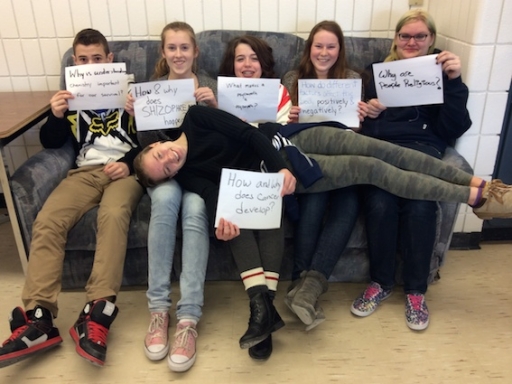
BUILDING MY IDENTITY AS A LEARNER, RATHER THAN A TEACHER
-
Five Ways for Teachers To Take Charge of Their Own Learning
Comments Off on Five Ways for Teachers To Take Charge of Their Own LearningIn Manitoba there are traditionally five provincially mandated PD days per year. This year the topics for the first four of my school’s PD days were ‘Cultural Proficiency’ (a division sponsored event), an ‘EdCamp’ (facilitated by division coordinators), a day where teachers work with other teachers from around the province in their teaching area, and a school-based session on ‘Deeper Learning and Critical Thinking’ with support from a division coordinator. Our final day will be on the topic of ‘Positive Behaviour Interventions and Supports’. We will join one of our feeder elementary schools, and the day will be facilitated by divisional educational support services staff.
Although these sessions have all been of great value, and have resulted in many thoughtful conversations, the days are somewhat disjointed. The topics for each day are chosen by divisional administration or school-based administrators, without the input of the teachers that will ‘benefit’ from the PD sessions. To make these PD days more valuable, teachers need to keep the conversations going on these important topics for deep learning to occur, or this ‘one size fits all’ model needs to be abandoned for a more teacher directed PD model. If teachers are in charge of the topic of their personal PD, they will be more likely to own this time and use the division sponsored PD days as a catalyst to deeper learning and connections to other professionals within their own building and beyond. Teachers need going beyond the four or five division sponsored PD days to ensure personal and professional growth.
HERE ARE FIVE WAYS THAT I FEEL THAT TEACHERS CAN MAKE THIS HAPPEN:
1. LEVERAGE TECHNOLOGY TO PERSONALIZE YOUR PD
PD for teachers need to be relevant, flexible and personalized for sustainable growth to occur for both new and experienced teachers. Technology can and should be a major driver of relevant and real time PD. There should be an expectation that teachers are in control of, and responsible for, enhancing their practice during and after the school day. Administrators can set up schedules to encourage sharing and collaboration. No longer can teachers be isolated in their own classroom and keep up with the demands of teaching in today’s world. PD needs to be ongoing, job-embedded, and connected in a significant way and happen more frequently than the four or five division or school sponsored PD Days.
Teachers, as professionals and learners, need to be in charge of, and responsible for, their own learning. Opportunities can be provided by division and school-based administrators for teachers to work together, learn together, and solve problems together. Technology is key to help connect teachers locally and globally. Using social platforms like Twitter can provide teachers the opportunity and flexibility to collaborate in real time with educators from around the world in real time.
2. CREATE OPPORTUNITIES FOR HANDS-ON PD WITH YOUR PEERS
To foster a culture of learning in a school, strong relationships need to be built, which includes teacher-to-teacher relationships. New pedagogies for deep learning is a focus for many schools across Canada. Deep learning happens when teachers focus on skills like character education, citizenship, communication, critical thinking and problem solving, collaboration, and finally creativity and imagination. The same goes for teachers too. If teachers aren’t proficient in these areas, it’s hard to expect them to teach or assess students who are expected to learn these important skills as well. According to Evangeline Harris Stefanakis, “The word assess comes from the Latin assidere, which means to sit beside. Literally then, to assess means to sit beside the learner.” Teachers need to able to ‘sit beside’ the learner and model these expected skills. Connected teachers, in effective Personal Learning Communities (PLCs), are more likely to grow their practice and attain a higher level of practice.
Using technology and social media are not silver bullets for teacher PD – it can and should happen within the school day as well. Scheduled times for teachers to meet, co-teach, visit other classrooms and schools are important aspects of professional growth. Encouraging teachers to share and collaborate will enhance teaching and learning in the classroom especially if it is done within a family of schools. This hands-on approach while working directly with colleagues encourages further development of the skills that are being taught to students in the classroom.
3. CULTIVATE YOUR PERSONAL LEARNING COMMUNITY (PLC)
For teachers entering the profession, building a strong PLC and collaborating is the best advice I can give. Getting connected through the use of social media is an easy and effective way to consistently learn and grow, stay relevant and have fun. An example is by taking part in ‘edchats’ on Twitter is a great way to build a PLC. There are so many smart people out there, constantly doing innovative things. What I’ve come to understand is that someone else is probably already doing it and seeing their ideas and adapting them to fit my situation is far more practical than inventing new ways to support and engage students.
Taking care of and engaging kids in deep learning is our job and finding ways to become a champion for their students is vital. This is a great video for all beginning teachers (and ones who have experience) as well. I suggest that this video be watched on an ‘as needed basis. It’s a great reminder of what good teachers do every day.
Building strong relationships with all of students is rewarding work and can be, at times, extremely difficult. New teachers need a support system to develop skills to be able to do this well. Supporting teachers new to the profession and encouraging them to build their own PLC will help them meet the demands of their important job.
4. BE ‘SOCIALLY’ CONNECTED WITH YOUR PEERS
Social platforms like Twitter don’t provide the PD. Social platforms provide the opportunity to build strong relationships with people, which, in turn, provide the opportunity for real professional growth to occur. Twitter is the gateway to find articles, blogs, have discussions build relationships with other professionals with like (or unlike) views on similar topics.
Learning is social. It begins when a strong relationship is formed. The quote ‘You can’t take care of the Bloom’s stuff until you take care of the Maslow’s stuff’ also applies to teachers. Learning occurs when people feel safe. A teacher who is connected feels safe and therefore will likely be more open to and adept at taking chances allowing them to navigate the confusing and often times uncomfortable seas associated with professional growth.
5. BE A MODEL LEARNER IN YOUR SCHOOL
PD for teachers should look similar to what good teaching looks like for students. It needs to be personalized, hands-on, relevant, and provide opportunities to build strong relationships with colleagues. Technology and social media can play a huge role in having all teachers build strong relationships with people within their own school and all over the world. Having a school filled with a group of connected teachers who are modelling learning, and continually sharing, helps to build a school’s culture of learning for everyone.
This blog post is part of CEA’s focus on the state of Teacher PD in Canada, which is also connected to Education Canada Magazine’s Teachers as Learners theme issue and The Facts on Education fact sheet, What is Effective Teacher Professional Development? Please contact info@cea-ace.ca if you would like to contribute a blog post to this series.
-
Find Your Voice
Comments Off on Find Your VoiceAs a music educator I have taken a pledge:
I pledge to facilitate more than I instruct.
I pledge to honour students’ choice in their learning.
I pledge to give them all of the tools they need to create music at school that resembles the music they so love, and are emotionally connected to, outside of school.
As participants in Musical Future’s international pilot project, “Find Your Voice,” we were challenged to make a pledge at the conclusion of our year-end sharing session in 2013. At first I wondered: Could I really take a pledge? Did I really agree that this is the way to teach music all of the time? I felt I was in transition to this new approach, but not completely converted.
It wasn’t until the fall of 2014, when I went to a more conventional music educators’ conference, that I realized how completely I had moved away from the traditional model of teaching and adopted a Musical Futures (MF) approach (see sidebar, Musical Futures). I no longer wanted to be the teacher expert, choosing all of the content for learning and seeing my students as the vessels waiting to be filled with musical knowledge. I was committed to the inquiry approach promoted by MF, where students lead their own learning by choosing their own friendship groups in which to work, by choosing the music they love to recreate, and by making musical choices about how best to create that music.
What had changed my approach to teaching so profoundly?
Finding my voice
It all began on a snowy Sunday afternoon in January, 2013. I was teaching in a new school and struggling with a Grade 6 class. The students were not at all engaged in Music and were becoming behaviour problems, and the Grade 8 class was not much better. When I pulled out my old tried-and-true instructional ideas, like bucket drumming, these students were disinterested, uninspired and would not “buy into” anything I was trying to teach them. I was confused by this and was left to question myself: Was I too old for this gig? Was I losing it? It was time for something new.
So that Sunday I turned to Google, searching for inspiration, and I stumbled upon a You Tube video interview with Professor Lucy Green, of the Institute of Education at the University of London, entitled, “What can teachers learn from popular musicians?” 1 I listened, amazed, at the simple logic of finding ways to align school music more closely with the music that students listen to outside of school (see sidebar below: Informal Music Learning).
Adolescents, including my Grade 6 class, are very passionate about music and, in fact, most consistently rank it within the three most important aspects of their lives. Yet many adolescents do not enjoy learning music in school, with a mere 20 percent continuing to pursue music in secondary school in North America. There is something shockingly wrong with this picture.
In the video, Lucy Green made reference to “Musical Futures,” which led me to musicalfutures.org. There I read as much as I could about how to imbed what they referred to as “informal” music learning practices into the formal setting of the music classroom. On the website I also found a call for teachers to join in an international pilot project called “Find Your Voice,” to study the impact of combining vocal music and mobile technology at the Year 7 level. Year 7 is significant in the U.K. in that it is the entrance year for high school; it was significant for me because in Canadian terms it is Grade 6 – my challenging class.
Although I had experienced many professional learning scenarios in the past, most were principal- or system-driven. This was a new experience, characterized by international and online collaboration, and in which I had complete control and autonomy in my choice of professional learning community. My principal was very supportive as ours was the only school in Canada to initially join this project, with the majority of schools being in the U.K. Other professional learning opportunities often involve submitting a great deal of data or writing lengthy reports at the conclusion of the work, which can upset the delicate balance between the cost of time and effort put in, and the learning benefit received, that makes these opportunities worthwhile. However, the Musical Futures invitation assured me that I was free to use their ideas in any way that I saw fit – to leave what I did not want, to take what I needed, and to make changes to suit my own purposes – as long as I then shared it back with the group. With this kind of an offer, what did I have to lose?
The project received funding from the Paul Hamlyn Foundation to allow 15 schools in the U.K. to send their teachers to regular professional training sessions. These sessions were documented in digital video and uploaded to websites and blogs. This is how teachers like me, who were international “co-pilots” in the study, benefited from their live workshops. We watched them and learned the material and then shared with our students – a fascinating process. My earliest connections with the group involved commenting in our closed Facebook group, where we could easily upload videos and other forms of media. I was accustomed to sharing ideas online with other teachers and offering suggestions for useful resources, etc., but this experience added a new dimension that was exhilarating: we saw learning in action, and the immediate evidence of risks, failures and many successes. Teachers regularly challenged each others’ perceptions and encouraged one another to try new things.
As I engaged in this process, I realized that I no longer felt isolated as the only music/arts teacher in my school, because every day I was in online contact with any number of teachers from Australia, the U.K. and the U.S. who were engaged in the same process and interested in a similar outcome. Teachers in the U.K., in particular, were using sharing walls such as Padlet to upload video of their students working on warm-ups and vocal mash-ups that the teachers themselves had recently worked through in their training sessions. I could instantly observe and assess the results, adopt what I liked, try it with one of my classes, record the outcome (with consent of the parents of course) and then go on to share the results on the sharing wall. The other revelation was – and I cannot stress enough how reassuring this was to me – that every video or comment post and publication, whether judged by its creators as a success or failure, could seed a spark of memory, intuition or inspiration.
Music teachers are accustomed to sharing their students’ work only when it is up to the highest performance standards. We do not commonly share work in progress or always appreciate the value in the development process. This project blew that precept out of the water. Here is one of my early Facebook posts:
“Just want to say that I am really appreciating the feeling of being so connected to music teachers in other parts of the world. It does my heart good to watch the videos and hear kids in the U.K. singing the same songs we are singing here in Canada. I also hear the musical strengths and struggles and I feel a connection to those teachers. I love this project and I’ve barely started!”
The connections among the online community of teachers grew as we progressed from cautiously and politely sharing our work to challenging one anothers’ perceptions of ourselves and our students. For example, on one occasion I expressed my frustration at trying to learn beatboxing in a second-hand way and wished I was able to attend the live sessions. The facilitator, Rob Kitchen, suggested that my lack of confidence might come from my need to be expert in the art form rather than expert in facilitating learning. That was a very challenging statement. He further suggested that I watch the video tutorials with my students and learn along with them. That is, in fact, what I did and have done on many occasions since. In facilitating music workshops I have also encouraged other teachers to co-learn with their students. This experience highlights one of the most interesting aspects of the Musical Futures approach for me: it places all learners – students and teachers – at various points along what can be conceived of as a learning-teaching continuum. There is neither a direct nor a constant hierarchy – all participants are free to experiment, create, learn and teach as needed, moving back and forth along this continuum.
My students’ learning was aligned very closely with my own on this project. They were diving into the deep end to produce vocal mash-ups and recreate songs using their voices and mobile technology, adding beatboxing and body percussion in new and exciting ways. Students have been turned on to learning music in ways I never dreamed possible. Some have created their own bands, others have developed their own hybrid form of beatboxing and dance, and most have started to perceive themselves as musicians capable of taking a song they like and recreating it in their own way. They now have a strong voice in the music program and are able to articulate their musical learning goals and desires.
The gains my students and I have made in music over the last year and half would have been unlikely had we not embraced the new challenge of learning online through social media and opened our hearts and minds to a new way of approaching music in our elementary school in Ontario. Our relationship to music will never be the same.
Informal music learning
Professor Lucy Green outlines five principles of informal music learning:2
- Learning always starts with music students choose.
- Learning is primarily aural and happens by listening and imitating recordings.
- Learning takes place alongside friends through self-directed, peer-directed and group learning.
- Learning is idiosyncratic and happens without structured guidance.
- Listening, performing, improvising and composing are integrated throughout the learning process with a focus on personal creativity.
Musical Futures
Musical Futures is a movement to reshape music education, driven by teachers for teachers. At its heart is a set of pedagogies that bring non-formal teaching and informal learning approaches into more formal contexts, in an attempt to provide engaging, sustainable and relevant music making activities for all young people.
For more information and a wealth of resources, see www.musicalfutures.org
For news on Musical Futures in Canada: www.musicalfuturescanada.org
En Bref – Cherchant de l’inspiration pour motiver sa classe de musique de 6e année, Sandie Heckel a adhéré au projet pilote international Find Your Voice de Musical Futures. Contrairement à de nombreux cadres d’apprentissage professionnel qu’elle avait connus, ce projet caractérisé par une collaboration internationale en ligne accordait toute la maîtrise et toute l’autonomie voulues aux participants, qui pouvaient utiliser à leur gré les idées offertes – à condition de partager à leur tour avec le groupe. Les idées novatrices, le soutien et la possibilité de partager l’apprentissage en cours ont été transformateurs, changeant profondément l’approche de l’auteure face à l’enseignement – et à l’apprentissage – de la musique.
Photo: Sandie Heckel
First published in Education Canada, March 2015
1 Lucy Green, Institute of Education, University of London, interviewed by Flávia Narita. “What Can Teachers Learn from Popular Musicians?” www.youtube.com/watch?v=4r8zoHT4ExY&feature=youtu.be
2 Lucy Green, “What Can Teachers Learn from Popular Musicians?”
-
Stories of Student Success – Lessons About Change
Comments Off on Stories of Student Success – Lessons About ChangeTwo students representing the Ontario Student Trustees’ Association shared their inspirational stories.
http://vimeo.com/113926510
-
I’ve Got Something To Say! How student voices inform our teaching By David Booth
Comments Off on I’ve Got Something To Say! How student voices inform our teaching By David BoothA review of I’ve Got Something To Say! How student voices inform our teaching by David Booth, Pembroke Publishers, 2013. ISBN: 978-1551382890
David Booth is internationally recognized for his long career in education promoting literacy and a love of words. In this new book, he provides a thorough, detailed reference full of meaningful and specific suggestions for teachers to encourage students to express their voices and take responsibility for learning. He advocates the importance of a classroom where all student voices are heard and all students receive opportunities to make choices in their learning.
This is a book that could last a teacher a lifetime. Each chapter is dense with suggestions on voice in story-making, role playing, writing, using technology, speaking and reading aloud, and understanding literature. Its demands are potentially difficult to implement: to be fully engaged; to use imagination; to construct creative opportunities for speech in learning; and to structure a democratic classroom. However, Booth believes “teachers have the potential to create contexts that permit and encourage young people to express their thoughts and feelings about issues and concerns that matter to them.”
Booth insists that “oracy” is as important as literacy and numeracy, and student voices are central to effective classroom learning – in all contexts, not just within a language unit. Talk includes speaking, listening, engaging in conversation, and learning through interaction in “a community of voices” (including online communities). It is a way to examine ideas, share thinking, raise questions, reveal biases, rethink answers, offer explanations, report information, and come to grips with complex issues.
Booth delivers many specific examples of how his ideas can be incorporated into the classroom, with lists such as “Promoting Oral Reading Fifteen Ways.” He deals with learners of all kinds, including introverts and extroverts, those with various learning challenges, and ESL students. The final words of the book reflect its intention: “Can you and your colleagues find ways, as a school, to value student voice, to recognize each student’s progress towards finding, freeing, and contributing thoughts and feelings as an involved agent of her or his own learning?”
Photo: Dave Donald
First published in Education Canada, November 2014
-
15 Years After the Quebec Education Reform: Critical Reflections
Comments Off on 15 Years After the Quebec Education Reform: Critical ReflectionsSome key figures from the world of education agreed to answer the following question:
According to its creators, Quebec’s education Reform was designed to generate innovation and bring about major change. Do you think the Reform’s implementation produced the desired results?
As you read these observations, you will see that these education leaders agree on a number of points related to both pedagogy and administration that could explain the Reform’s successes as well as its potential shortcomings.
N.B. The original content was in French and has since been translated to English
Flawed Rollout, But Sound Foundation
by Josée BouchardWe must not forget that as the 21st century was approaching, Quebec’s 1995 Estates General on Education affirmed the importance of having our education system and civil society adapt to the realities of a rapidly changing world. The resulting education Reform called for a profound, yet fundamental, shift in our basic learning paradigms. It was a tall order for a public that was not necessarily ready for it.
In the absence of an effective communication plan, the perception – and I emphasize the word – of the Reform’s basic relevance and implementation among some school personnel, and among even more members of the public, was undoubtedly negative. This situation invited ridicule, notably about the concept of the competency-based approach, particularly cross-curricular competencies. Other shortcomings, like the lack of clear information about learning assessments and the delayed approval of textbooks adapted for the new program, contributed to the misunderstanding about the Reform. Successive political decisions concerning its very name (the “Reform” became the “renewal”), learning cycles, the renewed emphasis on knowledge, and the letter grade versus numbers report card debate did nothing to help change the initial perceptions of the communities affected, both the general public and education professionals, and especially not those of the media, which had a field day demonizing it.
Despite the criticism, the Reform has endured. Elected school commissioners repeatedly voiced their support for the Reform and, over time, identified improvements and corrective measures for it. Administrative and professional personnel did the same thing and, of course, the majority of teachers showed enthusiasm and a high degree of professionalism in their commitment to making the Reform a success. In so doing, they ensured that what students learned was meaningful, while the students themselves demonstrated openness and an ability to work well in groups with a multidisciplinary approach. Incidentally, now that the first cohort has graduated from high school and started college, many detractors have been silenced by this inspiring new generation that is optimistic about the future! The stage is set for ongoing improvement and an opportunity to learn from a Reform that retains a solid foundation, despite its flawed rollout.
Lessons Learned
by Ron CanuelIn the late 1990s, the Quebec Ministère de l’Éducation (MEQ) began a movement to completely overhaul the parameters of classroom teaching and learning. The goal was to revitalize the conditions, organization and assessments of learning and, ultimately, develop classrooms adapted to the new century. In the middle of the 2000s, the movement introduced political ideologies founded on traditional concepts of education; accountability measures and standardized tests began to enter the curriculum. By the end of the first decade of the 21st century, the “Reform” (or “pedagogical renewal”) was a mere shadow of its original concept.
At that time, the program had obvious problems with its implementation and communication strategies. The MEQ’s lack of consistency and clarity with regard to content and process was striking.
Here then are several valuable lessons we can learn from this experience.
1. Before undertaking a large-scale reform, the education system must establish clear evaluation criteria and ensure that these are well understood by all educators.
2. Before the reform is implemented, parents must be sent communication materials written in language free of the jargon that is used too often in the field of education.
3. College (CEGEP) and university prerequisites must be completely overhauled because any major reform of the system implemented from Kindergarten to the end of high school must also include a review of post-secondary levels of education.
4. For a period of at least five years, the reform must be implemented “as is” – in other words, without being subjected to a constant assault of questions or external ideologies that create instability in the classroom.
5. At least 12 months before the new curriculum is launched, the system must provide professional development courses on the new educational approaches so that teachers receive the best training and preparation possible.
6. A steering committee (max. 15 individuals) made up of educators (teachers, principals, senior administrators), communication experts and parents must be given a firm mandate of five years to truly lead the initiative and deal with any challenges.
Of course, we can’t use old professional development models and outdated pedagogical tools to create stimulating new teaching and learning models. As for technology, it can – and should – have a significant positive impact, especially if it is not used solely to reproduce existing teaching and learning models.
The Challenge of the Reform
by Claude LessardThe education Reform had two goals: get schools back on track in terms of equality of opportunity to ensure the academic success of all students and improve the cultural content of the basic teaching curriculum. Although the Reform failed to achieve everything it set out to do, some actions are noteworthy.
Examples of educational equity introduced through the Reform include: full-day Kindergarten for 5-year-olds, junior Kindergarten in disadvantaged neighbourhoods, smaller class sizes in the first few years of elementary school, and the Supporting Montréal Schools Program, New Approaches, New Solutions. Learning cycles, which were shortened, and the end of grade retention are in the same vein. At the high school level, reformers wanted to eliminate the selective practices of public schools and re-examine the status of private education. This, however, required a political gesture; in the end, it was limited to encouraging private schools to accept more special needs students.
Combatting the fear of watering down this notion of educational equity went hand in hand with a demanding view of the culture of school. This was the meaning behind the title of the Inchauspé Report: Reaffirming the Mission of Our Schools. With its emphasis on teaching core subjects, including written French and Math, and introducing a cultural perspective in all subjects, this report aimed to strengthen the mission of instruction. However, the debate on cross-curricular competencies and the shift from curriculum to pedagogical renewal obscured the original intent of the adopted programs.
The Reform’s implementation strategy encountered three issues: the first involved the evaluation of competencies and the report card format; the second pitted the teachers’ collective professionalism against the “state as pedagogue,” which saw teachers as technicians and defined their work in detail; the third set socio-constructivism, self-regulated learning and complex situations against formal education, mastery learning and simple situations. Since these issues influenced the professional identity of teachers, the Reform’s implementation must be better understood and worked out with teachers and parents in order to cut these issues down to size.
The challenge of the Reform was to ensure that schools are both fair and demanding, and this remains valid. The Conseil supérieur de l’éducation will review the Reform in its next report on the state and needs of education.
The Implementation of the Quebec Education Reform: Between Relevance and Influence
by Raynald ThibeaultThe job of a school board Director General offers one a certain perspective on what the Ministère de l’Éducation, du Loisir et du Sport (MELS), school boards and schools have managed to introduce with the Reform, notably by using proximity management with school administrators.
The numerous modifications made to the Reform during its rollout created confusion; the situation also hobbled teachers, who had to constantly adapt, particularly with regard to learning.
The Reform aimed to provide equality of opportunity by employing an approach based on cycles and competencies. The cycle-based approach is designed, among other things, to encourage group work, take each student’s pace of learning into account and promote a variety of educational approaches. Under the competency-based approach, the acquisition of knowledge leads to the mastery of competencies that enable students to become responsible citizens and make practical use of these skills.
When it comes to teacher leeway with regard to student evaluation, the creation of a single report card, with its percentages, different weightings for each stage and group averages, has proved to be problematic. Since teachers now have much less flexibility, they must adjust and their professional judgment plays a much smaller role.
The Reform has experienced some setbacks as a result, but it has nonetheless made a good deal of progress that should continue to support efforts to mobilize it. It is essential that education stakeholders ensure that this doesn’t become an ersatz reform that causes us to move backwards, to the dismay of students. Since the organization of school recognizes that acquiring knowledge can help students develop a competency, it is understandable that evaluating a competency inevitably means evaluating the acquisition of knowledge.
Given that the Reform has actually accomplished quite a lot, we must not stray far away from its primary goal, which is to give all students an opportunity to succeed. Although I believe that education stakeholders are working towards this, there must be consistency, stability, mobilization and support before we can safely proclaim “Mission accomplished!”
The Education Reform’s Highs and Lowsby Louise ChabotIn 1997, the Minister of Education noted that the Quebec Reform targeted three things: success, quality and effectiveness. Reaching these goals would require a new of power and a major restructuring.
With regard to the of power, in hindsight, the creation of governing boards for every school can be seen as a step forward for participatory school democracy. These boards give parents and staff a forum for sharing their viewpoints and making decisions for the smooth operation of the school. However, these organizations have gradually assumed so many responsibilities over time that it has become increasingly complex for representatives to effectively fulfil their roles. In this respect, the movement toward decentralization in schools has perhaps reached its limits.
The Reform has also led to major upheavals, causing education stakeholders to become increasingly polarized. Among the primary criticisms of this Reform is its rushed implementation, the policy of not repeating grades at the elementary level, the disappearance of Individual Paths for Learning classes at the high school level and the evaluation of cross-curricular competencies. After much hesitation, the government finally made some concessions in these areas to reduce the tension in schools. For example, schools once again have the option of having a student repeat a grade at the end of every elementary cycle, not just at the end of Grade 6.
The government has progressively distanced itself from this Reform by trying to put aside its more controversial elements like the evaluation of cross-curricular competencies and the debate on the role of knowledge in the evaluation of competencies. Furthermore, in 2007, the Minister of Education began to speak more or less openly of her concern that the Reform was not helping more students succeed and this perception appears to be borne out by the facts: after ten years, the number of students earning a secondary school diploma or certification has barely risen.
The Education Reform Implementation: Good Intentions, But Mixed Resultsby Gaétan NeaultDesigned to bring about major change and innovation, the Reform did, in fact, generate the desired curriculum improvement. The educational approach will never be the same, and that’s a good thing! However, when it comes to real change in school practices, it will be several years before we can truly qualify this Reform as a success.
Why has it only partially succeeded? The curriculum Reform revealed the limitations of the socio-constructivism approach, particularly with regard to differentiated learning, the needs of special needs students and evaluation. If problems had been addressed using a scientific approach, the education community would have been able to tackle these limitations and apply possible solutions. Of course, for this to happen, the debate would have had to be constructive, less polarized and accessible to everyone.
The Reform did not realize its full potential because the implementation program was poorly designed, the strategy shifted constantly and the education system’s senior levels lacked leadership. It was plagued by obscure terminology, extreme negativity and a lack of clear communication. As a result, school administrations found it difficult to rally their teams around concepts that were so controversial, especially at the high school level.
This context also influenced the approach. With its intent, quite rightly, to distance itself from Skinner’s factory-inspired model of teaching, the Reform prioritized the higher mental faculties and the cross-curricular aspect of learning. Paradoxically, it also introduced a results-based management (RBM) approach by bringing in number grades, group averages and success as measured by exam grades – a dichotomy that was painfully obvious in the debate over the report card. An adequate reform of governance and management practices would have supported the implementation of the desired pedagogical changes. However, the proponents of traditional models, political issues, pressure from special interest groups, the insecurity inherent in any major structural change and the massive turnover in administrative staff carried the day and reinforced the status quo.
Admittedly, the curriculum itself is the key to ensuring that the pedagogical renewal’s original meaning is not lost. Just like its authors, who are experts from the world of learning and communication, we should move away from theoretical discussion and institute practical methods for applying the Reform that will finally encourage stakeholders to seek a dynamic, progressive pedagogical approach.
Lessons From An Imprecise Recipeby Gaston RiouxSignalling a major change in culture, Quebec’s education Reform significantly modified teaching methods to accommodate students who are hard to reach with traditional teaching. Since we have no wish to portray ourselves as pedagogy experts, we would like to talk instead about what we have observed.
The Reform’s strengths and benefits were obscured by the inept management of its communications, notably on the part of the government, which was in charge of the dossier. If you want to implement a program, you are better off giving yourself the time, the means and the tools to do so. In this case, the goal may have been noble, but it was impossible to properly assess its impact.
The numerous unanswered questions and intense public pressure ended up eclipsing the main message. As a parent, how do you make sense of it all? Stuck between a rock and a hard place, parents were caught between the education community and the government. While debates and arguments swirled, students were the ones to experience the launch of this “educational lab experiment.”
In fact, numerous articles have been published in recent months on the academic results of the “children of the Reform.” Despite the dire predictions, the results are very clear: at worst, students perform as well as before the Reform; at best, they perform better.
What a confusing message! Did the Reform fall short, but not the students? What are we to think? Perhaps the lesson is that while the Reform contained all the ingredients needed to achieve its stated goals, the cookbook was not written clearly enough for the education community to follow the recipe properly.
Parents have learned something from the Reform’s implementation: one must take the time needed to do things and respond to the specific characteristics and needs of communities. This is essential for the success of a major project such as this. The same message applies to the teaching of intensive English at the elementary level. Having learned from past experience, we emphatically affirm that these key prerequisites must be in place if such a program is to be successfully implemented. If we can remember this, our experience with the Reform’s somewhat troubled implementation will not have been in vain.
The Quebec Reform: Not the Disaster Predicted
by Léo Bureau-BlouinIn the 1990s, Quebec’s education specialists observed that our world was changing very rapidly, but that our education system was not always keeping pace. To remedy the situation, the government proposed an education Reform of the elementary and high school levels that would focus on student-centred learning and the acquisition of competencies rather than the transmission of knowledge.
A great deal has already been said and written about this Reform, also known as the “pedagogical renewal.”
Let’s begin by examining the major changes made. Hours of classroom instruction increased for several core subjects. For example, the time devoted to teaching French rose from 150 to 200 hours per year, while that for math increased from 100 to 150 hours.[1] Another major change was that English-as-a-second-language was introduced in Grade 1.[2] Class sizes were gradually reduced and students with learning disabilities received better support.[3]
If we look at a few statistics, we note that pre-2009, or before the Reform, new college students passed 84.8% of their classes while this rate was 85.1% in 2010.
The Reform increased the number of classroom hours devoted to core subjects and students are performing well, so why did it generate so much criticism? Much of the public’s criticism of the Reform seems to stem from problems of its presentation and communication. Research on this topic conducted by the Fédération étudiante collégiale du Québec[4] quotes Paul Inchauspé, one of the thinkers behind the Reform, who identified the following culprits: the Reform was clumsily presented and those in charge of its implementation provided verbose, pedantic communications that focussed solely on the means.[5] In fact, many complex educational concepts were not explained in plain language, which helped fuel the dissatisfaction of a large number of teachers and parents.
In conclusion, the education system is constantly evolving and, while far from perfect, the Reform was in no way the disaster it was predicted to be. Future educational theorists would, however, be well-advised to more clearly explain any modifications that the governments would like to make to our children’s education.
[1]Ministère de l’Éducation, du Loisir et du Sport, The Education Reform, The Changes Under Way, 2005, p. 5.
[2]Ibid.
[3] Idem p. 7.
[4]Julien Boucher, La réforme passe aux ligues majeures, August 2010, Fédération étudiante collégiale du Québec, p. 19.
[5] Paul Inchauspé. Pour l’école : Lettres à un enseignant sur la réforme des programmes, 2007, Montreal: Éditions Liber, p. 1.
EN BREF – Plusieurs leaders de la scène éducative se prononcent sur les résultats de la réforme, en nous livrant leurs perceptions de son implantation, 15 ans plus tard. Toutes ces personnalités reconnaissent unanimement la pertinence de ses fondements. Ceux-ci ont été élaborés à la suite des États généraux sur l’éducation (1995-1996) qui ont abouti à un certain nombre de recommandations. Cependant, plusieurs facteurs doivent être pris en considération dans l’évaluation des résultats de cette réforme. Son implantation a été parfois plus difficile que prévue car, selon plusieurs leaders, il aurait fallu se donner le temps et les outils nécessaires pour bien réussir une telle opération. Plusieurs d’entre eux ont mentionné l’importance de bien planifier les actions en revenant toujours aux orientations fondamentales qui ont précédé sa mise en œuvre. Ces décideurs de l’éducation nous donnent leur propre vision des succès et des possibles dérapages d’un changement éducationnel important, centré essentiellement sur la réussite de tous les élèves.
-
Don’t Fear the Reaper, Juliet
Comments Off on Don’t Fear the Reaper, Juliet“Do we have to study Shakespeare?”
As an English teacher, you are bound to hear this question at least once during your career. If you only hear it once in your entire career, you should consider yourself lucky! In this instance, however, I was not surprised. I was completing my final practicum for my Bachelor of Education studies. We were about to study Romeo and Juliet, and the comment came from a group of four boys who sat together during my fifth period Grade 9 English class. These boys were definitely not weak students, but they were very selective about which materials they found engaging. Our just-completed study of S. E. Hinton’s The Outsiders was a success, because they found the main characters easy to relate to; Romeo and Juliet, on the other hand, was not. The boys were not romantics at heart; they were simply not interested.
I challenged myself to find a way to make our study of Shakespeare interesting for all students. As I only had less than two weeks to cover the play, my time and resources were limited. I decided to make connections between the play and popular music, selecting a song with lyrics corresponding to the central themes in Romeo and Juliet. Students would not only be comparing and contrasting two texts, a play and a poem, but it was also an opportunity for me to assess comprehension and critical thinking. We began each class by playing a song and projecting the lyrics on the SMART Board, allowing students to sing along if they liked. Both of my Grade 9 classes were a lively bunch, so they enjoyed the karaoke aspect. On the second day, a female student suggested we play Taylor Swift’s Love Story. I asked her why she felt the song connected to the play, beyond the obvious mention of the characters Romeo and Juliet in the song lyrics, and she suggested that the song differs from the play because it removes the death element and allows a happy ending, whereas the play ends tragically. Encouraged by her insight, I played the song and challenged both classes to find songs that relate to the play.
Upon making this suggestion, I noticed the four boys’ eyes light up. At the end of that class, they stormed to my desk with a list of suggestions, one of which was Don’t Fear the Reaper by Blue Oyster Cult. Knowing that the song, much like Love Story, directly references Romeo and Juliet, I challenged them to justify its inclusion. They discussed with each other, and one of the boys suggested that both texts take a hauntingly positive outlook on death, that it was something not to be feared but to be embraced. Impressed by this suggestion, I promised to play it the next class.
From that moment onward, those four boys were completely engaged with our study of Romeo and Juliet. During classroom discussions, they were connecting occurrences in the play to songs, television shows, video games and movies that they enjoyed. I encouraged these connections, because in each instance, they were able to articulate how the two texts compared or contrasted. One of the boys even finished with the highest mark on our final project, and all four were sorry to see the unit end.
From this experience, I learned that the key to fostering student engagement is building meaningful connections between classroom study and students’ personal contexts, by making learning relevant and applicable to their own experiences. When I returned to that same school the next year as a substitute teacher, I met those four boys again, and they were eager to share their interpretations of popular songs with me, noting that they had never really thought about the meanings behind lyrics prior to our Shakespeare unit.
Perhaps the best lesson to be derived from this experience is summed up in the title of that fateful song. Don’t be afraid to go out on a limb; in essence, Don’t Fear the Reaper…
Collage: Dave Donald
First published in Education Canada, November 2014
-
Teaching People Skills
Comments Off on Teaching People SkillsI work in an alternative school setting with students whose lives are complicated by emotional turmoil, substance abuse, anxiety and other mental health issues. They are typically referred to as “at-risk” students. They do not do well in school partly because their desires do not comply with the primary mandate of schooling, which is the development of a capable workforce able to participate successfully in society as economically productive citizens.1 Yet many of them desire an education, because a high school diploma has become an essential prerequisite to basic survival in a consumer society.
The development of healthy beings capable of contending with the emotional vagaries of living is peripheral to the primary goal of schooling. Yet in discussions with my colleagues, we agreed that one of the most outstanding difficulties our students have is in dealing with human relationships, particularly when in conflict. They tend to lack the interpersonal skills that are essential for success in school, in work and in life.
Typically, in our classrooms, students work independently on the different credits they need to accumulate toward graduation. We decided that we could enrol the entire class of students in a single course which had, in its curriculum, components of ontological development. In doing so we would be able to have students work as a communal group on various problems that fulfilled other curriculum goals. More important to our purpose was the ability to create an environment in which the students would feel safe in confronting previously uncomfortable social development issues.
Recognizing the human need while respecting our duty to the social mandate and credit integrity created complications. There are very few courses in the standard curriculum that encompass aspects of human development that include communication and dealing with conflict, or that address the process of learning, with all its psychological and emotional influences. Further, students typically do not want to spend time on programs of a more developmental nature. Such programs are not given social value within school culture, even though the skills they develop are recognized as essential to social success. Within this paradoxical dynamic, we searched for courses that had ontologically developmental aspects as core learning. Through these courses, students would be able to move toward graduation while discovering who they were and how to relate to others.
The three courses that offered the best fit were: General Learning Strategies, Managing Personal Resources, and Managing Personal and Family Resources. These courses have some ontologically developmental aspects embedded within their curricula, offering the opportunity to further develop these aspects without threatening their integrity within the system.
These courses are not recognized by most students as essential to their future goals.
However, many of our students don’t care what credits they get: they just want to accumulate enough credits to get out of school. They accept that getting their high school education is important, but they are not engaged in the process of schooling. Ironically, this is one of the conditions that made it possible to offer the courses we used in this study. For students motivated by the “snatch and grab” mentality of credit accumulation, they would work while allowing us to explore the value of meeting ontologically developmental needs.
Methodology
We ran separate courses each semester, as some students continued with us from one semester to the next. We all used Tribes – an approach to the classroom as a learning community developed by Jeanne Gibbs and Teri Ushijima2 – to develop an environment in which students felt safe about sharing and reflecting on learning. Students learn how to work with the topics of their courses in an environment that respects them as individual learners. Being newer to the Tribes model, and at the suggestion of a colleague, I invited a program called Peer Power to lead group sessions so that I could learn through observation and participation.
Peer Power, provided through Saint Leonard’s Community Services of London (Ont.) and Region, uses a model exactly like Tribes. Saint Leonard’s supports schools implementing Restorative Justice. Peer Power engages students through an experiential and activity-based model. The activities raise issues of communication and conflict in a safe communal environment. The representative who ran our sessions had a calm, easy way with our students. She addressed issues as they arose. If two students had an issue with each other she would calmly acknowledge the tension and ask if there was something we needed to talk about before we continued. She was always ready to listen. When students said things that were questionable, they were responded to in a non-judgmental way: “We don’t do things that way, but everyone handles things differently.”
The content was central to the courses we were working on, so it was possible to assess students on their interactions in the Peer Power circle connected with topics we had been learning in class. The Peer Power experience gave the students an expert model of the kinds of things we were hoping to achieve in the course. It also offered me information on how better to run my own sessions, as what I was trying was out of my comfort zone.
In my class, the desk arrangement was changed so that the students formed an inward-facing shape around an open central area. My colleagues, working in separate classrooms across our board, used similar “community circles.” We also sometimes used a boardroom formation for meetings in which students made decisions about the direction of the course. The boardroom formation provided a glimpse at another social situation in which communication and respect was essential.
Students were given curriculum documents to determine what they had to know and do to meet curriculum expectations. Assignments had some aspect of group participation within them. Each assignment had to do with self-knowledge and how to interact with others. Communication and self-discovery were important to earning these credits.
Discussion of results
Our students, for the most part, enjoyed the activities included in the group courses. Those who did not – because they were made more uncomfortable by having to interact with a group – were the very students in whom we saw the greatest amount of positive change. That they learned the material was evidenced in their marks on assessments. Those who did poorly overall did not attend or did not complete all of the work. We believe the more important indicator was in students’ attitude to being in class and their demeanour. At our site we saw two very self-conscious boys bravely get up and do a presentation when they might just as easily have skipped that day. Another student opened up about the things that were going on in his life and agreed to meet with a psychologist, but only in our space. Previous attempts at the school to get this boy to speak with someone had not been successful.
There is obvious value to including interpersonal communication and personal self-awareness in the educational curriculum. I have witnessed the value of providing a learning environment where students can explore their doubts and assertions and have their opinions respected, even if we don’t all agree. Granted, the structures we put in place this year nowhere near met our vision. I had hoped, for example, to have students have more responsibility in planning learning experiences. However, our experience in using these courses has demonstrated some real success with some truly hard-to-serve students.
Disciplines can act as anchor points from which to explore more poignant issues. We have seen that when we link learning with personal growth, students increase their capacity to reflect and therefore to learn.
EN BREF – Travailler avec des élèves qui ne réussissent pas bien dans un environnement scolaire typique pose d’authentiques problèmes. Après avoir constaté que des facteurs développementaux de nature ontologique étaient courants dans une population d’élèves à risque, un groupe d’enseignants a élaboré des programmes pour répondre aux besoins de communication interpersonnelle des élèves tout en leur permettant d’accumuler les crédits requis. Bien que le curriculum normalisé n’inclue que quelques cours comportant des éléments développementaux de nature ontologique, les enseignants ont cerné trois cours qui pouvaient légitimement servir à rehausser la capacité de connaissance de soi et de communication personnelle des élèves. En utilisant des stratégies pour créer des communautés d’apprentissage fortes et respectueuses, les enseignants ont constaté que le fait d’acquérir des habiletés pour la vie est fondamental pour favoriser la réussite personnelle et scolaire.
Photo: Courtesy Sam Oh Neill
First published in Education Canada, November 2014
1 The language here is paraphrased from the Ontario Ministry Of Education’s mission statement in Achieving Excellence: A renewed vision for education in Ontario (Queen’s Printer for Ontario, 2014).
2 J. Gibbs and T. Ushijima, Engaging All by Creating High School Learning Communities (Windsor, CA: CenterSource Systems, 2002). See also www.tribes.com.


IDEAS TO SUPPORT EDUCATORS : Subscribe to the EdCan e-Newsletter
Quality research, reports, and professional learning opportunities.