Archive
-
Learning from Youth Post-Disaster
Comments Off on Learning from Youth Post-DisasterWhat are the needs of youth living through disasters?
This was a question I kept asking myself when I thought about the youth living through the 2013 Alberta floods. What were their experiences and what could we learn from them? In 2019, I interviewed nine youth who had graduated the year of the flood to find out what life had been like for them during and after the disaster (Markides, 2020). I chose this group because they were transitioning from life in school to life out of school at the time of the event. The stories and advice they shared about living through a disaster has significant bearing for supporting youth during our current pandemic times.
“It’s hard but you need to find time to grieve and it… it’s tough. Being a teenager is tough by itself.”
While the disasters are different, the needs of the youth of today are likely similar to those of the youth from the study. Following from this assertion, we can expect that the youth will lean on and be held in relationship to others as a means of mutual support. They will need informal and formal outlets for processing their experiences and healing from the trials of pandemic life. Finding work will also be a challenge for many, and accessing resources for school will be of greater need in the years to come. Youth are often hailed for their resilience, and rightly so, but that does not negate the reality that youth will need various supports to bounce back from this experience.
The importance of relationships
Whether describing their greatest supports or greatest challenges, the youth consistently spoke about their families, friends, partners, and even pets as a source of strength. Some relationships were strained and others changed over time. It became clear who was there for them in their time of need and who was not. The youth value those who can be present for them – to provide a listening ear, a shoulder to cry on, a helping hand, financial support, a place to crash, or a space to visit with their friends. Some youth were able to be a supportive person for others:
“Some of my friends who felt close enough would reach out to me if they needed a place to stay.”
“I just had a campfire one night, so everybody got together and got to feel some companionship.”
With the ever-changing safety guidelines in mind, youth living through COVID-19 have had to significantly reduce their in-person social interactions, which has consequently reduced their opportunities for mutual peer support. The social isolation may be seen by many youth as the greatest challenge they faced during the pandemic. Even over the shorter duration of the flood experience, youth found the isolation from their peers challenging:
“I feel like it would have been better to have a space where we could all talk and converse… Just a place to share stories.”
As restrictions lift, the youth may be re-evaluating their relationships and prioritizing social gatherings. Some have become more reliant on virtual interactions than before, while others have found creative ways to see friends outside of their schools and homes. In the months to come, they will need spaces to gather and reconnect with peers in safe and supported environments. Specifically, youth may need structured support in navigating their changing peer or familial relations.
Providing support for youth
While the youth in the study did not utilize wellness supports themselves, they all noted that youth would benefit from having access to counsellors and psychologists. They recommended that health-care professionals need to find creative ways of connecting with the youth and letting them know what resources were available to them. They also felt that group settings or online options would be most appealing.
“I feel like there should have been, like therapists and psychologists at those evacuation centres, like right away.”
When we consider the experience of the pandemic, it is clear that no one has been left untouched by the present disaster. However, each person’s experience of it is unique. Youth will need space to share and process their experiences from the past year and a half, as well as having options for professional supports offered directly to them. Families, schools, and organizations working with youth should pro-actively seek out counselling and other mental-health related programming that could benefit the youth. Often youth know that supports exist, but do not know how to access them. Keeping open and honest communication about the challenges of living through a disaster can help to destigmatize the issues and normalize seeking support.
Employment challenges facing youth
During the post-flood cleanup, many youth had their hours cut back significantly or lost their employment due to business closures. Those who had sustainable employment reported that they appreciated having purposeful work during the summer months and being able to save money for school or to support themselves if they were living on their own. In many ways, they were a largely untapped labour force in the post-disaster recovery. Additionally, one youth expressed gratitude for receiving a scholarship earmarked for flood victims:
“My third year, I worked two jobs while in school…. But actually, I was lucky enough my first year of college they had a grant for flood victims.”
With the pandemic closures and restrictions of 2020 and 2021, the economy has been hard hit. Youth are seeing greater competition for employment and fewer opportunities than in years past. The prospect of finding a job, let alone meaningful work, is more abysmal than ever. With extended time at home, people have been tending to their yard work and home improvements themselves, potentially reducing the positions for summer employment. As businesses begin to open up, increase hours of operation, and cautiously increase staffing, it will be important to consider where youth can be utilized. Youth who are transitioning from high school may also need support in accessing bursaries and scholarship for further education, and in securing apprenticeships and co-operative learning positions. Again, people working in intermediary roles with youth can play a major role in supporting their needs – by approaching industry to provide bursaries and positions earmarked for youth.
Coming to terms with the “new normal”
The 2013 Alberta floods disrupted many events and plans that the youth had envisioned and prepared for as they transitioned into adulthood. Graduation, summer celebrations, travel, work, and other happenings were cancelled or changed completely. These sudden and often stark shifts created significant breaks between what the youth had anticipated and their lived realities. As Leaf Van Boven and Laurence Ashworth (2007) assert, the expectations of future positive events can heighten emotions and associations in ways that overshadow the event itself. For example, the replacement of an anticipated graduation ceremony with something “other” – such as a drive-thru graduation or online ceremony – can lead to long-term feelings of loss and regret, despite their gratitude for the efforts made to make the day special for them. As one youth explained:
“There was the effort made to make it as best as possible and I appreciate that. And I think it was – I think everyone felt a little bit disappointed.… It’s kind of like the tradition [to have grad in the park] and it was a bit weird not to. It was kind of disappointing not having that, to be honest with you. I find no fault with anyone, it’s just how things worked out.”
In the years to come, youth will look back on the pandemic with a range of emotions and associations that may be difficult to negotiate. They may feel loss, anger, grief, and remorse for various aspects of their lives that changed temporarily or permanently as a result of the worldwide disaster. Oftentimes, these experiences will go unexamined unless there is a purposeful space for the conversation to unfold. As one youth said:
“[I] didn’t really, didn’t overly feel affected from the flood until I… wrote this out and… put all the puzzle pieces together.”
The notion of the “new normal” refers to the reality that life cannot return to what we remembered, anticipated, or wished it to be. It just carries on, different than before. So much of the experience has been out of the youths’ control. Rules, safety precautions, closures, cancellations, and limitations abound. Youth will be looking for ways to assert their autonomy and reclaim power over their lives. Some of these options may be healthy, others may not be. As parents, educators, and people involved with youth, we need to be pro-active in our planning and programming. We need to invite the youth into dialogue – to listen to their experiences, learn about their needs, and support them as they live through the challenges of post-pandemic life.
Photo: Shutterstock
First published in Education Canada, September 2021
REFERENCES
Markides, J. (2020). Wisdom and well-being post-disaster: Stories told by youth [unpublished doctoral dissertation]. University of Calgary.
Van Boven, L., & Ashworth, L. (2007). Looking forward, looking back: Anticipation is more evocative than retrospection. Journal of Experimental Psychology, 136(2), 289–300.
-
A New Perspective on Educator Wellness
Comments Off on A New Perspective on Educator WellnessNow, more than ever before, educator wellness is of the utmost importance – both for ourselves and for our students. We are dealing with a mental and physical health crisis on a global scale, and Canada is no exception:
- According to the World Population Review (2021), obesity rates in Canada are at 29.4% (11.5 million adults). That is almost one-third of educators if they are aligned with national rates. Obesity is defined as a body mass index of over 30.
- 40% of Canadians say their mental health has deteriorated since the onset of the pandemic (Canadian Mental Health Association & University of British Columbia, 2020).
- 70% of mental health problems have their onset during childhood or adolescence (Public Health Agency of Canada et al., 2006).
- Young people aged 15 to 24 are more likely to experience mental illness and/or substance use disorders than any other age group (Pearson et al., 2013).
- 34% of Ontario high-school students indicate a moderate to serious level of psychological distress (symptoms of anxiety and depression). Fourteen percent indicate a serious level of psychological distress (Boak et al., 2016).
- In 2016, suicide accounted for 19% of deaths among youth aged 10 to 14, 29% among youth aged 15 to 19, and 23% among young adults aged 20 to 24 (Statistics Canada, 2018).
In view of this reality, I think we can agree that it is past time that we start making some changes in how we approach wellness in education and the impact that staff wellness has on our students.
I recently had an educator reply to a tweet on the impact of educator mental and physical wellness on students with “School’s out. Students are at home. We’re crawling out of the abyss of a demoralizing year. We need examples, too. Besides, why are we always the first to be prompted to set this example, instead of the parents – where good modelling starts?”
While I agree that wellness examples should start at home, it is negligent to think that students are not looking to their educators to be the example of what mental, emotional, and physical wellness look like. Educators have chosen a path of impact and impact starts with being the right example.
A reactive and passive approach to our own health is missing the mark. So what needs to change?
- We need to take a proactive approach to wellness. We need less talk and more action: less saying how important it is and more demonstrating its importance. This starts at the top with leaders making it a priority and demonstrating it to their staff.
- We need to be willing to have the hard conversations with each other about how we can improve ourselves through wellness and the steps we are taking to do so. Nothing gets better in darkness and silence.
- Every educational professional, from district leaders to bus drivers, can start to build their own healthy and sustainable habits that demonstrate to students what mental and physical wellness look like. Additionally, if you are comfortable doing so, discuss your wellness journey with your students to deepen your connection and their understanding of health.
Now let’s move to some actionable takeaways that you can use as an individual educator to start becoming more well and setting the example today. These actionable takeaways will focus on building habits in four main pillars of wellness. Those four pillars are mindfulness and mental health, movement, nutrition, and sleep.
The concepts below will focus on building healthy habits and are taken from the book Atomic Habits by James Clear. I highly recommend his book if you want to make a healthy and sustainable lifestyle change.
Make habits obvious
Whether you want to start a mindfulness practice, increase your water intake or start exercising in the morning, you have to set yourself up for success by making daily habits obvious. Some examples of this would be keeping a water bottle on your desk so you always have access to water or setting out your fitness clothes the night before so you are ready to take action before your long school day starts. Another great example for teachers and school leaders is to schedule your sleep and set an alarm to go to bed. Stop burning the midnight oil and prioritize sleep. As educators we must always focus on removing barriers to our wellness.
Make habits attractive and fun
Let’s be honest, if hard things are not attractive and fun, we will struggle to sustain them. A way to do this would be habit stacking, the act of attaching a difficult habit with one that you enjoy. My favourite example of this is attaching my morning hydration to my coffee. I want to have my coffee on the way to school, so to get it I must drink a large glass of water first. This automatically makes my hydration habit more attractive, because it allows me to have the thing I really want.
Make habits easy
It is hard to do hard things, so make them easy. This is all about setting yourself up for success. Remove friction in finding time to be active or to practise mindfulness by scheduling it in your calendar and not allowing things to get in the way. Use technology to help you plan healthy meals, find great at-home workouts, or provide you with a daily breathing practice to calm your mind and prepare you for the day. Another great way to make habits easy as an educator is to grab a co-teacher and hold each other accountable. It is always easier to maintain a challenging habit if you have a friend to support you along your journey.
Make habits satisfying
It is human nature to strive to reach goals and to love being rewarded for meeting them. Set small, realistic, and achievable goals and tie in rewards to them. A great example of this would be setting a walking goal for the month and if you achieve that goal, you get to buy yourself those new shoes you want. School and district leaders can create walking or wellness challenges and create rewards for their teams. Set goals, hold yourself accountable, and celebrate your success.
No change is easy; if it were it would already be done. As we make these changes on a large scale and at a personal level, we have to remember and be held accountable by the fact that we are not only doing this for ourselves, but for our students. We are in a time of crisis. Change is necessary, and whether we were prepared to accept the responsibility to be the example of mental, emotional, and physical wellness for our students or not, that has to be the new expectation of educator wellness.
Are you willing to be the example your students need to be mentally, emotionally, and physically well adults?
Photo: iStock
First published in Education Canada, September 2021
References
Boak, A., Hamilton, H. et al. (2016). The mental health and well-being of Ontario students, 1991–2015: Detailed OSDUHS findings (CAMH Research Document Series No. 43). Centre for Addiction and Mental Health.
Canadian Mental Health Association & University of British Columbia. (2020). Mental health impacts of COVID-19: Wave 2. https://cmha.ca/documents/summary-of-findings
Public Health Agency of Canada, Mood Disorders Society of Canada, & Health Canada et al. (2006). The human face of mental health and mental illness in Canada. Government of Canada. https://www.phac-aspc.gc.ca/publicat/human-humain06/pdf/human_face_e.pdf
Pearson, C., Janz, T., & Ali, J. (2013). Health at a glance: Mental and substance use disorders in Canada. Statistics Canada Catalogue no. 82-624-X. https://www150.statcan.gc.ca/n1/pub/82-624-x/2013001/article/11855-eng.htm
Statistics Canada. (2018). Table 13-10-0394-01 Leading causes of death, total population, by age group [Data table]. https://www150.statcan.gc.ca/t1/tbl1/en/tv.action?pid=1310039401
World Population Review. (2021). Obesity rates by country 2021. https://worldpopulationreview.com/country-rankings/obesity-rates-by-country
-
The Pandemic of Educator Stress
Comments Off on The Pandemic of Educator StressConsider your own personal journey in the world of education. When you began your story, were there any classes that covered how to grapple with teaching and leading during a global pandemic? Did your coursework provide opportunities to learn how to educate students during a worldwide crisis? Did any of your mentor teachers give you a heads-up about how to completely transform your life from in-person instruction to teaching completely online in just a few days?
The truth of the matter is, educators have been grappling with an ever-present demand to be flexible, to think on our feet, and to pivot at a moment’s notice. We are accustomed to feelings of uncertainty while simultaneously putting on a brave face as we continue to show up day in and day out. Long before the COVID-19 pandemic, teachers were tasked with supporting students in the midst of the most seemingly insurmountable obstacles. And, long before the COVID-19 pandemic, there was an educator burnout pandemic.
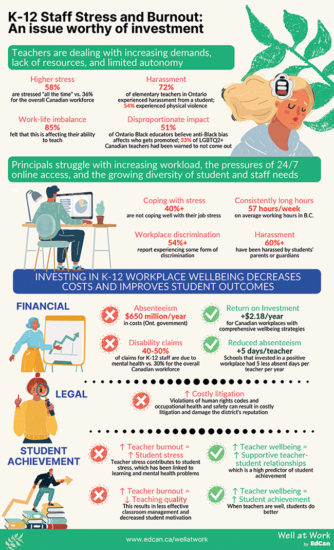
We know that stress and burnout are not new phenomena to educators, but unfortunately they’re getting worse. According to research, teachers are dealing with increasing demands, lack of resources, and limited autonomy. And their leaders are grappling with burnout, too.
Principals struggle with increased workload, the pressures of 24/7 online access, and the growing diversity of student and staff needs. When teacher burnout increases, teaching quality decreases, which results in less effective classroom management and reduced student engagement. When teacher stress increases, it contributes to student stress, which has been linked to learning and mental health problems.
I’ve recognized this issue as an educator for Baltimore City Public Schools, but before becoming a teacher, as a student in crisis, I learned the importance of supporting mental health and well-being. In both high school and college, I suffered from crippling depression, anxiety, and panic attacks. I represented the one in four Americans who has grappled with a mental illness and the one in ten college students who have contemplated suicide. My teachers were my emotional first responders who noticed the subtle changes in my behaviour, encouraged me to seek treatment and get help, and supported me with life-saving accommodations and differentiation. They are the reason I am alive and writing this today. They were my inspiration to become a teacher myself.
It was as a teacher that I realized the complete lack of preparedness and ongoing support for the emotional demands of the profession – and specifically, for working with children who have experienced trauma or are experiencing ongoing trauma first-hand.
Because of the lack of resources and support around self-care and mental health in the workplace for adult staff, I left the classroom after nearly a decade to start an organization aiming to revolutionize workplace well-being, called Happy Teacher Revolution. (See Happy Teacher Revolution.) I am by no means an expert about how to perfectly master the elusive work-life balance, as I am learning right alongside you as we embark on the next school year together, but I want you to know that this is an opportunity for us to collectively make change by prioritizing our own well-being as a best practice for those we serve. Below you will find my top eight strategies for revolutionizing your own wellness this school year. I hope you take the time to try out one of the action steps I’ve suggested – or create your own and share it with us!
1. Acknowledge that prioritizing YOU is a radical act of personal development.
The first step in prioritizing your well-being this school year is to know that just reading this, and making the intention to fill your cup first instead of pouring from an empty vessel, is an action that you have already taken. So, go YOU! This act of personal development is radical and disruptive in a good way because it is the means to your own professional sustainability. Some ways you might choose you this year are by setting boundaries, saying “no” or “I’ll think about it” instead of an automatic “yes,” or creating more opportunities to spend time enjoying the things you love.
2. The mute button isn’t just for Zoom.
This strategy comes from fellow Baltimore City Public School educator and advocate for teacher well-being LaQuisha Hall. Identify toxic forces that need to be “muted” in your life. Know that these influences may be rearing their ugly heads after you initiate boundaries like I’ve suggested above… but know that the people who will be pushing back on your boundaries are probably the same people who took advantage of your lack of boundaries to begin with.
3. Identify your purpose.
This strategy is one that applies to all of us: whether you are an aspiring educator, a brand-new educator, or you’ve been in the game for decades. Fascinatingly, it doesn’t matter if you’re older versus younger, or if you have a chronic condition or disease, feeling that you have a sense of purpose in life may help you live longer, according to research published in Psychological Science (2014), a journal of the Association for Psychology Science. Research shows that having a purpose in life is a best practice no matter one’s age, and a powerful strategy we could model to our students.
4. Create a self-care action plan.
One of our Revolutionary educators in Alabama, Benita Moyers, suggests creating a self-care action plan. Just as you create intentional plans for your students, consider what it could look like to implement a time every week to pour into your own cup, so that you can continue supporting your students and the community of individuals surrounding you. Carve out a time in your schedule to spend time on YOU. Actually put it into your calendar so that it will happen. Put in a reminder. Even if it feels indulgent to spend time on yourself, recognize that self-care isn’t selfish; self-care is professional development.
5. Offer yourself pre-forgiveness.
This inspired practice comes from one of our very first Happy Teacher Revolution pilot sites and trauma-informed schools in Nashville. To pre-forgive is to acknowledge that you will probably make mistakes and to be prepared to forgive yourself when things don’t go absolutely perfectly. This strategy is the opportunity to be gentle with yourself, just as you would be gentle with any friend or student who could benefit from a nurturing/encouraging sentiment rather than an accusatory one. Acknowledge that the pandemic of COVID-19 was something we could have never expected or “practised” for. Offer yourself pre-forgiveness and self-compassion around the immense amount of change that upended our lives over the last few years. Give yourself the space to grieve the losses, the changes, the ways that our lives will forever be different. Acknowledge that you will continue to make mistakes as you set one foot in front of the other. Pre-forgiveness is knowing that the road may still be bumpy in life post-COVID, and recognizing that the healing process is never linear.
6. Take breaks.
An accommodation that teachers often make for their students is to provide them with opportunities to take frequent breaks. This applies to us, too. Take time to disconnect and detach with love. Unplug from technology and the demand to be “available” all of the time. Put up an auto-response that you are currently unavailable. Go outside in nature. Move your body and take a moment to let your mind rest and digest the stimulation of the day. Disconnect for a time so that you can better connect with those you serve once you are back “on the grid.”
7. Affirm, affirm, affirm.
One of the most powerful practices in our Happy Teacher Revolution meetings has been to offer personal, positive affirmations. Some sentence starters include: “I’m proud of myself for,” “I forgive myself for,’’ “I recognize the courage it took for me to,” and “I’m grateful for.” Write these affirmations down. Say them out loud. Text one to a well-being accountability partner and invite them to share their own. We also utilize opportunities to prioritize autonomy in Happy Teacher Revolution meetings by using the sentence frame, “I choose.” Some choices include: “I choose what to let go of,” “I choose to prioritize the relationships that matter,” and “No matter how the school year started, I choose to finish well.”
8. Find community.
Self-care is an incredibly individualized industry, but we are collectively craving a reduced sense of isolation and an increased sense of community. Now, more than ever, it is of utmost importance to check in with one another. The mental-health crises I experienced personally as a student were intercepted by my heroes, my teachers, because of the relationships they fostered in and out of their classroom community. The mental-health crisis is only getting worse, and we are posited with the unique chance to prioritize workplace well-being as a best-practice approach, not only professionally with each other, with our students, and with our stakeholders… but also personally with ourselves.
To find out more how to foster community care alongside personal care, check out the exciting new collaboration with Happy Teacher Revolution and the EdCan Network at: www.edcan.ca/HTR
Illustration: Adobe Stock
First published in Education Canada, September 2021
Happy Teacher Revolution
Happy Teacher Revolution is an international movement on a mission to organize and conduct well-being support communities for education professionals in order to help increase their happiness, retention, and professional sustainability. To learn more visit www.HappyTeacherRevolution.com
LEARN MORE ABOUT HOW EDCAN SUPPORTS K-12 WORKPLACE WELLBEING
References
Association for Psychological Science. (2014, May 12). Having a sense of purpose may add years to your life. ScienceDaily. www.sciencedaily.com/releases/2014/05/140512124308.htm
-
After-School Programs
Comments Off on After-School ProgramsThe lights are low and peaceful in the school gymnasium. Around the floor, tiny pink and purple yoga mats are splayed in a large circle, six feet apart. The Community Schools Partnership facilitator sits in the centre. “This is how you breathe mindfully. Sit with your heart up and take a deep breath in and empty all of the worries from your day.” The students in her program adore her. She is the reason some students come to school each day during a pandemic. They feel the safe, caring space and it shows.
Who are we?
Community Schools Partnership (CSP) is a department that complements educational programs in Surrey Schools. Our work is to provide before-, during-, and after-school programs with a focus on sports, arts, STEM, and social-emotional learning (SEL) opportunities. CSP’s goals are aligned with the district’s goals to ensure equity and access for all children to reach their full potential, expand their learning, and grow socially and emotionally. Our programs are shaped around the needs of the school community. We focus on programs and partnership development in areas like physical literacy, art, music, STEM, coding, yoga, dance, and many other extra activities. It is in these programs that CSP Outreach staff have the opportunity to support children and youth who may not have access to fun physical and emotional supports that help them thrive.
Community Schools Partnership is funded through multiple streams provincially, locally, and federally. Our primary funding is through the Community Link Funding, which is intended to target students with complexities who need the additional supports in schools to thrive. Some of those complexities include financial and accessibilty barriers.
Throughout the pandemic, our small but mighty department pivoted and flexed in ways we never knew were possible to ensure that after-school programs continued. In British Columbia, schools remained open throughout the pandemic. Our team continued to implement programs by following the guidelines from the Provincial Health Authority and our school district’s Health and Safety team. Some of the key measures we put in place included: shortening program time, lowering numbers of students in programs, keeping students in their learning cohorts (not mixing cohorts), and communicating clear guidelines for keeping our students and school communities safe.
Why after-school programs matter
After-school programs have always made a difference for kids. They became even more important during the pandemic, when students were on blended learning programs that limited their ability to see friends face to face. Our CSP Outreach Workers and Facilitators worked hard to continue to meet the needs of our students and bring them back to safety, security, and normalcy. One of our Outreach staff, Vanessa, related that “many kids want to learn friendship skills, especially given the circumstances where they are forced to stay at home for extended periods.”
At a time when the mental health and well-being of young people have been clearly impacted, intentional programming that effectively responds to the needs of students will support their recovery as we move into our “new normal.”
Community Schools Partnership programs foster an atmosphere of safety and wrap-around support. They are not separate from the school culture; rather they echo the values and learning throughout the school day and contribute to a school culture that is healthy and robust. Jordan, one of our outreach workers, says, “In our after-school programs, everyone feels accepted and valued. We create opportunities for team building and bringing everyone closer to our common goals.” CSP’s after-school programs provide an intentional space to extend students’ learning and belonging. Student participants feel more connected to the school because they belong to the programs. Group leader Meghan names additional benefits: “Social-emotional learning, social connections after school, physical literacy, and community empowerment.”
Results of the program evaluation
Through the pandemic, we felt it was increasingly important to know where our students were at, socially and emotionally. We collaborated with our research department to create a survey based on some key pillars that reflect the students’ perception of how they are doing.
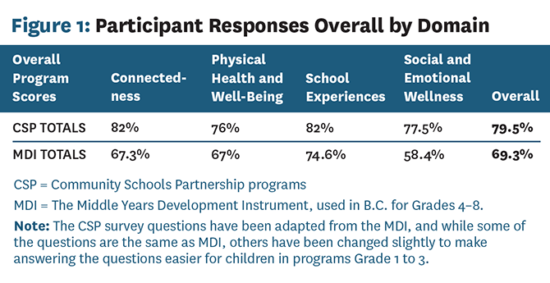
We evaluated students in nine different CSP after-school programs. Data was collected from 617 program participants ages six to 12, attending these programs across Surrey Schools. Program participants were asked to complete a 25-item survey, broadly grouped into five domains using a five-point Likert Scale. Program participants responded to survey items by indicating their level of agreement: 1) Disagree a lot; 2) Disagree a little; 3) Don’t agree or disagree; 4) Agree a little; and 5) Agree a lot. Additional open-ended questions were posed to program participants.
What we learned through this process was that students who attend CSP after-school programs tend to report higher feelings of attachment and after-school involvement, and to feel a deeper sense of awareness of their thoughts and feelings, than is reported by the overall school population of B.C. in the provincial Middle Years Development Instrument (MDI) survey (see Figure 1). These are early findings, but showcase the importance of after-school programming.
Teaching where they are at
We have been fortunate to be able to run after-school programs for students despite the pandemic. The strain that the pandemic has added to the lives of students has amplified the urgency for us to continue to effectively address the areas of mental health and SEL in our youth. Jordynn, one of our outreach staff, says, “Teaching mental health literacy in our after-school programs has been integral… mindfulness, awareness, and fostering social interactions have been lacking throughout this pandemic.” The opportunity for healthy interactions and rediscovering that place of quiet and calm can offer a much-needed respite for our youth, some of whom may find that the only space for them to practise mindfulness is in their after-school programs.
Consistently listening to the voices, opinions, and insights of our students is essential in creating programs that truly meet their needs. The more we listen, hear, and apply their considerations and make any necessary adaptations to our programs, the more we reach students where they are at and build their trust. We are always listening to them.
At the beginning of the article, our students were finding peace in their after-school program. In the final moments of this program, each student takes a long deep breath in and out. Then they roll up their little yoga mats, and the outreach worker checks in with each student as they make their way to the yoga mat bin. One student says casually on the way out, “I can teach this to my mom. Sometimes she gets stressed too, this could help her,” and runs to catch up with her mom waiting outside. This captures why we do what we do. The pressure that the pandemic is placing on our families and society is significant; however with supports and programming, we adapt. CSP after-school programs encourage children to express and accept their feelings, to embrace challenges, and to build up their resiliency toolboxes.
The authors wish to thank: Chadwin Stang, Tanya Parker, Arthur Tiojanco, Mark Elke, Denis Pavlovic, Manjot Badesha, Jordynn Punter, Jordan McDougall, and the Community Schools Partnership Team.
Photo: Courtesy James Speidel
First published in Education Canada, September 2021
-
No New Kids on the Block
Comments Off on No New Kids on the BlockSpring of 2020, mid-COVID lockdown and Canadian youth were planted at their computers for remote learning. Stores were closed, sports on hold, families isolated in their homes, and friends unable to hang out. Most middle- and high-school students spent part of their days creating ways to be interpersonal. Students from a high school in Alberta found an ingenious way to interact: they circled their wagons. Imitating ancestors who moved West almost two centuries ago, the students drove to the empty high-school parking lot and backed up to form a circle with their trunks and hatches open. They sat individually in the back of their own vehicles. Facing one another, between three and five metres apart, they sat, talked, and played music; they were kids doing what kids do. They had a space to be. Administrators still working daily in the school gave a thumbs-up to their creative pupils. I asked one of the Grade 11 students to send me a short video. In it, I observed 12 cars backed into the wagon wheel: one kid per vehicle, all legs dangling from the back and each teen engaged. During the most terrifying global time in a century, there was hope and initiative displayed by the clever youth who figured out how to safely be together, and with the approval from the school leadership team who were glad to create a space for their students to be, and to be well. I was impressed by the good intent and action all around and pitched an idea to make a short film with them. I would interview each participant remotely and ask them to shoot some of their sessions. The youth were thrilled that I was inspired by their collaborative genius, and I began to organize the logistics.
The local police shut it down. With no explanations, one day they came to the parking lot and told the youth to cease and desist. Overruling the school administrators, law enforcement made sure that no wagons would circle.
Having a place “to be,” a public space, creates healthy and positive ways of being. An ad hoc social community emerges in public spaces, where senses are stimulated and the similarities and diversity of those involved are displayed (Mean & Tims, 2005). Wellness is associated with the benefits of public space, which is claimed equally by everyone. The space reinvents itself daily: inhabitants change, the ability to seek an area for body and mind is created and recreated. Public space is not only the product of a developer, city planner, school board, or museum, it is often an unofficial collaboration between those who determine the space is valuable.
Urban public space is often conceived in parks, yet many areas have ceased mapping out new parks. While some public urban spaces for warm weather have been introduced, with shared public gardening, exercise space, meditation paths, biking and roller blading trails, and skateboard ramps and tubes, little consideration or initiative has been established to create winter-friendly public spaces. Canadian youth are left out in the cold.
From child advancement to youth encumbrance
Public space is often unattainable for youth; indeed many towns and cities have no designated space for youth. The last pre-pandemic public space I saw was in a parking lot. Between 25 and 40 high-school kids were hanging out in small groups in front of a Cineplex at the south end of an enormous mall, an early spring day, they were enjoying the weather. As I parked, four police cars pulled up and ordered them to leave. Canadian malls are often a gathering spot for youth. Avoiding inclement weather, Canadian youth visit malls for restrooms, food facilities, and stores, they also contribute to the economy by shopping. Claiming crime instances and theft, many malls have instituted bans for under-18 shoppers unless they are accompanied by a parent. Yet according to a 2016 Government of Quebec report, while youth are accused of shoplifting and vandalism over three times more often than adults, they are less likely to shoplift and vandalize (Lowrie, 2018).
Public space is democratic – not corporately or politically democratic. It is a space where one can feel safe. A place that allows movement, sound, art, quiet, the ability to congregate, the ability for a group of people to make known something important to them. But public space creates a difference between children and youth regarding access. Public space for children, of course, is chaperoned, shepherded. Children are with a teacher or an adult of some sort: a babysitter, a youth, someone who’s helping facilitate their enjoyment of the space. They interact in a place where they can climb on toys, wade, walk; someone is there to ensure little children are safe and nurtured. Adults and caregivers support children to enjoy public space, to run, to feel, to experiment. How important that experimentation becomes. Successes can happen for children in public spaces. The first time a child walks, runs, throws a ball, or rides a bike speaks to enormous growth and success. Public space is special for children, allowing socialization, physical activity, environmental awareness, fresh air, and wellness.
For youth, it can be a different scenario. North American youth are often seen as a population to be feared. My work has focused on the notion that many adults just don’t like youth (Steinberg, 2018). According to many adults, they are a revolutionary group, nonconformists. Along with their clothing, music, art, their way, the fact that they are youth, they become something to fear. Youth are often not allowed to be in a public space without adult supervision. There are dramatic differences in parental attitudes between a baby’s space and the space for a youth to be. With new babies, an obsession with advanced and appropriate development ensues. We watch for babies to roll over at four months, sit up at six months, and walk at one year. Potty training tends to be a milestone, with parents and family applauding as they stand around the toilet. Talking is an enormous concern for parents; expectations for the first word, then sentences haunt most parental minds. From preschool through Grade 1, expectations and hope surround the development of a child. Tying shoes is a stressful hurdle and the first playdate and friendship is a celebration. Riding the first trike and then a two-wheeler become kidhood capstones. Parents wait for their young children to become self-sufficient, independent, and able to entertain themselves. Up until nine or ten, each success is heralded and compared to other children of the same age.
By the time a child is a tween, parents reverse course and fear their child’s independence. No longer do parents push for their progeny to make their own decisions, pick out the day’s clothing, be creative. Parental complaints often barrage teens: their hair is wrong, their clothing is inappropriate, and their language is appalling. North American parents go from finding success in children to finding failure in teens. The same parents who pushed their little ones to make decisions, talk, choose clothes, and ride bikes are now fearful of skateboarding, rollerblading, pink hair, and midriff tops. Such irony in our childrearing. Adding to the nixing comes suspicion, doubt, fear and distrust… for both the teen and the parents. I contend that most adults just don’t understand or like teens; consequently, the rules pile on, adult/youth discord and tumultuous years commence. Along with this discord comes the restriction of places where teens are free “to be” and an adult need to control and surveil youth. To have healthy youth, we must find ways to have healthy public spaces available throughout the year for teens to create communities, hang out, and dangle their legs. Social distancing isn’t the problem; finding a place to safely socially distance is. Safe, public spaces must become a priority for our Canadian youth.
In search of healthy public spaces for youth “to be”
Dislike and fear of youth is uncovered regarding where the youth are, where they hang out, and who they are with. With limited safe spaces to be, our youth seek refuge in social media, online gaming, and smartphone addiction, all resulting in loss of socialization, healthy spaces, and shared communities. Space for youth to gather is limited: cars, homes with oft-gone parents, basements, and barns can become evening spaces to act out, kick back, and engage in exactly the activities the parents are so worried about. Without healthy special alternatives for youth, safe places to be, our teens resort to whatever they can find.
I was recently on a committee with city planners, university professors, and architects. Our charge was to discuss ways to turn a downtown walking mall into a viable and energetic public space. The area is known to be a haven for runaway youth and people who sleep rough, somewhat itinerant in nature, and many citizens avoid the area. I suggested creating a public space to serve youth, both the vulnerable teens who populate the mall and after-school kids in general. I noted that little ones run free in public spaces and are urged to experiment and climb, yet youth are often stopped or given signals that “you can’t be here, this space isn’t for you.” The same public space changes depending on the age of the occupant. I proposed a public theatre space – one that would allow crevices and climbing spots to serve both little ones and teens in physical movement and exercise, with the space also being used for impromptu performances, slam poetry, and improvisational theatre. Using the notion of theatre as public space, participants could mould the area to suit their visions. Possibly this area could offer some sort of wall in the same area that could be designated to create changeable graffiti where youth organizations could sponsor a space for artistic expression in a city where graffiti is completely illegal and has a full-time quasi police force patrolling for it. A small bit of interest was generated, but most of the group was anxious to turn back to exploring pop-up stores, picnic tables, and museum space.
In search of public spaces for wellness
I once found a place in the Highlands of Scotland by following an old sign, “Stone Circle” written with crayon or old paint, it had an arrow pointing to the left. I remember driving up there, just another pretty road. It led me to an enormous meadow of soft, green green moss, in the moss was a stone circle – a sort of Stonehenge, but not really. It didn’t have a name. There was a sense of mystery that I loved. One could walk all over…. there were no ropes, no signs, no poster that told us where we could take a picture. It was just a free space where anyone could run and touch the stones, chase around, or sit, as I chose to, in the very middle of the middle. I was in a space that was private and public at the same time. Low mountains were all around me, magical mountains with moors and the pillow softness of the Earth in all directions.
I’m not a meditator but I was able to do my way of meditating while I was there. Years later, when I want to put myself in a space that gives me peace, I still think of that free, unencumbered public space: a stone circle with no one in charge, no rules or cameras… it was free to the universe, free to the rain, the snow, and the people who touched it. I want our youth to know that they can go to a space, be safe, breathe fresh air, and just be. They need that. They deserve that.
Photo: courtesy Shirley R. Steinberg
First published in Education Canada, September 2021
References
Lowrie, M. (2018, May 2). Quebec shopping mall bans unaccompanied children and teens. The Canadian Press.
Means, M. & Tims, C. (2005). People make places: Growing the public life of cities. Demos.
Steinberg, S. R. (Ed). (2018). Activists Under 30: Global Youth, Social Justice & Good work. Brill/Sense Publishing.
-
Leveraging Pandemic Lessons to Heal
Comments Off on Leveraging Pandemic Lessons to HealIf there is a silver lining to the COVID-19 pandemic, one could argue that it demonstrated the critical role schools play in a functioning society, the interdependence of education and health, and the importance of a whole-school approach to health and well-being. We witnessed schools everywhere do their part in the crisis, going to great lengths to limit viral transmission. Imagine that! Every school in Canada took steps to protect public health that involved home, school, and community, while addressing social and physical environments, policies, teaching and learning, and partnerships and services. This, in essence, is Comprehensive School Health.
Physical health – mask-wearing, sanitizing, and distance between desks – was a dominant educational point for months, but perhaps the school health imperative we now face is the mental well-being of students, teachers, and staff. Can we learn from and leverage the education system’s pandemic response as a template for how to address health in other ways, and not only heal from the impacts of the pandemic, but also promote mental well-being in schools for all stakeholders?
If we ask the right questions now – with intention, compassion, and courage – we can reprioritize the value we place on well-being in school settings. Now more than ever, Comprehensive School Health needs to be on the national education agenda.
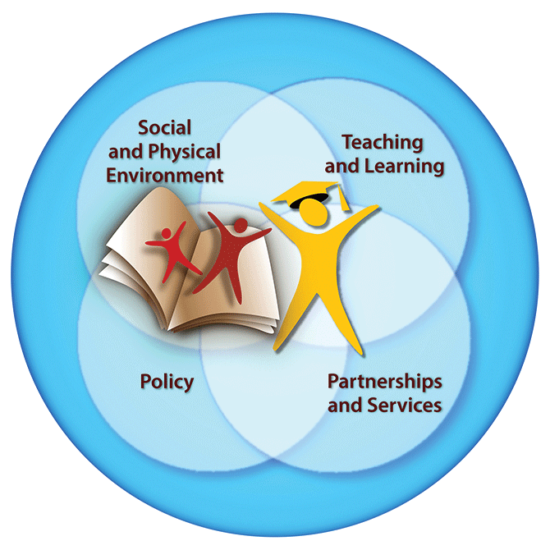
Courtesy of the Pan-Canadian Joint Consortium for School Health
Comprehensive School Health: An overview
Wellness is a balance of mind, body, and spirit that results in a feeling of well-being. As part of their social purpose, schools have a fundamental role to play in the well-being of children and youth. It is important to consider the systemic influences and environments in which children and adolescents emerge into adulthood. Young people spend a lot of time in educational contexts. When schools provide health-promoting environments, it creates capacity and opportunity for students to reach their full potential.
Comprehensive School Health (CSH) is gaining recognition among school districts across the globe, and across educational tiers in Canada, for its value in promoting wellness for students, teachers, and other members of the school community (staff, parents, community partners, etc.; Russell-Mayhew & Ireland et al., 2017). The CSH framework, which is based upon the knowledge that health and wellness enhance children’s ability to learn, provides a multifaceted structure for improving wellness within the school community.
Comprehensive School Health is an approach that includes:
- teaching health knowledge and skills both inside and beyond the walls of the classroom
- creating health-enabling social and physical environments
- creating healthy policies
- facilitating links with parents and the wider community to support optimal well-being and learning (Kolbe, 2019).
It is an internationally recognized framework that places students as primary beneficiaries of improved health and learning outcomes through coordinated action with all members of the school community (Koenig & Rodger et al., 2018; Langford & Bonell et al., 2015). This framework is based on evidence that healthy students have increased capacity for learning and that well-being has a positive effect on academic achievement throughout their lifespan (Byrne & Pickett et al., 2016, 2018). Health and education are interdependent. In other words, healthy students are better learners, and better-educated students are healthier (Squires, 2019; Viner & Russell et al., 2020).
A whole-school approach like Comprehensive School Health considers the well-being of the whole student and the whole community. It is not a program or curriculum, it is a process that integrates health promotion into the daily life of the school. The CSH framework takes advantage of a community development approach to enable customization to each unique site and the local context of a school.
Comprehensive School Health across the education system
The CSH framework seeks to harmonize actions across four components:
• teaching and learning
• social and physical environments
• policy and partnerships
• services.
These components guide actions in schools, such as: Ensuring high-quality health education, addressing teacher and staff well-being, revising school development plans to include well-being, and/or increasing social engagement opportunities for students. Ultimately, the CSH framework is intended to foster local autonomy to shift the culture to embrace well-being practices.
Increasingly, teachers are recognized as key agents of socialization, as they occupy positions that allow them to positively influence school wellness and student well-being. Teachers are our most important resource for the well-being of school communities; there is no profession with such profound influence. They influence people, places, and spaces in education. We know that health and education are deeply interconnected and intertwined, so if we want to influence outcomes, we need to focus on the whole person – not just academic outcomes – whether that is faculty, teachers, staff, or students. This includes post-secondary teacher preparation programs, which both serve as a feeder system for, and are an active part of, the education system. Supporting the well-being of pre-service teachers prior to their involvement in K–12 schools is an innovative way to promote transformational systemic change.
The potential cumulative effects of widespread, comprehensive wellness action across educational contexts are exciting to imagine. How might the world be different if every educational space was a place where each student, staff, teacher, and faculty felt a sense of belonging and was able to reach their full potential? What if every school was a healthy school? What if every BEd program was offered in a health-promoting post-secondary context?
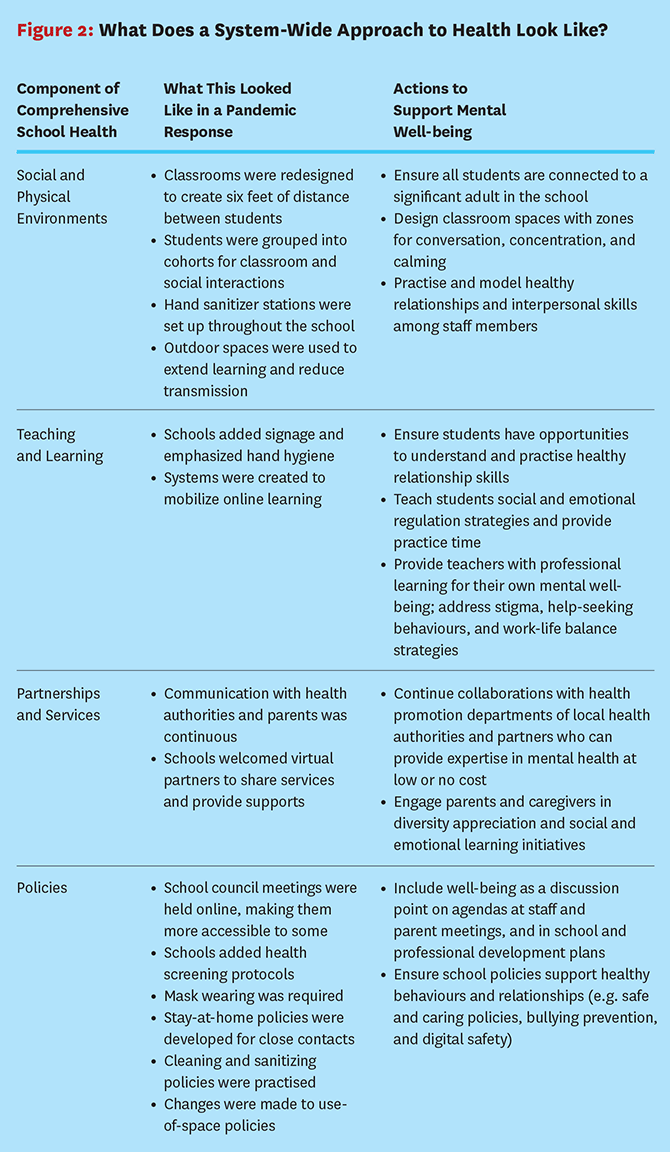
So, what now?
We urgently need coordinated strategies that support action at all levels of school governance to address mental health, safety, belonging, and other psychosocial outcomes in schools.
Recasting educational spaces as health-promoting spaces is a systemic change that requires societal support and commitment from across the health and education sectors, as we have recently experienced with the pandemic response. Now we know it is possible, and on a dramatically large scale, too. Comprehensive School Health gives us the framework, and the pandemic gave us the experience. In Figure 2, we explore how schools can leverage their experience of a system-wide approach to health through their pandemic practices into an opportunity for action that supports the mental health and well-being of students, staff, and teachers.
This may seem like a daunting task that is beyond any one individual, and it is. Still, there are small steps we can all take to do our part from both within and outside of the education system to drive change. A good first step is to educate ourselves and others about Comprehensive School Health (see Learn More).
Real and sustainable change is possible if the education system is structured, and supported, to embrace its role in creating health-promoting environments. At their best, education systems can support all children, youth, and young adults to reach their full potential, while ensuring teachers first learn and then work in health-promoting environments to facilitate learning and nurture the well-being of future generations. This type of system-wide embrace of well-being in Canadian education is not just the imaginings of idealists, but was proven possible in the context of the pandemic response.
Education is a human endeavour. In the context of CSH, this means attending to all the ways of wellness – physical, social, emotional, intellectual, spiritual, environmental, and occupational – across educational contexts. The well-being of students, staff, teachers, and faculty is at stake, and we can now better imagine the difference it will make.
Photo: iStock
First published in Education Canada, September 2021
Learn More
For some excellent self-paced learning, check out:
- The Podclass: Conversations on School Health (available on your podcast channel and at https://everactive.org/services/thepodclass)
- Building Healthy School Communities, a free foundational course available online at CSHhub.com
References
Byrne, J., Pickett, K., et al. (2016). A longitudinal study to explore the impact of preservice teacher health training on early career teachers’ roles as health promoters. Pedagogy in Health Promotion, 2(3), 170–183. doi.org/10.1177/2373379916644449
Byrne, J., Pickett, K., & Rietdijk, W. (2018). Teachers as health promoters: Factors that influence early career teachers to engage with health and wellbeing education. Teaching and Teacher Education, 69(1), 289–299. doi.org/10.1016/j.tate.2017.10.020
Koenig, A., Rodger, S., & Specht, J. (2018). Educator burnout and compassion fatigue: A pilot study. Canadian Journal of School Psychology, 33(4), 259–278. doi.org/10.1177/0829573516685017
Kolbe, L. J. (2019). School health as a strategy to improve both public health and education. Annual Review of Public Health, 40(1), 443–463. doi.org/10.1146/annurev-publhealth-040218- 043727
Langford, R., Bonell, C., et al. (2015). The World Health Organization’s Health Promoting Schools framework: a Cochrane systematic review and meta-analysis. BMC Public Health, 15(1), 130–130. doi.org/10.1186/s12889-015-1360-y
Russell-Mayhew, S., Ireland, A., et al. (2017). Reflecting and informing a culture of wellness: The development of a comprehensive school health course in a bachelor of education program. Journal of Educational Thought, 50(2&3), 156-181. www.jstor.org/stable/26372402?seq=5#metadata_info_tab_contents
Squires, V. (2019). The well-being of the early career teacher: A review of the literature on the pivotal role of mentoring. International Journal of Mentoring and Coaching in Education, 8(4), 255-267. doi.org/10.1108/IJMCE-02-2019-0025
Viner, R. M., Russell, S. J., et al. (2020). School closure and management practices during coronavirus outbreaks including COVID-19: a rapid systematic review. The Lancet Child & Adolescent Health. doi.org/10.1016/S2352-4642(20)30095-X
-
Making the Healthy Choice the Easy Choice
Comments Off on Making the Healthy Choice the Easy ChoiceLast May I visited Walnut Park Elementary, which is located on the unceded traditional territories of the Wet’suwet’en in Smithers, B.C. While navigating the halls to get to Mary Neto’s Grade 4 classroom, I passed students and staff decked out in denim, fluorescent headbands, tie-dye masks, scrunchies, and leather jackets. It was ’80s day.
Mrs. Neto welcomed me into her classroom and invited me to make myself at home. Students were quietly reading at their desks, some eating snacks, while others continued to trickle in. One student asked Mrs. Neto if he could tell her something, and when she replied of course, he told her about his dog running away (they found him), and then getting stuck in traffic, almost making him late for school. Mrs. Neto empathized with his hectic morning and said she was glad he made it to school on time in the end.
Looking around, I noticed many objects and displays that were familiar from my childhood Grade 4 classroom. Lined up along the windowsill were Styrofoam cups filled with dirt and the beginnings of tiny green sprouts. On the walls were exhibits of student work. However, there were also differences. Posters on the back bulletin board showed the different “Core Competencies” (Communicating, Collaborating, Creative Thinking, Critical and Reflective Thinking, and Personal and Social Identity). The chairs students were sitting at weren’t all the standard plastic-backed chair I remember either; some were wobble stools and others were on rockers.
A buzzer interrupted my thoughts, announcing the end of individual reading time. Students were instructed to find a partner and read to each other. Two boys reading Calvin and Hobbes comics partnered up and laughed at the antics of the boy and the tiger. Over the murmur of the class I heard a girl exclaim, “Oh, poor dinosaur!” in response to the story her friend was sharing. I hadn’t been in the class for more than 15 minutes and I had already witnessed displays of students practising and strengthening their social and emotional skills.
Walnut Park Elementary is one of seven schools in Bulkley Valley School District 54 (SD 54). It is no surprise that I observed social and emotional learning (SEL) in Mrs. Neto’s class, as SEL is a priority in the district. For those of you who are unfamiliar with SEL, it focuses on five competencies (CASEL, n.d.):
- Self-awareness (ability to understand your emotions, thoughts, and values and how they affect behaviour)
- Self-management (ability to manage emotions, thoughts, and behaviours to reach personal goals)
- Social awareness (ability to take other points of view and empathize with others)
- Relationship skills (ability to establish and maintain supportive relationships)
- Responsible decision making (ability to make caring, constructive choices about behaviour and social interactions).
There are numerous SEL programs designed for the school setting; however SD 54’s approach goes beyond a single program, which is likely one of the reasons it is so successful. SD 54 uses an approach that aligns with Comprehensive School Health (CSH).
CSH is an internationally recognized framework for supporting improvements in students’ educational outcomes while addressing school health in a planned, integrated, and holistic way. It is based upon the proven relationship between health and education: healthy students are better learners and more educated students are healthier.
Schools are often seen as an ideal setting to promote health among children and youth. Most children and youth attend school, and therefore ideas taught at school reach the majority of the population. However, educators already have a lot of material to cover in the short span of ten months. Adding more to their plate can be overwhelming, and in some cases, impossible. If you imagine each subject that educators have to cover as a block, many educators are already carrying their maximum number of blocks. Using a CSH approach to promote health ensures that we aren’t just adding another block to educators’ already towering stacks. Instead, a CSH approach seeks to embed health into the school and district culture so that making the healthy choice is the easy choice. I like to imagine CSH as a wheelbarrow rather than another block. It may take time and energy for educators and schools to figure out how best to use it, and how to organize their other blocks within it, but once they do, the wheelbarrow actually makes carrying all of the other blocks easier.
Specifically, CSH involves planning health-promoting activities in four distinct but interrelated areas:
- Teaching and learning
- Physical and social environment
- Community partnerships
- School policies
Here is more detail about each component:
Teaching and learning
Teaching and learning occurs in the classroom and beyond. It includes any teaching and learning opportunities that build knowledge and skills. Students learn from teachers, other adults in the school and community, and from their peers.
Physical and social environment
The physical environment refers to the physical spaces in the school that support health and well-being. This includes buildings, equipment, and outdoor areas. The social environment includes the quality of relationships and emotional well-being of members of the school community.
Community partnerships
There are many potential community partners that schools can connect with to promote health and well-being. Some examples are parents, other schools or classrooms, community organizations, and health professionals.
School policies
The final component of CSH refers to provincial, district, school, or classroom policies, as well as rules, procedures, and codes of conduct that help shape a caring and safe school environment and promote student health and well-being.
CSH can be used to promote any health topic, but for this article we’re going to take a deeper look at how SD 54’s actions to promote SEL in their schools align with a CSH approach.
Using a CSH approach to promote health ensures that we aren’t just adding another block to educators’ already towering stack.
In 2016, the B.C. Ministry of Education released a revamped K–9 curriculum with the significant new addition of Core Competencies. The Core Competencies closely align with the five SEL competencies. Incorporating the Core Competencies into the provincial curriculum is an example of a policy change that supports SEL in schools. Policy changes such as these are effective, especially when combined with support for implementation. While changes to the curriculum are out of the control of any one school district, the district can provide this support to ensure they are successful.
A case in point: around the same time that the new curriculum was being released, SD 54 created a new position within their district: Elementary Social and Emotional Helping Teacher. It was originally a part-time role and filled by a school counsellor in the district. Over time it developed into a .8 FTE position as demand from educators to work with the Helping Teacher increased. In a short video about the initiative, superintendent Mike McDiarmid explains that the role was spurred by increasing concern about the mental wellness of students in the district and educators feeling like they didn’t have the necessary background to teach the social and emotional curriculum.
This partnership between the district and elementary schools successfully supported implementation of SEL and the Core Competencies. Educators could schedule sessions for the Social and Emotional Helping Teacher to join their classroom to collaborate and co-teach around the social and emotional curriculum. If you think back to my earlier analogy of the teacher holding a towering stack of blocks, you might ask, “How are they supposed to load the wheelbarrow without dropping everything? They don’t have any free hands.” This shows just how important partnerships are when it comes to CSH. In SD 54, educators who had previously felt uncomfortable or unsure about how to approach SEL gained valuable skills and confidence by observing and working alongside the Social and Emotional Helping Teacher. They were then able to more easily incorporate the ideas that they had learned into their regular lesson plans, which laid the groundwork for embedding SEL into the school culture.
In Mrs. Neto’s classroom, the physical environment supported SEL with different seating options that allowed students to self-regulate depending on how they were feeling. Schools and districts can support changes in the physical environment by ensuring there is funding available for classrooms to put toward SEL. There are also strategies educators can use to impact the physical environement that don’t cost any money. Mrs. Neto turned off some of the lights in the classroom when students were high energy and it was time to focus, and had different seating configurations that were associated with different levels of ease to communicate with their classmates.
Modelling behaviour and actions is another form of teaching. By modelling SEL through their words and actions, teachers are directly impacting the social environment. Cultivating an environment of mutual respect and care will support learning and create a space that is more enjoyable for everyone. Sometimes actions speak louder than words; Mrs. Neto’s calm and empathetic demeanor set a precedent that her students followed.
Teaching and learning is part of many of the actions that I’ve already discussed, but SEL was also explicitly addressed while I was in Mrs. Neto’s class. After students each did two laps around the school (an effective way to regulate their energy levels and develop their fitness), they came inside and worked on their daily goals. Mrs. Neto started the class off by reviewing her own goal from the previous day: to read one chapter of her book. She shared that it was difficult because she was tired, but she persevered and managed to finish the chapter. Alongside their goals, students had space to write the steps they would take to achieve them and something they were grateful for. I walked around the room asking students what their goals were, and they varied from being a better listener to eating healthier snacks. In the space asking what they were grateful for, many of the students wrote, “Mrs. Neto.”
Procedures such as daily goal setting and partner reading demonstrate how policy can be established at the classroom level, and that it doesn’t have to come from the district when using a CSH approach.
These collective actions in policy, community partnerships, the environment, and teaching and learning have made SEL an integral part of students’ school days in SD 54. Hopefully you can also see how the approach the district took meant that the weight of it didn’t fall solely on any one person’s lap. And while Mrs. Neto is particularly passionate about SEL, the underlying SEL principles are present in every classroom in the district.
Health and learning are intertwined. Using a CSH approach to make health and well-being part of your school’s culture will inevitably improve student learning and behaviour and contribute to the development of more well-rounded students.
Photo: iStock
First published in Education Canada, September 2021
References
Collaborative for Academic, Social, and Emotional Learning (CASEL) (n.d.). CASEL’s SEL Framework: What are the core competence areas and where are they promoted? https://casel.org/wp-content/uploads/2020/12/CASEL-SEL-Framework-11.2020.pdf
-
How can K-12 students learn to regulate their emotions?
Comments Off on How can K-12 students learn to regulate their emotions?Emotion regulation requires noticing and naming emotions as they arise (e.g. joy, excitement, frustration, anger), understanding the impact these emotions have in our body, thoughts, behaviour and expressions, knowing what causes us to feel the way we do, and having strategies to navigate our way through them. Research demonstrates that emotion regulation is a skill that can be taught and developed across the lifespan.
HERE ARE FIVE KEY TIPS TO SUPPORT STUDENTS’ EMOTION REGULATION
Talk about emotions to build a foundation for emotion regulation
It’s important to help learners notice and name their emotions. For example, you can help students identify book characters’ emotions and then link those to their own experience using guiding questions like: how is the character feeling? Why do you think they feel this way? What might they do to change how they feel? What would you do?
Explicitly teach emotion regulation strategies
It’s helpful to teach a wide range of emotion regulation strategies, including mindful breathing, progressive muscle relaxation, positive self-talk and positive reappraisal (i.e. reframing a negative perspective about something and changing it into a positive one). Start by teaching strategies that are accessible in the moment (like mindful breathing) and that students already know. Explain what the strategy is and why/how/when it might be used.
Practice using the strategies
Practice the strategies when students are “cool” and not “hot.” When anyone is emotionally activated, it’s difficult to think rationally. In a classroom, this might include integrating a daily mindful practice during circle time or class meetings. This practice helps students feel familiar with the strategy and builds neural pathways, making the strategies more accessible when needed.
Create space and support for emotion regulation
Integrate support for emotional regulation into day-to-day life (e.g. if a conflict arises, you can help learners draw on strategies they have been learning). Students can also be provided with spaces where they can go to “cool off” if needed. It’s important for children and youth to have autonomy to choose and use strategies that they are comfortable with that meet their particular needs.
Model effective emotion regulation strategies
It’s important to be mindful of how our behaviours provide implicit instruction and influence student’s skill development. It can be helpful for adults to narrate some of the regulation processes so that children can see/hear how they handle emotions. In a challenging situation, it’s also critical that adults use strategies themselves to stay calm so that they are available to help others respond to the situation effectively.
Parents and teachers play a critical role in supporting and teaching students the skills and strategies needed for emotion regulation. Research has shown that when students are able to successfully regulate their own emotions, they tend to experience improved health and wellbeing, greater emotional resilience (i.e. the ability to recover from stressful situations), more positive interactions with peers, and more success at home and school.
Additional information and resources
Barrett, L. F., Gross, J., Christensen, T. C., & Benvenuto, M. (2001). Knowing what you’re feeling and knowing what to do about it: Mapping the relation between emotion differentiation and emotion regulation. Cognition and Emotion, 15, 713–724. http://dx.doi.org/10.1080/ 02699930143000239
Building Emotion Skills at Home: https://static1.squarespace.com/static/5b8b251189c172835f9398e1/t/5c04497988251b931be5e9aa/1543784825343/Practicing+Emotional+Intelligence.pdf
CASEL (general): casel.org
CASEL (lesson examples): https://www.casel.org/wp-content/uploads/2017/08/Sample-Teaching-Activities-to-Support-Core-Competencies-8-20-17.pdf
Edutopia (general/SEL): https://www.edutopia.org/social-emotional-learning
Graziano, P. A., Reavis, R. D., Keane, S. P., & Calkins, S. D. (2007). The role of emotion regulation in children’s early academic success. Journal of School Psychology, 45, 3–19. http://dx.doi.org/10.1016/j.jsp.2006.09 .002
Greater Good Parenting: https://ggsc.berkeley.edu/parenting
Greater Good (general/educators: https://ggsc.berkeley.edu
Greater Good (SEL/emotion regulation): https://ggie.berkeley.edu/student-well-being/sel-for-students-self-awareness-and-self-management/sel-for-students-emotion-regulation/
Gross, J. J. (1998). The emerging field of emotion regulation: An integrative review. Review of General Psychology, 2, 271–299. http://dx.doi .org/10.1037/1089-2680.2.3.271
Ivcevic, Z., & Brackett, M. (2014). Predicting school success: Comparing conscientiousness, grit, and emotion regulation ability. Journal of Research in Personality, 52, 29 –36. http://dx.doi.org/10.1016/j.jrp.2014.06 .005
Jennings, P. A., & Greenberg, M. T. (2009). The prosocial classroom: Teacher social and emotional competence in relation to student and classroom outcomes. Review of Educational Research, 79, 491–525. http://dx.doi.org/10.3102/0034654308325693
Marroquín, B., Tennen, H., & Stanton, A. L. (2017). Coping, emotion regulation, and well-being: Intrapersonal and interpersonal processes. (pp. 253-274). Springer International Publishing. https://doi.org/10.1007/978-3-319-58763-9_14
Stanton, A. L. (2011). Regulating emotions during stressful experiences: The adaptive utility of coping through emotional approach. In S. Folkman (Ed.), The Oxford handbook of stress, health and coping (pp. 369-386). New York: Oxford University Press.
WITH THE GENEROUS FINANCIAL SUPPORT OF:


-
WEBINAR: How can we improve K-12 school wellbeing?
Comments Off on WEBINAR: How can we improve K-12 school wellbeing?Watch the full webinar below:
This webinar is primarily for school district leaders, principals, and vice-principals, and school or district wellbeing leads as well as anyone interested in K-12 staff wellbeing.
We know that wellbeing – especially cases of burnout – are issues in Canadian schools. We know a lot of this is systemic – involving organizational culture, structures, priorities, and policies at various levels of the education system. However, research is still evolving about how approaches taken at the school level or the individual level could help educators cope with their daily stress. In a 12-month research project, The Behavioural Insights Team (BIT) set out to develop two simple approaches that could be scaled district-wide.
This webinar broadcasted on June 16, 2021 discussed findings from this research project outlining what worked, what didn’t work, and lessons learned that can be used to support education leaders in ensuring their staff’s wellbeing.
Consult our report for practical templates
you can use in your school -
Introducing Well at Work 2.0
Comments Off on Introducing Well at Work 2.0K–12 staff experience chronic stress and burnout at a greater rate than in other professions. This not only impacts their own health, but also their students’ well-being and academic success, all while leading to significant costs for school districts, reduced workplace morale, and leadership recruitment challenges. With the extra stress of the pandemic, schools and school districts are looking for ways to support their staff now more than ever, and they require solutions that will address underlying problems such as heavy workloads and toxic workplace cultures.
Since 2019, EdCan has been leading an awareness-building platform called Well at Work to increase knowledge about the need to make K–12 staff well-being a top policy and investment priority. Since then, our organization has built a network of Canadian educators, researchers, practitioners, and stakeholder groups who are passionate about and dedicated to advancing K–12 workplace well-being.
From 2021–2023, EdCan will continue to build awareness, while shifting its main focus toward catalyzing action with a wide variety of partners through Well at Work 2.0. Through a non-prescriptive approach, education leaders across Canada who are ready to take action will be supported to develop and implement individual, organizational, and systemic strategies to improve K–12 workplace well-being through four key solutions:
- Professional learning for school district leaders, principals, and wellness leads on actionable strategies to measure, implement, and evaluate comprehensive approaches to K–12 workplace well-being.
- A coaching platform for school and district leaders and teams to improve their own personal wellness while receiving guidance to embed mental well-being for all staff into their district’s culture, priorities, and structures.
- Facilitated provincial and pan-Canadian hubs to convene and connect stakeholders to advance issues related to workplace well-being and align their efforts to achieve them, including communities of practice for teachers and staff to provide them with a community of support and facilitate peer learning through sharing best practices.
- An economic study of the costs of K–12 staff stress and burnout, and the benefits of investing in positive mental health and well-being to offset these costs. A service for school districts will also be provided that compiles and analyzes their workplace well-being data in a cost-benefit report.
EdCan is grateful for the 75 stakeholders who generously shared their time, expertise, and perspectives in conceptualizing these programs. We look forward to working together to build capacity and coordinate impact among education leaders to enable them to develop their own context-specific solutions, which will sustain our collective efforts in the long-term.
Stay tuned for more details on Well at Work 2.0. In the meantime, you can browse our growing catalogue of K–12 workplace well-being information resources at www.edcan.ca/well-at-work.
First published in Education Canada, June 2021
-
Pandemic Perspectives from the Field
Comments Off on Pandemic Perspectives from the FieldIn early 2020, I sat in the revolving restaurant of the Calgary Tower on a cold January night to share a meal with a teacher and vice-principal from Tarui, Japan. We were celebrating the successful conclusion of a cultural exchange between our schools. Over the week, we had opened our school, billeted students in our homes, and shared rich cultural experiences. Through broken English and Japanese we told stories and forged bonds. Little did we know that within weeks, borders would close, and the COVID-19 pandemic would change all our lives fundamentally. Looking back, it is easy to see the ways we took that experience, and so many like it, for granted.
In early February, our school community would be thrown into disarray. One of our students returned from a trip to China and questions began to arise. Parent calls followed. What if the student had been exposed to this novel coronavirus? What if it came into the school? This previously distant disease became an unsettling and very present reality.
As anxiety rose, I worked with parents, staff, and my admin team to maintain calm while coping with crippling uncertainty myself. My responsibility to create a safe environment for children had never felt so challenging or elusive. Following guidance, we didn’t encourage the use of masks in our school, citing their limited effectiveness
(if only we knew!) and scarce supply for healthcare workers. On Sunday, March 15 in the late afternoon, we watched a news conference announcing the closure of physical schools effective Monday morning. We had no more notice of the closures than the families we served.Overnight, we were thrust into this strange new reality. My wife was home sick with our three school-aged children who were suddenly distance learning. I felt I had no choice but to go in to work to help guide my community through those tenuous early days of remote teaching and learning.
Our staff met in-person the next morning as we had always done. I naively felt prepared to lead. After all, I had spent years researching instructional leadership. In our meeting I told teachers to “get comfortable with being uncomfortable.” I am surprised now they didn’t walk out. “Uncomfortable” was a grave underestimation of how they were feeling. A teacher with a compromised immune system contacted me that night to say he could not meet in person anymore. In that moment, my perspective changed. I realized that the very lives of my staff would be impacted by my decisions from here on out. The gravity of that responsibility sat heavy on my shoulders.
We scrambled to provide professional learning and resources to our teachers as they moved online. We shared resources, PD was organized, and teachers worked together to troubleshoot new tech tools. In the end, our success pivoting to online learning was built on relationships rather than program. We worked tirelessly to reach out to families in those months. We reached out to one another. We focused on building community despite physical distance.
The pandemic has been one of the most dynamic, nerve-wracking, challenging, exhausting, and at times exciting experiences of my career as a school principal. From moving classes online overnight in the spring, to riding the wave of uncertainty and fear about school reopening through the summer, to reinventing school around safety guidelines in the fall, to the constant threat of contact-tracing and isolations this winter, this school year has been like no other. It has been said that leadership is a rainy-day job. In the 2020–21 school year, we are living through a monsoon.
On that cold January night with our Japanese counterparts, we compared our school systems in the hopes that this cross-pollination of ideas would lead to positive change. We dreamed of future trips to Japan and the celebrations and fun that would ensue. While those dreams now seem distant, I often think of our friends from Japan and wonder how they experienced this global calamity, how they adapted their school and family life, and when we will meet again. We will certainly not take it for granted when we do.
The pandemic has tested our resilience and fortitude as educators, parents, and individuals. I am proud of how my school has served our community and how all teachers continue to show commitment to their students even in the face of personal health risks. Let us move forward through this pandemic with hope for better things to come while celebrating the gift of a new perspective.
Photo: courtesy of Kirk Linton
First published in Education Canada, June 2021
-
Student Agency in COVID Times
Comments Off on Student Agency in COVID TimesWe were at the mercy of the pandemic. Powerless. The pandemic stripped teachers from what we knew or believed was good teaching and learning. We had to make choices to regain this power. The pandemic served as a catalyst for change and forced educators to exercise their agency and think critically about what’s really important to teach and learn – with less time and more barriers. Getting through the curriculum seemed like an impossible task… and it was.
One way to regain our power as educators was to let go. We had to let go of our routines and expectations. What we used to do in the classroom could not be done during the pandemic. We had to figure out how to create learning experiences that were engaging, yet wholeheartedly embraced learning intentions that best reflected the curriculum. Not everyone was in class and some students were learning online. Deciding to let go of what was is a choice.
Understanding that we have choice as educators is key to our freedom to create and design experiences that meet the learning needs of the students in our classroom – and also meet our learning needs as educators. Teaching during a pandemic inherently involves a steep learning curve that we’ve had to tackle whether we like it or not.
Wishing away the pandemic or hoping that all schools would close and go online are not outcomes within our control. Choosing to let go and reconsider what teaching and learning looks during the pandemic is within our control. Exercising our professional autonomy and making decisions that best suit the learners in our classroom is our agency as educators. As educators, we are collectively questioning what we can do to make teaching and learning viable for our students: to meet them where they are, make learning fun, and stay loyal to the curriculum.
Lessons in agency
As a teacher educator, I have the privilege of peeking into K–12 schools to observe teacher candidates, but also to imagine what is possible in teaching and learning during COVID times. I saw classes ranging from five students, to classes split into morning and afternoon cohorts, to full classrooms. I loved watching classes that were held outside. Students in a multi-graded class would gather and sit under the “poetree,” in the snow, to read, listen, share, and create poetry together.
In another class, where there were very few students, the lesson focused on movement and play-based activities to learn how to sound out words and spell. Students were encouraged to get up and move around the room to find words about food (their favourite topic), and they could choose to work in partners or independently. Students were engaged, on-task, and worked at their own rate. The words hidden around the room were inclusive and students had choice in what words they found, how they would sound out the words, and how they would practise spelling the words.
By letting go and embracing our autonomy and agency as designers of learning, we can create learning experiences for students so that they are able to develop and exercise their agency by having choice within the learning activity. Students, in turn, will feel empowered. They take ownership of their learning. They can choose how they learn, who they learn with, and what they produce. The driving force to this kind of learning is the why that’s embedded.
In British Columbia, the provincial curriculum has three Core Competencies: Communication, Thinking, and Personal/Social. These core competencies are developed and embedded in the learning. Students are learning how to communicate, collaborate, and think critically, creatively, and reflectively. They are also developing social responsibility, cultural awareness, and positive personal identity, which serve as underpinnings to what is being taught and why it’s important.
The Core Competencies not only connect and interconnect different subject areas into more meaningful and purposeful interdisciplinary learning experiences that are holistic and experiential; they also prioritize the humanness of learning back into education. The mastery of content is no longer the goal. Instead, content serves as the vehicle for learning. Curricular competencies are introduced, developed, and honed. And context and community matter.
When we focus on the competencies, we not only free ourselves from the burden of singular outputs and striving to create a high level of sameness amongst our learners, we empower students to personalize their learning, make choices about their learning, and
Understanding that we have choice as educators is key to our freedom to create experiences that meet the learning needs of our students.
be the agents of their learning and achievement. Joy becomes part of the learning experience. Learning with others and co-constructing knowledge and criteria become the norm for students.
In a Grade 3–6 class, the primary focus was to make their math thinking visible. The topic was estimating. The class started out with a jar of dominoes and students estimated how many were in it. The lesson moved onto working in small groups at locations around the classroom, where each group collaboratively make their thinking and learning visible on whiteboards.
With each problem projected, the students became more engaged. The learning environment was inclusive, collaborative, and dynamic. Students had the freedom to move, discuss, and solve.
Throughout the math lesson, students were practising their numeracy skills, understanding of math facts, and number estimating. They were also developing their skills in communication, collaboration, and thinking. The Core Competencies were central to this learning experience, which enabled the teacher to facilitate the learning while also having students choose how they would approach the problem, work in small groups, and mutually agree or negotiate an answer.
The lesson concluded with students returning to the jar of dominoes to see if they would change their original estimation based on what they had just learned and collectively experienced in small groups. Some students chose to keep their answer while others opted to change. In the end, they counted the dominoes in the jar to see how close their estimation was to the actual answer. There were cheers, smiles, and a few groans once the answer was revealed.
The students provided feedback to the teacher at the end of the lesson by holding one to four fingers up to their chest to reveal their level of confidence and understanding of estimation. The students also offered many opportunities during the lesson for the teacher to assess how they were doing with the learning. One could assess the noise level in the room (a.k.a. the hum) when students broke off into small groups. One could look at the thinking made visible on the white boards. One could see how they well they estimated the number of dominoes in the jar, before and after.
What I appreciated most about this lesson was not only that the educator created a learning experience that provided many choices for students to engage in the learning, but that there were also many different opportunities and ways to assess student learning and progress, and multiple ways for students to demonstrate their learning throughout the lesson. Assessment is not limited to the traditional pen and paper, and what was important was more than the answer.
The way forward
The global pandemic stopped everyone in their practice and allowed us to take a moment to reflect, reassess, and recalibrate. What is working, what’s not working, and what is worth keeping? I invite you to reflect on these questions and self-assess how you have pivoted during the pandemic and what you would consider keeping in your practice or return back to.
To regain our sense of power during the pandemic and beyond is to understand and exercise our agency as educators and feel good about letting go of some of what we previously did – because doing so allows us to get to the heart of teaching and learning. We want to create, design, and facilitate learning experiences where students feel empowered because they have agency to choose within flexible and reflexive frameworks and guidelines that you determine and provide.
Trust your professional judgment. Take a risk. Break (your) rules and be vulnerable to the uncertainty of not doing things in the same way you have known or experienced. Go outside with your class. Be intentional with the learning. Notice and wonder. What are the students learning? What’s working? What’s not working? Tweak it and try again. Try assessing students in ways that empower them, include their input and voice; this can be done in a variety of ways.
We must break away from the industrial model of mass education. COVID-19 separated us and now we pine to be together as a community and learn together as a community. We want and need to bring back humanity, strive for learning that is student-centred, competency-based, personalized, and interdisciplinary. The pandemic kept us home, which helps us to value being local, learning from our community, and learning more about local Indigenous knowledge and perspectives.
We want students to love learning, feel in control of their learning, and understand the intrinsic good of learning.
Be vulnerable. Let go. Be the agent of your learning. Choose what will work best for your students as it relates to the curriculum. Less is more. We are choosing what is best for our students to learn, meeting them where they are, and focusing on quality over quantity. Enable and encourage students to be the agents of their learning. We can empower ourselves and also the students by giving them voice, choice, community, and context.
What we hope for post-pandemic is for teachers to embrace their professional autonomy to create learning experiences for students that give them opportunities to exercise their own agency. We want students to love learning, feel in control of their learning, and understand the intrinsic good of learning. When we achieve this, students will extend their learning, take risks, and be vulnerable. They will develop their competencies and sense of self as they construct and co-construct deeper understandings of their identity, of others, and of the environment.
Photo: iStock
First published in Education Canada, June 2021
-
The Mental-Health Risks of Pandemic Teaching
Comments Off on The Mental-Health Risks of Pandemic Teaching“What’s wrong with me? Why can’t I manage? I feel like a failure. I can’t go on like this.”
If only one teacher had said this to me – or even just a handful – I would not be writing this article. However, over the course of the past 12 months, and especially the last six, I have heard these statements from teachers so consistently and with such frequency that I cannot help but see a bigger pattern emerging.
As a psychotherapist, I have been privileged to support many educators in finding ways to maintain their mental health amid personal struggles, strikes, resource management issues, and changes in job expectations. Prior to the beginning of the COVID-19 pandemic, many reported feeling an understandable sense of burnout and frustration, but always present in each session was a very palpable love and devotion to their occupation as teacher.
Things are different now.
In the clients I see, the educators and administrators I speak with, and the articles I search through for a sign I might be wrong, the evidence is everywhere… teachers and school leaders are not OK.
This isn’t the kind of “not OK” that gets restored after a summer break. Nor is it the kind that is resolved by a politically stale “We appreciate all that you do.” This is the kind of not OK that does lasting and long-term damage to one’s view of the world and one’s self. This is the kind of not OK that results in trauma.
Informed consent
Educators, like other front-line workers, have been asked to face the challenges and changes brought on by the pandemic while helping others do the same. But at what cost? Is there more that can be done to shine a light on the potential risks for teachers? While the COVID-19 pandemic is a new obstacle for the world, research on the mental health impact on front-line workers during crisis situations is plentiful and clearly details the hazards of prolonged exposure to heightened stress. With such risks landing on the shoulders of those who care for our children, it is imperative that educators are provided with the information and supports needed to protect their mental well-being. Without a true understanding of the risks they face, educators cannot protect themselves against the long-term consequences of pandemic teaching.
Mental-health risks to teachers
My intention is not to encourage teachers to abandon their post, but instead to renew their commitment to their craft in a way that is informed and intentional. It is also to provide a look at the very real risks of continuing to ignore their mental health as they try to meet the ever-changing demands of pandemic learning.
Here are the top three psychological risks teachers currently face:
- Compassion fatigue If you ask anyone about a teacher they remember fondly, they tell you how they felt cared for. It is a hallmark of some of the world’s greatest teachers. The ability to connect with children, be present to their needs (not always academic in nature), and leave them feeling seen and valued every single day takes an incredible amount of patience and energy. Patience and energy come from a rested, well nourished (physically and emotionally), healthy human being.
The pandemic restricted access to many resilience-enhancing factors that help teachers stay healthy, such as social connection, supportive routines, and a sense of safety and security. As the demands on educators increased, the opportunities for reset and restoration quickly dried up. The result: compassion fatigue.
Compassion fatigue is a psychological response to existing in a continual state of burnout for an extended period. The act of caring and connecting is costly to a nervous system that is running out of energy, so to protect us, our brain creates emotional distance from those in our charge. This is well documented in health-care professions, but discussed less in reference to our educational system.
Compassion fatigue will not only compromise the connection between teacher and student, it will also compromise other connections, such as relationships with the teacher’s own child(ren), spouse, family members or friends. One of the most prevalent increases in my clinical practice after March 2020 was in front-line workers navigating relational conflict at home. - Trauma Psychological trauma occurs when a threat to our safety and well-being overwhelms our capacity to cope. As educators faced the risk to their own health (amplified by a 24-hour news cycle of death and tragedy), worried about their children and families, and faced working in ways never before imagined, they became (and have remained) incredibly vulnerable to the risk of trauma and PTSD.
Post-traumatic stress disorder can result in an individual living in a constant state of alert known as hypervigilance. With a nervous system in overdrive, those with PTSD struggle with heightened and uncontrollable anxiety, depression, and difficulty managing emotional responses. They often develop distorted thinking, marked with a persistent worry about their own safety or the safety of their loved ones. Every problem becomes amplified and filtered through a constant sense of personal insecurity.
These symptoms, left untreated, can disrupt an individual’s ability to function in the long term, compromising their overall health, careers and relationships. - Anxiety and depression Anxiety and depression are best understood as the brain’s natural responses to cope with being overwhelmed. Through this lens, we can understand how, as teachers become more and more overwhelmed by the demands of the pandemic, we will see a correlated increase in anxiety and depression.
With limited ability to change the level of output (energy and focus required to navigate the demands of work and life), and restricted access to restorative inputs, it is understandable that an increasing number of teachers have reported struggles with anxiety and depression,1 with a significant portion seeking pharmaceutical or psychotherapeutic intervention for the first time. Left unresolved, anxiety and depression increase in intensity over time, putting educators at risk for panic attacks, persistent low mood, and many other harmful outcomes including self-harm and suicide.
Teacher-centered reform?
To assume that all of the risks stated above are solely the result of this pandemic is to overlook the conditions that educators faced prior to March 2020. The demands on teachers to provide the best learning experience (often with limited or insufficient resources), manage the weight of public opinion (which is not always compassionate and appreciative), and provide for the intricate and diverse emotional, cultural and sociological needs of their students has grown steadily over time. For decades, some of the best minds have explored how the education system can better meet the needs of the students – but what of the needs of teachers? How can any model of improvement not include those who are on the front lines for any change we wish to make?
I do not presume to know what a system needs to look to like support both students and teachers alike, but I do know that the risks educators face during these challenging times are real. I also know that these risks are not limited to a few months of disruption or challenge but, instead, have the ability to tragically impact their health, careers and relationships well into the future.
The first step toward change is informed consent. Teachers, and all front-line workers, need to be aware of the risks of the work they do and the conditions in which they do them. Secondly, the mental health risks to educators need to be considered a primary occupational hazard and treated as such. Resources should be mobilized and allocated in a way that reflects the system’s commitment to protecting educators through and beyond the pandemic. Where time, funding or other resources are limited, the potential for community support should be considered. This might include inviting local mental-health professionals or community-based social organizations to partner in providing information or supports. Restructuring or re-allocating professional development opportunities may also be an option. Supporting teachers may require innovative new methods, but the pandemic has provided many examples of how communities can come together to meet the needs of our most vulnerable.
The care of our children – and those who support them – is not a government issue or a union issue. It is a public-health issue. Effectively supporting our educators as front-line workers is well within our capacity as a community and as a nation. To begin this important work we only need to acknowledge and accept that educators are facing a mental-health crisis and refuse to minimize the very real hazards of pandemic teaching any longer.
Survival Tips for Teachers
There are steps teachers can also take to build resilience and fortify their mental health. These include:
- Modify expectations: “Doing your best” will not look the same each day, and striving for perfect is the path to poor mental health. Each day, check in with yourself and consider what doing your best means to you, today. Your circumstances and stress levels can change day to day, so being able to recalibrate your own expectations will help you to work in a satisfying and sustainable way.
- Self-Advocate: It is important to consistently advocate for yourself and your mental health. The more educators share their experiences, the more information the education system has on which to develop and implement supports. You don’t have to disclose every aspect of your mental health experience or sacrifice your privacy. Just know that every voice added to the growing call for support can matter significantly.
- Practice Self-Care: Self-care isn’t spa visits and golf trips. Taking care of yourself can include daily steps such as taking your breaks diligently, eating well, sharing a laugh with a loved one, or disconnecting through engagement in the arts or time outside. Find a practice that is restorative for you and make it a priority and a non-negotiable part of each day.
- Reconnect with your Why: Do you remember why you decided to become a teacher? If not, take some time to reconnect with what you loved about being an educator. Consider ways you can recapture that love in the current climate. I have encouraged all of my teacher clients to start a daily “Win Diary” where they can capture at least one moment each day that felt positive and reconnected them with their craft. It can be a student’s breakthrough or a shared moment of laughter with your colleagues.
- Finally, understand that the public (including parents) may not always appreciate the selfless commitment you have to your work and to our children. Do not let this convince you that your work is unimportant or undeserving of recognition. You must set your own standard of excellence and let it – and the impact you will have on an entire generation of future adults – be your guiding light.
Photo: iStock
First published in Education Canada, June 2021
Note
1 In a poll conducted by Dr. David Dozois, teachers were five times more likely to report experiencing heightened anxiety.
- Compassion fatigue If you ask anyone about a teacher they remember fondly, they tell you how they felt cared for. It is a hallmark of some of the world’s greatest teachers. The ability to connect with children, be present to their needs (not always academic in nature), and leave them feeling seen and valued every single day takes an incredible amount of patience and energy. Patience and energy come from a rested, well nourished (physically and emotionally), healthy human being.
-
Summing Up, Looking Ahead
Comments Off on Summing Up, Looking AheadThe end of a challenging school year is in sight. To all the teachers, EAs, support staff, principals, school superintendents, school board employees, and trustees who worked so hard to adapt to shifting conditions and requirements and keep students both safe and learning – thank you!
And I know, it’s not over yet. But we have reason to think that we will start the new school year, in most places, with a return to many of the pre-pandemic aspects of schooling. We’re not out of the woods, but we’re getting there.
So it’s time to take stock of what we’ve learned, and ask: How will things be different when we return to school in the fall? How can we deal with post-pandemic challenges? In “Learning Our Way Out of the Pandemic” (p. 23), Karen Mundy and Kelly Gallagher sum up global lessons on the impacts of school shutdowns on students and ways to alleviate them.
We also need to consider where we are aiming to land. Is the goal to return to the status quo, or is this the time to address the inequities exposed and exacerbated by the pandemic, and strengthen our education system’s ability to prepare all students to thrive in the rapidly changing world that awaits them? There’s a reason this issue’s theme is “Back to Normal?” with a question mark. Not everyone is convinced that normal was all that great. In this issue, Christine Younghusband (p. 19) argues that now, more than ever, we need to intentionally make space for students to exercise agency in their education. Sarah Leung and her team (p. 26) share a model for inviting more meaningful parent participation in school life and decision-making, while two prominent Canadian education thinkers, Charles Pascal and Paul Bennett, present their differing visions for what our educational priorities should be in the coming school year (“Plotting a Post-Pandemic Course for Public Education” (p. 13).
As you read through the magazine, don’t overlook the valuable web-exclusive articles on our website! In this issue, Danielle Lapointe-McEwan and her colleagues discuss challenges and strategies for formative assessment of online or blended learning in “Navigating New Territory.” John Chan and Nicholas White present an effective program to support students with reading difficulties (“Overcoming Reading Deficits,”), while Susan Drake and Joanne Reid describe their “Story Model,” a way for students to broaden their understanding of an issue and then create their own vision for a positive future outcome.
What’s your vision of what school should be? What do we need to do to get there?
Write to us!
We want to know what you think. Send your comments and article proposals to editor@edcan.ca – or join the conversation by using #EdCan on Twitter and Facebook.
First published in Education Canada, June 2021
-
The Colour of Wellbeing: How do we ensure the wellbeing and success of BIPOC students and K-12 staff?
Comments Off on The Colour of Wellbeing: How do we ensure the wellbeing and success of BIPOC students and K-12 staff?BIPOC (Black, Indigenous, and People of Colour) K-12 students and staff experience lower levels of wellbeing. Yet, a growing focus on wellbeing approaches such as mindfulness, social-emotional learning, trauma-informed practices, and self-regulation can have harmful effects on racialized students and educators and may lead to cultural appropriation (i.e. adopting aspects of a culture that’s not your own). These approaches to wellbeing often don’t take into consideration the unique experiences and perspectives of BIPOC students and staff.
Wellbeing is systemic. When wellbeing is understood as one individual’s experience, it fails to account for the harmful effects of systemic racism, White supremacy, and colonialism that create unwelcoming, exclusionary, and unsafe environments for BIPOC students. This approach absolves systems from taking any responsibility in creating and perpetuating harm, which could look like:
- Overlooking the histories, experiences, and positive contributions of BIPOC people within the curriculum
- Disproportionate punishment, suspension, and expulsion of Black and Indigenous students
- Disproportionately greater numbers of Black and Indigenous students, and students marginalized by poverty in lower academic streams and particular special education classes, and disproportionately greater numbers of White, middle-class, or wealthy families in gifted classes, French Immersion, and specialty programs.
- Continuing to hire and promote White employees for leadership positions instead of BIPOC employees with strong understandings of anti-racism (i.e. actively identifying and eliminating racism by changing policies, practices, and attitudes that perpetuate racist ideas and actions).
Here are 4 key tips to support the wellbeing of BIPOC students and staff:
1) There is no one-size-fits-all approach. Place identity – such as race, gender, sexuality, abilities, social class, and faith – at the center of approaches to student and staff wellbeing.
2) Avoid taking individual approaches to wellbeing that place both the source and solution of wellbeing with individuals and instead take a more systemic approach. This includes identifying and disrupting structures and policies that have had disproportionate effects on access, opportunity, and outcomes for BIPOC students and staff.
3) Connect with students, staff, families, and communities in meaningful ways to understand the experiences of institutional harm (e.g. residential schools).
4) Embed multiple understandings and approaches of wellbeing that value the physical, social, emotional, cognitive, and spiritual needs of students and staff.
By not acknowledging the depth and breadth of systemic racism, we end up focusing on symptoms rather than the root causes of achievement and wellbeing, while expecting individual students and staff members to overcome the numerous structural barriers placed before them. When schools take a systemic approach, they instead identify and take action to change the ways in which student and staff wellbeing is impacted by anti-Black, anti-Indigenous, and other forms of racism. Every student and educator deserves to feel safe, valued, and know that they belong at school.
Additional Information and Resources
Anti-racism: the active identification and elimination of racism and intersecting forms of oppression, by changing systems, structures, policies, practices and attitudes, for the equitable redistribution of power and resources.
Streaming means that students are placed into groups defined by their ability levels. Students may be grouped by ability either for a subject (for example for mathematics or reading) or for all or almost all their instruction. Students’ assignment to an ability group may be temporary, changing during the year, or relatively permanent.
White supremacy refers to a political, economic and cultural system in which Whites overwhelmingly control power and material resources, conscious and unconscious ideas of White superiority and entitlement are widespread, and relations of White dominance and non-White subordination are daily re-enacted across a broad array of institutions and social settings (Ansley as cited in Gillborn, 2016, p. 48).
Colonialism: systems and practices that seek to impose the will of one people on another and to use the resources of the imposed people for the benefit of the imposer. Colonialism can operate within political, sociological, economic and cultural values and systems of a place even after occupation by colonizers has ended (Assante, 2006).
- Faculty of Education Summer Institute 2020-21 Webinar Decolonizing Mental Health – https://fesi.blog.yorku.ca/november-25th-2020-webinar/
- VoicEd Equity Podcast Series – https://voiced.ca/project/rsekn-equity-podcast-series/
- Documentary: This is Not a Resilience Story – https://www.youtube.com/watch?v=7wkh1sxKGxI
- https://thunderbirdpf.org/first-nations-mental-wellness-continuum-framework/
- https://smho-smso.ca/wp-content/uploads/2020/09/Understanding-Anti-Black-Racism-For-MHL.pdf
- http://www.ontariodirectors.ca/downloads/Listening_Stone/Dion_LS_Final_Report%20Sept_10-2014-2.pdf
- https://ofifc.org/?research=trauma-informed-schools-in-indigenous-contexts-module
- https://www.raiseyouraq.ca/files/2017/04/Towards-Race-Equity-in-Education-April-2017.pdf?x60002
- https://thelearningexchange.ca/partnering-for-black-student-well-being-a-teachers-journey/
- https://issuu.com/ontarioprincipalscouncil/docs/opc_fall20-aoda-final/s/11099619
- https://www.cbc.ca/player/play/935078979530/
References
Dei, G.J.S. (2008). Schooling as community: Race, schooling, and the education of African youth. Journal of Black Studies, 38(3), 346-366.
Dion, S. (2014). The listening stone: Learning from the Ontario Ministry of Education’s First Nations, Métis and Inuit–focused collaborative inquiry 2013-2014. http://www.ontariodirectors.ca/downloads/Listening_Stone/Dion_LS_Final_Report%20Sept_10-2014-2.pdf
James, C. E. (2012). Students “at risk”: Stereotyping and the schooling of black boys. Urban Education, 47(2), 464-494.
James, C.E. & Turner, T. (2017). Towards race equity in education: The schooling of Black students in the Greater Toronto Area. https://edu.yorku.ca/files/2017/04/Towards-Race-Equity-in-Education-April-2017.pdf?x60002
Thompson, R. (2020, Sept. 29). Addressing trauma in the K-12 workplace: The impact of racial trauma on Black and non-white educators. https://www.edcan.ca/articles/addressing-racism-in-the-k-12-workplace/
-
The Escalating Crisis of Violence Against Educators (Part 2)
Comments Off on The Escalating Crisis of Violence Against Educators (Part 2) -
The Escalating Crisis of Violence Against Educators (Part 1)
Comments Off on The Escalating Crisis of Violence Against Educators (Part 1) -
Workplace wellness isn’t a program
Comments Off on Workplace wellness isn’t a program -
EdCan’s New Theory of Change
Comments Off on EdCan’s New Theory of ChangeWhen the beginning of the pandemic closed schools and left district leaders like me in a constant state of disruption, I joined a small working group of EdCan Network staff and colleagues from our Advisory Council for an important virtual planning process. We engaged in a series of sessions to get to the heart of the impact that our Network can achieve to support K-12 educators across Canada. After many iterations, our creative team wholeheartedly endorsed the following three priorities to respond to the rapidly evolving opportunities and challenges that our education systems are currently facing:
- Increasing workplace well-being for K-12 staff, to make it a top policy and investment priority via our Well at Work initiative.
- Engaging and empowering students to lead societal change through meaningful learning and discovering their crucial role in solving local, regional, national, and global problems. Our upcoming awareness campaign on the potential for educating with the UN’s Sustainable Development Goals will help to kickstart this focus.
- Equipping K-12 staff by informing them on emerging issues and actionable strategies to support the shift from knowledge to action. This magazine provides relevant and timely ways to support all our stakeholders as we rethink how we can “do education” in a better way for all students.
These priorities were the focus of our virtual December 2020 EdCan Advisory Council Meeting. (The first ever gathering of the CEA was in 1891 in Montreal.) We will continue to explore how we can align our focus with supporting Ministries of Education, faculty, and school district leaders, principals, teachers, and staff throughout 2021 as we strive to increase the capacity, self-efficacy, and well-being of our 110,000 members, and through them, to heighten every student’s well-being and opportunities for meaningful learning to help them discover their purpose and path in life.
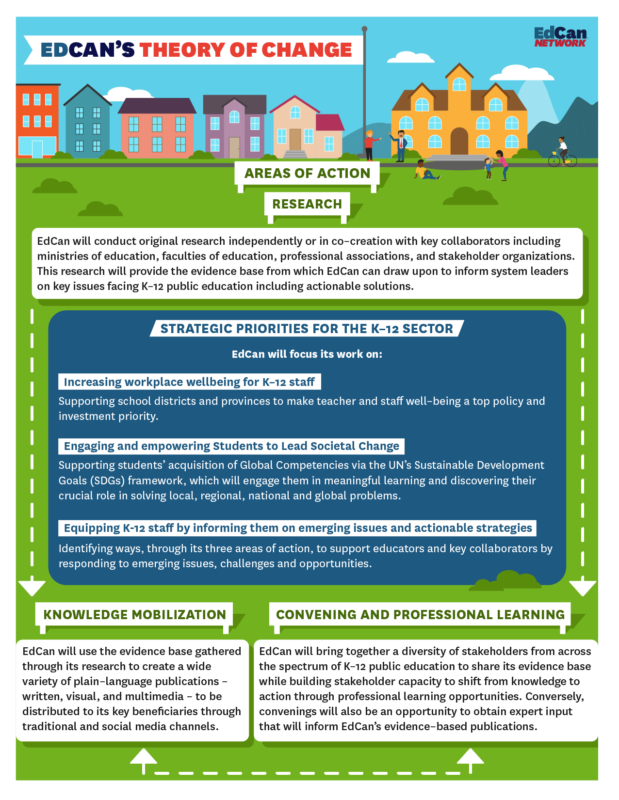
For more information about EdCan’s Theory of Change, Intended Impacts and Strategic Priorities, please visit: www.edcan.ca/aboutus
For a list of the education and philanthropic leaders who serve on EdCan’s Advisory Council, please visit: www.edcan.ca/council
First published in Education Canada, January 2021
-
Compassionate Systems Leadership
Comments Off on Compassionate Systems LeadershipWhat else can be said about our experiences since the onset of the pandemic? “Unprecedented, stress producing, disrupting, mind boggling, unimagined.” All of the descriptors of our current context have been used and overused. Yet somehow the magnitude of it all never seems quite properly conveyed. The pandemic has shone a light, as rarely before, on the possibilities and opportunities for innovation and change in the education system. And we are all engaged in thinking about how we can respond in ways that not only address immediate needs but also capitalize on the opportunity for much larger and more significant innovation.
As children and teachers return to the classroom, we have searched for an accurate description of the impact of the pandemic on the education system and all the people within it. COVID-19 has exacerbated existing stressors and challenges as administrators, educators, and support staff return to school: it has been tough, really tough. Regular routines have been disrupted; the needs of many learners have increased, and those with special needs especially so; the need to be innovative and try new things, though exciting, has also depleted energy; children are experiencing high levels of anxiety and sadness.
Simultaneously though, the disorder presents us with an extraordinary opportunity to consider actions that are capable of transforming the system in ways that we could not have envisaged at the start of 2020. We have a chance now, from this place of disruption, to create a new kind of environment; one that is compassionate and nurturing as an essential foundation for learning; one that focuses on our shared humanity and provides continuous collaboration and learning for both students and educators; one that is grounded in an understanding of the complexity of the education system and acknowledges this in all of the decisions that need to be made.
Compassionate Systems Leadership (CSL) is a framework that can facilitate such a transformation. CSL is an approach to educational leadership that explicitly builds skills and practices in three interconnected domains (see Figure 1) that are required in this new reality: self (building a practice of personal reflection, mindfulness, and compassion), each other (building authentic relationships that can support generative conversations), and the system (developing skills and capabilities to use tools that honour the complexity of the work that needs to be done).
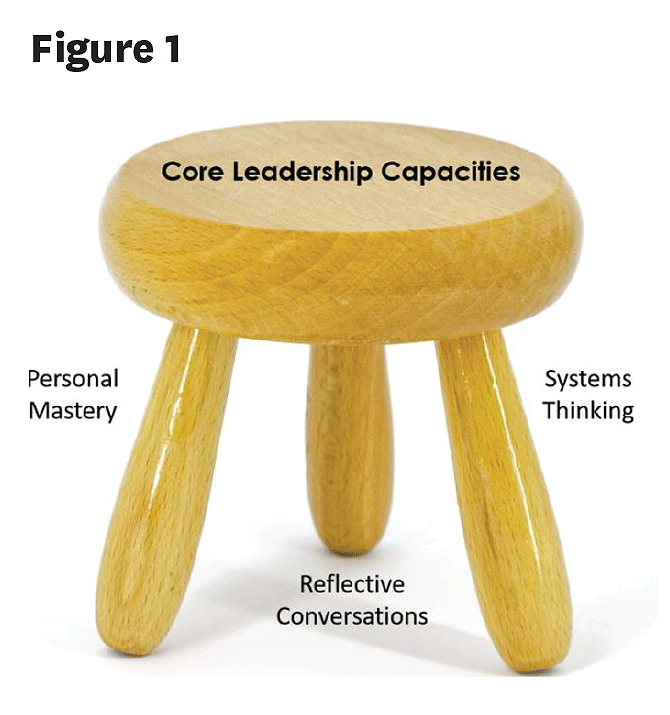
CSL draws on practices that are similar to those that have proven effective in building teacher well-being and supporting the social and emotional capacity of learners. It extends these to include the strengthening of interpersonal relationships, while deepening the understanding of how the system can perpetuate, rather than diminish, stress in the workplace. CSL can shift us out of that continuous cycle of doing what we can to take care of ourselves, while always returning to a structure that does not take care of the health and well-being of the people within it.
Self
The foundation of CSL is a continuous practice of mindfulness and reflection. It draws on the premise that increasing the awareness of ourselves as leaders – our values and beliefs, our passions and our challenges – allows us to become more alert to how we are “showing up” at work every day and how our behaviour and approach might be impacting those around us. CSL uses simple tools to build this awareness. It encourages a practice of personal mindfulness meditation (the deep skill of pausing, understanding our emotions and thoughts, and responding from a place of clarity), and regular reflective journaling.
Each other
The CSL process also introduces practices that facilitate awareness and deeper, more authentic, and trusting relationships amongst groups of colleagues: these are essential to more courageous systems work. For example, “Check-in” (See Steps in Facilitating a Check-In) is a CSL tool that is simple and powerful. It creates the time and space for each person to share their thoughts and emotions without judgment. It creates a place where all those involved can bring their whole selves into the work. It asks that we practise the basic skills of intentional speaking and listening that can generate a new and shared personal understanding with our colleagues. The CSL approach also supports a curiosity into the possibility for more transformative conversations that take us beyond our existing ways of thinking and solving problems into a more aspirational approach that can encourage more innovative and creative solutions.
Steps in Facilitating a Check-In
- First, open up by asking a group of people to take two to five minutes to individually and quietly reflect on a guiding question. You can also do this as a simple guided meditation.
- Next, take time (five minutes) to journal whatever comes to mind. Maintain silence throughout the journaling time.
- Place everyone into groups of three to five (either in small circles or in virtual breakouts), and take one to two minutes per person to share personal reflections. Encourage people to share only what they are comfortable with and to listen without judgment or interpretation, only to understand and hold what people have to say.
SYSTEM
The core concepts of systems thinking (Meadows, 2008; Stroh, 2015) that are included in the CSL framework provide a broad set of tools for viewing the challenges and opportunities faced by schools and the system more generally at the moment. CSL incorporates a series of practices and concepts that facilitate perspective taking (from multiple perspectives), deepen knowledge about systemic behaviour, and illuminate the patterns that often lead to us into a continuous cycle of frustration and powerlessness, where we keep on doing the same things and getting the same outcome. One such concept is the Systems Iceberg (see Figure 2). This concept provides a structure to explore and unpack the system challenges that consume too much time and energy, and yield little progress. The iceberg moves us from seeing daily events, to understanding the patterns in these events and then digging deeper to understand the structures, processes, values, and beliefs that continue to generate non-optimal outcomes and leave us feeling stuck.
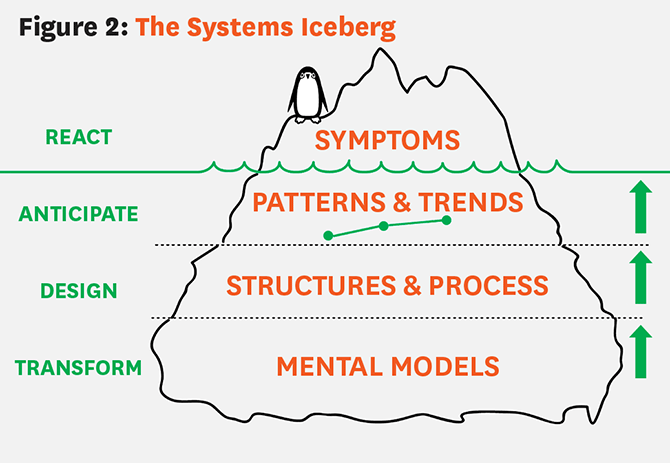
The CSL framework that we are developing in B.C. is a compilation of the work of many others. It is connected to the work of Peter Senge (2006) and Mette Boell at the Centre for Systems Awareness at the Massachusetts Institute of Technology. Through the Centre, a global community for systemic change in education is developing. In B.C. we have also integrated an approach to cultivating compassion that was developed at Stanford University and the Cultivating Compassion Institute based in California. And we are grateful to be able to draw on tools and approaches developed by Otto Scharmer (2018) (Theory U), Robert Fritz (1989) (Creative Tension), and others.
We are testing and applying this emerging framework with educators and other child-serving professionals in B.C. The B.C. Ministry of Education recently incorporated a CSL component in its Mental Health in Schools strategy. Through a robust and growing Community of Practice of educators and professionals from a range of sectors, which meets on a regular basis, we are continuously adapting the approach to integrate shared learnings and best fit the systemic context of participants. Our discussions and emergent practice focus on collaborative learning. And we are grounded in the idea that “we are the system,” that what we each do, individually and collectively, is an essential contribution toward meaningful and effective systemic change. We are also connected in a common commitment to approach the work ahead of us with an intention toward kindness and compassion (Jinpa, 2016); cultivating compassion for ourselves and for those we connect with every day is an essential foundation for the transformation that we seek.
Curious to know more? Check out the website: compassionatesystemsleadership.net
Photo: iStock
First published in Education Canada, January 2021
REFERENCES
Fritz, R. (1989). Path of least resistance: Learning to become the creative force in your own life. The Random House Publishing Group.
Jinpa, T. (2016). A fearless heart: How the courage to be compassionate can transform our lives. Penguin Random House LLC.
Meadows, D. (2008). Thinking in systems: A primer. Chelsea Green Publishing.
Scharmer, O. (2018). The essential of Theory U: Core principles and applications. Berret-Koehler Publishers, Inc.
Senge, P. (2006). The fifth discipline: The art and practice of the learning organization. Crown Business.
Stroh, D. (2015). Systems thinking for social change: A practical guide to solving complex problems, avoiding unintended consequences and achieving lasting results. Chelsea Green Publishing.


IDEAS TO SUPPORT EDUCATORS : Subscribe to the EdCan e-Newsletter
Quality research, reports, and professional learning opportunities.